
Card.fi reviewed: a crypto card with wide reach, thin trust paperwork
 Available in US
Card.fi is a crypto payment card, not a bank account, and that single sentence shapes everything else in this review. The card gives you a card number you can spend from a crypto balance, it reaches a very long list of countries, and it comes in several forms including metal. In exchange you hand control of your funds to a Hong Kong company whose licences the public pages never name. My score is 6.6 out of 10. That is not a bad card. It is a convenient card wrapped around a company you have to trust because the paperwork behind it is thin. Whether that trade suits you depends almost entirely on why you need a card in the first place.
The conditions described here are current as of October 28, 2026.
Verdict: who the card suits and who it does not
The single word that describes this card is reach. Card.fi says its cards ship to “200+ countries,” and nothing in its terms narrows that to a citizenship or residence list beyond one sanctions clause. On everyday use it scores a perfect 10 out of 10, because you can hold a virtual, a physical or a steel card, add Apple Pay and Google Pay, and pull cash at an ATM from the physical ones. On cost, however, it scores 2 out of 10, because a Virtual Classic card costs $49 and a Virtual Premium costs $249, with a top-up fee and a foreign-exchange fee on top. On reliability and complaints it manages 5 out of 10, because there are no published licences and no found complaints page, which cuts both ways. Put those together and 6.6 out of 10 is an honest summary: excellent mechanics, thin trust.
Here is the score broken down, criterion by criterion.
| Criterion | Score | Why |
|---|---|---|
| Who can get it | 9 / 10 | Cards ship to “200+ countries”; terms bar only residents of, or orders from, sanctioned countries |
| Cost | 2 / 10 | Virtual Classic $49, Virtual Premium $249; top-up 1.5% + $1.00 on Classic and 1% on Premium; FX 3.5% on Classic and 2.5% on Premium; no monthly or annual fee |
| Top-up options | 9 / 10 | 32 coins across 5 networks including Ethereum, Base, BNB Chain, Solana, Kaanch; USDT, USDC, ETH, BNB, SOL, KAANCH; a separate address per card |
| Reliability and complaints | 5 / 10 | Trading name Kaanch Limited, Hong Kong; cards issued by the On5 Card Network, licences not named; balance held as a debt of the company (custodial); no complaints pages found |
| Everyday use | 10 / 10 | Virtual, physical and steel cards; every physical card includes a virtual one; Apple Pay and Google Pay; ATM on physical cards |
| Total | 6.6 / 10 | A wide, well-built card for people who already trust the operator |
Who is this for? Someone who wants to spend many different coins, from a virtual or a metal card, without holding a native balance in a dozen wallets. Someone who travels, or lives somewhere a normal bank card is awkward to obtain, and who values “it works at the till” over deposit insurance. Someone who accepts that the balance is a claim against a company rather than a claim against a segregated pile of cash.
Who is it not for? Someone whose priority is a regulated, named licence. Someone whose priority is cheapness, because $49 to start and a 3.5% foreign-exchange fee on a Classic card add up fast. Someone with large monthly spend who will hit the daily top-up cap and find the higher tier costs more than they planned. And someone whose money must sit in their own wallet, because this is a custodial card and the balance is a debt of the company, not coins you control.
Will they give you the card
Yes, for almost anyone of legal age, unless you live in a sanctioned country. The banner says cards are sent to “200+ countries.” The terms exclude residents of, or orders from, “a country subject to sanctions that would prohibit the service.” That is the only country rule I can find. There is no citizenship-versus-residence distinction beyond that line, which is unusual and, on its face, generous.
One thing to know before you apply. The issuer may require identity verification before it issues a card or raises your limits. If verification fails, the card is not issued and the fee is refunded. The minimum age is 18. What documents you need is not stated on the public pages, so do not assume it is only a passport. Whether the verification is light, standard or deep is not stated either.
The practical checklist before you start:
- You are 18 or older.
- You are not resident in, and not ordering from, a sanctioned country.
- You can produce identity documents if asked, even though the list is not published.
- You accept that limits can be raised only after verification.
That is the whole eligibility picture. It is short, and that is the point.
How to get it
There are two named virtual tiers and two named physical tiers, plus metal. A Virtual Classic card and a Virtual Premium card are the entry points. Physical Classic and Physical Premium cards are the plastic version, and there is a metal card in stainless steel. Every physical order includes a virtual card as well, so buying plastic gives you both. The cards are issued “under licence from the relevant card schemes,” but the schemes themselves, Visa and Mastercard, are not named. The currency the card holds is not stated.
Delivery for Physical Classic and Physical Premium is within 5 to 7 business days. Metal is shipped express. The shipping country list is the same “200+.” The replacement cost, if you lose a card, is not stated, so treat that as an open question rather than assume it is free.
Applying, in short: create the account, pick a tier, pay the one-time fee, and expect identity verification to be possible. Activation details are not laid out as a separate published procedure; the natural sequence is that the virtual card appears in your account and the physical one arrives in the post.
Fees: what it really costs
This is where the card is weakest, and it is worth reading the table before anything else. There is no monthly fee, no annual fee, no inactivity fee and no minimum-balance fee, which is genuinely nice. But there is a one-time purchase price, a fee on every top-up, and a fee on currency conversion, and on the Classic tier those add up to a lot.

| Fee or limit | Value |
|---|---|
| Issuance, Virtual Classic | $49 one-time |
| Issuance, Virtual Premium | $249 one-time |
| Issuance, physical and metal | not listed |
| Monthly fee | none |
| Annual fee | none |
| Inactivity fee | none |
| Minimum-balance fee | none |
| Top-up fee, Classic | 1.5% + $1.00 |
| Top-up fee, Premium | 1% |
| Conversion fee | shown before each top-up, per the terms |
| FX fee, Classic | 3.5% |
| FX fee, Premium | 2.5% |
| ATM, virtual cards | not included |
| ATM, physical | supported; Premium and Metal have larger allowances than Classic, amounts and fee not stated |
| Daily top-up limit, Classic | $5,000 |
| Daily top-up limit, Premium | $25,000 |
| Spending limits, Classic | “standard” |
| Spending limits, Premium | “higher” |
| Card currency | not stated |
Let me run three everyday payments through it, so you can feel the fees rather than just read them.
Coffee, paid in dollars, from a Classic card, already topped up. You paid $49 once for the card. The coffee is a straightforward purchase, and if you have loaded dollars already there is no further conversion. Cashback on Classic is 0.8% up to a cap of 10 USDT a month. So the cost here is not per-transaction, it is the entry fee you already paid, spread thin only if you use the card a lot.
A holiday abroad, spending euros from a Classic card. The purchase is in euros, your balance is in dollars. The 3.5% foreign-exchange fee applies on the conversion, on top of whatever the network’s own conversion adds. On a $200 dinner that is $7 of fee before anything else. On larger purchases, those fees add up significantly. This is the fee that decides whether the card is worth it for you: if you spend abroad regularly, the 3.5% Classic rate is punishing, and even Premium’s 2.5% is not cheap.
Loading money in, three times a month, on a Premium card. Premium costs $249 up front. Each top-up is 1%. If you load $1,000 three times, that is $30 in top-up fees across the year, plus the conversion fee shown before each top-up, plus whatever FX applies when you later spend in another currency at 2.5%. Against a 10% headline cashback at coffee shops capped at 10 USDT a month, the maths only works if your spending is large and mostly in your balance’s own currency.
The honest summary is that the card has no subscription, but it charges you at the moment you move money, and it charges you again when you change currency. Buy the tier whose fees match how you actually spend, and if you are unsure, start on Classic, because a wrong choice here is expensive.
How to Top up the card
Topping up is the part this card does well. You can deposit 32 coins across 5 networks: Ethereum, Base, BNB Chain, Solana and Kaanch. Examples named are USDT, USDC, ETH, BNB, SOL and KAANCH. Each card gets its own deposit address, so a transfer to one card does not accidentally land on another. The coins are converted at the market rate when they arrive. The top-up fee is the one in the table above, and the order completes after the blockchain confirms the transaction.
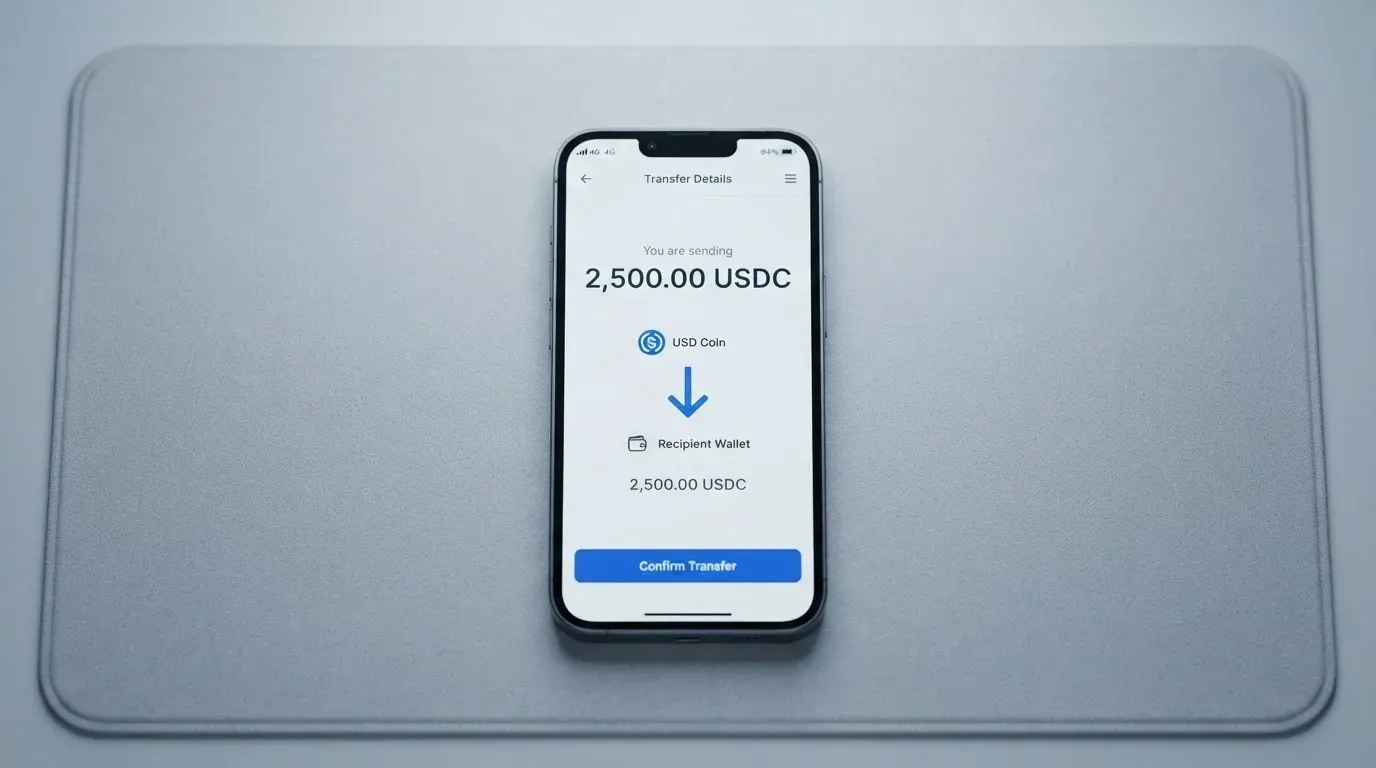
Two warnings travel with this. First, the wrong chain. If you send on a network the card does not support, or to an address belonging to a different network, the transfer can be lost or need manual support recovery with no guarantee. Blockchain transfers are irreversible by design. Check the network and the address character by character before you confirm. Second, the minimum top-up is shown in the app or account, not on the public pages, so it is not stated here.
There is also a withdrawal side, which matters if you want your money back out. Withdrawals are paid in a supported stablecoin 1 to 1, with a fee of 1% of the amount and a 7-day hold during which the withdrawal can be cancelled. If you close the card, the funds return to a held balance that is still withdrawable. Virtual cards, once issued, cannot be cancelled.
One more thing to understand about the money itself. On-chain network fees, the gas or bandwidth you pay to move tokens, are charged by the blockchain, not by Card.fi. If you send USDT on Ethereum you need some ETH in the wallet to pay the way. On Tron, fees are paid through bandwidth and energy, often by burning TRX. And the stablecoins themselves are not risk-free: USDT and USDC are dollar-pegged but can move, as USDC briefly did in March 2023. “Stable” is an intention, not a guarantee.
Paying with it every day
This is where the card earns its 10 out of 10. In practice you hold a virtual, a physical or a steel card. Every physical card comes with a virtual one. Apple Pay and Google Pay are supported on the Classic and Premium tiers, so you can add the card to your phone’s wallet and pay by face or by fingerprint. Physical cards support ATM withdrawals, and Premium and Metal carry larger allowances than Classic.
The rewards structure is worth understanding before you get excited. Cashback is on card spending only. Classic pays 0.8%, capped at 10 USDT a month. Premium pays 1%. Metal pays either 1.2%, capped at 10,000… no, capped at 100 USDT a month with a 5,000 USDT ceiling, or 2%, capped at 250 USDT a month with a 20,000 USDT ceiling. There is a headline 10% at coffee shops, but it is capped at 10 USDT a month, so treat it as a pleasant nudge rather than a plan. On balances, Metal advertises earning “up to 18%,” and that figure is variable.
You manage the cards in the Card.fi account, which is a web dashboard. The token list is referenced as being in “the app.” Store ratings were not found, so I cannot give you a sense of how the app is rated by users.
Now the other side of everyday use: where the card will be declined. Card.fi blocks 18 merchant category codes. In plain terms, the card is closed to crypto purchases (6051), cash advances (6010), ATMs (6011), quasi-cash (6050), stored-value loads (6540), remittances (4829), financial institutions (6012), securities brokers (6211), telemarketing (5966), dating (7273), massage (7297), betting (7995), regional gambling (7800, 7801, 7802, 9406), and political or religious organisations (8651, 8661). None of that is unusual for a card of this kind, but if you expected to buy something in one of those categories, you cannot.
Two more everyday realities that are not the card’s fault but will shape your day. A merchant can look at the issuing country in the card’s own number, and if it differs from your billing address the shop may look at the transaction more closely, which is why a card issued in one country can feel “foreign” at a till in another. And a decline can leave a hold on your funds that stays for several days, typically up to seven.
What can go wrong
The reliability mark is 5 out of 10, and the reason is the company behind the card. The trading name is Kaanch Limited, Hong Kong, under Hong Kong law. The cards are issued by the On5 Card Network. On-chain settlement is done by the Kaanch Network. The public pages do not name any licences. That is not proof of anything wrong, but it means you cannot check the card against a named authorisation the way you can with a regulated European issuer.
The second risk is custody. Your balance is held as “a sum we owe you.” It is custodial. The terms do not address safeguarding or segregation, meaning the money is not described as being held in separate, protected accounts. If you are comfortable trusting the company with your balance, fine. If you are not, this is the wrong card, and no fee makes it right. This is not a rare failure mode: custodial platforms have a history of it, from Mt. Gox and Coincheck to the Ronin Network bridge.
The third risk is that card programmes get shut down. The card networks do not issue these cards themselves; they license issuers and can suspend a programme. WaveCrest, a card issuer that supplied several crypto brands, was suspended by Visa in Europe in 2018, closing every WaveCrest-issued Visa programme. When Visa ended its agreements with FTX in November 2022, the FTX US debit card was wound down by its issuer. Closures follow a pattern: a notice period, then loading and spending stop, then you are asked to withdraw what is left. You should read Card.fi’s terms as if that could happen to you, because it could.
Disputes and complaints are the fourth area, and here the card is quiet. Card.fi’s own terms do not cover transaction disputes. Disputes fall under the issuer’s cardholder terms instead. Complaints about the card account are passed to the On5 Card Network. When I looked for a public complaints record, I found no official incident, and no Trustpilot or Reddit pages for Card.fi or Kaanch in my search. That is not evidence of a clean sheet; it is evidence of no visible public voice, which for a new card is neutral at best.
Support, at least, is specified. You can reach them by email from your account address, or by Telegram. The terms promise an acknowledgement within two working days and a resolution or an explanation within fifteen, and Premium gets priority support.
What to take instead
If the deal-breaker for you is trust or cost, there are three alternatives I looked at, and none of them is clearly better in every way. Here is the honest comparison.
| Card.fi | CardFlow | HyperCard | Nero | |
|---|---|---|---|---|
| Score | 6.6 / 10 | 4.9 / 10 | 4.7 / 10 | 4.8 / 10 |
| Card type | Virtual, physical, metal | Virtual USD Mastercard | Prepaid, USD or EUR | Virtual, standard number |
| Issuance cost | $49 Virtual Classic; $249 Virtual Premium | Free to create | Not stated | One-time fee, amount not stated |
| Top-up fee | 1.5% + $1.00 (Classic); 1% (Premium) | Not stated | Not stated | 4% |
| FX fee | 3.5% (Classic); 2.5% (Premium) | Not stated | Not stated | Not stated |
| Networks | 5 networks, 32 coins | Bitcoin, USDT, ETH or Naira; networks not stated | Crypto such as USDT, BTC, ETH; networks not stated | USDT or USDC; networks not confirmed |
| Cashback | 0.8% to 2% on spend | Not stated | Not stated | Not stated |
| Country reach | “200+ countries” | Aimed at Nigeria and global users | Accepted in “176+ countries” (acceptance, not eligibility) | Restricted countries exist; list not read |
Read that table with the same scepticism I read Card.fi with. Every one of these alternatives has fees or reach I could not confirm, because their public pages simply do not state them. CardFlow is explicitly built for Nigeria. HyperCard’s “176 countries” is about where the card is accepted, not who can open one. Nero has a 4% top-up commission, which on its own is worse than Card.fi’s Classic.
So why would you switch away from Card.fi? A few concrete reasons. If you are in Nigeria, CardFlow may be the more natural fit with local Naira funding. If your priority is a free virtual card, CardFlow creates one at no cost, where Card.fi charges $49. If you want a lower-cost top-up than Nero’s 4%, Card.fi is better. And if you specifically want Apple Pay, Google Pay, an ATM and a wide choice of coins on five networks in one card, Card.fi is harder to match.
What none of these cards gives you is the thing you cannot shop for: a named licence, segregated funds, and a public complaints record. If that is what you need, the alternative is not another crypto card but an ordinary bank or regulated e-money account.
Who I would recommend it to
I would recommend Card.fi to someone specific: a person who already holds crypto, who wants to spend many different coins from one card, who travels or lives somewhere a normal card is inconvenient, and who has made peace with a custodial balance held by a Hong Kong company. For that person, 6.6 out of 10 is a fair price for a card that simply works, with wide reach and a metal option if you want one.
I would not recommend it, and would steer you to a regulated bank or e-money account instead, if any of these are true of you:
- A named regulator authorisation is a hard requirement, not a nice-to-have.
- You are sending or holding large sums, where a 3.5% Classic foreign-exchange fee and a $5,000 daily top-up cap would frustrate you.
- You need your funds in your own wallet at all times.
- The blocked merchant categories, especially gambling and crypto purchases, are part of how you plan to spend.
- You want consumer dispute rights that Card.fi’s own terms do not describe.
The card is good at what it does. The question is whether what it does is what you need, and for a lot of people who end up here, the honest answer is that a cheaper, boring, regulated card serves them better.
Frequently asked questions
What is Card.fi card?
Card.fi is a crypto payment card, not a bank account. You load it from cryptocurrency, it converts that to a spendable balance, and you pay with the resulting card number like an ordinary card. The card comes as virtual, physical or stainless-steel metal, with Apple Pay and Google Pay on the main tiers. The company behind it trades as Kaanch Limited in Hong Kong.
How does Card.fi card work?
You deposit crypto to a per-card address across one of five supported networks. The coins convert at the market rate on arrival, minus the top-up fee, and the card spends from that balance like a prepaid card. Spending is in the card’s currency, and a conversion or foreign-exchange fee may apply on top. If you close the card, remaining funds return to a held balance you can still withdraw.
Is Card.fi a bank?
No. Card.fi is a card programme front-end whose trading name is Kaanch Limited, a Hong Kong company. The cards themselves are issued by the On5 Card Network. Card.fi is not described as a bank, and the public pages do not name any banking or e-money licence it holds, so you should not treat your balance as a bank deposit.
Who owns Card.fi?
Card.fi operates under the trading name Kaanch Limited, registered in Hong Kong and governed by Hong Kong law. Cards are issued by the On5 Card Network, and on-chain settlement runs on the Kaanch Network. The ownership structure behind those entities is not detailed on the pages I could read, and no licence is named.
Does Card.fi card require KYC?
It can. The issuer may require identity verification before issuing a card or raising your limits. If verification fails, the card is not issued and the fee is refunded. The minimum age is 18. The specific documents required and the depth of the checks are not stated on the public pages, so expect to be asked for proof of identity.
How much does Card.fi card cost?
A Virtual Classic card costs $49 and a Virtual Premium card costs $249, one time. There is no monthly, annual, inactivity or minimum-balance fee. On top of that, Classic charges 1.5% plus $1.00 per top-up and 3.5% on currency conversion, while Premium charges 1% and 2.5%. Physical and metal prices are not listed on the pages I could read.
How do I top up Card.fi card?
Send supported crypto to the deposit address assigned to your card. Card.fi supports 32 coins across Ethereum, Base, BNB Chain, Solana and Kaanch, including USDT, USDC, ETH, BNB and SOL. The transfer converts at the market rate once the blockchain confirms it, and you pay the top-up fee for your tier. Make sure the network matches, because a transfer on the wrong chain can be lost with no guarantee of recovery.
Can I use Card.fi card in my country?
Cards ship to “200+ countries,” and the only stated exclusion is residents of, or orders from, a country under sanctions that would prohibit the service. There is no narrower citizenship or residence list published. So if you are not in a sanctioned country, you can probably order one, though shipping times, delivery and local acceptance at tills still vary by where you are.
Is Card.fi card safe?
It is convenient but centralised. Your balance is custodial, held as “a sum we owe you,” and the terms do not describe safeguarding or segregation of funds. The operator’s licences are not named on the public pages, and I found no public complaints pages, which tells you little either way. Treat it as trusting a company with your money, not as holding your own keys, and do not load more than you are willing to lose.
Is Card.fi card worth it?
Worth it if you want to spend many coins from one card, need wide country reach, or value Apple Pay, Google Pay and an ATM over cheap foreign exchange. Not worth it if the $49 entry fee and a 3.5% Classic FX rate sting, if you need a named regulator’s licence, or if you must keep funds in your own wallet. Judge it against the fees in the table, not the metal.
Virtual card verdicts – cryptocardverdict
Content created by the «cryptocardverdict» team