
A euro Visa card that spends crypto, rebuilt after a collapse
 Available in US
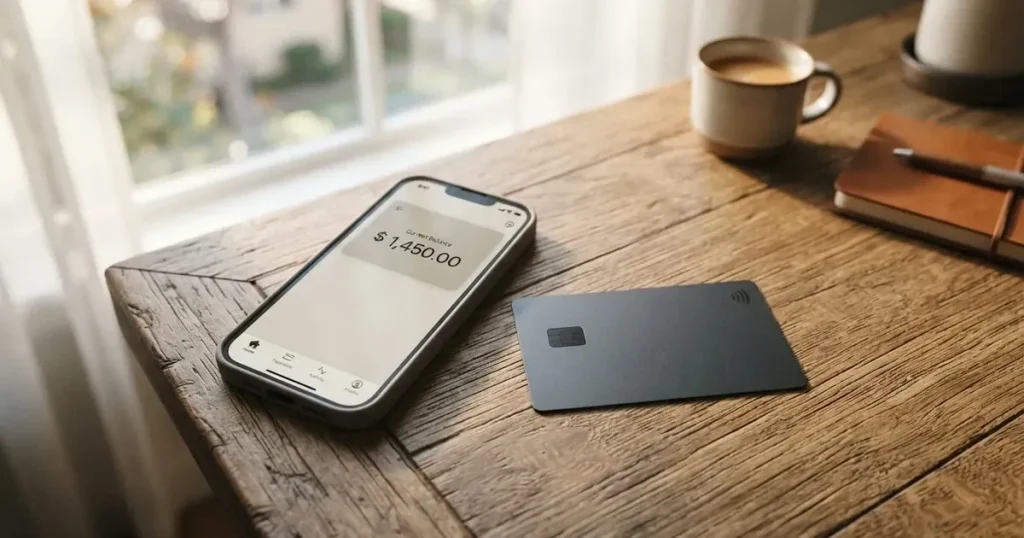
The Bitwala card is a Visa debit that runs on a euro account rather than a bank account, so your balance is euros, not a crypto account with a card stuck on the front. The crypto you hold is swapped into euros inside the app, and after that the card behaves like an ordinary euro Visa: you pay in shops, take cash out, add it to Google Pay. The catch is that eligibility stops at the EEA, so the whole product depends on where you live, and the company’s own history is part of the story you have to weigh. I score it 6.1 out of 10.
*Conditions are current as of October 28, 2026.*
Verdict
The score is 6.1 / 10. That number is not a hedge; it is a mixture, and the mixture is the honest answer. Bitwala does three things well: it is cheap or free to hold, it pays in euros without a separate currency charge on euro spending, and it is genuinely convenient once the money is in. It is not a bank in the ordinary sense, it exists only for people living in the European Economic Area, and the company it grew out of went into insolvency in 2022. So who does it suit, and who does it not?
It suits someone who already lives in the EEA, holds some Bitcoin, Ether or USDC, and wants a euro balance they can spend from a normal Visa without thinking about crypto networks every time they buy coffee. It suits someone who treats the card as a spending tool rather than as a place to keep savings, and who is comfortable with the balance sitting with a company rather than in their own wallet.
It does not suit anyone outside the EEA, whatever their citizenship. It does not suit someone looking for a bank with deposit guarantee, or someone who wants their crypto under their own keys. And it does not suit someone who needs to know precisely which network to send funds on, because Bitwala’s own pages do not say.
| Criterion | Score | Why |
|---|---|---|
| Who can get it | 5 / 10 | Verified account and EEA residency; narrow gate |
| Cost | 7 / 10 | Account and subscription free; virtual €0.99 one-time, physical €9.99 one-time plus delivery; euro payments free, crypto payments €0.20 + 1%, ATM €2 + 1% |
| Top-up options | 6 / 10 | Bitcoin, Ether, USDC and euros; crypto swapped to euros in-app; networks not stated |
| Reliability and complaints | 5 / 10 | Bitwala GmbH in Germany, euro account and IBAN via Solarisbank; issuer not named; the predecessor company Nuri filed for bankruptcy in 2022, with 2022 complaints about blocks |
| Everyday use | 8 / 10 | Visa debit, virtual and physical; Google Pay works, Apple Pay via Curve; ATM available, limits and freeze in the app |
| Total | 6.1 / 10 | Strong daily mechanics, held back by eligibility and history |
Will they give you the card?
Yes, if two things are true, and only two. The card’s stated gate is “anyone with a verified Bitwala account and residency in the EEA”. So residency in the EEA is the requirement, not citizenship. That distinction matters more than it first looks: the rule is about where you live, and someone with a passport from outside the EEA who lives in, say, Germany falls inside the gate, while someone with an EU passport living outside the EEA does not.
The verified account part is not a formality either. Bitwala describes registration as “instant”, but instant registration and a verified account are not the same thing, and the pages say nothing about what documents you will be asked for. Proof of address, identity papers, age verification: none of these are stated. That silence is the practical problem. You will not be able to prepare documents in advance, and you cannot tell from the public pages whether your particular case will clear quickly or need a manual review.
If you are outside the EEA, stop here. No amount of reading about fees will help you, because the product is not offered to you.
How to get it
The route is short in description: create a Bitwala account, verify it, then order a card. The card itself is a Visa debit, and there are two of them, virtual and physical. The card currency is not stated, though the account it draws on is a euro account.
What is not stated is quite a lot. Verification levels are not described, so there is no published ladder of tiers to aim for. Documents are not listed. And the physical card costs €9.99 plus shipping, with the countries it ships to and the delivery time not stated anywhere on the page I checked. That last point is worth pausing on for anyone outside the euro area: free euro spending does you no good if the card never arrives.
One thing is clearly handled. If you lose the physical card you can freeze it in the app, and you can order a replacement. The price of that replacement is not stated.
Fees
The pricing is one of the more attractive parts of this product, and also one where the gaps matter. Here is everything the card states, and it is genuinely everything, so where a cell is empty that is a real gap rather than me being lazy.
| Item | What Bitwala states |
|---|---|
| Account | Free, no monthly subscription |
| Virtual card | €0.99 one-time |
| Physical card | €9.99 one-time plus shipping |
| Payments in euros | Free |
| Crypto payments | €0.20 + 1% per transaction |
| FX fee | Not stated separately |
| ATM withdrawal | €2 + 1%; free allowance not stated |
| Spending limits | No amounts published; settable in the app |
| Tiers | Not stated |
Three everyday payments, and what each costs you.
Buying a €30 lunch with euros already in the account is free. That is the plainest part of the offer, and it is the part most people care about most often.
Buying a €30 lunch with crypto still sitting in the app costs €0.20 plus 1%, so €0.50 on that transaction. The percentage is the part that scales. On a €300 purchase of, say, electronics or a flight deposit, the crypto fee alone is €3.20. None of that applies if the balance is already in euros.
Taking €50 out of a cash machine costs €2 plus 1%, so €2.50. Do it twice in a month and you have spent €5 without buying anything. Whether that is acceptable depends entirely on whether the card is a convenience or a necessity for you, and Bitwala does not state whether there is any free allowance.
The line that should make an EEA reader pause is FX. Euro payments are free, but what about paying in dollars? A separate foreign exchange fee is not stated, and in this category “not stated” is not the same as “none”. A card that is only free inside the euro area is a different proposition from one that is free everywhere. If you spend abroad, this is the first number to ask support for before you rely on the card.
Top up
The stated assets are Bitcoin, Ether, USDC and euros. Crypto is swapped to euros inside the app. That is the whole list, and it is a short one: no USDT, no other stablecoins, no other networks named.
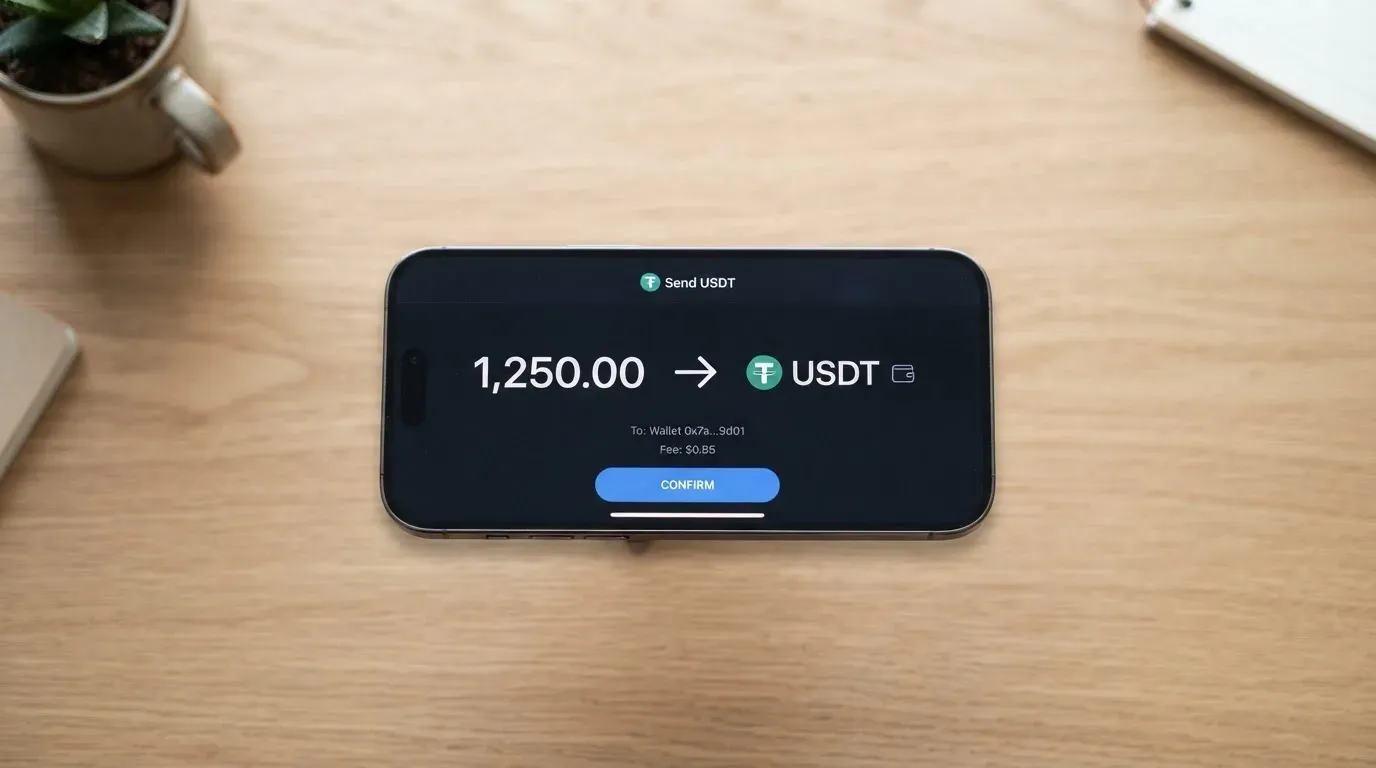
The networks are the part that catches people out, so let me be blunt about it. Bitwala’s pages do not say which networks to send on. This is not a detail you can guess at. Crypto transfers are irreversible: a deposit sent on a network the provider does not support, or to an address belonging to a different network, can be lost or can need manual support recovery with no guarantee of outcome. Anyone who has moved USDT on the wrong network has learned that the expensive way.
There are two practical consequences. First, before your first transfer, find out the supported network from support and write it down. Second, note what is also not stated: the top-up method itself is not described in the fee terms, though the home page mentions SEPA funding without giving fees. So the euro route exists in some form and the crypto route exists in some form, but the details on both are thin.
Withdrawals are not stated either, which is a real gap when you are thinking about money you might want back out. The one hard figure on this side comes from the 2022 news: when the old company wound down, customers had to withdraw their funds by 18 December 2022.
Paying with it every day
This is where the card scores best, 8 out of 10, and the reason is that there is little to get wrong once the balance is in euros.
Google Pay works. Apple Pay works if you sign up through Curve, which is a provider wrapping the card rather than Apple reading it directly. So if a shop takes contactless and you prefer tapping to inserting, that path exists; it just is not the standard route.
An ATM is available, at the cost set out above. Card freezing and unfreezing happens in the app, which is the single most useful control a card like this has, since it lets you react in seconds rather than ringing a number. You can set spending limits in the app too, though no default amounts are published.
What is not stated is worth listing, because these are the questions people ask after their first month. Whether merchant categories are blocked: not stated. What the app can actually do beyond freezing and limits: not stated. What happens when a payment is disputed or a merchant refuses a charge: not stated. There are no rewards on the card page either. None of these absences mean the features are missing; they mean you will not find them written down before you need them.
What can go wrong
The most serious item here is not a fee or a limit. It is the company’s history, and it needs saying plainly.
Bitwala today is Bitwala GmbH in Germany, working with Solarisbank, a licensed German bank, for the euro account and the IBAN. The card issuer is not named on the page. That combination matters: the euro money sits behind a real banking partner, while the card programme itself is fronted by a company whose name you should be able to trace.
The predecessor company, Nuri, filed for insolvency in August 2022, with outlets reporting the filing on either 9 or 10 August. It announced its closure in October 2022, stopped digital-asset trading on 30 November 2022, and required customers to withdraw funds by 18 December 2022. This was not a small wobble. It was the end of the business.
The 2022 user complaints follow the same pattern from the other direction. A July 2022 Trustpilot report describes SMS and card functions failing and accounts suspended without explanation with support unreachable. An October 2022 Google Play report describes a locked account with access later restored. Unofficial write-ups of that period characterise the themes as login and SMS failure, suspended accounts and unanswered support. I did not read the current Trustpilot score or review count, so treat the pattern rather than any live number as the signal.
If you hold funds here, one habit is worth building: keep the balance on the card to what you intend to spend, and do not treat it as a savings account. Programme closures typically follow a shape. You get a notice period, spending and loading stop, then you are asked to withdraw what remains. You do not want to discover that shape for the first time when you are mid-month.
Two smaller risk items. Cards can be frozen and unfrozen in the app, and beyond that the card’s security details are not stated, so I cannot tell you what else is in your favour. A support centre exists, but its languages and hours are not stated, which is exactly what you want to know before you need it at an awkward hour.
What to take instead
Three alternatives, scored the same way, and honestly compared. I am not ranking them above Bitwala by default; the point is to show which weakness you are trading away.
| International Visa Card | UNi Card | Morse | |
|---|---|---|---|
| Score | 6.7 / 10 | 6.1 / 10 | 7.5 / 10 |
| Where you must live | Excludes residents of Belarus, mainland China, North Korea, Cuba, India, Iraq, Iran, Israel, Myanmar, Nepal, Nicaragua, Russia, Syria, Turkey, Ukraine, Venezuela, Vietnam; FATF grey-list reviewed case by case | Not stated | Supported countries; app in over 140 countries, closed-beta in some |
| Card | US-issued Platinum Visa, virtual, pays in USD; physical “coming soon” | Mastercard, multicurrency, spends from UNi.Global balance | Visa prepaid, fully virtual for now |
| Issuance and monthly | $5 one-time, no maintenance; plans Classic free, Pro $9.00/month, Max $19.00/month | No annual fee; issuance not stated | Not stated; cardholder agreement applies |
| Foreign currency | Visa exchange rate + 2% FX fee | No foreign transaction fee; live OTC rates, no hidden exchange fees | Zero foreign exchange fees or markups, real-time Visa rate |
| Card use in home currency | Free in USD on all plans | Not stated | Paying online and contactless is free |
| Funding | USDC or USDT into the USD account; also USD, EUR, SEPA, SWIFT, FedNow | Not stated | Debit card, stablecoin transfer, USDC, USDG and EURC via Solana free; other tokens and blockchains carry a fee |
| Rewards | None stated | Spend-to-Earn up to 3% | Not stated |
Read that table with the caveats from the card’s own pages in mind. International Visa Card excludes residents of a long list of countries by residence rather than citizenship, and purchases are blocked in North Korea, Cuba, Iran, Russia, Syria, Ukraine and Venezuela. Its physical card is “coming soon”. Morse scores highest at 7.5, but its fees are not published on the card page, the country list is not published either, and it cannot serve customers subject to US, UK, EU or UN sanctions. UNi is the one that says least about who can get it.
The trade-offs are specific. International Visa Card costs you a stated 2% on every foreign-currency purchase, which is worse than Bitwala’s unstated FX. Morse gives you zero foreign-exchange markup and a self-custodial wallet, but you will not find its fee schedule or its country list without contacting it. UNi promises no foreign transaction fee and up to 3% back, and tells you almost nothing about funding. None of the three fixes Bitwala’s specific problem, which is that it only exists inside the EEA, and none of them asks for less history.
Who I would recommend it to
I would recommend the Bitwala card to someone in the EEA who wants to turn a modest holding of Bitcoin, Ether or USDC into everyday euro spending without opening a bank account for it, and who has first asked support which network to use. I would recommend it with the balance kept low, because the card is a spending rail, not a vault.
I would not recommend it to anyone outside the EEA, because the gate is residency and no amount of interest crosses it. I would not recommend it as a place to keep money you cannot afford to lose access to, given what happened in 2022. And I would steer a reader who spends heavily outside the euro area towards an alternative with a published exchange fee, because Bitwala does not publish one and silence is not a price.
My one instruction for anyone reading this before they sign up: ask three questions first. Which network do you send on. What is the foreign exchange fee. What does it cost to close your account and withdraw the balance. All three have no published answer, and all three matter.
Frequently asked questions
What is the Bitwala card?
It is a Visa debit card tied to a euro account rather than a bank account. You hold euros, crypto or both; the crypto gets swapped into euros in the app, and the card then spends the euro balance like an ordinary Visa. It exists in a virtual and a physical version, and the euro account and IBAN come through Solarisbank, a licensed German bank.
Is Bitwala a bank?
No, not in the sense you would find reassuring in a deposit guarantee scheme. Bitwala GmbH is the company behind the product, a German company, and it partners with Solarisbank for the euro account and IBAN. The page does not name the card issuer. Money held here is not the same as a bank deposit.
Who can get the Bitwala card?
The stated gate is a verified Bitwala account plus residency in the EEA. Residency is the operative word, not citizenship, which cuts both ways depending on where you actually live. Anyone outside the EEA is outside the offer entirely. Required documents, proof of address and age rules are not stated on the public pages.
Does Bitwala require KYC?
A verified account is required, so identity checks are part of the process by definition. But the pages say nothing about what documents are needed, no proof of address, no age rule, and no verification tiers. EU rules generally require name, address, date of birth, nationality and identity documentation, so expect to be asked for more than an email.
How much does the Bitwala card cost to hold?
The account is free with no monthly subscription. A virtual card costs €0.99 once. A physical card costs €9.99 once plus shipping, and the price of a replacement card is not stated. Euro payments are free, which makes holding it cheap if you spend in euros and awkward if you do not.
What does a crypto payment cost?
€0.20 plus 1% per transaction, on top of any network fee the blockchain charges for the transfer, which is not set by Bitwala. Paying with euros already in the balance costs nothing. So the crypto fee is a reason to convert to euros and hold there rather than to pay small amounts repeatedly.
Is the Bitwala card safe to use?
It has the standard controls for this category: freeze and unfreeze the card in the app, and set spending limits in the app. Google Pay works, Apple Pay works via Curve. What is not stated is the blocked merchant categories, the dispute process, or anything beyond the freeze and the limits. Security is decent in the way these cards usually are.
Can I use the card outside my country?
Yes, it is a Visa and is not geographically limited to the EEA for spending. But the foreign exchange fee is not stated separately, and euro payments being free does not mean payments elsewhere are. If you spend abroad regularly, get that number from support before you depend on the card.
How do I top up the Bitwala card?
The stated assets are Bitcoin, Ether, USDC and euros, with crypto converted to euros in the app. SEPA funding is mentioned on the home page without fees. The critical gap is networks: the pages do not say which networks to send on, and transfers are irreversible, so confirm this with support before your first deposit.
Is the Bitwala card worth it?
Worth it if you live in the EEA, hold some crypto, and want euro spending without a traditional account. Not worth it if you are outside the EEA, if you want deposit-guaranteed savings, or if you need a published foreign exchange rate and published withdrawal terms. The card’s own history in 2022 argues for keeping the balance small.
App and neobank card verdicts – cryptocardverdict
Content created by the «cryptocardverdict» team