
The card is expensive on paper and thin on disclosure — what you actually get for US$388 a year
 Available in US
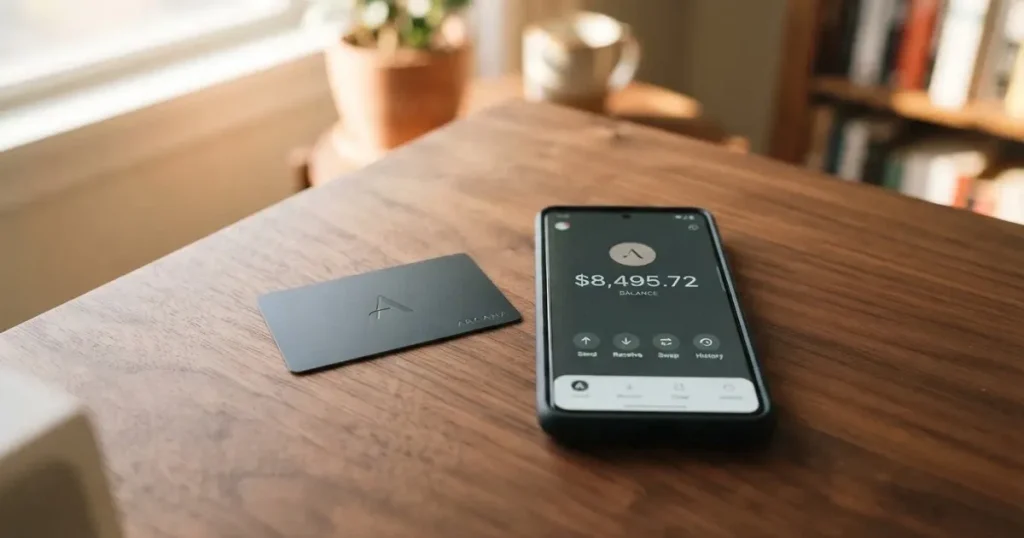
I went through the DeCard website, its terms and conditions, and the surrounding material with the eye of someone who was actually choosing between cards, and this is what I found. The short version is that DeCard is not what most people assume when they hear “crypto card”. It is a SGD-denominated Visa credit card sold as a single premium membership, priced at US$388 a year with no waiver, where cryptocurrency is not a way to load money onto the card but simply one of the ways to repay the balance you have already borrowed. That single design choice explains most of the card’s strengths and most of its rough edges, and it is why I scored it 4.8 out of 10.
The conditions described here are current as of October 28, 2026.
That number is not a punishment. The card does several things well, and I will get to those. It is low because two of the most important questions a prospective cardholder asks — what does it actually cost me to spend, and what happens if I get something wrong — are answered by the company’s own website with silence. Several fees, limits and the identity of the issuing bank are simply not stated on the public pages, and that silence sits underneath everything else in this review.
The score, criterion by criterion
| Criterion | Mark | Why |
|---|---|---|
| Who can get it | 5 / 10 | Countries not named, age 21 to 65, access by invitation or application; Singapore citizens and PRs pass Singpass |
| Cost | 2 / 10 | Annual fee US$388, cannot be waived, metal card included; FX shown as 0% on the site while the terms name a Foreign Exchange Conversion Charge |
| Top-up options | 4 / 10 | A credit line that crypto only repays; USDT and USDC through D-Vault, networks not named |
| Reliability and complaints | 7 / 10 | DCS Card Centre Pte. Ltd. (Singapore), terms follow MAS recommendations; issuer and licences not named; no complaints found |
| Everyday use | 7 / 10 | Physical metal and virtual Visa, ATMs as cash advance outside Singapore; Apple Pay and Google Pay not disclosed |
| Total | 4.8 / 10 | A good premium metal credit card for a very specific buyer; a poor fit for almost everyone else |
The pattern in that table is the whole story. Reliability and everyday use both score respectably — the company is real, the Singapore connection is documented, and no complaints surfaced in my searches. Cost is where it collapses. A membership that costs US$388 a year, cannot be waived, and hides its conversion fee in a PDF I was not able to read, is not a card I would hand to someone who just wants to pay for groceries. And the “top-up” column deserves a special note: there is no top-up, because there is no stored balance. That is not a flaw in itself; it is a different product, and you have to want it.
Who will they give you the card to
The card’s own materials do not name a list of countries. That is the first thing to understand about eligibility, and it is the first thing that makes this review harder to write than the alternatives I compare later. When a provider does not publish its country list, I cannot tell you whether your country qualifies — and neither, most likely, can you before you apply and are reviewed.
What is stated:
- Age 21 to 65. No minimum income is stated, which on paper removes one of the usual gates — though the credit limit DCS assigns is its own decision regardless.
- Invitation or application, subject to review. Applications are reviewed before approval, so approval is not automatic even when you meet the age rule.
- Singapore Citizens and Permanent Residents verify through Singpass.
- Other applicants upload identity and proof-of-address documents, for example a passport.
I want to be honest about what that leaves unresolved. Citizenship rules for non-Singaporean applicants are not stated on the pages I read. Nor are the processing time, the reasons applications are refused, or any tiered or premium-versus-basic application route — the card exists as one product, DeCard Luminaries, described on its own pages as “a premium evolution of DeCard” rather than one tier among several. If you are outside Singapore and your nationality or residence has any bearing on screening, expect to find that out during review, not from a published table.
For the reader this review is written for — someone who cannot get an ordinary bank card, and for whom country rules are told exactly as the card states them — that absence of a country list is not a footnote. It is the single largest practical unknown in the entire application.
How to get it
The sequence the card describes is short, which is to its credit. Singapore citizens and permanent residents verify through Singpass. Everyone else uploads a passport or similar identity document plus proof of address. The application is then reviewed, and approved applicants receive a card.
Two things make this step less mechanical than it sounds. First, the review is a real gate, not a formality — the card states plainly that applications are approved after review, and it does not publish how long that takes or on what basis it decides. Second, there is a payment cliff at the end: the virtual card is issued after approval but activated only once the annual fee is paid, and the physical metal card is sent once that fee is paid. So the moment of “getting the card” and the moment of paying US$388 are the same moment, with no trial in between.
What arrives if you pass is two things: a physical metal card and a virtual card. The physical one is described as a “22-gram alloy” with laser engraving, and it is Visa-branded. The card account is denominated in SGD. The terms governing the product run to 56 pages, dated 2 October 2026. Delivery countries, delivery time and delivery cost are not stated. If you lose the card, the terms say a replacement is issued “on terms we stipulate” — a phrase that leaves the actual cost of a replacement open.
For context on the timing, DeCard launched its Visa card in May 2025 according to an aggregator, DeCard Luminaries launched with Visa in September 2025 per a Visa Singapore press release, and a metal card partnership with IDEMIA was dated 15 December 2025. These are launch dates, not promises about how fast your own card will arrive.
What it really costs: the Fees
This is the section where I spent the most time, because it is where a US$388-a-year card should be easiest to justify and, as published, is hardest. The card markets itself on “No foreign transaction fees on any overseas spending” and a headline of 0% FX. Its own terms, at clause 1.5.3, describe other-currency transactions being converted at the “DCS retail rate of exchange” plus a “Foreign Exchange Conversion Charge”. The terms also list late payment charges, interest after the Due Date, an inactivity fee after 90 days, an early termination fee within 180 days, a cash advance service fee, and the foreign exchange conversion charge itself — and then point you to the website FAQ for the actual amounts, which I did not read. The crypto conversion fee is likewise not stated, because I did not read the terms PDF in full.
Let me put the cost picture in one table, and I want to be honest that half of it says “not stated” — that is the finding, not a gap in my notes.
| Fee or limit | What the card publishes |
|---|---|
| Annual fee | US$388, charged in SGD, “cannot be waived”; metal card included with the membership |
| Separate issuance fee | Not stated |
| Foreign exchange | 0% on the website; terms name a “Foreign Exchange Conversion Charge” plus the “DCS retail rate of exchange” |
| Crypto conversion fee | Not stated |
| ATM / cash advance | Terms clause 4.1: cash advance at any ATM outside Singapore, up to a DCS-set limit, with a service fee per advance (rate not stated) |
| Credit limit | Assigned by DCS at its “sole and absolute discretion”; may be revised without notice; no figure published |
| Spending limits | Not stated |
| Late payment / interest | Charged per the terms; rates published in the website FAQ |
| Inactivity fee | After 90 days without transactions |
| Early termination fee | Within 180 days of approval |
| Withdrawal | Credit card, so there is no balance to withdraw |
Now, three everyday payments, and which fees apply to each. These are the cases that decide whether the membership earns its keep.
A coffee in your own city, paid in SGD. The annual fee is already sunk — you have committed to it at signup. On the purchase itself, the terms name no per-transaction spending fee, so the marginal cost of the coffee is the retail price. This is the case the card handles most cleanly.
A meal abroad, paid in the local currency. Here the card’s two statements collide. If “0% FX” is the whole truth, this costs you the restaurant price plus whatever Visa’s interchange is, which is the ordinary cost of any good no-foreign-fee card. But the terms describe a “Foreign Exchange Conversion Charge” on top of a “DCS retail rate of exchange” — and the rate that charge produces is not published. So the honest answer is that I cannot tell you what this meal costs, and neither could you, before paying it. That is not a small gap. Foreign spending is precisely the reason many people pay a premium for a card, and it is the reason this card’s cost score is 2 out of 10.
An ATM withdrawal while you are outside Singapore. The terms treat this not as a withdrawal but as a cash advance, “at any automated teller machine outside Singapore”, up to a limit DCS sets, with a service fee per advance at an unstated rate. ATM disbursements do not earn rewards. Cash advances on credit cards are one of the most expensive things a card can do for you, because the interest clock typically runs from the moment of withdrawal rather than from the statement date — and while the terms confirm late payment charges and interest after the Due Date exist, the rate is not in the terms I read. If you plan to get cash abroad, this is the card’s weakest feature and you should read the FAQ for the current rate before you rely on it.
There is also the crypto repayment angle, which is not a fee but changes the arithmetic. Because the line is repaid in USDT or USDC, the cost of a purchase depends on what that conversion does at the moment you pay — a variable I cannot quantify for you, and one that cuts both ways if the tokens move against you in the wrong window. Any tax treatment of your holdings is your own matter to take up with a professional; I do not give tax advice.
How to Top up it — or rather, how to pay it back
The heading asks about topping up, and the honest answer is that this card is not topped up. This is the most important thing to understand about how it works, and if you have been reading about “crypto cards” as cards you load with crypto, put that model down now.
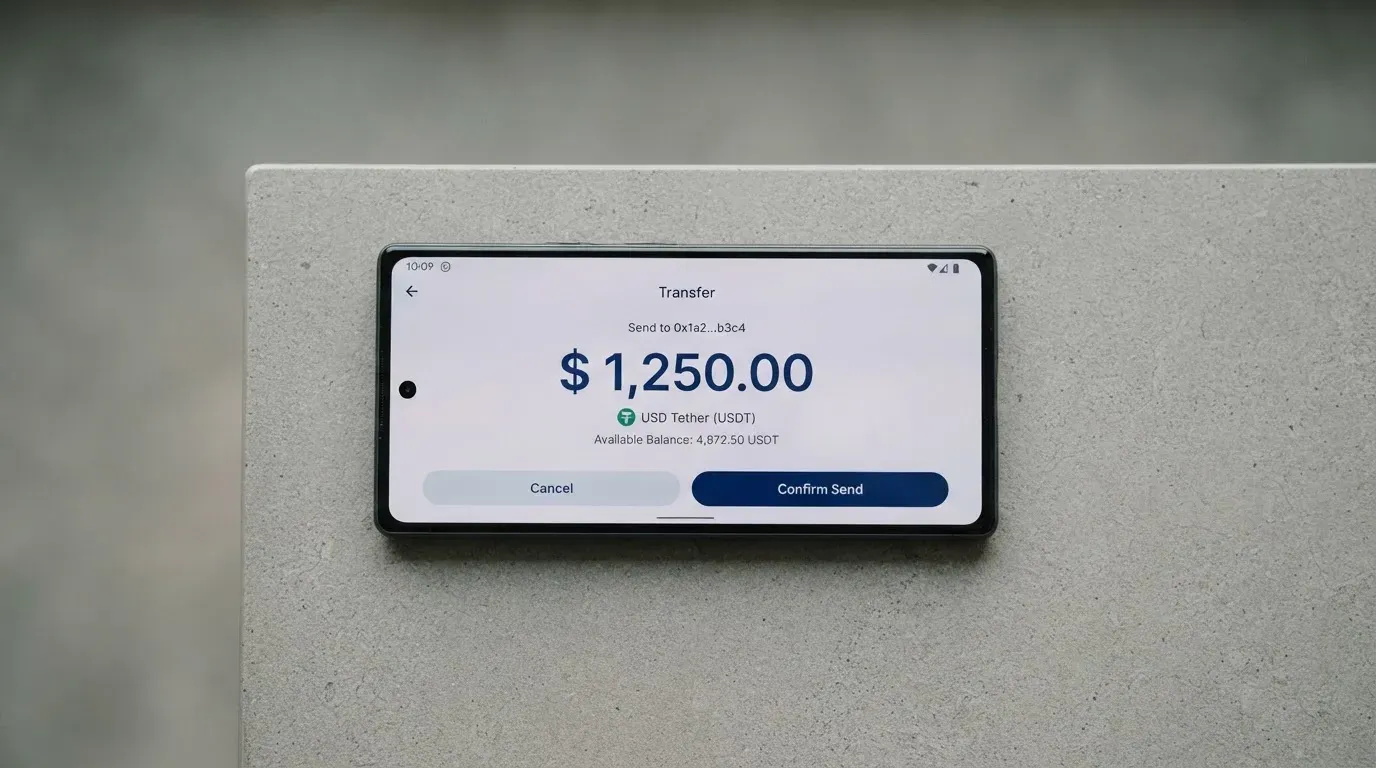
DeCard is a credit line. The DCS assigns you a limit; you spend against it; you owe the balance; and crypto is one of the ways you repay. The D-Vault page offers “Pay to card” with USDT and USDC. The networks those tokens should be sent on are not stated — a third-party aggregator mentions Polygon, but that is not from the card, and I would not treat it as instruction. The repayment fee and minimum are not stated.
If the full Outstanding Balance is not paid by the Due Date, late payment charges and interest apply, with the rates again in the website FAQ rather than the terms. On termination — through DeCard Live Chat or the app — the card is not closable within 90 days of issuance unless agreed, an early-termination fee is possible within 180 days of approval, and on closure the annual fee and other fees are not refunded while any outstanding liabilities must be repaid immediately. An inactivity fee can bite after 90 days without transactions.
Two practical warnings before you plan around “paying with USDT”. Blockchain transfers are irreversible: a deposit sent on a network the card does not support, or to an address belonging to a different network, can be lost or need manual recovery with no guarantee. And if the wallet you repay from holds USDT but no ETH on an Ethereum network, you cannot send at all — gas is paid only in ETH. Tether also states it disables tokens in wallets on the OFAC sanctions list and has frozen funds tied to illicit activity, so stablecoins are not censorship-proof. Check the supported network on the card’s own page at the time you send; that is the one fact here that I would not do without.
Paying with it every day
In the ordinary sense, this is a competent card. You get a physical metal Visa and a virtual Visa, an SGD account, an iOS app listed as “DCS DeCard” and an Android app, and a membership package that includes cashback, lounge access and travel cover. Visa acceptance is the ordinary global kind.
The rewards are specific, and I would read them carefully. Cashback goes “up to 10%”, capped at up to US$200 per month, plus 1 DePoint per US$1 spent. The payout currency is not stated. The package also includes two DragonPass lounge visits and travel accident cover up to US$1,000,000. Compare that with the membership structure: a single tier, DeCard Luminaries, with the metal card valued at US$100 and included with the US$388 fee.
Two gaps in daily use are worth naming. Apple Pay and Google Pay are not disclosed — the card does not say whether either is supported, and for most people that decides whether a card gets used daily or sits in a drawer. And blocked merchant categories are not stated; some issuers block gambling and similar categories by policy, and the blocked list varies by issuer, so if that matters to you it is unresolved here.
On disputes, the terms tell you to raise a problem with the merchant directly and not withhold payment. Charges unresolved by the statement date do not qualify for promotions. No chargeback time frames are stated, and the contract is on Singapore law and Singapore courts.
One more thing that catches people: some merchants decline prepaid or foreign-issued cards, because the card’s BIN lookup reveals the type and country of issue and can trigger extra scrutiny when it does not match your billing address. Address verification is also generally unavailable for foreign-issued cards, which causes declines. If you are outside Singapore, expect occasional friction that has nothing to do with you.
What can go wrong
I searched for complaints about Decard and DCS Card Centre across the sources people actually use — Trustpilot, Reddit, news — and found no material on them at all. The results that came back were about unrelated sellers. So there are no complaint themes to report, and no official incident is stated by the card. I would not read that as a clean bill of health; it may simply mean the card is young or small enough that nobody has written about it yet. A quiet complaint history is neutral, not reassuring.
The real risks are structural. The homepage says DeCard is “Backed by regulated issuing infrastructure”, but the copyright is held by DCS Card Centre Pte. Ltd., “Powered by DCS Group”, with DCS SERV PTE. LTD. also listed — and the issuing bank and its licences are not named on the official pages I read. The terms state that they follow the Monetary Authority of Singapore E-Payments User Protection Guidelines, which is a real commitment; it is not the same as naming the entity whose name is on your statement and that stands behind your balance. For a credit card where you are borrowing, I would want to know the issuer before I paid a US$388 membership, and that information is not published.
The custody question, which usually dominates crypto card reviews, resolves unusually here — and that is a point in the card’s favour. Because the product is a credit line, your crypto is not sitting in a wallet the card controls while you shop; crypto is only a repayment rail. Liability for a lost or stolen card is limited, per the terms, only if you notify immediately and file a police report or statutory declaration. Transaction alerts with a notification threshold are provided. In-app freeze and insurance of funds are not stated.
Set against that, the terms’ own terms are heavy: an early-termination fee, an inactivity fee, interest after the Due Date, a credit limit the issuer may revise without notice, and a Foreign Exchange Conversion Charge that contradicts the marketing. A declined authorisation can also leave a hold on your funds for several days, in some cases up to seven.
What to take instead
Let me take you through the three I looked at, so you can see the shape of the choice rather than just a verdict. All three are virtual-first, crypto-collateralised products; the contrast with DeCard’s fixed annual fee is the main thing to hold on to.
| Decard | Sponge | Xplace | ether.fi | |
|---|---|---|---|---|
| Score | 4.8 / 10 | 4.9 / 10 | 7.7 / 10 | 6.7 / 10 |
| Model | Credit line, US$388/yr, crypto repays | Credit card issued by Rain, crypto moves to card | Cash mode spends stablecoin balance; Credit mode borrows against holdings | Credit mode uses collateral in a Safe; Direct Pay spends balance |
| Annual fee | US$388, no waiver | Not stated | Basic free, Silver $99, Gold $249, Platinum $999 per year | Not stated; first virtual card $10 in some regional-pricing countries, core members normally one free |
| FX | 0% claimed, charge in terms | Not stated | 0% FX on Platinum; other tiers not stated; “no hidden spread” on stablecoin spend | 0.5% Core, 0.25% Luxe, none Pinnacle/VIP; 0% on EUR purchases |
| Rewards | Cashback up to 10%, cap up to US$200/month, lounge visits, travel cover | Not stated | Credit-mode cashback 0.5% to 2% by tier, paid in USDC | Cashback in ETHFI, 3% up to a tier cap, then lower steps |
| Where | Countries not stated | Not stated | Visa accepted in 160+ countries; “not available in all jurisdictions” | Listed jurisdictions only; 31 US states; Belgium and Ireland without physical delivery |
Sponge scored 4.9, effectively tied with DeCard. It is a virtual card issued by Rain, a Visa Principal Member, created through the Sponge platform; USDC collateral moves from the Sponge wallet with a card-funding action, on networks that appear to be Base with Solana as an option in the SDK. Nearly everything else — country list, fee, rewards — is not stated. Its virtue is simplicity and no annual fee narrative; its drawback is that I could not verify much about it.
Xplace scored 7.7, the highest here, and the clearest upgrade if your priority is a clean, tiered fee schedule rather than a metal object. Visa accepted in 160+ countries; virtual card instant, physical Silver available, Gold and Platinum coming with seven-to-fourteen-business-day delivery. Deposits in BTC, ETH, SOL, JitoSOL, USDC, USDT and xStocks on Solana. Credit-mode cashback from 0.5% on Basic to 2% on Platinum, paid in USDC to the wallet at settlement, with no origination fee on borrowing. The catch is the country caveat — services are not available in all jurisdictions — and that its Cash-mode rewards are not stated.
ether.fi scored 6.7. The most transparent about who can get it, listing a long set of jurisdictions plus 31 US states, with Belgium and Ireland eligible without physical delivery, and stating plainly that if your jurisdiction is not listed you cannot apply. Deposits go to your own Safe as collateral. Rewards are paid in ETHFI, locked seven days then claimable, on tiered ladders up to $50,000 for Pinnacle. Its FX fee is the clearest of the four.
My own read: if you want a premium metal card repaid in USDT, DeCard is what you are looking at. If you want a cheaper way to spend crypto, Xplace or ether.fi are cheaper and, in the ways that matter day to day, more transparent about their fees.
Who I would recommend it to
I would recommend the Decard card to a specific person: someone in or reachable from Singapore who is comfortable with a fixed US$388-a-year membership, values a heavy metal card and the lounge and travel-cover benefits that come with it, and already holds the stablecoins to repay a credit line rather than intending to top up a balance. For that person it is a genuinely pleasant object with real perks, and the 7s in my table are not charity.
I would not recommend it to someone who wants a cheap everyday card, to anyone who needs to know exactly what a foreign purchase will cost them, to anyone planning to draw cash abroad, or to anyone outside Singapore reading the card’s silence on country availability as a green light. If you fall in that last group — and if your difficulty getting a normal bank card is why you are here — then the absence of a published country list and issuer name is not a small thing. It is the information you would need most, and it is the information the card does not give you.
Check three things yourself before you commit, in this order: the current cash advance rate and the foreign exchange conversion charge, both of which live in the website FAQ rather than the terms; whether Apple Pay is supported, which decides daily use; and whether the cashback percentage is a genuine 10% or a capped figure you will rarely reach. If those three answers satisfy you, the card is probably fine. If they do not, the US$388 is the most you would ever lose by walking away.
Frequently asked questions
What is Decard card?
Decard is a Singapore-based Visa credit card sold as a single premium membership called DeCard Luminaries. It is not a prepaid card and not a wallet card: DCS assigns you a credit limit, you spend against it, and crypto — USDT or USDC through the D-Vault “Pay to card” page — is one way to repay the balance. The card account is denominated in SGD.
How does the Decard card work?
You apply, are reviewed, and on approval receive a virtual card that activates once you pay the annual fee, plus a physical metal card sent after that payment. You then spend up to a credit limit DCS sets at its own discretion. The balance is repaid by the Due Date, with late payment charges and interest applying otherwise. Cryptocurrency repays the debt; it does not load the card.
Is Decard a bank?
Not as far as its own pages state. The copyright is held by DCS Card Centre Pte. Ltd., “Powered by DCS Group”, with DCS SERV PTE. LTD. also listed, and the homepage says the product is “Backed by regulated issuing infrastructure”. The issuing bank and its licences are not named on the official pages, and the terms follow the Monetary Authority of Singapore E-Payments User Protection Guidelines.
Who owns Decard?
The legal entities behind the brand are Singapore-based: DCS Card Centre Pte. Ltd. appears in the site’s copyright, with DCS SERV PTE. LTD. also listed and the site describing itself as “Powered by DCS Group”. The individual owners behind those companies are not disclosed on the site, and neither is the issuing bank whose name would appear on a card network record.
Can I use the Decard card in my country?
The card’s public pages do not state a country list at all, which is the honest answer and an unhelpful one. Age eligibility is 21 to 65 with no minimum income, and access is by invitation or application subject to review. Visa acceptance means that wherever a physical or virtual Visa is accepted, the card should work — but whether you can obtain one from where you live is simply not published.
How do I get and activate the Decard card?
You apply with Singpass if you are a Singapore citizen or permanent resident, or by uploading identity and proof-of-address documents such as a passport otherwise. Applications are reviewed before approval. Once approved, your virtual card is issued and activates when the annual fee is paid, and the physical metal card is posted after that payment. Delivery time, delivery cost and countries are not stated.
Does the Decard card require KYC?
Yes. Identification and a check are part of the application: Singapore citizens and permanent residents verify through Singpass, and everyone else uploads identity and proof-of-address documents. This is standard for regulated financial services, which are required to verify customers and screen for sanctions as part of anti-money-laundering law, and it continues after signup rather than ending at approval.
How do I top up the Decard card?
You do not top it up, because it is a credit line with no stored balance to load. You repay what you have borrowed, and USDT and USDC are available for that through the “Pay to card” option on the D-Vault page. The supported networks, the repayment fee and the minimum repayment are not stated, so confirm the network on the card’s own page before sending, since transfers are irreversible.
Is the Decard card safe and is it worth $388?
On safety, the model is more conservative than most crypto cards because your coins are not parked in the card’s wallet while you shop, and the terms follow MAS E-Payments User Protection Guidelines; lost-card liability is limited if you notify immediately and file a police report. On worth, the fee cannot be waived, includes a metal card, and the cashback is capped at up to US$200 a month with rewards and fees partly unstated — so it is worth it for a specific buyer, not a general one.
What happens if I close my Decard account?
Termination runs through DeCard Live Chat or the app, and the card cannot be closed within 90 days of issuance unless the company agrees. An early-termination fee can apply within 180 days of approval, and on closure the annual fee and other fees are not refunded while any outstanding balance must be repaid immediately. An inactivity fee can also apply after 90 days without transactions.
Credit and cashback card verdicts – cryptocardverdict
Content created by the «cryptocardverdict» team