
Bitypay, reviewed: a USDC-funded Visa Infinite card with sharp costs and a thin public record
 Available in US

Bitypay is a card you load with USDC and then spend like an ordinary Visa card — the sort of thing that solves a real problem for someone who cannot get a normal bank card, or who would rather not keep a fiat balance sitting in a current account. That is the pitch, and on the strength of what I could verify it is a plausible one. But I have to be honest with you before we go further: the card’s own public pages did not answer most of the questions a careful reader would ask. Countries of issuance, the exact fee schedule, the verification steps, delivery times — the card’s public pages do not state them. What I have below, marked clearly, comes from third-party listings and has not been confirmed by Bitypay. If your decision depends on one of those numbers, you have to ask the company before you commit money.
On the balance of what is known, the card scores 7.4 out of 10. That is a good mark for a product built around a single, well-understood asset — USDC — and a poor mark for transparency. The costs are the strongest part of the picture; the documentation is the weakest.
The conditions described here are current as of October 28, 2026.
Verdict: 7.4 out of 10, and who that suits
Here is where I landed, criterion by criterion, with the marks exactly as I scored them:
| Criterion | Mark | Why |
|---|---|---|
| Who can get it | 6 / 10 | Countries of issuance are not disclosed and the official site was unavailable; unofficially, full “Level 4” verification and one Reddit comment says access depends on citizenship |
| Cost | 9 / 10 | Unofficially, issuance and the monthly fee are free, FX and ATM free, USDC top-up 0 %; the same page calls transaction and maintenance fees “not publicly disclosed” |
| Top-up options | 7 / 10 | USDC as collateral in a self-custody wallet on Base or Arbitrum; unofficially, USDC and USDT |
| Reliability and complaints | 6 / 10 | Brand belongs to Codego Group, issuer and licences unnamed, official site returned 403; unofficially self-custody; no complaints found about this card |
| Everyday use | 9 / 10 | Unofficially Visa Infinite, virtual and physical, Apple Pay and Google Pay, contactless, ATM without a fee |
Total: 7.4 / 10.
Who this suits: someone who already holds USDC, wants a Visa Infinite card, and would rather spend directly from a self-custody wallet than convert into a bank balance first. If that is you, the value proposition is straightforward — you spend from crypto across Visa’s rails with no manual conversion step.
Who it does not suit: anyone who needs to know, before applying, exactly which countries can get the card, exactly what a declined transaction costs, or exactly how long verification takes. Those answers are not on the public pages. If you are deciding on a card that will become your only means of paying, the gaps matter more than the fee marks.
There is also a structural point worth understanding before the details, because it explains why so much is missing. A crypto card is rarely issued by the crypto brand itself. The card network — Visa here — sets the rules and licenses issuers; a bank or licensed electronic money institution holds the card programme; the crypto brand is often just the programme manager and the front end that markets it. Visa and Mastercard do not issue crypto cards to consumers directly, and they can suspend a programme. So “Bitypay” may be the name you meet at the shop counter, while the entity on your statement, and the licence that makes it legal, is someone else’s. That is not a criticism; it is how the industry is built. But it does mean the absence of an issuer name and a licence on a public page is not reassuring in the way a missing “about us” paragraph would be. It is the single most important thing I could not verify.
Will they give you the card?
Short answer: I cannot tell you, because the card’s public pages do not say. Countries of issuance are not stated. That is the honest finding, and I am not going to paper over it with guesses.
What is unofficially on record — from a third-party listing, not confirmed by Bitypay — is that verification is described as full “Level 4”: email, phone, identity document, proof of address and a selfie. If that is accurate, expect a document-heavy sign-up, not a light one.
“Level 4” is worth pausing on, because KYC levels are not a single global standard; they are internal labels. The listing cites only that one level, and the card itself does not publish a ladder of its own. Treat the label as a description of thoroughness rather than a comparable score you can weigh against another provider’s “Level 3”.
One more thing you will have heard if you went looking: a single Reddit comment reportedly says whether the card is usable to you depends on your citizenship and the regulatory gating around it. I did not read that thread; it is an anecdote, and one is worth very little. But it is consistent with something structural. Nationality is recorded and screened separately from residence, because sanctions screening and issuer risk policy often apply to citizenship and country of birth, not just to your address. So a card can be available to residents of a country and still refuse applicants on the basis of the passport they hold. If your situation is not straightforward — dual citizenship, a passport from one place and residence in another — that is exactly the question to ask before you send a document.
- Prepaid and debit cards are generally available to adults (18+); some issuers set higher minimums, and Bitypay’s public pages state none.
- Proof of address appears in the unofficial verification list, so have a utility bill or bank statement ready even if you are not sure it is required.
- If due diligence cannot be completed, EU rules require the institution to decline the relationship, and where necessary end existing ones. That is why accounts are closed or frozen pending documents, and it is normal, not a judgement on you.
How to get it
The card’s public pages do not set out an application procedure — no steps, no documents, no timeline. So the honest answer is: I cannot walk you through a flow I could not read. What I can give you is the shape of what to expect, and the questions worth asking before you start.
The unofficial picture is that this is a digital-first product: a virtual card alongside a physical one. If that is right, the virtual card is presumably the one you can get earliest, since it needs no courier, and the physical card arrives later. Do not build a plan around that until you have it in writing from the company.
Three things to establish before you send anything:
- Which countries the card is actually issued in, and whether that list depends on your nationality rather than your address.
- What verification actually consists of, and what happens to your documents afterwards.
- How long the physical card takes, and what it costs to have it couriered. Delivery time is not stated, and delivery cost is not stated.
If you are in the EU, there is a background point that applies to any provider you are considering. Customer due diligence there covers name, address, date of birth, nationality and identity documentation, a sanctions check, the purpose of the relationship, and whether you are a politically exposed person. That is a floor, not a Bitypay-specific promise. In the US, the customer identification programme requires name, date of birth, address and an identification number, and electronic systems also validate proof-of-address documents against records. Either way, expect to prove who you are, and expect it to be checked rather than merely collected.
Fees: what it really costs
The headline costs look excellent — unofficially, issuance free, monthly fee free, FX free, ATM free, and a 0 % deposit fee on USDC. But the same third-party listing that lists those as free also says transaction and maintenance fees are “not publicly disclosed”. I want to be honest about what that means: the listing contradicts itself, and I have not resolved it. Treat the free figures as promising, not as confirmed.
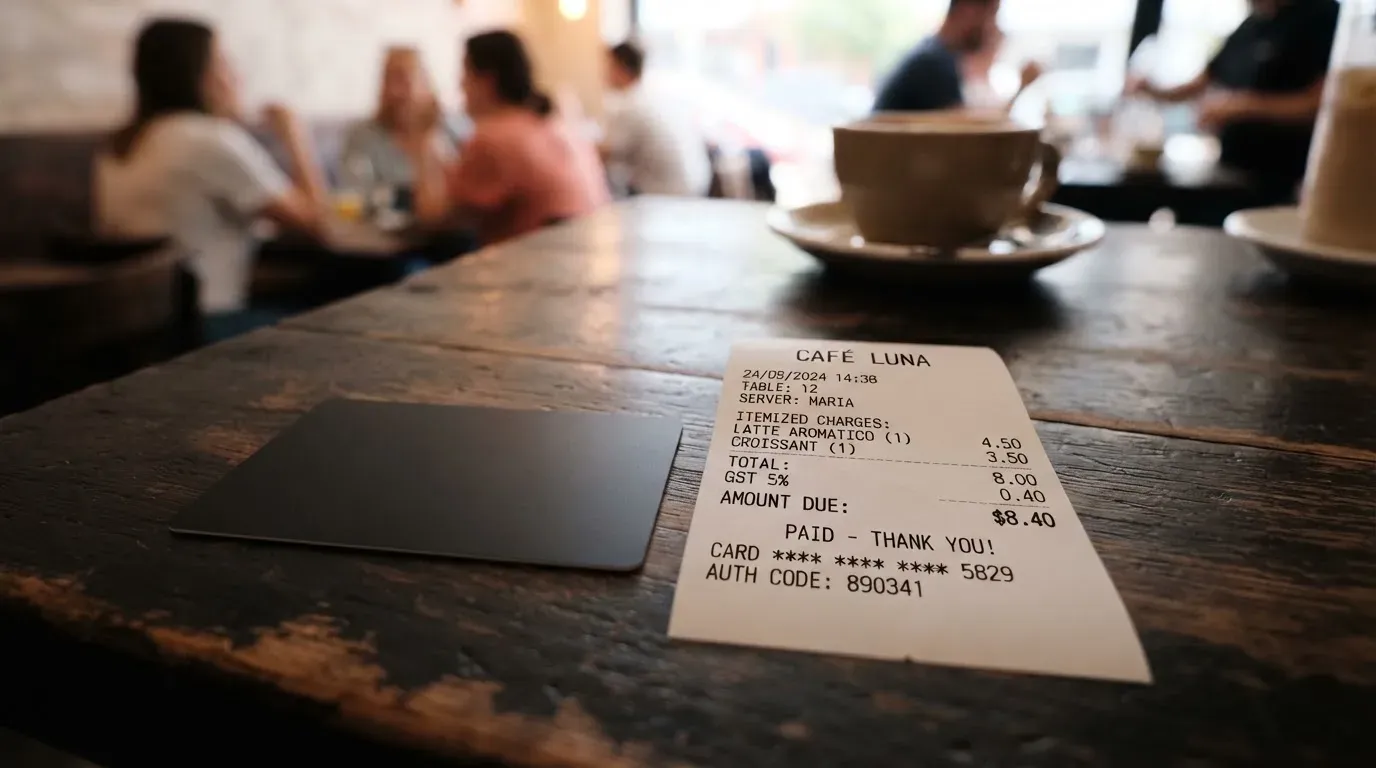
Here is the full picture as I could assemble it, with every “not stated” marked:
| Fee or limit | Value | Source status |
|---|---|---|
| Issuance | Free | Unofficially listed as free |
| Monthly fee | Free | Unofficially listed as free |
| Conversion | Not stated on the public pages | — |
| FX fee | Free | Unofficially listed as free; the same listing is internally inconsistent on fees |
| Decline fee | Free | Unofficially listed as free; inconsistent with the same listing |
| ATM fee | Free | Unofficially listed as free |
| Daily spend limit | Unlimited | Unofficially listed as unlimited |
| Monthly spend limit | Unlimited | Unofficially listed as unlimited |
| ATM withdrawals | Unlimited | Unofficially listed as unlimited |
| USDC top-up | 0 % | Unofficially listed as 0 % |
| Tiers | Not stated | — |
| Card currency | Not stated | — |
Now let me walk you through three ordinary payments, because abstract fee tables hide more than they show.
A coffee in your own country. If the fee figures hold, you pay the price on the cup and nothing else — no conversion, no monthly charge, no per-transaction fee. This is the case the free entries are built for, and the one that makes the 9/10 cost mark defensible. The caveat is that “no additional fees” and “not publicly disclosed” appear in the same breath in the listing I read. If a decline fee or a small per-transaction charge does exist, a coffee is where you would meet it, because that is where you tap most often.
A purchase in another currency, in the local currency. Unofficially the FX fee is listed as free, which would make this card unusual among cards aimed at people who travel or buy from foreign merchants. But there is a category-level trap here that no fee table removes. The merchant’s terminal asks Visa for a conversion rate, and the rate Visa passes back already contains a markup. A “0 % FX fee” means the card adds nothing on top; it does not mean you receive the mid-market rate. That difference is invisible in a fee table and visible in your statement. If you spend abroad often, compare the rate you are actually getting against the mid-market rate on the day, not against a fee column.
A deposit, in USDC on Base or Arbitrum. Unofficially 0 % on the deposit itself. But the network charges its own fee, and that fee comes from the blockchain, not from the card provider — on Ethereum you would need ETH in the wallet to pay gas at all, since gas is paid only in ETH. On Base or Arbitrum the cost is far lower, but it is not zero. So “free top-up” means the card takes no cut, not that moving money costs nothing.
One more category fact worth keeping in view, because it can look like a card fee and is not: a declined authorisation may leave a hold on your funds that can remain for several days, up to about seven. Money you did not spend can be unavailable for a week. That is a property of card networks, not of Bitypay.
Top up: how the money gets in
The mechanism is the part of this card I find most interesting, and the part that is actually stated rather than inferred. USDC is held as collateral in a self-custody wallet on Base or Arbitrum, and spending happens across Visa rails with no manual conversion step. In other words, the USDC never becomes a bank balance you manage; it stays where it is, and the card draws against it as you pay.
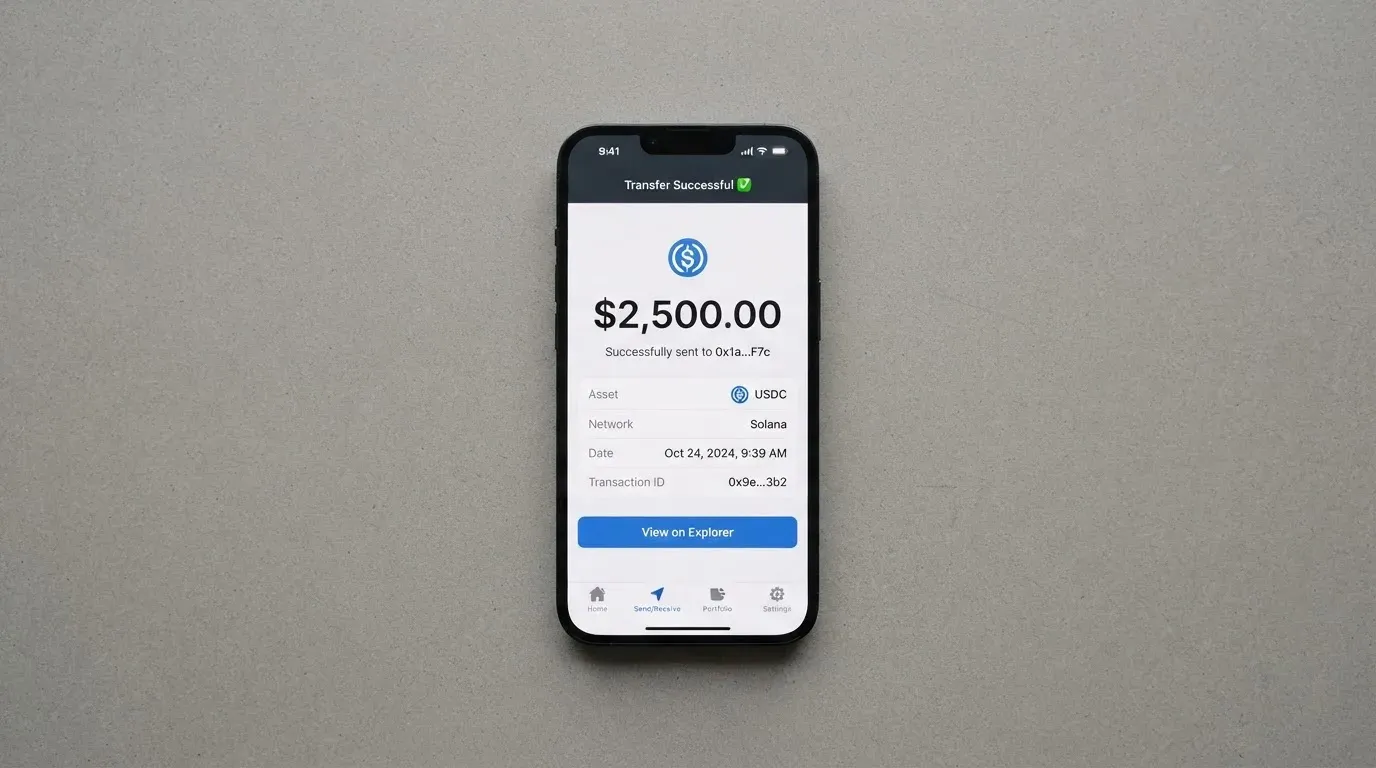
Unofficially, USDT is supported alongside USDC, and the deposit fee on USDC is 0 %. That is a narrower funding story than some rivals offer, and it has a specific consequence: you need the asset, on the right network, before you can spend anything. There is no documented bank transfer route and no way to load from a card balance, because the card’s public pages state no top-up method other than the crypto one.
Getting this right matters more than it usually does with crypto, because of how transfers work. Blockchain transfers are irreversible. A deposit sent on a network the provider does not support, or sent to an address belonging to a different network, can be lost or need manual recovery with no guarantee. There is no customer-service desk that can reverse a misrouted transfer. Before your first deposit, confirm two things: the network, and the address. Get either wrong and the money may simply be gone.
- Send only on Base or Arbitrum unless the company confirms otherwise.
- USDC is supported on many networks natively, but that does not mean this card accepts all of them. A stablecoin being available on a chain and a card accepting that chain are two different facts.
- Keep a little native gas token on the network you use, so the transfer can actually execute.
- If you hold USDT, note it exists on chains including Ethereum, Tron, Solana, Polygon and Avalanche — again, availability on a chain is not acceptance by the card.
A related point on custody: with a self-custody-linked card the funds stay in your own wallet until the moment of payment, and you bear sole responsibility for key loss, for phishing, and for clipboard-hijacking malware that silently replaces a copied address. Nobody can restore a seed phrase for you. A seed phrase is typically 12 to 24 words in an unencrypted form of your private key; anyone who obtains it can restore the wallet and spend the funds, and a stolen key has no built-in recovery.
Paying with it every day
Unofficially, this is a Visa Infinite card, available virtual and physical, supporting Apple Pay and Google Pay, with contactless payments, and with no ATM fee.
If that holds, the everyday experience is a normal one: tap at the terminal, pay with the phone, use it wherever Visa is accepted. That is where the 9/10 everyday mark comes from — the friction people complain about with crypto cards is usually the wallet, the network or the merchant, not the tap.
There is one benefit attached, also unofficial: free access to over 1,300 airport lounges, which is a Visa Infinite hallmark rather than something specific to this card. No cashback, staking, welcome bonus or referral bonus is listed. I would not build a case for the card around rewards; there are none.
What is not stated anywhere I could read: the card currency, the support channels, what happens with a disputed transaction, and what the app looks like. For a card you may be leaning on as your main way of paying, the absence of a stated dispute process is worth a question. A chargeback is a refund ordered by the issuer, with reason codes such as fraud, duplicate billing or goods not received — but who performs it here, and under which rules, is exactly what is missing.
Three practical things that affect whether a tap succeeds, whichever card you hold:
- A merchant category code is a four-digit number classifying the business, set when it starts accepting cards. Gambling sits under MCC 7995, and many issuers block that category on specific cards by policy rather than by law. Blocked lists differ by issuer, so what works on one card tells you nothing about the next.
- Address Verification compares the numeric parts of the billing address you type against issuer records. It is mainly offered in the US, Canada and the UK, and it is generally unavailable for foreign-issued cards — which causes declines. If you are outside those markets, a shop that works with local cards may reject a foreign one at the address-check step.
- Some merchants decline prepaid or foreign card numbers outright, because the lookup reveals the card type and the issuing country. The first six or eight digits of a card number identify the institution and can be checked by the merchant in milliseconds, and an issuer country that differs from your billing address invites extra scrutiny. This is the single most common reason a crypto card works at one shop and not another.
What can go wrong
I found no complaints specific to this card. Searches return the unrelated legacy BitPay, a different company — worth knowing, because the names are close enough to produce a lot of wrong reading. There is no Trustpilot page for Bitypay that I could find, and no complaints about this card; the absence of complaints is not the same as evidence of a good record, since a young product with few users produces few complaints either way.
The real risks are structural, and I would rather name them plainly than reassure you.
Nobody will tell you who the issuer is. The brand belongs to Codego Group, but the issuer and the licences are not stated. For a card that holds real spending power, an unlicensed or unclear issuer is not a detail. In the EU, an electronic money institution can issue e-money and payment cards but cannot lend, and it must safeguard customer funds in dedicated accounts or by insuring them — and those safeguarded funds are not bank deposits, so a deposit guarantee scheme may not cover them. If the licence is not visible to you, you cannot know which regime your money sits under.
A programme can be wound down. Visa and Mastercard can suspend a card programme, and they have. In November 2022 Visa said it had terminated its global agreements with FTX and the FTX US debit card was wound down by its issuer. In 2018 WaveCrest, a Visa issuer that supplied crypto card brands, was suspended in Europe, closing all WaveCrest-issued Visa programmes. The pattern of a closure is usually orderly but not gentle: a notice period, then loading and spending stop, then users are asked to withdraw what remains. If a card holds your only spending balance, that is the risk to plan for.
Self-custody is your problem, not theirs. The unofficial description is that you keep your private keys. That removes counterparty risk — the category has a grim record here, with Mt. Gox, Coincheck and Ronin Network all losing large sums — but it replaces it with your own operational risk of losing keys, falling for phishing, or having an address swapped by malware on your clipboard.
Your country and your citizenship both matter. Country of issuance is not stated, and nationality is screened separately from residence. This is the point where a hopeful application quietly ends.
Top-ups can be lost in transit. Transfers are irreversible, and a deposit on the wrong network may be unrecoverable. Stablecoins are also not censorship-proof: Tether states it disables tokens in wallets on the OFAC sanctions list and has frozen funds tied to illicit activity.
Fee uncertainty is itself a risk. An undisclosed transaction or decline fee is a fee you cannot budget for, and on a card meant for daily use that is worth pressing on.
| Risk | How it would show up | What to do about it |
|---|---|---|
| Unclear issuer and licence | Funds safeguarded under rules you cannot identify | Ask which entity issues the card and under which licence, before depositing |
| Programme shutdown | Loading and spending stop; balance becomes stranded | Do not hold your last money on the card; keep a withdrawal route |
| Lost keys or phishing | Transfer gone, no recovery available | Use a hardware wallet; never type a seed phrase into a site |
| Wrong-network deposit | Balance credited to an address nobody controls | Confirm network and address from a source inside the app, not from an email |
| Citizenship gating | Application refused after documents are sent | Ask about nationality rules in writing before uploading a passport |
| Undisclosed fees | Small charges appearing at month end | Get the current fee schedule in writing |
What to take instead
If the gaps in Bitypay’s documentation are the deciding factor, three cards with published information are worth comparing. I have scored them on the same basis, and none of them is clearly better than Bitypay on price — they are better on being able to read the terms.
| Card | Score | Card type | Cost you can read | Funding |
|---|---|---|---|---|
| Bitypay | 7.4 / 10 | Visa Infinite, virtual and physical (unofficial) | Issuance and monthly free; FX and ATM free (unofficial); other fees undisclosed | USDC as collateral, self-custody, Base or Arbitrum |
| MetaMask | 7.1 / 10 | Mastercard, virtual then metal | Virtual free, no annual or maintenance fee; Metal $199/year | Directly from the connected wallet |
| KAST | 6.1 / 10 | Visa Platinum, Infinite metal or Infinite gold, virtual and physical | Standard $0/year; Premium $1,000/year; Private $10,000/year | Stablecoin deposits, 0 % |
| TokenPocket | 5.8 / 10 | Visa or Mastercard debit depending on region | NFT creation fee partly covered; 1 % on crypto deposits | Deposits from the TokenPocket wallet |
MetaMask Card is the nearest comparison on price: the virtual card is free with no annual or maintenance fee, while the metal card is $199/year. Sign-up is open in 45 listed countries and territories, proof of residency is required, and other regions join a waitlist; citizenship rules are not stated, and US and UK sign-ups were temporarily closed. It is Mastercard, virtual first, then metal, one card per user, and it spends directly from the connected wallet across Linea, Base, Monad and Solana. Its fees are described as minimal with no additional MetaMask fees and no foreign transaction fee, though the amount is not stated on the pages I read. Its rewards are the strongest of this group: cashback in mUSD, 1 % on virtual and a headline 3 % on metal, though a footnote caps the 3 % at the first $10,000 spent.
KAST publishes the most complete fee and limit schedule of the three. Membership is $0, $1,000 or $10,000 a year, billed annually with no monthly option; extra virtual cards are $2; a Standard physical card is $0 plus $40 delivery; an inactivity fee of $1/month starts after 12 months. Fees: stablecoin top-up 0 %, card spend in USD 0 %, transaction fee 0 %, Apple and Google Pay 0 %, non-USD FX between 0.5 % and 1.75 % depending on residence country, transaction country and card programme, $0.10 on non-USD transactions under $25, and $0.50 for a declined transaction on insufficient balance. Cashback is 1.5 % to 3 % depending on tier, capped monthly. What holds it back is eligibility: the country list is not published, and there are citizenship rules — holding an ID from a restricted region can make you ineligible even if you live in a supported country, and a VPN does not help. Its token list also conflicts with its own terms, which say acceptable tokens are “currently USDT and USDC” while the app shows PYUSD and RLUSD.
TokenPocket is the cheapest-looking and the least transparent on country. It issues Visa debit for a list of European countries and territories, Mastercard debit for Australia, Canada, Hong Kong, Japan, Taiwan, New Zealand, Singapore, South Korea and the UK, with the Americas planned; Fiat24 cards are virtual. The 1 % deposit fee is refunded later through rewards or reduced transaction fees, which is a promise about the future rather than a present saving.
My own ordering: MetaMask if you want the cheapest published card, KAST if you want the clearest published numbers, Bitypay if you specifically want USDC on Base or Arbitrum drawn from your own wallet with a Visa Infinite card.
Who I would recommend it to
I would recommend Bitypay to someone in this position: you already hold USDC, you want a Visa Infinite card, you are comfortable with a self-custody wallet and you would rather spend from that wallet than hold a fiat balance with a bank. For that person the design is sound — collateral stays where it is, spending goes across Visa’s rails, and there is no manual conversion step to forget.
I would not recommend it as your only card, and I would not recommend it as your first crypto card, for reasons that have nothing to do with whether the product works. The card does not publish its countries of issuance, its verification procedure, its fee schedule, its card currency or its dispute process. Those are not exotic details; they are the things you need in order to use a card without surprises. A competitor that publishes all of them is more useful to you even at a worse price.
So: proceed, but only after you get straight answers. Ask which entity issues the card and under which licence; ask the full fee schedule in writing, including declines; ask which countries are supported and whether nationality changes the answer; ask how long verification takes and how long the physical card is delivered. If the answers come back clearly, this is a 7.4-out-of-10 card with a genuinely attractive cost profile. If they come back vague, you have your answer too.
One last thing to carry with you. If your crypto leaves your wallet and becomes a purchase, that is generally a taxable disposal: digital assets are treated as property, the gain or loss is measured in your local currency at fair market value on the date of the transaction, and holding a year or less makes it short-term. So every card payment funded from crypto may be a separate disposal to report. I am not going to tell you what to do about that — it depends on your circumstances and your jurisdiction, and it is a question for a professional, not for a review.
Frequently asked questions
What is the Bitypay card?
Bitypay is presented as a Visa Infinite payment card funded by crypto rather than by a bank balance. Unofficially, it comes in virtual and physical form, supports Apple Pay and Google Pay, and contactless payments, with no ATM fee. Its defining feature is that USDC is held as collateral in a self-custody wallet on Base or Arbitrum, and purchases are drawn across Visa’s rails without a manual conversion step. None of those details come from Bitypay’s own pages, which state very little.
How does the Bitypay card work?
The described mechanism is that you keep USDC in your own wallet, and it sits there as collateral while the card spends against it. When you pay, the transaction travels over Visa’s network and the balance is drawn down, so the crypto never has to be converted into a bank account first. That is why it behaves like an ordinary card at the terminal even though the underlying asset is a stablecoin. It also means the usual crypto friction — wrong network, missing gas, unsupported coin — happens on the funding side, not at the point of sale.
Is Bitypay a bank?
No — it should not be treated as a bank, and there is no evidence it is one. The brand belongs to Codego Group, and the card’s public pages do not name the issuer or the licences. Cards like this are typically issued by a licensed bank or electronic money institution, with the crypto brand acting as programme manager and front end. If you hold a balance, the protections that apply to you depend on which licence the issuer holds, which is precisely what you cannot confirm from the public pages here.
Who owns Bitypay?
The brand is owned and operated by Codego Group. That much is on record from the card file and a third-party listing. Beyond the ownership of the brand, the details you would actually want — the entity that issues the card, the licence it issues under, and where customer funds are safeguarded — are not stated. Be careful when searching: there is an older, unrelated company called BitPay, and it dominates the results.
Is the Bitypay card available in my country?
I cannot tell you, and neither could I tell you from the card’s public pages: countries of issuance are not stated. Unofficially, the picture is complicated by nationality rather than residence alone, since a single Reddit comment reports that access depends on citizenship and regulatory gating. If you hold an unusual combination of residence and passport, ask the company directly and in writing before you upload any document. Getting this wrong wastes time and, more importantly, hands over personal data unnecessarily.
How much does the Bitypay card cost?
Unofficially, issuance is free, there is no monthly fee, the FX fee is free and ATM withdrawals carry no fee. The catch is that the same third-party listing also says transaction and maintenance fees are “not publicly disclosed”, which contradicts the rest of its own content. Daily, monthly and ATM limits are listed as unlimited, but again unofficially. My advice is to treat the free figures as encouraging rather than settled, and to ask for the current fee schedule — including decline fees — in writing.
How do I top up the Bitypay card?
The stated method is to hold USDC in a self-custody wallet on Base or Arbitrum, where it acts as collateral for the balance you spend. Unofficially, USDT is also supported and the USDC deposit fee is 0 %. Check the network carefully before your first transfer: blockchain sends are irreversible, and funds sent on an unsupported network or to the wrong address can be lost with no guarantee of recovery. Keep a little native gas token on the network you use, or the transfer may not execute at all.
Is the Bitypay card safe?
There are two separate questions here. Custody: unofficially, this is self-custody, so you hold the private keys and nobody can move your USDC — but key loss, phishing and clipboard malware become your responsibility, and there is no recovery for a stolen key. Counterparty: the issuer and its licence are not stated, and card programmes can be suspended, as happened with the FTX card in 2022 and with WaveCrest in Europe in 2018. Neither of those risks is unique to this card; both are reasons not to keep your last money on it.
Is the Bitypay card free?
Most of the listed costs are free, unofficially: issuance, the monthly fee, FX and ATM withdrawals, with a 0 % USDC top-up fee. What is not free, and not disclosed either, are any transaction or maintenance charges the provider may apply. Network fees also remain: the blockchain charges for your deposit, not the card company, and those are separate from anything Bitypay takes. On Ethereum you would need ETH to pay gas at all; on Base or Arbitrum the cost is much lower but not zero.
Is the Bitypay card worth it?
For someone already holding USDC who wants a Visa Infinite card drawn from their own wallet on Base or Arbitrum, the economics look strong: no issuance fee, no monthly fee, no ATM fee. Against that, the card publishes almost nothing about eligibility, verification, fees or disputes, so you are making a decision partly on faith. I scored it 7.4 out of 10 — a good product with thin documentation. Treat it as a useful second or spending card rather than your only one, and confirm the missing details before you deposit.
Wallet card verdicts – cryptocardverdict
Content created by the «cryptocardverdict» team