
Binance Card: A Brazil-First Crypto Card That Leaves Most of the World Out
 Available in US
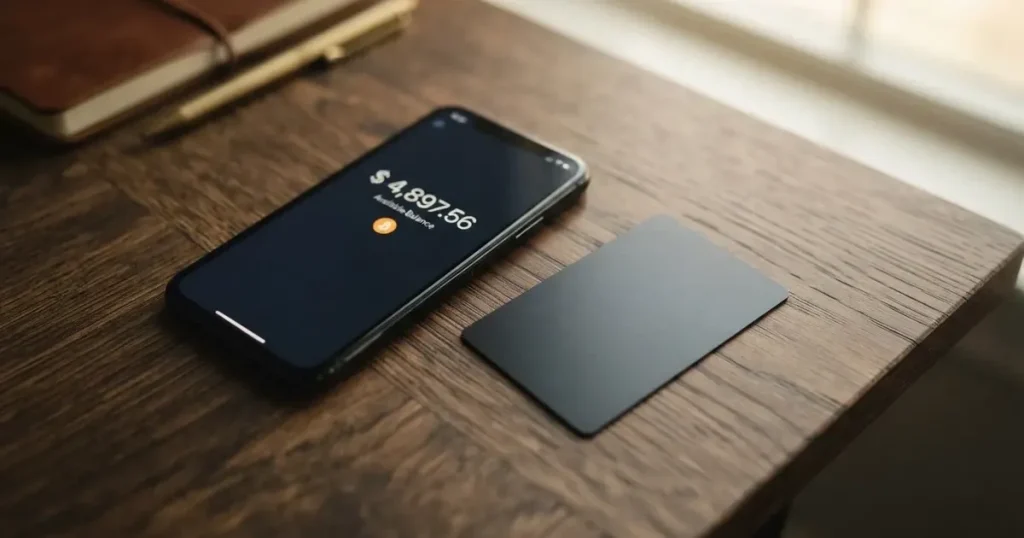
The Binance card is a prepaid Mastercard that converts your crypto balance into a real-world payment at the till. It is fast at point of sale, but its geographic reach has shrunk sharply since 2023, and a lot of the headline numbers (fees, cashback tiers, even the issuer) sit in unofficial third-party write-ups rather than on Binance’s own pages. That gap between what the card promises and what the public terms confirm is the story I want to walk you through.
The conditions described here are current as of October 28, 2026.
Verdict
Binance card scores 5.7 out of 10. That is a card I would recommend only to a narrow audience: Brazilian residents who already keep their crypto on Binance, are comfortable with the platform, and want a familiar prepaid Mastercard for everyday spending. For anyone outside Brazil the picture is much weaker.
| Criterion | Mark | Reason |
|---|---|---|
| Who can get it | 3/10 | Officially one country: Brazil. Support for the EEA and the UK ended in December 2023, and US residents have never been eligible. |
| Cost | 6/10 | Officially, conversion 0.9% and FX 1–2%. Unofficial sources add a 2% FX rate outside Brazil and BRL-priced ATM terms. |
| Top-up options | 7/10 | From a Binance Funding or Spot balance, with payment priority across 3 to 12 assets. |
| Reliability and complaints | 5/10 | The 2023 launch release names Dock as issuer; third-party sources now name Immersve and Pomelo. Trustpilot disabled Binance’s rating for fake reviews. |
| Everyday use | 9/10 | Virtual and physical cards, Apple Pay and Google Pay in Brazil, two free ATM withdrawals a month. |
The card is essentially a Brazil product now, and that single fact does most of the work in the score. If you live there, the experience is solid: a prepaid Mastercard that takes crypto at the till, free ATM withdrawals twice a month, and a 3% cashback tier once you spend more than 5,000 BRL a month. If you do not live in Brazil, you are either out of luck or relying on unofficial launch coverage that has not been kept up to date.
Who will they give you the card to
Officially, the answer is: Brazilian residents with a valid national ID. The 2023 launch press coverage stated the card was open to Binance users in Brazil with valid national ID, and that remains the only country the card’s own pages confirm.
Unofficial sources paint a wider but muddier picture. SpendNode, writing in August 2026, lists Brazil, Australia, New Zealand and Peru as verified, and notes that EEA and UK card support ended in December 2023, with the US never supported. CryptoCardHub, also from August 2026, lists Armenia, Brazil, Colombia, Mexico and Peru as available and most of Europe as restricted. You should treat these as unofficial: they are not confirmed by Binance, and the card’s own pages still describe a Brazil launch.
What this means for you in practice: if you are reading this from anywhere outside Brazil, your realistic path is thin. EEA and UK customers who already have a card are running on a programme that ended; new signups in those regions are not on offer. Australian and New Zealand readers may find the card workable if they had it before, but should not expect the same feature set as Brazilian cardholders.
The score for “who can get it” sits at 3 out of 10 for exactly this reason: the gap between the card’s global name recognition and its actual footprint is wide, and you should not sign up expecting worldwide service.
How to get it
In Brazil, the process that the unofficial sources describe (Kkinvesting in October 2026 and SpendNode in August 2026) is: provide a CPF, a photo ID and a selfie, complete KYC as required by the card issuer, then order the card inside the app. CryptoCardHub says a physical card arrives in about 14 days and a virtual card is instant. The official launch release for Brazil required a valid national ID; the card’s own pages do not currently state the full list of required documents, proof of address, age requirement, or step-by-step process. I would take “not stated” at face value and confirm in the app before you commit.
The card is described in the official launch coverage as a “prepaid crypto card” on the Mastercard network. Unofficial sources go further: CryptoCardHub and SpendNode describe it as a prepaid Mastercard, with a global programme that is virtual-only in USD, and a Brazilian programme that is virtual and physical in BRL. The official source does not break this down by region.
Identity checks are described generally by the card issuer: KYC with photos and documents is part of registration. Levels and turnaround times are not stated by the official pages, so do not assume a same-day approval. If you need a card urgently for travel, plan a buffer.
What it really costs
The card’s own pages are thin on detail. The launch release said BRL payments have zero fee and 0.9% applies to the crypto conversion on a crypto payment. The current public terms do not refresh those numbers, so anything more granular comes from third-party write-ups.
Here is the breakdown, mixing official and unofficial figures where Binance’s own pages are silent.
| Fee or limit | Amount | Source |
|---|---|---|
| Issuance | 0 (unofficial: Brazil physical first free with 10 USDT-equivalent balance, 30 BRL if cancelled in year one) | CryptoCardHub, Aug 2026 |
| Annual fee | 0 | CryptoCardHub, Aug 2026 |
| Monthly fee | 0 | CryptoCardHub, Aug 2026 |
| Crypto conversion | 0.9% (0.1% for USDC) | Kkinvesting, Oct 2026 |
| FX fee | 1–2% on non-BRL; 2% for Brazil and most countries; 3% New Zealand | Kkinvesting Oct 2026; CryptoCardHub Aug 2026; SpendNode Aug 2026 |
| ATM | 2 free withdrawals per month, then 1.50 each (unofficial) | SpendNode, Aug 2026 |
| Daily ATM limit | 3,000 BRL (Brazil); KYC1/2/3 up to 3,000/5,000/7,000 BRL | SpendNode; CryptoCardHub, Aug 2026 |
| Monthly ATM limit | 25,000/25,000/50,000 BRL by KYC level (Brazil) | CryptoCardHub, Aug 2026 |
| Daily spend (Brazil) | 25,000 BRL | CryptoCardHub, Aug 2026 |
| Monthly spend (Brazil) | 50,000/50,000/150,000 BRL by KYC level | CryptoCardHub, Aug 2026 |
| Yearly spend (Brazil) | 200,000/450,000/600,000 BRL by KYC level | CryptoCardHub, Aug 2026 |
The fees are not refunded, and refunds are paid in USDC according to SpendNode. That is a useful detail if you are budgeting: a refund of a 100 BRL coffee will not come back as 100 BRL of spendable balance.
What this looks like for three everyday payments. A coffee paid in BRL from a BRL balance: no conversion fee, no FX, free in the card’s own model. A coffee paid from a USDT balance at a BRL merchant: 0.9% conversion plus the FX rate (2% under most unofficial sources). A coffee paid abroad from a USDT balance: same 0.9% conversion, then 2% or 3% FX depending on country, plus whatever the merchant’s bank adds. None of these are ruinous, but stacking them up over a year of travel adds up.
A small thing worth checking before you sign up: whether your region still falls under the 2% FX rate or the 3% New Zealand rate. The 1–2% range in the launch press release is not the same as the 2–3% that current unofficial write-ups describe, and the card’s own pages do not resolve the conflict.
How to top it up
The card’s own pages do not state the top-up flow. According to CryptoCardHub and SpendNode (both August 2026), the card draws on a Binance Funding or Spot balance (in some versions of the product, Flexible Earn is also supported). The supported assets named in those sources are BNB, BTC, ETH, USDT, USDC, FDUSD, SOL, ADA, LTC, LINK and XRP. You can set a payment priority of 3 to 12 assets, so the card will pick the top of your list first and fall through to the rest if the chosen one runs low.
The mechanics of topping up in practice: you move funds from a token you hold on Binance into the Funding wallet (or Spot, depending on the flow), then the card draws from there at the point of sale. Because you are moving balances inside one platform, the on-chain network fees described in the wider crypto-card world do not apply here, but you still face the platform’s own trading or conversion spread if you swap between assets before loading.
A practical point: if you hold USDC specifically, the conversion fee drops to 0.1% (per Kkinvesting, October 2026), which is meaningfully cheaper than the 0.9% on the other assets. Worth knowing if you already use USDC as a parking stablecoin.
Paying with it every day
The card is prepaid, so you cannot overdraw. In Brazil, unofficial sources say you get a virtual and a physical Mastercard, plus Apple Pay and Google Pay support, and also tokenisation into Mercado Pago and 99Pay according to CryptoCardHub. Two free ATM withdrawals a month is the unofficial baseline, then 1.50 per additional withdrawal.
Cashback is where the card is more interesting than its global footprint suggests. The official rate is “up to 3%” and the official 2023 launch release mentioned “up to 8% crypto cashback”, which is outdated. The current unofficial tiering in Brazil (CryptoCardHub, August 2026) is: 1.5% under 500 BRL monthly spend, 2% for 500–4,999.99 BRL, 3% from 5,000 BRL upward, with a cap of 500 BRL per month, paid in BRL. Kkinvesting (October 2026) describes a USDC-paid tier system (T1 1.5%, T2 2% from $100, T3 3% from $1,000, credited by the 10th), and SpendNode says up to 3% in BNB for APAC/MEA/AU/NZ/Brazil, up to 2% for LATAM/CIS. The card’s own pages just say “up to 3%” and tell you to verify in the app. Verify in the app.
The Binance app itself scores 4.7 out of 5 on the App Store with 117.4K ratings, according to SpendNode in August 2026. That is the Binance app, not a card-specific rating, so it is a proxy for general platform stability rather than card experience.
Two practical things you should know before relying on the card for travel. The card is issued from a single BIN tied to its issuer country, and a merchant doing a BIN lookup will see “Brazil” even if you are paying in Berlin. Some merchants treat foreign-issued prepaid cards more cautiously. And unauthorised transactions are governed by the standard Binance support flow: contact Binance Support immediately with explanation, transaction records and receipts. Time frames for dispute resolution are not stated.
What can go wrong
The first thing to flag is the issuer. The 2023 Mastercard release excerpt names Dock as the issuer. Third-party write-ups from August 2026 name Immersve Limited (global programme, Mastercard Global Reach) and Pomelo Instituição de Pagamento Ltda (Brazil). Kkinvesting, October 2026, names Immersve Ltd (New Zealand) for the global card. The card’s own pages do not currently state the issuer. The pattern of issuer changes is itself the story: a card that started life with one issuer, then quietly migrated to others, and whose public pages do not reflect either fact.
The second thing is reputation. Trustpilot disabled Binance’s TrustScore after detecting fake reviews. Reclame Aqui, a Brazilian consumer complaint platform, has complaints about uncredited promotions, unauthorised charges and dispute handling (allegations, per CryptoCardHub, August 2026). Binance is not a bank, and your card balance is not covered by a deposit guarantee scheme; in the EU, an electronic money institution must safeguard customer funds, but the safeguard is segregation, not deposit insurance.
The third thing is the broader risk surface. Crypto transfers are irreversible. If you top up with the wrong network or wrong address, support can sometimes recover the funds but with no guarantee. Binance Terms note that the user is liable for credited amounts in case of chargeback, and that a chargeback can lead to suspension or restriction of the account. So the safer way to think of the card is: the platform controls your funds, the issuer can change, the dispute path is not quick, and the platform has had public trust problems.
The fourth thing is support. The cards page lists “24/7 Chat Support” and a Support Center link, but that is general Binance support. CryptoCardHub and SpendNode (both August 2026) say no card-specific support channel is listed. If your card stops working at an airport, you are routed into the same queue as someone with a trading question.
The fifth thing is regulatory. Binance’s ADGM entities (Nest Exchange Limited, Nest Clearing and Custody Limited, Nest Trading Limited) are listed in the Binance footer and are FSRA-regulated, but the card page does not say which entity serves the card programme. That matters because the regulator who can hear your complaint depends on which entity is named on the cardholder agreement, and that name is not in the public-facing material.
What to take instead
| Card | Score | Best for | Key trade-off |
|---|---|---|---|
| Coinbase Card | 6.4/10 | US residents (all states except Hawaii) | Spends USD only; crypto is converted to USD at purchase, so a spread applies |
| OKX | 6.2/10 | EEA plus Norway, excluding Iceland and Liechtenstein | Virtual Mastercard in euros; spend priority limited to USDC and USDG; other coins must be converted first |
| Young Card | 5.7/10 | Users who want token-based cashback | Cashback paid in YNG tokens; tier system (Essential 0.1%, Gold 1.8%, Platinum 3.6%) — Bronze and Silver not stated |
If you live in the US, the Coinbase Card is the more straightforward option. It is a Visa prepaid debit card, virtual or physical, that converts your crypto to USD at the point of sale. Coinbase says there are no spending or annual fees, and a spread applies only when Coinbase itself buys, sells or trades crypto. You can fund by linking a bank account, setting up a paycheck deposit, or spending from a crypto balance that is converted to USD. Optional crypto rewards are US-card-only and the rate is shown in the app; you pick from rotating rewards.
If you are in the EEA or Norway, OKX is worth a look. Launched on 28 January 2026, it is a Mastercard virtual debit card denominated in euros, linked to OKX Pay. The card has no fee according to the explainer from May 2026, no transaction or FX fee from OKX, and a conversion spread of 0.1% (the explainer is newer than the launch press release, which said 0.4%). You can only hold USDC or USDG in OKX Pay; other coins must be converted first. There is no auto top-up, so a payment is declined if the balance is insufficient. Cashback is only on USDG purchases, with monthly EUR caps that vary by VIP tier: Regular 2% (cap 10), VIP1 4% (300), VIP2 4.5% (450), VIP3 5% (1,000), VIP4+ 10% (1,000), and promos layered on top.
The Young Card scores the same as Binance (5.7) and is interesting mostly if you want token-based cashback. Essential tier pays 0.1%, Gold 1.8%, Platinum 3.6%, paid in YNG tokens. Bronze and Silver rates are not stated in the public material, so if you sit in those tiers you should check before relying on the headline.
Who I would recommend it to
I would recommend the Binance card to a Brazilian resident who already keeps most of their crypto on Binance, is happy to convert at the till or via the payment-priority list of up to 12 assets, and uses BRL for most spending. The 3% cashback tier kicks in at 5,000 BRL a month, the two free ATM withdrawals handle everyday cash, and the prepaid model means you cannot overdraw. The platform risk is real but the same risk you take by holding crypto on Binance at all, so the marginal risk of adding the card is small.
I would not recommend it to anyone outside Brazil who does not already have a card. The EEA and UK programmes ended in December 2023, US support has never existed, and the unofficial lists of Armenia, Colombia, Mexico and Peru are not confirmed by Binance itself. If you are one of those readers, the Coinbase Card (US), OKX (EEA plus Norway) or another card with a current programme is a more honest bet.
I would also not recommend it to anyone who needs a card for travel. The foreign-BIN issue means some merchants will treat it cautiously, the FX fee of 2% or 3% compounds over a trip, and there is no card-specific support queue. A general-purpose travel card is a better tool for that job.
The one group I would actively warn off is anyone who needs predictable dispute resolution. The dispute path is general Binance support, time frames are not stated, and the card’s own pages do not refresh the issuer name. If a payment goes wrong you will spend time in a chat queue; if a chargeback happens to your account, Binance Terms reserve the right to suspend or restrict it. That asymmetry is worth thinking about before you move any meaningful balance onto the card.
Frequently asked questions
What is the Binance card?
The Binance card is a prepaid Mastercard that converts your crypto balance into a real-world payment at the point of sale. In Brazil, it is available as both a virtual and a physical card; outside Brazil, the global programme is virtual-only according to unofficial sources. The card is issued under the Mastercard network, but the issuer named in the 2023 launch release (Dock) does not match the issuer named in 2026 third-party write-ups (Immersve and Pomelo), and the card’s own pages do not currently state an issuer.
How does the Binance card work?
When you pay, the card converts crypto from your Binance Funding or Spot balance into the merchant’s currency and debits the card’s prepaid balance. You can set a payment priority of 3 to 12 assets, so the card picks from the top of your list first. Because it is prepaid, the card cannot overdraw, and the conversion happens at the moment of payment. The card’s own pages do not describe this flow in detail; CryptoCardHub and SpendNode (both August 2026) are the source for the asset list and priority behaviour.
Is Binance a bank?
No. Binance is a crypto exchange, not a bank. Card balances are not covered by deposit guarantee schemes, and the platform risk (the risk that Binance itself runs into trouble) is real. The 2023 launch release named Dock as the card issuer; third-party write-ups from 2026 name Immersve and Pomelo. The card page itself does not name a current issuer, which means the regulatory body that can hear your complaint is not stated in the public material.
Who owns Binance?
Binance is a private company. Its ADGM entities (Nest Exchange Limited, Nest Clearing and Custody Limited, Nest Trading Limited) are listed in the Binance footer and are regulated by the FSRA. The card page does not name which entity serves the card programme, so the relevant regulator for the card is not stated in the public material.
Is the Binance card available in my country?
Officially, only Brazil. SpendNode (August 2026) lists Brazil, Australia, New Zealand and Peru as verified and says EEA and UK support ended in December 2023, with the US never supported. CryptoCardHub (August 2026) lists Armenia, Brazil, Colombia, Mexico and Peru as available and most of Europe as restricted. These unofficial lists are not confirmed by Binance, and you should verify availability in the app for your country before you sign up.
How do I get the Binance card?
In Brazil, unofficial sources describe the process as: provide a CPF, a photo ID and a selfie, complete KYC, and order the card in the app. CryptoCardHub says a physical card arrives in about 14 days and a virtual card is instant. The official launch release required a valid national ID, and the card’s own pages do not currently state the full document list, age requirement or step-by-step process.
Does the Binance card require KYC?
Yes. KYC is required as part of registration by the card issuer, with photos and documents, but the official pages do not state the levels or the turnaround time. Unofficial sources (Kkinvesting, October 2026; SpendNode, August 2026) describe a CPF, photo ID and selfie for Brazil. Plan for verification to take longer than the same-day you would get from a non-crypto prepaid card.
How do I top up the Binance card?
The card draws on a Binance Funding or Spot balance according to CryptoCardHub and SpendNode (both August 2026). Supported assets named by those sources are BNB, BTC, ETH, USDT, USDC, FDUSD, SOL, ADA, LTC, LINK and XRP, with a payment priority of 3 to 12 assets. USDC has a lower conversion fee (0.1% versus 0.9% for the others) per Kkinvesting (October 2026), which is worth knowing if you already use USDC as a parking stablecoin. The official card page does not state this flow.
How do I add the Binance card to Apple Wallet or Google Pay?
CryptoCardHub (August 2026) says Apple Pay and Google Pay are supported in Brazil, and SpendNode also lists them, along with tokenisation into Mercado Pago and 99Pay. The official card page does not currently state wallet support, so the exact in-app steps are not stated in the public material. If wallet support is the reason you want the card, verify in the app before relying on it.
Is the Binance card safe?
Treat it with the same caution as any custodial crypto product. The card is prepaid, so it cannot overdraw, but the funds sit on Binance until they are spent, and the platform has had public trust problems (Trustpilot disabled Binance’s TrustScore for fake reviews). The card’s own pages do not name a current issuer, dispute time frames are not stated, and unauthorised transactions are handled through general Binance support. Crypto transfers are irreversible, so a top-up to the wrong network or address can be lost.
Exchange card verdicts – cryptocardverdict
Content created by the «cryptocardverdict» team