
A Visa that spends the crypto you keep in your own wallet, priced for holders who already have collateral
 Available in US
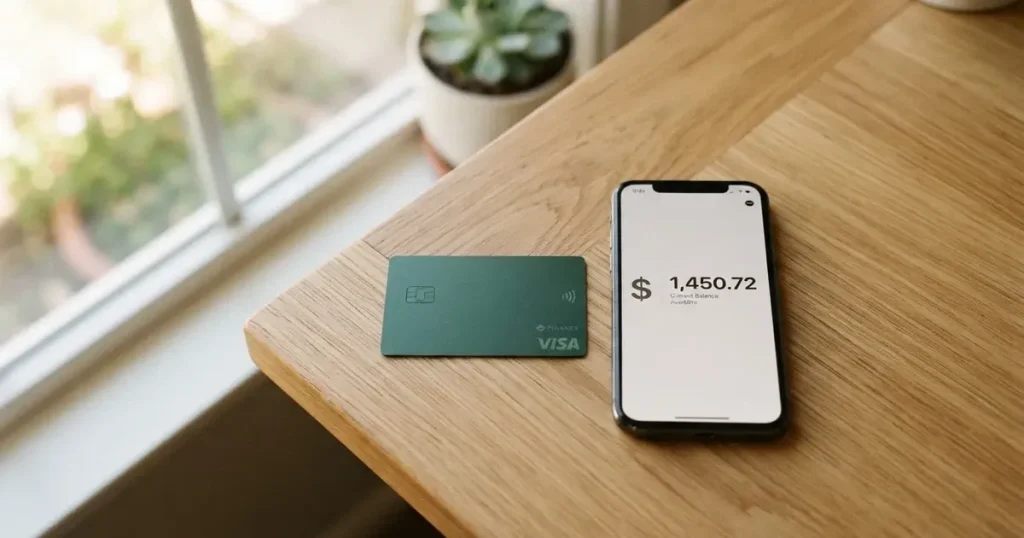
The Anodos card is a Visa issued under licence by Third National, with the front-end built by Anodos Labs Inc. What makes it different from most crypto cards is the funding model: you do not deposit crypto into an account that the card company then holds for you. You keep the assets in your own wallet, and the card spends against that collateral. In plain terms, you stay in control of your private keys while a Visa number lets you pay anywhere Visa is taken, in shops, online, or at an ATM.
That design has real appeal for people who already manage their own wallet and do not want to hand custody to a card issuer. It also comes with sharp edges that the marketing does not always make obvious: spending is capped by the value of the collateral you have locked, fees change sharply between tiers, and several large countries are excluded from the international programme entirely. The card terms are also a working document: the public agreement still contains a placeholder where a partner should be named, and Anodos Labs is explicit that it is not a bank.
This review walks through who can actually get the card, what it costs in practice, how the collateral model works, what daily life with the card looks like, and where the risks sit. I will also compare it against three other crypto cards so you can see how it stacks up. Conditions here are current as of October 28, 2026.
Verdict
The Anodos card lands at 7.2 / 10 in my scoring. That puts it clearly above average for a crypto card, mainly because of its breadth of availability and its non-custodial funding model. It is held back by the small-print inconsistencies, the absence of public information about a rewards programme, and the fact that several major jurisdictions are blocked.

| Criterion | Mark | Why it scored this way |
|---|---|---|
| Who can get it | 9 / 10 | Available in 150+ countries with a small list of exceptions; several large countries blocked. |
| Cost | 7 / 10 | Free tier is workable; Pro and Elite bring the FX fee down but add $9.99 and $29.99 per month. |
| Top-up options | 6 / 10 | Collateral model, not top-up; Ethereum, Polygon, Optimism and Arbitrum; coins not listed. |
| Reliability and complaints | 6 / 10 | Visa-licensed via Third National; terms contain a placeholder; no public complaint record. |
| Everyday use | 7 / 10 | Physical or virtual card, ATM available with limits; Apple Pay and Google Pay not addressed. |
| Total | 7.2 / 10 |
Who the card suits, in one line: anyone who already keeps crypto in a self-custody wallet and wants a Visa that spends against that collateral without surrendering their keys. Who it does not suit: anyone who needs rewards, anyone living in one of the 17 excluded countries, and anyone who would rather a regulated bank hold the funds behind the card.
Who will they give you the card
Anodos says the card is currently available in more than 150 countries, with a list of exceptions. The list is specific and worth checking before you do anything else. By residence, the card cannot be issued to residents of Belarus, China (Mainland), Cuba, India, Iran, Iraq, Israel, Myanmar, Nepal, Nicaragua, North Korea, Russia, Syria, Turkey, Ukraine, Venezuela or Vietnam. Chinese and Hong Kong passports are not eligible. Nigeria, Sri Lanka and South Africa are listed but only on the basis of an “enhanced review + explicit approval” — that is, you apply and wait, and Anodos decides.
Spending is also geographically restricted. Card use is blocked in Cuba, Iran, North Korea, Russia, Syria, Ukraine and Venezuela. So if you live in a country where the card is issued but plan to travel and spend in one of those places, the card will not work there.
Russia deserves its own line. Cards cannot be issued to Russian residents, and they cannot be used for spending inside Russia. The terms extend this to Belarus, where cards also cannot be issued to residents. If you have Russian or Belarusian citizenship but live elsewhere, the residence test — not the citizenship test — is what Anodos applies, though the card terms also require users to attest they are not US citizens. A separate US programme exists, but only across 30 US states, so it is not a nationwide US offering.
Two practical consequences follow. First, the list of blocked countries overlaps heavily with international sanctions regimes, which is the obvious reason for the exclusions and the spending block, and it is the kind of restriction that will not loosen quickly. Second, the “150+ countries” headline is accurate but easy to misread: the international programme excludes more of the world’s population by sheer size than the headline suggests, because China, India, Russia, Turkey and Ukraine are on the blocked list.
There is no public KYC process in the card terms. Anodos requires that the information you provide is “true, correct, and complete”, and the card is for personal, family or household use only. The minimum age is not stated. The information you will need to provide in practice is not described, and the terms do not break the verification into tiers.
How to get it
The signup process is short on documentation, by design, because the wallet is the point. The starting move is to link a self-custody wallet and lock collateral in it. The locked value sets your spending limit. That is the model in a sentence.
Three things to plan for:
- A wallet on Ethereum, Polygon, Optimism or Arbitrum (Anodos spells the last one “Arbitrium”, a typo in the official page). The list of supported chains is the issuer’s, so it can grow, but only Ethereum, Polygon, Optimism and Arbitrum are confirmed today.
- Crypto collateral you are willing to lock. The spending limit equals the collateral value, so $100 of locked collateral supports $100 of spending across all your cards. The limit is described as “dynamic and may be modified at any time”, which includes the issuer reducing it to $0.
- A choice of card form. The first virtual card is included free on every tier. Physical cards are also available; the terms describe a Visa issued “under license from Visa”.
Card currency behaves like a US-dollar card. Foreign-currency transactions are converted to USD by the card network, so a purchase in euros or pounds goes through a USD conversion before the foreign-exchange fee is applied. Replacement and delivery terms for physical cards are not listed in the fee schedule.
What it really costs
Anodos runs three tiers, named Financial Freedom (Free), Empower Pro and Sovereign Elite. The headline numbers are: $0, $9.99 per month (or $99.90 per year) and $29.99 per month (or $299.90 per year). The first virtual card is free on every tier. Extra virtual cards cost $20 on Free, $10 on Pro and $10 on Elite.
| Fee or limit | Free | Pro | Elite |
|---|---|---|---|
| Monthly fee | $0 | $9.99 | $29.99 |
| Annual alternative | — | $99.90 | $299.90 |
| First virtual card | Free | Free | Free |
| Extra virtual card | $20 | $10 | $10 |
| Card FX / international | 1.50% | 1.25% | 1.00% |
| Currency exchange (non-card) | 1.00% | 0.75% | 0.50% |
| ATM fee | $1.00 + 1.75% | $1.00 + 1.00% | $1.00 + 0.75% |
| ATM monthly limit | $5,000 | $10,000 | $15,000 |
Two fee categories the card has, and two it does not. Interest on purchases is currently 0% APR, which sounds generous but is a bit odd for a card that effectively cannot be over-drawn because spending is capped by the collateral value. Late payment fees are listed at “up to $40”, and returned payments at $29.00. Cash advances and balance transfers are not available, even though the fee schedule describes ATM withdrawals in detail; the two statements appear to conflict, and that is one of several small inconsistencies in the public terms.
Spending limits track the collateral you have locked. The limit is dynamic and can be reduced at any time, including to zero, by the issuer. Daily limits are not stated. The ATM limits above are the only explicit numerical limits on the card.
Three everyday payments, to make the costs concrete.
- A $50 coffee and lunch, paid in USD, on the Free tier. No FX fee applies because the transaction is in dollars, so you pay the $50 plus whatever the merchant’s own charges are. The only Anodos charge would be if the merchant’s currency were not USD, in which case the 1.50% FX fee would be added to the network conversion.
- A €40 dinner in Europe, paid on the Free tier. Visa converts the euros to dollars at the network rate, then Anodos adds 1.50% on top. The total fee for that conversion is around 60 cents, before any fee your own bank might charge for non-USD activity.
- A $200 ATM withdrawal in a country where the ATM is enabled, on the Free tier. You pay the $1.00 fixed fee plus 1.75% of $200, which is $3.50, for a total of $4.50 in Anodos fees. The $5,000 monthly ATM limit is per tier and per month, not per transaction, and it applies to the Free tier only; Pro doubles it and Elite triples it.
There is no published rewards or cashback programme. A card that costs $29.99 a month at the top tier and gives nothing back has to be justified by the funding model and the FX rate, not by points.
How to top it up
Anodos does not use a top-up model. It uses a collateral model. You do not move crypto onto the card company’s balance sheet; you lock crypto in your own wallet, and the card spends against that locked value. The two terms are easy to confuse because both end with a card that can be swiped, but the legal and practical consequences are different.
What the model means in practice:
- No “deposit” step in the usual sense. There is no button that says “top up”. The funding step is locking collateral in a supported wallet.
- The list of supported chains is short. Ethereum, Polygon, Optimism and Arbitrum (spelled “Arbitrium” by Anodos). The list of supported coins is not stated. The terms say coins on those chains can be used as collateral, but the issuer does not list which ones.
- No deposit fee is listed in the fee schedule. On-chain network fees (gas) for the user’s own transfer are paid by the user, not by Anodos; the issuer does not charge a fee for accepting the collateral.
- Gas on liquidation is paid from the locked collateral. That is a notable point: if the card has to liquidate collateral to cover a charge, the network fees come out of the collateral itself, not from a separate Anodos account.
This is the part of the Anodos model that is genuinely different from most crypto cards. The card company never holds your crypto, so the risk of an exchange-style collapse (where the platform that held user funds goes bankrupt) does not apply in the same way. The risk that does apply is the standard self-custody risk: if you lose your seed phrase, the collateral is gone, and with it the spending power on the card. The card company explicitly says it will not, in any circumstance, hold custody of your collateral.
Withdrawal is not a concept that applies to a collateral card. The collateral stays in your wallet. On termination, the card has to be surrendered or destroyed, and any repayment obligations survive the end of the relationship.
Paying with it every day
The card works as a Visa, which is the most important thing about it. The form factor is either physical or virtual; the first virtual card is free, and physical cards are available on all three tiers. The card currency is effectively USD, because the card network converts any non-USD transaction to dollars before Anodos adds the FX fee.
What is not in the card terms is also worth knowing. Apple Pay and Google Pay support are not stated. That is a meaningful gap for a card priced at $29.99 a month, because mobile wallets are now the default way many people pay in shops. If mobile wallet support matters to you, this is something to confirm with Anodos support before paying for the Pro or Elite tier.
Some transaction types are restricted. Cash-like transactions — crypto purchases, gambling, money transfers — may be restricted. Merchant category codes for gambling (MCC 7995) are a common block on cards of this type, and the issuer’s blocked list can change without notice.
Disputes work the standard way: try the merchant first, then report the dispute to Anodos “no more than 60 days after the disputed Charge is posted on your Periodic Statement”. Pending disputed charges may still be due while the dispute is open, and the card network’s rules apply on top. The Anodos app is described as a place to send, save and invest, but app store ratings and platform availability are not officially stated, so it is unclear whether the app is well-regarded or available in your local app store.
There is no published rewards or cashback programme. A card that costs $29.99 a month at the top tier gives nothing back on spend, and that is a serious consideration for anyone paying for a premium tier.
What can go wrong
The honest list starts with the structure of the company. Anodos Labs Inc. is the technology provider, and the terms are explicit that it is “not a bank, credit union, or money services business”. The card is issued by Third National, under a Visa licence. The terms are governed by Puerto Rico law and contain a binding arbitration clause in New York under AAA rules. The cardholder gives up the right to a court trial in most disputes, which is a common feature of US-style cardholder agreements but worth flagging.
The terms contain a placeholder. The public agreement still includes a placeholder where a partner should be named. That is the kind of thing that should not be in a published cardholder agreement, and it is a small but real signal that the document is a work in progress.
Liquidation is the central risk in the collateral model. If a payment is not made “within one (1) calendar day” after it is due, or if the collateral value falls below the outstanding charges, the issuer can run a liquidation event. The gas fees for that liquidation are paid from the collateral. Your account can be suspended or cancelled “in our sole discretion”, which is unusually broad wording.
Security features are not all listed. Two-factor authentication and an in-app card freeze are not stated in the card terms. Tokenised mobile wallet support is also not stated, so it is not safe to assume the card can be added to Apple Pay or Google Pay in the same way as a regular Visa.
There is no public complaint record. Trustpilot and Reddit searches turned up no reviews of the Anodos card. That is not the same as the card being bad, but it does mean that prospective cardholders have very little to go on beyond the issuer’s own pages and the card terms.
Support is reachable by email at [email protected] and by phone at +1 (307) 683-5768. Anodos has official pages on X, Discord, LinkedIn, Facebook, YouTube, Instagram and TikTok. Languages and hours are not stated, so it is not clear whether support is available outside US business hours, or in languages other than English.
The country availability page was last updated on 26 September 2026, which is recent, and that is a small positive signal. The blocked-list wording for spending is more aggressive than the issuance list, so a card issued in country A may still refuse to spend in country B even if country B is not on the issuance list.
What to take instead
Three cards that come up in the same conversation as Anodos, and how they compare on the points that matter most.
Sponge
- Score: 4.9 / 10
- Country list: not stated on the card pages; the platform’s wider terms set a minimum age of 13 for the service.
- Card form: virtual card created by a createSpongeCard function; described on the homepage as a credit card issued by Rain, a Visa Principal Member, accepted wherever Visa is accepted.
- Cost: not stated.
- Fees: not stated.
- Funding: USDC collateral moved from the Sponge wallet with a
card fundcommand; example chain is Base, and the SDK mentions Base or Solana as optional chains. - Rewards: not stated.
Sponge is a developer-friendly card with a low score largely because the public information is thin. If you only need a virtual card to spend USDC, it can work, but the lack of published fees and reward terms means you have to find the numbers yourself.
Xplace
- Score: 7.7 / 10
- Country list: not stated; the platform says “services are not available in all jurisdictions”; Visa acceptance in 160+ countries.
- Card form: Visa, virtual (instant) and physical (Silver tier live; Gold and Platinum coming soon; delivery 7 to 14 business days); Cash mode spends a stablecoin balance, Credit mode borrows against holdings.
- Cost: Basic free, Silver $99 a year, Gold $249 a year, Platinum $999 a year; borrowing has no origination fee.
- Fees: “0% FX on Platinum”; FX for other tiers and the conversion fee are not stated; stablecoin spending has “no hidden spread”.
- Funding: deposit BTC (cbBTC), ETH (wETH), SOL, JitoSOL, USDC, USDT, xStocks; network is Solana.
- Rewards: Credit-mode cashback by tier — Basic 0.5%, Silver 1%, Gold 1.5%, Platinum 2% — paid in USDC to the wallet at settlement. Cash-mode cashback is not stated.
Xplace scores higher than Anodos largely because of the published rewards ladder and the explicit 0% FX offer on the Platinum tier. It is more expensive at the top end ($999 a year, versus $299.90 for Elite on Anodos), but the cashback can offset that if you spend enough.
ether.fi
- Score: 6.7 / 10
- Country list: issued only in listed jurisdictions, residence- and jurisdiction-based, “subject to KYC and compliance”: Andorra, Argentina, Australia, Austria, Brazil, Canada, Cyprus, Czech Republic, France, Germany, Hong Kong, Hungary, Italy, Japan, Mexico, Poland, Portugal, Singapore, Spain, Switzerland, UAE, the UK, plus 31 US states; Belgium and Ireland are eligible without physical delivery. The list of excluded jurisdictions is long. ATM withdrawals are blocked in North Korea, Iran and Myanmar.
- Card form: Visa, virtual and physical; card currency not stated (USD and EUR purchases are referenced).
- Cost: Core members normally get one free virtual card; the first virtual card costs $10 in regional-pricing countries (Argentina, Angola, Bangladesh, Bolivia, Colombia, Ecuador, Indonesia, Malaysia, Mexico, Nigeria, Peru, Philippines, South Africa, Thailand). Monthly or annual fees and physical card fees are not stated.
- Fees: FX fee on top of the base rate by tier: Core 0.5%, Luxe 0.25%, Pinnacle and VIP none; EUR purchases have a 0% FX article. Crypto conversion fees are not stated.
- Funding: deposit “any supported token” to the user’s Safe (collateral in Credit mode); Direct Pay mode spends the balance; the coin and network list is not stated.
- Rewards: cashback paid in ETHFI (locked for 7 days, then claimable): Core 3% up to $2,000 monthly, then 1% to $3,000, then 0.5%; Luxe 3% up to $10,000; Pinnacle 3% up to $50,000; EUR purchases use lower ladders; Business 1%. ATM, cash advances, P2P and gambling MCCs are excluded; no payout cap is stated.
ether.fi is the most rewarding card in this comparison, in headline terms, with up to 3% cashback paid in the protocol’s own token. The catch is the locked token: ETHFI is locked for seven days after the spending period before it is claimable, and the underlying token’s value can move. The country list is also narrower than Anodos’s, although the programmes are different in scope.
The honest read is that Anodos, Xplace and ether.fi are aimed at slightly different readers. Anodos is for people who want a non-custodial card and do not care about rewards. Xplace is for people who want a published rewards ladder and are willing to pay for the top tier. ether.fi is for people who are already inside the ether.fi ecosystem and want token-denominated cashback. Sponge is for developers building on top of a card API and is not a consumer product in the usual sense.
Who I would recommend it to
The Anodos card is a good fit for a specific kind of reader. If you already keep crypto in a self-custody wallet on Ethereum, Polygon, Optimism or Arbitrum, and you want a Visa that spends against that collateral without giving up custody, the design is honest about what it does and what it does not do. The 150+ country availability is a real strength compared with ether.fi’s narrower list, and the Free tier is a low-cost way to try the model.
It is not a good fit for several other readers. If you live in Russia, Belarus, China (Mainland), Cuba, India, Iran, Iraq, Israel, Myanmar, Nepal, Nicaragua, North Korea, Syria, Turkey, Ukraine, Venezuela or Vietnam, you cannot get the card, and there is no workaround. If you care about rewards, the card does not have a published programme. If you want a card in your mobile wallet, the terms do not confirm Apple Pay or Google Pay support, so you should test that before paying for the Pro or Elite tier. If you want the cheapest FX in this category, Xplace’s Platinum tier advertises 0% FX for an annual fee, while ether.fi’s higher tiers also drop the FX fee. Anodos’s Elite FX of 1.00% is competitive but not the lowest.
The biggest single risk to weigh is the liquidation mechanic. Because the spending limit is collateral, and the collateral can be liquidated if a payment is not settled within one calendar day or if the value of the collateral falls below the outstanding charges, the card behaves less like a debit card and more like a margin account. Users who are used to a bank holding their balance and authorising a payment days later may find the model less forgiving. Users who are used to managing their own wallet already understand the volatility risk, and the liquidation mechanic will not surprise them.
The placeholder in the card terms is also worth flagging. It suggests the agreement is not the final version, and a careful reader should watch for updates. Anodos has updated the country list as recently as 26 September 2026, so the document is being maintained, but the placeholder is still there.
My final read: if the non-custodial funding model is the point for you, the Anodos card does the job it sets out to do, at a fair price on the Free tier and a defensible price on Pro. The score of 7.2 out of 10 reflects that the design is sound, the availability is broad, and the cost is reasonable, while the small-print inconsistencies, the lack of a rewards programme, the country exclusions and the absence of a public complaint record keep the card from the top of the table.
Frequently asked questions
What is the Anodos card?
The Anodos card is a Visa payment card whose spending power is backed by cryptocurrency held as collateral in the cardholder’s own wallet, rather than by a balance held by the card issuer. The technology is provided by Anodos Labs Inc. and the card is issued by Third National under a Visa licence.
How does the Anodos card work?
You lock crypto as collateral in a self-custody wallet on Ethereum, Polygon, Optimism or Arbitrum, and that locked value sets the spending limit on the card. The card then behaves as a Visa for everyday spending, with the issuer able to liquidate collateral if a charge is not settled or if the collateral value falls below outstanding charges.
Is Anodos a bank?
No. Anodos Labs Inc. is the technology provider and is explicit in the card terms that it is “not a bank, credit union, or money services business”. The card is issued by a regulated bank called Third National under a Visa licence.
Who owns Anodos?
The card terms name Anodos Labs Inc. as the technology provider. Ownership of the company itself, including investors and parent entities, is not stated in the public card documents, and a search of official channels did not return a clear answer.
Is the Anodos card available in my country?
The international programme is available in more than 150 countries, with residents of Belarus, China (Mainland), Cuba, India, Iran, Iraq, Israel, Myanmar, Nepal, Nicaragua, North Korea, Russia, Syria, Turkey, Ukraine, Venezuela and Vietnam excluded. Nigeria, Sri Lanka and South Africa are listed but require enhanced review and explicit approval.
Can I use the Anodos card while travelling?
Card spending is blocked in Cuba, Iran, North Korea, Russia, Syria, Ukraine and Venezuela, regardless of where the card was issued. In any other country where Visa is accepted, the card should work, subject to the standard card network and merchant category rules.
Does the Anodos card require KYC?
The card terms require the information you provide to be “true, correct, and complete”, and the card is for personal, family or household use only. A specific KYC process is not described in the terms, the minimum age is not stated, and there is no public breakdown of KYC tiers.
How do I top up the Anodos card?
You do not top up the Anodos card in the usual sense. The funding model is collateral: you lock crypto in your own wallet on a supported chain, and that locked value sets the spending limit. There is no deposit step and no deposit fee in the published fee schedule.
Can I add the Anodos card to Apple Pay or Google Pay?
Apple Pay and Google Pay support are not stated in the card terms. Tokenised mobile wallet support is a meaningful gap for a card with paid tiers, and you should confirm with Anodos support before paying for Pro or Elite if mobile wallet support is essential.
Is the Anodos card safe?
The card is non-custodial, which means the issuer does not hold your crypto, and that part of the design is well-explained in the terms. The card is also a Visa issued by a licensed bank, which gives it the standard chargeback framework. The risks to weigh are the collateral liquidation mechanic, the absence of published information about 2FA or in-app freeze, and the broad wording that lets the issuer suspend or cancel the account at its discretion.
Credit and cashback card verdicts – cryptocardverdict
Content created by the «cryptocardverdict» team