
Should you trust Dantown? A virtual dollar card priced for Nigerians, thin on the details
 Available in US
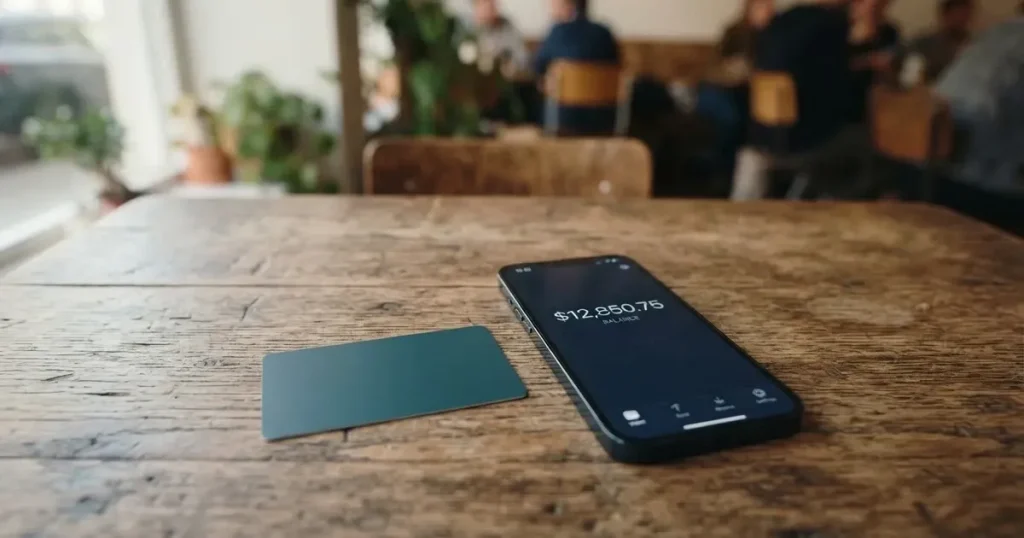
The Dantown virtual dollar card looks, at first glance, like a simple proposition: a dollar card you create inside an app for $1, load with naira, and spend online. On the surface there is little to argue with. But once I went through the card’s own pages — the marketing site, the Google Play listing, the support contacts — and compared them against what the public cannot find, a lot of the questions that matter stay unanswered: who issues the card, which coins fund it, whether Apple Pay works, what the conversion fee is. My honest summary: it is a plausible tool for a Nigerian user who specifically needs a cheap virtual dollar card, and a poor fit for anyone who wants a fully documented, internationally understood financial product.
Conditions are current as of October 28, 2026.
My verdict on the Dantown card: 4.2 out of 10
I scored the Dantown card 4.2 out of 10 overall. That is not a rejection — it is a “useful in a narrow lane, opaque everywhere else” verdict. For a Nigerian user who wants a virtual dollar card without shipping anything to an address, Dantown is genuinely cheap and, by every published figure, straightforward to open. For anyone who plans to treat it as a general everyday payment card, or who wants to know who stands behind the money, the answer is that the card’s public pages do not say.
| Criterion | Mark | Why |
|---|---|---|
| Who can get it | 2 / 10 | Marketed for Nigeria; other countries and any exclusion list are not named |
| Cost | 8 / 10 | $1.00 to create the card, $0 to fund it; an unofficial extra $1 maintenance fee; conversion amounts not published |
| Top-up options | 3 / 10 | Officially naira via Pay-bridge; coins and networks not named; unofficial reports of bank transfer and crypto |
| Reliability and complaints | 4 / 10 | Issuer and licences not found; Trustpilot TrustScore 0 with no reviews and a “high-risk investments” note; no official incidents |
| Everyday use | 3 / 10 | Virtual only, in USD; Apple Pay and Google Pay not indicated; no ATM |
| Total | 4.2 / 10 | Narrowly useful, widely undocumented |
Where Dantown scores well is exactly where it claims to: cost. Where it scores poorly is everything a stranger on the internet would need in order to trust it. That imbalance is the whole review, honestly.
Will they give you the card?
Short answer: if you are in Nigeria and following the app’s process, the card’s marketing is built for you. If you are anywhere else, the official pages simply do not address it.
The Dantown product is marketed squarely at Nigeria. The page title is “Get a Secure & Cheap Virtual Dollar Card in Nigeria for $1,” and the FAQ includes “How can I create a virtual dollar card in Nigeria?”. That is the entire official statement of who qualifies. There is no country list, and there is no exclusion list — no “not available in X, Y, Z” — on the pages I read. So I cannot tell you, from the card itself, whether a resident of, say, Kenya or Ghana would be accepted or refused; the answer lives behind the sign-up form, not in the documentation.
One piece of unofficial information is worth flagging. Third-party sources describe Dantown as a Mastercard virtual dollar card. The card’s own page images are even labelled “visa card,” while the text does not name the network. That inconsistency is itself telling: a card whose public images and third-party descriptions disagree about Visa versus Mastercard is a card whose network you should verify yourself before you rely on it at a merchant that cares. I would not treat the network as settled fact.
The realistic audience here, then, is Nigerian users who need a cheap virtual dollar card — for subscriptions, or for spending online in a currency their everyday bank account does not easily offer. If that is you, the target fits. If you are reading this from outside Nigeria hoping the card travels with you, this is the wrong page to rely on.
How to get it
The sign-up is three steps, and the card tells you all three: download the Dantown mobile app, sign up and verify your account, then create and personalise your card. That is genuinely it — there is no branch, no paperwork by post, no waiting period described.
What the page does not tell you matters just as much. The documents you need to verify your account are not stated. Whether proof of address or proof of age is required is not stated. The level of identity checks is not stated — the page only says “verify your account” and stops there. In a market where identity rules are set by anti-money-laundering law rather than by the card, “verify your account” could mean a phone number or could mean a passport scan, and you will not know which until the app asks.
The card itself is virtual only. There is no physical card to be delivered, so there is nothing to wait for and nothing to lose in the post. The card details — name, number, expiry, and CVC — are displayed in the app for you to type into online payment forms. A replacement fee, if you ever needed one, is not stated.
So the honest picture of getting the card: the mechanics are simple and app-based, the eligibility is Nigerian-by-presentation but undocumented beyond that, and the exact verification requirements are a box you tick inside the app rather than a published policy.
Fees: what it really costs to hold and spend a Dantown card
Dantown’s cost story is the strongest part of the offer and, at the same time, the least complete. The two numbers the card publishes — $1.00 to create the card and $0 to fund it — are the whole headline. But several fees that will actually appear in your life are either unofficially sourced or simply not stated at all. Here is everything I could pin down.

| Fee or limit | What the card says |
|---|---|
| Card creation | $1.00 |
| Monthly or annual fee | Not stated on the official page |
| Maintenance (unofficial) | $1, per a Dantown announcement carried by TechCabal on 9 December 2024; Adomonline in 2026 also lists $1 / $1 |
| Funding fee | $0 |
| Conversion fee | Not stated; “specific transaction fees and conversion fees” apply to international transactions, amounts not given |
| FX / naira-to-dollar rate | Not stated |
| ATM fee | Not stated (it is a virtual card) |
| Daily spending limit | Marketing claims “no transaction limit” and “your spending should have no limit”; no figures published per KYC level |
| Monthly spending limit | Same as above — no published figures |
| Card currency | US dollars |
Two things to take from that table. First, the $1 creation fee and the $0 funding fee are the officially published numbers, and they are genuinely attractive against many crypto cards. Second, there is an unofficial extra $1 that has been circulating since the December 2024 launch — a maintenance or service fee on top of the creation fee — that the official page does not list. Treat it as likely real, but treat it as unofficial.
Now let me walk three ordinary payments through this, because “no transaction limit” and “$0 to fund” tell you very little about what a shop actually charges you.
Paying for an online subscription in dollars. You have topped up (see below) and you type your card details into a website. Because your balance is already in dollars and the merchant prices in dollars, there is no currency conversion on your side. The relevant published figure is the $0 funding fee. This is the cleanest case for the card.
Paying a merchant that prices in naira or another currency. Here the card’s own words kick in: “specific transaction fees and conversion fees” apply to international transactions, and the amounts are not given. You are told such a fee exists and not told how big it is. I cannot tell you what it costs, only that it exists and that you should find out before relying on the card for regular cross-currency spending.
Trying to take cash out or use it in person at a terminal. This card is virtual and dollar-denominated. ATM use is not stated, and it is not the sort of card you tap in a shop. Physical, point-of-sale and cash use are outside what this card is built for.
The marketing claim that your “spending should have no limit” deserves a small asterisk. It is a marketing line, not a published table of per-level limits, and unofficial sources actually disagree with it: one guide says there are no official spending limits, while a TechCabal piece says Dantown has some funding limits, without giving a figure. So the honest reading is that the limit, if there is one, is not something the card publishes and I could not verify in either direction.
Top up: how to put money into a Dantown card
Officially, the route is naira. The Google Play description of the app says “Naira deposit via Pay-bridge” and “Naira withdrawal via Pay-bridge,” and calls the wallet a “secure wallet.” The company has also said the funding fee is $0, and that deposit and decline fees are $0 too.
What is not stated is almost as important. Which coins and which networks fund the card is not named on the official pages I read. The minimum top-up is not stated. Who pays the underlying network fee is not stated. Unofficial sources — the Adomonline comparison from 2026 — say you can also fund by local bank transfer and by crypto, but that is not confirmed by the card itself.
So the practical picture: the officially documented path is naira through Pay-bridge, which suits a Nigerian user holding naira. Whether you can send USDT or another stablecoin straight to the card, and on which network, is exactly the kind of detail that matters if you think of this as a “crypto card” — and it is the kind of detail Dantown does not publish. I would find that out before you move real money.
On the way back out, naira withdrawal from the wallet goes through Pay-bridge as well. Withdrawing the card’s dollar balance itself, the fee for doing so, and what happens to a leftover balance if you close the account — none of that is stated.
Paying with it every day
Everyday use is where the Dantown card is at its thinnest, and I want to be blunt about it: this is a virtual dollar card for online payments, not an everyday physical card.
The card is USD-denominated and virtual only. Apple Pay and Google Pay are simply not indicated anywhere I could read — there is no mention of adding it to Apple Wallet or to a mobile wallet, which is a real gap given how many people now tap to pay. There is no ATM. Wallets supported are not stated. Rewards or cashback are not stated. The dispute process — how you would actually challenge a charge — is not stated.
On reliability of the app itself: the Google Play listing, under developer Dantown, shows 50K+ downloads and an update on 20 August 2026. Unofficial app directories put the average rating around 4.10 from roughly 1.1 thousand ratings, with about 80 thousand downloads; Adomonline lists it at 4.7 from about 1.12 thousand reviews. Those are decent numbers for a small app, and they suggest the app works for the people who downloaded it. An App Store listing is said to exist, but I did not read it.
Taken together, everyday use means: online, in dollars, in the app, one card at a time. Dantown does say you can “easily create and manage multiple virtual dollar cards,” so if you need more than one, that is supported. But if your daily life involves tapping a card in a shop, paying at a terminal, or pulling cash, this is not that card.
What can go wrong
I looked for incidents, complaints, and the company behind the card, and here is the honest state of what is findable.
First, the company itself. The official pages do not name an issuer, a partner bank, or any licence. Unofficial information — a Trustpilot listing — describes Dantown as a cryptocurrency buying, selling and spending service based in Port Harcourt, Nigeria. But an issuing partner and licences were not found. When a card’s public pages never name the institution that actually issues it, that is the single most important thing a careful user would want, and it is the thing most conspicuously absent here.
Second, complaints. I found no official incident notices. I searched for reviews and complaints across Reddit and Nairaland and found no relevant threads. Trustpilot, for Dantown, shows a TrustScore of 0 with no reviews yet (read 21 October 2026), and the page carries a notice that the company “may be associated with high-risk investments.” With zero reviews there are no recurring themes to report — which is not the same as a clean bill of health; it is simply too early or too small to have a track record either way. Separately, Nairametrics has noted that forex scarcity has led some virtual dollar card providers in Nigeria to suspend service (2024 news, not specific to Dantown) — a reminder that this category carries a country-level risk that has nothing to do with any one company.
Third, a security point that is worth understanding. The card states that “when a virtual card is blocked, all functionalities are disabled,” and that a card can be blocked repeatedly. It also says you get notifications by email, transaction logs and push messages, and the Google Play listing describes a “secure wallet” with data encrypted in transit. Whether the balance is held in custody by Dantown or in a self-custody wallet of yours, and whether two-factor authentication is available, are both not stated. On a card that can be blocked and re-blocked, those two unknowns are the ones I would want answered before I parked meaningful money in it.
Support is listed as “24/7 Customer Service,” with an e-mail at [email protected]. A 24/7 promise is nice to have; whether it is honoured is not something a listing can tell you.
For background, the general risks of this whole category are worth a sentence, because Dantown sits inside them. Card networks like Visa and Mastercard do not issue crypto cards to consumers themselves; they license issuers, and they can suspend a programme — as Visa did with FTX’s US debit card in November 2022. Custodial platforms have a real history of failure (Mt. Gox, Coincheck, Ronin). Blockchain transfers are typically irreversible, so funds sent to a wrong network or address can be gone. Stablecoins can and have depegged. None of this is Dantown-specific, but it is the terrain the card operates on, and it is why an issuer you cannot name is a bigger deal than it sounds.
What to take instead
If Dantown is not right for you, the closest alternatives I looked at are all in the same neighbourhood: virtual dollar cards aimed at crypto users and, in two cases, at Nigeria in particular. Here is how they compare, using their own published figures.
| Card | Score | Cost to create | Fees published | Funding | Card type |
|---|---|---|---|---|---|
| CardFlow | 4.9 / 10 | Free | Not stated | BTC, USDT, ETH or naira bank transfer; networks not stated | Virtual USD Mastercard |
| HyperCard | 4.7 / 10 | Not stated | Not stated | Crypto (USDT, BTC, ETH) converted to USD or EUR | Prepaid, works in 176+ countries |
| Card.fi | 6.6 / 10 | Virtual Classic $49, Premium $249 | Top-up 1.5%+$1 (Classic) / 1% (Premium); FX 3.5% / 2.5% | 32 coins, 5 networks, converted at market rate | Virtual and physical, metal options |
The comparison is instructive because it cuts both ways. CardFlow and HyperCard are, like Dantown, light on published fees — CardFlow even advertises a free virtual card. But Card.fi, at 6.6, is the only one of the three that publishes a real fee schedule (top-up percentages, FX percentages) and a real funding list (32 coins across five named networks, with market-rate conversion). That transparency is worth something even though Card.fi’s creation cost is far higher than Dantown’s $1.
Where CardFlow edges Dantown is funding: you can load with Bitcoin, USDT, ETH or a naira bank transfer. Where Dantown edges both is pure price: $1 to create and $0 to fund, which nothing else in this set matches. Where HyperCard differs is reach — its App Store listing claims the card works in more than 176 countries (acceptance, not eligibility). If you are not in Nigeria, that acceptance reach may matter more than the fee.
There is also cashback and rewards, if that is your thing — Dantown states none, and CardFlow and HyperCard also state none. Card.fi is the outlier here with a tiered cashback scheme (0.8% to 2% depending on tier, with caps, plus a headline 10% at coffee shops capped at 10 USDT a month). None of the cards in this set publish rewards except Card.fi.
Who I would recommend it to
I would recommend Dantown to a specific person: someone based in Nigeria who needs a virtual dollar card for online spending, wants to load with naira through the documented Pay-bridge route, is comfortable treating it as a small everyday-online tool rather than a financial relationship, and accepts that they will not get published fee tables, a named issuer, or a physical card. For that person, $1 to create and $0 to fund is a fair trade, and the app’s rating suggests it works.
I would not recommend it to someone who needs to know, in writing, who holds their money; who wants Apple Pay or in-person payments; who plans to hold a large balance; or who is outside Nigeria and hoping the card travels. In each of those cases, a card that publishes its fee schedule and names its issuer — Card.fi, at a higher price, is the clearest example in this set — is the more sensible default.
And if you are minded to try Dantown anyway, treat the unknowns as things to confirm in-app before you commit, not things to assume: the verification documents, the funding coins and networks, the conversion fee, the mobile wallet support, and the dispute process. Each of those is a question the app can answer faster than any review can.
Frequently asked questions
What is the Dantown card?
The Dantown card is a virtual dollar card you create inside the Dantown mobile app. It costs $1.00 to create, you fund it in naira through Pay-bridge for a $0 funding fee, and you spend the dollar balance online by typing the card details shown in the app. It is virtual only — no physical card is delivered — and is marketed for Nigeria. Third-party sources describe it as a Mastercard, though the card’s own images are labelled Visa.
How does the Dantown card work?
You download the app, sign up and verify your account, then create and personalise the card. The app shows your card name, number, expiry and CVC for online payments, and you top up with naira via Pay-bridge. Spending draws down a dollar balance you have already loaded, so it behaves like a prepaid card rather than a debit card tied to your bank. It is a single card type, though the app supports managing multiple virtual cards.
Is Dantown a bank?
Not on the evidence available. Dantown’s official pages do not name an issuing bank, an e-money partner, or any licence. An unofficial Trustpilot listing describes it as a cryptocurrency buying, selling and spending service based in Port Harcourt, Nigeria, not as a bank. When a card’s public pages never name the institution that issues it, treat that as an open question rather than a reassurance — and check the issuer and licence in the app before you hold a meaningful balance.
Does the Dantown card require KYC?
The card says only that you should “verify your account” during sign-up; the specific documents are not stated. What is clear from the wider category is the direction of travel: identity checks are required by anti-money-laundering law, and regulated providers normally verify name, address, date of birth and identity documents, with sanctions screening. So expect to prove who you are; expect the exact list of documents to be set by the app rather than published in advance.
How much does the Dantown card cost?
Officially, $1.00 to create the card and $0 to fund it — that is the headline and it is genuinely cheap. Unofficial sources, including a December 2024 Dantown announcement carried by TechCabal, add a $1 maintenance fee on top. The card also refers to transaction and conversion fees on international payments without giving amounts, and the naira-to-dollar rate and any FX fee are not stated. The total you pay in real life is therefore more than the $1 headline, by an amount the card does not publish.
Does the Dantown card have spending limits?
Marketing claims “no transaction limit” and “your spending should have no limit,” but the card publishes no per-KYC-level figures. Unofficial sources disagree: one guide says there are no official spending limits, while a TechCabal piece says Dantown has some funding limits, without a number. So there may be a limit, there may not be, and the card does not say. Ask in the app if this matters to you, and do not assume unlimited spending.
Can I add the Dantown card to Apple Wallet or Google Pay?
Not as far as the published information goes. Apple Pay and Google Pay are not indicated anywhere on the card’s pages I read, so there is no confirmation that the Dantown card can be tokenised into a mobile wallet. It is a virtual card used by entering its details online, and that is the payment method the card actually describes. If contactless or in-person spending matters to you, this is a gap, not a feature — check the app for current support before you rely on it.
How do I top up and withdraw from the Dantown card?
The officially documented way to top up is a naira deposit through Pay-bridge, with a $0 funding fee and, per the company’s announcement, $0 deposit and decline fees. Naira withdrawal from the wallet also goes through Pay-bridge. Unofficial sources say you can also fund by local bank transfer and by crypto, but the card does not name which coins or networks. The minimum top-up, who pays network fees, and how you withdraw the dollar card balance are all not stated.
Is the Dantown card safe?
I cannot give you a straight yes, and I would be wary of anyone who does. The card describes notifications by email, transaction logs and push messages, a “secure wallet,” and encryption in transit, and it says a blocked card disables all functionality — which cuts both ways, since a card can also be blocked repeatedly. Whether funds are held in custody or self-custody, and whether two-factor authentication exists, are not stated. Against that, there is no issuer named and no licence published, and Trustpilot shows a TrustScore of 0 with a “high-risk investments” notice — too few reviews to be a track record either way.
Is the Dantown card worth it?
For a Nigerian user who needs a cheap virtual dollar card for online spending, the $1 creation and $0 funding fees are hard to beat, and the app’s ratings suggest it functions. Whether it is “worth it” beyond that depends on what you need: if you want published fees, a named issuer, mobile wallet support, or confidence for larger balances, a more transparent card at a higher price is the better trade. Confirm the verification, funding, conversion-fee and dispute details in-app before you commit money.
Virtual card verdicts – cryptocardverdict
Content created by the «cryptocardverdict» team