
The Jam card looks like a self-custody card with a payment card attached, and almost none of the numbers you would need to judge it
 Available in US
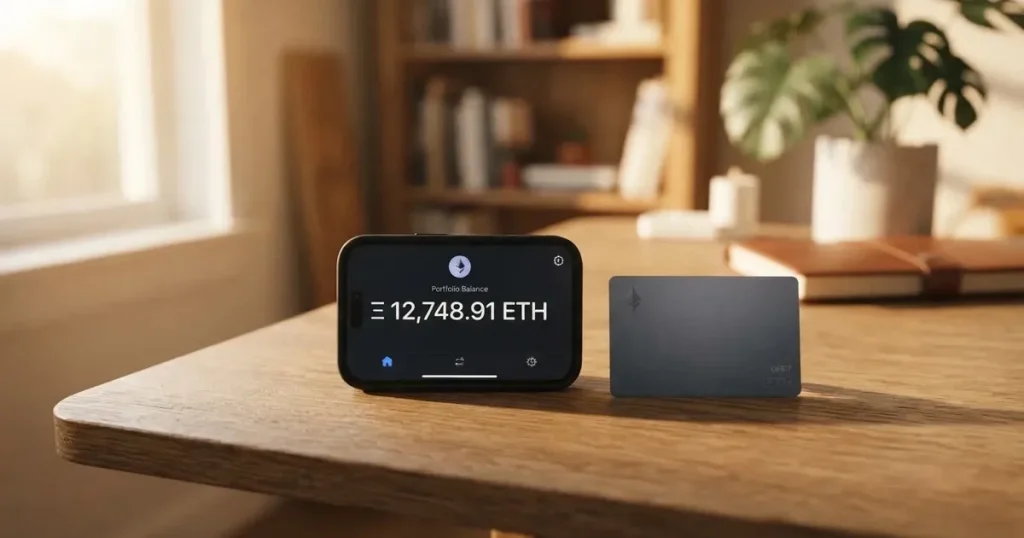
There is a particular kind of crypto card review that is easy to write and hard to trust: everything is described in the app’s own words, the fees are quietly missing, and the reader is left to assume the blanks are small. I want to try the opposite here. The Jam card is a real product with a real app, a real company behind it, and one design idea that genuinely appeals to a particular kind of user — you keep your own keys, and the card is just a thin layer on top. That idea deserves a serious review. The problem is that the public material is thin, and a review that hides that is worse than useless to somebody who is about to move money.
So here is the shape of what I found. Jam publishes no list of countries where the card is available, no fee schedule, no description of the card’s network, no statement of who issues it or under which licence, and no detail about identity checks beyond the fact that they are handled by unnamed third parties. That is not a reason to refuse the review. It is the review. My score for Jam is 4.4 out of 10, and most of that score is lost on exactly those gaps.
The conditions described here are current as of October 28, 2026.
Verdict: 4.4 out of 10, and mostly a score about missing information
Jam suits a very specific person: someone who already uses a self-custody wallet, already understands networks and gas, and wants a payment card attached to that wallet without handing a custodian the keys. If that is you, the concept is the right one. If you are looking for a card that “just works” in a shop with a predictable statement, known fees, and a support line that answers, the material Jam publishes does not let you judge whether it does that, and that is the finding.
Let me be clear about what my score is measuring and what it is not. It is not a judgement that Jam is fraudulent. I found no official incident record, no enforcement action, and no stream of user complaints — Trustpilot shows 4.1 out of 5, all of its reviews five-star. It is not a judgement that the product is bad; it is a judgement that a payment card is a trust instrument, and trust requires disclosure. A card that cannot tell me who issues it, what it charges, or where it works is asking for a different kind of trust — the kind where you find out afterwards.
| Criterion | Mark | Why |
|---|---|---|
| Who can get it | 5 / 10 | No country list published; terms exclude Russia, Belarus, Iran, North Korea, Syria, Cuba, Ukraine and US citizens; the on/off ramp works in 200+ countries |
| Cost | 3 / 10 | No fees disclosed anywhere on the site; unofficial figures suggest stablecoin top-ups around 4.2% plus gas, and 0.2% for Apple Pay |
| Top-up options | 4 / 10 | USDT, “No TRX required”; unofficial reports say USDT and BSC-USD only |
| Reliability and complaints | 6 / 10 | Non-custodial, JAM Platform LLC in Delaware, but issuer and licences unnamed; Trustpilot 4.1 of 5, with one report about cost and being unable to withdraw |
| Everyday use | 4 / 10 | Card type and network not named, unofficial reports say no physical card yet; Apple Pay and Google Pay exist; ATM details not disclosed |
Two features stand out as genuine strengths, and I want to give them their due before the criticism. The card is non-custodial — Jam’s own terms say the services are “strictly non-custodial” and that Jamcard never holds funds, keys or seed phrases. That is a materially different posture from most card offers, and it means the failure mode of an insolvency at the operator does not take your coins with it. Second, the app does a live sanctions address check on each transaction, which is why the on/off ramp covers 200+ countries: it is screening addresses as they move. Both of those are real. Neither of them tells you what the card costs.
Will they give you the card?
The honest answer is that the card’s public pages do not say, and you will have to find out by applying. Jam does not publish a country list for the card. What it publishes is the reach of its on/off ramp — “Ramp functionality over 200 countries” — which is a different thing entirely, because a wallet can reach a country that the card is not issued into.
What the terms do say is where the card is not available, and this is the part worth reading carefully. Card and financial services are “categorically forbidden in specific jurisdictions,” named as “including but not limited to Russia, Belarus,” and also Iran, North Korea, Syria, Cuba and Ukraine. Sanctioned persons are barred. On top of that, the service is “strictly not intended for use by United States Persons,” and access from a US IP address is prohibited. Jamcard may restrict access by IP or jurisdiction — meaning it can also decline you based on where you appear to be connecting from.
So the exclusion list is real and reasonably detailed; the inclusion list simply does not exist in public. And one question the terms leave entirely open is the one that catches people out: whether eligibility follows your citizenship or your residence. Not stated. If you are a citizen of an excluded country living elsewhere, or a citizen of an allowed country living in an excluded one, the site’s public text does not resolve it. Two further things are not stated either: the minimum age, and whether proof of address is required. Given that identity checks are delegated to compliance partners, expect to be asked for documents even though the site does not promise the process.
One thing you may have read that you should discount. A Trustpilot reviewer in May 2026 described Jam as a “No KYC” first card. That is a user’s report, not the card’s position, and it conflicts with the site’s own statement that KYC is performed by independent third-party compliance partners. Treat “no KYC” as a description of one reviewer’s experience at signup, not as a property of the product.
How to get it
You sign up with an email address and a phone number, and Jam calls it “30-second onboarding.” There is no application form, no documents on the site, no waiting list — which is either reassuring or suspicious depending on what you were expecting.
The identity check happens, but it is outsourced. Jam says KYC is done by independent third-party compliance partners and does not name them. You will therefore be handing your personal documents to a company the card never identifies, under a process the card never describes. That is not automatically a problem — plenty of regulated businesses use compliance vendors — but it means you cannot check the vendor’s reputation before you upload to them, and if the check fails, the appeal path runs through a support team you also cannot evaluate in advance. Not stated: what level of verification you need, how long it takes, or what documents are accepted.
What you get at the end of that process is not described either. The card type, the payment network and the card currency are all not stated. Jam does say it starts with one card and plans to add 20+ card types later, and that your starting data is converted to a USD balance — so expect a dollar-denominated spending balance rather than your local currency. Delivery is not stated. One reviewer writes “no physical card yet,” which is a user report rather than something the site confirms, and it lines up with the fact that a reviewer also mentions not being able to withdraw once funds are loaded. My read: expect a virtual card in a mobile wallet first, and treat the physical card as unconfirmed.
Fees and what a payment really costs
Jam publishes no fees. There is no fees page linked from the site, no pricing table, no disclosure of issuance cost, monthly fee, conversion rate, foreign-exchange spread, or ATM charge. The only number that appears anywhere on the site is a referral reward: “$5 for each friend.” That is the entire published cost picture.
I can tell you what is not stated rather than what is, and for a fee discussion that is the honest lead. Issuance, monthly fee, conversion, FX, ATM — all not stated. Limits: the page title promises “Spend Up to $250,000 Daily Worldwide,” and no per-level limits are given beneath it. That figure is a marketing headline, not a documented limit, and a large daily ceiling tells you nothing about what your actual ceiling is at your verification level.
| Item | What Jam publishes |
|---|---|
| Issuance | not stated |
| Monthly fee | not stated |
| Conversion fee | not stated |
| Foreign exchange fee | not stated |
| ATM | not stated |
| Daily limit | “Spend Up to $250,000 Daily Worldwide” in the page title; no per-level limits given |
| Monthly limit | not stated |
| Referral | $5 for each friend |
The unofficial figures, which I am passing on as reports and not as Jam’s own terms, come from a Trustpilot reviewer in May 2026: stablecoin top-ups cost about 4.2% plus gas, and Apple Pay carries a 0.2% fee. Two cautions about those numbers. They are one person’s account, not a schedule, and a 4.2% top-up cost is not necessarily fatal — it depends entirely on how much you spend and how often you reload. If you load once a month and spend it all, roughly 4.2% of your monthly volume is the effective cost. If you load small amounts often, it eats you. And the 0.2% on Apple Pay, if accurate, is a per-transaction toll on the channel most people would use most, which is the expensive place to put a fee.
There are also the costs that never appear on a fee page because they belong to the blockchain, not the card. Network fees — gas on Ethereum, or bandwidth and energy on Tron — are charged by the network for your deposit, not by Jam. If you fund from a network where fees are high, that is money you lose before the card ever sees it. This is the part most fee comparisons get wrong: the card’s own charges and the cost of moving the money to the card are two different bills, and you pay both.
There are no fee tiers. What does exist is “JAM VIP Club,” a private Telegram community offering special rewards and a personal manager. Read that for what it is: a community and a concierge relationship, not a pricing tier, and not something that changes what you are charged.
Three everyday payments, and which fees actually bite. A coffee in a local-currency country: the load fee has already been paid, then FX or conversion applies, and the Apple Pay fee if you tap. A weekly supermarket run in your own home currency: if the balance is USD-denominated, this is where a conversion or FX spread would show up most clearly, and it is the payment most likely to make you notice a number you were not told. A subscription — streaming, a hosting plan, an app: the smallest-value recurring payments, where a per-transaction fee such as the reported 0.2% hurts proportionally most, and where an insufficient-balance decline or a hold can be the visible symptom rather than a fee.
How to top up
Top-ups start with USDT stablecoins. Jam’s own line is “No TRX required,” which points to a gas-free arrangement on the funding side. The coin and network list is not stated on the site — which coins, on which chains, whether more than one is supported. An unofficial report from a Trustpilot reviewer in May 2026 says only USDT and BSC-USD are supported. If that is right, your funding path is narrow: you hold USDT, you send it on BNB Smart Chain, and that is the option you have. If it is wrong, there may be more. You cannot tell from public sources, and that matters more here than in most cards, because sending on the wrong network is one of the few genuinely irreversible mistakes available.
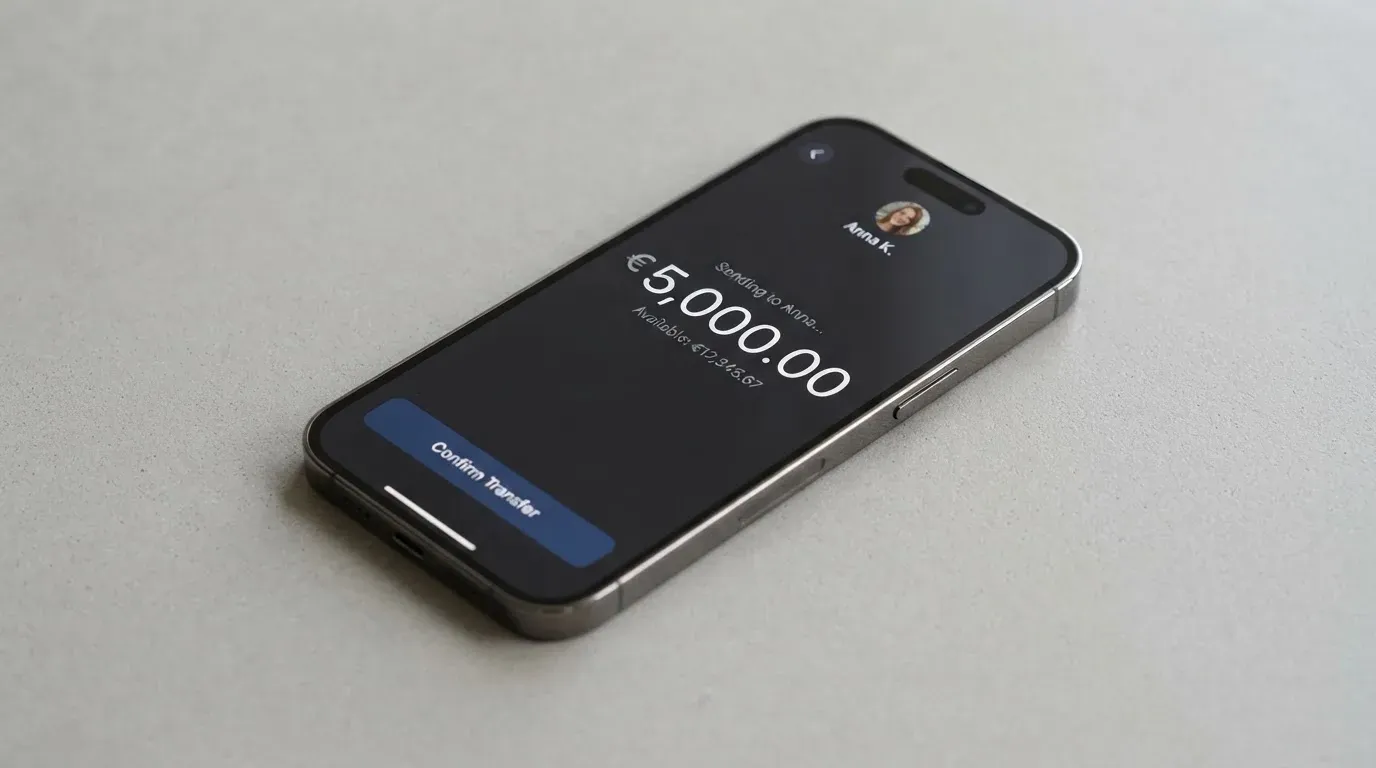
So the practical sequence is short and unforgiving. You obtain USDT. You send it to the address the app shows you, on the network the app shows you. You wait for it to land. Note that the coin, the network and the top-up fee are not stated, and the withdrawal side — getting money back off the card — is also not stated.
That last point deserves more weight than it gets. One reviewer reported funds that could not be withdrawn once loaded, and one report about the top-up cost. Neither is an official incident, and I want to be careful not to inflate them into a pattern. But combined with the fact that withdrawal is not documented publicly, it produces an asymmetry worth naming: the way in is described in a single sentence about TRX, and the way out is not described at all. When you choose an amount to load, choose it with the understanding that “stuck” has a plausible reading here.
Two background points that bear on the choice of network, because they explain why the network matters more than it seems. On Ethereum, fees are paid only in ETH, so a wallet holding USDT with no ETH cannot send at all. On Tron, fees are handled through bandwidth and energy and often by burning TRX — which is what “No TRX required” appears to be working around. And stablecoins can send to a dead end: Circle stopped supporting USDC on Tron in February 2024, so not every stablecoin lives on every chain. Transfers are irreversible, so a deposit sent on a network Jam does not support can be lost, or need manual support recovery with no guarantee.
Paying with it every day
Apple Pay and Google Pay are both supported — “Pay instantly with Apple Pay or Google Pay” is how Jam puts it. If the card is virtual-first, these are not conveniences, they are the product. That is a genuine strength for anyone who does not want a plastic card in a wallet.
Where it gets thin is the practical detail. Which cards can you add, and in which wallets, and in how many cards per device — not stated. Which merchant categories are blocked, which is a policy each issuer sets for itself and never a legal requirement — not stated. Cash withdrawal, ATM access, fees — not stated. So the everyday picture is: tap to pay in a mobile wallet, with the exact conditions of that tap unpublished.
The app itself is real and current. iOS shows as “Crypto Wallet & Web3 – Jam App,” requires iOS 17.6 or later, and carried no visible rating at the time I looked because there were not enough ratings; the Android package is io.jamcard.app and its rating was not retrievable. The app supports Russian, which matters if you are reading this outside an English-speaking market. What is not stated is anything in the app’s own release notes — Jam keeps a “What’s New in the Jam” section in the help centre that I did not read.
On money coming back, there is no cashback. No rewards on spend are mentioned anywhere; the only incentive described is the referral, “$5 for each friend.” So spend with this card and you earn nothing, and that is worth weighing against a 4.2%-ish reported top-up cost: you would be paying to load and getting nothing back.
Disputes are not addressed. That is a real gap and I want to state it plainly rather than as a scare. Jam’s terms say blockchain transactions cannot be reversed, and that disputes with third-party providers fall under those providers’ terms. If a purchase goes wrong — goods not received, a duplicate charge, a merchant that will not answer — you have no chargeback route described in the card’s own material. To be fair, this is common in the category, and it is not evidence of wrongdoing here. It is evidence that this card has not thought publicly about what happens when something goes wrong.
Two background facts that explain the shape of the risk. Address verification — the check that compares the street number and postal code a buyer types with issuer records — is mainly offered in the US, Canada and the UK, and is generally unavailable for foreign-issued cards, which can cause declines. And because merchants can look up the issuer and country behind a card number and may apply extra scrutiny when it differs from the billing address, a card issued in one country can look foreign to a shop in another. Neither is Jam-specific. Both are more likely to matter for a card whose issuing country you cannot find out.
What can go wrong
Let me take these in order of how likely they are to hurt you.
Sending on the wrong network, or to the wrong address. This is the sharpest one. Blockchain transfers are irreversible. A deposit sent on a network the provider does not support can be lost or need manual support recovery with no guarantee. Jam does not publish which networks it accepts, so you are relying on the app at the moment of sending.
Loading money you cannot get back out. Withdrawal is not stated. One reviewer reports funds that could not be withdrawn once loaded. If the top-up fee is also what you are quoted as around 4.2%, then a failed attempt to use or recover funds is expensive in two directions at once.
The card simply not existing in your country, or not for you. No country list. Terms exclude several jurisdictions and US persons. Eligibility basis — citizenship or residence — not stated. If you are refused, you will find out late.
Nobody to escalate to. The help centre exists at help.jamcard.io in Arabic, English, Portuguese, Russian, Spanish, Turkish and Ukrainian, and there is a Telegram channel plus social accounts. Operating hours are not stated. So if a payment fails at 2am on a Friday, the realistic response is a message into a queue with no published service level.
Operator-level risk. JAM Platform LLC is registered in Delaware, at 8 The Green, Suite A, Dover, DE 19901. Card issuance is by unnamed third-party providers shown in the interface, and no licences are named. An unofficial source, GetApp, says the operation is by UAB Jam, registered in Lithuania — third-party, not confirmed by the card, and I would not rely on it. The structural point stands regardless of which is right: with the issuer unnamed and unlicensed on the page, you cannot check the register that ESMA and national regulators maintain.
Complaints. I found no official incident records. Trustpilot sits at 4.1 out of 5, all reviews five-star, with one critical remark in May 2026 covering no physical card, inability to withdraw once loaded, and top-up cost. A web search found no Reddit threads. In plain terms: the sample is far too small to mean anything statistically, and its one criticism lands on precisely the three things this review found undocumented. That is a coincidence worth noticing, not a verdict.
Sanctions screening. The app lists a live AML address check. Tether says it disables tokens in wallets on the OFAC sanctions list and has frozen funds tied to illicit activity, so stablecoins are not censorship-proof. Screening cuts both ways: it protects the service, and it can also freeze you.
And one risk that is not Jam’s to carry but is worth knowing in this category. Programme closures follow a pattern: a notice period, then spending and loading stop, then users are asked to withdraw remaining balances. Visa terminated its global agreements with FTX in November 2022 and the FTX US debit card was wound down by its issuer. WaveCrest, a Visa issuer that supplied several crypto card brands, was suspended by Visa in Europe in 2018, closing all WaveCrest-issued programmes. Providers can be cut off. What happens to your loaded balance then depends on terms you would want to have read — and Jam’s are not published.
What to take instead
None of these are endorsements, and all of them publish more than Jam does. I include them because the comparison is the most useful thing I can offer someone whose real problem is “I need a card that works and tells me what it charges.”
TokenPocket — 5.8 / 10. A Visa debit card for a list of European countries and territories, and a Mastercard debit for Australia, Canada, Hong Kong, Japan, Taiwan, New Zealand, Singapore, South Korea and the UK, among others; the Americas were planned for Q2 2025. It runs on Arbitrum, Fiat24 cards are virtual, balances are in EUR24 and USD24. Cost: NFT creation fee partly covered by TokenPocket, user pays “a small portion” (amount not stated), and “Apart from these, TP Card does not charge any additional fees.” What it does charge is disclosed: a 1% fee on depositing cryptocurrency into the card, which is “to be refunded later to users through rewards, reduced transaction fees.” FX fee not stated; extra fees can arise from inter-institution settlement. So: a published headline fee structure, with one number you can actually plan around.
MetaMask — 7.1 / 10. The most documented of the three, and the most expensive in one line. Sign-up open in 45 listed countries and territories, other regions on a waitlist, proof of residency required, and “Ineligible regions limit sign-ups, not spending” — a distinction worth more than it sounds, because it means a signing block does not necessarily mean a dead card. US and UK sign-ups temporarily closed per the FAQ. Mastercard, issued by Monovate with Crypto Life as card provider. A virtual card issued instantly, free, no annual or maintenance fee; a Metal card pre-orderable in app at $199/year, one card per user. Fees: “minimal fee for each transaction” with the amount on a linked table, “no additional MetaMask fees,” no foreign transaction fee, Mastercard rate used. It spends directly from the connected wallet on Linea, Base, Monad and Solana — but Solana-only wallets cannot withdraw credit. Cashback is real and published: 1% on Virtual in mUSD, 3% headline on Metal capped at the first $10,000 spent then 1%, plus a $FLY bonus multiplier through the Blackbird dining app. More moving parts, but you can read the whole thing.
KAST — 6.1 / 10. The one with the most explicit pricing, including membership tiers. Residence-based availability shown at KYC, and notably careful about citizenship: if you live in a supported country but hold an ID from a restricted region you may still fail, dual citizens with a supported ID may pass, only your own ID is accepted, VPN does not bypass, and creating an account in an unsupported country leaves KYC locked. Visa, virtual and physical, up to 10 cards per user, three tiers of metal and plastic, balance in USD with stablecoin deposits converted 1:1 at 0% spread. Annual membership: Standard 0 USD, Premium 1,000 USD/year, Private 10,000 USD/year, billed annually upfront. Physical card on Standard is 0 USD plus 40 USD delivery; inactivity 1 USD/month after 12 months. Fees are stated: stablecoin top-up 0%, USD spend 0%, transaction fee 0%, Apple/Google Pay 0%, non-USD FX 0.5%–1.75% depending on residence and transaction country, non-USD transactions under 25 USD at 0.10 USD, declined transaction for insufficient balance at 0.50 USD. Cashback in USD by tier: 1.5% on the first 2,000 USD/month, 2% on first 10,000, 3% on first 40,000. Tokens USDT, USDC, PYUSD and RLUSD per the app, though the Terms say acceptable tokens are “currently USDT and USDC” — a conflict worth noticing, because a card whose own documents disagree about what you may deposit is doing something you would want clarified at signup.
If you want the comparison in one line: KAST publishes the most and charges for membership, MetaMask publishes a lot and is free at the entry tier, TokenPocket publishes a partial picture, and Jam publishes almost nothing.
Who I would recommend it to
I would recommend Jam to someone who already keeps their own keys, already knows the difference between an ERC-20 chain and a Tron address, and treats a card as a convenience rather than as a financial product they need to understand. For that person, the non-custodial design is the point and it is a real one: Jam’s terms say it never holds funds, keys or seed phrases, and that removes an entire category of risk that most card offers in this space carry.
I would not recommend it as a first card, and I would not recommend it to anyone who needs a predictable statement, known conversion costs, or an answer about who is liable when a payment goes wrong. Four of the five criteria I scored come out below 5, and three of them fail on absence rather than on performance. When a product is silent on price, on issuer, on limits and on withdrawal, you are not choosing between options — you are choosing between guessing and not.
What I would do, concretely. Read the fees off the app before you commit anything, because that is where they exist. Load the smallest amount you would be willing to lose on a first test, and confirm you can both spend it and get it back. Check whether a physical card exists yet, since one report says not. And if your country is not on a published list — there is none — accept that you are the one taking the risk in this arrangement. That is not pessimism. It is the same position every honest early user of a new financial product is in.
Frequently asked questions
What is the Jam card?
Jam is a card offered through a non-custodial crypto wallet app. You keep control of your own funds and keys, and the card spends a balance you have loaded. Jam’s terms describe the services as “strictly non-custodial” and say Jamcard never holds funds, keys or seed phrases. Card type, payment network and currency are not stated on the site; the starting data is described as converted to a USD balance.
How does the Jam card work?
You sign up with email and phone, top up with USDT stablecoins, and spend the resulting balance through Apple Pay or Google Pay, both of which are supported. The site advertises “30-second onboarding” and says identity checks are performed by independent third-party compliance partners who are not named. The App Store listing for the iOS app includes a live AML address check on transactions. How the balance converts, and at what cost, is not stated.
Is Jam a bank?
Not on the published evidence. JAM Platform LLC is registered in Delaware at 8 The Green, Suite A, Dover, DE 19901, but the card itself is issued by unnamed third-party providers shown in the interface, and no licences are named anywhere on the site. An unofficial GetApp listing says the operation is by UAB Jam, registered in Lithuania — third-party information, not confirmed by the card. Because no licence is published, you cannot check the issuer in a regulator’s register.
Who can get the Jam card?
The card’s country list is not published, though the on/off ramp works in 200+ countries. Terms bar card and financial services in “specific jurisdictions,” naming Russia, Belarus, Iran, North Korea, Syria, Cuba and Ukraine, plus sanctioned persons and United States Persons, with US IP access prohibited. Whether eligibility follows citizenship or residence is not stated, and neither is minimum age or proof of address. The realistic answer is that you find out by applying.
Does Jam card require KYC?
The site’s position is that KYC is carried out by independent third-party compliance partners, unnamed, without describing what documents are needed or what happens if you fail. One Trustpilot reviewer in May 2026 described Jam as a “No KYC” card — that is a user’s experience, not the card’s stated policy, and I would not plan around it. Prepaid and debit cards are generally available to adults aged 18 or over, though this card does not state an age.
What does it cost to use the Jam card?
Officially, nothing is published — no fees page is linked, and no issuance, monthly, conversion, FX or ATM charges are disclosed. The one figure on the site is a $5 referral reward per friend. Unofficial reports from a Trustpilot reviewer in May 2026 put stablecoin top-ups at about 4.2% plus gas, and Apple Pay at 0.2% per payment. Network fees for moving the crypto to the card are charged by the blockchain, not by Jam, so you pay both bills.
How do I top up the Jam card?
With USDT stablecoins. Jam says “No TRX required,” suggesting a gas-free arrangement on the funding side, and an unofficial report says only USDT and BSC-USD are supported. The coin and network list is not stated on the site. Because transfers are irreversible, send only on the network and to the address the app shows you — a deposit to an unsupported network can be lost or need manual support recovery with no guarantee.
Is Jam card free?
Nobody can answer that from public sources, which is the point. There is no fees page, no pricing table, no disclosed monthly or issuance fee, and no fee tiers. What exists instead is “JAM VIP Club,” a private Telegram community with special rewards and a personal manager, which is a community rather than a pricing tier. The number to verify yourself is the top-up fee, before you load anything.
Can I use Jam card in my country?
You may not be able to, and the site will not tell you in advance. Terms exclude Russia, Belarus, Iran, North Korea, Syria, Cuba, Ukraine and United States Persons, and Jamcard may restrict access by IP or jurisdiction. No inclusion list exists publicly, and the basis — citizenship or residence — is not stated. Separately, foreign-issued cards are often declined or scrutinised because the issuer country behind a card number is visible to merchants.
Is Jam card safe?
The design is safer than most: non-custodial, so Jam never holds your funds or keys, and addresses are screened against AML lists in-app. But safe design is not the same as documented protection. No issuer, no licences, no published fees, no withdrawal procedure, no stated dispute process — and the terms say blockchain transactions cannot be reversed. A small first load is the only sensible way to find out what works.
Wallet card verdicts – cryptocardverdict
Content created by the «cryptocardverdict» team