A USDC card that promises yield and says little else
 Available in US

Some cards arrive with a fee table you can read before you sign up. Kontigo does not work that way. The company’s own pages describe a card that earns yield, spends straight from a USDC balance and runs on Base — and then leave the questions most people actually care about unanswered. Not refused, just silent: no issuing countries named on the card, no fee schedule, no ATM or wallet details, no card network. What I can do is tell you precisely where the line between “the card says this” and “nobody has published this” falls, because that line is where your decision has to be made.
The conditions described here are current as of October 28, 2026.
Verdict: 4.7 out of 10
I score Kontigo at 4.7 / 10. It is not a bad card in the sense of being a trap; it is an incomplete one. The company markets “the first international credit and debit card in USDC that earns yield” and describes it as a hybrid, credit and debit card in its footer, aimed, on the evidence of that footer, at Latin American users who save and spend in USDC. That is a genuinely interesting proposition. But the terms are written for a platform, not for a card, and the card specifics everyone needs — where it is issued, what it costs, what it runs on — are simply not stated.
| Criterion | Mark | Why |
|---|---|---|
| Who can get it | 5 / 10 | Issuing countries not named; availability depends on country of residence; sanctioned and high-risk jurisdictions not permitted; footer lists Argentina, Bolivia, Brasil, Chile, Colombia, El Salvador, Espana, Estados Unidos, Mexico, Peru |
| Cost | 5 / 10 | Not disclosed: fees and spreads are shown in the app; the site says sending, receiving and topping up in USDC “without commissions” |
| Top-up options | 4 / 10 | Purchases are drawn from the USDC balance, the app runs on Base; other coins and networks not named |
| Reliability and complaints | 4 / 10 | Kontigo, Inc. (Delaware); issuer and licences not named; assets in self-custody; unofficial: hack, 340,905.28 USDC withdrawn from 1,005 accounts, the company said refunds were returned |
| Everyday use | 5 / 10 | Not disclosed: card form, wallets and ATM not named; the site talks about hybrid, credit and debit cards |
| Total | 4.7 / 10 | A clear idea with the practical details missing |
So who does this suit? In the honest reading, someone already inside the Kontigo platform: a Latin American user holding USDC who wants to spend it from their own balance and wants the balance to earn something while it sits there. If that is you, the product direction is right. Who it does not suit: anyone who needs a card they can predict the cost of, anyone outside the listed countries who has no way to check eligibility before signing up, and anyone for whom the identity of the institution standing behind the plastic is a dealbreaker.
Two warnings before the detail. First, the “credit” wording deserves scepticism: an issuer and its licensing are not stated, and the footer explicitly says Kontigo does not provide financial services or take deposits, with assets held in user custody. Whatever the card turns out to be, it is not straightforwardly a bank credit line. Second, one Spanish-language piece, unofficial and unverified, describes “a stablecoin card with Bitcoin cashback” and 10% USDC yield as a promotion — promotional figures from a third party tell you what marketing is aiming at, not what you will receive.
Will they give you the card?
Short answer: you cannot tell from the public pages, and that is the first thing to check in the app before you commit anything.
The terms say availability depends on your country of residence, and that sanctioned and high-risk jurisdictions are not permitted. That is the whole of the stated rule. The card countries are not stated — there is no list of where the card itself can be issued, held or used. What the footer carries is a “Paises” list — Argentina, Bolivia, Brasil, Chile, Colombia, El Salvador, Espana, Estados Unidos, Mexico, Peru — and that list is not tied to the card. I want to be careful here, because it is exactly the kind of detail that gets read as permission. A country footer is a website’s regional settings. It is not an eligibility list.
Identity verification is required before you can use the services: name, date of birth, address, nationality and ID documents are among the things that may be checked, along with financial information, sanctions screening and credit checks. One account per user. There are no verification tiers described in the terms — though developer documentation mentions that available deposit methods depend on your KYC level, without giving amounts, which implies tiers exist somewhere even if the terms do not describe them. The help centre does list topics called “Niveles Kontigo”, Kontigo Cash, Kochinitos and Kontigo Credit, but the content of those pages I have not read, so I am not going to characterise what is inside them.
What is also missing: card-specific application steps, processing time, the reasons an application might be refused, and how the card reaches you. All not stated. Delivery is not stated at all.
For you, practically, the checklist before you invest time is short: does the app tell you your country is eligible, does it tell you which card product you are actually getting, and does it name the issuer. If it answers none of those, you are signing up on a promise.
How to get it
The honest answer is that the card-specific steps are not stated, and I would rather say that than reconstruct a plausible-sounding sequence. What the terms do set out is the shape of the process: identity verification before use, one account per person, sanctions and risk screening applied. Everything after that — form, documents, waiting period, activation, delivery — is absent from the pages I could read.
Two things you should know before you start. First, the site describes the product as “the first international credit and debit card in USDC that earns yield”, and the footer lists hybrid, credit and debit cards; whether all three exist, or whether the card you get is one of them, is not stated. Second, the card’s network is not stated — nobody on the public pages says Visa or Mastercard. That matters more than it sounds: the network decides which shops take it, which online merchants accept it, and how disputes are handled, as I explain further down.
If you want the plainest possible checklist of what is known and what is not:
- Known: identity verification before use, one account per user, sanctions and high-risk jurisdictions excluded, availability tied to country of residence.
- Not stated: which countries issue the card, the card network, physical or virtual format, application steps, delivery, processing time, refusal reasons.
- Unverified: a Spanish-language third-party piece describing a card with Bitcoin cashback and 10% USDC yield as a promotion — promotional, unofficial, not confirmed by the card.
My advice: judge the card by what the app shows you at sign-up, not by what the marketing page promises before it.
Fees: what a payment really costs
Here is the part that should decide this for a lot of people. Card costs are not stated. No issuance fee, no monthly fee, no conversion percentage, no foreign-exchange spread, no ATM terms, no daily or monthly spending limits — none of these appear on the public pages. The terms say fees, commissions and spreads are shown in the app and may change. “May change” is doing real work in that sentence: it means the number you see in the app today is not contractually the number you get next month.
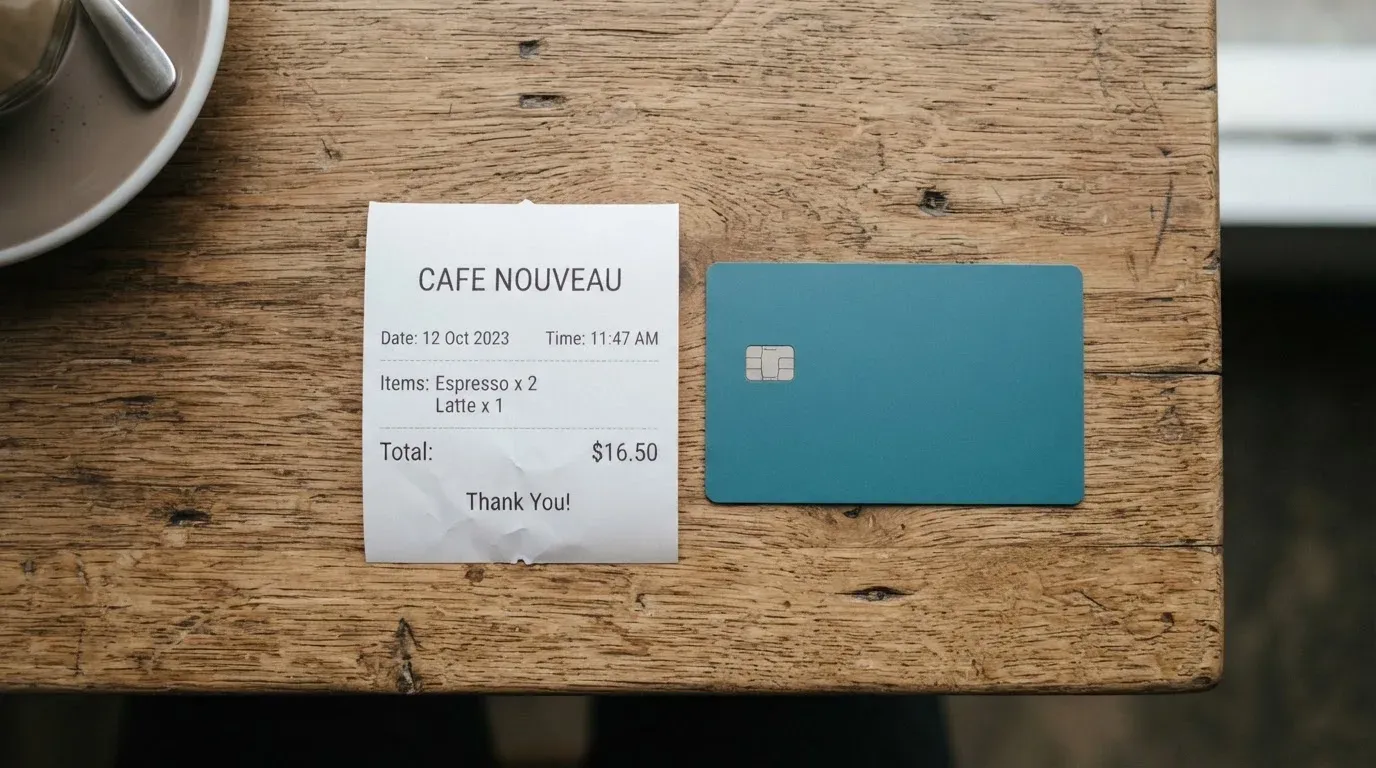
What the home page does say is that you can send, receive, top up and save in USDC “without commissions”. Read that narrowly. It describes the stablecoin side of the account — the transfer in, the transfer out, the balance sitting there. It does not describe what happens when you buy a coffee with the money, and that is the fee that would hurt you.
| Item | What is published |
|---|---|
| Issuance fee | Not stated |
| Monthly / maintenance fee | Not stated |
| Conversion fee (crypto to fiat at payment) | Not stated |
| Foreign exchange fee | Not stated |
| ATM withdrawal | Not stated |
| Daily spending limit | Not stated |
| Monthly spending limit | Not stated |
| Card currency | Not stated; terms say fiat accepted include USD and other local currencies shown in the platform |
| Stated only for crypto transfers | Sending, receiving and topping up in USDC “without commissions”; fees, commissions and spreads are shown in the app and may change |
Three everyday payments, and what I can honestly say about each:
- A coffee in the country where you live. Total cost unknown. The card currency is not stated, so if the shop charges in anything other than your balance’s currency, some conversion happens — at a rate the card does not publish. This is the everyday case, and it is the one where a missing fee schedule matters most.
- An online subscription in USD. Also unknown, and with an extra wrinkle: online authorisations can be declined by risk systems, and a decline may leave a hold on your funds for several days. Nothing about how this card behaves in that situation is published.
- Withdrawing cash at an ATM. Entirely not stated — whether ATMs work at all, what they cost, per-transaction or daily limits. Treat this as unavailable until you have seen otherwise.
One more currency detail from the terms worth knowing, because it affects what happens to your money in a bad scenario: liquidated balances may be held in a fiat currency Kontigo chooses, for example USD. That is about balances, not payments, but it is the kind of clause that matters if you are far from home when it applies.
How to Top up
Topping up is the one part of the mechanism that is stated clearly: card purchases are paid directly from your USDC balance, and the app runs on Base according to a Kontigo article. So the model is a pre-loaded balance — you hold USDC, you spend USDC, and the balance is what stands between you and an overdraft. That is a simple, comprehensible model, and it is the right one for the pitch.
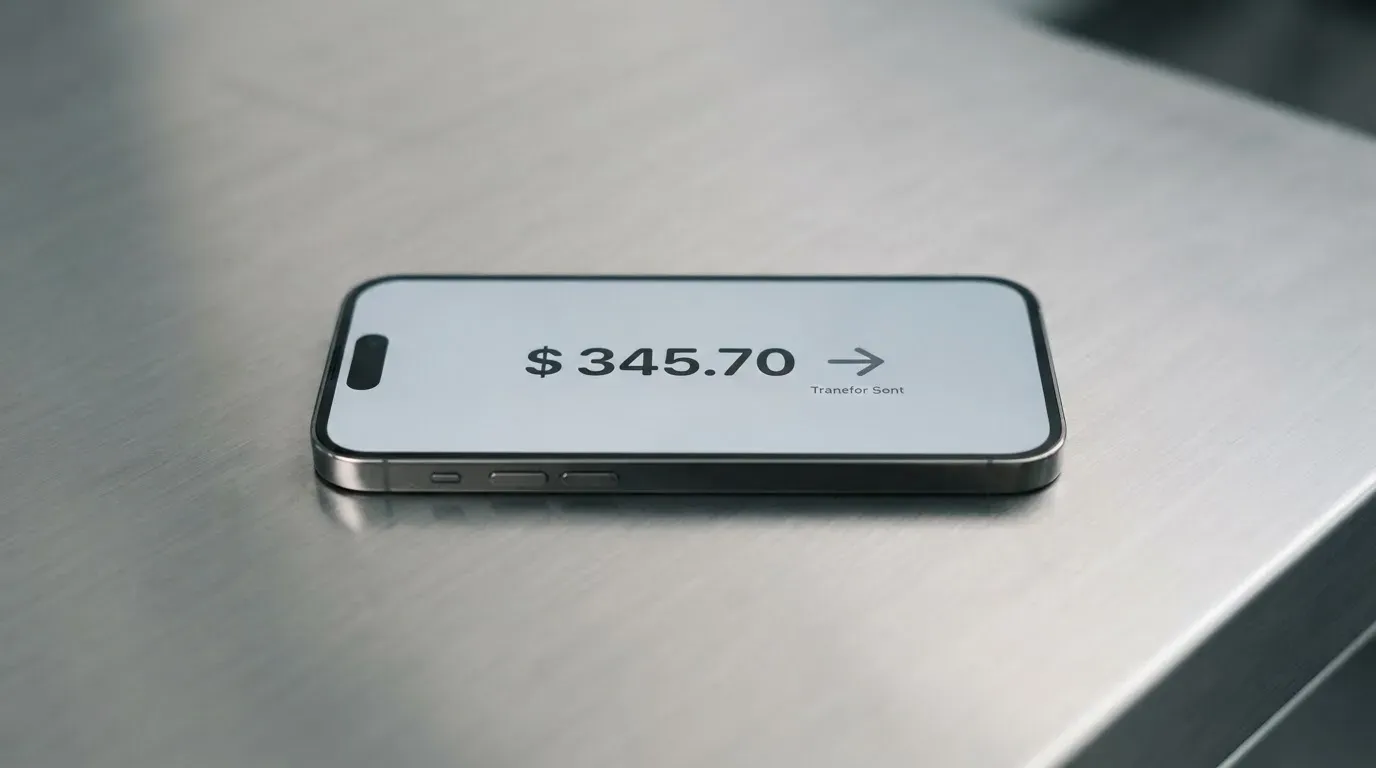
But the card-specific top-up routes are not stated. Which networks are accepted, whether other coins are accepted, whether bank transfer, card transfer or anything else is offered — the card’s own terms do not say. The home page claims topping up in USDC “without commissions”; as with the other “without commissions” claim, that is about the transfer, and the network fee on the deposit itself is charged by the blockchain, not by the card provider.
Base deserves a specific warning because it is the kind of detail people lose money on. Blockchain transfers are irreversible. If you send on a network the provider does not support, or to an address belonging to a different network, the funds can be lost or need manual support recovery with no guarantee of success. Before your first transfer, confirm in the app which network and which address it wants. That is a five-minute check that has saved people entire balances.
What about getting money back out? The terms say digital assets can be transferred to external wallets “when that feature is available” — note the conditionality. After account closure you get a reasonable period to instruct a withdrawal, for example 30 days. If you do not instruct it, Kontigo may sell the assets and hold the proceeds in a fiat currency of its choosing, earning no interest. Closing requires no pending obligations and no balance (or a withdrawal already instructed).
And a warning you may not expect: USDC is not censorship-proof. Tether describes disabling tokens in wallets on the OFAC sanctions list and freezing funds tied to illicit activity. That cuts both ways — it is a compliance fact, and it is also a reminder that your balance is not outside the reach of the system.
Paying with it every day
The everyday-use picture is where this card is thinnest, and the reason is simple: form factor is not stated. Card design, Apple Pay and Google Wallet support, and ATM access — none of it is named. The site speaks about hybrid, credit and debit cards, which is a family of products rather than a specification.
What you can take from general knowledge of how these cards work, and why each point bites here:
- Merchant category codes. A card carries a four-digit merchant category code classifying the business, and many issuers block gambling (MCC 7995) by policy rather than by law, with the blocked list differing per issuer. Whether Kontigo blocks anything is not stated.
- Which network looks you up, and why that matters. A payment card number begins with six or eight digits identifying the issuing institution. Merchants can look that up to see which institution and country issued the card, and may apply extra scrutiny when the issuer country differs from the billing address. This is why a card issued in one country can look “foreign” in a shop in another — and Kontigo does not name its issuer country.
- Prepaid versus debit. A prepaid card draws on a stored balance; a standard debit card asks your bank for funds at the moment of purchase. Many crypto cards behave as prepaid. Kontigo’s own description — spending from a USDC balance — fits the prepaid model, which also means it cannot overdraw.
- Mobile wallets and tokenisation. Apple Pay replaces the card number with a device-specific number stored in the Secure Element, never on Apple’s servers, with a one-time dynamic code per payment. The issuer can restrict such a token — blocking it on phone, website or magnetic-stripe use. Unconfirmed for this card, and worth asking about, because mobile wallet is often the difference between a card you use and a card in a drawer.
- Declines and holds. A declined authorisation can leave a hold on funds that may persist for several days.
On the balance, there is a genuine upside: the card is marketed as one that earns yield, holding and spending from the same balance. The rate and the payout form are not stated, and no cashback figure is given. The one cashback claim, from the unofficial Spanish-language piece, mentions Bitcoin cashback and sits inside a promotion. So: the concept is attractive, the number is absent.
Two comparison points for context. The app is on Google Play and the App Store, and the site cites “over 10,000” user reviews; the store rating is not stated. And the help centre pages are in Spanish, with English article pages existing at /en/article.
What can go wrong
Three risks, in the order I would worry about them.
Security and custody. The footer says assets are held in user custody, and the terms add that assets may be in a self-custodied wallet or with third-party custodians. Kontigo says it cannot access or recover private keys, and the user is solely responsible for credentials. Transactions are generally final. So the usual trade: you keep control of your keys, which means you carry sole responsibility for key loss, phishing, and clipboard-hijacking malware that swaps copied addresses. Transfers are typically irreversible and a stolen key has no built-in recovery — the network cannot freeze or return funds. Two-factor authentication, a card-freeze function and insurance are not stated, and those are exactly the three things I would ask about.
Platform and security incidents. Unofficial, dates not verified: a hack drained 340,905.28 USDC from 1,005 user accounts, and the company says refunds were processed. The same reporting mentions a US$20M seed round reported in December 2025. Treat all of this as third-party reporting, not as a card statement — but the direction of it matters. Self-custody did not prevent losses at the platform layer, which tells you custody language describes key control, not operational security. And the historical record of custodians in this category is not reassuring: Mt. Gox (about US$350 million reported stolen, 2011-2014), Coincheck (about US$400 million, 2018), Ronin Network (US$625 million, 2022).
Disputes. The terms set out a good-faith negotiation window of up to 15 business days after written notice, then Delaware courts, and local consumer-protection authorities remain available to you. Chargebacks are not mentioned. This matters more than it sounds. A chargeback is a refund ordered by the issuer to settle a dispute, with reason codes such as fraud, duplicate billing or goods not received; US debit card reversal rights come from Regulation E and credit card rights from Regulation Z, and prepaid-card coverage varies and should not be assumed. For an unknown issuer and an unnamed network, plan on negotiation rather than chargeback. Report unrecognised transactions as soon as possible.
One more thing on licensing. Kontigo, Inc. is a Delaware corporation, and the card issuer, the BIN sponsor and the licences are not stated. For context: a card programme normally has a licensed issuer holding it, with the crypto brand often only a programme manager or front end; Visa and Mastercard license issuers and can suspend a programme, and both have done so — WaveCrest’s Visa programmes were closed in Europe in 2018, and Visa terminated its global agreements with FTX on 13 November 2022, after which the FTX US debit card was wound down. Programme closures tend to follow a pattern: notice, then spending and loading stop, then you are asked to withdraw remaining balances. In this category that is a normal risk, not an exotic one.
On complaints, the picture is thin in both directions: one search of Trustpilot and Reddit found no Kontigo card complaints, and the hits were for an unrelated brand — a Trustpilot page for kontigo. was not found either, the hits being for Tuyo. No user reports found. That is not a clean record; it is an absence of one, and for a young product it should be read as “too early to tell”, not “no problems”.
What to take instead
Here are three alternatives I looked at, with their published details, so you can see the contrast. Scores are from the same scale as above.
| Alternative | Score | Card | Cost and fees | Funding |
|---|---|---|---|---|
| International Visa Card | 6.7 / 10 | U.S.-issued Platinum Visa, virtual, pays in USD; physical “Coming soon” | Virtual card issuance $5 one-time, no maintenance fee; plans Classic free, Pro $9.00/month, Max $19.00/month; USD use free on all plans; foreign currency at “Visa exchange rate + 2% FX fee”; deposits of any kind free | Deposit USDC or USDT into the USD account, free at 1:1; networks not stated; also USD, EUR, SEPA, SWIFT, FedNow |
| UNi Card | 6.1 / 10 | Multicurrency UNi Card on the Mastercard network, spends from the UNi.Global account balance; physical/virtual not stated | “No annual fee” or foreign transaction fee; issuance fee not stated; converted at “live OTC (Over-the-Counter) rates”, “No hidden exchange fees” | Not stated |
| Morse | 7.5 / 10 | “Morse Card is fully virtual for now”; Visa prepaid debit, spends from Morse Balance “in any currency” | Issuance and monthly fee not stated (“Fees may apply. See Cardholder Agreement”); “Zero foreign exchange fees or markups” at the real-time Visa rate; paying online and contactless is free | Deposits by debit card, stablecoin transfer, Account Details (USD, EUR, MXN, COP; BRL needs Brazilian CPF); USDC, USDG and EURC via Solana free, other tokens/blockchains carry a fee; Bitcoin, USDT, Ethereum and others accepted; wallet is self-custodial |
Take the contrast in fees and it is stark. Morse publishes zero FX fees and no markups and says paying with the card is free. UNi publishes no foreign transaction fee, no annual fee and live OTC rates. The International Visa Card publishes a 2% FX fee, which is real money, but it is a number you can plan around. Kontigo publishes none of it, so you are choosing with the costs hidden.
Two structural differences also matter. Eligibility: the International Visa Card excludes residents or legal registrants of Belarus, mainland China, North Korea, Cuba, India, Iraq, Iran, Israel, Myanmar, Nepal, Nicaragua, Russia, Syria, Turkey, Ukraine, Venezuela and Vietnam, with FATF grey-list countries reviewed case by case — a rule by residence or registration, with citizenship not mentioned. Morse sets eligibility by residence too: 18+, a resident in a supported country, app in “over 140 countries”, and it cannot serve customers subject to US, UK, EU or UN sanctions, with a closed-beta invite list including Australia, Japan, New Zealand, Serbia, Singapore, Switzerland, Thailand, Türkiye and the UK. Both tell you more than Kontigo does about whether you qualify.
Rewards, for what it is worth: UNi offers spend-to-earn rewards up to 3%; the International Visa Card states no cashback; Morse does not state rewards on its card pages. None of them matches the yield pitch either — but Kontigo is the only one of the four where the reward is the headline and the figure is missing.
Who I would recommend it to
I would recommend Kontigo to exactly one kind of person, and describe them precisely: someone in one of the Latin American markets the company clearly serves, who already holds USDC, is comfortable with self-custody and irreversible transfers, has verified in the app which network and address to use, and is willing to treat the card as a spending convenience rather than as a financial instrument they can reason about. For that person the pitch works — spend from a balance that also earns, from a platform rather than a traditional bank, in a region where an ordinary card is hard to get.
I would not recommend it to you if any of these are true. You need a predictable cost per payment and the fee schedule lives only in the app. You are outside the countries the company works with and cannot confirm eligibility before signing up. You need credit, and the issuer and its licensing are not stated. You need a physical card, cash withdrawals, or Apple Pay and Google Wallet, because none of those are confirmed. You intend to hold a meaningful balance and self-custody, because a key loss is final and the standard safeguards — 2FA, freeze, insurance — are not stated.
And if you are searching rather than reading, one honest caution. This is a young platform with a thin published record: no named issuer, no licences disclosed, an unofficial report of a hack affecting 1,005 accounts with refunds claimed, and effectively no user reviews to check. Absence of complaints is not absence of risk. What you are being offered may well be sound; what you can verify is thin. Size your decision to that.
Frequently asked questions
What is Kontigo card?
Kontigo describes itself as the first international credit and debit card in USDC that earns yield, with hybrid, credit and debit cards listed in its footer. Purchases are drawn directly from your USDC balance, and the app runs on Base. The company is Kontigo, Inc., a Delaware corporation, and its footer says it does not provide financial services or take deposits, with assets held in user custody.
How does Kontigo card work?
It works on the pre-loaded balance model: you hold USDC, you spend from it, and the card cannot overdraw because only the loaded balance stands behind it. The balance is said to earn yield while it sits there. Card purchases are paid from the USDC balance directly. Everything around that — card network, physical or virtual format, ATM support — is not stated on the card’s public pages.
Is Kontigo a bank?
Not on its own account. Kontigo, Inc. is a Delaware corporation, and the footer states that Kontigo does not provide financial services or take deposits, with assets held in user custody. The card issuer, the BIN sponsor and the licences are not stated. In practice, a card programme normally sits with a licensed issuer while the crypto brand acts as programme manager — but here that issuer is unnamed.
Who owns Kontigo?
Kontigo is Kontigo, Inc., a Delaware corporation. The card issuer is a separate thing from the brand, and for Kontigo it is not stated. That distinction is worth holding on to: your contractual counterparty may not be the company whose app you use, which matters for complaints and for what happens if the programme is wound down.
Does Kontigo card require KYC?
Yes. The terms require identity verification before you can use the services, with name, date of birth, address, nationality and ID documents among the possible checks, along with sanctions screening and credit checks. One account per user is allowed. No verification tiers are described in the terms, though developer documentation mentions that deposit methods depend on your KYC level.
How do I top up Kontigo card?
The card-specific routes are not stated. What is published: purchases are paid from your USDC balance, the app runs on Base, and the home page says you can top up in USDC “without commissions”. Confirm in the app which network and address it expects before your first transfer, because blockchain transfers are irreversible and a wrong network can mean lost funds.
What does it cost to use the Kontigo card?
Nothing is published. Issuance fee, monthly fee, conversion fee, FX fee, ATM fees and daily or monthly limits are all not stated. The terms say fees, commissions and spreads are shown in the app and may change. The “without commissions” claim covers sending, receiving and topping up in USDC — it says nothing about what a shop payment costs.
Can I add the Kontigo card to Apple Wallet?
That is not stated. Apple Pay support is one of the everyday-use details the public pages do not cover, along with Google Pay and ATM access. Since the issuer is unnamed and the card network is not named, treat mobile wallet as unconfirmed until the app or the issuer confirms it.
Is Kontigo card safe?
It depends which layer you mean. The footer says assets are in your own custody and Kontigo cannot access or recover your private keys — which also means key loss, phishing and wrong-network transfers are yours alone, and transactions are generally final. 2FA, card freeze and insurance are not stated. Unofficially, a hack drained 340,905.28 USDC from 1,005 accounts, with the company saying refunds were processed.
How do I withdraw money or delete my Kontigo account?
Transfers to external wallets are possible “when that feature is available”, so check the app before relying on it. Account closure needs no pending obligations and no positive balance, or a withdrawal already instructed. After closure you get a reasonable period — for example 30 days — to instruct a withdrawal; after that Kontigo may sell the assets and hold the proceeds in a fiat currency of its choosing, with no interest.
App and neobank card verdicts – cryptocardverdict
Content created by the «cryptocardverdict» team