
A virtual Visa from a Central American app, priced at zero and limited to Latin America
 Available in US
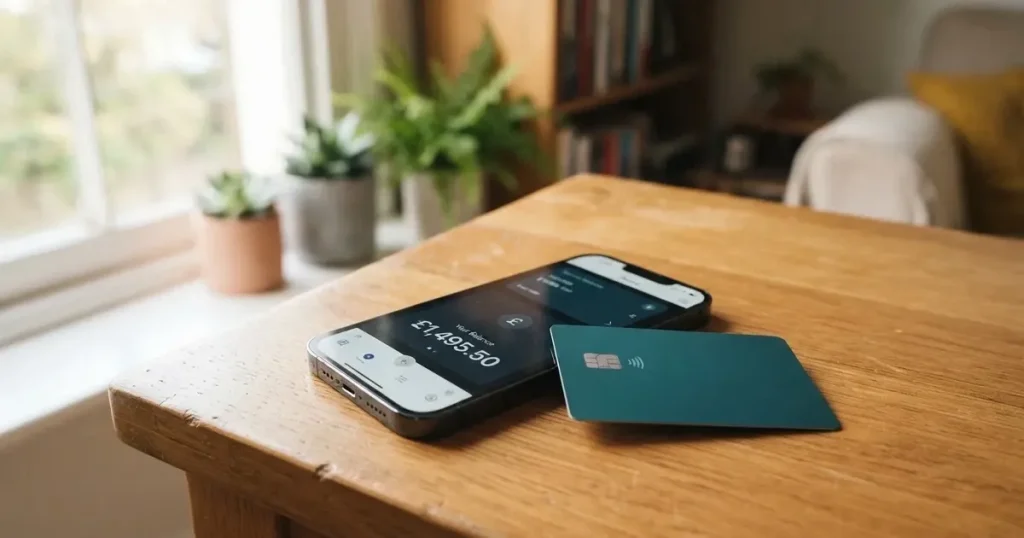
If you are looking at the OSMO card, you are probably trying to answer one of two questions: can I spend my money without friction, and can I stop a bank from shutting me off? This review answers both, from the card’s own public pages and the material a careful reader would check anyway. OSMO is a virtual Visa International debit card, free to issue and free to hold, that spends from a USD balance inside an app run by a company in El Salvador. The catch is geography. It is built for residents of a defined group of Latin American countries, and outside that group the answer is simply no — not “complicated”, but no.
My score for the card is 6.4 out of 10. That number is not a verdict on whether the card is any good at what it does; it is a judgement about how much of what you might want, you actually get. The cost side is excellent. The everyday-use side is thin, because it is a card that exists on a phone screen and barely anywhere else. If you are a resident of the supported Latin American countries, holding dollars and Bitcoin in one app is a real convenience and the card does it cheaply. If you are anywhere else on earth, keep reading — there is an entire section later on what to look at instead.
The conditions described below are current as of October 28, 2026.
The score, criterion by criterion
Here is how I arrived at the 6.4, one line per criterion. Each mark is out of 10, and the total is the sum as published.
| Criterion | Mark | Why |
|---|---|---|
| Who can get it | 4 / 10 | A defined Latin American region: Costa Rica, Guatemala, El Salvador, Panamá, Honduras, República Dominicana, Argentina and several more countries. Everyone else is out. |
| Cost | 8 / 10 | “$0 de cuota mensual”, the virtual card is free; cash withdrawal 1%, bank withdrawal 1%; the card’s FX fee is not disclosed |
| Top-up options | 7 / 10 | Bitcoin or USDT (networks Bitcoin, Lightning, Polygon), card, bank transfer, cash |
| Reliability and complaints | 8 / 10 | Cards from Rain and SOINSA, accounts at Bridge Ventures, Bitcoin custody at Osmo El Salvador under CNAD, BCR, SSF oversight; App Store 4.8 out of 5 from about 1.8 thousand ratings; Trustpilot 3.2 from a single review |
| Everyday use | 5 / 10 | Virtual Visa, Apple Pay immediately; Google Pay and ATM are not disclosed; cash via “agencias afiliadas” |
Total: 6.4 / 10.
Read the “Who can get it” line again. A single mark of 4 out of 10 is doing most of the work in this average, and it is doing it because of a fact that has nothing to do with quality. The audience the card is woven for is Latin American residents holding dollars and Bitcoin in one app — people for whom a USD balance and a crypto balance in a single interface is the point. For everyone else, the other four lines are largely irrelevant.
Will They Give You the Card
The starting data names the countries: Costa Rica, Guatemala, El Salvador, Panamá, Honduras, República Dominicana, Argentina, Colombia, Chile, Ecuador, México, Uruguay, Paraguay, Puerto Rico, Perú, Bolivia. The app store listing adds only a soft warning that “Product availability depends on where you live”. So the honest reading is that this is a card for residents of a specific Latin American region, and the app itself is the final arbiter of whether your address qualifies. If you live in one of those countries, you are in the intended group. If you do not, no amount of good intent on your part will get you a card, and you should not spend an evening looking for a workaround — the boundary is the product, not an obstacle.
One thing the card does not say, and I want to be plain about the absence rather than fill it in: nothing on the public pages tells you whether eligibility runs on residence, on citizenship, or on both. Unlike some international cards that state their exclusions in full, OSMO simply publishes the list of places it works. Assume it follows where you live, and treat anything else as unknown.
How to Get It
The process is short, and that is the good news. You sign up with an email address or a phone number, in 30 seconds, and you do identity verification inside the app — the card calls it “verificación de identidad”. A help centre section on KYC exists and carries six articles. You get a virtual Visa International debit card, free of charge, that spends your USD balance and automatically converts to your local currency when you do not hold that currency.
What the public pages do not say is just as important as what they do. Which documents you need is “not stated”. Whether proof of address is required is “not stated”. How many KYC levels exist, if more than one, is “not stated”. The help centre has a “Verificación (KYC)” collection, which tells you the topic is documented somewhere — just not in the places a new applicant would look first. Budget for the possibility that you will be asked for documents, and check the KYC section of the help centre before you assume the thirty-second sign-up is the whole story.
There is no physical card to wait for; this is a virtual card, and the card’s pages do not mention a plastic version at all. A physical card is mentioned as “not applicable” — it simply does not feature in this product. So there is no delivery wait, but also nothing to hand a shop that insists on a physical card.
What It Really Costs: Fees, Fees, and More Fees
This is the section where OSMO looks its best, and I want to lay it out plainly because the numbers are the reason the cost criterion scores 8.
| Fee or limit | What the card says |
|---|---|
| Issuance | The virtual card is free |
| Monthly fee | “$0 de cuota mensual” |
| Cash withdrawal | 1% |
| Bank withdrawal | 1% |
| Card FX fee | “not stated” |
| ATM | “not stated”; cash is handled through “agencias afiliadas” |
| Sending Bitcoin | 3% |
| Receiving USD | No cost |
| Spending limits | Card limits “not stated”; you can set your own spending limits, and limits vary by country under the help centre’s “Límites de transacciones” |
| Tiers | “not stated” — a single virtual card; a separate “OSMO Private” product exists |
The full schedule sits on the card’s Tarifas page. Two numbers deserve your attention because they are the ones you will feel. Withdrawing cash costs 1%, and withdrawing to a bank costs 1%. Those are not small figures if you live on cash, and they are the reason the card’s cash story — paywalled affiliates rather than an ATM network — has to be priced in.
The single genuine gap in this table is the card’s foreign exchange fee. It is “not stated”. Given that the balance is in USD and the card “automatically converts to local currency” when you hold no such currency, the conversion rate you get is exactly the thing a traveller or an importer most needs to know, and the public pages do not say. Treat the conversion cost as unknown rather than zero until you have seen it yourself in the app. The absence of a number is not a number.
Now let me walk through a few ordinary days, because that is where fee schedules either hold up or fall apart.
Buying coffee. You tap the card or use Apple Pay and the amount leaves your USD balance. If you are in a country whose currency you already hold, no conversion happens. If you do not, the card converts to local currency for you and you are at the mercy of a rate and a fee the card does not publish. There is no monthly fee to soften this, at least.
Paying a supplier in local currency. Again, the conversion question. The card converts automatically when you hold no such currency. The fee attached to that conversion is the unknown from the table above.
Getting money out. Cash through an affiliated agency costs 1% and is immediate. A bank withdrawal costs 1% and arrives in one to two business days, via SINPE. Crypto can go to any wallet. If you take cash out often, the 1% compounds in a way the zero monthly fee does not offset.
Two everyday limits are worth flagging because you can partly control them. You can set your own spending limits in the app, which is a real and useful control. But the card’s own limits are “not stated”, and the help centre notes that limits vary by country. So the number you would want to plan a month around — “how much can I actually push through this in one go” — is not something the public pages will give you.
How to Top Up
Funding is where OSMO is genuinely flexible, and this is the second thing the card does well. You can top up with Bitcoin, or with USDT on the Bitcoin, Lightning, or Polygon networks. You can top up by card or bank transfer. You can top up in cash. Whatever you load, the card spends from your USD balance — the conversion to a spendable balance happens on your side of the line, not at the till.
Receiving USD costs nothing, which is the number most of the funding paths share. The minimum Bitcoin purchase starts at $1, so the card does not demand a meaningful commitment before you can test it. A fee for topping up by card is “not stated”.
Two cautions, and neither is about OSMO. The first is the network. A blockchain transfer sent on a network the provider does not support, or to an address belonging to a different network, can simply be lost or need manual recovery with no guarantee. OSMO names Bitcoin, Lightning, and Polygon for USDT; send on anything else and you are outside what the card has told you it supports. The second is timing. Crypto transfers are irreversible, and the network fee for your deposit is charged by the blockchain, not by the card — so the amount that arrives can be less than the amount you sent, by the gas cost.
Withdrawals run as follows: cash at an affiliated agency, 1%, immediate; bank, 1%, one to two business days, via SINPE; or crypto to any wallet.
Paying With It Every Day
The everyday picture is honest and narrow. The virtual card “can be added to Apple Pay right away” — that is the single strongest practical fact on this page, because it means the card is usable at a contactless terminal within minutes of being issued. Google Pay is “not stated”; you should not assume it works. Blocked merchant categories are “not stated”, which means you do not know in advance whether there is a gambling block or a crypto-on-crypto block or anything else. Rewards are “not stated” — there is no cashback to plan around. Dispute handling is “not stated”, which is a bigger gap than it sounds, and I will come back to it below.
The app itself rates well where it can be measured: 4.8 out of 5 on the App Store from about 1.8 thousand ratings, as read on 2026-10-21. The Google Play listing exists but its rating was not read, so I will not extend the 4.8 across both stores.
On the mechanics that explain some of this, a merchant category code is the four-digit number that classifies a business, and gambling (MCC 7995) is one many issuers block by policy rather than law. 3-D Secure — Visa Secure on Visa’s network — adds an identity check to online payments. And a prepaid or foreign-issued card can be declined at the counter simply because the shop looked up the number and saw what it was. OSMO is a USD card issued in Latin America, so in a shop in, say, Europe, it can look “foreign” in exactly the way that invites a second look or a refusal. That is not a defect of the card; it is how card networks work.
What Can Go Wrong
The cleanest thing to say first: I found no official incidents. That is worth stating, because it is the kind of finding that is easy to leave out and expensive to omit.
What I did find was a single Trustpilot review. The card scores 3.2 out of 5 there — but from one review, which is not a signal, it is a data point. The lone 1-star review, dated 14–17 July 2026, describes a USDC deposit via Polygon that was not credited, with support repeating “investigating” for 3 days. This is a user report, not a confirmed finding by the card, and one review cannot tell you whether the same thing happens to others. But it is the shape of the failure a prepaid crypto card is most exposed to: a transfer that vanishes into an unsupported network and a support desk that works on it slowly.
The company behind the card is worth understanding, because “who holds my money” is a different question from “who issues my card”. Osmo is described as “HODL Group”, styled “no un banco”. Bridge Ventures LLC holds the USD accounts. The Visa cards are issued by Rain (Signify Holdings) and the Mastercard by SOINSA. Bitcoin custody sits with Osmo El Salvador S.A., regulated by CNAD, BCR, and SSF. That structure is not unusual for this category — the crypto brand manages the programme, a licensed institution issues the card — but it does mean that a question about your balance and a question about your card have different answers depending on which entity you ask.
On security, the card offers what you would expect: freeze and unfreeze in the app, refreshable digital card details, encryption, fiat backed 1:1 by bank accounts, and Bitcoin held 1:1 with 80% in cold storage and 20% hot. Support is reachable through a contact page and a Spanish-language help centre, but hours are “not stated”.
Two absences worry me more than the one review does. Dispute handling is “not stated”. If a charge goes wrong, I cannot tell you what recourse you have, how long it takes, or whether prepaid-card protections apply to this product at all — they vary by programme and should not be assumed. And the card’s FX fee is “not stated”, which for a card whose entire daily job is spending a USD balance abroad is the number you will argue about in your own head.
There is one more category risk worth naming without dramatising it: programmes get closed. Visa terminated its agreements with FTX in November 2022 and the US card programme was wound down. WaveCrest, an issuer that supplied several crypto card brands, was suspended by Visa in Europe in 2018. Typically a closure means a notice period, then loading stops, then spending stops, then you withdraw what is left. OSMO’s licence arrangements and its named issuers are current as far as the public pages go, but this is a category where continuity is not permanent, and the pattern above is what you would follow if it changed.
Fees at a Glance: What an OSMO Payment Costs
Before the alternatives, here is the cost picture condensed to the three things that actually vary between a zero-fee purchase and a cash withdrawal.
| Action | Cost as stated |
|---|---|
| Spend from your USD balance | No monthly fee (“$0 de cuota mensual”); the card itself is free |
| Take cash out | 1% at an affiliated agency, immediate |
| Withdraw to a bank | 1%, one to two business days |
Everything else — conversion rate, FX fee, card top-up fee, ATM access — is “not stated” on the public pages. Read that table as the known floor of the fee schedule, not the whole of it.
What to Take Instead
Nothing here is a like-for-like replacement, and I would rather say that plainly than dress up a comparison. OSMO’s specific combination — a Latin American focus, Bitcoin and USDT funding, USD balance, free card — is not widely matched. But if you are outside its region, or the missing FX fee bothers you, here is where the alternatives actually differ.
International Visa Card scores 6.7 / 10, marginally above OSMO. It is open to far more people: account and card are not available to residents or legal registrants of Belarus, mainland China, North Korea, Cuba, India, Iraq, Iran, Israel, Myanmar, Nepal, Nicaragua, Russia, Syria, Turkey, Ukraine, Venezuela, or Vietnam, and FATF grey-list countries are reviewed case by case. Purchases are blocked in North Korea, Cuba, Iran, Russia, Syria, Ukraine, and Venezuela. Note the rule is by residence or registration, not citizenship. The card is a U.S.-issued Platinum Visa, virtual, paying in USD, with a physical card “Coming soon”. Issuance is $5 one-time with no maintenance fee; plans run Classic free, Pro $9.00/month, Max $19.00/month. Card use in USD is free on all plans; foreign currency is “Visa exchange rate + 2% FX fee”. Deposits of any kind are free. No cashback is stated. The trade is clear: broader eligibility and a stated FX fee, against a monthly charge on the paid plans and no crypto-native funding story.
Morse scores 7.5 / 10, the highest of the four. Eligibility is by residence, not citizenship: you must be at least 18 and a resident in a supported country. The app is available in over 140 countries and local add/withdraw works in over 70. Morse “cannot serve customers subject to sanctions issued by the United States” (and the UK, EU, UN). A number of countries are in closed beta and need an invite code — American Samoa, Australia, Cape Verde, Guernsey, Hong Kong SAR China, Isle of Man, Japan, Jersey, New Zealand, Serbia, Singapore, Switzerland, Thailand, Türkiye, United Kingdom, Western Sahara — and the card is “available only in certain countries” with the list not published on the card page. The card is fully virtual for now: a Visa prepaid debit spending from a Morse Balance “in any currency”. Issuance and monthly fees are “not stated” (the card page says fees may apply, see the Cardholder Agreement). What is stated reads well: zero foreign exchange fees or markups at the real-time Visa rate, conversions at the real rate with no markup, and paying with the card online and contactless is free. Funding is broad — debit card, stablecoin transfer, Account Details in USD, EUR, MXN, COP (BRL needs a Brazilian CPF), with USDC, USDG and EURC via Solana free and other tokens or blockchains carrying a fee, and Bitcoin, USDT, Ethereum and other tokens accepted. The Morse Wallet is self-custodial. If you want a card with the fee schedule actually spelled out and you are not in a beta country, this is the one to look at first.
UNi Card scores 6.1 / 10. A multicurrency card on the Mastercard network, spending from the UNi.Global account balance; physical versus virtual is “not stated”, and so are the country list, the funding routes, and the issuance fee. What it does state is attractive: “No annual fee” and “no foreign transaction fee”, conversion at live OTC rates, and “No hidden exchange fees”. It also offers “Spend-to-Earn rewards” up to 3%. The problem is that the details you would need to open an account are the ones it does not publish.
So, briefly: OSMO if you are in its region and want crypto funding at no monthly cost; Morse if fee transparency and broad residency matter more to you than crypto-native top-ups; the international Visa if you need the widest country list and can accept a stated 2% FX fee; UNi if multicurrency and cashback matter and you can confirm the basics yourself.
Who I Would Recommend It To
I would recommend the OSMO card to someone living in Costa Rica, Guatemala, El Salvador, Panamá, Honduras, República Dominicana, Argentina, or one of the other listed countries, who already wants to hold dollars and Bitcoin in one place and who is comfortable adding a card to Apple Pay and tapping. For that person it is a genuinely cheap, well-regulated arrangement: no monthly fee, a free virtual Visa, several funding routes including three stablecoin networks, and custody of the crypto held under named regulators. The app’s 4.8 rating from about 1.8 thousand App Store ratings is a reasonable signal of a product people do not regret.
I would not recommend it to anyone who needs a physical card, who lives outside the listed region, who needs to know their exact conversion rate before they spend, or who plans to lean on cash — at 1% per withdrawal, and with no ATM network disclosed, cash is the expensive part of this card, not the cheap part. I would also be cautious if your priority is knowing exactly how a disputed charge gets resolved, because the card does not say.
And if you are reading this wondering whether a crypto card will solve a banking problem for you: understand the trade before you commit. Custody, not the card, is where your risk sits. With a custodial wallet, the provider holds the credentials and you must trust them completely; a seed phrase is an unencrypted form of the private key, and anyone who obtains it can restore the wallet and spend the funds. Transfers are typically irreversible, and a stolen key has no recovery — the network cannot freeze or return it. Custodial platforms have a real record of failure: Mt. Gox (about US$350 million reported stolen 2011–2014), Coincheck (about US$400 million, 2018), Ronin Network (US$625 million, 2022). OSMO’s answer to this is that fiat is backed 1:1 by bank accounts and Bitcoin 1:1 with 80% cold and 20% hot. That is a mitigation, not a proof, and it is the right thing to have weighed before you deposit anything you cannot afford to lose.
One more thing, since you will spend money on this card eventually. The IRS treats digital assets as property, so exchanging them for goods, services, or dollars generally produces a taxable gain or loss, measured in local currency at fair market value on the date of the transaction. In other words, each card payment funded from crypto may be a separate taxable disposal. That is not advice — it is a reason to keep records, and to ask a qualified professional in your own country about your own situation before you assume either way.
Frequently asked questions
What is the OSMO card?
OSMO is a virtual Visa International debit card inside a crypto app. You fund it with Bitcoin or USDT, or by bank or card transfer, or with cash, and it spends from a USD balance in that app. The card converts to your local currency automatically when you do not hold it. It is issued free and carries no monthly fee. The card itself is virtual — no physical version is mentioned.
Is OSMO a bank?
No — the company describes itself as “HODL Group”, styled “no un banco”, which is to say “not a bank”. The pieces sit with named institutions: Bridge Ventures LLC holds the USD accounts, Rain (Signify Holdings) and SOINSA issue the cards, and Osmo El Salvador S.A. handles Bitcoin custody under CNAD, BCR and SSF oversight. That structure is normal for this category, but your balance and your card are two different relationships.
Who can get the OSMO card?
Residents of a defined Latin American region: Costa Rica, Guatemala, El Salvador, Panamá, Honduras, República Dominicana, Argentina, Colombia, Chile, Ecuador, México, Uruguay, Paraguay, Puerto Rico, Perú and Bolivia. The app store listing says availability depends on where you live. The card does not say whether the test is residence, citizenship, or both — assume residence, and check in the app.
Does the OSMO card require KYC?
Yes. You verify your identity in the app — “verificación de identidad” — and sign-up is by email or phone in 30 seconds. The help centre has a KYC section with six articles. Which documents are required, whether proof of address is needed, and how many verification levels exist are all “not stated” on the public pages, so check that section before assuming the quick sign-up is the whole process.
What does it cost to use the OSMO card?
The card is free to issue and the monthly fee is “$0 de cuota mensual”. Withdrawing cash costs 1%, and withdrawing to a bank costs 1% over one to two business days. Sending Bitcoin costs 3%; receiving USD costs nothing. The card’s own foreign exchange fee is “not stated”, as is the fee for topping up by card — so treat your conversion cost as unknown rather than zero.
How do I top up the OSMO card?
Four ways: Bitcoin, USDT on the Bitcoin, Lightning or Polygon networks, a card or bank transfer, or cash. The smallest Bitcoin purchase starts at $1 and receiving USD is free. Send on a network the card does not name and the transfer can be lost or need manual recovery with no guarantee — that risk is the network’s, not the card’s.
Can I use the OSMO card with Apple Pay and Google Pay?
Apple Pay, yes, and immediately — the virtual card “can be added to Apple Pay right away”, which is its strongest everyday feature. Google Pay is “not stated”, so do not count on it. Whether any merchant categories are blocked is also “not stated”, so a decline at a particular type of shop may not be something you could have predicted.
Is the OSMO card safe?
No official incidents came up in my checking, and the app holds 4.8 out of 5 on the App Store from about 1.8 thousand ratings. Trustpilot shows 3.2 out of 5, but from a single review: an uncredited USDC deposit via Polygon in July 2026, with support saying “investigating” for 3 days. That is one user’s account, not a pattern. The bigger question is custody — the crypto is held by a provider, so you are trusting them.
Where can I use the OSMO card?
Anywhere a virtual Visa is accepted, including contactless terminals once it is in Apple Pay. For cash, the card points to “agencias afiliadas” at 1%, immediate — it does not describe an ATM network. Because the card is USD-denominated and issued in Latin America, a shop elsewhere may see it as a foreign or prepaid card and decline it. Bank withdrawal, 1%, takes one to two business days via SINPE.
Is the OSMO card worth it?
For someone in its region who wants dollars and Bitcoin in one app, a free card and no monthly fee, yes — that is a good deal, and the funding routes are genuinely broad. Outside the listed countries it is not an option at all. And inside the region, the two things to weigh are the ones the card does not disclose: your conversion rate and fee, and how a disputed charge gets resolved.
App and neobank card verdicts – cryptocardverdict
Content created by the «cryptocardverdict» team