The Worldwide card: cheap to hold, quiet about who issues it
 Available in US
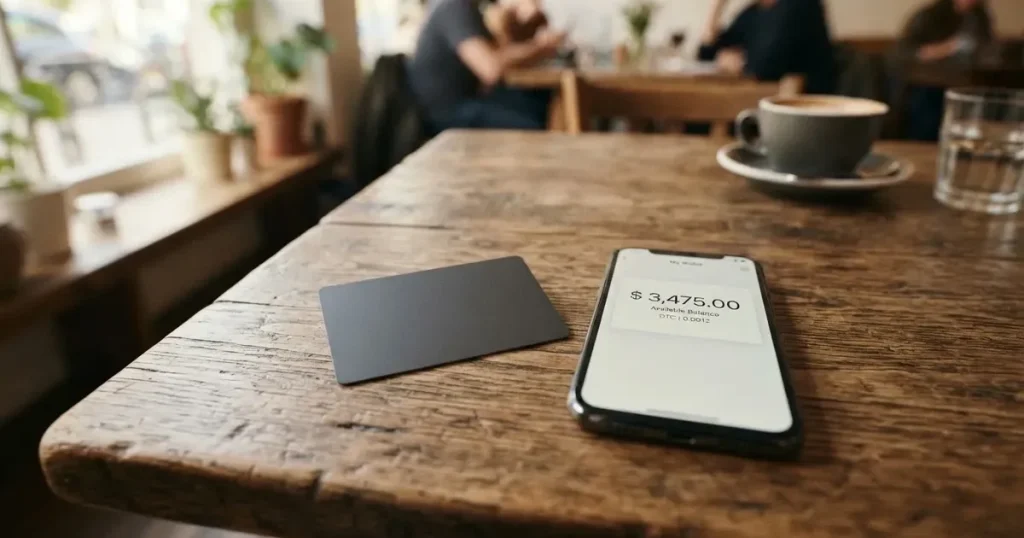
If you have run into Russian cards not working abroad and you want something that behaves like an ordinary payment card instead, the Worldwide card is one of the names you will meet. It is a virtual Mastercard you order and top up inside a Telegram mini-app, its prices are published in rubles, and it makes a plausible case for everyday spending. But when I went through the card’s own pages line by line, one gap kept coming back: the site tells you what the card does, not who stands behind it. The issuer is described only as “a licensed foreign issuer” and never named, and there is no country list, no residency rule and no statement about citizenship. That single silence shapes almost everything else on this page.
My score for the card is 4.2 out of 10. That is not a verdict on whether a virtual card is a good idea — plenty of those are well run. It is a verdict on this particular package, weighed against how little the public pages let you check.
The conditions described here are current as of October 28, 2026.
Verdict: 4.2 / 10, and the gap that decides it
Let me show you the score the way I built it, criterion by criterion, because the numbers matter more than the headline. Here is the table:
| Criterion | Score | Why |
|---|---|---|
| Who can get it | 5 / 10 | Eligibility rules and issuing countries are not described; marketing says “150+ countries” and the app is listed in many storefronts, but nothing says where the card is actually issued |
| Cost | 5 / 10 | Standard from 2,900 RUB a year, Premium from 3,900, Promo 2,390 RUB to issue with 0 RUB maintenance in the first year; operations 0.00 USD and top-up 0%, but the conversion markup is not disclosed |
| Top-up options | 3 / 10 | The website offers top-up only via SBP and says crypto is “not offered”; the App Store app mentions USDT TRC-20 |
| Reliability and complaints | 3 / 10 | The issuer is an unnamed “licensed foreign issuer”, the app developer is URUS – FZCO, and there are no reviews to read — one App Store rating of 1.0 out of 5 carries a scam note, unverified |
| Everyday use | 4 / 10 | Virtual Mastercard only; Apple Pay and Google Pay on Premium and Promo; no physical card and no ATM |
| Total | 4.2 / 10 |
Who this suits: someone who already has a stable crypto position or a steady ruble income, who wants a virtual card for online subscriptions and ordinary web spending, and who is comfortable that the operator is not naming the bank behind the card. The readership I imagine here is an English-speaking reader wanting a virtual tool.
Who it does not suit: anyone who needs a physical card, a cash withdrawal, or the reassurance of a named, licensed institution they can point to. Nor anyone who intends to load significant balances. When an issuer is unnamed and the conversion markup is undisclosed, the thing you cannot do is price the card accurately — and a card you cannot price is a card you cannot trust with money you would miss.
Will they give you the card
The short answer is: the site never says no to anyone, and never says yes in a way you can check. The card is presented as a Russian-language Telegram mini-app that can be ordered and topped up “from Russia without a VPN”. Eligibility rules and the list of countries are not described. Citizenship versus residence — the distinction that decides whether you are allowed — is not stated.
Marketing does the reassuring work instead. The card is advertised as working “where Russian cards are not accepted” and in “150+ countries”. Those are claims of reach, not statements of eligibility. In the App Store the app is listed across many storefronts (US, CA, UK, TR and others), but the listing says nothing about where the card is issued. An app appearing in a country’s store does not mean a card from that country can be issued to you.
One point worth pausing on, because it is easy to read past: this is the criterion that earned 5 out of 10. Not because anyone is refused, but because the answer to “will they give it to me, and from where” is not written down anywhere a reader can consult. For a prepaid-style product, that is the first question, and it is the one left most vague.
How to get it
Everything happens online, which is the strongest practical point in the card’s favour. The site promises no queues and no courier meetings. A physical card is not mentioned at all — everything on offer is virtual.
Activation takes place through the Telegram mini-app. The card you get is a virtual Mastercard (per the site’s FAQ) and comes in tiers: Standard, Premium, Promo and Business. Promo runs on a USD account. In the App Store version, the app describes a virtual card but does not state the network.
On verification, the honest answer is that the picture is thinner than it looks. The site says no visits, no paperwork and no passport are needed — that is marketing wording, and the actual KYC steps and accepted documents are not stated. Verification levels are not described, and neither are rejection reasons. The App Store app lists biometric unlock and says nothing about KYC. In short: you can start in five minutes, but what you are being checked against, and why you might be refused, is not something the public pages tell you.
Fees and what a payment really costs: the costs table
Here is the cost picture, and then we will walk three everyday purchases through it. First the table:
| Item | What the card says |
|---|---|
| Standard tier | from 2,900 RUB/year |
| Premium tier | from 3,900 RUB/year |
| Promo tier | 2,390 RUB to issue; 0 RUB maintenance in the first year; 0% top-up fee |
| Business tier | from 12,900 RUB/year |
| Per card operation | 0.00 USD |
| Top-up via SBP | no transfer fee; 0% |
| Crypto top-up fee | on the App Store app the fee is shown on the deposit/top-up screen; the website says crypto top-up is “not offered” |
| Currency conversion | at the Central Bank rate plus a markup; the amount of the markup is not stated |
| Foreign-exchange rate | “close to exchange/central bank rate”, shown before the top-up; no percentage given |
| ATM withdrawal | not stated (no ATM is mentioned at all) |
| Spending limits | no numeric limits published; Premium is advertised as “purchases without restrictions”, Business as “unlimited turnover” (marketing wording) |
| Top-up amount limits | minimum 500 RUB; maximum 200,000 RUB per SBP transfer (the Central Bank SBP limit) |
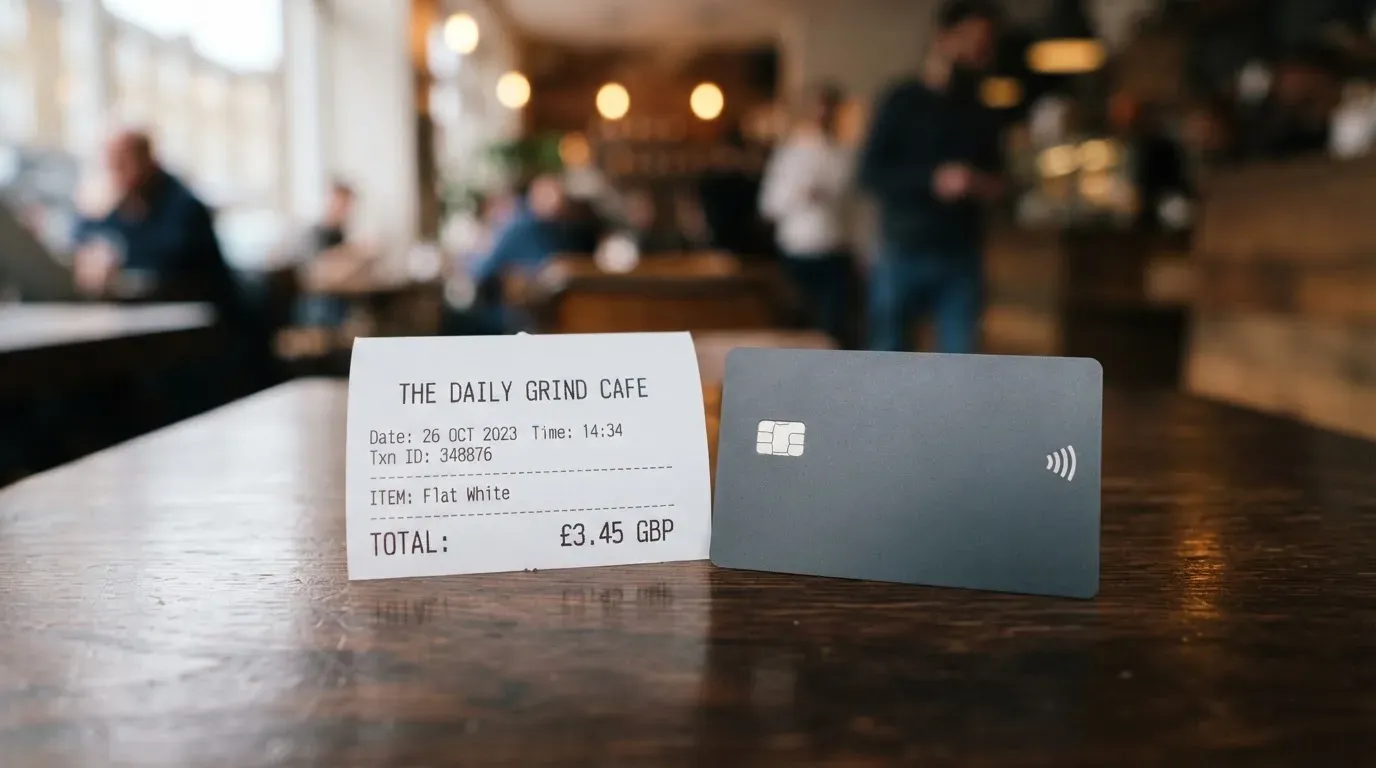
Now, three payments, and which fees actually apply. Take a coffee for 400 RUB on a Standard card. The operation itself is 0.00 USD, so the only cost is the conversion of your ruble balance into the card’s currency at the Central Bank rate plus a markup — and because the markup is never given, you cannot compute it. That is the whole cost of this purchase, and it is the part that stays invisible.
Take a 90 USD subscription paid from a card holding USD. The operation fee is 0.00 USD and the balance is already in dollars, so no conversion happens and the charge is clean. This is the scenario the card is genuinely good at, and it is why the 0.00 USD figure is worth something.
Take a 500 EUR hotel night paid from a USD balance. Here two things bite: the conversion rate “close to exchange/central bank rate” with no percentage attached, and a site warning that the foreign-currency charge can come out slightly above the ruble or dollar equivalent. The site suggests leaving a small buffer. There is no ATM, so there is no cash leg to this trip at all.
Two further costs sit in the background. The blog describes the top-up commission as “minimal or absent”, which is softer language than the 0% the site states for SBP. And the App Store side carries a user claim of a “20 USDT card fee” — one unverified review, not something the card confirms.
What the tiers add matters as much as what they cost. Standard covers online subscription payments, chat support and a basic rate. Premium adds unrestricted online purchases, priority support, a better rate, and Apple Pay/Google Pay. Promo adds a USD account, first-year-free maintenance and the mobile wallets. Business adds unlimited turnover, a personal manager, the best rate, multi-cards for teams and reports. A metal card is not mentioned.
How to Top up
The website says top-up by SBP only — Russia’s Fast Payment System — from any Russian card or account, credited in 1 to 3 minutes, sometimes up to 15. You pay by QR code or by entering the details in your banking app. The minimum is 500 RUB and the maximum 200,000 RUB per transfer, which is the Central Bank’s own SBP limit, not the card’s. On the same page, crypto top-up is marked “not offered”. So the website story is a clean single rail: rubles in, card balance out.
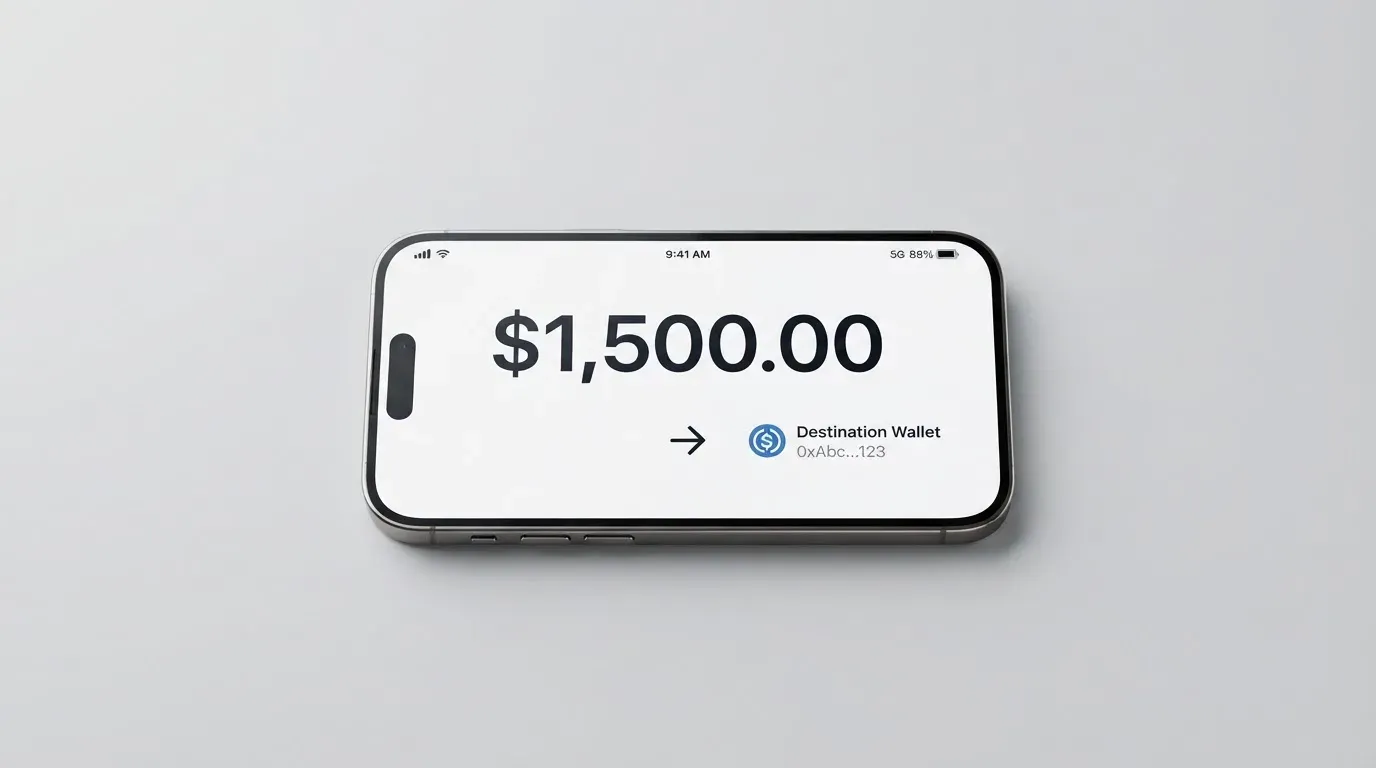
The App Store app tells a different story. There the top-up is USDT over TRC-20, plus top-ups from the account balance, with fee terms shown on the deposit screen. This matters practically: the mini-app and the app are two descriptions of the same product, and only one of them mentions crypto at all. Which one your own account gets is something you would have to discover for yourself.
On withdrawals and closing, the picture is thin. Withdrawal for the card is not stated. The App Store app supports USDT withdrawals over TRC-20. What happens to a remaining balance when you close an account is not stated. If you are picturing this card as somewhere to park money rather than spend it, that silence is the answer to your question.
One word on network choice for the USDT route, since it is a common and costly mistake. Chain transfers are irreversible. A deposit sent on a network the provider does not support, or to an address belonging to a different network, can simply be lost, with manual support recovery and no guarantee. If you top up over TRC-20, check that the receiving address is a TRC-20 address.
Paying with it every day
The daily rhythm is straightforward, and narrower than the marketing suggests. It is a virtual Mastercard; you pay online. Apple Pay and Google Pay are listed for the Premium and Promo tiers only, and the App Store app mentions adding Apple Pay from the card screen. So if you want to tap at a terminal with your phone, you want Premium or Promo, not Standard.
What is missing shapes the day. There is no physical card, so no contactless tap on a card, no ATM and no cash. Blocked merchants and merchant categories are not stated — you are not told whether gambling or similar categories are declined, and that list usually varies by issuer anyway. Rewards are not stated: no cashback, no points, nothing.
The app layer is thin too. The main interface is a Telegram mini-app with no app link on the page. On the stores, the app “Worldwide: Wallet USDT Card” is listed for iPhone and iPad, iOS 16.0 and up, free, 18.3 MB, in 9 languages including Russian, with versions from 1.0 on 30 June up to 1.3.12 on 1 October. Its rating is 1.0 out of 5 from a single rating. Google Play: not found. That single rating is thin evidence either way, but it is what exists.
When a payment fails, the card says the funds return to the balance automatically, and if the problem is on the service’s side, Telegram support can return funds via SBP. A formal chargeback procedure is not described, which is different from saying one exists.
One internal inconsistency to hold on to: the blog says the card works with Apple Pay and Google Pay and that the network is “Mastercard or Visa”, while the site FAQ says Mastercard. The FAQ is the more specific claim; take Mastercard as the safer assumption.
What can go wrong
Let me go through the risks I would want a reader to hold in mind, roughly from the concrete to the structural.
The unnamed issuer is the first. The site says the card is “issued by a licensed foreign issuer” without naming it. The App Store developer is URUS – FZCO, a UAE free-zone company form. Licences are not stated. The site does not even name the operator. So the institution you would contact if funds were stuck is one the public pages do not identify.
The complaint record is empty, not clean. Trustpilot, Reddit and Otzovik turned up nothing for this product — the only near-misses were an unrelated old Worldwallet complaint page and Kazakh CardB news, and similar-sounding services such as “Plati po miru” are not attributable to this card. The single App Store rating of 1.0 out of 5 says “not safe and probably a scam” and mentions a “20 usdt card fee”; it is one unverified report. I would not read a one-rating panic as a verdict, but I would not read the silence around it as a clean bill of health either.
Security is described in marketing terms and not beyond. The site mentions 3-D Secure and “modern encryption”. The custody model is not stated — and this is the crux — nor are card freeze, spending controls or what happens to the balance in a freeze. The App Store app adds biometric unlock, one account per user, and notes that “Assets” positions are internal products and that the company is “not an exchange, broker or investment adviser”. Support is Telegram, described as 24/7 with live staff, with Standard chat, Premium priority and a Business personal manager; if a transfer does not arrive, support checks the receipt and credits manually.
On the regulatory side there is nothing to read. The issuer is unnamed, and the most recent dated item on the site is a blog post of 19 September 2026; the app’s first version is dated 30 June with the year not shown. So there is no public trail of a licence, a registration or an audit to point at.
Structurally, this sits inside a category with a scar tissue. Card programmes do close: Visa terminated its global agreements with FTX in November 2022, and WaveCrest, a Visa issuer that supplied crypto card brands, was suspended by Visa in Europe in 2018, closing all its programmes. Closures typically mean a notice period, then loading and spending stop, then you are asked to withdraw what is left. For a card whose issuer is not named and whose balance treatment on closure is not stated, that is a real thing to hold in mind.
One practical note for paying: a declined authorisation can leave a hold on funds for several days, up to about 7. And prepaid or foreign-issued cards get declined at some merchants for a structural reason — the card’s BIN identifies the issuer and its country, and shops apply extra scrutiny when that country differs from the billing address. That is the same mechanism behind the “works where Russian cards are not accepted” claim, pointed the other way.
What to take instead
If you want a virtual crypto card with more of its cards face-up, these are the comparisons I would make. The scores beside each are from the same scale as the 4.2 above.
| Alternative | Score | Country rule | Card and cost | Top-up |
|---|---|---|---|---|
| Worldwide | 4.2 / 10 | not described; marketed “150+ countries” | virtual Mastercard; Standard from 2,900 RUB/year; operations 0.00 USD | SBP only on the site; USDT TRC-20 in the app |
| Telecard | 6.1 / 10 | usable in 150+ countries where Mastercard is accepted; identity check in most major regions; only US-sanctioned users barred | virtual Mastercard, USD; Standard $5 once; VIP $49 setup then $19/month | USDT on TRC-20 or ERC-20; USDC on ERC-20; $99 minimum to activate, stated as “not a fee” |
| Azul Card | 5.3 / 10 | everywhere except Russia, Belarus, North Korea, Iran, Syria, Cuba, Sudan, Venezuela, Ukraine and the Crimea, Donetsk, Luhansk, Zaporizhzhia and Kherson regions — and the bar applies “regardless of the user’s nationality” | virtual only, anywhere Mastercard is accepted; $20 creation, refunded after $2,000 spending; $5/month | crypto sent to the card in Telegram; first top-up up to 10 minutes, then 1 to 5 minutes |
| OnCards | 4.6 / 10 | not stated | virtual Mastercard/Visa directly in Telegram; fees “simple and clear — no hidden charges”, amounts not stated | USDT BEP20 only; no bank transfers |
How to read that table. Telecard scores highest and it earns it in the places Worldwide is vague: it names an identity check, publishes dollar figures, and states its conversion fee at 1.5% on non-USD payments with a 0.5 USDT gas fee per successful transaction. It still does not name an issuing bank, and its rules only bar users “blocked or sanctioned by the United States Government, including OFAC”. Azul is the clearest about where it will not work, listing excluded countries outright and stating that the restriction follows the user rather than the card — an unusual and, for a reader who values certainty, a welcome kind of honesty. Its costs are explicit too: $20 creation refunded after $2,000 in spending, $5 monthly, 4% crypto top-up, $0.25 per transaction, with the FX fee not stated. OnCards sits just above Worldwide, ahead mainly because it names its top-up rail (USDT BEP20) rather than leaving a contradiction between two descriptions — but it states neither its fees nor its country rules, so it is thin in a different way.
The general shape of the comparison: the strongest of these cards publish their fees in a currency you can add up. Worldwide publishes its fees too, in rubles, but withholds the one number — the conversion markup — that determines what your money actually costs.
Who I would recommend it to
I would recommend this card to a specific person: someone who is already comfortable with the payment process, who wants a virtual Mastercard for subscriptions and web spending, who will use Promo or Premium if they want Apple Pay, and who accepts that the issuer is not named and the conversion markup is not disclosed. For that person, at 0.00 USD per operation and 0% on SBP top-ups, it is a cheap and workable tool.
I would not recommend it to anyone keeping meaningful balances, anyone who needs cash or a physical card, anyone who plans to fund it heavily with crypto and wants to know the fee in advance, or anyone who needs to name the institution holding their money. And I would be careful, in this category generally, about a distinction the card itself draws: in a “pre-loaded balance” model the card spends only what you loaded, so it cannot overdraw, but the balance sits with the provider until you spend it. Provider-side risk is exactly the kind that cannot be priced from the outside.
Two habits cover most of the risk, and they are habits, not workarounds. Keep a working buffer on the balance, because foreign-currency charges can come out slightly above the equivalent amount. And read the fine print on where your money sits before you load it, not after.
For context on the wider category, worth knowing: an electronic money institution in the EU can issue e-money and payment cards but cannot lend, and MiCA — the EU’s markets-in-crypto regulation, in legal effect since June 2023 — requires e-money tokens to be issued only by a credit institution or an EMI, with its token rules applying from 30 June 2024 and the crypto-asset service provider rules from 30 December 2024, and a transitional period running to 1 July 2026. A card, meanwhile, is regulated separately as a payment service, so a crypto card often rests on two licences. And stablecoins, for all the name, are not necessarily stable: TerraUSD collapsed in May 2022 and USDC temporarily lost its peg in March 2023.
Frequently asked questions
What is the Worldwide card?
Worldwide is a virtual Mastercard you order and top up inside a Telegram mini-app, aimed at Russian users. The site says it can be ordered and funded “from Russia without a VPN” and advertises the card as working in “150+ countries” and where Russian cards are not accepted. It comes in Standard, Premium, Promo and Business tiers, all virtual, with no physical card mentioned. The issuer is described only as a licensed foreign issuer and is never named.
How does the Worldwide card work?
It behaves like a prepaid card: you load a balance first, and the card spends only that balance. Each payment is charged at 0.00 USD per operation. A payment in a currency other than the balance currency is converted at the Central Bank rate plus a markup the card does not disclose, so you cannot calculate the true cost beforehand. The site suggests keeping a small buffer for that reason.
Is Worldwide a bank?
No — the public pages do not describe it as a bank, and they do not name the operator. The App Store developer is URUS – FZCO, a UAE free-zone company form, and the card is said to be issued by an unnamed licensed foreign issuer. Licences are not stated. Because the operator and issuer are not identified, the institution you would contact if funds were delayed is one you cannot name.
Who owns Worldwide?
The ownership structure is not stated. The Telegram mini-app is operated by a party the site does not name; the App Store listing credits URUS – FZCO as developer; and the issuing institution is referred to only as a licensed foreign issuer. No parent company, licence number or regulator appears on the pages I could read, which is the single biggest reason my score sits where it does.
Can I get the Worldwide card in my country?
The site does not say. Eligibility rules and issuing countries are not described, and citizenship versus residence is not stated. The app is listed in many App Store storefronts — US, CA, UK, TR among others — but a listing says nothing about where a card can be issued to you. The “150+ countries” line describes where the card works, not who qualifies for it.
Does the Worldwide card require KYC?
The public pages do not set out a KYC process. The site uses marketing wording — no visits, no paperwork, no passport — while the actual steps and accepted documents, the verification levels and the rejection reasons are all not stated. Activation takes place through the mini-app. The App Store app lists biometric unlock and says nothing further about identity checks.
How much does the Worldwide card cost?
Standard is from 2,900 RUB a year and Premium from 3,900; Promo costs 2,390 RUB to issue with 0 RUB maintenance in the first year and 0% top-up; Business is from 12,900 RUB a year. Operations are 0.00 USD and SBP top-up is free. The number that matters most is not published: the conversion markup on top of the Central Bank rate. Premium and Promo add Apple Pay and Google Pay.
How do I top up the Worldwide card?
On the website, by SBP only — from any Russian card or account, by QR code or bank-app details — with a minimum of 500 RUB and a maximum of 200,000 RUB per transfer, credited in 1 to 3 minutes and sometimes up to 15. Crypto top-up is marked “not offered” there. The App Store app describes something different: USDT over TRC-20, plus top-ups from the account balance, with fees shown on screen. Check which rail your own account uses.
Is the Worldwide card safe?
There are real safeguards named — 3-D Secure, “modern encryption”, biometric unlock in the app and one account per user — but the custody model is not stated, nor are freeze and spending controls. There is no complaint record to read: Trustpilot, Reddit and Otzovik show nothing for this product, and the only direct signal is one App Store rating of 1.0 out of 5 marked unverified. Treat the absence of complaints as absence of evidence, not as a clean bill.
Is the Worldwide card worth it?
Worth it if your spend is subscriptions and web payments, you top up through SBP, and you are comfortable with an unnamed issuer and an undisclosed conversion markup. Not worth it if you need a physical card or cash, if you plan to hold a balance, or if you want to know the fee before you spend. Compare the tiers carefully: Standard lacks Apple Pay, and the business features — unlimited turnover, personal manager — are marketing wording, not published limits.
Virtual card verdicts – cryptocardverdict
Content created by the «cryptocardverdict» team