
A regulated Italian exchange with a debit card bolted on — and a long list of things the card never says
 Available in US

The Young card is what you get if you treat a crypto exchange as a bank and then ask it for a piece of plastic. Young Platform S.p.A. is authorised by Consob and Banca d’Italia as a crypto-asset service provider under MiCAR, and its account and payment services sit with TPPay S.p.A., an electronic money institution registered with the Bank of Italy. That part I can verify. The card part is where the picture thins out: Young’s public pages do not say who issues the card, what the limits are, what conversion costs, or which chains you can deposit on.
I scored it 5.7 out of 10. That is not a verdict on the company — the regulatory footing is genuinely solid and the Trustpilot score for the exchange reads 4.4 out of 5 from 980 reviews. It is a verdict on the card as a documented product. If you are choosing a crypto card and you want a prospectus you can read, this is a thin one. If you are already inside the Young ecosystem, holding YNG, and you spend mostly in Italy, the calculus is different — the cashback and the Club tiers are real and quantifiable, and they are the strongest thing about this offer.
The conditions described here are current as of October 28, 2026.
Who this suits: Italian-market users who already hold YNG for exchange-linked cashback, and who mostly want a Visa debit that spends the balance sitting on their exchange account. Who it does not suit: anyone outside Italy reading a country list that isn’t there; anyone planning to live on ATM withdrawals; anyone who needs to know the exact conversion spread before their first purchase; anyone who wants a self-custody card where a private key never touches a third party. There is nothing wrong with any of those wanting — the card simply does not publish enough for them to decide.
Score card
The score is built from six criteria, each marked out of 10, and the total is 5.7. Here is the arithmetic in the open, because I think you should see which parts are dragging the number down rather than being handed a single opaque figure.
| Criterion | Mark | Why |
|---|---|---|
| Who can get it | 4 / 10 | The country list is not disclosed, and there is no confirmation of any country restriction |
| Cost | 7 / 10 | Unofficial: issuance and the monthly fee are free; conversion and ATM fees are not disclosed |
| Top-up options | 4 / 10 | The coins and networks for topping up are not disclosed; the card is tied to an exchange account |
| Reliability and complaints | 8 / 10 | Young Platform S.p.A. is supervised by Consob and Banca d’Italia, payment partner TPPay S.p.A. (IMEL); the card issuer is not named; Trustpilot 4.4 out of 5 for the exchange |
| Everyday use | 5 / 10 | Unofficial: a Visa debit card tied to the exchange account; wallets, virtual and plastic versions, and ATM are not disclosed |
| Total | 5.7 / 10 | Regulated underneath, undocumented on top |
Reliability and complaints is the highest mark here and it is the one I would defend hardest, because supervision is a fact about a company rather than a claim about a product. Cost sits second for a slightly awkward reason: it is not expensive as far as anyone can tell, it is simply impossible to price completely. The two fours are the problem. If you cannot tell which countries will let you in, or which network to send your deposit on, those are not small gaps — they are the two questions that stop a payment before it happens.
Will they give you the card
This is the section where I have least to tell you, and I want to be straight about why rather than dress it up. The card’s country eligibility is not stated on Young’s public pages. There is no list of eligible countries, no mention of whether residents of a particular jurisdiction are excluded, and no confirmation that a country restriction exists at all.
Everything else in this section is in the same position. The identity verification requirements — what documents, what checks, what level of verification tier — are not stated publicly. Whether Young assesses applicants for politically exposed persons, or how it handles a customer whose due diligence comes back incomplete, is not something the public pages describe.
So let me give you the honest shape of the answer. Young Platform is a European, MiCAR-authorised crypto-asset service provider supervised by Consob and Banca d’Italia. Under MiCAR, an authorised provider in one member state can serve the EU — Coinbase’s Luxembourg licence, for example, replaced its national licences with one EU-wide authorisation. That tells you the licence is the kind that travels. It does not tell you that Young’s card programme does. A card is a separate regulated thing: MiCA covers the crypto side (custody, exchange, transfer), while the card itself is a payment service regulated separately under e-money and payment-services law. Young is a registered Payment Services Agent of TPPay, which is the mechanism through which payment services are delivered. But a licensed crypto firm and a card you can hold in your hand are licensed by different rules in different places, and Young’s own pages do not bridge that gap for a reader outside Italy.
If you are in Italy, everything points toward yes. If you are elsewhere, you have to ask support, and the honest advice is to ask before you move any money.
| What you’d want to know | What the card’s public pages say |
|---|---|
| Which countries are eligible | Not stated |
| Whether exclusions apply by country | Not stated |
| What documents KYC requires | Not stated |
| Whether verification tiers exist | Not stated |
| Whether PEP screening applies, and how | Not stated |
| What happens if checks cannot be completed | Not stated |
There is one more thing you should know before you invest an afternoon in it, because it is the single most common reason applicants give up. In the EU, if customer due diligence cannot be completed, rules require the institution to refrain from the transaction or relationship and, where necessary, end existing relationships. That is why accounts get closed or frozen pending documents — it is not a judgement about you, it is the law the firm is obliged to follow. In the EU the checks cover name, address, date of birth, nationality and identity documentation, a sanctions check, establishing the purpose of the relationship, and determining whether you are a politically exposed person. Nationality is recorded and screened separately from residence, because sanctions screening is often applied to citizenship and country of birth as well as to your address. Prepaid and debit cards are generally available to adults (18+), and some issuers set higher limits — though whether Young does is not stated.
I would add one background point that bears on how any crypto card can behave in a shop. A payment card number starts with an issuer identification number (BIN/IIN) of 6 or 8 digits identifying the card-issuing institution; the rest is an account identifier and a check digit. Merchants can look up the BIN to see which institution and which country issued the card, and may apply extra scrutiny if the issuer country differs from the billing address on the payment. That is why a card issued in one country can look foreign to a shop in another — and it is a live consideration for any card where the issuer is not named.
How to get it
Also not stated, for the most part, and I am going to resist the temptation to fill the gap.
Verification. Not stated. The card’s public pages do not describe what identity checks you pass through, or what you should have to hand before you start.
The card itself. Not stated officially. Unofficially — and this comes from a third-party review by Finanza Digitale, dated 2026, not from the card’s own pages — Young is described as a Visa debit card linked to the exchange trading account. I am flagging that clearly: it is an external characterisation, not a confirmed specification, and if the card’s format is decisive for you, confirm it with Young directly.
Delivery. Not stated. Whether it arrives as plastic in the post, instantly in the app, or both, and how long either takes, is not on the public pages.
Verification levels. Not stated. There is no public tier structure for verification to speak of.
Here is what the background tells you to expect generically, so that nothing here surprises you. KYC rules require regulated businesses to verify customers and assess risk as part of anti-money-laundering and counter-terrorism-financing law, including ongoing transaction monitoring and suspicious-activity reporting. In the US the customer identification programme requires name, date of birth, address and an identification number, and electronic KYC systems also validate proof-of-address documents against records. So the shape of the process is predictable even when this particular card’s process is not published.
The one piece of good news here is a date, and it is unofficial. Finanza Digitale reported in 2026 that the card became available from 30 November 2025 alongside a new payment account. That suggests this is not a decades-old programme you are being invited into late; it is a recent launch, on a new payment account, which partly explains why the documentation is thin. Thin documentation on a young product is not the same as a bad product. It does mean you should size your first deposit accordingly.
Fees: what it really costs
The headline is friendly and the detail is missing. Unofficial — per Finanza Digitale, 2026 — the monthly fee and the issuance cost are both free. That is the good half. The other half is that Young’s own pages do not state the conversion fee, the ATM fee, the daily limit, the monthly limit, or which currency the card is denominated in.
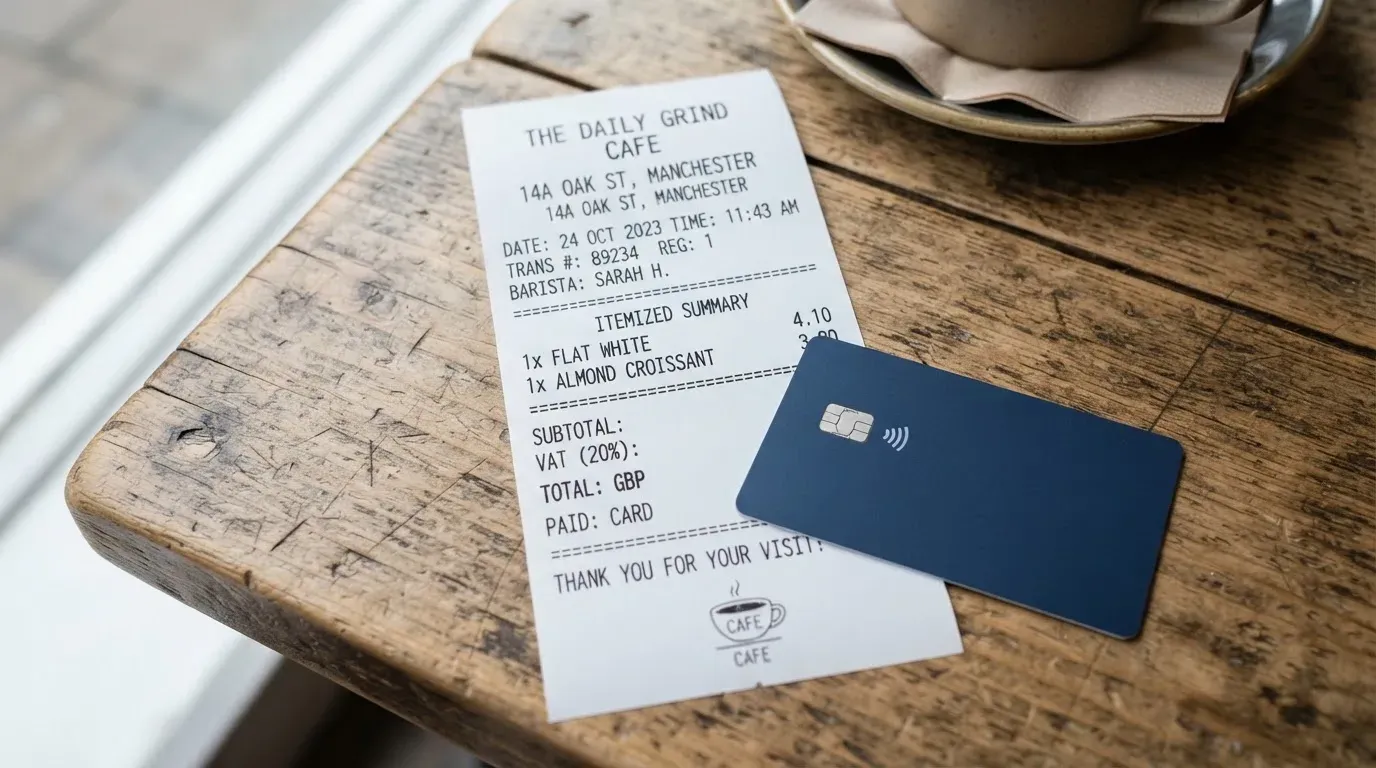
So here is the costs table, and you should read the empty cells as the most important content in it.
| Fee or limit | What the card states |
|---|---|
| Issuance | Unofficial: free (Finanza Digitale, 2026) |
| Monthly fee | Unofficial: free (Finanza Digitale, 2026) |
| Conversion fee | Not stated |
| FX / foreign currency fee | Not stated |
| ATM fee | Not stated |
| Daily limit | Not stated |
| Monthly limit | Not stated |
| Card currency | Not stated |
Now, why do the gaps matter more here than on an ordinary bank card? Because a crypto card converts. You are not spending euros that were already in an account; you are spending a balance that has to be turned into a currency the merchant accepts at the moment of payment. That conversion is where the cost lives, and that is precisely the number the card does not publish. On Coinbase Card, for comparison, the structure is disclosed in the Cardholder Agreement and User Agreement: there are zero spending fees and no annual fees, and no Coinbase transaction fees, but a spread applies when Coinbase buys, sells or trades crypto — that spread is the conversion cost, and it is charged at payment.
What this means for you in practice: you can budget for holding the card, because free is free. You cannot budget for spending it, because you do not know the spread. The sensible approach is to make one small purchase, look at what your balance actually did, and work out your own effective rate from that rather than assuming it matches the headline exchange rate.
Two everyday payments, and what applies to each:
- Buying lunch at a café in Milan. This is the case the card is best suited to. The amount is converted from your exchange balance, so the conversion fee and spread apply. If your balance is already in euro, that step disappears. No ATM fee is involved, no foreign currency fee if the merchant prices in euro, and you stay well inside whatever daily limit exists — if any.
- Withdrawing cash at an ATM in a different country. This is where the unstated ATM fee and the unstated FX treatment hit at once, compounded by the card currency not being stated and by the possibility that your daily limit is low. If a foreign ATM is part of your plan, this is the single payment to test before you rely on it.
- Paying for something online. The conversion applies as above. Add the possibility of a decline: 3-D Secure adds an identity check to online payments, where the issuer assesses risk and either approves frictionlessly or challenges you with a one-time code or biometrics. Visa’s 3-D Secure brand is Visa Secure, Mastercard’s is Identity Check. Address Verification Service also comes into play — it compares numeric parts of the billing address you type with issuer records, is mainly offered in the US, Canada and the UK, and is generally unavailable for foreign-issued cards, which can cause declines. And some merchants decline prepaid or foreign BINs because the lookup reveals the card type and the issuer country. So the risk on an online payment is not only cost; it is that the payment may simply not go through.
One more everyday cost that catches people out, from outside the card: on-chain network fees for your deposit are charged by the blockchain, not by the card provider. Whatever gas or bandwidth a network charges, you pay on top of the amount you send.
How to Top up the card
This is the section where my honest answer is: I cannot tell you, because the card’s public pages do not say. The coins and networks for topping up the card are not stated for the card itself. How to withdraw money is likewise not stated for the card.
What I can tell you is the structural point, which is more useful than a list of chains would be. The card is tied to an exchange account. That is not a criticism; it is the design. In the pre-loaded balance model, you first convert or top up a fiat or stablecoin-denominated balance, and the card spends only that balance — so the card cannot overdraw. Young follows that model, and the trade-off is that the exchange is the gate between your money and the card. Your top-up route is, in practice, whatever the exchange supports.
Here is the background on why the network question deserves more attention than it usually gets, because this is where mistakes cost real money and there is no undo button.
- USDC is redeemable 1:1 for USD and 100% backed by cash and cash equivalents, mostly in an SEC-registered government money market fund, with monthly reserve attestations by a Big Four firm. Circle listed it as natively supported on 38 networks as of 16 September 2026, including Ethereum, Solana, Base, Polygon PoS, Avalanche, Arbitrum and Stellar.
- USDT is a token built on multiple blockchains, with reserves intended to back it 1-to-1. Tether says it disables tokens in wallets on the OFAC sanctions list and has frozen funds tied to illicit activity — so stablecoins are not censorship-proof.
- Most of the market sits in two names. The BIS (July 2025) put about 90% of stablecoin market capitalisation in USDT and USDC. US-dollar-pegged, both of them.
- Networks charge in their own currency. ERC-20 is the Ethereum token standard, proposed November 2015; gas is paid only in ETH, so a wallet holding USDT but no ETH cannot send. Tron uses bandwidth and energy as internal resource pricing, with fees often burning TRX.
- One trap worth naming. Circle stopped supporting USDC on Tron in February 2024, so “USDC over TRC20” is not a native option.
- The rule that protects you. Blockchain transfers are irreversible, so a deposit sent on a network the card provider does not support, or to an address belonging to another network, can be lost or need manual support recovery with no guarantee. Before you send anything, confirm with Young which network and which asset, in writing.
A stablecoin also has a name that promises more than it delivers. The aim is a stable value against a fiat currency, but despite the name, stablecoins are not necessarily stable: TerraUSD collapsed in May 2022, and USDC temporarily lost its peg in March 2023 during the US banking crisis. A card that converts from a stablecoin balance carries that risk into every payment.
Paying with it every day
The everyday picture is thin, and again I would rather show you the shape of the gap than fill it with adjectives.
Wallets. Not stated. Whether Apple Pay or Google Pay accepts a tokenised Young card number is not on the public pages. This matters more than it sounds: Apple Pay replaces the card number with a device-specific Device Account Number stored in the Secure Element, never on Apple servers, with a one-time dynamic security code per payment — that is a real security benefit, and you cannot assume you have it. Card issuers can also restrict a tokenised number, for example blocking it on magnetic-stripe, phone or website use, which is exactly the sort of policy that is invisible until you need it.
The app. Young Platform has an app on iOS and Android. Store ratings were not read for this review, so treat any impression of its quality as unformed.
Cashback. This is the one genuinely concrete everyday benefit, and it is where the Club tier system earns its place. Cashback is paid in YNG tokens, with the rate depending on your Club tier: Essential 0.1%, Gold 1.8%, Platinum 3.6%. Bronze and Silver cashback rates are not stated.
Disputes. Not stated. How to dispute a charge, what reason codes apply, and how long a refund takes is not described publicly. That is a gap worth weighing if you intend to put large purchases through this card, because a chargeback is a refund ordered by the card issuer to settle a dispute, with reason codes such as fraud, duplicate billing or goods not received — and you need the issuer’s process to use it. In the US, debit card reversal rights come from Regulation E and credit card rights from Regulation Z; prepaid-card coverage varies and should not be assumed.
Now, the part that should genuinely inform your decision — where your crypto actually sits. Control of crypto belongs to whoever holds the private key or seed phrase. With a custodial wallet, the provider holds the credentials, so you must trust the provider completely. A seed phrase — typically 12 to 24 words — is an unencrypted form of the private key, and anyone who obtains it can restore the wallet and spend its funds. Transfers are typically irreversible, and a stolen private key has no built-in recovery: the network cannot freeze or return the funds. Custodial platforms have a record of failures — Mt. Gox (about US$350 million reported stolen 2011-2014), Coincheck (about US$400 million, 2018), Ronin Network (US$625 million, 2022). A card tied to an exchange account is custodial by construction, so that history is part of the picture, not a footnote to it. With a self-custody-linked card, by contrast, funds stay in your own wallet until the moment of payment, but you bear sole responsibility for key loss, phishing and clipboard-hijacking malware that swaps copied addresses.
| Everyday feature | What is documented |
|---|---|
| Cashback currency | YNG tokens |
| Cashback, Essential | 0.1% |
| Cashback, Bronze | Not stated |
| Cashback, Silver | Not stated |
| Cashback, Gold | 1.8% |
| Cashback, Platinum | 3.6% |
| Apple Pay / Google Pay | Not stated |
| Card freeze, spending caps, 2FA | Not stated |
| Chargeback / dispute process | Not stated |
| App | Young Platform, iOS and Android |
What can go wrong
The regulatory side here is the strongest thing about this card, and I want to be clear about it before turning to the risks. Young Platform S.p.A. is authorised by Consob and Banca d’Italia as a crypto-asset service provider under MiCAR. MiCA is the EU’s markets-in-crypto-assets regulation; ESMA states it took legal effect in June 2023, its rules on asset-referenced and e-money tokens applied from 30 June 2024, and the remaining provisions including crypto-asset service provider rules applied from 30 December 2024. Under MiCA, e-money tokens may be issued only by a credit institution or an electronic money institution. The transitional period lets providers already operating under national law continue only until 1 July 2026, or until they receive or are refused a MiCA authorisation, whichever comes first — and ESMA keeps an interim register of authorised CASPs, white papers and non-compliant entities, which you can check a provider against. An electronic money institution in the EU can issue e-money, payment cards and e-wallets but cannot lend, and may offer services across the EU/EEA from a licence granted in one member state.
What that means for your money. Account and payment services are linked to TPPay S.p.A., an Electronic Money Institution (IMEL) registered with the Bank of Italy, and Young Platform is a registered Payment Services Agent of TPPay. EMIs must safeguard customer funds, by segregating them in dedicated accounts or insuring them — but such funds are not the same as bank deposits and may not be covered by deposit guarantee schemes. That is the honest shape of the protection: real, regulated, and not the same thing as a bank guarantee.
The card issuer is not named. This is the most consequential single omission in the whole review. Under MiCA a crypto card often depends on two licences, and the payment side is where the card lives. When Young names no issuer, you cannot check that issuer’s licence, cannot read its fee schedule, and cannot know who adjudicates a chargeback. It also means you cannot check its BIN.
Complaints. No official incidents were found for the card. What exists is user reporting about the exchange, not the card: on Trustpilot, Young Platform’s exchange scores 4.4 out of 5 from 980 reviews, read 2026-10-21. The themes users report are unclear or undisclosed fees on instant bank transfer, unhelpful support, a site bug that caused a loss of about €100 — which the company acknowledged and offered compensation for — and stablecoins no longer being available. Notably, no review visible to me discusses card payments. So the 4.4 is a measure of the exchange, and I would not transfer it to the card.
Security features. Not stated. Whether the app offers instant card freeze, spending limits or app-based 2FA — the typical safeguards — is not something the public pages confirm.
Support. Customer Support is reached through the Young Platform support centre. Given the user reports above describing unhelpful support, this is worth testing early with a small question rather than saving for a crisis.
Programme closure. This is a category risk that catches people out. Visa and Mastercard themselves do not issue crypto cards to consumers; they license issuers and can suspend a programme. In November 2022 Visa said it had “terminated our global agreements with FTX” and the FTX US debit card programme was being wound down by its issuer. WaveCrest, a Visa issuer that supplied crypto card brands, was suspended by Visa in Europe in 2018, closing all WaveCrest-issued Visa programmes. Closures typically follow a pattern: a notice period, then spending and loading stop, then users are asked to withdraw remaining balances. One 2026 closure reported by a secondary source had new loads ending 8 July 2026 and spending stopping 8 August 2026 — single source, unconfirmed, and offered only to show the shape of the risk, not to predict anything about Young.
Holds. Declined authorisations may leave a hold on funds that can remain for several days, typically up to 7.
Where the crypto side of a tax question sits. I am not giving tax advice and this is not advice. What the general rules look like: the IRS treats digital assets as property, so exchanging them for goods, services, dollars or other digital assets generally produces a taxable gain or loss. For personal or investment holdings the result is a capital gain or loss, short-term if held one year or less, and gain is measured in local fiat currency using fair market value on the date of the transaction — so each card payment funded from crypto may be a separate disposal. Whether this applies to you, and how, depends on your circumstances; take it to a qualified professional in your own jurisdiction.
What to take instead
If any of the gaps above is one you cannot accept, the alternatives are worth a look. Here is how the three I examined compare, on their own terms.
| Young | Coinbase Card | OKX | BingX | |
|---|---|---|---|---|
| Score | 5.7 / 10 | 6.4 / 10 | 6.2 / 10 | 5.8 / 10 |
| Where | Country list not stated | All US states except Hawaii; no other countries | EU plus Norway, launched 28 January 2026; Iceland and Liechtenstein excluded | Europe (EEA), APAC, LATAM and other selected regions |
| Card | Visa debit, unofficial, linked to the exchange account | Visa prepaid debit, virtual or physical | Mastercard, euro-denominated virtual debit linked to OKX Pay; physical not mentioned | Visa debit; virtual (instant) and metal (mailed 15-30 business days) |
| Cost | Unofficial: issuance and monthly free | Zero spending fees, no annual fees | No card fee (explainer, as of May 2026) | Not stated |
| Conversion | Not stated | No Coinbase transaction fees, but a spread applies when Coinbase buys, sells or trades crypto | No transaction fee, no FX fee; conversion spread 0.1% per the explainer (May 2026) vs 0.4% market spread in the launch release | Not stated; card spends USDT from Fund Account converted at real-time rate |
| Top-up | Tied to an exchange account; coins and networks not stated | Link a bank account, or deposit part of a paycheck into Coinbase at zero fees; crypto balance converts to USD | USDC or USDG held in OKX Pay; other coins converted first; no auto top-up, payment declined if balance is insufficient | USDT only for now, from BingX Fund Account |
| Cashback | YNG tokens: 0.1% Essential, 1.8% Gold, 3.6% Platinum | Optional crypto rewards per purchase, US Card users only, variable rate shown in the app, from rotating rewards | Cashback on USDG purchases only (USDC earns none); EUR monthly caps: Regular 2% cap 10, VIP1 4% cap 300, VIP2 4.5% cap 450, VIP3 5% cap 1,000, VIP4+ 10% cap 1,000; launch release: 30-day promo up to 20% VIP / 15% regular | Not stated |
Two inconsistencies in that OKX row deserve flagging rather than smoothing over: the explainer’s conclusion says “entire EEA” while Iceland and Liechtenstein are excluded, and the cashback text says 2-5% while the table says 10%, with the launch release citing a 30-day promo of up to 20% VIP or 15% regular. I would not build a plan on any of those figures without confirming them.
What the comparison tells me:
- Coinbase Card is the most completely documented of the four. Its terms state zero spending fees and no annual fees, and the actual cost sits in a disclosed spread. Its limitation is hard limits: US states except Hawaii, and no other countries.
- OKX is the broadest by geography among the well-specified options, and its fees are published, but its card is virtual, euro-denominated, and there is no physical card mentioned. Cashback is tied to one asset only.
- BingX is the thinnest of the three on paper — costs and cashback not stated — but it is the one that offers a metal card as well as an instant virtual one, with metal shipped in 15-30 business days.
And the honest meta-point: all three score within a band of 5.8 to 6.4. The category is not well served on disclosure, and that tells you something about the category rather than about any one brand. If disclosure is what you care about, an ordinary bank debit card with a published fee schedule is still a stronger proposition than any of them.
Who I would recommend it to
Three answers, in order of confidence.
To Italian-market users already holding YNG. This is the clearest yes. The audience note for this card points exactly here: users holding YNG for exchange-linked cashback. If you are in that group, the card’s weak spots are largely irrelevant to you — you already know the exchange, you already hold the token, and the Club tier system is the part that is documented. At Gold, cashback runs at 1.8% and fees are 75% discounted; at Platinum, 3.6% and 90%. Read the tiers below before you assume which one you are on.
To anyone who wants a card and nothing more. A conditional yes, with a test. The free issuance and free monthly fee make it cheap to hold. Buy something small with it, read your balance, and check three things before you rely on it: what the conversion cost actually was, whether the daily and monthly limits get in your way, and whether Apple Pay works. If those three check out, a card that spends your exchange balance is a reasonable convenience. If any of them do not, you have lost very little.
To everyone else, no — not yet. If you are outside Italy, if you are planning on ATM withdrawals, if you need the exact conversion rate to decide whether a purchase is worth making, or if you want your crypto to stay in a wallet you control, then this card does not give you enough published information to make that decision, and a different product will. I would rather say that plainly than round 5.7 up to a recommendation.
| Club tier | Held (YNG, approx.) | Fee discount | Staking and other |
|---|---|---|---|
| Essential | ~130 | 5% | +1% staking APY; cashback 0.1% |
| Bronze | ~1,100 | 30% | 1 free card deposit a month |
| Silver | ~3,600 | Half price | +15% staking boost; monthly Market Report |
| Gold | ~7,200 | 75% | 2 free card deposits a month; cashback 1.8% |
| Platinum | ~18,000 | 90% | 3 free card deposits a month; dedicated Account Manager; cashback 3.6% |
One last piece of background that applies whichever card you pick, including a crypto one. A merchant category code is a four-digit number classifying a business by goods or services, specified in ISO 18245 and assigned when a business starts accepting a card. MCC 7995 covers gambling; many issuers block it on specific cards by policy rather than by law, and the blocked list varies by issuer. So if a category matters to you, it is worth asking whether this card blocks it — Young’s pages do not say.
Frequently asked questions
What is the Young card?
The Young card is a Visa debit card linked to a Young Platform exchange account, so it spends a balance you already hold on the exchange rather than a separate bank account. That description comes from a third-party review by Finanza Digitale dated 2026, not from Young’s own public pages, which do not officially describe the card. Finanza Digitale also reported the card became available from 30 November 2025 alongside a new payment account. The company side is clearer: Young Platform S.p.A. is MiCAR-authorised and supervised by Consob and Banca d’Italia.
How does the Young card work?
On paper it works like a pre-loaded balance card: you fund a balance, and the card spends only that balance, so it cannot overdraw. The conversion step is where the cost sits, since crypto or a stablecoin balance has to be turned into a currency the merchant accepts at the moment of payment. What the card does not publish is that conversion cost — the conversion fee, FX treatment, ATM fee and limits are all not stated. Treat the mechanics as understood and the pricing as unknown.
Is Young a bank?
No — Young Platform is a crypto-asset service provider, not a bank. It is authorised by Consob and Banca d’Italia as a CASP under MiCAR, and its account and payment services are linked to TPPay S.p.A., an Electronic Money Institution registered with the Bank of Italy; Young Platform is a registered Payment Services Agent of TPPay. EMI funds must be safeguarded by segregation or insurance, but they are not bank deposits and may not be covered by a deposit guarantee scheme.
Who owns Young, and who issues the card?
Young Platform S.p.A. is the company behind the exchange and the card programme, regulated in Italy. The card issuer is not named. That matters more than it might sound: without a named issuer you cannot check that issuer’s licence, read its fee schedule, or know who handles a chargeback. Visa and Mastercard do not issue crypto cards to consumers themselves — they license issuers.
Can I get the Young card in my country?
I cannot tell you, because the card’s public pages do not say. The list of eligible countries is not disclosed and there is no confirmation of any country restriction. The company is Italian and MiCAR-authorised, and such a licence can serve the EU, but the card is regulated separately as a payment service, so the licence travelling does not mean the card does. If you are outside Italy, contact support before moving any money.
Does the Young card require KYC, and what documents do I need?
Identity verification is required by the underlying regulation but the specifics are not stated publicly. The card’s pages do not describe what documents are needed, what checks are run, or whether verification tiers exist. In the EU, due diligence covers name, address, date of birth, nationality and identity documentation, a sanctions check, the purpose of the relationship, and politically exposed person status. If checks cannot be completed, rules require the firm to hold off or end the relationship.
How much does the Young card cost to use?
Unofficial figures from Finanza Digitale, 2026, list the monthly fee and issuance cost as free. The card’s own pages do not state the conversion fee, the FX fee, the ATM fee, or the daily and monthly limits — and on a crypto card the conversion cost is the number that actually determines what you pay. Compare Coinbase Card, which publishes zero spending fees and no annual fees but applies a spread when crypto is bought, sold or traded.
How do I top up the Young card, and on which network?
Not stated for the card. The coins and networks for topping up are not disclosed, and the card is tied to an exchange account, so in practice your route is whatever the exchange supports. Before sending anything, confirm the asset and network with Young in writing: transfers are irreversible, so a deposit on an unsupported network can be lost or need manual recovery with no guarantee. Also note that on-chain gas is charged by the blockchain, not by the card provider.
Is the Young card safe, and can I use it with Apple Pay?
The regulated footing is solid — MiCAR authorisation in Italy, with payment services through a Bank of Italy-registered EMI, and safeguarding of customer funds by segregation or insurance. But the card issuer is not named, security features such as instant freeze and spending caps are not stated, and whether Apple Pay or Google Pay accepts a tokenised Young number is not stated either. On Trustpilot the exchange scores 4.4 out of 5 from 980 reviews, with themes of unclear fees, support and a site bug; no review I saw discusses card payments.
Is the Young card worth it?
For Italian-market users already holding YNG for exchange-linked cashback, plausibly yes: free issuance and monthly fee, and cashback in YNG at 0.1% on Essential, 1.8% on Gold and 3.6% on Platinum. For everyone else, I would say not yet — the country list, conversion costs, limits, issuer and top-up networks are all not stated, and a 5.7 out of 10 reflects that gap rather than any red flag against the company.
Exchange card verdicts – cryptocardverdict
Content created by the «cryptocardverdict» team