Zeal pays you in GNO and charges no FX fee, but the card programme behind it is shutting down on 20 December 2026
 Available in US
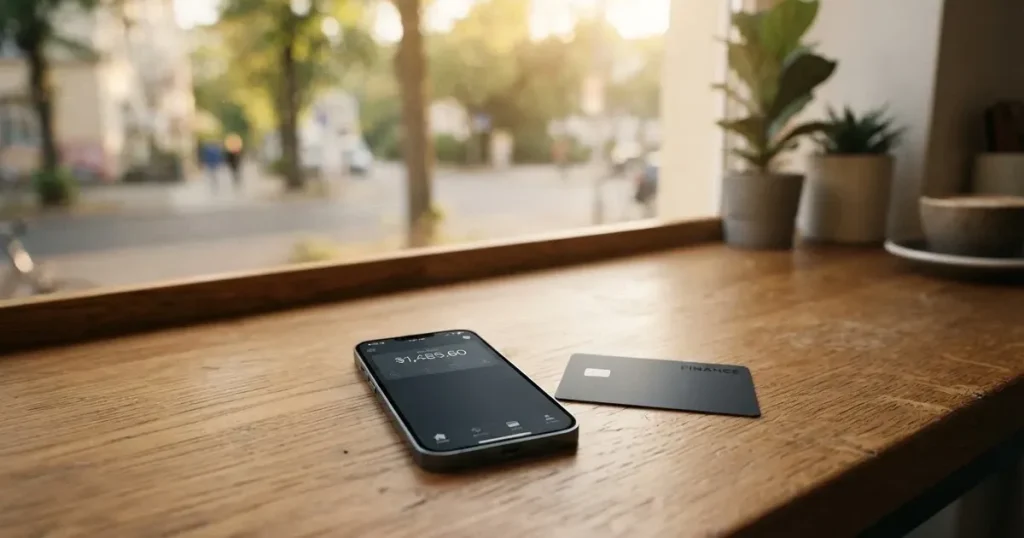
If you have stablecoins sitting in your own wallet and you want to spend them like ordinary money, the Zeal card does one thing and does it plainly: it turns EUR, USD and GBP balances in your own Safe into Visa purchases, with no extra foreign-exchange fee bolted on by Zeal. That is genuinely attractive. What makes this review a hard one to write is the other half of the picture — the card sits on the Gnosis Pay consumer programme, and Gnosis Pay has announced that it closes that programme at 23:59 UTC on 20 December 2026. So the question for you is not only what the card costs, but how much runway you have.
My score for the card as it stands: 6.1 out of 10.
The conditions described here are current as of October 28, 2026.
That number is not a snub. On cost and on everyday mechanics the card scores well. On reliability and complaints it scores badly, and it is the reliability side that most damages it, because a card is a piece of infrastructure and infrastructure that is being retired is not something you can bank your spending on.
| Criterion | Mark | Why |
|---|---|---|
| Who can get it | 7 / 10 | Spending in 150+ countries; issuance depends on eligibility and region, with the programme live in the EU, UK, Brazil, Colombia, Mexico, Japan, Singapore, Philippines, Indonesia and Thailand |
| Cost | 8 / 10 | No published sums; Zeal adds no FX fee. Unofficial sources say ordering and delivery are free, replacement 4.99, monthly 0, and the first 5 ATM withdrawals free, then 2% |
| Top-up options | 5 / 10 | Spends Safe balances in EUR, USD, GBP stablecoin accounts on Gnosis Chain and Celo; the specific coins are not named |
| Reliability and complaints | 2 / 10 | Gnosis Pay closes the consumer card at 23:59 UTC on 2026-12-20; GNO cashback ends 2026-09-30; an exploit hit the ERC-1271 module on 2026-06-01; Trustpilot 3.5 of 5 from 17 reviews, and the issuer Gnosis Pay scores 2.3 |
| Everyday use | 8 / 10 | Virtual and physical Visa, Apple Pay; ATM possible at Gnosis Pay rates; unofficial sources say Google Pay is supported |
| Total | 6.1 / 10 | A well-priced, easy card on top of infrastructure that is being switched off |
Who this suits: you already run a self-custody wallet, you think in EUR, USD or GBP stablecoins, and you want a card that spends exactly what is in the Safe without a bank in the middle. Who it does not suit: anyone who needs a card in the next three years, anyone who wants file-and-forget reliability, and anyone whose country is not on the eligibility list — Zeal does not publish who exactly qualifies, so the answer to “can I get one here?” is genuinely not published.
Will they give you the card
You can spend in 150+ countries, and that part is broad. Getting the card is narrower: issuance, in Zeal’s own words, “depends on eligibility and regional availability”. The Gnosis Pay documentation puts the card programme live in the EU, UK, Brazil, Colombia, Mexico, Japan, Singapore, Philippines, Indonesia and Thailand. Zeal’s own update notes add Mexico, Colombia and Bolivia.
That is the confirmed picture. What you will read elsewhere is less tidy, and you should treat it as unofficial because Zeal does not publish it: third-party sites describe the EEA and UK as requirements, show an order screen listing the EU, Switzerland, Iceland and Norway, say the card is unavailable in the US and in much of APAC, and count 36 countries available against 21 restricted. The same sites list Bolivia as both supported and coming soon. Where official and unofficial sources disagree, I would plan around the official one and treat the third-party list as a hint about what to try.
Two things worth understanding about why country lists look strange in this category. A card number starts with a six- or eight-digit issuer identification number, and a merchant can look that number up to see which institution and country issued it. If that country differs from the billing address on the payment, the merchant may apply extra scrutiny — which is why a card issued in one country can look foreign to a shop in another, and why some places are harder to spend in than 150+ countries suggests. And nationality is recorded and screened separately from residence, because sanctions screening and issuer risk policy are applied to citizenship and country of birth as well as to address. A country being on the “we ship there” list does not mean a resident of that country will pass.
How to get it
The card is a Visa debit card issued by Monavate Limited together with Gnosis Pay Co Ltd, offered as both a virtual and a physical card. Zeal’s own site describes it that way. The virtual card is the one you can add to Apple Pay.
Here is the honest limit of what I can tell you: what you need to pass, how long it takes, why a request might be refused, and where and when a physical card is delivered are all not stated on the card’s public pages. Zeal describes itself as self-custodial software and points you to Gnosis Pay for the KYC process, but Gnosis Pay’s onboarding includes KYC after signing in with Ethereum, with verification through Sumsub. No document list and no age requirement are published by Zeal.
Unofficial accounts fill in some of it: full identity and address verification, age 18 or over, a government ID or passport plus proof of address issued within the previous three months, handled by Sumsub, and the note that uploading documents does not guarantee approval. Delivery is described as free, with no time given; an older Gnosis Pay fee page mentioned delivery within 10 days of shipping verification, though the date on that page is unclear.
So the sequence I would expect, understanding that the middle is guesswork: sign in with Ethereum, complete Gnosis Pay’s verification, get the virtual card, and treat a physical card as something to ask about rather than assume. If your situation is that you have no access to ordinary banking, be aware that an open self-custody wallet does not by itself mean a card, because the regulated part of the chain sits with the e-money institution and that part does check you.
Fees: what it really costs
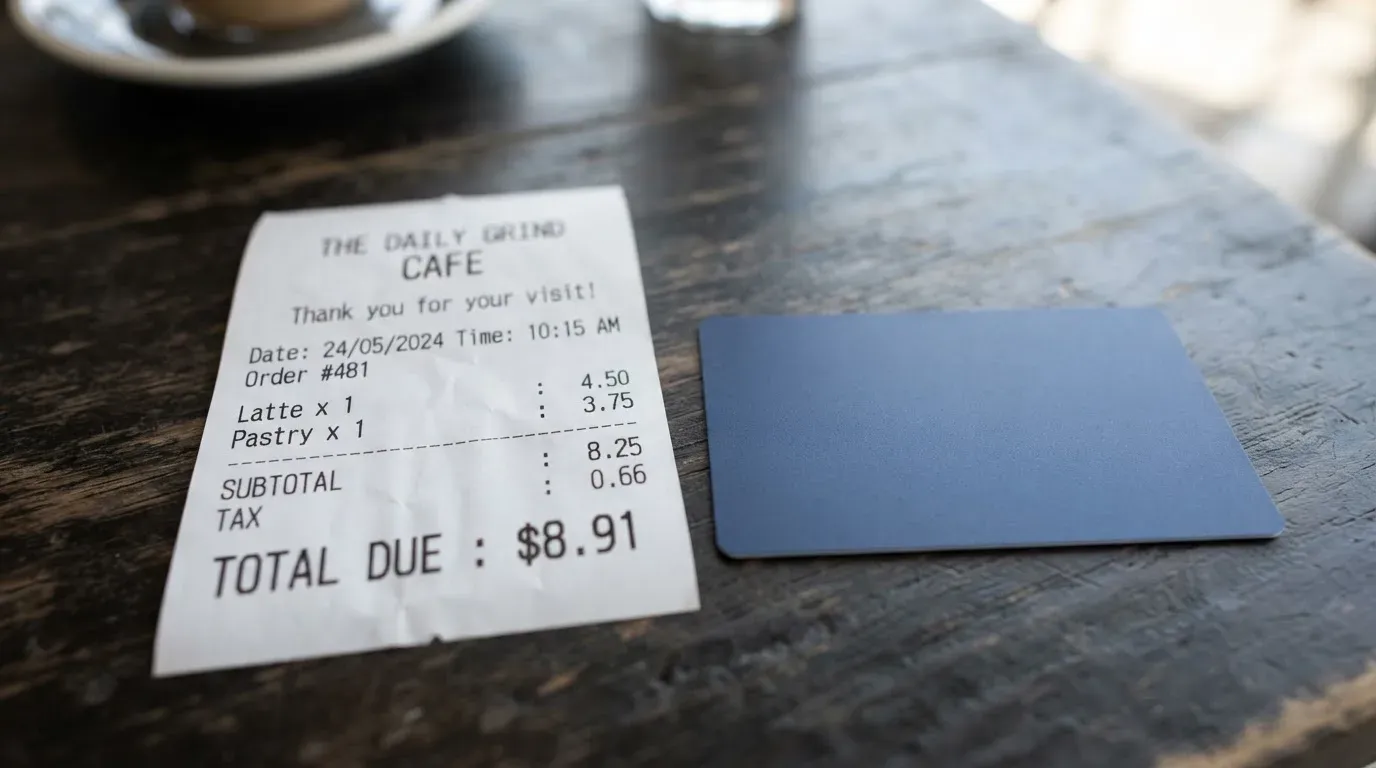
Zeal publishes no fee schedule at all — no numbers on its site or its App Store listing. So the honest answer is that the cost side is the one I can describe least precisely, and the table below is built from what the card states plus what third parties report. Treat the unofficial rows as unofficial.
| Item | Value | Source status |
|---|---|---|
| Card fee schedule | Not stated | No schedule published |
| Additional FX fee from Zeal | None; conversion at the Visa wholesale rate | Stated |
| Ordering the card | Free | Unofficial |
| Physical delivery | Free | Unofficial |
| Replacement card | 4.99 (EURe/GBPe/USDCe) | Unofficial |
| Monthly or annual fee | 0 | Unofficial |
| ATM, first 5 withdrawals or 200 units per month | Free, whichever comes first | Unofficial |
| ATM after that | 2% per withdrawal; 250 per withdrawal; 500 per day | Unofficial |
| Card purchase fee on an older Gnosis Pay page | 30.23 incl. shipping | Unofficial, older page, date unclear |
| Per-transaction limit | 5,000 (EURe/GBPe/USDCe) | Unofficial |
| Rolling 24-hour limit | 8,000 (EURe/GBPe/USDCe) | Unofficial |
| Cashback rate | Up to 4%, depending on GNO held in the card Safe | Stated; rates can change |
Three ordinary payments, and which fees actually apply:
- A coffee in your own country. Nothing to pay. You are spending a balance you already hold in your own currency, and there is no conversion to do. This is the case where the card is simply better than most.
- A subscription billed in euros while your Safe holds USDC. The stablecoin was already converted when it landed in the EUR account, so the purchase is at the Visa mid-market rate with no additional FX fee from Zeal. What you may still meet is a Gnosis Pay fee, and any network fee that was already paid to move or bridge the token.
- Withdrawing cash abroad. Here a fee is genuinely likely, because ATM withdrawals are subject to Gnosis Pay fees and the published numbers are unofficial. The first few withdrawals in a month are reported as free up to a cap, then 2% each. Note also that an ATM dispense in a currency your Safe does not hold is a conversion at ATM rates, which is not the same thing as the card rate.
The rule of thumb that falls out of this: the fees you can be confident about are the ones that apply when you spend from a balance you already have, and the ones that bite hardest are the cash ones. On-chain network fees for your own deposit are charged by the blockchain, not by the card — and on Ethereum that means a wallet holding a stablecoin with no ETH in it cannot send at all, which is the single most common way people get stuck topping up a crypto card.
One more cost-shaped number: cashback. Up to 4%, paid in GNO on Gnosis Chain, and only if you hold GNO in the card Safe. The rate depends on how much GNO you hold and rates can change. The App Store also advertises a variable APY of up to 5% on EUR and USD balances. And the GNO cashback eligibility ends on 30 September 2026, so treat that line as historical rather than something to plan around.
Top up: how you put money in
The card spends balances sitting in the Safe — EUR, USD and GBP stablecoin accounts, with Gnosis Chain and Celo named in the Gnosis Pay documentation. The exact coins you can use for Zeal are not stated. That is the practical core of it: it is not a “deposit any of 40 tokens” card, it spends what is already in those accounts in those currencies.
Unofficial sources say the card accounts hold EURe, GBPe and USDCe, that a SEPA top-up arrives in 1 to 2 business days, and that conversion, off-ramp and gas fees are 0% except that bridging on Ethereum still needs gas. What is not stated by Zeal: the card top-up fee and minimum, the fees applied to bank transfers, and network fees for a crypto top-up. Bank transfers are handled by Monerium ehf for EUR and by Unblock LT UAB for others, which is at least useful to know if you are wondering why two different companies appear in your bank statement.
Because the setup is self-custodial, the money never really leaves your ownership. Funds stay in your own wallet or Safe. Earn balances in USD and EUR are withdrawable 24/7 with no lockups. What Zeal does not state is how to withdraw the card balance, what that costs, or what happens to a balance if the card is closed — and given the closure date below, that last one is not a hypothetical.
The mistake to avoid is the one everyone in this category makes: sending a deposit on a network the provider does not support, or to an address belonging to a different network. Blockchain transfers are irreversible. There is no built-in recovery, no freeze button at the network level, and support may or may not be able to help. Check the network and the address before you sign anything.
Paying with it every day
This is where the card earns its marks. Apple Pay works with the virtual card. Google Pay is not stated by Zeal, though third-party sources say it is supported and add that Google Pay is not subject to the physical-card contactless limit. Blocked merchant categories are not stated either — worth asking about, because a card that quietly declines a category you use often is a bad everyday card even when it is cheap.
The app is iPhone-only in practice: iOS 16.2 or later, or a Mac with M1 and later, and Vision Pro. The App Store listing showed a UK rating of 4.5 out of 5 from 17 ratings when I read it, version 0.33.3 dated 1 September. I did not read the Google Play rating, and given the iPhone requirement that is not a small gap.
Day-to-day this behaves like a prepaid card, which is the honest way to think about it. You load a balance, the card spends only that balance, and it cannot overdraw — which is a feature when you are working from a self-custody wallet, because there is no credit line to go wrong. Two things to expect as ordinary rather than exceptional: a declined authorisation can leave a hold that stays for days, and some merchants decline prepaid or foreign-issued card numbers because a BIN lookup reveals what they are. If a payment fails, that is usually the reason, not a fault in your balance.
Disputes are the gap here. How Zeal handles a chargeback is not stated on its site or its App Store listing, and unofficial sources say the same. Zeal did reply publicly on Trustpilot that card disputes take time, which tells you something but not much about the process or its length.
What can go wrong
Start with the biggest one, because it sits above everything else.
The programme is closing. Gnosis Pay has announced it will close its consumer card and web app at 23:59 UTC on 20 December 2026 and move to business customers. The notice to cardholders is dated 21 September 2026, with other outlets reporting it on 25 September. Users are to be pointed at partner apps for replacement cards — MiniPay is named. Safe funds stay accessible and the web app remains in a limited form for withdrawals. GNO cashback eligibility ended on 30 September 2026. One secondary report says Zeal has not confirmed its own future plans, and I could not find a Zeal statement.
Read that carefully, because it is the difference between two very different situations. Zeal is the software you use your own Safe through; Gnosis Pay is the regulated card programme underneath it. Those may not end at the same moment, and you should not assume they will. But you should plan on the card side having an end date, and if you rely on a card for everyday spending, plan it rather than hope.
Security incidents. An exploit affecting the ERC-1271 module hit Card Safes on 1 June 2026, per a third-party report. The dates in your own past are the ones that matter: if you hold a card Safe, find out whether yours was affected.
Complaints, in numbers. Zeal’s Trustpilot page shows 3.5 out of 5 from 17 reviews, and also displays 3.7 at times. Individual reports include a January 2026 one-star review about support requests going unanswered for two weeks, during which Zeal apologised publicly, and a 2026 review about a scam transaction and slow dispute handling. App Store reviews mention problems transferring from balance to card and slow support. The issuer, Gnosis Pay, scores 2.3 out of 5 from 38 reviews with 58% one-star, mostly about slow or unanswered tickets. No official incident is on record. A low score on 17 reviews is not strong evidence about the world, but it is the evidence that exists.
Support is thin. The channels listed are Discord and X, with no email, no chat and no stated hours. The site is in English, French, German, Spanish and Italian; the App Store listing is in English. If Russian is your working language, that is a real cost to this card.
What the self-custody model means. No bank or company can freeze or seize your funds, which is the whole appeal. The other side is that lost funds are likely unrecoverable. Authentication is biometric passkey with real-time transaction alerts, you can freeze the card in the app, the wallet is audited with a security policy on GitHub, and there are Safety Checks and transaction previews. Deposits are not insured, and the card says plainly: your principal is at risk. Nobody should describe that as safe.
The company behind it. The app developer is grwth lbs ltd. Zeal is self-custodial software and not regulated. Cards are managed by Gnosis Pay Co Ltd, UK company number 14919639. The issuer is Monavate Limited, an FCA-authorised e-money institution in the UK, licensed by Visa Europe. That is a real structure rather than a brand with a logo on it — and it is also worth noticing that the entity with the poor Trustpilot score is the regulated one.
What to take instead
None of these is a straight swap, and I would rather say so than pretend otherwise. The alternatives below are drawn from the same category and scored on the same scale, where MetaMask Card scores 7.1, KAST 6.1 and TokenPocket 5.8.
| Zeal | MetaMask | KAST | TokenPocket | |
|---|---|---|---|---|
| Score | 6.1 / 10 | 7.1 / 10 | 6.1 / 10 | 5.8 / 10 |
| Card | Visa, virtual and physical | Mastercard, virtual first, metal optional | Visa, virtual and physical, up to 10 cards | Mastercard/Visa debit, virtual |
| Annual fee | 0 (unofficial) | Virtual free; metal $199/year | Standard 0; Premium 1,000; Private 10,000 USD/year | Not stated |
| Where | 150+ countries to spend; listed programme countries | Sign-up open in 45 listed countries, others waitlisted | Residence-based list, not published | Europe for Visa; more for Mastercard |
| Custody | Self-custodial | Spends from connected wallet | Own balance, stablecoin deposits 1:1 | Deposits from wallet |
| Cashback | Up to 4% in GNO | 1% virtual, 3% metal to first $10,000 | 1.5% / 2% / 3% by tier, capped monthly | None stated |
MetaMask is the one I would look at first if you want a card that is not in the middle of a shutdown. It is Mastercard, virtual card issued instantly with metal pre-orderable afterwards, one card per user, spending directly from a connected wallet across Linea, Base, Monad and Solana with mUSD, wETH, EURe, GBPe, USDC and USDT named. Fees are described as minimal and per-transaction with no MetaMask addition, no foreign transaction fee. Sign-up is open in 45 listed countries with proof of residency, and ineligible regions limit sign-ups rather than spending — a distinction most issuers do not make. US and UK sign-ups are temporarily closed per its FAQ. The catch is the metal card at $199 a year, and that US and UK residents cannot sign up at all right now.
KAST has the most interesting economics if you spend heavily, and the worst structure if you do not. Stablecoin top-up at 0%, USD spending at 0%, Apple and Google Pay at 0%, and cashback of 1.5% to 3% by tier on a monthly spend cap. The FX fee on non-USD spending is 0.5% to 1.75% depending on where you live and which card programme, which is the number to actually check against Zeal’s zero. It is also much fussier about identity: its own rule is that living in a supported country is not enough if your ID is from a restricted region, and the list of restricted countries is not published. A VPN does not get around it.
TokenPocket I would look at only if you are already inside that ecosystem. It charges 1% on depositing cryptocurrency into the card, which is refunded later through rewards or lower transaction fees, and there are no other fees it claims. It runs on Arbitrum, its cards are virtual, and its Americas rollout was announced for a quarter that has long passed.
Who I would recommend it to
I would recommend Zeal to someone specific, and if that is you, I would do it with eyes open.
You are the person who already holds a self-custody wallet and already thinks in EUR, USD or GBP stablecoins. You are not asking how to get into crypto, and you are not asking for credit — you are asking for a clean way to spend balances you have, without a bank’s approval process and without an FX fee eating a slice of every foreign purchase. For that, the card is good work: 150+ countries of spending, no additional FX fee, conversion at the Visa wholesale rate, Apple Pay, and cashback paid in a token you may already want.
I would not recommend it as your main or only card, and the reason is not the fees. It is that the programme underneath closes at 23:59 UTC on 20 December 2026, the support that would help you through a problem is a Discord and an X account with no stated hours and no Russian, and the issuer’s own rating is 2.3 out of 5. If your spending is occasional, if you can move to a card whose operator is not retiring the programme, or if you would rather have a support line in your own language, the alternatives above are more sensible homes for your balances.
And the version of you who should think hardest is the one with no access to ordinary banking, because I wrote this knowing you may be reading it as the only card on offer. In that case the honest sequence is: check your country against the official list, expect to pass through KYC that Zeal does not describe, be precise about the network on any deposit, keep enough ETH for gas, and ask Zeal in writing what happens to your card balance at closure — because that answer is not published anywhere I could find.
One last thing, since it applies to whatever card you pick: if you dispose of crypto to pay for something, that is generally a taxable event in many jurisdictions, with the gain measured in local currency at the value on the date of the transaction. Every card payment funded from crypto can be a separate disposal. Nothing here is tax or legal advice — but treat each payment as a small bookkeeping item rather than a surprise.
Frequently asked questions
What is the Zeal card?
It is a Visa debit card that spends stablecoin balances held in your own self-custodial Safe, mainly in EUR, USD and GBP accounts on Gnosis Chain and Celo. The card is issued by Monavate Limited together with Gnosis Pay Co Ltd, and Zeal is the software you access it through. No bank holds your money; no bank approval is involved once you are set up.
How does the Zeal card work?
You load your Safe with stablecoins, and the card spends the balance in those accounts like a prepaid card. Because it behaves like a prepaid card, it can only spend what is loaded and cannot overdraw. Zeal adds no extra foreign-exchange fee, and conversion happens at the Visa wholesale rate. Up to 4% cashback is paid in GNO if you hold GNO in the Safe.
Is Zeal a bank?
No. Zeal is self-custodial software and is not regulated. The regulated parts are Gnosis Pay Co Ltd, which manages the card, and Monavate Limited, the FCA-authorised e-money institution that issues it under licence from Visa Europe. No bank or company can freeze your funds, which is the appeal — and also means lost funds are likely unrecoverable.
How do I get the Zeal card?
You sign in with Ethereum and complete Gnosis Pay’s onboarding, which includes KYC verified through Sumsub. Zeal does not publish the document list, the age requirement, approval or refusal reasons, or processing times — those are not stated on its public pages. What is published is that a virtual card is issued first and that physical cards are offered.
Does the Zeal card require KYC?
Yes. Gnosis Pay’s onboarding includes identity verification via Sumsub after sign-in, and EU rules require name, address, date of birth, nationality, identity documents, a sanctions check and a politically-exposed-person check. Unofficial sources add age 18+, a government ID or passport, and proof of address issued within the previous three months. Uploading documents does not guarantee approval.
Is the Zeal card free, and what does it cost?
Zeal publishes no fee schedule at all. Unofficial sources say ordering the card and physical delivery are free, there is no monthly or annual fee, and a replacement costs 4.99. What is stated is that Zeal charges no additional FX fee and converts at the Visa wholesale rate. Gnosis Pay fees may still apply, particularly on ATM withdrawals.
How do I top up the Zeal card?
You send stablecoins to the right address on the right network, or top up by bank transfer — EUR transfers are processed by Monerium ehf and others by Unblock LT UAB. SEPA is reported to arrive in 1 to 2 business days. The card top-up fee, minimum, and crypto network fees are not stated by Zeal. The classic mistake is sending on an unsupported network, which is irreversible.
Can I use the Zeal card in my country?
Spending works in 150+ countries, but getting the card does not follow the same map — issuance depends on eligibility and regional availability. The programme is listed as live in the EU, UK, Brazil, Colombia, Mexico, Japan, Singapore, Philippines, Indonesia and Thailand. Unofficial sources say the US and much of APAC are excluded and count 36 countries available. Your nationality is screened separately from where you live.
Is the Zeal card safe?
Not insured, and the card says so: your principal is at risk. The self-custody design means no third party can freeze or seize funds, and equally that lost funds are almost certainly gone. Safeguards include biometric passkey login, real-time alerts, in-app card freeze, an audited wallet and transaction previews. An exploit affecting Card Safes via the ERC-1271 module was reported on 1 June 2026, and Gnosis Pay closes the consumer card at 23:59 UTC on 20 December 2026.
Is the Zeal card worth it?
For a self-custody user spending EUR, USD or GBP stablecoins with no FX fee, yes — the economics are good. But GNO cashback ends 30 September 2026 and the underlying consumer card programme closes at 23:59 UTC on 20 December 2026, with users directed to partner apps. My score is 6.1 out of 10, and I would not make it your only card.
Wallet card verdicts – cryptocardverdict
Content created by the «cryptocardverdict» team