
A self-custody crypto card with generous rewards and thin support
 Available in US
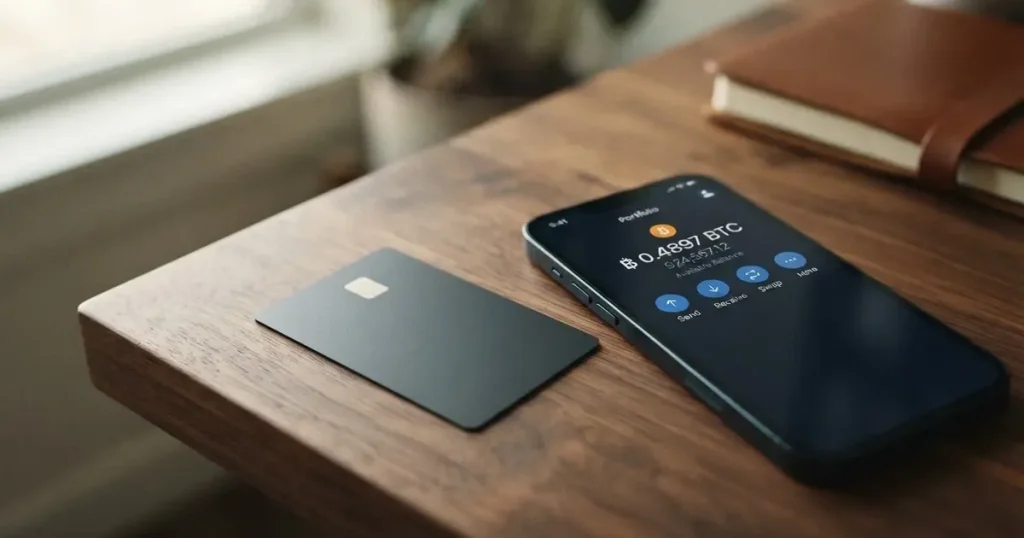
If you are reading this because an ordinary bank card has been awkward to get, blocked, or simply does not fit your situation, the Bitget card deserves an honest look rather than a pitch. I went through its terms and its public pages carefully. Here is what I found: a card with a genuinely generous rewards system and no annual or monthly fee, wrapped in an app that keeps your crypto in your own wallet — and a support operation that is the weakest thing about the whole offer.
The conditions described here are current as of October 28, 2026.
The verdict: 6.8 out of 10
Bitget scores 6.8 / 10. That is a card that does the basic job well if your situation is simple — you hold USDT or USDC, you spend them in ordinary shops, you top up occasionally — and that gets uncomfortable the first time a payment is declined, a refund goes missing, or a proof-of-address review closes your account. The number is not a punishment. It is the sum of a card that scores 8 out of 10 on access and 8 out of 10 on how you can fund it, against a card that scores 4 out of 10 on reliability and complaints.
| Criterion | Score | Why |
|---|---|---|
| Who can get it | 8 / 10 | Issued in 50+ countries and regions, among them the EEA, UK, Argentina, Brazil, Japan, Singapore, South Africa, Pakistan and Bangladesh; more regions are said to be opening soon; unofficial: closed in the United States |
| Cost | 7 / 10 | No annual fee and no monthly fee; FX 1.7%, conversion fee 0.05%, physical card in APAC 49 USD, ATM 1% or 5 USD |
| Top-up options | 8 / 10 | USDT, USDC, ETH, SOL, and a self-custodial app |
| Reliability and complaints | 4 / 10 | Issues Bitget Wallet, regional issuing partners unnamed, Trustpilot 3.4/5 across 82 card reviews, support described as weak |
| Everyday use | 7 / 10 | Virtual card, physical only in parts of Asia and Australia, Apple Pay, Google Pay, PayPal, Alipay, WeChat Pay, ATM on the physical card |
Who this card suits: someone who already keeps USDT or USDC in a self-custody wallet, who is comfortable sending a blockchain transfer and checking they picked the right network, and who wants a spending card with cashback rather than a bank account. Who it does not suit: someone whose primary worry is that a payment will clear and a refund will arrive; someone who wants a named, licensed bank on the other end; someone in a country where the card is not offered; or anyone who needs help from a human being on the same day.
Before the details, two things to weigh. First, this is a card from a crypto exchange group, and the person whose name appears on your statement may not be the same company you have an account with — more on that in the risks section. Second, the rewards rate is the marketing headline, and the support score is the reality. Both are real. Neither cancels the other.
Will they give you the card
The short answer is: probably, if you are outside the United States, and more probably in Europe, the UK or several of the larger Asian and Latin American markets.
Bitget states the card is available in 50+ countries and regions, explicitly including the EEA, the United Kingdom, Argentina, Brazil, Japan, Singapore, South Africa, Pakistan and Bangladesh, with more regions opening soon. That is a wide door. For a reader whose problem is that a bank card is hard to obtain, a card issued across that many markets is worth looking at before you dismiss it.
What the card’s own pages do not do is list the countries where it is *not* available. One third-party site, unofficial and not confirmed by the card, says the United States is closed, and reports that Nigeria is not open. The same source notes some cards were closed with a small balance deduction when proof-of-address review failed. I would treat all of that as a rumour to verify rather than a fact to plan around. The one thing I would take from it: have your address documents genuinely in order before you apply, because a failed address check seems to be a real sticking point.
There is also a citizenship-versus-residence question that the card’s public pages leave open. Where the card says nothing about which nationality you must hold, that is genuinely not stated, and you should ask support before you commit anything. In the EU generally, nationality is screened separately from residence, because sanctions screening often applies to citizenship and country of birth as well as to the country you live in. A residence permit in a supported country does not always mean a card.
One more practical gate to expect: prepaid and debit cards are generally available to adults of 18 and over, and some issuers set higher limits. Bitget does not publish an age statement on the pages I read. Assume the usual adult requirement, and if you are under 18 the answer is no.
How to get it
The application is done in the app, and it is short.
Identity verification happens in the Bitget Wallet app: you open Wallet, then Card, then submit an ID. If the information you provide is complete, approval can take as little as a minute. There are no account tiers to work through — you do not climb from Bronze to anything — and there is a help article on how to apply and verify your identity.
What is not stated on the public pages: whether proof of address is required, and any specific age rule. This matters, because that same third-party report mentioned address-review failures. Assume you will be asked for more than a photo of your ID, and have a utility bill or bank statement to hand.
On the card itself: you start with a virtual card. The network is Visa or Mastercard, and the issuing partner varies by region. The card’s own pages do not name those partners; one unofficial user report mentions Mastercard in Europe and another reviewer mentions OSL Pay, neither confirmed by the card. One user can hold a virtual card; the physical option is a separate step.
A physical card is available in Singapore, South Korea, Japan, Vietnam, Malaysia, Taiwan, Australia, Thailand and the Philippines. For those, the card states it is for citizens or residents of those countries, with an employment pass or proof of address, and it costs 49 USD including international shipping, deducted from your card balance — though that cost is offset if you invite three friends. Delivery is by FedEx. If the card has not arrived after two weeks, contact support. Delivery time itself is not stated.
Losing a physical card is not a disaster, and this is one of the better design choices in the app: you freeze the card, get a new virtual card with a new number, and can reapply for a physical one. You are not locked out.
Fees and what a payment really costs
There is no annual fee, no monthly card fee, and no interest markup. An issuance fee is not stated for the virtual card, though third-party aggregators describe virtual issuance as free.
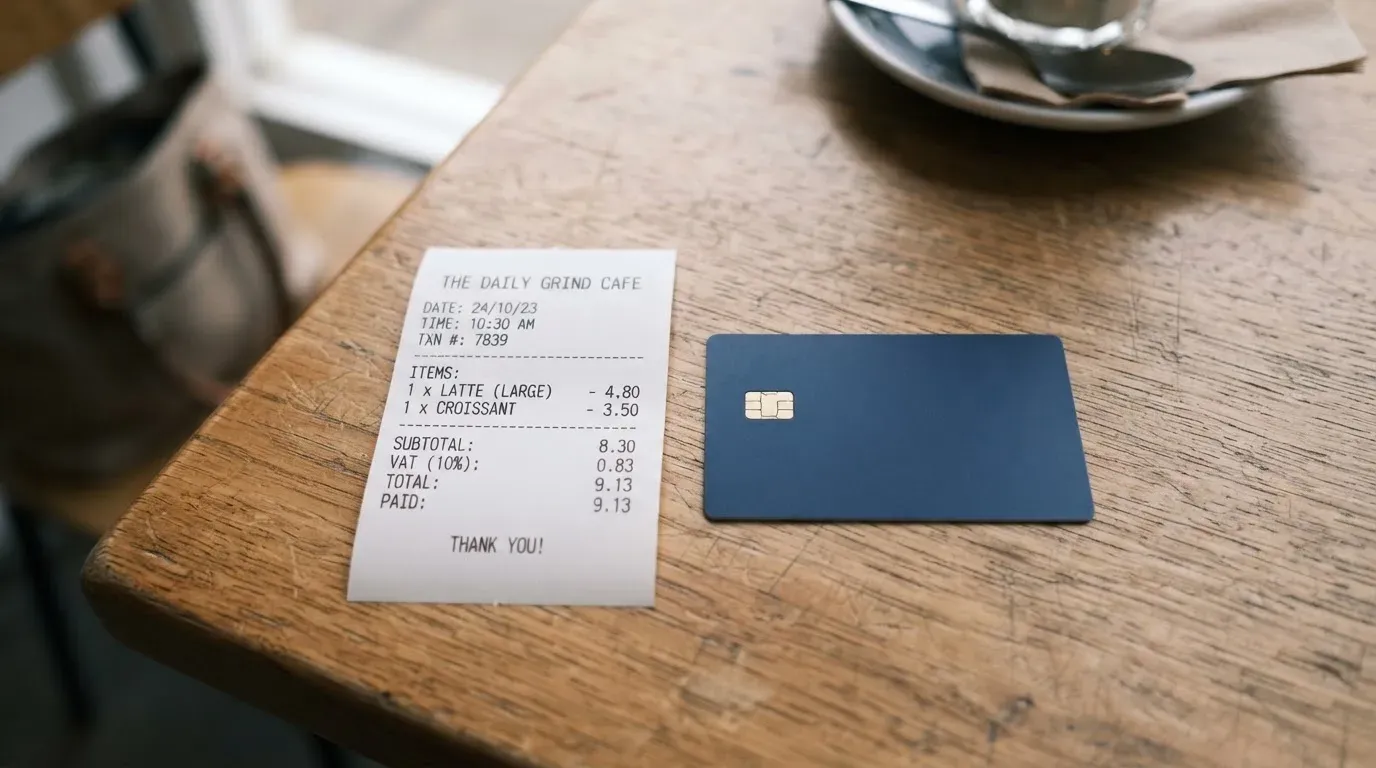
Once your monthly spend reaches $200–$400, Assetback — the rewards programme — typically covers your top-up and conversion fees; beyond that monthly allowance, standard fees apply, and the exact amounts are not stated in that sentence. Bitget says it does not profit from exchange-rate spreads and that its rates closely match Google’s live rates.
Here is the concrete fee picture. Some of the figures below are from the card’s APAC physical card FAQ; where a number comes from a third party rather than the card, I say so.
| Fee or limit | What the card says |
|---|---|
| Annual fee | None |
| Monthly card fee | None |
| Issuance (virtual) | Not stated; aggregators describe it as free |
| Physical card, APAC | 49 USD including international shipping, deducted from card balance |
| FX fee | 1.7% (APAC physical card FAQ) |
| Conversion fee | 0.05% (APAC physical card FAQ) |
| ATM fee | 1% of the amount or 5 USD per transaction, whichever is higher; some ATMs add their own fee |
| Daily spending limit | 50,000 USD (APAC physical card FAQ); unofficial sources report higher figures and one European user reported 5,000 daily |
| Annual spending limit | 990,000 USD (APAC physical card FAQ); an unofficial source reports 150,000 |
| ATM limits | 3,000 USD per transaction; 10,000 USD daily, maximum 20 withdrawals; 100,000 USD monthly, maximum 30 |
Two everyday payments, to make the percentages real. Pay 40 USD in a café where the price is in euros: the FX fee of 1.7% applies to the converted amount, and the conversion fee of 0.05% applies on top, so roughly 0.73 USD of the 40 goes to fees — before any spread, though the card says it takes none. Pay 40 USD in a shop that bills in dollars, in a country whose currency is the dollar: there is no conversion, so you are down to whatever the merchant charges and the 0.05% conversion fee if the payment is processed as a currency conversion.
The ATM case is where fees bite hardest: withdraw 200 USD and the 5 USD per-transaction floor applies if that is higher than the 1%. And a note on the top-up fee, which the card contradicts itself on: one Bitget help centre page says 1% per top-up, while Bitget’s own blog articles say 0%. Both are Bitget. That contradiction is not resolved in the card’s favour, so assume a top-up fee exists until you see otherwise in your own app. The same third-party source says the physical card is exempt from the FX fee up to 600 USD a month — unofficial, not confirmed.
Do not forget the fees that are not the card’s. A blockchain transfer to top up costs a network fee, charged by the network, not by Bitget. If you send on Ethereum with nothing left in ETH for gas, the transfer simply cannot happen.
Top up options and how to top up
You fund the card with USDT, USDC, ETH or SOL. That is the whole list, and it is the reason this card scored 8 out of 10 on funding — four of the most liquid assets in crypto, all stablecoin-or-native majors, and no bank account needed at any step.
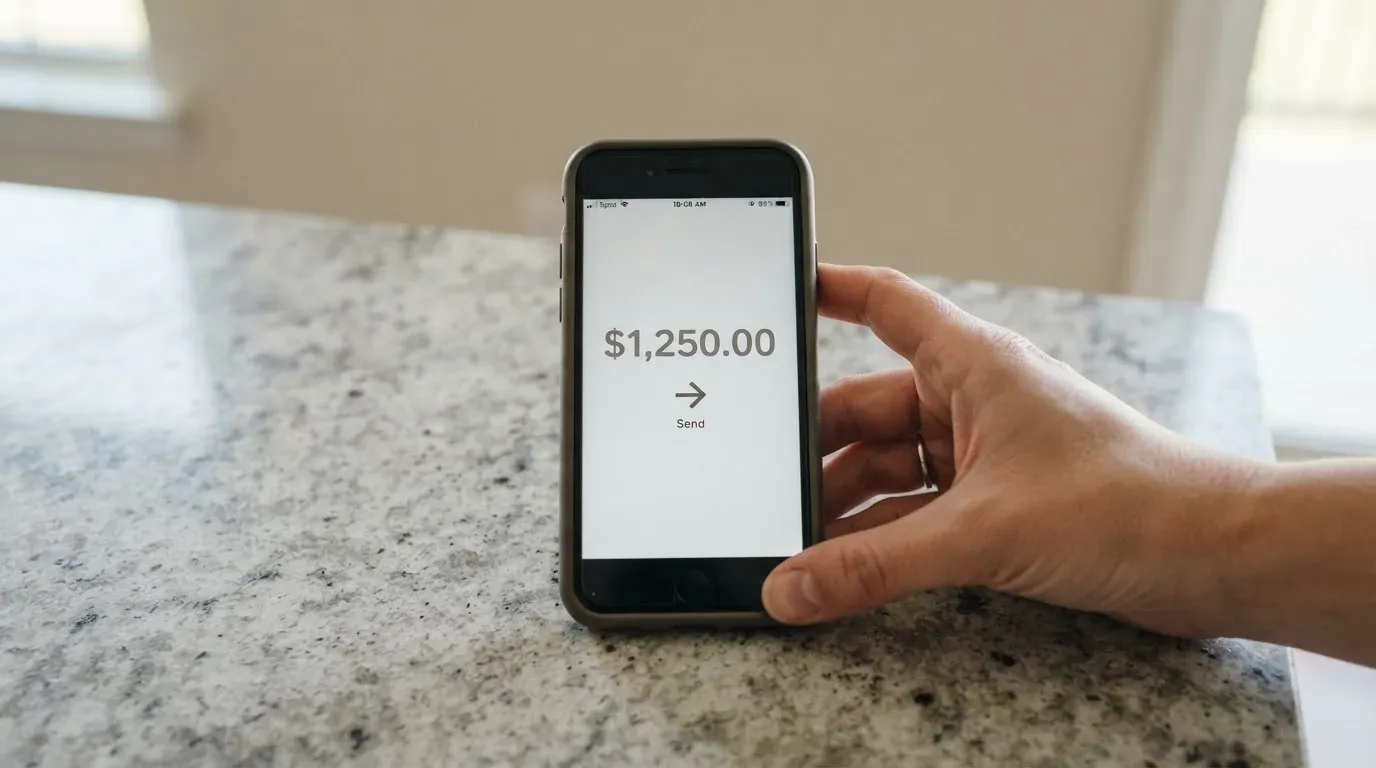
In practice the flow is: you transfer one of those assets to the card, and the card converts it to a spendable balance. No minimum top-up is stated. The conversion fee of 0.05% from the APAC FAQ applies. Assetback typically covers most top-up and currency-conversion fees within the monthly allowance, and standard fees apply beyond it.
Two things to get right, both of them your responsibility rather than the card’s:
- The network must be one the card supports. Blockchain transfers are irreversible. A deposit sent on a network the card provider does not support, or to an address belonging to a different network, can be lost or need manual support recovery with no guarantee of success. Check the network in the app before you send, not after.
- If you hold USDC, know that Circle stopped supporting USDC on Tron in February 2024, so “USDC over TRC20” is not a native option. Ethereum fees are paid in ETH, so a wallet with USDT and no ETH cannot send.
One more thing about self-custody that the card’s pages do not soften: if you lose your wallet or seed phrase, an activated card will still spend what is already loaded, but topping up, withdrawing from the card and card recovery all become impossible. Your keys are the account.
Paying with it every day
It is a virtual card from day one, with a physical option in the nine Asia-Pacific countries listed earlier. It works wherever Visa or Mastercard is accepted, and the app links to Apple Pay, Google Pay, PayPal, Alipay and WeChat Pay. You can add it to a mobile wallet — the card number is replaced by a device-specific number in the phone’s secure hardware, and each payment uses a one-time code, so linking to Apple Pay does not expose your card number to Apple’s servers.
On ATMs: supported Visa ATMs work with the physical card, and withdrawals count towards your daily spending limit.
The rewards are the strongest part of the offer. Assetback pays 2% base for all cardholders, rising to 3% for new users or once you hit a monthly spend threshold, and you can change what you are paid in — BTC, gold, US stocks or USDC — once per calendar month. There are no account tiers: 2% is for everyone, 3% is for new users and for those reaching the spend threshold, and the exact upgrade conditions and reward caps live in the rules inside the app. Some merchant category codes are excluded from rewards, and refunds are excluded too, though which specific categories are excluded is not stated.
Refunds deserve their own warning because it is the place people get surprised. Assetback is not paid on refunded, reversed or cancelled transactions. There are help articles on refunds and cash withdrawals and on issues with purchases, refunds or cash withdrawals, but I did not read their text and the time frames are not stated. The rule of thumb: if a purchase is reversed, expect the cashback to go with it.
Store ratings for the Bitget Wallet app are not stated. For what it is worth as a sign of trust, a merchant category code is a four-digit classification of a business, and some codes — gambling is the classic one, code 7995 — are blocked by issuers as policy rather than by law, with the blocked list differing by issuer. Which categories Bitget blocks is not stated, so if a purchase of that kind is declined, that is the first thing to suspect.
What can go wrong
This is the section where the card’s real score lives, so I will be blunt.
Reliability and complaints scored 4 out of 10, the lowest of any criterion. The card is issued by Bitget Wallet, and the issuing partners vary by region and are not named anywhere on the public pages. Licences are not stated either — I looked and did not find them, which is not the same as their absence, but it means you cannot verify from the card’s own site who is actually regulated underneath it. Official incidents are not stated. That is what I could establish; it is not a clean bill of health.
On Trustpilot, one user report puts the Bitget Wallet Card at 3.4 out of 5 from 82 reviews, with the lowest scores for support and transparency, and themes of automated generic replies and Bitget not responding to reviews. The exchange itself sits far lower in a second report, around 2 out of 5 across roughly 2,000 reviews, with support and account-verification disputes as the recurring themes; one reviewer says Bitget and partner OSL Pay stopped responding after a loss. These are user reports and third-party listings, not audited figures, and a third-party catalogue also lists an older Bitget Card as no longer accepting new customers, which the card does not confirm. What I take from all of it: support is the weak point, and on a card where you hold your own keys, weak support is worse than it sounds.
Then the thing that stops me recommending this to anyone nervous about a missing payment. It is possible for a crypto card programme to be switched off suddenly. In November 2022 Visa terminated its global agreements with FTX and the US debit card programme was wound down. WaveCrest, a Visa issuer that supplied crypto card brands, was suspended by Visa in Europe in 2018, closing every Visa programme it had issued. Closures follow a pattern: a notice period, then spending and loading stop, then you are asked to withdraw what remains — one reported 2026 closure ended new loads on 8 July 2026 and spending on 8 August 2026, a single unconfirmed source. Here, the physical card press release dates from 2026-04-01, while a third party says the exchange-branded Bitget Card stopped accepting new applications on 2026-08-01. I am not telling you the card is closing. I am telling you the category closes cards, and that a card with unnamed issuers and unnamed licences is harder to hold accountable when it does.
Three more practical traps:
- Address verification. Address Verification Service compares the numeric parts of a billing address against issuer records, and it is generally unavailable for foreign-issued cards — which can cause declines. On a card issued through a partner in one country while you live in another, expect some friction.
- The BIN. Merchants can look up the issuer and country from the first six or eight digits of a card number, and some decline prepaid or foreign-issued cards as policy. A card that looks “foreign” to a shop is a real, dull, recurring problem.
- Holds. A declined authorisation can leave a hold on your funds for several days, typically up to seven.
The protection side, for balance: the app is self-custody, so you keep the seed phrase safe and nobody can spend your balance behind your back; you can freeze the card instantly under Card, then Manage, then Freeze Card; and typical safeguards exist across this category — app-based two-factor authentication, spending limits, 3-D Secure confirmation and tokenised mobile wallets. A seed phrase is typically 12 to 24 words in an unencrypted form of your private key, and anyone who gets it can restore the wallet and spend the funds, with no built-in recovery, because blockchain transfers are irreversible.
And if you are in the EU: MiCA, the markets-in-crypto-assets regulation, took legal effect in June 2023, with its rules on asset-referenced and e-money tokens applying from 30 June 2024 and the remaining provisions, including crypto-asset service provider rules, from 30 December 2024. A card is a payment service regulated separately, so a crypto card often rests on two licences at once. ESMA keeps an interim register of authorised providers that you can check.
What to take instead
If the Bitget card’s support record makes you uneasy, or you want a named issuer and clearer fees, three alternatives came up in my comparison.
| Card | Score | Issuer network | Cost shape |
|---|---|---|---|
| Bitget | 6.8 / 10 | Visa or Mastercard by region | No annual or monthly fee; FX 1.7%, conversion 0.05%; physical 49 USD in APAC |
| MetaMask | 7.1 / 10 | Mastercard | Virtual free, no annual or maintenance fee; Metal 199 USD/year; minimal per-transaction fee, no foreign transaction fee |
| KAST | 6.1 / 10 | Visa (Platinum, Infinite metal, Infinite gold) | Annual membership 0 / 1,000 / 10,000 USD by tier; FX 0.5%–1.75%; declined-transaction fee 0.50 USD |
| TokenPocket | 5.8 / 10 | Visa debit in Europe, Mastercard debit in Asia-Pacific and elsewhere | 1% fee on crypto deposits, refunded later via rewards; no other fees stated |
A few notes on each, because a table flattens the trade-offs.
- MetaMask scores highest here at 7.1 / 10. Sign-up is open in 45 listed countries and territories — Andorra, Argentina, Brazil, Canada, Mexico, Germany, France, Spain, Uruguay among them — with other regions on a waitlist, proof of residency required, and US and UK sign-ups temporarily closed. One important nuance in its favour: ineligible regions limit sign-ups, not spending. The card is Mastercard, virtual first and instant, with a Metal card you can pre-order in the app after virtual approval; one card per user; issuer Monovate, card provider Crypto Life. It spends directly from the connected wallet across Linea, Base, Monad and Solana, holding tokens including mUSD, wETH, EURe, GBPe, USDC and USDT. Cashback is paid in mUSD into the Money Account: 1% on Virtual, and on Metal a 3% headline limited to the first 10,000 USD spent, then 1% — read that footnote rather than the headline. A 5X (Virtual) or 7X (Metal) FLY bonus runs through the Blackbird dining app.
- KAST at 6.1 / 10 is the most transparent on residence and ID: the country list appears at KYC, and if your country is not listed it is not available there. It also states that living in a supported country with an ID from a restricted region may still fail KYC, that dual citizens with an ID from a supported country may pass, that only the account holder’s own ID is accepted, and that a VPN does not bypass this — an account can be created in an unsupported country with KYC still locked. Fees are unusually explicit: stablecoin top-up 0%, USD spend 0%, transaction fee 0%, Apple and Google Pay 0%, non-USD FX 0.5%–1.75% depending on your residence and the transaction country, non-USD transactions under 25 USD costing 0.10 USD, and a 0.50 USD fee on a declined transaction for insufficient balance. Cashback is USD: 1.5% on the first 2,000 USD a month (Standard), 2% on the first 10,000 (Premium), 3% on the first 40,000 (Private), with KAST Points adding +1% and +2% on the two paid tiers. One caution: the Terms say acceptable tokens are currently USDT and USDC, while the app also lists PYUSD and RLUSD — a conflict worth asking about.
- TokenPocket at 5.8 / 10 runs on Arbitrum with balances in EUR24 and USD24. Visa debit covers a list of European countries and territories — Germany, France, Spain, Switzerland among them — and Mastercard debit covers Australia, Canada, Hong Kong, Japan, Taiwan, New Zealand, Singapore, South Korea and the UK, among others, with the Americas planned. Cards are virtual, no physical mentioned. An NFT creation fee is partly covered, with the user paying “a small portion” not stated; a 1% fee is charged on depositing crypto into the card, refunded later via rewards or reduced transaction fees; and there is no stated FX fee, though extra fees can come from inter-institution settlement.
My honest ranking for the reader this page is written for: if your problem is access to a card and you already hold stablecoins, MetaMask and Bitget are the two to compare, with Bitget winning on how easily you can fund it and MetaMask winning on a named issuer and clearer reward terms. KAST is the one to pick if you want every fee written down in advance and you can pass its ID checks.
Who I would recommend it to
I would recommend the Bitget card to three kinds of person.
To someone who already keeps USDT or USDC in a self-custody wallet and wants to spend it in ordinary shops without converting to a bank balance first. The four funding assets, the self-custodial app and the 2–3% Assetback rewards make this the natural use, and with no annual or monthly fee there is nothing to lose by trying.
To someone in one of the 50+ supported countries and regions who has decided, on the evidence, that unnamed issuing partners and a 3.4-out-of-5 support score are an acceptable trade for a working card and good cashback. I would still ask support two questions before topping up: who is the issuing partner in my region, and what happens to my balance if the programme is closed.
To someone who wants Apple Pay, Google Pay, PayPal, Alipay or WeChat Pay links from the same crypto balance, which the card supports and which not every alternative matches.
I would not recommend it to someone whose first priority is a payment that will definitely go through and a refund that will definitely arrive. I would not recommend it to someone who cannot comfortably check a blockchain network before sending funds, because the card cannot help you there and the network will not reverse you. And I would not recommend it as your only card in a country where it is not officially supported — the US is reported closed by a third party, not by the card, and Nigeria is reported not open, and I would not build on that.
On tax, one practical point rather than advice: the IRS treats digital assets as property, so exchanging them for goods or dollars generally produces a taxable gain or loss measured at fair market value on the date of the transaction — which can make each card payment its own disposal. Check the rules where you live.
Frequently asked questions
What is the Bitget card?
The Bitget card is a Visa or Mastercard payment card that spends a balance you load with crypto, rather than a bank account. You fund it with USDT, USDC, ETH or SOL through the Bitget Wallet app, and it behaves like a prepaid card: the crypto is converted to a spendable balance, which cannot be overdrawn. It is issued by Bitget Wallet, with issuing partners that vary by region.
How does the Bitget card work?
You convert or top up a balance first, then the card spends only that balance, so it cannot go negative. Payments route through Visa or Mastercard exactly like any other card, so it works anywhere those are accepted. Cashback through the Assetback programme runs at 2% for all cardholders, rising to 3% for new users or after a monthly spend threshold.
Is Bitget a bank?
No — Bitget is a crypto exchange group, and the card is issued by Bitget Wallet through regional issuing partners. The partners are not named on the card’s public pages, and licences are not stated. That is the practical difference from a bank account: you are trusting a card programme and its issuer, not an insured deposit, and the card itself is a payment service regulated separately from the crypto side.
Who owns Bitget?
Bitget is the crypto brand behind the card; the card is issued by Bitget Wallet. Regional issuing partners differ and are not named publicly — one unofficial reviewer mentions OSL Pay, which the card does not confirm. Beyond the brand, the ownership structure is not something the card’s public pages state, and I would not guess at it.
Can I get the Bitget card in my country?
Probably, if you are outside the United States — the card says it is available in 50+ countries and regions including the EEA, UK, Argentina, Brazil, Japan, Singapore, South Africa, Pakistan and Bangladesh, with more regions opening. Third parties, unofficial, report the US closed and Nigeria not open. The card does not publish a list of excluded countries, so check with support for your specific country.
How do I apply for the Bitget card?
In the app: Wallet, then Card, then submit an ID. If your information is complete, approval can take as little as a minute, and there are no tiers to climb. Whether proof of address is required and any specific age rule are not stated on the public pages, so have address documents ready just in case — a failed address review is a reported reason accounts get closed.
Does the Bitget card require KYC?
Yes. Identity verification in the app is part of applying, and approval can be as quick as a minute. The card’s pages do not detail a proof-of-address requirement or an age rule, both marked as not stated. Note that a failed proof-of-address review was reported by a third party as leading to account closure with a small balance deduction.
How much does the Bitget card cost to use?
There is no annual fee, no monthly card fee and no interest markup. The costs that bite are the 1.7% FX fee and the 0.05% conversion fee from the APAC physical card FAQ, and ATM withdrawals at 1% or 5 USD per transaction, whichever is higher. A physical card costs 49 USD including shipping in APAC, and network fees for topping up are charged by the blockchain.
How do I top up the Bitget card?
Send USDT, USDC, ETH or SOL to the card from your wallet through the Bitget Wallet app. Check the network before you send: transfers are irreversible, and one sent on an unsupported network can be lost or need manual support recovery with no guarantee. The conversion fee is 0.05%, and Assetback typically covers most top-up fees within your monthly allowance. Minimum top-up is not stated.
Is the Bitget card safe and worth it?
Worth it if you already hold USDT or USDC and want 2–3% cashback with no annual fee. Safety is a mixed picture: self-custody means your keys stay with you, you can freeze the card instantly, and you can link to Apple Pay or Google Pay with tokenised numbers. But support scored 4 out of 10, with Trustpilot at 3.4/5 from 82 card reviews, issuing partners unnamed, and licences not stated. Judge it on that, not on the rewards rate.
Wallet card verdicts – cryptocardverdict
Content created by the «cryptocardverdict» team