
An open-questions review of a Hong Kong virtual crypto card
 Available in US
MothCard is a virtual payment card funded from a crypto balance, issued through Visa or Mastercard and settling in US dollars, run by a Hong Kong company. It exists for a specific person: someone who cannot get an ordinary bank card, who has USDT in a wallet rather than money in a current account, and who wants to pay online without a bank asking too many questions. For that person it does something genuinely useful. For everyone else, the arithmetic is worse.
I scored it 5.4 out of 10. Not because the product is broken, but because of what I could not verify. MothCard’s public pages tell me what the card does and roughly who it is for. They do not tell me who issues it, what it costs, which networks work, or how much money I may move in a day. Every one of those gaps lands on the person holding the card.
Conditions are current as of October 28, 2026.
The verdict
The score is 5.4 out of 10, and the shape of that number matters more than the number itself. Five of the six criteria came back at exactly 5, and only eligibility and everyday use reached 6. Nothing here scored badly. Nothing scored well either. This is a card that is neither obviously a trap nor obviously a keeper, and for someone whose alternative is no card at all, that middle position may still be the best available one.
| Criterion | Mark | Why |
|---|---|---|
| Who can get it | 6 / 10 | “Accepted worldwide” on the site, but with country and region restrictions; the issuing region depends on the card and shows in the app; the company sits in Hong Kong |
| Cost | 5 / 10 | Issuing and maintaining the card are both paid for, amounts visible only in the app; transaction fees are not disclosed |
| Top-up options | 5 / 10 | Wallet top-up in USDT per the App Store listing; other coins and networks appear in the app and are not published |
| Reliability and complaints | 5 / 10 | Hong Kong Yunmo Technology Co., Limited; issuing bank and licences not named; App Store rating 5.0 from one rating; no complaints found |
| Everyday use | 6 / 10 | Virtual card, Apple Pay and Google Pay all supported; cash machine use not disclosed |
| Total | 5.4 / 10 |
Who this suits: someone with USDT already in hand, no usable bank card, and a spending pattern that lives almost entirely online. The product is built for exactly that person — online payments with a virtual card funded in USDT. If that is you, the card will do its job and the missing numbers mostly do not matter, because you will spend what you load and nothing more.
Who it does not suit: anyone planning to hold a balance on it long-term, anyone who pays rent or utilities through it, anyone who needs cash from a machine, and anyone who wants to know in advance what a payment will cost. Those readers should look at the alternatives below, where at least some fees are published, or at an ordinary prepaid card from a company in their own country.
There is one more thing that should sit in the back of your mind while reading the rest of this. This is a card you fund before you spend. That design means the card cannot overdraw you — a real advantage — but it also means you are trusting one small company with both your balance and your recovery. There is no second bank behind it.
Will they give you the card?
Short answer: probably, if your country is not one of the restricted ones — but MothCard will not tell you which those are in advance.
The starting data on the card is Hong Kong, stated in section 3.1 of its Terms of Service. The marketing on the site says the card is “accepted worldwide” while warning in the same breath that “some countries or regions may have restrictions.” Those two sentences are doing a lot of work between them, and they are not really in conflict: acceptance is about where the card will work, eligibility is about who can hold it. A card can be accepted in a country whose residents cannot get one.
The practical point is that your issuing region depends on which card you pick, and you see it in the app. MothCard offers several cards with differing issuing regions, and the one assigned to you is the one that determines which country’s rules you are under. That is unusual, and it means two people using the same app may be living under different eligibility and screening regimes without either of them knowing.
The company behind it is Hong Kong Yunmo Technology Co., Limited, in Tsim Sha Tsui, Hong Kong. Neither the issuing bank nor any licence is named on the pages I read. For a card that handles money converted from crypto, an unnamed issuing institution is the single most important gap on this page. I will come back to it under risks, but I would rather you know now that you are being asked to trust a chain of custody whose second link is not written down anywhere public.
So: the honest answer to “will they give me the card” is that I cannot tell you. Not because the card is secretive, but because the eligibility rules are genuinely not published. If your country is large and ordinary, your odds are probably good. If you live somewhere with its own payment controls, or your nationality matters more than your address, the answer is unknowable before you install the app.
How to get it
There is one identity check, once, and it is there for anti-money-laundering and sanctions reasons rather than anything to do with your crypto. MothCard asks for “just one valid personal ID,” with the document types listed in-app per country, and a face scan in some cases. Proof of address is not stated anywhere I found. The minimum age is not stated either, though the App Store age rating is 18+, which is the usual signal that the app is not meant for children.
The sequence is short: sign in, choose a card, verify your identity, top up the wallet, move funds onto the card. That last step matters and I will return to it in the funding section, because the card and the wallet hold balances separately and money has to be pushed from one to the other.
What you get is a virtual card, described as a “crypto virtual card for global payments,” issued on Visa or Mastercard, settling in US dollars. There is no physical card, so nothing is posted to you, nothing is lost in the mail, and nothing depends on your address being deliverable. That is a genuine advantage for exactly the reader this card is built for.
The levels of verification are not stated — there is no tier structure described anywhere, no mention of higher tiers unlocking higher limits. What is stated is the single check, and that is what you should plan around.
One thing to keep in mind when you read “one valid personal ID”: under EU rules, customer due diligence normally covers name, address, date of birth, nationality and identity documents, a sanctions check, the purpose of the relationship, and whether you are a politically exposed person. MothCard is Hong Kong-based, so EU rules are not its rules, but the principle travels. Nationality in particular is recorded and screened separately from residence, because sanctions screening and issuer risk policy are applied to citizenship and country of birth as well as to country of address. Which document you are asked for may depend on where you were born, not where you live.
What it really costs: Fees
This is the weakest part of the card, and the weakness is not that the fees are high. It is that they are invisible until you are already holding the card.
MothCard states plainly that “there are fees for issuing and maintaining a card.” It does not publish the amounts. They appear in the app. Beyond that, the operation-by-operation fees are not stated; sending money carries a service fee and a minimum, and both are shown on an in-app confirmation page. Cash machine use is not stated, and the card is described as being for online payments.
| Item | What MothCard says |
|---|---|
| Issuance | There are a fee for issuing the card; amount shown in the app only |
| Monthly maintenance | There are a fee for maintaining the card; amount shown in the app only |
| Conversion fee | Not stated |
| Foreign exchange fee | Not stated; settlement is in USD |
| ATM / cash machine | Not stated; card described for online payments |
| Sending money | A service fee and a minimum, shown on the in-app confirmation page |
| Per-transaction limit | Applies; exact amount referred to the app |
| Daily spending limit | Applies; exact amount referred to the app |
| Monthly spending limit | Applies; exact amount referred to the app |
Let me make that concrete with three everyday payments, because abstract fees hide their own size.
Paying an amount in dollars for groceries in a shop that charges in dollars should be the simple case: settlement is in USD, so there is no conversion on your side and no currency decision to make. What you still pay is the sending fee, if any applies to that transfer, and the card’s own maintenance cost spread across the month. What you do not know is what the issuer charges for the payment itself.
Paying an amount in euros for software is where the unknown becomes real. Your card settles in dollars, so the euro amount has to be converted, and the cost of that conversion is not published. You can work out the arithmetic — the euro amount at whatever rate applies, plus a conversion charge you will discover at the confirmation screen. You cannot work out the result beforehand.
Paying an amount in dollars for something at a merchant that treats foreign-issued cards as a risk is the case where the cost is not a fee at all, it is a decline. More on that below.
The honest summary is that MothCard’s cost structure is knowable in principle and unquantifiable in advance. If you are someone who needs to forecast spending to the cent for a business expense, that alone disqualifies the card. If you are loading fifty dollars and spending it before the end of the week, it barely registers.
There are no tiers here. Several cards are selectable in the app with differing issuing regions, but no tier structure is described. Wallet balance and card balance are shown separately, which is a small but useful detail: you can see what has been loaded and what is still spendable.
How to Top up
Top up wallet in USDT, then move the funds from the wallet onto the card. Two steps, not one, and the second step is the one people miss.
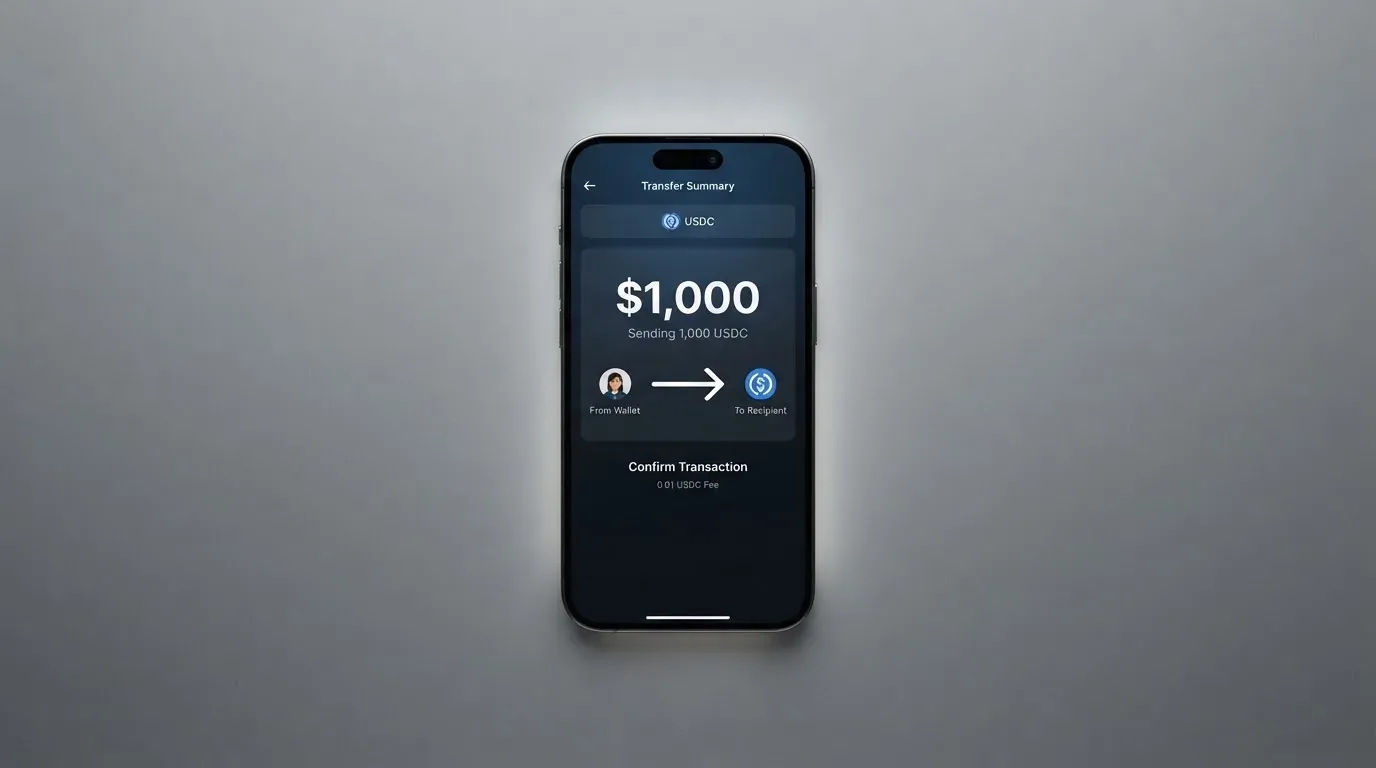
The App Store listing says you top up the wallet with USDT. Beyond that, MothCard says only that “you used the network shown in the App” — its wording — and does not publish the list of supported coins or chains. So the honest position is: USDT is documented, other assets are plausible and app-dependent, and I will not guess which. Open the app, read the network, send on that network.
The deposit fee and the minimum are not stated.
Why the network matters so much deserves a short explanation, because this is where real money is lost by people who are otherwise careful. A blockchain transfer is irreversible. The network cannot freeze funds, cannot reverse them, and cannot return them. If you send USDT on a chain the provider does not support, or to an address belonging to a different chain, the funds can simply be gone, or recoverable only through manual support with no guarantee. Some networks will not even let the transfer complete: on Ethereum, fees are paid only in ETH, so a wallet holding USDT and no ETH cannot send at all.
One detail worth carrying in your head if you have both assets: Circle stopped supporting USDC on Tron in February 2024, so “USDC over TRC20” is not a native option. USDT on Tron, by contrast, is a long-established route. And note that on-chain network fees for your deposit are charged by the blockchain, not by MothCard, so they are invisible in the app and unavoidable.
Withdrawing is the gap here. MothCard does not explicitly cover withdrawal. The FAQ advises two things: move your remaining balance off a card before cancelling it, and move funds out of both card and wallet before deleting the account. That advice tells you something important about how the product sees itself — it assumes you will want out, and it does not tell you what that costs. Fees for withdrawal are not stated.
Those two pieces of advice are worth following to the letter. If you close a card with a balance on it, or delete an account holding funds, you may never see that money again.
Paying with it every day
Everyday use is the card’s best section, and it earned 6 out of 10 for one reason: it does the ordinary things.
Apple Pay and Google Pay are both supported, and which wallets work with which card is shown in the app. This matters more than it sounds. When a tokenised number is in a mobile wallet, the device substitutes a device-specific number stored in its Secure Element rather than the real card number, and each payment carries a one-time dynamic code. In practice, adding the card to a phone wallet also converts it from something that feels like a foreign payment instrument into something that looks local to a merchant’s systems.
The app exists on iOS (15.6 and above), on Google Play, and as a direct Android download. The App Store rating is 5.0 — but read that carefully, because it comes from one single rating. A single rating tells you nothing about reliability. The Google Play rating could not be obtained. App history shows a first release of version 1.0.0 on February 3 with the year not shown, and version 2.1.0 more recently.
Inside the app, you can freeze and unfreeze the card. You can reveal the full card number and CVV after an identity confirmation, and the app then hides them again. Sign-in is by email, Apple or Google, with optional Face ID or fingerprint. The app’s payment history lists payments, fees and merchant refunds, which is the kind of boring feature that turns out to matter when a charge goes missing.
What is not stated: blocked merchant categories. Many issuers block gambling (MCC 7995) by policy rather than by law, and the blocked list differs between issuers. MothCard publishes no blocked list, so if gambling is something you do, you will find out by being declined. Cashback and rewards are also not mentioned anywhere in the FAQ. If rewards are the reason you are comparing cards, MothCard is not competing on that ground.
Disputes and chargeback handling are not stated either. This one deserves weight. A chargeback is a refund ordered by the issuer with a reason code such as fraud, duplicate billing, or goods not received, and in the United States prepaid-card coverage varies and should not be assumed. MothCard’s app history shows merchant refunds arriving, which is the mechanism that works. Whether you can formally dispute a charge is a different question, and the pages do not answer it.
What can go wrong
Nothing bad has publicly happened to MothCard that I can find. That is worth saying first, because the absence of a track record is different from a good track record. A search for MothCard reviews across the major complaint and discussion sites returned nothing about MothCard — not praise, not complaints, nothing. There is no Trustpilot page and no Reddit presence that I found.
For a young product that can be a fair sign of early days. For a card holding money, it means you have no external read on how it behaves when things go wrong.
Here is what I would actually worry about, in order.
The unnamed issuer and unnamed licences. Hong Kong Yunmo Technology Co., Limited is a named company, which is more than nothing. But the issuing bank or institution is not named, and no licences are named. In this category that is unusual. A crypto card typically depends on two licences: the crypto side (custody, exchange, transfer) under MiCA in the EU, and the card itself as a payment service under e-money and payment-services law. When neither is printed on the site, you cannot check anything. ESMA maintains an interim register of authorised crypto-asset service providers, white papers, and entities flagged as non-compliant — a register you can use to check a provider. I could not check MothCard, because nothing is there to check.
The custody model is not stated, and this is the gap that decides how much you should ever leave on the card. If the funds sit in a custodial wallet, the provider holds the credentials and you must trust them completely. If the funds sit in a wallet linked to your own keys, they remain yours until the moment of payment and you carry the entire risk of key loss, phishing, and malware that swaps a copied address. MothCard says nothing about which. That is not a technicality. It is the difference between a lost-seed-phrase scenario you cannot recover from and a provider failure you might be able to argue about.
And the sector’s record on that second failure mode is not reassuring. Mt. Gox reported roughly US$350 million stolen between 2011 and 2014; Coincheck lost about US$400 million in 2018; Ronin Network lost US$625 million in 2022. Transfers are typically irreversible and a stolen private key has no built-in recovery. Tether also says it disables tokens in wallets on the OFAC sanctions list and has frozen funds tied to illicit activity, so stablecoins are not censorship-proof in either direction — the provider can act against your balance.
Then the smaller risks, which are more likely and less dramatic.
Programmes closing. Card programmes do end. Visa terminated its global agreements with FTX on 13 November 2022 and the FTX US debit card was wound down; Visa suspended WaveCrest in Europe in 2018, closing all WaveCrest-issued Visa programmes. Closures typically follow a pattern: a notice period, then spending and loading stop, then users are asked to withdraw remaining balances. That last step is exactly the situation MothCard’s own FAQ warns you about, and it is why the advice to move funds out before closing or deleting anything matters.
Your card looking foreign. Every card number begins with six or eight digits identifying the issuing institution, and merchants can look that up to see which institution and country issued the card — then apply extra scrutiny when the issuer country differs from the billing address. Some merchants decline prepaid or foreign-issued cards precisely because the lookup reveals the type and country. Address verification, which compares the numeric parts of the billing address against issuer records, is generally unavailable for foreign-issued cards and can cause declines on their own. With no named issuing bank, you cannot even know what country your BIN will read as.
Holds that linger. A declined authorisation can leave a hold on funds that stays for days, typically up to seven. If you have pre-loaded a balance, a hold eats real money for a week.
Identity checks failing. If due diligence cannot be completed, EU rules require the institution to hold back from the transaction and, where necessary, end the relationship — which is why accounts get frozen pending documents. MothCard’s check is a single ID and sometimes a face scan, which is lighter than most, but it can still fail.
What to take instead
Three alternatives, compared honestly. Two of them publish less about their costs than MothCard does; one publishes more. None of them is a recommendation, and I am not suggesting any of them is safer.
| MothCard | CardFlow | HyperCard | Card.fi | |
|---|---|---|---|---|
| Score | 5.4 / 10 | 4.9 / 10 | 4.7 / 10 | 6.6 / 10 |
| Card type | Virtual, Visa or Mastercard, USD settlement | Virtual USD Mastercard, created in about 3 minutes | Prepaid, balance in USD or EUR | Virtual and physical, Classic and Premium tiers, plus a metal card |
| Who it is for | “Accepted worldwide” with country and region restrictions | Aimed at Nigeria (“Nigeria’s smartest fintech card platform”) and “Nigerians and global users” | App Store says it works in “more than 176 countries” (acceptance, not eligibility) | Cards ship to “200+ countries”; terms bar residents of, or orders from, sanctioned countries |
| Stated cost | Issuance and maintenance fees, amounts in app only | “Creating a virtual card is completely free”; monthly fee not stated | Not stated; App Store page lists no fees | Virtual Classic $49 one-time, Virtual Premium $249; physical and metal prices not listed; no monthly, annual, inactivity or minimum-balance fee |
| Top-up | USDT per the App Store listing | Bitcoin, USDT, ETH or Naira bank transfer | Crypto deposits such as USDT, BTC, ETH, converted to USD or EUR | 32 coins across 5 networks, converted at market rate on arrival |
| Networks published | No | Not stated | Not stated | Yes: Ethereum, Base, BNB Chain, Solana, Kaanch |
| Fees published | No | Not stated | Not stated | Yes: top-up Classic 1.5% + $1.00, Premium 1%; FX Classic 3.5%, Premium 2.5% |
| Rewards | Not stated | Not stated | Not stated | Cashback on card spending: Classic 0.8% capped at 10 USDT/month, Premium 1%, Metal 1.2% (caps 100 USDT/month, 5,000 USDT) or 2% (caps 250 USDT/month, 20,000 USDT); earn on balances “up to 18%” on Metal, variable |
| Score reason | Solid basics, almost nothing published | Free creation, narrow and unclear scope | Thin public detail, no network named | Most transparent on cost and networks, and the only one with published cashback |
Where each of these stands out: CardFlow creates a free virtual card in a few minutes and is aimed squarely at Nigerian users and global users, but no country list, exclusions, fees or networks are stated anywhere I could read. HyperCard has the widest acceptance claim — more than 176 countries, which is acceptance rather than eligibility — and holds balances in USD or EUR, but its App Store page names no network and lists no fees. Card.fi is the outlier: it is the only one of the four that publishes both its supported networks and its percentage fees, and the only one with a rewards programme, with cards issued “under licence from the relevant card schemes” (Visa or Mastercard not named) and every physical order including a virtual card. It also warns plainly that sending on the wrong chain risks permanent loss — which is the most honest sentence any of these cards says.
If your decision turns on knowing what things cost, Card.fi is the only one of these four where you can calculate before you commit. If your decision turns on being paid a cashback, it is the only one with any. If you are in Nigeria and want a free virtual card in a few minutes, CardFlow is built for exactly that.
Who I would recommend it to
I would recommend MothCard to a specific person, and I would not recommend it to everyone else.
I would recommend it if you have USDT in a wallet, you cannot open a normal bank card, you spend online, and you treat the balance as spending money rather than savings. Load what you need, spend it, empty it. Under those conditions the card’s missing numbers barely matter, because you are never exposed to a large balance, never depend on a published fee, and never need an ATM.
I would not recommend it if you want to know what a payment costs before you make it, if you need to hold a few thousand dollars on it, if you take cash out, if you gamble with it, if you are in a country the app may restrict you from, or if you are the kind of person who needs to know the name of the bank behind your money before you hand it over. On that last point I am being blunt: MothCard does not say who issues the card, does not name a licence, and does not say whether your crypto is held by them or by you. That is three absences in the same category, and no amount of app polish makes them go away.
The comparison to draw is not MothCard versus a good card. It is MothCard versus nothing. For a reader with no ordinary bank card, a 5.4 that works is worth more than a 6.6 you cannot open. If you have any other option at all — a local prepaid card, a bank account, an established exchange card with published fees — you should weigh this one against that option rather than against the absence of one.
I would come back and reread this page once two things are public: the name of the issuing institution, and the fee table. Until then, this is a card to fund lightly.
Frequently asked questions
What is MothCard?
MothCard is a virtual payment card funded from a crypto balance rather than a bank account. It is issued on Visa or Mastercard and settles in US dollars, and the company behind it is Hong Kong Yunmo Technology Co., Limited in Tsim Sha Tsui, Hong Kong. It is aimed at online spending, and its own description calls it a crypto virtual card for global payments. It is not a bank card attached to a current account.
How does MothCard work?
You load a balance, then spend from it. You top up the wallet with USDT, then move funds from the wallet onto the card, and the two balances are shown separately in the app. The card then behaves like a prepaid card: it draws on what you loaded and cannot overdraw. Payments settle in USD, and Apple Pay and Google Pay are both supported for use with a virtual card.
Is MothCard a bank?
No, and this is the most important question on the page. The company is Hong Kong Yunmo Technology Co., Limited, a technology company rather than a bank. The issuing bank or institution is not named anywhere public, and no licences are named either. That is why I put an unnamed issuer at the top of my risk list: with two unknown links in the chain, you cannot check either.
Who owns MothCard?
MothCard is run by Hong Kong Yunmo Technology Co., Limited, registered in Tsim Sha Tsui, Hong Kong. Terms of Service section 3.1 names Hong Kong as the starting data. That is the whole of the ownership information published. The issuing bank is not named, so the company that holds the card programme on the network side remains unidentified.
Does MothCard require KYC?
Yes, there is one identity check, done once, for anti-money-laundering and sanctions reasons. MothCard asks for one valid personal ID, with the accepted document types listed in-app per country, and a face scan in some cases. Proof of address is not stated, and no verification tiers are described. The App Store age rating is 18+, though a minimum age is not stated on the pages.
Is MothCard available in my country?
The site says the card is “accepted worldwide” while also warning that some countries or regions may have restrictions. Eligibility is not the same as acceptance, and your issuing region depends on which card you are offered and is visible in the app. MothCard publishes no country list and no exclusion list. If your country has its own payment controls, the honest answer is that you cannot tell before installing the app.
What does a MothCard card cost?
MothCard states that there are fees for issuing and maintaining the card, but the amounts are shown in the app only and are not published. Sending money carries a service fee and a minimum, both shown on an in-app confirmation page. Conversion fees, foreign exchange fees and ATM costs are not stated. Per-transaction, daily and monthly spending limits apply, with exact amounts referred to the app.
How do I top up MothCard?
Top up the wallet with USDT as the App Store listing describes, then move the funds onto the card in a second step. Other coins and networks are not published; MothCard says only that you use the network shown in the app. The deposit fee and minimum are not stated. Send on the network the app shows you, because blockchain transfers are irreversible and a wrong-chain deposit can be lost.
Is MothCard safe to use?
There is no public record of problems: a search found no complaints and no Trustpilot or Reddit presence. That is an absence of history, not a record of good behaviour. The things I would check first are the custody model, which is not stated, and the issuing bank, which is not named. You can freeze the card in the app and sign in with Face ID or fingerprint, which are genuine safeguards.
Can I withdraw money from MothCard, and can I close the account?
Withdrawal is not explicitly covered by the published pages, and no withdrawal fee is stated. MothCard’s own FAQ tells you to move your remaining balance off a card before cancelling it, and to move funds out of both the card and the wallet before deleting the account. Follow that advice exactly. Closed card programmes typically stop spending and loading, then ask users to withdraw, so money left behind is money at risk.
Virtual card verdicts – cryptocardverdict
Content created by the «cryptocardverdict» team