
KAST Card: The Fees Look Clean, the Paperwork Behind Them Does Not
 Available in US
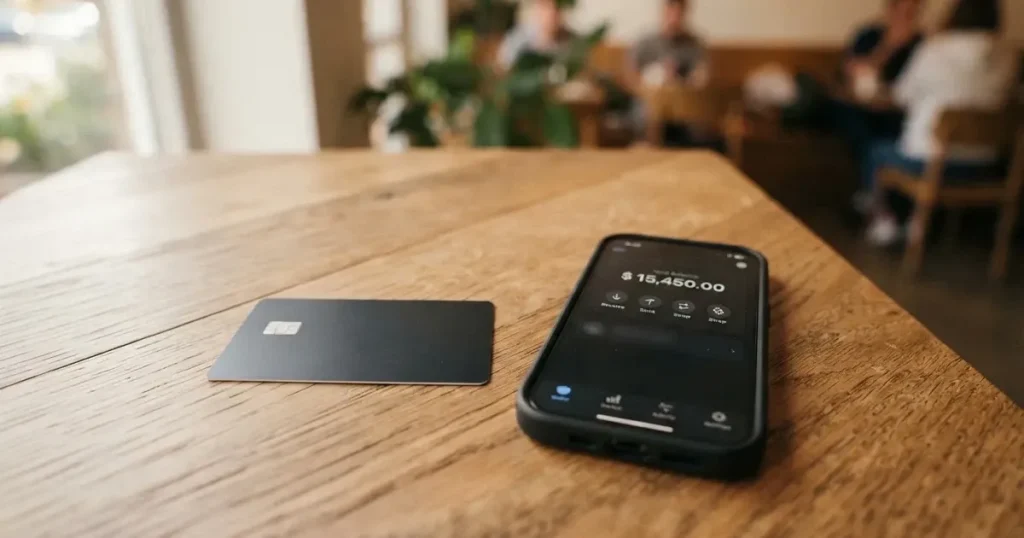
KAST is a card you load with stablecoins and then spend like an ordinary Visa. On paper it is one of the cheapest crypto cards available: the free tier costs nothing a year, top-ups are free, spending a USD balance costs nothing, and you get cashback on every purchase. The reason I am not recommending it more warmly sits underneath all of that — the entity behind it is registered in Anjouan, the card issuer is never named, no licence numbers appear anywhere on the pages I read, and the Trustpilot score sits between 2.5 and 2.7 with a consistent theme of frozen balances and repeated document requests.
That is the honest shape of this card. Good product, weak transparency, and a support record that suggests the compliance machinery sometimes grabs people it should not.
The conditions described here are current as of October 28, 2026.
Verdict: 6.1 out of 10
KAST scores 6.1 / 10 overall. It is genuinely good at the two things most people want from a crypto card — topping up cheaply and spending day to day — and genuinely weak on the third thing, which is being confident that your money and your account will behave normally when something goes wrong.
Who it suits: you already hold stablecoins, you spend in USD, you are comfortable with a custodial setup where a company holds your balance, and you would rather keep the whole chain on-chain than route money through a bank.
Who it does not suit: anyone who needs a card that will definitely work everywhere from a banked, fully documented life; anyone who wants to read a licence number and see a named issuer; anyone whose country may be on a restricted list they cannot see; anyone for whom a frozen balance with slow support is an unacceptable risk.
| Criterion | Mark | Why |
|---|---|---|
| Who can get it | 5 / 10 | The supported-country list is shown only at KYC and is not published; Visa acceptance in 170+ countries is a service claim, not an eligibility promise |
| Cost | 6 / 10 | Standard tier 0 USD a year; physical card 0 USD plus 40 USD delivery; extra virtual card 2 USD; stablecoin top-up 0%, USD spend 0%, FX 0.5%–1.75%, ATM 3 USD + 2% |
| Top-up options | 9 / 10 | USDT, USDC, PYUSD, RLUSD; USDT and USDC on Ethereum, Solana, Polygon, Arbitrum, TRON; 0% top-up fee |
| Reliability and complaints | 3 / 10 | Issuer not named, no licence numbers, KAST Tech registered in Anjouan, Comoros; Trustpilot 2.5–2.7 with reports of frozen accounts and repeated document requests |
| Everyday use | 9 / 10 | Virtual and physical cards, Apple Pay and Google Pay, ATMs across the Visa network |
| Total | 6.1 / 10 | A well-built card on an opaque foundation |
The 9s and the 3 sit next to each other on purpose. Nothing about the software, the networks or the fees is in dispute. The 3 is about whether you can trust the entity holding your balance to answer an email and to keep your account open.
Will they give you the card?
Short answer: only if your country and your identity document both pass — and you cannot check either from outside.
KAST shows the list of supported countries during KYC and says plainly: if your country is not listed, KAST is not available there. The list itself is not published anywhere on the public pages, and the terms reference a Restricted Locations list without naming a single country in it. That means you find out whether you are eligible by trying, not by reading. You can create an account in a country that is not supported; the app will open, and KYC will simply stay locked.
Citizenship matters separately from residence, and this is the part people usually miss. KAST’s own wording: if you currently live in a supported country but hold only an ID from a restricted region, you may still be ineligible to pass KYC. So a supported address does not save you if your passport is from elsewhere. The reverse also appears — dual citizens holding an ID from a supported country may pass.
A few more things worth knowing before you start:
- Only your own ID is accepted. You cannot verify with someone else’s document.
- A VPN does not change the answer. The system looks at who you are, not at where your connection appears to be.
- The age floor is the legal age in your country — 18 in most places.
One thing the card does not publish: official rejection reasons beyond expired IDs and unsupported or restricted countries. If your file comes back rejected with no explanation, you are not imagining it.
For context on why this is the rule and not an arbitrary one: EU due-diligence rules cover identity documentation, a sanctions check, the purpose of the relationship, and whether you are a politically exposed person. If due diligence cannot be completed, the institution is required to stop the relationship. That requirement is why accounts freeze pending documents. Nationality is also screened separately from residence, because sanctions lists and issuer risk policy follow citizenship and country of birth, not just your address.
How to get it
Three verification levels, and this is the part that actually matters for daily use — the card is not available at level one.
Level 1 — account creation. Phone and one-time code, PIN, email, country of residence. This gets you app access and nothing else: no sending or receiving funds, no cards.
Level 2 — identity document. A valid passport, national ID card or driver’s licence, plus a selfie with liveness check. This unlocks sending and receiving funds, and cards. This is the level at which KAST becomes a usable payment card.
Level 3 — proof of address and enhanced checks. Citizenship documents are requested at this stage. This level unlocks USD and EUR accounts and global payouts.
A few practical notes. Source-of-funds documents may be requested at any point, which is standard for this kind of business. US residents are asked for an SSN. Processing time is not stated on the pages I read.
The sequence itself is short: app, KYC, then order a virtual or physical card. What you get:
| Details | |
|---|---|
| Card types | Virtual and physical, up to 10 cards per user |
| Standard | Visa Platinum |
| Premium | Visa Infinite, metal |
| Private | Visa Infinite, gold plated |
| Other designs | Pengu, Solana, Bitcoin |
| Balance | Held in USD; stablecoin deposits convert 1:1 with a 0% spread |
Physical card delivery is 7–10 business days. On the Standard tier the card fee is 0 USD but delivery is 40 USD, which is the single largest hidden-in-plain-sight cost on the free plan. Which countries are shipped to, and what a replacement card costs, is not stated.
Fees: what it really costs
The headline numbers are genuinely good. The details are where the money goes.
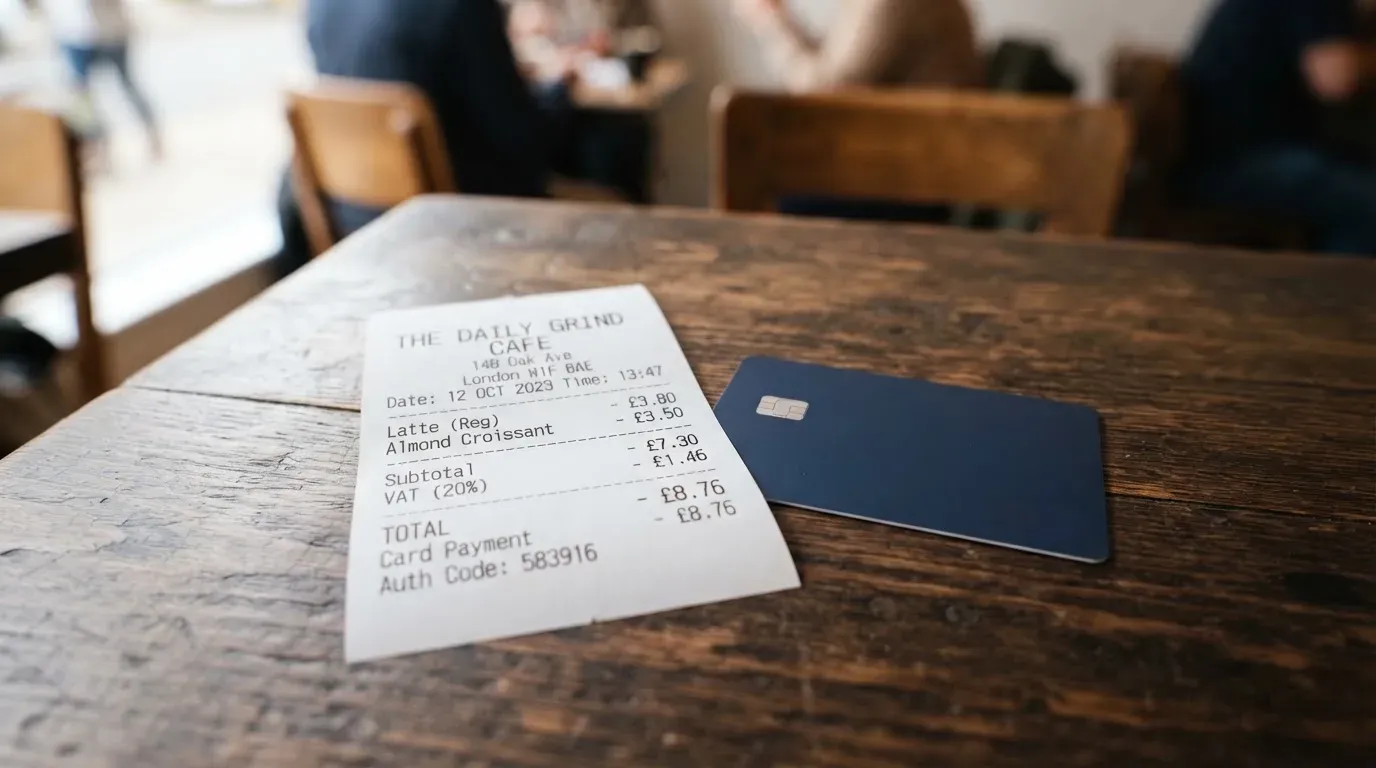
| Fee or limit | Value |
|---|---|
| Standard annual membership | 0 USD |
| Premium annual membership | 1,000 USD/year |
| Private annual membership | 10,000 USD/year |
| Monthly option | None — billed annually upfront |
| Standard physical card | 0 USD card fee + 40 USD delivery |
| Extra virtual card | 2 USD (in some regions 2 USD also on included Standard virtual cards) |
| Inactivity fee | 1 USD/month after 12 months |
| Renewal / reactivation fees | Exist; amounts not stated |
| Stablecoin top-up | 0% |
| Card spend in USD | 0% |
| Transaction fee | 0% |
| Apple Pay / Google Pay | 0% |
| Non-USD FX fee | 0.5%–1.75% depending on residence country, transaction country and card programme |
| Non-USD transaction under 25 USD | 0.10 USD |
| Declined transaction (insufficient balance) | 0.50 USD |
| ATM | 3 USD flat + 2% of the amount, plus the FX fee for non-USD |
| ATM withdrawal limit | The two official pages disagree — see below |
| Card transaction, deposit, balance limit | Listed as “Unlimited”; large transactions may be flagged for compliance |
| KAST Tag transfers | Free, max 10,000 USD/day, 5 per day |
That ATM row deserves a closer look, because the card’s own concierge fee page says “Up to $500 per withdrawal; up to 3 withdrawals or $1,500 per 24-hour period”, while its marketing page says “$250 per withdrawal, including fees, and three withdrawals per rolling 24 hours ($750/day)”. Two official pages, two different answers. Take the lower one as your working assumption until you have seen your own limit in the app.
Now, three everyday payments, with the fees that actually bite.
Coffee in your home country, paid in local currency from a USD balance. If the currency is not USD you pay the FX fee of 0.5%–1.75%. On a small transaction there is a floor: non-USD transactions under 25 USD cost 0.10 USD. So a 4 USD coffee abroad is 4 USD plus up to 1.75% plus 0.10 USD — the flat 0.10 USD is more than 2% at that size. Above 25 USD the floor stops applying and you are left with the percentage alone.
Paying online in USD. This is the clean case: 0% card spend, 0% transaction fee, so a 60 USD subscription costs 60 USD. The catch is not the fee but the payment method — address verification compares the billing address you type against issuer records, and it is generally unavailable for foreign-issued cards, which can cause declines on their own.
Withdrawing cash at a Visa ATM. Here the cost is genuinely high: 3 USD flat plus 2% of the amount, and if the ATM is outside the US the FX fee on top. On 100 USD in a non-USD country you are paying 3 USD, 2 USD, and up to 1.75 USD before you touch the cash. That is why the card is better for shops than for tills.
Two more costs that are not fees but behave like them. Non-stablecoin tokens sent to the app may be auto-converted, with a fee shown in the app at the time. And the tiers carry cashback that is worth understanding as a spend threshold, not a flat rate: Standard pays 1.5% on the first 2,000 USD/month, Premium 2% on the first 10,000 USD/month, Private 3% on the first 40,000 USD/month, paid in USD when the transaction is authorised. On the free tier, everything you spend above 2,000 USD a month earns nothing. That is a real ceiling, and it is the reason the 1,000 USD Premium tier exists.
The tier comparison, since the numbers decide who should pay:
| Standard | Premium | Private | |
|---|---|---|---|
| Annual fee | 0 USD | 1,000 USD | 10,000 USD |
| Card | Visa Platinum | Visa Infinite metal | Visa Infinite gold plated |
| Cards included | 2 free (virtual or physical) | Physical shipping included | 1 plated card plus 2 from other tiers |
| Cashback on USD spend | 1.5% on first 2,000 USD/month | 2% on first 10,000 USD/month | 3% on first 40,000 USD/month |
| KAST Points | None | +1% of eligible spend | +2% of eligible spend |
| Reserve rate on balances | 8% | 10% | 12% |
| Visa Infinite benefits | Not included | Included | Included |
| Concierge | KAST Concierge, 24/7 | KAST Concierge, 24/7 | VIP Concierge |
Two details on that table. The Reserve rewards programme on balances ends 1 July 2027 — well inside the life of any card you are holding today, and worth remembering when you compare the tiers. And Visa Infinite benefits (travel, purchase protection, lounge, eSIM) need separate registration on the Visa Benefits portal; they are not switched on by having the card.
If you hold SOL, there are staking rewards in Points: 0.25 per 1 SOL roughly every two days on Standard, 0.5 on Premium and Private.
Top up: how the money gets in
Top-up is the strongest part of this card. It is also where a mistake can cost you the money outright.
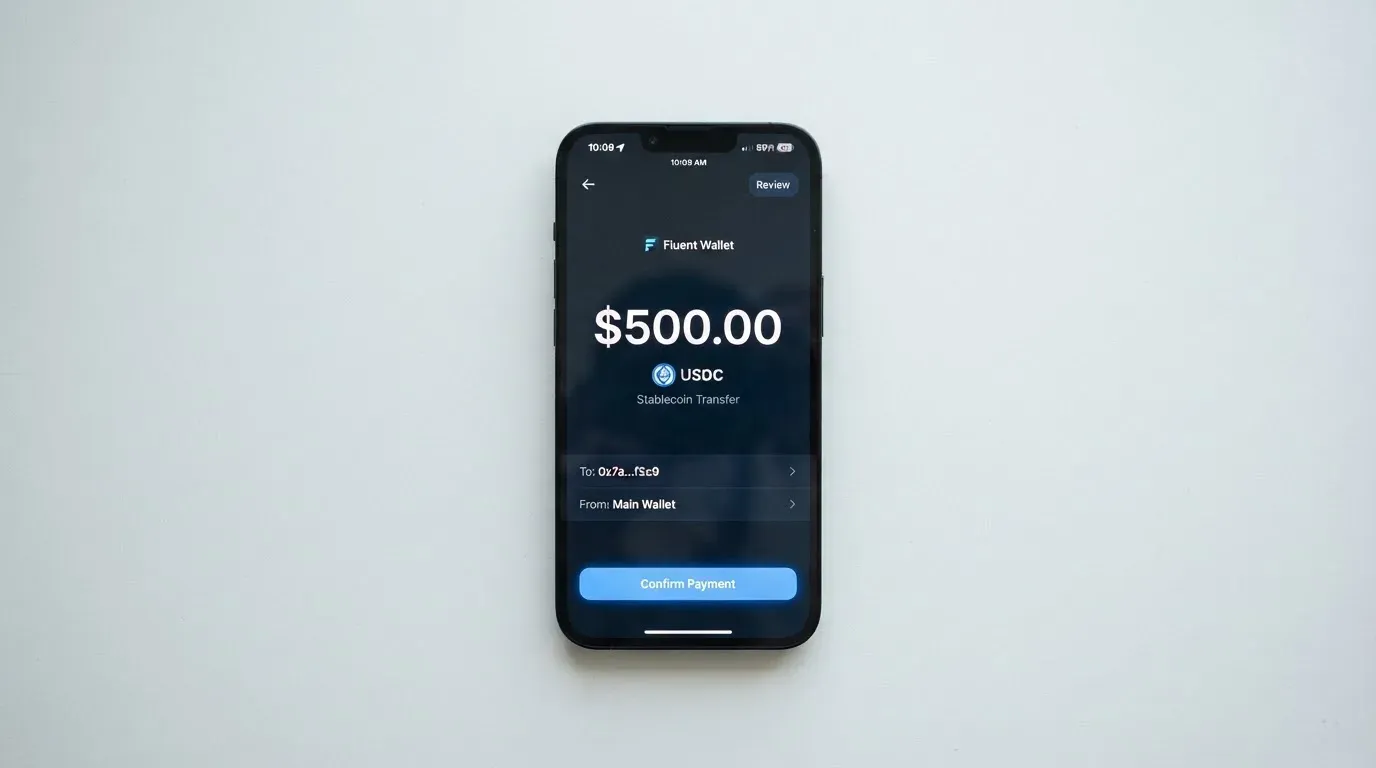
Supported stablecoins are USDT, USDC, PYUSD and RLUSD. USDT and USDC can be sent on Ethereum, Solana, Polygon, Arbitrum or TRON, with the app listing the current networks. The deposit fee is 0%, with no cap stated, network fees excluded. No bank account is needed.
One conflict to be aware of: the terms say the acceptable tokens are “currently USDT and USDC”, which does not match the app’s own list of four. The app is the more current source, but the discrepancy is a reminder that this is a young operation where documents lag behind products.
Bank deposits, if you want to go that way:
| Method | Fee |
|---|---|
| USD ACH | 2 USD |
| FedWire | 15 USD |
| SWIFT | 30 USD |
| EUR SEPA | 0.5% |
| Minimum top-up | Not stated |
The stablecoin route is cheaper by an order of magnitude. SEPA at 0.5% is the only bank rail that competes.
Two things to get right. First, sending on a network the provider does not support, or to an address belonging to another network, can lose the funds or require manual support recovery with no guarantee — blockchain transfers are irreversible. Pick the network from the app, not from memory. Second, if your token is not a supported stablecoin, it may be auto-converted at a fee shown in the app.
Spending works the way a prepaid card works: the balance is loaded first, and each purchase is deducted straight away. This is not credit, so the card cannot overdraw. The balance shown is in USD; USD and EUR accounts exist at level 3 verification, and paying in a non-USD currency carries the FX fee.
If you want to move money back out to a stablecoin rather than spend it:
| Network and coin | Fee |
|---|---|
| Solana (USDT, USDC) | 1 USD + 0.1% |
| Arbitrum (USDC) | 0.20 USD + 0.1% |
| Ethereum (USDT, USDC) | 6 USD + 0.1% |
| Tron (USDT) | 5 USD + 0.1% |
| Minimum withdrawal | 5 USD |
What happens to a leftover balance if you close the account is not stated, which is worth asking support about before you ever close one.
Paying with it every day
This is where the card is at its best, and where the 9 in the score comes from.
Apple Pay and Google Pay both work with the virtual and the physical card, at 0%. Samsung Pay support is not stated. The card works wherever Visa is accepted, which the service puts at more than 150 million merchants across more than 170 countries — a claim from the service, not something independently confirmed here.
Rewards on normal spending, repeated because the thresholds catch people out: cashback in USD of 1.5% up to 2,000 USD a month on Standard, 2% up to 10,000 USD on Premium, 3% up to 40,000 USD on Private. Plus KAST Points on Premium (+1%) and Private (+2%) of eligible spend. Cashback is paid when the transaction is authorised, not at month end.
The app is a real one: “KAST: Global USD Account” on iOS, from a developer named Troia Limited, rated 3.97 out of 5 from 276 ratings, updated 8 October 2026. A 3.97 is not a disaster and not a delight — it is an app that works and that people are not thrilled about.
What you should not expect to do with it. The terms prohibit weapons, controlled substances, Ponzi/pyramid/MLM schemes, counterfeit goods, Darknet and Tor purchases, adult content, and pseudo-pharmaceuticals. That is a list of hard blocks, not soft preferences. Note that gambling is not mentioned in the terms, though MCC 7995 is the code covering casinos, betting and lotteries and many issuers block it by policy rather than by law — the blocked list varies by issuer, so do not assume either way. Merchants can also place pre-authorisation holds, and a declined authorisation can leave a hold on your funds for several days, typically up to seven.
If a transaction goes wrong, the terms say to contact KAST within 90 days. The company’s liability is capped at 500 USD. The chargeback process itself is not stated, and that matters more than it sounds: a chargeback is a refund ordered by the issuer, and prepaid-card coverage varies between jurisdictions and should not be assumed. Ask about it before you need it.
What can go wrong
This is the section that costs KAST its 3 out of 10, and it is the one I would read twice.
The entity is opaque. KAST Tech is registered with number 16223 in Anjouan, Comoros. The governing law is Seychelles, and disputes go to SIAC arbitration in Singapore. The iOS developer is Troia Limited. No licence numbers appear on the pages I read and no regulator is named. KAST describes itself as “a financial technology company, not a bank”, with cards, custody and on/off-ramp “provided by licensed partners” — but the card issuer is never named, only “one of our Partner”. Partners named in the terms are Tazapay and BitGo; the homepage logos include Stripe, Privy, Fireblocks, Visa, Sardine and Elliptic. Availability is “subject to regulatory approval”.
None of that is proof of anything wrong. It does mean that if something goes wrong, you are dealing with a corporate structure spread across several jurisdictions with the key one unnamed.
Users report frozen money. On Trustpilot, read on 20 October 2026, the score sits at about 2.5 on regional pages and 2.7 on the main page across roughly 170 reviews. Recurring themes: accounts frozen or restricted soon after depositing, deposits held; repeated 0.50 USD declined-transaction fees that pushed a balance negative in April 2026; repeated document requests even on transfers between a user’s own accounts; slow support. KAST replied to most negative reviews saying accounts can be restricted by security and compliance systems. Positive reviews praise the low fees and stablecoin spending.
Official incident data is not stated. So the honest reading is: there is no published record of problems, and there is a consistent volume of user reports of problems.
You are trusting a custodian. Control of crypto belongs to whoever holds the private key. With a custodial wallet the provider holds the credentials, and you must trust them completely. This matters here because crypto transfers are irreversible and a stolen key has no recovery path. The category has a history: Mt. Gox (about US$350 million reported stolen, 2011–2014), Coincheck (about US$400 million, 2018), Ronin Network (US$625 million, 2022).
The card can be blocked by someone else. Visa and Mastercard do not issue crypto cards to consumers; they license issuers and can suspend a programme. Visa terminated its global agreements with FTX on 13 November 2022 and the FTX US debit card was wound down. WaveCrest, a Visa issuer that supplied crypto card brands, was suspended by Visa in Europe in 2018, closing all WaveCrest-issued Visa programmes. Closures typically follow a pattern: a notice period, then loading and spending stop, then you are asked to withdraw what is left.
Some security features are simply not documented. Users can set lower spend limits in the app, which is good. But 2FA, instant card freeze and insurance are not stated on the pages I read. Visa Infinite benefits exist only on Premium and Private. Typical safeguards for this category would be app-based 2FA, instant freeze, spending limits, 3-D Secure and tokenised mobile wallets — from what is published, confirm which of these you actually have.
Support is thin in practice. There is a KAST Concierge help centre, 24/7 on all tiers, VIP Concierge on Private, and [email protected] appears in company replies. Russian is not offered on the membership page — English only in the selector.
A background note on stablecoins. “Stable” does not mean stable. TerraUSD collapsed in May 2022 and USDC temporarily lost its peg in March 2023 during the US banking crisis. About 90% of stablecoin market capitalisation sits in USDT and USDC. And stablecoins are not censorship-proof: Tether says it disables tokens on OFAC-sanctions-list wallets and has frozen funds tied to illicit activity.
A note on your own tax position. I am not giving tax advice and you should not treat this as advice. The general shape, if it applies to you: in the US the IRS treats digital assets as property, so exchanging them for goods, services or dollars generally produces a taxable gain or loss, measured in local currency at fair market value on the date of the transaction — which means each card payment funded from crypto can be a separate disposal. If you spend meaningfully, ask a professional in your own jurisdiction.
What to take instead
All four alternatives below spend stablecoins. They differ mostly in who is willing to tell you what they are.
| Score | Card and issuer | Cost | Notable limits | |
|---|---|---|---|---|
| MetaMask | 7.1 / 10 | Mastercard, issuer Monovate, provider Crypto Life | Virtual free; metal $199/year | Sign-up open in 45 listed countries/territories, others waitlisted; US/UK sign-ups temporarily closed |
| KAST | 6.1 / 10 | Visa, issuer not named | Standard 0 USD/year; physical delivery 40 USD | Country list unpublished; citizenship screening |
| Zeal | 6.1 / 10 | Visa, via Gnosis Pay | Not stated — no fee schedule published | Live in EU, UK, Brazil, Colombia, Mexico, Japan, Singapore, Philippines, Indonesia, Thailand |
| TokenPocket | 5.8 / 10 | Visa/Mastercard debit, runs on Arbitrum | 1% on crypto deposits, refunded later via rewards; no other fees stated | Fiat24 cards are virtual; no physical card mentioned |
MetaMask is the one with the most visible issuer — Monovate, named on the page — and a 7.1 score. You spend directly from a connected wallet on Linea, Base, Monad or Solana, with mUSD, wETH, EURe, GBPe, USDC and USDT supported. Cashback is 1% on Virtual and 3% on Metal, though the Metal footnote caps it at 3% to the first $10,000 spent and 1% after. The trade-off is reach: 45 countries, and US/UK sign-ups temporarily closed.
Zeal scores the same 6.1 and is the most regulation-shaped of the group — it runs on Gnosis Pay infrastructure, is live in a long list of named countries, holds accounts in EUR, USD and GBP, and charges no additional FX fee, converting at Visa’s wholesale rate. Up to 4% cashback paid in GNO, which you must hold in the card Safe to qualify, and rates can change. What it does not publish is a fee schedule.
TokenPocket is last at 5.8, mainly on reach and disclosure: a European Visa list and a wider Mastercard list including Australia, Canada, Hong Kong, Japan, South Korea, UK and others, with the Americas “planned for Q2 2025”. A 1% deposit fee is charged and refunded later through rewards, and Fiat24 cards are virtual with no physical card mentioned.
If your problem is specifically that you cannot get an ordinary bank card, the deciding factor is eligibility, not fees — and only you and the provider can settle that. If your problem is trust and paperwork, MetaMask and Zeal are the two with the most identifiable structures. If your problem is purely cost at low volume, KAST still wins on the numbers.
Who I would recommend it to
Three groups, in order of how comfortable I would be.
Recommend it if you already sit on USDT or USDC across several networks, you spend most of your money in USD, you are comfortable with a custodial balance held by a Comoros-registered entity with an unnamed issuing partner, and your country’s presence on that unpublished list is something you can find out by trying. The fees are genuinely the best in this category, the everyday mechanics are the best in this category, and if it works for you it works very well.
Recommend it with eyes open if you travel and spend in non-USD currencies — you will pay the 0.5%–1.75% FX fee, plus the 0.10 USD floor under 25 USD, so small purchases abroad cost relatively more than large ones. Keep cash withdrawals to a minimum; 3 USD plus 2% plus FX makes the ATM the expensive way to use this card.
Do not recommend it if any of the following is true: you need a card for a service that may scrutinise a foreign BIN and you cannot afford declines; you are in a country whose eligibility you cannot verify; you cannot tolerate a frozen balance with slow support; you want to read a licence number and see an issuer’s name; or you are planning to hold a large idle balance. On that last point, note the 1 USD/month inactivity fee after 12 months, the unstated renewal and reactivation fees, and the fact that nobody will tell you what happens to a residual balance at closure.
My own decision, if I were choosing today: I would test it with a small balance first, keep the money I actually need in an amount I can afford to have frozen, and confirm the ATM limit in the app before relying on cash. I would not put a month’s rent through it.
Frequently asked questions
What is the KAST card?
KAST is a Visa card you fund with stablecoins, not a bank account. You top up with USDT, USDC, PYUSD or RLUSD, and spend your USD balance like a normal Visa. It works as a prepaid card: you load the balance first, purchases deduct immediately, and the card cannot go into debt.
Is KAST a bank?
No, it is a financial technology company, not a bank. The cards, custody and on/off-ramp are provided by licensed partners. The contracting entity is KAST Tech, registered in Anjouan, Comoros, with Seychelles governing law and SIAC arbitration. The card issuer is never named on the public pages, and no licence numbers appear anywhere.
How do I get the KAST card?
Three steps: create an account, pass KYC, then order a card. Card creation needs level 2 verification — a valid passport, national ID or driver’s licence plus a selfie with liveness. Level 1 is app access only, with no cards. Level 3 adds proof of address and citizenship, unlocking USD and EUR accounts. Physical cards take 7–10 days.
Does KAST require KYC?
Yes, it is mandatory. Sending or receiving funds and getting a card require identity verification. Expect requests for source-of-funds documents as well. US residents are asked for an SSN. The age floor is 18 (or legal age in your country). Only your own ID is accepted; a VPN does not change the outcome.
Is KAST available in my country?
You cannot tell from the outside. The supported list is shown only at KYC and is not published; the terms reference a Restricted Locations list without naming any countries. Citizenship is screened separately: living in a supported country while holding an ID from a restricted region may still make you ineligible. If unsupported, KYC stays locked.
What does it cost to use the KAST card?
On Standard, annual membership, top-ups and USD spend are free. Costs include 0.5%–1.75% FX on non-USD payments, 0.10 USD on transactions under 25 USD, 0.50 USD for declined transactions, and 3 USD plus 2% at ATMs. A Standard physical card is free, but shipping it costs 40 USD. Inactivity and renewal fees also apply.
How do I add KAST to Apple Wallet?
Open Apple Wallet, add the virtual or physical card, and verify with the app’s code. Apple Pay itself is free. The card number is replaced by a device-specific token in the phone’s Secure Element, and each payment uses a one-time code — your actual card number is never stored on Apple servers.
Is KAST safe to use?
Treat it as a custodial product. Your balance is held for you, so your money depends on the provider’s security and its willingness to keep your account open. Users report frozen balances, repeated fees, and slow support. KAST says accounts can be restricted by security systems. Only use small amounts you can lose.
Can I use the KAST card in other countries?
Yes, anywhere Visa is accepted — 150 million merchants in over 170 countries. Practical catches: paying in non-USD currencies costs 0.5%–1.75% plus a 0.10 USD floor under 25 USD, and foreign-issued cards can face declines. Cash at ATMs is the most expensive route at 3 USD plus 2% plus any applicable FX fee.
Is KAST card free, and is it worth it?
Standard is free to hold and spend a USD balance, with the best top-up rate. Whether it is worth it depends on whether your country and ID pass eligibility, as the list is not published. If they pass and you hold stablecoins, the value is clear. If they do not, the pricing does not matter.
Wallet card verdicts – cryptocardverdict
Content created by the «cryptocardverdict» team