
Ruvo pays out in dollars and skips the fee on dollar spending, but several basics stay unpublished
 Available in US

If you have been looking for an ordinary card that works in more than one country, and you have decided — or been told — that a crypto-linked card is the way to get one, Ruvo is worth putting on your shortlist. It is a small, Brazil-centred company with a virtual card denominated in US dollars, a Brazilian Pix funding rail, Apple Pay and Google Pay, and no fee at all when you spend in dollars. That is genuinely attractive for one narrow, specific situation. For almost everything else, the picture gets thin fast: Ruvo does not publish what its card costs to issue, whether there is a monthly fee, what the daily or monthly limits are, whether there is a plastic card, or how to withdraw. Those are not nitpicks. They are the things you need before you commit money.
My score for Ruvo is 6.1 out of 10. That is not a bad score — it is a “good for a specific case, do your homework for anything else” score. The conditions described here are current as of October 28, 2026.
Verdict: 6.1 out of 10, and the case for it is narrower than the marketing
Here is the whole picture in one table, so you can see where the marks come from before you read further.
| Criterion | Mark | Why |
|---|---|---|
| Who can get it | 5 / 10 | Described as “accepted worldwide”, with Brazil (Pix) and the US (USD balance) highlighted; the terms say availability “varies by jurisdiction, user type, provider, and product” |
| Cost | 8 / 10 | Purchases in USD with no fee; other currencies carry 1% foreign transaction fee plus the exchange rate; IOF 0%; a Pix example includes a 0.5% fee; issuance not disclosed |
| Top-up options | 5 / 10 | Top up in reais (Pix) or dollars, under a minute; earlier checks show USDT from a self-custodial wallet and ACH/wire for USD; coins and networks not named |
| Reliability and complaints | 6 / 10 | Ruvo Financial Inc., “NOT A BANK”, issuer not named, partners in the US and Brazil hold licences; no complaints found; App Store 4.9 from 31 ratings |
| Everyday use | 6 / 10 | Virtual card in USD with Apple Pay and Google Pay; plastic card and ATM access not disclosed |
| Total | 6.1 / 10 | Strong on dollar spending, thin on published detail everywhere else |
Who this suits: someone moving dollars between Brazil and the United States who holds their crypto in a self-custody wallet and wants a US-dollar virtual card they can load and spend, ideally in their phone’s wallet. For that person, the mechanics line up — Pix in, dollars out, 1% only when you spend somewhere other than the US.
Who it does not suit: anyone who wants a physical card, cash withdrawals, published limits, or a clear answer on costs before they sign up. It also does not suit anyone whose money sits in a custodial exchange account, because the design assumes you control the wallet yourself.
One thing to be clear about before you go further: Ruvo says the card is “accepted worldwide”, and its own terms simultaneously say availability “varies by jurisdiction, user type, provider, and product”. Those two sentences are in tension, and the terms are the ones with legal force. If you live somewhere other than Brazil or the US, treat “accepted worldwide” as a statement about where the card might work once you have it, not about whether you can get one.
Will they give you the card?
The eligibility answer is: probably, if you are in Brazil or the US and over 18, and possibly not at all if you are anywhere else.
What the card page says is that it is “accepted worldwide” and it highlights two markets in particular — Brazil, where you can fund with Pix, and the United States, where the balance is held in dollars. That is a narrow, honest headline once you read it twice: the company’s centre of gravity is a corridor, not the globe.
The terms add the important caveat. Availability “varies by jurisdiction, user type, provider, and product”, and Ruvo reserves the right to restrict access by jurisdiction and by sanctions. On top of that, you represent that you are not subject to US, UN, EU, UK or Brazilian sanctions. Those are not casual words — they are a warranty you give, and the consequences of it sit in the eligibility question rather than in a footnote.
So the practical test is not “is this card accepted everywhere?” but “will Ruvo open an account for me, from where I am, with the document I hold?” If you are outside the two markets they highlight, the honest answer is that you will only find out by trying. Two further things are simply not stated anywhere on the public pages: the identity verification levels, and the countries on a blocked or restricted list. I would not want to send documents to a company that has not told me which documents it will accept.
How to get it
Nobody at Ruvo publishes a signup walkthrough. The step list is not stated. That is an unusual thing to find in 2026 and it is worth pausing on, because the absence is informative: you are likely to spend more time in the app discovering the flow than you would with a bank.
What is stated is the check itself. Under the terms, Ruvo’s partners may require your legal name, date of birth, address, a government ID, a taxpayer ID and biometric verification. The age floor is 18. And the terms are explicit about the consequence of failing: limits, suspension, or termination. Read that as a real possibility rather than a theoretical one, particularly if any document is mismatched or expired.
The card itself: denominated in US dollars, virtual, and managed in the app — you can view its details, freeze it, set a PIN, replace it, manage limits, and add it to Apple Wallet. The network is not stated on the page, though third-party reporting from Brazil Journal in January 2026 describes it as a Visa Platinum card for USD spending. Treat that as unofficial: it is not confirmed by Ruvo.
Physical delivery is not stated. The page shows only the digital card and wallet setup, which suggests a plastic card is not part of what is on offer today — but the absence of a sentence saying so is not the same as a sentence saying no. If you need a card you can swipe through a reader that has no contactless, or hand to someone at a till, this is not obviously the product for you, and nobody will have told you either way.
And here is the practical point I would put above everything else in this section: you cannot work out your own capacity here. Not the balance, not the daily spend, not the monthly spend. Nobody has published it.
Fees: what it really costs, and where the number is missing
Fees are the strongest part of the card, and the published set is short enough to hold in your head. It is also incomplete in one way that matters.
| Fee or limit | What Ruvo publishes |
|---|---|
| Card issuance | Not stated — no figures published |
| Monthly or maintenance fee | Not stated — no figures published |
| Purchase in US dollars | No fee |
| Purchase in another currency | 1% foreign transaction fee, plus the applicable exchange rate |
| IOF (Brazilian tax on foreign currency) | 0% |
| Example Pix conversion | R$1,000 converts to about 196.41 USDC at 5.0915 BRL per USDC “after a 0.5% fee” |
| ATM withdrawal | Not stated |
| Daily limit | Not stated; spending is capped by your own Ruvo balance, and you choose how much of that balance is available on the card |
| Monthly limit | Not stated; limits are managed in the app |
| Tiers | Not stated — a single card appears on the page |
Let me walk through three ordinary payments, because the difference between them is the whole fee story.
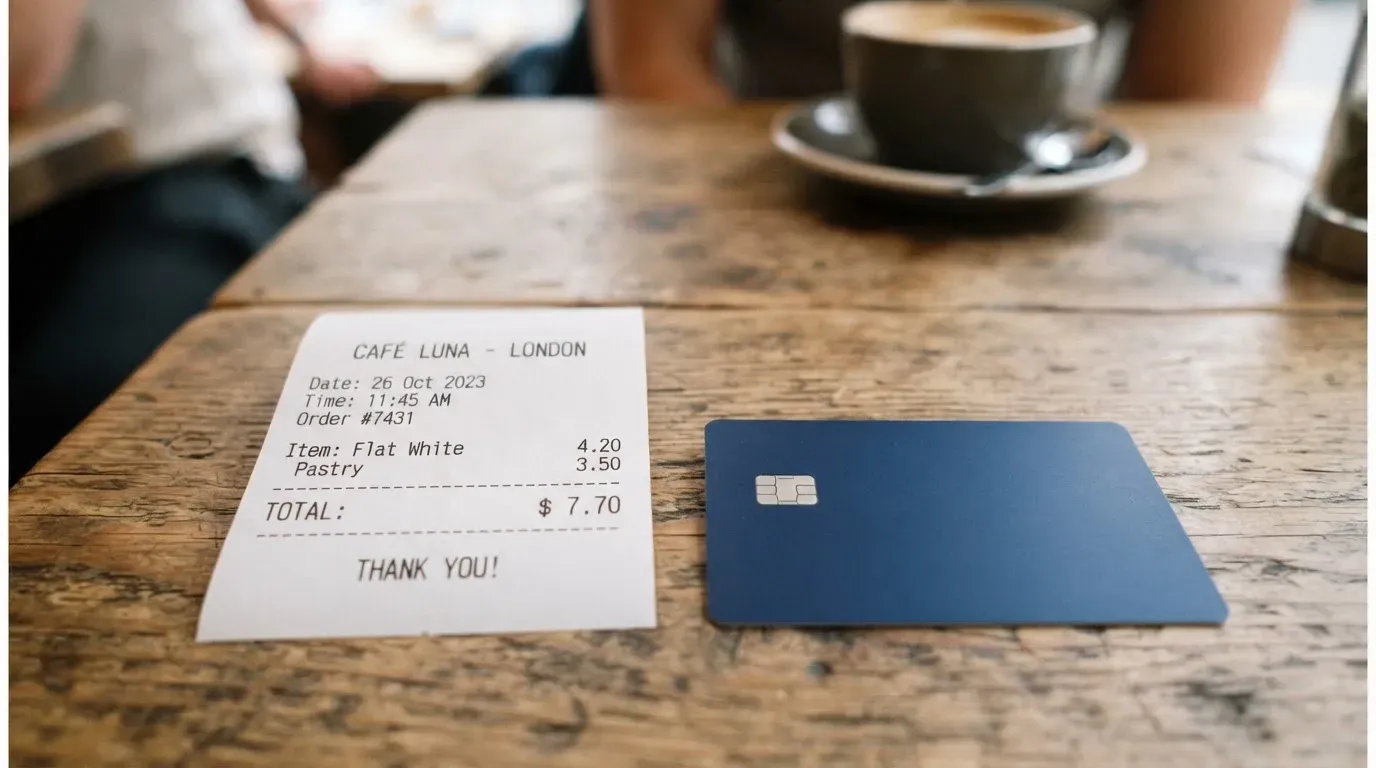
Buying coffee in São Paulo. You are not spending dollars; you are spending reais. The rate is 1% on top of whatever exchange rate applies on the day. This is the number that surprises people — the headline “no fees” applies to dollar spending, and only to dollar spending.
Buying something online priced in dollars. Here the card earns its strongest mark: no fee. That is a genuine saving against a typical card’s foreign transaction fee, and if you routinely pay for US software, hosting or subscriptions in dollars, it is real money.
Converting reais into your balance through Pix. The worked example in the terms shows R$1,000 arriving as about 196.41 USDC at 5.0915 BRL per USDC after a 0.5% fee. That 0.5% is the number in the terms, not a number I derived. What the example does not settle is what the same conversion costs on the USD route, or whether the rate moves between the moment you tap and the moment it settles.
There is a set of further fees that third-party reporting attributes to Ruvo but that Ruvo’s own pages do not confirm. Per Brazil Journal in January 2026, individuals pay 0.9% converting USDT to USD or BRL and 1.8% converting USD to BRL, businesses pay 0.2% and 0.4% respectively, and crypto-to-crypto conversion is free. That is a materially different picture from the 0.5% in the Pix example, so if conversion cost is your deciding factor, this is the number to put to Ruvo directly rather than rely on either source.
If you want a picture of the floor under all of this: on-chain network fees for a deposit are charged by the blockchain itself, not by Ruvo, so a stablecoin transfer can cost more or less than any percentage the card charges, depending on the network and the congestion at the time.
Top up: how money gets onto the card
Top up is where Ruvo is simplest, and also where the documentation is thinnest. The direct answer: add money in reais through Pix, or in dollars, and the funds arrive in under a minute.
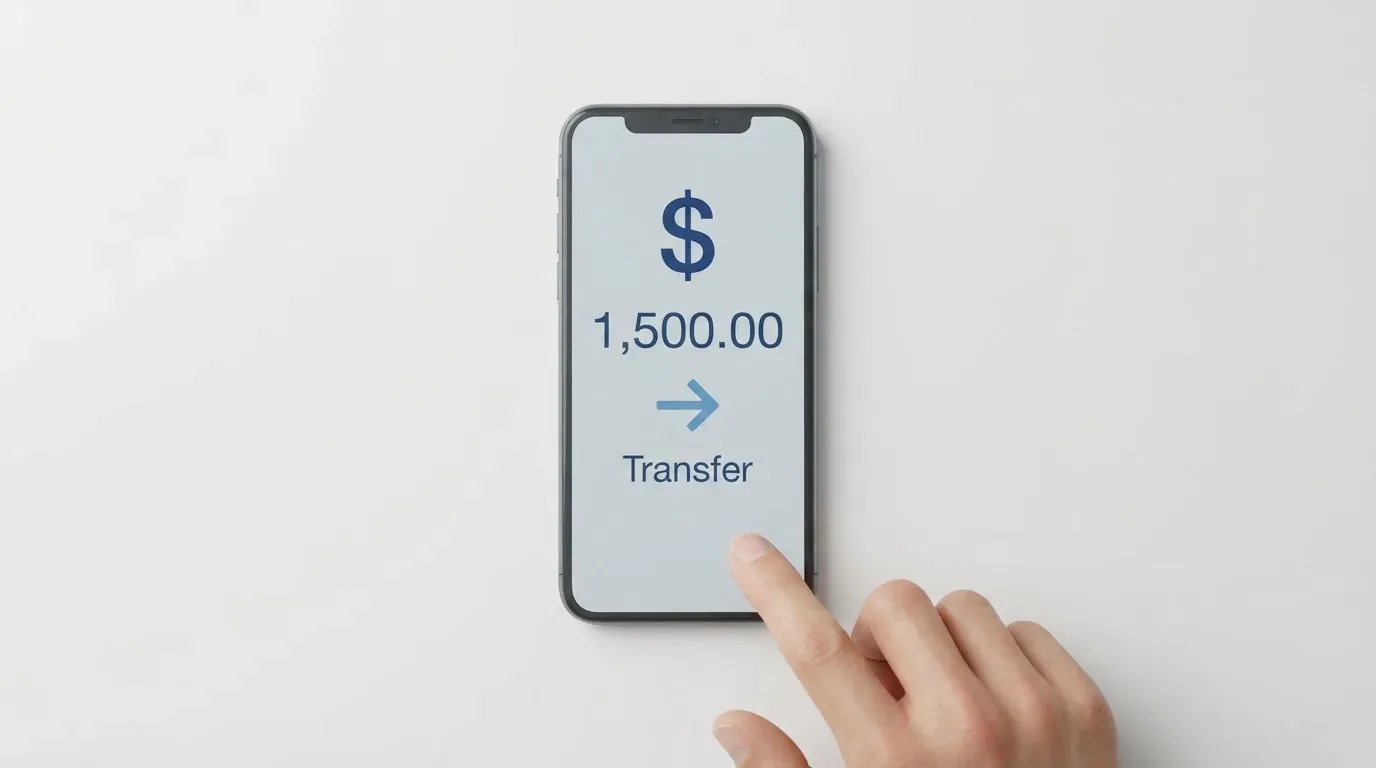
An earlier check of the card’s own material showed a slightly earlier version of this picture: USDT from a self-custody wallet, and ACH or wire for US dollars. That is worth knowing because it tells you the direction of travel — the crypto route is a first-class input, not an afterthought.
What is not there is the part most self-custody users care about most: which coins and which networks. The card page does not list them. This matters more than it might look. Blockchain transfers are irreversible, so a deposit sent on a network Ruvo does not support, or to an address belonging to a different network, can simply be lost, or need manual support intervention with no guarantee of success. If your only deposit route is USDT over a network you cannot confirm is supported, you are making a guess with your own money.
No minimum top-up is stated either. On taxes, the IOF rate is 0%, and the terms are clear that blockchain network fees are separate and fluctuate.
Withdrawal is not stated for the card. What the terms do cover is closure: you can close by emailing [email protected] or [email protected], processed within a reasonable time, and a self-custodial wallet is unaffected by closing your Ruvo account. That is the right design — your coins do not live inside Ruvo — but it is not the same answer as “can I get my balance back as dollars”, and the card pages do not give one.
Paying with it every day
Day to day, Ruvo behaves like a normal virtual card, which is the point. You get Apple Pay and Google Pay, both in contact and online. That covers most of what you actually do on a phone, and it means you are not handling a card number at a checkout.
What you will not find published: which merchant categories are blocked. This is not a trivial gap. Merchant category codes are the four-digit classification system under ISO 18245, and card programmes routinely restrict them — gambling (MCC 7995) is the most commonly blocked, alongside adult content, fuel and crypto-adjacent merchants. The blocked list varies by issuer and changes without notice. So you may find out your card declines in a category you did not think to test, and nobody could have told you in advance.
Rewards: not stated. There is no cashback mentioned anywhere on the card pages. That is worth pocketing mentally as an operating assumption.
The app is real and current. On iOS, “Ruvo – Global Dollar Account” sits at version 2.1.9 with a 4.9 rating from 31 ratings, read on 21 October 2026. Thirty-one ratings is a very small sample, so treat that number as a signal rather than evidence — it tells you there is no visible pile of angry reviews, not that the service is proven. Google Play is listed on the site; that rating I did not read.
Disputes are the part to read twice, because the terms do not flatter the cardholder. Fiat and card transactions may be returned, reversed or charged back, and you remain liable. Disputes on fiat rails follow the provider’s own rules rather than the card’s. The suggested path is informal resolution first, after which Ruvo has up to 30 days to respond. The card help FAQ is not shown publicly, so you cannot read the fine print on how disputes actually work before you need it.
Two more things about the mechanics that explain a lot of declines people report with cards of this type. Address Verification Service compares the numeric parts of the billing address you typed against issuer records, is mainly offered in the US, Canada and the UK, and is generally unavailable for foreign-issued cards — which causes declines. And declined authorisations can leave a hold on your funds for several days, typically up to seven. If a card is declined at a hotel, the hold can outlast the trip.
What can go wrong
Nothing bad has been found against Ruvo. That is worth stating plainly, and it is also worth stating precisely what “nothing found” means here: no Trustpilot page for the Ruvo website existed as of 21 October 2026, and no recurring complaint themes surfaced. For a young company, an empty complaint record is not the same as a clean long-term record.
The structural risks sit in the setup rather than in the track record.
You are not dealing with a bank. Ruvo’s own terms say “NOT A BANK”. The company is Ruvo Financial Inc., headquartered in Brazil, with CEO Alec Howard, and Delaware governing law. It works with regulated partners in the US and Brazil — those partners hold the VASP and payment licences, and Ruvo does not custody funds or perform regulated activities in Brazil. Ruvo’s own licences are not listed. Most importantly, the issuer of the card is not named. So the entity holding your card programme is a fact Ruvo has not published, and you are relying on its partners’ licences rather than its own.
No deposit protection. The funds are not FDIC- or SIPC-insured. In EU terms this is the same gap an e-money institution has: client funds must be safeguarded, usually segregated or insured, but they are not bank deposits and a deposit guarantee scheme does not reach them.
Programmes like this close. It is not a hypothetical. Visa terminated its global agreements with FTX on 13 November 2022 and the FTX US debit card was wound down. WaveCrest, a Visa issuer that supplied several crypto card brands, was suspended by Visa in Europe in 2018 and all its programmes closed. The usual sequence is a notice period, then loading and spending stop, then you are asked to withdraw what remains. A 2026 closure reported by a secondary source — new loads ended 8 July 2026, spending stopped 8 August 2026 — is single-source and unconfirmed, and I include it only to show the shape of the risk, not as evidence.
Self-custody shifts the risk to you. Ruvo does not hold your private keys and does not custody fiat. That is the honest architecture: your crypto stays in your wallet until payment. But control of crypto belongs to whoever holds the private key or seed phrase, and a seed phrase is 12 to 24 words in plain unprotected form — anyone who gets it can restore the wallet and spend the funds. Transfers are typically irreversible and a stolen key has no recovery path. The classic exchange failures in this space are the counterparty version of that risk: Mt. Gox at about US$350 million reported stolen between 2011 and 2014, Coincheck at about US$400 million in 2018, and Ronin Network at US$625 million in 2022.
Stablecoins are not, despite the name, stable. USDC lost its peg temporarily in March 2023 during the US banking crisis, and TerraUSD collapsed in May 2022. Both USDT and USDC are dollar-pegged and together account for roughly 90% of stablecoin market capitalisation by the BIS’s July 2025 estimate, but your card balance is not the same as dollars in a bank account.
Identity checks can end the relationship. If due diligence cannot be completed, EU rules require the institution to refrain from the transaction and, where necessary, end the relationship. That is why accounts freeze pending documents. Ruvo’s terms say the same in their own way: failure leads to limits, suspension or termination.
Support is thin in the details. There is a help centre at ruvo.com/help, WhatsApp, and [email protected], in Portuguese and English. Hours are not stated. If you are in another timezone, nobody has committed to when a human answers.
The company’s funding, for completeness: a seed round of US$4.6 million led by 1confirmation, reported by latamfintech.co and startupi in 2026, and YC lists the company under its former name, Cacao. A funded team is a better position than an unfunded one, though it is not a guarantee of longevity.
What to take instead
Ruvo is not alone in this category, and the alternatives make the comparison useful. Two notes on the whole comparison: these are all still crypto-linked cards, so the structural risks in the previous section apply to all of them, and none of them is a bank account.
| Card | Score | Cost to hold | Notable |
|---|---|---|---|
| Ruvo | 6.1 / 10 | Not stated | 1% on non-USD spend, no fee on USD spend |
| TokenPocket | 5.8 / 10 | NFT creation fee partly covered; user pays “a small portion” | 1% fee on depositing crypto into the card |
| MetaMask | 7.1 / 10 | Virtual free; Metal $199/year | Mastercard, 45 listed countries, cashback 1% on virtual |
| KAST | 6.1 / 10 | Standard $0; Premium $1,000/year; Private $10,000/year | Visa tiers, 0% stablecoin top-up and USD spend |
MetaMask is the highest-scoring of the four and the most directly comparable. It is a Mastercard, issued by Monovate with Crypto Life as the card provider, virtual first and instant, with a metal version you can pre-order after approval — one card per user. Sign-up is open in 45 listed countries including Brazil, and other regions join a waitlist; proof of residency is required, and the FAQ notes that ineligible regions limit sign-ups rather than spending. Its virtual card is free with no annual or maintenance fee, and its pages state no additional MetaMask fees, no foreign transaction fee, and the Mastercard rate. It spends directly from your connected wallet across Linea, Base, Monad and Solana, and pays cashback in mUSD into a Money Account — 1% on virtual, with the metal card headline of 3% limited by footnote to the first $10,000 spent and 1% after that. Against Ruvo, the trade is plain: MetaMask publishes more, costs more on the premium tier, and has a broader country list; Ruvo is free of anything on the dollar side but tells you less.
KAST matches Ruvo’s score and is the more expensive product by a wide margin: Standard at $0, Premium at $1,000 a year and Private at $10,000 a year, billed annually upfront with no monthly option. What you get for it is a real tier structure — Visa Platinum Standard, Visa Infinite metal Premium, Visa Infinite gold-plated Private, other designs including Pengu, Solana and Bitcoin, up to ten cards per user. Fees are the most transparent in the group: 0% stablecoin top-up, 0% on card spend in dollars, 0% transaction fee, 0% for Apple and Google Pay, and a non-USD foreign exchange fee of 0.5%–1.75% depending on your residence country, the transaction country and the card programme. Non-USD transactions under $25 cost $0.10, a declined transaction for insufficient balance costs $0.50, and an inactivity fee of $1 a month kicks in after 12 months. Its eligibility rules are also the most honest about the trap people fall into: living in a supported country while holding an ID from a restricted region may still make you ineligible for KYC, dual citizens with an ID from a supported country may pass, only your own ID counts, and a VPN does not bypass any of it.
TokenPocket scores lowest, and the reason is visible in the numbers: 1% charged on depositing crypto into the card. The page says that 1% will later be refunded to users through rewards or reduced transaction fees, which is a promise about the future rather than a discount today. Geographic reach is also narrower in a specific way — Visa debit for a list of European countries, Mastercard debit for Australia, Canada, Hong Kong, Japan, Taiwan, New Zealand, Singapore, South Korea and the UK, with the Americas “planned for Q2 2025” as of the material read.
If your situation is Brazil-to-US dollar movement, the real choice is not really between these four. It is between a card that publishes its costs and one that does not, in a category where publication of costs is the main protection you have.
Who I would recommend it to
I would recommend Ruvo to a reader in a specific shape: you are in Brazil or the US, you are over 18, you hold crypto in a self-custody wallet, you spend a meaningful share of your money in US dollars, and you are willing to treat the missing figures as something you get answered in a support conversation rather than something you find on a page. For that person, the card’s actual design is good — load through Pix or in dollars, spend dollars for free, pay 1% elsewhere, keep your coins in your own wallet.
I would not recommend it to someone who needs a physical card, who plans to take money out of an ATM, who expects published limits, or who wants to know the full cost of the product before signing up. Nor would I recommend it to anyone treating it as a bank account, a place to hold money long-term, or a card to put large balances through.
Before you decide, do three things. First, ask Ruvo directly for the four numbers they do not publish: issuance, any monthly fee, daily limit, monthly limit. Second, ask which coins and networks they accept for USDT deposits — that is the irreversible step, and an unanswered question there is a reason to stop. Third, weigh the alternatives against MetaMask’s published costs and KAST’s, because being able to see a price sheet is worth something in a category where programmes have historically closed.
Frequently asked questions
What is Ruvo card?
Ruvo is a crypto-linked payment card product from Ruvo Financial Inc., a Brazil-headquartered company whose terms state it is “NOT A BANK”. It issues a virtual card denominated in US dollars, funding comes through Pix in reais or through dollars, and the card works with Apple Pay and Google Pay. Ruvo works with regulated partners in the US and Brazil and does not name the card issuer.
Is Ruvo a bank?
No. Ruvo’s own terms carry the line “NOT A BANK”. It partners with regulated entities in the US and Brazil who hold the relevant VASP and payment licences, but Ruvo’s own licences are not listed, and it states that it does not custody funds or perform regulated activities in Brazil. Delaware governing law applies, and the balance on the card is not a bank deposit.
Does Ruvo card require KYC?
Yes, most likely. The terms say partners may require your legal name, date of birth, address, government ID, taxpayer ID and biometric verification, and set 18 as the minimum age. The specific identity verification levels are not published. The terms also warn that failing to complete checks can lead to limits, suspension or termination of the account.
How do I top up the Ruvo card?
Add money in reais through Pix or in dollars, and funds arrive in under a minute. Earlier versions of the card’s material also showed USDT from a self-custodial wallet and ACH or wire for US dollars. IOF is 0%, blockchain network fees are separate and fluctuate, and no minimum top-up is published. The coins and networks accepted are not listed, which matters because transfers are irreversible.
What does it cost to spend with the Ruvo card?
Purchases in US dollars carry no fee. Purchases in another currency carry a 1% foreign transaction fee on top of the applicable exchange rate, and IOF is 0%. The worked Pix example shows R$1,000 converting to about 196.41 USDC at 5.0915 BRL per USDC after a 0.5% fee. Issuance, monthly fee and ATM fees are not stated anywhere on the card’s public pages.
Is Ruvo card safe to use?
There is no complaint record to point to — no Trustpilot page for the Ruvo website and no recurring themes found. Structurally, your crypto stays in your own self-custody wallet, which removes custodian risk but leaves you responsible for key loss and phishing. The balance is not FDIC- or SIPC-insured, and crypto card programmes have closed before, as with FTX and WaveCrest. Freeze, PIN and limits are in the app; 2FA is not stated.
Can I withdraw money from Ruvo?
Not stated on the card pages, which is itself the answer to consider. What the terms do cover is closing the account by emailing [email protected] or [email protected], processed within a reasonable time, with your self-custodial wallet unaffected. ATM fees and ATM availability are not disclosed, so I would not assume cash access exists.
Which countries can I use the Ruvo card in?
The card page says “accepted worldwide” while highlighting Brazil through Pix funding and the US through the USD balance. The terms qualify that availability “varies by jurisdiction, user type, provider, and product”, and Ruvo may restrict access by jurisdiction and sanctions. You also represent that you are not subject to US, UN, EU, UK or Brazil sanctions. For anyone outside the two highlighted markets, availability to you is genuinely unknown until you try.
Is the Ruvo card worth it?
It depends entirely on where you spend. If you pay for things in dollars, the zero fee is a real saving against a typical card’s foreign transaction fee. If you spend in reais all day, you are paying 1% every time plus the exchange rate. Add the unanswered questions — issuance, monthly fee, ATM, limits, plastic — and the honest summary is a 6.1 out of 10 that suits a Brazil-US mover rather than a general reader.
Wallet card verdicts – cryptocardverdict
Content created by the «cryptocardverdict» team