
A crypto card on Arbitrum with a quiet support record — worth it only if you already live in a listed country
 Available in US

The TokenPocket card is a virtual Visa or Mastercard debit card that spends a balance you load from a crypto wallet, with the account tied to an NFT minted on Arbitrum. That sounds like a small detail. It is not: it is the whole design, and it is the reason both the appeal and the friction sit where they do.
Conditions are current as of October 28, 2026.
I gave it 5.8 out of 10. That is not a rejection — it is a “yes for a narrow group of people, no for everyone else”. The card is competently built for the crowd it targets: TokenPocket users who already hold crypto on Arbitrum and spend it in Europe and Asia-Pacific. Outside that circle the picture gets thinner fast, because the pages leave large parts unsaid, and the issuer-side service that handles your money carries a very poor public review record.
The conditions described here are current as of October 2026.
| Criterion | Mark | Why |
|---|---|---|
| Who can get it | 7 / 10 | Visa for a list of European countries and territories such as Germany, France, Spain and Switzerland; Mastercard for Australia, Canada, Hong Kong, Japan, Taiwan, New Zealand, Singapore, South Korea and the UK, among others. The Americas are described as “planned for Q2 2025”. |
| Cost | 7 / 10 | Creating the account NFT is partly covered by TokenPocket and the user pays a “small portion” — the amount is not published. Beyond that, the card states it charges no additional fees. |
| Top-up options | 4 / 10 | Crypto deposits from the TokenPocket wallet on Arbitrum. The FAQ does not name specific coins or networks, and balances sit in EUR24 and USD24. |
| Reliability and complaints | 4 / 10 | The FAQ does not name the issuer; support runs through Fiat24. Fiat24’s Trustpilot score is 2.2 out of 5 from 8 reviews, all one-star, with complaints about silent support and delayed funds. |
| Everyday use | 6 / 10 | Apple Pay, Google Pay, Samsung Pay, Alipay and WeChat Pay. The cards are virtual — no physical card and no ATM details are mentioned. |
| Total | 5.8 / 10 | Solid inside its niche, thin on published detail, and the support picture is the weak point. |
Read that table as six separate questions rather than one verdict. A card can be excellent for the person who fits its eligibility list and useless to everyone else, and that is exactly the shape of this one.
Who will they give you the card?
They will give it to you if you live in a listed country, and the list is long but not global. For Visa it covers a list of European countries and territories, with Germany, France, Spain and Switzerland named as examples. For Mastercard it covers Australia, Canada, Hong Kong, Japan, Taiwan, New Zealand, Singapore, South Korea and the UK, among others. The Americas appear in the FAQ only as “planned for Q2 2025” — a phrase I would treat as a statement of intent, not a date you can plan a payment around.
Now the part people usually miss when reading a crypto card page: the list is about where the card is issued, not a promise about where you are standing. Residence, citizenship and the documents you present are all separate inputs, and this card’s public pages do not spell out a citizenship rule or a document list — the card’s pages simply do not state it. You can create an account in a country the card does not serve; that does not make you eligible for the card. If your country is not on the relevant list, the realistic answer today is no.
One more structural point before you decide whether to keep reading. The account is not a normal bank account with a login. Verification runs through the on-chain wallet: you hold the key, the card reads the wallet. That single choice shapes everything else on this page — the signup, the lost-key recovery, and the fact that the support desk has to reason about NFTs rather than account numbers.
How to get it
The route the card describes is: download TokenPocket, create or import an Arbitrum wallet, mint an account NFT, complete registration, and receive the card. Read that middle step carefully. Minting an NFT is not a formality — it is the account itself. The account *is* the token, one account NFT per wallet, and the card is bound to it.
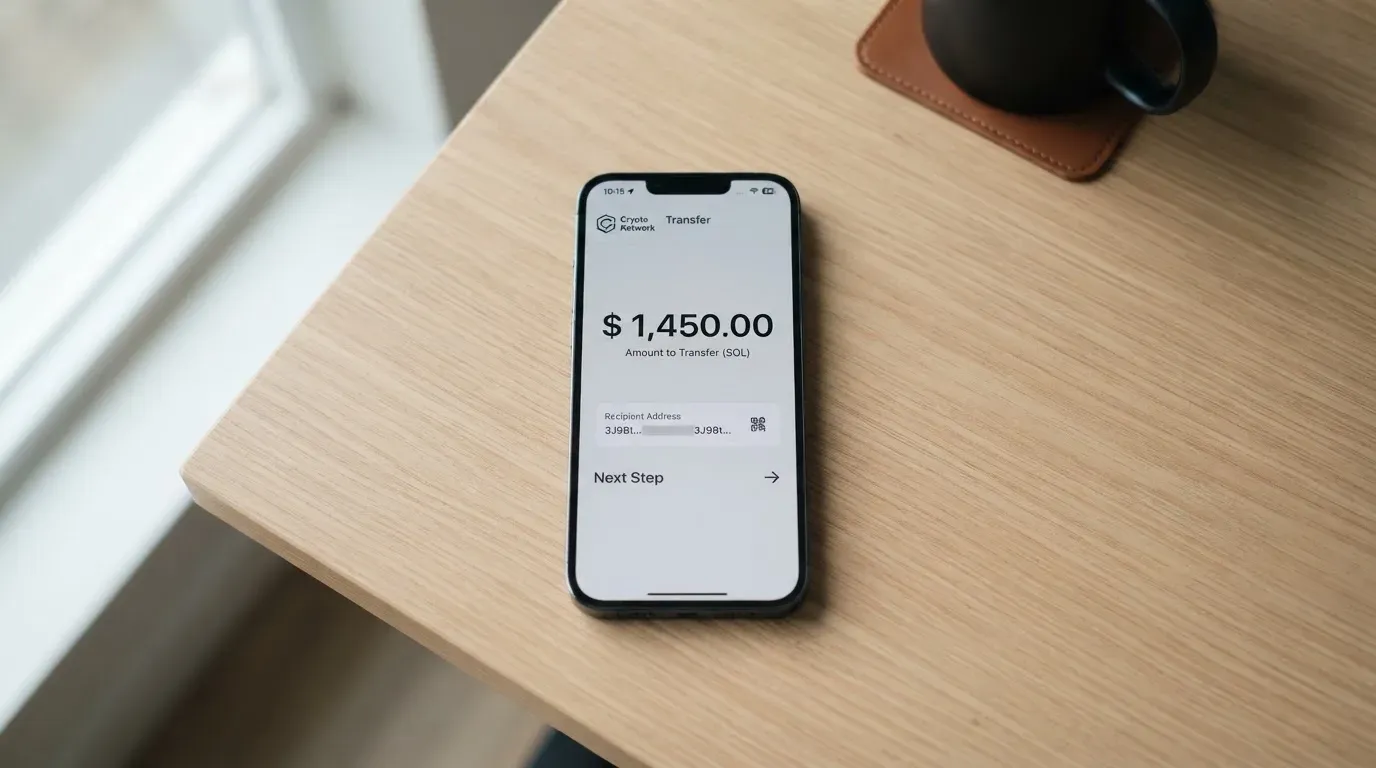
The practical consequence is that you cannot hold two of these accounts in one wallet, and you cannot move the card to a different person by transferring money. If you lose access to the wallet holding the NFT, the card goes with it — recovery runs through Fiat24, who verify identity, lock the account and reset it by moving the NFT and the funds to a new Arbitrum wallet, with a small fee possibly applying. That is a real procedure, not a lost-password email, and you should read the rest of this page before deciding the risk is acceptable.
What the card itself is, in its own words: a “Mastercard/Visa debit card” running on Arbitrum. The cards are virtual — Fiat24 cards are virtual, and no physical card is mentioned anywhere in what I read. Balances are held in EUR24 and USD24.
Several things people always ask about at this stage are simply not stated on the card’s public pages: there is no published delivery time or delivery method, no account tier structure, and no stated verification level. You will not find a table saying “tier 1 lets you do X”. If any of those matter to your decision, the only honest answer is that the card’s public pages do not say — and you should ask support before minting anything.
What it really costs
The headline is genuinely good, and it is good for a specific reason: TokenPocket pays most of the minting cost of the account NFT, and you pay “a small portion” — an amount the card does not publish. On top of that, the card states plainly that apart from these, TP Card does not charge any additional fees.
Then there is the one fee that does apply: a 1% fee is charged when depositing cryptocurrency into the TP Card. The card says this will later be refunded to users through rewards or reduced transaction fees. Treat that as a promise about the future, not a present-day offset.
| Fee or limit | What the card says |
|---|---|
| Account NFT (issuance) | Partly covered by TokenPocket; the user pays a “small portion”, amount not stated |
| Monthly or annual fee | “Apart from these, TP Card does not charge any additional fees” |
| Crypto deposit | 1% fee on depositing cryptocurrency into the card |
| Conversion | Not stated |
| Foreign exchange fee | Not stated |
| ATM / cash withdrawal | Not stated |
| Daily limit | Not stated |
| Monthly limit | Not stated |
| Card currency / balances | Balances held in EUR24 and USD24 |
Several of those rows read “not stated”, and that is the honest state of the information, not an oversight on my part. It also has a real cost: I cannot tell you what a foreign-currency purchase will cost you, because the card does not say. Cross-border spending is exactly where a hidden conversion fee lives.
One more source of cost that is not the card’s fault but will land on you anyway: extra fees can come from inter-institution settlement. And on the funding side, the network fee for the deposit is charged by the blockchain, not by the card provider.
Let me make the arithmetic concrete with three everyday situations, because “no additional fees” sounds more universal than it is.
Buying coffee in a euro country with EUR24 in the balance. This is the clean case. No crypto deposit happens at the moment of purchase, so the 1% deposit fee is not in play, and the card states it adds no other charges. The spread between what you paid for the crypto and what the EUR24 balance is worth is not something the card’s pages quantify — so the real cost of this purchase is the conversion you already did, not the purchase.
Paying a subscription in US dollars from a EUR24 balance. Now a currency conversion happens at the transaction. The card does not state an FX fee and does not state that there is none; the sentence that no additional fees apply comes in the context of the NFT and the deposit. I would confirm this in writing with support before you rely on it, because a recurring charge is exactly where an unstated percentage repeats every month.
Loading the card with crypto. Here the 1% is explicit and immediate. You also pay whatever the network charges for moving the tokens on Arbitrum. And if you later want to move EUR24 or USD24 to another registered account-NFT holder, that transfer is described as possible — but its cost is not stated.
My rule of thumb: treat the 1% as the only fee you know for certain, and treat every unstated row as a question to ask before you commit money.
How to top it up
Top-up runs through crypto. Deposits come from the TokenPocket wallet, and that wallet is on Arbitrum. The FAQ does not name the specific coins or networks you can deposit, which is a bigger gap than it sounds — on a multi-chain wallet, sending on the wrong network is one of the most common ways people lose money, and blockchain transfers are irreversible.
So the sequence is: transfer the tokens to the correct address on the correct network, and expect the 1% deposit fee to be taken. Beyond that, the card does not state a minimum deposit, does not say who pays the network fee, and does not list any fiat top-up option. If you were hoping to load the card from a bank account in euros, I found nothing on the card’s pages that offers that.
On the way out, wire transfers are generally credited within 1–2 business days, with fees not stated. I mention that specifically because it is the only transfer time the card actually commits to.
Before you send anything, check three things:
- The network. Arbitrum is what the card describes; anything else is a guess with your money on it.
- The token. The FAQ does not list what is accepted, so confirm before transferring rather than after.
- The destination. An irreversible transfer to the wrong address can usually only be recovered through manual support intervention, and there is no guarantee of that.
Once loaded, EUR24 and USD24 can be transferred to another registered account-NFT holder — useful, but it means the balance belongs to a card account in a wider NFT-holder network rather than to your bank account.
Paying with it every day
Day to day, the card behaves like a virtual card behind your phone. It works with Apple Pay, Google Pay and Samsung Pay, and it is accepted by Alipay and WeChat Pay for offline spending. That is a solid practical list for the region it targets, and being able to add the card number to a phone wallet is how most people will actually use it.
Where I would want clarity before you rely on it: the categories of purchase that are blocked are not stated. Crypto cards commonly restrict gambling and similar merchant categories, and every issuer’s list differs, so treat this as an open question rather than an assumption. Whether the card works for your specific merchants — streaming services, ticket sites, car hire — is something only a real transaction will tell you.
The card is managed inside the TokenPocket app. I did not check store ratings, so I have no view on how the app itself is rated by users.
Two things about getting your money back from a purchase. Refunds are credited 15–30 business days after the merchant completes its refund process — that is a long window, and it is the merchant’s clock as much as the card’s. Chargeback rules are not stated, which is a meaningful silence: chargebacks are how you contest a payment that went wrong, and without published rules you cannot know what evidence will be asked of you.
On rewards: no cashback is stated. The 1% deposit fee is described as refunded later “through rewards, reduced transaction fees, etc.” — which is a list of possibilities, not a rate.
What can go wrong
The card’s own pages show no official incident. That is worth saying plainly, and worth not over-reading. What I did find is a pattern on the issuer side.
TokenPocket describes itself as working jointly with “a compliant financial institution” — a Swiss-compliant bank is mentioned — while support emails point to Fiat24, and the FAQ does not name Fiat24 as the issuer. Licences are not named. So the chain runs: you hold the key to a wallet, an NFT stands in for your account, and a service that is not named as the issuer on the card’s pages handles your support requests. Each of those gaps is individually normal for this category. Together they are a reason to keep a modest balance rather than your life savings.
The complaints are the part that moved my score. On Fiat24, Trustpilot shows 2.2 out of 5 from 8 reviews, all one-star, read on 21 October 2026 — a small sample, so treat it as a signal rather than a statistic. The user reports behind it are consistent: unresponsive support from December 2024 to May 2026, funds held or delayed from April 2024 to May 2026, and payment or transfer failures in November 2024 and February 2026. I did not find a Trustpilot page for TP Card itself.
Fundamentals first, because they outrank any single complaint. Control of crypto belongs to whoever holds the key. With a custodial wallet the provider holds the credentials and you must trust them completely; here the wallet is yours, which is better — but a seed phrase of 12 to 24 words in the wrong hands restores the wallet and spends everything in it, and transfers are typically irreversible, with no built-in recovery. The wider category has form: custodial platform failures have included Mt. Gox (about US$350 million reported stolen, 2011–2014), Coincheck (about US$400 million, 2018) and Ronin Network (US$625 million, 2022).
The card’s own recovery procedure is the part to memorise before you need it:
- Lost key. Fiat24 verifies identity, locks and resets the account by moving the NFT and the funds to a new Arbitrum wallet. A small fee may apply.
- Stolen key. Lock the card, and if you are logged in, move the funds. Then contact Fiat24 at [email protected] — the address given for frozen accounts, refunds and lost or stolen keys.
- Custody model and two-factor authentication are not stated. Do not assume a second factor exists.
Two structural risks sit underneath all of this. Regulation moves in stages: MiCA, the EU’s markets-in-crypto-assets regulation, took legal effect in June 2023; its rules on asset-referenced and e-money tokens applied from 30 June 2024, and the remaining provisions including crypto-asset service provider rules from 30 December 2024. Providers operating under national law could continue only until 1 July 2026 or until a MiCA authorisation was granted or refused, whichever came first. I could not confirm where this particular programme sits in that process, because the licence is not named. And programmes do close: Visa terminated its global agreements with FTX on 13 November 2022, and WaveCrest’s Visa programmes were closed in 2018. Visa and Mastercard do not issue crypto cards to consumers themselves — they license issuers and can suspend a programme.
Finally, some quiet traps of the category. A declined payment can leave a hold on your funds for several days, typically up to seven. Some merchants decline prepaid or foreign-issued card numbers, because a lookup reveals the card type and the issuer’s country. And address verification is mainly available in the US, Canada and the UK, so it is often unavailable for a foreign-issued card, which can itself cause declines.
One thing I will not do here is walk you around identity checks, sanctions rules or country restrictions. If your country is not listed, the answer is that the card is not for you, not that there is a workaround.
What to take instead
If TokenPocket’s gaps — an unnamed issuer, an unstated FX fee, a 4 out of 10 on top-up options — make you uncomfortable, here is what the same research turned up, scored on the same basis.
| Card | Score | Cost | Top-up | The trade-off |
|---|---|---|---|---|
| TokenPocket | 5.8 / 10 | 1% on crypto deposit; no other stated fees | Crypto from a TokenPocket wallet on Arbitrum; coins and networks not listed | Cheapest stated fees, thinnest published detail |
| MetaMask | 7.1 / 10 | Virtual free; Metal $199/year | Directly from the connected wallet: Linea, Base, Monad, Solana | Most transparent, but sign-up is limited to a 45-country list |
| KAST | 6.1 / 10 | Standard 0 USD; Premium 1,000 USD/year; Private 10,000 USD/year | USDT, USDC, PYUSD, RLUSD | Most generous cashback, highest membership cost |
| Zeal | 6.1 / 10 | Not stated; no fee schedule published | Balances in the card Safe (EUR, USD, GBP) | Spends in 150+ countries; no published fee table |
MetaMask is the one to look at first if your priority is knowing what you are paying. Sign-up is open in 45 listed countries and territories, with proof of residency required, and US and UK sign-ups temporarily closed per its FAQ. It says it has no additional MetaMask fees, no foreign transaction fee, and Mastercard’s rate is used; each transaction carries a “minimal fee” whose amount is on a linked table. You get a virtual card instantly and can pre-order a Metal card, at $199 a year. Cashback is 1% on Virtual; Metal’s headline is 3%, with a footnote limiting 3% to the first $10,000 spent and 1% after. One honest caveat: its own token list and terms disagree about which stablecoins are acceptable.
KAST goes the other way — spend more for more rewards. Annual membership runs 0 USD for Standard, 1,000 USD for Premium and 10,000 USD for Private, billed annually upfront. In exchange: cashback of 1.5% on the first 2,000 USD a month (Standard), 2% on the first 10,000 (Premium) or 3% on the first 40,000 (Private), plus KAST Points on Premium and Private tiers. Stablecoin top-ups and USD spending are at 0%, while non-USD foreign exchange runs 0.5%–1.75% depending on where you live and which programme you hold. Eligibility is residence-based and its country list is not published — its own rule is that if your country is not listed, it is not available there.
Zeal is the simplest of the four. It spends in 150+ countries, uses a Visa card with a virtual option you can add to Apple Pay, and states it charges no additional FX fee, converting at Visa’s wholesale rate. It also publishes no fee schedule, so if transparency is what you are shopping for, Zeal does not win that.
My honest comparison: MetaMask wins on published detail, KAST on rewards, Zeal on reach. TokenPocket wins on stated fees — and only because it says so little that there is little to charge.
Who I would recommend it to
I would recommend this card to one specific person: someone already inside the TokenPocket ecosystem, living in a listed European or Asia-Pacific country, holding crypto on Arbitrum, and treating the card as a convenient top-up-and-spend tool rather than a bank account. For that person, a 1% deposit fee with no other stated charges and support for the major phone wallets is a fair deal, and 5.8 is being generous about the fact that the card is virtual only.
I would not recommend it as your only card. If your money has to work in a week when support does not answer — and the issuer-side record suggests that week exists — a virtual card with no stated ATM access, no published limits and no stated chargeback rules is the wrong foundation. I would not recommend it to anyone outside the eligibility list, to anyone who cannot hold an Arbitrum wallet comfortably, or to anyone who needs a physical card in their hand.
Before you mint the NFT, put three questions in writing to support: what the FX fee is on a non-USD24 purchase, what the daily and monthly limits are, and which legal entity issues the card and under which licence. If the answers come back clearly, this is a 6 out of 10 card and you will enjoy it. If they do not, your money is better parked in a card that publishes its fees.
Frequently asked questions
What is the TokenPocket card?
It is a virtual Visa or Mastercard debit card that spends a balance loaded from a crypto wallet, with the account tied to an NFT minted on Arbitrum rather than to a bank account number. Balances are held in EUR24 and USD24. TokenPocket sells it jointly with what it calls a compliant financial institution, a Swiss-compliant bank. The card’s own pages do not name the issuer.
How does the TokenPocket card work?
You hold the key to an Arbitrum wallet, and an account NFT minted in that wallet stands in for your account. Depositing crypto loads a fiat balance, and the card spends that balance, so it cannot overdraw. The card states a 1% fee on the crypto deposit. Everything happens inside the TokenPocket app, and support for frozen accounts, refunds and lost or stolen keys sits with Fiat24.
Is TokenPocket a bank?
No — nothing in what I read describes it as one. TokenPocket describes itself as working jointly with a compliant financial institution, a Swiss-compliant bank, while support emails point to Fiat24 and the FAQ does not name the issuer. Licences are not named. That gap matters: an e-money institution and a bank are different things under different rules, and I could not confirm which one you are dealing with.
Which countries can get the TokenPocket card?
Visa is offered for a list of European countries and territories, with Germany, France, Spain and Switzerland named as examples. Mastercard covers Australia, Canada, Hong Kong, Japan, Taiwan, New Zealand, Singapore, South Korea and the UK, among others. The Americas are described as “planned for Q2 2025”. The card’s public pages do not state a citizenship rule or a document list.
Does the TokenPocket card require KYC?
Yes, in practice: you complete registration, and verification runs through the on-chain wallet rather than a document upload flow described on the page. The specific document list and the verification level are not stated on the card’s public pages, so ask support before you start if you need to know exactly what to have ready. In the EU generally, customer due diligence covers identity documents, a sanctions check and politically-exposed-person screening.
How much does the TokenPocket card cost?
Creating the account NFT is partly covered by TokenPocket and you pay a “small portion” whose amount is not published. Beyond that, the card states it charges no additional fees. The one explicit charge is 1% on depositing cryptocurrency. The FX fee, ATM fees and daily and monthly limits are all not stated, and network fees on the deposit are paid to the blockchain.
How do I top up the TokenPocket card?
You send crypto from your TokenPocket wallet, which runs on Arbitrum, and the card applies its 1% deposit fee. The FAQ does not name which coins or networks are accepted, so confirm before transferring — on-chain transfers are irreversible. No minimum deposit, network-fee payer or fiat top-up option is stated. Wire withdrawals are generally credited within 1–2 business days.
Can I add the TokenPocket card to Apple Wallet?
The card supports Apple Pay, Google Pay and Samsung Pay, and it also works with Alipay and WeChat Pay. Because the cards are virtual, adding the number to a phone wallet is probably the main way you will use it day to day. Note that which merchant categories are blocked is not stated, so check before you rely on it for anything specific.
Is the TokenPocket card safe?
No card is anonymous and none should be treated as untouchable. The good part is that you hold the wallet key yourself rather than trusting a custodian with it. The bad part: recovery is an identity-verified process where Fiat24 moves your NFT and funds to a new Arbitrum wallet, the custody model and two-factor authentication are not stated, and Fiat24’s Trustpilot score is 2.2 out of 5 from 8 reviews, all one-star.
Is the TokenPocket card worth it?
For someone already holding crypto on Arbitrum in a listed country, probably — 1% to load, no other stated fees, and the usual phone wallets. For everyone else, I would read the unstated rows first: FX fee, daily and monthly limits, and the named issuer are all missing from the card’s public pages. I would also compare MetaMask for published fees, KAST for rewards, or Zeal for country reach before you mint the account NFT.
Wallet card verdicts – cryptocardverdict
Content created by the «cryptocardverdict» team