
Bix card: a self-custody Visa with thin details and a US launch still underway
 Available in US
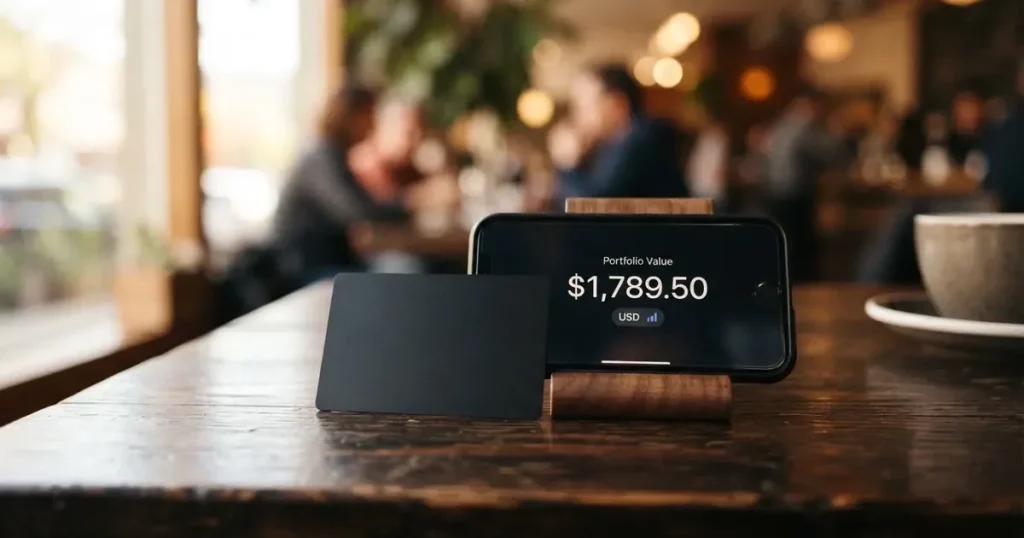
Bix is a Visa debit card whose defining feature is that the money behind it never sits with a card company. You hold USDT or USDC in your own non-custodial wallet, the card draws on that balance at the point of sale, and Bix is explicit that “BIX is a technology company, not a bank” and does not hold or control the assets in your wallet. That setup is genuinely different from a custodial crypto card, and it is the reason anyone tired of trusting an exchange with their balance might be interested. The catch is that the card itself is still being rolled out: in late September 2026, the press release around the launch put the live footprint at 29 US states with a target of 49 within six to eight months, and the help centre’s fee table does not match the no-funding-fee, 1% FX message in the press release. If you live outside the US, the website only says “service availability depends on your location, eligibility and the relevant provider’s terms” — there is no published list of countries.
The conditions in this review are current as of October 28, 2026. The score below is 5.2 out of 10, and the breakdown that follows explains what that number reflects and what it does not.
Verdict
The card earns a 5.2 out of 10. The reason the number is not lower is that the funding model is interesting and the security story is unusually well described: non-custodial keys, Shamir’s Secret Sharing, AWS Nitro TEEs, SOC 2 Type II, audits by Cure53, Zellic and Doyensec, and 24/7 monitoring. The reason it is not higher is that almost everything you would normally check before getting a card is still missing: the card-issuing bank is not named on the public site, the country list is implicit, the card’s currency is not stated, the monthly and daily limits have no numbers, the disputes and refunds process is not described, and the help-centre fee table disagrees with the press release on the headline FX and funding charges. The people this card suits are self-custody wallet users in eligible US states who already hold USDT or USDC, want a Visa debit that draws directly on those balances, and are comfortable being early users of a programme whose own documentation is still being written. The people it does not suit are anyone outside the US, anyone who needs a physical card today (only the virtual Visa is live, with physical and metal “coming soon”), and anyone who needs a published fee table they can rely on before they sign up.
Score breakdown
| Criterion | Mark | Why it lands there |
|---|---|---|
| Who can get it | 2 / 10 | The issuer names 29 US states with a target of 49; there is no list of countries. |
| Cost | 5 / 10 | Virtual Visa is $9.99, standard membership is free, purchase fee 3%, conversion 1% per the help centre — but the press release claims no funding fees and 1% FX. |
| Top-up options | 8 / 10 | USDT and USDC as collateral in a self-custody wallet on Ethereum, BNB Smart Chain, Base, Solana and Optimism; fiat is “coming soon”. |
| Reliability and complaints | 6 / 10 | Bix Ltd, Cayman Islands, operating offices in Dubai; the issuer is not named; no complaints found; iOS app 4.4 out of 5 from 7 ratings. |
| Everyday use | 7 / 10 | Virtual now, plastic and metal “coming soon”; Apple Pay and Google Pay supported; ATM fee $1 + 0.6%. |
| Total | 5.2 / 10 | A credible self-custody design, but live coverage, fees and issuer details are still thin. |
Who will they give you the card to
The first thing you will look for on a card’s site is a country list, and on the Bix site the closest you get is the line “service availability depends on your location, eligibility and the relevant provider’s terms”. The September 2026 press release is more concrete: the card is currently available to eligible residents of 29 US states, with a stated target of 49 states within six to eight months. That puts the present reality somewhere in the US, and the broader rollout as a promise rather than a fact. If you live anywhere else, the public site does not yet tell you whether you are eligible, and the company is not an issuer — its own wording is “BIX is a technology company, not a bank”, with the regulated services run by third-party partners, the names of which are not published on the public site at the time of writing.
The second thing to look for is who is actually on the other side of the application. Bix Ltd is incorporated in the Cayman Islands and runs operating offices in Dubai. The iOS app store listing is under Bit One Ventures Inc. Neither of those is a card issuer, and the press release and site do not name the bank that will print your Visa. That is not unusual for a programme-manager structure where a licensed issuer sits behind the front-end brand, but it is something a careful reader should be aware of before they hand over identity documents: the identity check, the KYC process, the customer due diligence and the sanctions screening are run by someone whose name you cannot see on the marketing site.
For KYC itself, the site only says identity verification and “programme requirements” apply to eligible users. The exact documents, the address proof, the age floor and the differences between KYC tiers are not stated on the pages read. In practice that means you will not know what to send until you start the sign-up flow, and you will not know how long it takes until other users have shared their experience.
How to get it
You start by downloading the Bix app, creating an account and creating or importing a self-custody wallet. Because the card is non-custodial, this is not the same as opening an account with a custodian: you generate or restore the keys yourself, and the card later spends the balances in that wallet. After that you go through identity verification under the programme’s KYC rules; as described in “Who will they give you the card to”, what those rules require is not published. Once you are eligible, you can order a virtual Visa debit card for $9.99; the physical card and the metal card are both listed as “coming soon”, along with a paid tier called BIX Plus at $119 a year. Standard membership is free. The card is linked to the BIX Wallet and, in the launch configuration, the card currency is not stated on the public pages.
Apple Pay and Google Pay are listed as supported, so once your virtual card is issued you can tokenise it into a mobile wallet and start using it at contactless terminals. There is no published delivery time for the future physical card, and the public site does not describe how to activate a physical card when one arrives.
What it really costs (Fees)
The headline cost is the $9.99 you pay once for the virtual Visa. After that, standard membership is free. The planned BIX Plus tier is $119 a year and the planned physical card is $99, but neither is on sale today. Two other things matter in practice: the cost of paying with the card, and the cost of getting cash.
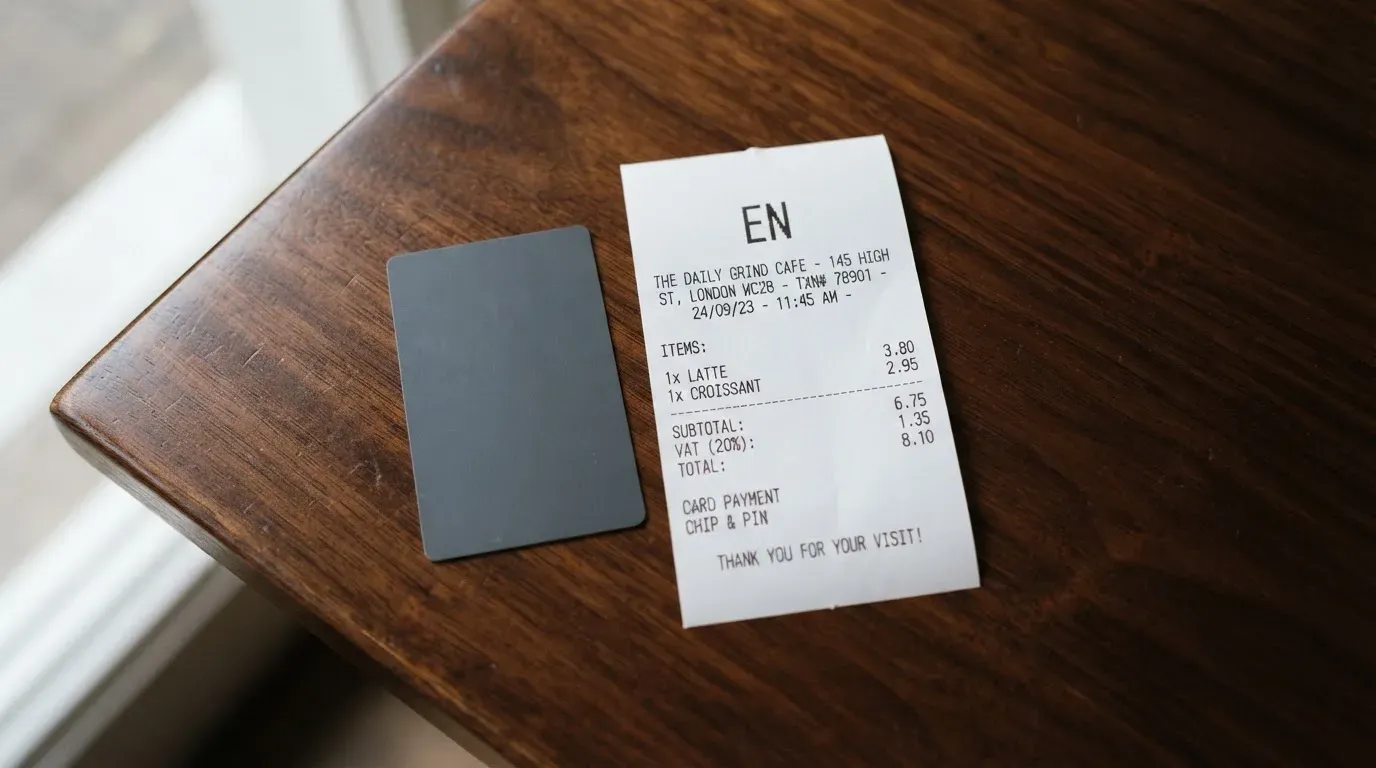
The help-centre fee table — which is what the company itself publishes for its customers — says card purchases cost 3% in fees, currency conversion costs 1%, small authorisations (charges under $50) cost $0.75, and declined transactions cost $0.65. The same page adds that “fees may vary depending on the transaction type or payment network”, which is honest but does not give you a number to plan on. The press release disagrees with the help centre: it says there are no funding fees and that the US programme carries a 1% FX fee. The two sources are both official, and they do not match on the most basic cost of using the card. That alone is a reason to be careful until the table is updated.
For cash, the help centre puts ATM withdrawals at $1 plus 0.6%. The press release says the physical-card ATM fee is 0.6% but does not list the $1 fixed piece. There is no free ATM allowance published anywhere.
Spend limits are described as “configurable monthly spend limits” and “flexible and customizable based on the user’s deposited collateral”. No numbers, no minimum monthly or daily spend, no maximum. Because the balance is held in your own wallet and the card is prepaid in the way most crypto cards are, the practical ceiling is whatever you can park in stablecoins and have the programme accept, but that is not the same thing as a published limit you can plan a budget around.
| Fee or limit | Value |
|---|---|
| Issuance (virtual) | $9.99 one-off |
| Monthly fee (standard) | $0 |
| Card purchase fee | 3% (help centre) |
| Currency conversion | 1% (help centre) |
| FX (US programme, press release) | 1% (no funding fees) |
| ATM withdrawal | $1 + 0.6% (help centre) |
| ATM fee, physical card (planned) | 0.6% (press release) |
| Small authorisation (under $50) | $0.75 |
| Declined transaction | $0.65 |
| BIX Plus annual (planned) | $119 |
| Physical card (planned) | $99 |
| Daily / monthly limits | not stated |
Three concrete examples make the cost structure more useful than a percentage alone.
- A $40 supermarket shop in the US, paid in dollars, no conversion needed. The help-centre table would put the small-authorisation fee at $0.75 on a charge under $50, on top of the 3% purchase fee. Whether the small-authorisation fee applies to ordinary purchases is the kind of detail the help centre is vague on.
- The same shop in euros, paid from a USD card. The 1% conversion fee applies, on top of the 3% purchase fee, so the effective drag is the sum of these two fees, before the network fee the merchant’s acquirer charges.
- A $200 ATM withdrawal abroad would, on the help-centre table, be $1 plus 0.6% — $2.20 in Bix’s own fees, before any fee the ATM operator itself charges.
The BIX Rewards programme is listed as “coming soon” with no rate, so there is nothing to subtract from these numbers yet.
How to top it up (Top up)
Topping up Bix starts with a stablecoin transfer to the right network. The card is funded by USDT and USDC held as collateral in a self-custody wallet, and the supported combinations listed in the public documentation are Ethereum, BNB Smart Chain, Base, Solana and Optimism. There is no bank transfer, no card top-up, no Apple Pay funding flow yet — the public materials describe a fiat on-ramp as “coming soon”. That is fine if you already hold USDT or USDC, and limiting if you don’t.
Two practical points follow. The first is the network: the help centre emphasises the supported combinations, and the broader point worth keeping in mind is that a transfer sent on a chain Bix does not support, or to an address of the wrong network, can be lost or need manual support recovery with no guarantee. The minimum top-up amount and which side pays the network fee (the on-chain gas or bandwidth) are not stated. The second is the on-ramp gap: until fiat funding ships, your only way to put money behind the card is to buy stablecoins somewhere and send them in, with whatever fee and spread that route charges.
There is no published withdrawal flow for getting balances back to a bank or to a different wallet.
Paying with it every day
In its current shape Bix is a virtual Visa. You can add it to Apple Pay or Google Pay and use it at any contactless terminal that takes Visa; for online checkout you type in the card details. Standard contactless and online limits set by the merchant apply, and the help centre describes monthly spend limits as configurable.
Tokenised mobile wallets work in the usual way: the device stores a device-specific number rather than your real card number, and each payment uses a one-time code. You can freeze the card from the app. Bix has not published a list of blocked merchant categories; the help centre is silent on gambling, adult content, crypto purchases and the other categories some crypto cards restrict by policy. The Visa Signature benefits listed on the marketing pages — lounge access, travel and rental car insurance, hotel discounts of up to 65% and concierge — are typical for the network tier rather than specific to Bix, and the concierge is described as 24/7.
There is no public description of how disputes work, how chargebacks are filed or how long they take. US debit reversal rights normally come from Regulation E, but prepaid-card coverage varies and the rights of a self-custody-funded prepaid card are not what you should assume without checking. The iOS app BixPay has 4.4 out of 5 from 7 ratings as of 21 October 2026, and Google Play was not read for this review.
For cash, the published ATM fee is $1 plus 0.6%, there is no free allowance and the monthly cash ceiling is not stated.
What can go wrong
There are three broad risks: the card programme itself, the company behind it, and the funding model.
On the card programme, the practical risk is what happened to FTX in November 2022, when Visa terminated its global agreements and the FTX US debit card was wound down by its issuer. Crypto card programmes can be suspended by the network or wound down by the issuer with notice, and when that happens the pattern is that new loads end first, spending stops next, and users are asked to withdraw any remaining balance. The Bix card does not publish an issuer name, so it is hard to judge the issuer’s track record independently, and the public Bix site does not lay out a wind-down plan.
On the company, Bix Ltd is in the Cayman Islands with operating offices in Dubai, and the app store listing is under Bit One Ventures Inc. The card’s payment rails are not Bix’s. There is no public incident notice, no Trustpilot page was found within the search budget, and no user-report source surfaced complaints. That is good for a young product and not a substitute for a track record.
On the funding model, the trade-off is the one that defines self-custody. Your keys are never stored in complete form on Bix’s side — the documentation describes Shamir’s Secret Sharing, AWS Nitro TEEs, SOC 2 Type II, audits by Cure53, Zellic and Doyensec, and 24/7 monitoring. That is a strong security description. The other side of the same trade-off is that you alone hold the seed phrase (typically 12 to 24 words), and anyone who obtains it can restore the wallet and spend the funds. Crypto transfers are generally irreversible, and a stolen private key has no built-in recovery — the network cannot freeze or return the funds.
Two specific funding risks are worth keeping in mind. The first is the chain: stablecoin transfers are easiest to lose at the network boundary. Circle stopped supporting USDC on Tron in February 2024, so “USDC over TRC20” is not a native option; USDT is a separate token issued by Tether, and “USDT on Tron” is a different token contract from “USDT on Ethereum”. Sending USDC on a chain the programme does not support, or to an address of the wrong network, can be lost or need manual recovery with no guarantee. The second is the stablecoin itself: despite the name, stablecoins are not necessarily stable. Tether’s USDT and Circle’s USDC are the two largest dollar-pegged stablecoins, and Circle says USDC is redeemable 1:1 for USD and 100% backed by cash and cash equivalents, mostly in an SEC-registered government money market fund, with monthly reserve attestations by a Big Four firm. Tether describes USDT as backed 1-to-1 by reserves. The history of the category includes a TerraUSD collapse in May 2022 and a temporary USDC depeg in March 2023 during the US banking crisis. Both USDT and USDC can also be frozen or blocked by the issuer against wallets on sanctions lists, which is a reminder that stablecoins are not censorship-proof.
On the regulatory side, MiCA in the EU (Regulation (EU) 2023/1114) took legal effect in June 2023, with stablecoin rules from 30 June 2024 and CASP rules from 30 December 2024. A CASP authorised in one member state can serve the EU under passporting. The card itself is a payment service, regulated separately under e-money and payment-services law, and a crypto card often depends on two licences: a MiCA-side authorisation for the crypto part and an e-money or payment-services licence for the card part. In the US, FinCEN guidance (FIN-2013-G001) treats administrators and exchangers of convertible virtual currency as money transmitters. None of this changes what you can do today, but it is the regulatory shape the product will eventually have to fit into.
What to take instead
The closest comparable cards depend on where you live and what you want from the card. Below are three alternatives with the facts the public pages give, side by side with Bix.
| Card | Score | Footprint | Funding | Card | Cost | Notable fees |
|---|---|---|---|---|---|---|
| Bix | 5.2 / 10 | 29 US states live, target 49 | USDT, USDC in self-custody wallet on Ethereum, BNB Smart Chain, Base, Solana, Optimism | Virtual Visa now, physical/metal “soon” | Virtual $9.99, standard free | 3% purchase, 1% conversion, ATM $1 + 0.6% |
| TokenPocket | 5.8 / 10 | Visa debit for a list of European countries/territories; Mastercard debit for Australia, Canada, Hong Kong, Japan, Taiwan, New Zealand, Singapore, South Korea, UK, others; Americas “planned for Q2 2025” | Crypto deposits from the TokenPocket wallet (Arbitrum) | Mastercard or Visa debit; Fiat24 cards are virtual | NFT creation fee partly covered by TokenPocket; user pays “a small portion”; “no additional fees” stated | 1% on crypto deposits, “to be refunded later via rewards” |
| MetaMask | 7.1 / 10 | Sign-up open in 45 listed countries/territories (Andorra, Argentina, Brazil, Canada, Mexico, Germany, France, Spain, Uruguay among them); waitlist elsewhere; US/UK sign-ups temporarily closed | Spends from the connected wallet on Linea, Base, Monad, Solana | Mastercard, virtual first then Metal | Virtual free, Metal $199/year | “Minimal fee” per transaction, no MetaMask fees, no foreign transaction fee, Mastercard rate used |
| KAST | 6.1 / 10 | Residence-based list at KYC; list not published | Stablecoins USDT, USDC, PYUSD, RLUSD on Ethereum, Solana, Polygon, Arbitrum, TRON | Visa Platinum, Visa Infinite metal, Visa Infinite gold; up to 10 per user | Standard $0, Premium $1,000/year, Private $10,000/year; extra virtual $2; physical $0 + $40 delivery Standard | 0% spend in USD, 0% stablecoin top-up, non-USD FX 0.5%–1.75%, declined $0.50 |
If your priority is a published fee table you can plan around, MetaMask is the cleaner story. If your priority is a US launch with a transparent issuer, none of the three beat Bix on that point because Bix is a US-targeted product — but they each have a wider footprint. If your priority is a self-custody wallet that funds a card directly, Bix and MetaMask both work that way, and MetaMask is the more developed of the two today.
Who I would recommend it to
I would recommend the Bix card to a self-custody wallet user in one of the 29 US states where the card is live today, who already holds USDT or USDC, is comfortable being an early user of a young programme, and treats it as one tool among several rather than the main bank card. The published security posture is unusually well described for a card of this size, and the funding model — stablecoins sitting in the user’s own wallet until the moment of payment — is genuinely different from a custodial card. The downsides are the ones I have walked through: the live footprint is 29 states, the issuer is not named, the help-centre fee table and the press release disagree on the headline FX and funding charges, the card currency is not published, the monthly and daily limits are not published, the disputes process is not published, and the physical card and metal card are still “coming soon”. If any of those details matter for the way you plan to use the card — and they will, the first time you try to budget in dollars, dispute a charge, or pull cash from an ATM abroad — wait for the documentation to catch up with the product.
Frequently asked questions
What is the Bix card?
The Bix card is a Visa debit card linked to a self-custody wallet. The wallet holds USDT or USDC, the card draws on that balance at the point of sale, and Bix is explicit that it is a technology company, not a bank, and that it does not hold or control the assets in your wallet. A virtual card is available now, with physical and metal versions listed as “coming soon”.
How does the Bix card work?
You keep your stablecoins in your own non-custodial wallet. When you tap or insert the card, the programme converts the stablecoin balance and pays the merchant through Visa. Spend limits are described as configurable and based on the collateral you have deposited; the help centre does not publish a number for the daily or monthly ceiling.
Is Bix a bank?
No. The company describes itself as a technology company, not a bank, with regulated services provided by third-party partners. The public materials do not name the card issuer, and you should assume the bank or e-money institution that actually issues the Visa is one of those partners rather than Bix itself.
Who owns Bix?
Bix Ltd is incorporated in the Cayman Islands with operating offices in Dubai, and the iOS app store listing is under Bit One Ventures Inc. The card-issuing institution behind the programme is not named on the public pages.
Is the Bix card available in my country?
The website says “service availability depends on your location, eligibility and the relevant provider’s terms”. The September 2026 press release says the card is live in 29 US states with a target of 49. If you are not in one of the live US states, the public materials do not yet confirm availability, and there is no list of countries outside the US.
How do I apply for a Bix card?
You download the Bix app, set up a self-custody wallet, complete identity verification under the programme’s KYC rules, and order a virtual card for $9.99. The documents and address proof required for KYC are not published on the site, so you will see the list of required documents once you start the flow.
Does the Bix card require KYC?
Yes, the public pages say identity verification and “programme requirements” apply. The exact documents, age floor and tiered limits inside the KYC process are not stated, and a US-style customer identification programme normally covers name, date of birth, address and an identification number, with sanctions screening on top of that.
How do I add the Bix card to Apple Wallet?
The Bix app supports adding the card to Apple Pay or Google Pay, and once tokenised you can pay at contactless terminals. Tokenisation replaces your real card number with a device-specific number stored in the Secure Element, and each payment uses a one-time code.
How do I top up the Bix card?
You send USDT or USDC to your Bix wallet on one of the supported networks: Ethereum, BNB Smart Chain, Base, Solana or Optimism. A fiat on-ramp is listed as “coming soon”, and the help centre does not publish a minimum top-up or say which side pays the on-chain network fee.
Is the Bix card safe?
The security story is well described: non-custodial keys, Shamir’s Secret Sharing, AWS Nitro TEEs, SOC 2 Type II, audits by Cure53, Zellic and Doyensec, and 24/7 monitoring. The trade-off is that the seed phrase (typically 12 to 24 words) is an unencrypted form of the private key, and a stolen seed phrase has no built-in recovery because crypto transfers are generally irreversible.
Wallet card verdicts – cryptocardverdict
Content created by the «cryptocardverdict» team