
Bringin scores 5.7 out of 10 — a solid everyday card for people paying in Bitcoin, with no stablecoin top-ups
 Available in US
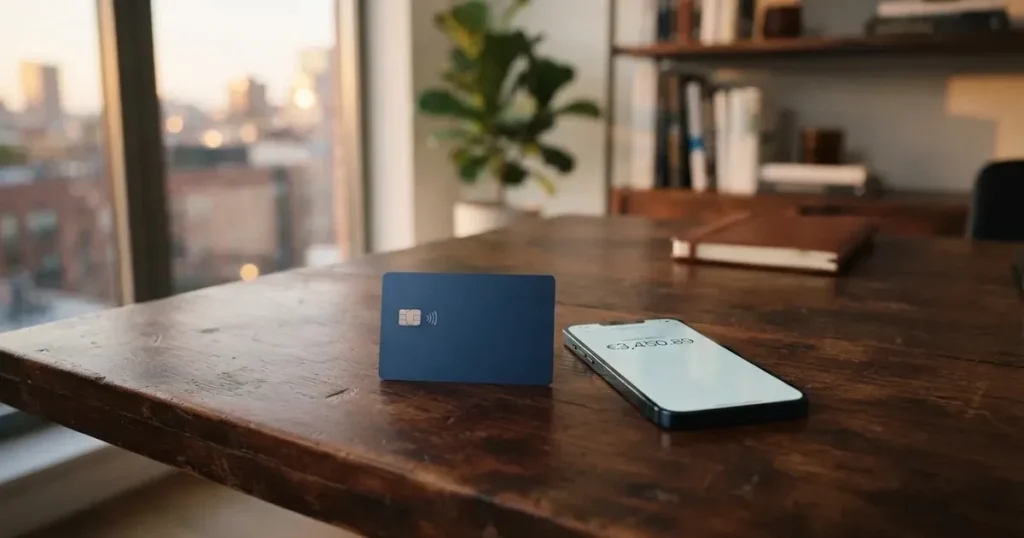
Bringin is a euro Visa card built around one idea: you move Bitcoin into it, it converts the money to euros, and you spend that euro balance like an ordinary payment card. That narrow design is both its appeal and its limit. If your money already arrives in euros through a normal bank transfer, the Bitcoin side adds very little. If you actually hold and spend bitcoin, it removes a step you would otherwise do yourself. It is a comfortable, unremarkable card with one sharp edge — you can top it up with SEPA or Bitcoin, but not with stablecoins.
The conditions described below are current as of October 28, 2026.
The score: 5.7 out of 10
Bringin earns a middle-of-the-road 5.7 out of 10. The card does its job cleanly, and the everyday-use side of the score is genuinely strong at 8. The weak points are the ones that matter most to someone choosing between cards: what it costs to hold, and how many ways you can get money into it.
| Criterion | Mark | Why |
|---|---|---|
| Who can get it | 5 / 10 | 18+ with a valid EEA ID: 30 EU countries plus Liechtenstein, Norway and Iceland |
| Cost | 5 / 10 | Plan €37.69 (€3.49 per month when paid annually), “0 fee per usage”; bitcoin-to-euro conversion 1% plus a 0.5% markup; FX 0% |
| Top-up options | 4 / 10 | SEPA, bitcoin on-chain or Lightning, all converted to euros; no stablecoins |
| Reliability and complaints | 7 / 10 | UAB Bringin, Lithuania; partner Lightspark Europe holds a MiCA licence; issuer not named; no complaints found |
| Everyday use | 8 / 10 | Physical and virtual Visa, Google Pay and Samsung Pay directly, Apple Pay via Curve; €350 cash per day |
| Total | 5.7 / 10 |
Who this suits: EU residents who pay with bitcoin, especially if Lightning payments are part of how you move money, and who want a card that behaves normally in shops without thinking about which network they are on. Who it does not suit: anyone outside the EEA, anyone who holds stablecoins rather than bitcoin, and anyone who wants a card with several plan tiers to choose between — Bringin has a single plan.
The 7 out of 10 for reliability reflects something you cannot see on a fee table. Bringin is UAB Bringin, a company registered in Vilnius, Lithuania, and it is built on Lightspark Payments Europe AS, which received its MiCA licence in June 2026. That is a licensed European operation rather than an offshore shell. It also reflects what I could not find: the card issuer is not named on the public pages, and I found no official incidents and no user complaint threads. An absence of complaints is not evidence of a clean record — it can mean there is simply not much volume yet.
Will they give you the card?
They will, if you are 18 or older and hold a valid identity document from the EEA — the 30 EU member states plus Liechtenstein, Norway and Iceland. That is the whole eligibility list, and it is a residency-shaped list rather than a citizenship one, though the card’s own pages do not spell out the difference: whether the test is citizenship or residence is not stated. If you are an EU citizen living outside the EEA, that gap is the first thing you would need to resolve with support before you apply.
There is a second test, and it is the one that catches people out. The card cannot be used in restricted countries, and the list includes Belarus and Russia, alongside Ukraine, Türkiye, the UAE, Nigeria and Egypt. Practically this means: you may be eligible to hold the card and still find that it declines in a particular country. If your life involves travelling to or paying suppliers in any of the listed places, that is a real constraint, not a technicality.
What the card asks of you at sign-up is standard: age, a valid EEA ID, and identity verification (KYC) at sign-up. Proof of address is not stated. One thing you will notice later rather than now: your limits depend on your KYC level, but the levels themselves and the reasons for rejection are not shown, so you cannot see in advance which tier of limits you will land on.
How to get it
The route is short and conventional. You sign up, verify your ID, fund the euro vIBAN that is assigned to you, and then either create a virtual card or order a physical one. Both cards are Visa — a physical card and a virtual one — in euro. You are not limited to a single virtual card: the card offers unlimited virtual cards, and also one-time virtual cards, which are the kind you can use for a single purchase and throw away.
Delivery is where the detail runs out. A physical card is delivered to the registered address; the delivery time and any delivery cost are not stated. The virtual card is instant, which is the practical reason many people start there. That combination — instant virtual, physical by post with no published timing — is worth factoring into your first month, because if you need a card in your wallet before a physical one lands, the virtual route is the one that actually has a date attached to it.
Fees: what it really costs
The headline price is €37.69 for the plan, shown with a “10% Discount” and noted as “Paid annually, €3.49 per month”. The card itself is free, both the physical and the virtual one, and the plan says “0 fee per usage”. So the honest summary is: there is an annual subscription, there is no per-payment fee, and the money you actually lose is in the conversion.
That conversion is where the cost lives. Converting bitcoin to euro costs 1%, plus a Bringin markup of 0.5% on partner pricing. There is no forex fee online and “0% FX fee”. Currency is euro only. If you spend in euros, you pay the 1% conversion and 0.5% markup once, when you move bitcoin in. If you spend in another currency, the 0% FX fee is the part that matters.
| Item | Amount | Note |
|---|---|---|
| Plan price | €37.69 | shown with “10% Discount”; “Paid annually, €3.49 per month” |
| Physical card | Free | |
| Virtual card | Free | unlimited virtual cards; one-time virtual cards offered |
| Per-usage fee | “0 fee per usage” | |
| Bitcoin-to-euro conversion | 1% | plus a 0.5% Bringin markup on partner pricing |
| FX fee | “0% FX fee” | no forex fee online |
| Currency | Euro only | |
| ATM withdrawal limit | €350 per day, €3,000 per month | ATM fee not stated |
| Card payment limit | €10,000 per day, €15,000 per month | limits depend on your KYC verification level; per-level figures not shown |
| Monthly fee | None separate | the plan is the recurring cost |
Three everyday payments, so this stops being abstract.
A €30 lunch in a Berlin cafe. If you topped up in euros by SEPA, the €3.49-per-month-equivalent subscription is all you feel. If you topped up in bitcoin, the 1% conversion and 0.5% markup of €30 — around €0.45 — came off before the meal, and that is the whole price of convenience here.
A €900 flight booked online in euros. Same structure, larger number: about €13.50 in conversion cost if the money came from bitcoin, nothing beyond the plan if it came from euros. Worth checking that the €10,000 daily card limit comfortably covers it; it does.
A €200 withdrawal from a Greek ATM. The card allows it and the limits are €350 a day and €3,000 a month, but the ATM fee is not stated anywhere on the public pages. This is the one line in the table I cannot fill in, and it is the one a cash user needs. Find out before you rely on it.
Top up
There are three ways in, and they reduce to two ideas. You can send a SEPA bank transfer, or you can send bitcoin — either on-chain from any wallet, or over Lightning. Whichever you use, the money is converted into euros and lands in your personal vIBAN. The card then spends from that IBAN balance. That last detail is the one to sit with: the card is not spending bitcoin at the moment you tap. It is spending euros that your bitcoin became earlier, which is why the conversion cost is a separate line in the fees table rather than an invisible rounding.
The gap that costs the card points in the top-up column is stablecoins. They are not supported. If your working habit is to hold value in USDC or USDT and spend it, Bringin is not a fit — you would have to convert to bitcoin first, adding a step and a second conversion cost that the card’s own table does not describe.
Two things about the mechanics are unstated and you should check them in the app rather than assume them. Minimum and fee amounts are not stated. What is stated, and is genuinely helpful, is that fees are displayed in the app before you confirm. For the euro top-up the route is a bank transfer to the Bringin euro account only.
Going the other way, withdrawals are described as possible “anytime”, in euros to your bank, with fees not stated. Closing your account is done by email, per an article dated 24 July 2026; what happens to any remaining balance is not stated, and that is worth asking about before you close anything.
Paying with it every day
This is where the card scores best, and it earns 8 out of 10 for a reason: the day-to-day mechanics are unremarkable in the best sense. A physical Visa and a virtual Visa, euro-denominated, that behave like a normal card in a normal shop.
The mobile wallets split, and the split is the practical detail. Google Pay, Samsung Pay, Fitbit Pay and Garmin Pay work directly. Apple Pay works, but only through the Curve app — direct support is described as planned. If your phone is an iPhone and your instinct is to add the card to Apple Wallet the day it arrives, you will be doing it via Curve in the meantime.
Rewards are thin, or rather, they are not cashback. No cashback is shown. What is offered is a discount: 10% off Alby subscriptions and off the Koinly tax calculator. That is a genuine saving if you already use either, and worth nothing if you do not.
The apps are iOS (through TestFlight), Android (Google Play) and a web app. I did not read the store ratings. Also unstated: blocked merchant categories. This is worth a check before you travel — gambling and similar categories are blocked by many issuers as policy, and the exact list here is not published.
What can go wrong
No official incidents surfaced when I looked, and no user complaint threads turned up. There is also no Trustpilot page, so there is no public complaints page to read either way. Read that as a thin file rather than a clean one.
What the card does state on the security side is reassuring. The wallet is self-custody, per the card page. There is instant card freeze, real-time alerts, and 3-D Secure on every transaction. What is not stated is safeguarding — how customer funds are held and protected — and that absence matters, so I would ask.
The support picture is mixed in a specific way. There is a Telegram chat, in-app chat, a help centre at help.bringin.xyz in 15 languages, and [email protected]. Russian is not among those 15 languages. Support hours are not stated. If you need help in Russian, or you need to know when anyone will answer, you are working without a stated answer to both.
Two structural points about who stands behind the card. The issuer is not named — the licence sits with partners rather than being visible to you, which is normal in this category but does mean you cannot read the cardholder agreement of the entity that actually owes you the money. And on the regulatory side, a card is a payment service regulated separately from crypto: the crypto side depends on the MiCA licence Lightspark Europe received in June 2026, while the card side runs under e-money and payment-services law. Two licences, two sets of rules, and you are relying on both.
If you want the general shape of the risk: a crypto card’s card number identifies an issuing institution and country, and merchants can look it up. A card issued in one country can therefore look “foreign” in another, and some merchants decline prepaid or foreign-issued cards as a result. Declined authorisations can also leave a hold on funds for days. And a self-custody wallet cuts one way — the funds stay yours, but so does the responsibility: a lost seed phrase or a malware-swapped deposit address has no built-in recovery, because blockchain transfers are irreversible.
What to take instead
Three alternatives came up in the same category, and each trades a different thing away. I am comparing them on the same lines I used above, because the interesting differences are in the gaps, not the features.
| Card | Score | Strong point | Where it is thinner than Bringin |
|---|---|---|---|
| International Visa Card | 6.7 / 10 | Free to hold — virtual issuance $5 once, no maintenance fee | Long exclusion list by residence or registration; pays in USD; 2% FX fee on foreign currency; physical card “Coming soon” |
| UNi Card | 6.1 / 10 | No annual fee and no foreign transaction fee, converted at live OTC rates; rewards up to 3% | Eligibility, top-up routes and physical/virtual format all not stated |
| Morse | 7.5 / 10 | Zero FX fees or markups at the real Visa rate; free card payments online and contactless | Fully virtual only; many countries need an invite code; fees page defers to the Cardholder Agreement |
| Bringin | 5.7 / 10 | Physical and virtual Visa, direct Google/Samsung Pay, Lightning top-up | No stablecoin top-ups; annual plan fee; EEA-only |
International Visa Card is the one to look at if the FX fee is your main worry and you can live in dollars. It is a U.S.-issued Platinum Visa, virtual, paying in USD, with a $5 one-time issuance and no maintenance fee — the cheapest to hold of the four. Plans run Classic free, Pro $9.00 a month, Max $19.00 a month. Card use in USD is free on every plan; foreign currency costs the Visa exchange rate plus a 2% FX fee, which is the opposite of Bringin’s 0%. Deposits of any kind carry no fee, and you can fund with USDC or USDT at 1:1 as well as USD, EUR, SEPA, SWIFT and FedNow. Its eligibility list is long and exclusionary: residents or legal registrants of Belarus, mainland China, North Korea, Cuba, India, Iraq, Iran, Israel, Myanmar, Nepal, Nicaragua, Russia, Syria, Turkey, Ukraine, Venezuela and Vietnam are not served, FATF grey-list countries are reviewed case by case, and purchases are blocked in North Korea, Cuba, Iran, Russia, Syria, Ukraine and Venezuela. No cashback is stated.
UNi Card is the multicurrency one — a Mastercard that spends from a UNi.Global account balance, converted at live OTC rates with, in its own words, no hidden exchange fees and no annual or foreign transaction fee. It also has the only cashback of the group, “Spend-to-Earn rewards” up to 3%. I have to be straight with you about the rest: who can get it, how you fund it, and whether it comes in physical or virtual form are all not stated on the pages I checked. That is a thin file for a card you would be funding with crypto.
Morse scored highest of the four at 7.5, and the reason is fee transparency in the currency you actually use: zero foreign exchange fees or markups at the real-time Visa rate, conversions at the real exchange rate with no markup, and paying with the card online and contactless is free. Its funding is the broadest of the group — debit card, stablecoin transfer, and Account Details in USD, EUR, MXN and COP, with USDC, USDG and EURC free over Solana and other tokens or blockchains carrying a fee; the wallet is self-custodial. Two things to weigh: the card is fully virtual for now, and eligibility runs by residence with an invite-code requirement for a long list of countries including the United Kingdom, Switzerland, Japan, Singapore, Australia and New Zealand. Its fees page simply says fees may apply and points to the Cardholder Agreement, so the numbers I have do not cover everything.
Read the table the other way round, too. Bringin is the only one of the four with a physical card in active circulation, and the only one with a direct Lightning top-up. If either of those is what you need, the comparison narrows sharply.
Who I would recommend it to
I would recommend Bringin to a euro-area resident who already holds bitcoin, pays in euros most of the time, and wants the awkward part of spending bitcoin handled without thinking about it. Someone for whom the 1% conversion and 0.5% markup is a fair price for not managing a balance across Lightning and on-chain every month. Someone who wants a card in their hand — physically — and direct Google Pay or Samsung Pay, and who does not mind waiting for Apple Pay to become direct.
I would not recommend it as a first card for someone whose money lives in stablecoins. That is not a preference; stablecoin top-ups simply are not supported, and routing around it means paying a second conversion. Nor would I recommend it to anyone outside the EEA, or to anyone in a restricted country who needs the card to work there.
And if you are simply looking for the cheapest euro card to hold, Bringin is not that. The €37.69 annual plan is real money against a free tier elsewhere. It buys you Lightning, a physical card and a licensed European operator, which is a fair bundle — but it is a bundle, not a bargain.
Before you sign up, three things. Ask what the ATM fee is, because the limits are published and the fee is not. Ask what happens to a remaining balance when you close the account, because that is not stated either. And check whether your own country is on the restricted list before you plan a trip around the card. If those three answers come back well, this is a solid, unexciting card that does its job.
Frequently asked questions
What is Bringin card?
Bringin is a euro Visa card that converts your bitcoin into euros so you can spend them as ordinary payment money. You fund a personal euro vIBAN by SEPA transfer or by sending bitcoin, on-chain or over Lightning, from any wallet. The card then spends from that IBAN balance. It comes as a physical Visa, a virtual Visa, and unlimited or one-time virtual cards. The company behind it is UAB Bringin, registered in Vilnius, Lithuania.
Is Bringin a bank?
Not as far as its public pages describe. Bringin is a company, UAB Bringin, that works with Lightspark Payments Europe AS, which received a MiCA licence in June 2026. The card issuer itself is not named on those pages. Cards of this type typically run under e-money and payment-services regulation rather than banking regulation, so your euro balance is not the same thing as a bank deposit. Safeguarding arrangements are not stated, and I would want to know about them.
Who can get the Bringin card?
You need to be 18 or older and hold a valid identity document from the EEA: the 30 EU member states plus Liechtenstein, Norway and Iceland. Whether the test is citizenship or residence is not stated, so if you are an EU citizen living elsewhere, ask support first. The card also cannot be used in restricted countries, a list including Belarus and Russia along with Ukraine, Türkiye, the UAE, Nigeria and Egypt. Physical cards go to your registered address.
Does Bringin require KYC?
Yes. Bringin runs identity verification at sign-up, against a valid EEA ID, and says limits depend on your KYC verification level. What that means for you is that the €10,000 daily card payment limit and the €350 daily cash limit are the headline figures, while the per-level numbers are not shown. Proof of address is not stated as a requirement. It is worth assuming the verification is real and the review is not instant.
How do I top up the Bringin card?
Three ways: a SEPA bank transfer, bitcoin sent on-chain from any wallet, or bitcoin over Lightning. All three are converted to euros and land in your personal vIBAN, and the card spends from that balance. Stablecoins are not supported at all, which is the single biggest limitation for anyone holding USDC or USDT. Minimum and fee amounts are not published, but fees are displayed in the app before you confirm, so you see the cost at the point of committing.
What does the Bringin card cost?
The plan is €37.69, shown as paid annually at €3.49 per month, and the card itself is free in both physical and virtual form with “0 fee per usage”. The real cost is conversion: bitcoin to euro costs 1% plus a 0.5% Bringin markup on partner pricing. There is a 0% FX fee online. Cash withdrawals are allowed at €350 per day and €3,000 per month, but the ATM fee itself is not stated anywhere I could find, which is the number to ask for before you rely on cash.
Can I add the Bringin card to Apple Wallet?
Not directly, at least not yet. Google Pay, Samsung Pay, Fitbit Pay and Garmin Pay work directly. For Apple Pay you need to add the card through the Curve app, because direct Apple Pay support is described as planned. That is a small friction if your phone is an iPhone and you expect to tap on day one, and no friction at all if you are used to seeing a card in Curve. Direct support may change, so it is worth a look at the app when you sign up.
Is the Bringin card safe?
The security features the card publishes are solid ones: a self-custody wallet, instant card freeze, real-time alerts and 3-D Secure on every transaction. What I could not find was any statement about safeguarding of customer funds, or a complaints page — there was no Trustpilot page to read. Support is by Telegram, in-app chat, a 15-language help centre and email; Russian is not among the 15, and hours are not stated. Safe in design, thin on published detail.
How do I withdraw money or close my account?
Withdrawals are available “anytime”, in euros to your bank, with fees not stated. Closing the account is done by email, according to an article dated 24 July 2026. What happens to any balance left in the account is not stated, so if you are closing rather than pausing, ask what the process is for the remaining money before you send the request. It is a small question with an annoying answer if you skip it.
Is the Bringin card worth it?
It depends on one thing: whether you actually hold bitcoin. If you do, and you pay in euros, the 1% conversion and 0.5% markup buys you a physical and virtual Visa with Lightning top-up and a licensed European operator behind it. If you do not, the €37.69 annual plan buys you little that a free euro card does not, and you are paying for a feature you will not use. The other honest answer is that there are no stablecoin top-ups, so if stablecoins are how you hold value, this is not the card for you regardless of how good the Bitcoin side is.
App and neobank card verdicts – cryptocardverdict
Content created by the «cryptocardverdict» team