
A USDC-spending Visa card on nine chains, priced low but gated by an invite
 Available in US

Encrypto is a Visa debit card that draws on a self-custody crypto wallet rather than a bank account. You hold the keys, the card is issued by a partner bank, and spending happens in USDC — either directly, with no conversion fee, or from another asset at a stated 0.5% conversion charge. My score for it is 7.9 out of 10. It is a strong fit if you already keep stablecoins on-chain and want a plain payment card that behaves like an ordinary one; it is a poor fit if you are looking for cash machines, tiered loyalty, or a card you can open the same afternoon without an invitation.
The conditions described here are current as of October 28, 2026.
Verdict: 7.9 out of 10, built for people who already hold crypto on-chain
The card earns its score on cost and funding, loses points on everyday convenience. That balance is exactly what it should be for the audience it serves: on-chain stablecoin holders who want to spend USDC across many networks. If your money is already sitting in USDC on a blockchain, the value proposition is unusually clean — no annual fee, no monthly fee, no conversion charge when you spend the stablecoin directly, and a virtual card you can use the moment verification clears.
If you are coming to crypto from a normal bank account, the same product reads very differently. The invitation-only gate, the fact that a physical card costs $5.00, and the absence of any published cashback mean there is less to be tempted by. Apple Pay exists; Google Pay and cash machines do not yet. Those are the details that decide whether a card feels normal, and two of the three most-visited ones are still “coming soon.”
| Criterion | Mark | Why |
|---|---|---|
| Who can get it | 7 / 10 | United States, Brazil, Mexico, Argentina, Colombia, Europe; availability decided at signup by region, wallet described as globally available, access by invitation |
| Cost | 9 / 10 | Virtual free, physical $5.00 one-time, servicing free; 0.5% exchange on non-USDC assets, USDC spends fee-free, FX at the Visa rate with no markup |
| Top-up options | 9 / 10 | Self-custody wallet on 9 blockchains: Ethereum, Base, Arbitrum, Optimism, Polygon, Avalanche, Solana, Stellar, Tron; spends straight from USDC, other coins converted at payment |
| Reliability and complaints | 8 / 10 | Visa debit issued by Lead Bank, transfers through Bridge Building Inc., keys held by Privy; one complaint about a refund that never appeared (Sep 2026) |
| Everyday use | 6 / 10 | Virtual card instantly and a physical one, Apple Pay present, Google Pay “coming soon”, ATM “Coming soon” |
| Total | 7.9 / 10 | Strong on money mechanics, thin on everyday convenience |
One clarification before anything else. Encrypto is not a bank, and the card’s own public pages do not describe it as one. The card is issued by Lead Bank under a licence from Visa U.S.A. Inc., and money transmission is handled by Bridge Building Inc. and Lead Bank. That structure is normal for this category: the crypto brand is usually the front end, and a licensed institution sits behind it. Whether that matters to you depends on what you want the balance to be. There is no deposit guarantee behind a stablecoin balance, and the on-chain funds are not FDIC-insured.
Will they give you the card?
Six markets are named: the United States, Brazil, Mexico, Argentina, Colombia and Europe. That is the honest list, and it is not the whole story — the card’s position is that availability is determined during signup based on your region, so the final answer comes when you try rather than from a table you can study. Colombia appears on the regions page as rolling out or coming soon, so treat it as not-quite-there rather than open. No excluded countries are named anywhere on the public pages.
The wallet itself is described as available globally. There is a real difference here that is easy to miss: the wallet is the piece that touches your keys and your coins, and the card is the piece that touches a payment network. They have different footprints. That is not a trick, but it does mean “available globally” is a statement about the wallet and not a promise that a plastic card will be posted to you everywhere.
Who you are, as distinct to where you are, is not stated. Citizenship rules, proof-of-address requirements and document types are all things the public pages do not cover. If your citizenship differs from your country of residence, that is a question you will only get answered at the verification step — and you should expect the answer to follow the issuer’s risk policy, which in this category routinely screens citizenship and country of birth separately from address. Nobody can tell you in advance how that will go, and anyone who says otherwise is guessing.
How to get it
The route is invitation-first. You verify with an X account, and if you are approved you then complete identity verification, which is handled by Bridge, a Stripe company. Activation is instant once that verification is approved. So there are three gates in sequence: an invitation, an X account, and a full identity check — and the third one is where a large share of applicants will either pass quickly or not at all.
What you will be asked for in documents is not stated. Age requirements, proof of address and the specific list of accepted identity documents all fall into the same gap, and the KYC levels or tiered verification thresholds are not stated either. Assume for planning purposes that you will need a government identity document and that the check is automated rather than conversational. If your situation is unusual — a new residence, a recent change of name, a country of birth that is not your country of residence — the honest advice is to be ready for that step to take longer than the instant the marketing implies.
Once approved, the card itself is a Visa debit card, usable wherever Visa is accepted. The virtual card is usable immediately; a physical card ships to your address. The card spends in USD. Shipping countries, delivery time and replacement cost are not stated, so do not plan around a physical card arriving before a trip — the virtual one is the one that is genuinely ready on day one.
Fees: what a Encrypto payment really costs
Here is the honest cost picture, and it is the strongest part of the card. There is no monthly maintenance fee, the virtual card is free, the physical card is $5.00 one time, and spending USDC directly costs nothing at the point of sale. International purchases carry no Encrypto markup — you get the Visa exchange rate, not a padded one. That combination is better than almost anything else in this category.
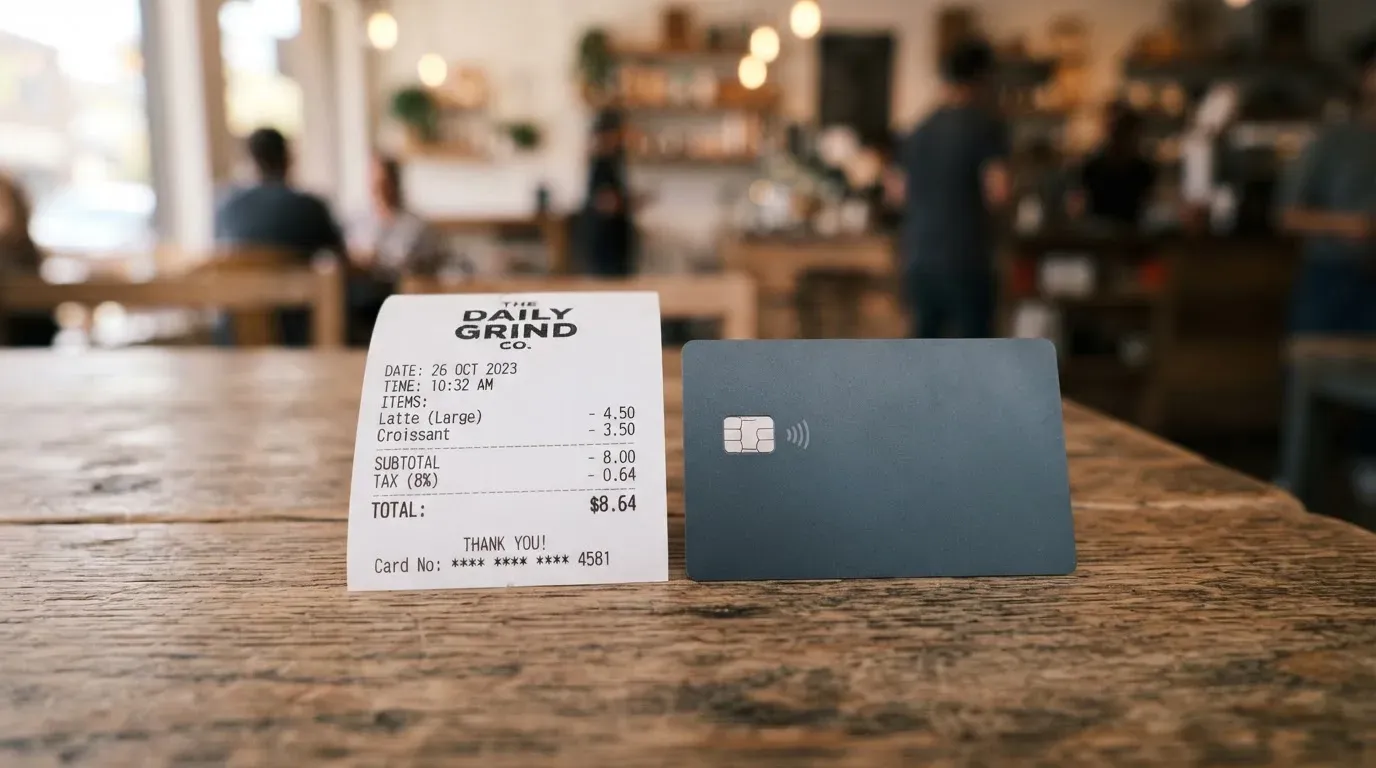
The line to read carefully is the 0.5%. That is the Encrypto conversion fee, and it applies when you spend a non-USDC asset: the card converts at checkout. If your balance is in USDC, it does not apply. There is also a DEX swap fee charged at the market rate, typically 0.01–0.3%, on the same kind of transaction. Someone spending ETH directly will pay both, and someone spending USDC pays neither.
| Fee or limit | What it is |
|---|---|
| Virtual card issuance | Free, instant |
| Physical card | $5.00 one-time |
| Monthly maintenance | Free |
| Conversion | 0.5% on non-USDC assets at point of sale |
| DEX swap | Market rate, typically 0.01–0.3% |
| Spending USDC directly | No conversion fee |
| Domestic purchases | Free |
| International purchases | Visa FX rate, no Encrypto markup |
| ATM withdrawals | “Coming soon”, fee not stated |
| Daily spend limit | $10,000 |
| Overdraft | None; the purchase declines if the balance is insufficient |
| Card currency | USD, settled from the USDC balance, FX conversion automatic |
Three everyday payments, to make this concrete.
Paying for a coffee with USDC. You tap and the shop charges you in the local currency. The network converts at the Visa rate, Encrypto adds no markup, and because the underlying balance is USDC there is no conversion fee either. What you pay is the purchase price plus whatever your own bank charges you on a foreign purchase, if you were using a different card. On this card, the cost is essentially the exchange rate and nothing else.
A $60 subscription, paying with a non-USDC balance. Here the 0.5% conversion fee appears, plus the DEX swap fee at the market rate. If you hold, say, a token that needs swapping, you are paying for two things at once. The obvious discipline: keep the balance you actually spend from in USDC, and treat other assets as something you convert deliberately rather than at the till.
A $3,500 purchase, split around the daily limit. The daily spend limit is $10,000, so this clears in one go. But notice the second thing the card does not have: overdraft. If the balance is short, the authorisation simply declines. There is no negative balance to absorb the shock, which is genuinely protective, and also means a pending charge from a merchant who does an authorisation hold can leave you short at the till a day later. Declined authorisations can also leave a hold on funds that can remain for several days, typically up to 7.
Two things the pages do not cover. There are no published tiers, and ATM fees are not stated because ATMs are not available yet. I did find a mention of a “Black Tier” with collateral that can waive certain transaction fees, but that comes from a third-party site, not from Encrypto, and no threshold is published — treat it as unconfirmed.
Top up: nine chains, and two ways in
This is where the card is at its best. The wallet is self-custody and runs on 9 blockchains: Ethereum, Base, Arbitrum, Optimism, Polygon, Avalanche, Solana, Stellar and Tron. Spending draws directly on the on-chain USDC balance, and other crypto is converted at the point of sale rather than requiring you to swap first. In practice that means your funds sit where you put them and the card reads from there.
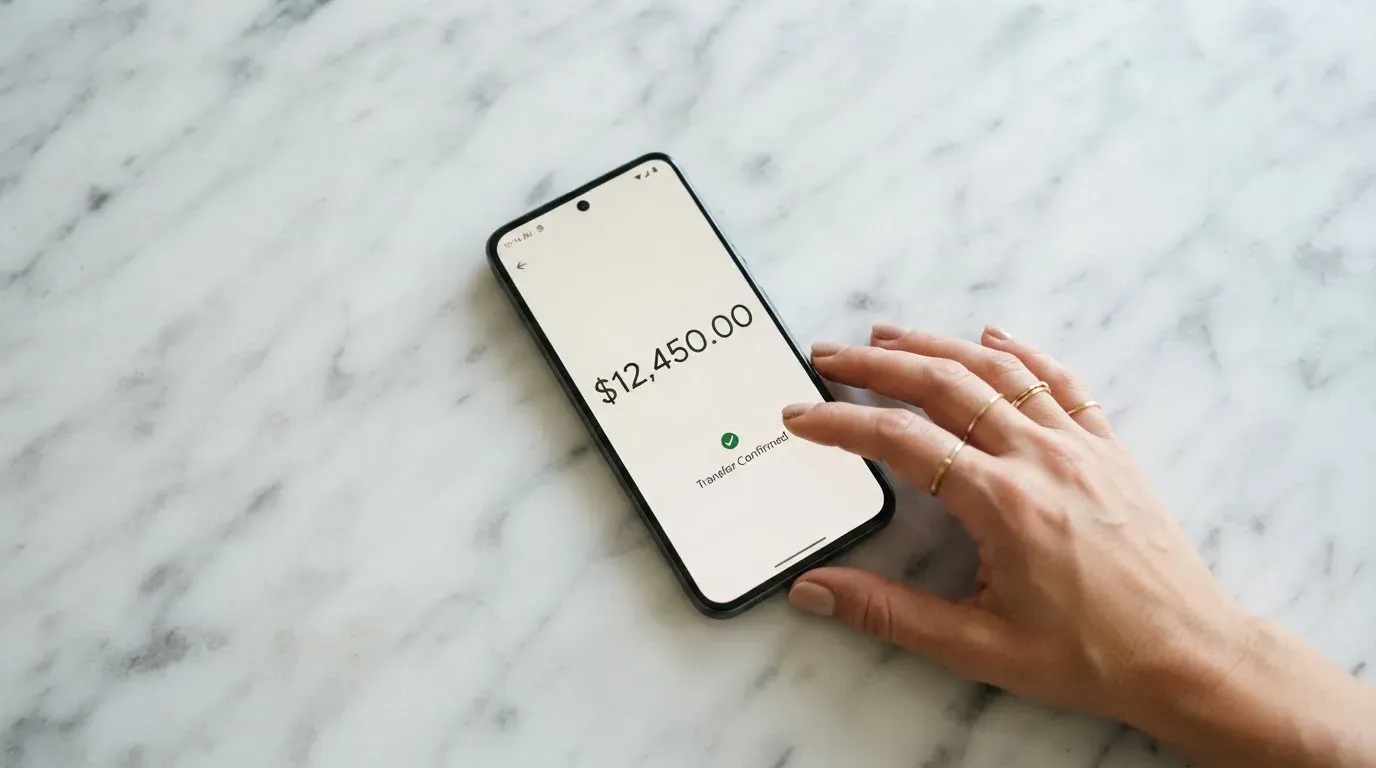
Getting money in is free in the ways that matter. Sending or receiving USDC on-chain costs nothing from Encrypto’s side; cross-chain transfers cost only the network gas. The ACH on-ramp is free and takes 1–3 business days, with same-day ACH at $1.00 where it is available. PIX in Brazil and SPEI in Mexico are free. A minimum top-up is not stated.
The gas point deserves emphasis, because it is the one cost people forget. Network fees for a deposit are charged by the blockchain, not by the card provider — you pay for using Ethereum or Tron, not for using Encrypto. That also means a network with expensive fees is an expensive network to top up from, however good the card experience is. And the classic self-custody trap applies: send on a network the provider does not support, or to an address belonging to another network, and the money can be gone or need manual support recovery with no guarantee. Blockchain transfers are irreversible. Double-check the network before you press send, every time.
Getting money back out is narrower than getting in. The bank off-ramp is ACH in the US, free, 1–3 business days; PIX in Brazil; SPEI in Mexico; and CVU in Argentina, rolling out. Colombia and Europe are not available or not listed. What happens to a balance if you close the account is not stated — and that is worth asking about before you deposit anything you would be annoyed to lose, because the answer is not on the page.
One more background point that catches people: Tron is on the wallet’s list, but Circle stopped supporting USDC on Tron in February 2024, so “USDC over TRC20” is not a native option. Tron remains a chain for tokens like USDT. If you were planning to route everything through the cheapest chain you know, check which token is actually native there first.
Paying with it every day
The virtual card is available immediately and Apple Pay works, so the phone-in-hand routine is covered. Google Pay is listed as “coming soon,” which is the gap that will be felt most: for anyone who has moved their wallet to Android, there is a period where physical card use is the fallback. Blocked merchant categories are not stated, and since gambling is one of the categories issuers commonly restrict, that is a question worth raising rather than assuming.
Rewards are the other silence. No cashback is stated on the official pages. A third-party source reports that Encrypto Points are earned on purchases in early access with no cash value stated — again, unofficial, and not something to build a spending decision on. What I would say is this: the economics of the card are strong on fees and flat on rewards, so treat it as a fee-saving tool rather than a rewards card. If you were hoping for a cashback rate to offset your spending, that case is not made here.
The app is a web app at app.encrypto.fun. App Store and Google Play listings and their ratings were not found, which means you cannot read other people’s one-star reviews before committing — worth knowing given that the physical card ships to an address. Support is via X, at @encryptodotfun. Dispute handling is not stated, and in this category that is not a trivial omission: a chargeback is a refund ordered by the card issuer, and US debit card reversal rights come from Regulation E while prepaid-card coverage varies and should not be assumed. A card that spends a stablecoin balance sits closer to the prepaid end of that spectrum than the ordinary debit end.
There is one piece of good news from the news side: in October 2026 the product became available in Spanish as part of a LATAM expansion, and the most recent Encrypto update on that source’s page is dated 20 Oct 2026. If you read Spanish, the card is more usable than it was.
What can go wrong
No official incidents came up in my checks. No Trustpilot page for Encrypto exists that I could find. What I did find is a single user report, dated Sep 2026, about a refund notification that never appeared in the card or the wallet — unresolved as of that page. One report is not a pattern, but it is also the entire complaint record, which means you have no history to calibrate against. Treat it as thin evidence in both directions.
The structural risks are the ones the complaint record cannot show you.
Self-custody means you carry the key risk. Control of crypto belongs to whoever holds the private key or seed phrase — typically 12 to 24 words in an unencrypted form that anyone who obtains it can use to restore the wallet and spend everything in it. Encrypto’s arrangement is a managed key custody setup through Privy, with social login and wallet recovery without a seed phrase. The company’s position is explicit: it cannot access or move user funds, and at no time will it receive, control or hold them. That is the correct answer for this category, and it is not the same as zero risk — you now own key-loss risk, phishing risk and clipboard-hijacking malware that swaps copied deposit addresses. Transfers are typically irreversible; a stolen private key has no recovery, because the network cannot freeze or return funds.
The history of custodians is the counterweight. Mt. Gox (about US$350 million reported stolen 2011–2014), Coincheck (about US$400 million, 2018) and Ronin Network (US$625 million, 2022) are the reference points for why self-custody matters. But note the other side of that coin: on-chain balances carry no FDIC insurance. You have moved risk away from a custodian and onto yourself, which is a trade, not a free win.
The issuer can disappear. Visa and Mastercard do not issue crypto cards to consumers themselves; they license issuers and can suspend a programme. Visa terminated its global agreements with FTX on 13 November 2022 and the FTX US debit card was wound down by its issuer. WaveCrest, a Visa issuer that supplied several crypto card brands, was suspended by Visa in Europe in 2018, closing all its Visa programmes. The pattern is usually orderly — a notice period, then spending and loading stop, then an instruction to withdraw — and a 2026 closure reported by a secondary source stopped new loads on 8 July 2026 and spending on 8 August 2026; that one is a single unconfirmed source, so treat the dates as indicative rather than established. The lesson is that a card is not a permanent instrument, and your balance should not be treated as one.
The card can look foreign. A card number starts with a 6- or 8-digit issuer identification number that merchants can look up to see which institution and country issued it, and shops may apply extra scrutiny when the issuer country differs from the billing address. Address Verification Service compares the numeric parts of the billing address you type with issuer records; it is mainly offered in the US, Canada and the UK and is generally unavailable for foreign-issued cards, which can cause declines. Some merchants decline prepaid or foreign BINs outright. This is a normal friction for any crypto card and it improves over time as you build transaction history, but expect it in the first weeks.
Two-factor and freeze are unstated. Whether Encrypto offers app-based 2FA or an instant card freeze is not stated on the public pages. Both are standard safeguards in this category and their absence from a page is weak evidence of absence — but until you see them in the app, do not assume you can lock a lost card instantly.
Stablecoins are not what their name promises. They aim to hold a stable value against a fiat currency, but as the BIS put it in July 2025, about 90% of stablecoin market capitalisation sits in Tether’s USDT and Circle’s USDC, and despite the name they are not necessarily stable. USDC lost its peg temporarily in March 2023 during the US banking crisis; TerraUSD collapsed outright in May 2022. Circle says USDC is redeemable 1:1 for USD and 100% backed by cash and cash equivalents with monthly reserve attestations, and lists it as natively supported on 38 networks as of 16 September 2026. If your card balance is effectively short USDC, your card experience is effectively a dollar experience — including all of that dollar’s risk.
Taxes are yours. The IRS treats digital assets as property, so exchanging them for goods, services or dollars generally produces a taxable gain or loss, measured in local fiat currency at fair market value on the transaction date. For personal holdings that is a capital gain or loss, short-term if held a year or less. Every card payment funded from crypto can be a separate disposal. I am not giving tax advice here — I am flagging that a card makes many small disposals, and you should take your own advice on your own situation.
What to take instead
Three alternatives came up, and none of them is a clean win. Each trades something away.
TokenPocket (5.8 / 10). A Visa debit for a list of European countries and territories such as Germany, France, Spain and Switzerland, with Mastercard debit for Australia, Canada, Hong Kong, Japan, Taiwan, New Zealand, Singapore, South Korea and the UK, among others; the Americas were planned for Q2 2025. It runs on Arbitrum and uses Fiat24 cards, which are virtual — no physical card mentioned — with balances in EUR24 and USD24. Cost-wise, NFT creation is partly covered by TokenPocket and you pay “a small portion,” with no other stated fees. But a 1% fee is charged when depositing cryptocurrency into the card, to be refunded later via rewards or reduced transaction fees. The exchange rate fee is not stated, and extra fees can come from inter-institution settlement. If you want no annual cost and a virtual card in Europe, it is comparable; if you want to spend USDC directly, the 1% deposit fee is a real drag.
MetaMask (7.1 / 10). Sign-up is open in 45 listed countries and territories — Andorra, Argentina, Brazil, Canada, Mexico, Germany, France, Spain, Uruguay among them — with other regions on a waitlist and proof of residency required. The rule is sensible: ineligible regions limit sign-ups, not spending. Citizenship rules are not stated, and US and UK sign-ups are temporarily closed per the FAQ. The card is Mastercard; virtual first and instant, metal pre-orderable in app after virtual approval, one card per user, issuer Monovate, card provider Crypto Life. Virtual is free with no annual or maintenance fee; metal is $199/year. Fees are described as “minimal” per transaction, with no additional MetaMask fees and no foreign transaction fee, Mastercard rate used — the amount itself is not on the pages I read. It spends directly from the connected wallet on Linea, Base, Monad and Solana, with mUSD, wETH, EURe, GBPe, USDC and USDT named. And it pays cashback in mUSD: 1% on Virtual, 3% headline on Metal (footnote limits 3% to the first $10,000 spent, then 1%), plus a $FLY bonus via a dining app. This is the strongest rewards proposition here, and the $199 metal price is the reason Encrypto’s numbers look better on cost.
KAST (6.1 / 10). The most transparent on eligibility, and the most expensive. Residence is checked at KYC — if your country isn’t listed it isn’t available — and citizenship is checked separately: “If you currently live in a supported country but only hold an ID from a restricted region, you may still be ineligible to pass KYC,” dual citizens with an ID from a supported country may pass, only the account holder’s own ID is accepted, and a VPN does not bypass it. That is unusually clear, and it is a template for what Encrypto’s “determined during signup” leaves vague. Costs: Standard 0 USD/year, Premium 1,000 USD/year, Private 10,000 USD/year, billed annually upfront with no monthly option; extra virtual card 2 USD; Standard physical 0 USD card fee plus 40 USD delivery; 1 USD/month inactivity fee after 12 months. Fees: stablecoin top-up 0%, card spend 0%, transaction fee 0%, Apple/Google Pay 0%; non-USD FX 0.5%–1.75% depending on your country, the transaction country and the card programme; non-USD transactions under 25 USD cost 0.10 USD; a declined transaction for insufficient balance costs 0.50 USD. Cashback is USD: 1.5% on the first 2,000 USD/month at Standard, 2% on the first 10,000 at Premium, 3% on the first 40,000 at Private. If your spending is international and small-ticket, KAST’s per-transaction and FX fees will tell you quickly whether it suits.
| Encrypto | TokenPocket | MetaMask | KAST | |
|---|---|---|---|---|
| Score | 7.9 / 10 | 5.8 / 10 | 7.1 / 10 | 6.1 / 10 |
| Network | Visa | Visa (Europe), Mastercard (Asia-Pacific, others) | Mastercard | Visa |
| Free tier cost | Virtual free, physical $5.00 | NFT creation partly covered, plus 1% crypto deposit fee | Virtual free | Standard 0 USD/year |
| Top-up fee | Network gas only | 1% on crypto deposit | Not stated | Stablecoin top-up 0% |
| Rewards | None stated on official pages | Deposit fee refunded later via rewards | 1% Virtual, up to 3% Metal, in mUSD | 1.5% / 2% / 3% USD by tier |
| Main catch | Invite-only; no cash machines yet | No physical card mentioned; Americas planned | $199/year for metal; US/UK sign-ups closed | Premium 1,000 USD/year; FX 0.5%–1.75% |
Who I would recommend it to
I would recommend Encrypto to someone already holding USDC on a chain, spending most of it, and tired of conversion charges. That person gets a free virtual card, no monthly fee, a 0.5% charge only when spending something that is not USDC, and the Visa exchange rate with no markup abroad. Add Apple Pay and nine supported networks, and the card does its job without asking anything clever of you.
I would not recommend it as a first card, or as a card to depend on for cash. The invitation gate means you cannot simply open it, the physical card costs $5.00, there is no cash machine network yet, Google Pay is not live, and no cashback is published. If you need to walk up to an ATM tomorrow or want rewards on your spending, this is the wrong instrument today.
And if your reason for wanting this card is that ordinary banking is difficult — that is the situation this review is written for — then the parts to check before you move real money are narrow and specific. Does your citizenship pass the issuer’s screening, which nobody publishes? Does your network appear on the supported list for the token you hold, given that USDC is not native on Tron? Is the off-ramp available in your country, since Colombia and Europe are not listed for withdrawals? What happens to a balance at closure, which is not stated? Those four answers decide more than the fee table does.
Frequently asked questions
What is the Encrypto card?
Encrypto is a Visa debit card linked to a self-custody crypto wallet rather than a bank account. You keep control of your keys, the balance settles from USDC, and the card works wherever Visa is accepted. A virtual card is issued instantly and a physical one ships to your address. The card itself is issued by Lead Bank under a licence from Visa U.S.A. Inc.
How does the Encrypto card work?
Spending draws on your on-chain USDC balance, and the card settles in USD. Paying with a non-USDC asset triggers a conversion at the point of sale for a 0.5% fee, plus a DEX swap fee at the market rate. Spending USDC directly has no conversion fee. The daily spend limit is $10,000 and there is no overdraft — a purchase declines if the balance is short.
Is Encrypto a bank?
No. Encrypto Inc. is a crypto company, not a bank. The Visa debit card is issued by Lead Bank under a licence from Visa U.S.A. Inc., and money transmission is handled by Bridge Building Inc. and Lead Bank. Wallet key custody is with Privy. Encrypto’s own registration place is not stated on its public pages.
Who owns Encrypto?
Encrypto is operated by Encrypto Inc. The banking and payments pieces sit with partners: Lead Bank as the card issuer, Bridge Building Inc. for money transmission, and Privy for wallet key custody. Support runs through X at @encryptodotfun, and the app is a web app at app.encrypto.fun.
Which countries can get the card?
The card’s public pages name the United States, Brazil, Mexico, Argentina, Colombia and Europe. Availability is described as determined during signup based on your region, and Colombia is listed as rolling out or coming soon. The wallet is described as available globally, which is a separate point from card availability. No excluded countries are named.
How do I get an Encrypto card, and how long does it take?
Access is by invitation. You verify with an X account, then complete identity verification handled by Bridge, a Stripe company, and activation is instant once that is approved. The virtual card is usable immediately; the physical card ships to your address. Which documents, proof of address or age requirements apply, and any KYC levels, are not stated.
Does Encrypto require KYC?
Yes. Identity verification is part of the process, handled by Bridge. The public pages do not state which documents are accepted, whether proof of address is required, or whether verification is tiered. Expect an automated check against a government identity document, and allow more time than the instant activation suggests if your address or name has changed recently.
What does it cost to use the Encrypto card?
The virtual card is free and the physical card is $5.00 one-time, with no monthly maintenance. Spending USDC directly carries no conversion fee. A 0.5% conversion fee applies to non-USDC assets at the point of sale, alongside a DEX swap fee at the market rate, typically 0.01–0.3%. International purchases use the Visa FX rate with no Encrypto markup.
How do I top up, and how do I withdraw?
You send USDC on-chain to your wallet across 9 blockchains — Ethereum, Base, Arbitrum, Optimism, Polygon, Avalanche, Solana, Stellar and Tron — free, with cross-chain transfers costing network gas only. The ACH on-ramp is free in 1–3 business days, same-day ACH is $1.00 where available, and PIX (Brazil) and SPEI (Mexico) are free. Withdrawals go out by ACH in the US, PIX, SPEI and CVU in Argentina (rolling out); Colombia and Europe are not available or not listed.
Is Encrypto card safe?
There is no FDIC insurance on an on-chain balance, and you carry key-loss and phishing risk because the wallet is self-custody through managed key custody by Privy — Encrypto states it cannot access or move your funds, and you never hand it custody. There is almost no public complaint history: no Trustpilot page and one user report from Sep 2026 about a refund that never appeared. Whether 2FA and an instant card freeze exist is not stated, so check in the app.
Wallet card verdicts – cryptocardverdict
Content created by the «cryptocardverdict» team