
A self-custody stablecoin card for people who can't get a normal bank account
 Available in US
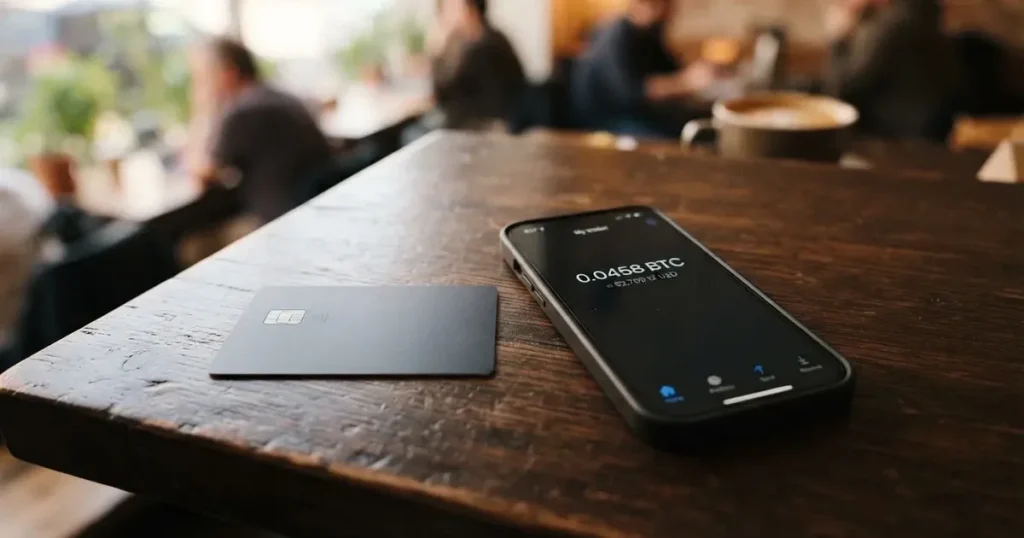
If you live somewhere a regular bank has decided not to like you, or you simply want a card that draws from a crypto balance you actually control, the Morse card is one of the more interesting options on the market. It is a fully virtual Visa debit card that spends from a self-custodial crypto wallet, and it markets itself on a very specific promise: zero foreign-exchange markup, free card payments, and a wallet where you, not the provider, hold the keys. Whether that promise holds up in daily use is what this review is about.
The conditions below are current as of October 28, 2026.
Verdict: 7.5 out of 10
Morse does one thing unusually well: it lets you take a stablecoin balance and spend it anywhere Visa is taken, in any currency, without an FX markup on top of the Visa rate. That single feature is genuinely useful for anyone travelling, working remotely, or paying overseas suppliers. Around that core, the card is virtual only, has no ATM access, and publishes almost no numbers for its own fees, which is why the score is solid rather than excellent.
| Criterion | Mark | Why |
|---|---|---|
| Who can get it | 7 / 10 | The app works in 140+ countries, with local add/withdraw in 70+; the card itself is only available in a subset and the list lives inside the app. Sanctioned countries are closed. |
| Cost | 8 / 10 | Conversion is at the real rate with no markup, card payments are free, and there is no foreign-exchange fee. Issuance and monthly fees are not disclosed publicly. |
| Top-up options | 8 / 10 | USDC, USDG and EURC on Solana are free to deposit; Bitcoin, USDT, Ethereum and many other tokens are accepted. The wallet is self-custodial, so you keep your keys. |
| Reliability and complaints | 8 / 10 | The card is issued by Lead Bank, a US bank, and the platform is Avian Labs, an AFM-authorised crypto-asset service provider in the Netherlands under MiCAR. No public incidents or reviews found. |
| Everyday use | 6 / 10 | Apple Pay and Google Pay work. The card is virtual only, so anything that demands a physical swipe or insert is out, and ATM withdrawals are not supported. |
| Total | 7.5 / 10 | A specialist card for spending stablecoins abroad, with a real rate and no FX fee, but limited to virtual use. |
The card is built for a fairly specific reader: someone who already holds stablecoins (or is comfortable buying them) and wants a way to spend that balance in the real world without paying an FX premium every time the currency switches. If that is you, the value proposition is real. If you mostly want a free daily debit card, a cashback card, or a way to get cash from an ATM, you are not the audience.
Will they give you the card
Whether Morse will issue you a card depends on where you live, not where you were born. The card’s own terms are framed around residence: you must be at least 18 years old and “a resident in a supported country”. The app itself is broader than the card — it is available in over 140 countries, with local add and withdraw in more than 70 of them — but the card is “available only in certain countries”, and the full list is not published on the public pages. You see the answer once you install the app and try to add the card to your account.
Morse is also explicit about who it cannot serve. The card “cannot serve customers subject to sanctions issued by the United States”, and the same wording covers the UK, EU and UN sanctions lists in practice. There is also a list of countries that are in a closed beta and need an invite code rather than a public sign-up: American Samoa, Australia, Cape Verde, Guernsey, Hong Kong SAR China, Isle of Man, Japan, Jersey, New Zealand, Serbia, Singapore, Switzerland, Thailand, Türkiye, the United Kingdom and Western Sahara. If you live in one of those, you can still install the app, but you cannot finish the card application without an invite.
A practical point that often surprises people: residency rules and sanctions rules are different things, and they overlap with country-of-birth screening in ways the public pages do not spell out. A US bank sits behind the card programme, and US banks are obliged to screen against the Office of Foreign Assets Control list regardless of where the customer actually lives. If your citizenship or country of birth puts you on a screening flag, the application can stall even when your address is in a perfectly open country. That is the policy of the underlying bank, not a Morse choice, and it is worth knowing before you install the app.
How to get it
The sign-up flow is short and entirely in-app. You install the Morse app, create an account, verify your identity, fund your Morse balance, and add the virtual card to the wallet of your choice. There is no web sign-up and no branch to visit, because the card itself does not exist as a piece of plastic: “Morse Card is fully virtual for now”, and the Visa it links to is a prepaid debit card that draws from your Morse Balance “in any currency”.
Identity verification uses the standard pieces. You will be asked for your name, phone number, date of birth and residential address, plus a selfie and a photo of a government-issued photo ID. The exact documents “vary by country”, and the card page does not promise a proof of address — for example a utility bill — though larger deposits can trigger an additional compliance review. There is no published tiered KYC; the help centre describes a single identity check rather than a stepped system of higher and higher limits.
What this means in practice is that, in most supported countries, the entire process can be done in one sitting on a phone. The bottleneck is rarely the form — it is the country check. If your address is in a supported jurisdiction and your ID is clean, you are typically looking at minutes, not days, before the card appears inside the app ready to be added to Apple Pay or Google Pay. If either of those conditions is not met, the application can sit in review or be refused outright, and the public pages do not promise a specific turnaround.
There is no physical card to wait for and no courier to chase. The “delivery” step of a normal card application simply does not apply here, which is one of the quietly attractive features of the product if you are used to waiting a week for a bank to mail you a piece of plastic.
What it really costs: Fees
The honest answer to “what does Morse cost” is in two parts. The published numbers are good. The unpublished ones are an asterisk.

What the card page is clear about: conversions inside Morse use the real exchange rate “with no markup”; “Paying with the Morse Card, online and contactless, is free”; and “Zero foreign exchange fees or markups” apply, with the rate coming from Visa in real time. There is no FX surcharge on top of the network rate, no payment fee, and no fee for paying in a currency different from the one you funded.
What the card page is not clear about: the one-off issuance fee and the monthly maintenance fee. The relevant line on the site is “Fees may apply. See Cardholder Agreement”, with the actual numbers living in the agreement you only see after you sign up. That is a real gap, because it means the headline cost of the card is unknowable before you commit. For most readers that will not be a deal-breaker — the card is free to add to Apple Pay, and the everyday fees (FX, conversion, payment) are zero — but for anyone who needs the full picture up front, this is the place Morse is weakest.
Costs at a glance
| Item | Cost |
|---|---|
| Issuance | Not stated publicly (“Fees may apply”) |
| Monthly fee | Not stated publicly (“Fees may apply”) |
| Currency conversion | No markup (real rate) |
| Foreign exchange fee | None |
| Card payment (online or contactless) | Free |
| ATM withdrawal | Not supported |
| Card daily spending limit | US$2,000 for the first 30 days, then US$5,000 per day |
| Money-transfer services weekly cap | US$500 |
| Weekly / monthly deposit and withdrawal limits | Shown in the app, amounts not published |
What a few everyday payments actually cost
A coffee in a different currency. You hand over the card, the merchant’s terminal converts the local price to a currency Morse understands, and Visa’s rate is used. The payment itself is free. The only “cost” is that the crypto in your wallet is converted at the moment of payment, and that conversion is at the real rate with no extra layer added by Morse. If the crypto you are holding is itself a stablecoin pegged to the dollar, the price impact is essentially the network’s exchange rate plus whatever slippage you took when you bought the stablecoin.
A hotel booking in a third currency. Same as above, but on a larger number. The card’s daily spending limit is the relevant cap here: US$2,000 per day for the first 30 days after you add the card, rising automatically to US$5,000 per day after that. A multi-night stay that pushes past US$2,000 will be declined if you try to charge it on day one, and a deposit plus the final balance can run into the same wall. The cap moves up by itself, but not on demand.
A subscription or recurring online payment. Free to pay, and the app shows a notification as soon as the authorisation hits. The catch is that recurring payments count towards the same daily limit, and if the merchant retries because of a soft decline, several holds can stack up on the same day. Hold behaviour is a feature of the wider card network, not a Morse choice, but it is worth knowing if you have a tight limit and several subscriptions renew on the same date.
How to top it up: Top up
Topping up is where Morse feels most different from a normal prepaid card, because the wallet you are topping up is self-custodial. You hold the private key; the app is the front-end. That has real consequences: if you lose your seed phrase, the company cannot recover your balance. It also has real advantages: you are not relying on the provider to keep your funds safe, and the same wallet works with the rest of the crypto ecosystem.
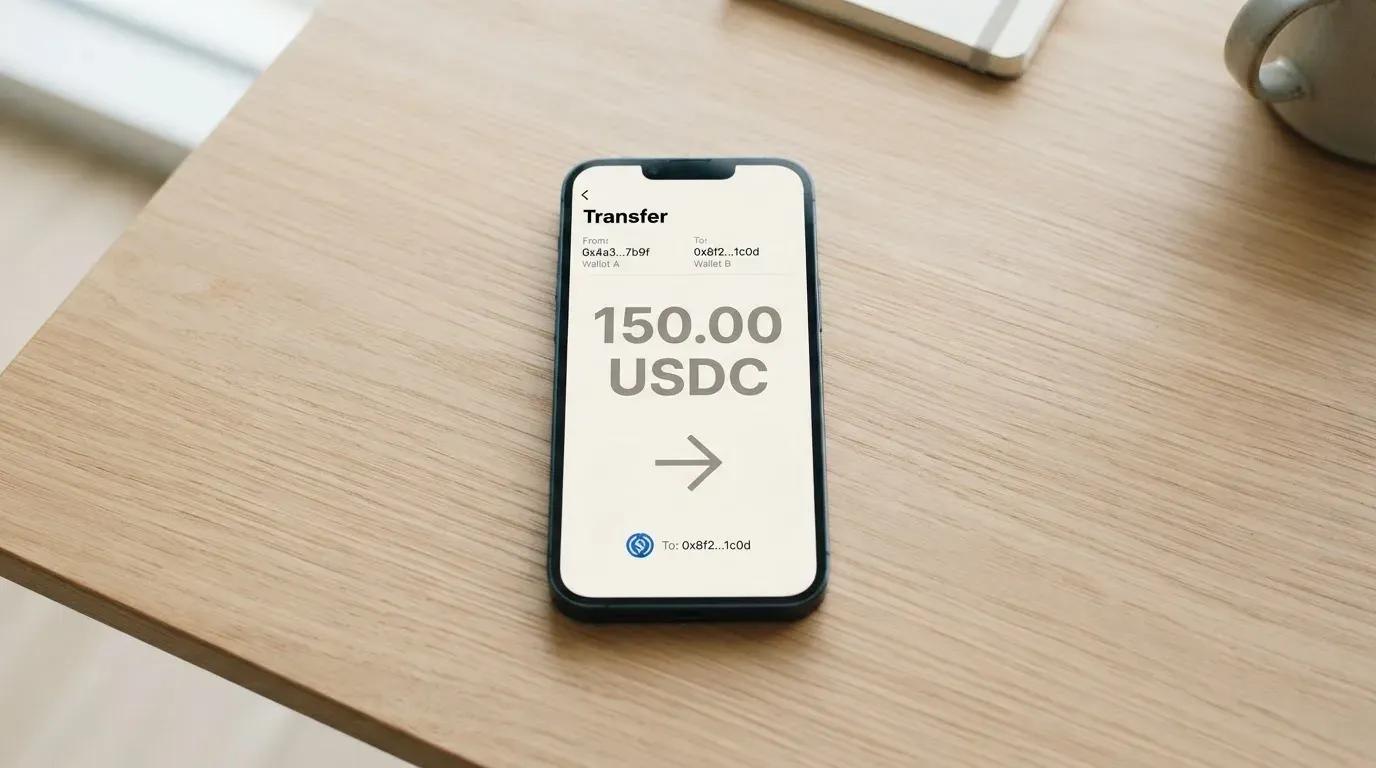
The funding options split into three groups:
- Stablecoins on Solana. USDC, USDG and EURC deposited via the Solana network are free on Morse’s side. This is the cheapest, fastest path the card supports, and it is what the rest of the system is built around.
- Other crypto. Bitcoin, USDT, Ethereum and a wide range of other tokens can be deposited. Other tokens or other blockchains carry a fee, and the blockchain itself charges its own network fee on top, which is paid to the network, not to Morse. The app shows the fee before you confirm.
- Fiat rails. You can deposit by debit card, by local bank transfer using the Account Details shown in the app, or by mobile money in supported countries. The app supports USD, EUR, MXN, COP and BRL accounts; BRL requires a Brazilian CPF. Domestic deposits are free in most countries; international deposits via linked bank, card or mobile money cost US$0.50 flat after the first three transactions, and international deposits into Account Details cost 0.1%. Network fees from the blockchain are charged separately.
The minimum top-up is not stated in the public pages. What is stated is that the app shows any fee before you confirm a deposit, which is the right place to find out.
A practical note on networks. Morse supports USDC on Solana for free, and Circle has dropped USDC on Tron, so sending USDC over TRC20 is not a native option. If you have USDT on a chain Morse does not support and you send it to a deposit address of a different chain, the funds can be lost, because blockchain transfers are irreversible and there is no guarantee the support team can recover them. Always check the chain the app shows you before you send.
On the way out, the pattern is similar. You can withdraw to a bank account, a debit card or a stablecoin transfer. Domestic withdrawals are free in most countries, and USDC, USDG or EURC back out over Solana is free. International withdrawals and other tokens or chains carry a fee. If you decide to close the account, you must withdraw your balance first; closure is permanent, and what happens to any unwithdrawn balance is not stated.
Paying with it every day
Day to day, the card behaves like a prepaid Visa that you cannot overdraw. You tap to pay, insert a virtual card into a wallet, or type the number into a checkout. The app pushes an instant notification for every authorisation, and you can lock and unlock the card from the same screen.
Apple Pay and Google Pay are both supported, which matters more than it sounds. A virtual card is useless in a shop that only takes a physical tap or swipe, but a tokenised version inside Apple Pay or Google Pay works at any contactless terminal and at any online checkout that accepts the wallet. Because the token is a device-specific number held in the phone’s Secure Element, the actual card number is never shared with the merchant, and a stolen phone does not expose the PAN. The card issuer can also constrain a tokenised number — for example, blocking it on websites while keeping it live in the wallet — and Morse publishes the relevant controls in the app.
What is missing is mostly physical. The card is virtual only, so a restaurant that insists on a physical card handed over for a manual imprint, or a hotel that wants to physically swipe at check-in, is a hard stop. There is no ATM access at all: “Morse Card does not currently support ATM withdrawals”. Anything you would normally get cash for — a small market stall, a cash tip, splitting a bill — needs another solution.
Two smaller things are worth knowing:
- Blocked merchant categories. The card pages do not publish a list of MCCs that are blocked, which is normal for the category but unhelpful if you specifically need, say, gambling or crypto purchases to work.
- Rewards. The card pages do not state a cashback or points programme. The help centre has an “Earn rewards” collection that was not read for this review, so the absence here is “not stated on the card pages”, not a confirmed no.
App quality is harder to pin down. The store rating was not obtained directly; a third-party snapshot dated 2026-10-21 lists 4.5 stars from 400 reviews on the App Store under the old name Sling Money, which is unofficial and undated. The app is available on both iOS and Android, and the company rebranded from Sling Money to Morse at some point in the recent past, so any older review you read is likely about the previous product.
Support is reachable in three ways: an in-app chat (profile > Support > Chat), email, and what the card describes as AI support “24/7/365” plus human chat. The exact hours of the human team are not published. The help centre also has a “Make a complaint” article, which suggests there is a formal complaints process, but the article itself was not read for this review.
What can go wrong
Every payment card has failure modes, and crypto cards have a few of their own. The honest list, in rough order of likelihood:
- You fall outside the supported country. The card only works in jurisdictions the issuer is happy with, and the issuer is a US bank. Even if your address is in an open country, your country of birth or citizenship can trigger a sanctions screen, and the application can stall or be refused without a published reason. The card page is explicit that the country list is “available only in certain countries” and that you find out which by checking the app.
- You lose your seed phrase. The wallet is self-custodial and the private key is exportable. That is the point of the product, but it is also the cost: there is no “forgot password” link that gets your money back. Cryptocurrency transfers are irreversible, and a stolen private key has no built-in recovery, so the network cannot freeze or return the funds.
- You send a deposit on the wrong network. Sending USDC on a chain the app does not list, or to an address of another chain, can lose the funds. Recovery from support is not guaranteed, and the standard advice is to send a small test transaction first.
- A stablecoin depegs. USDC and USDG are designed to hold their value against fiat, but the name is a marketing line, not a guarantee. USDC briefly lost its peg in March 2023 during the US banking crisis, and the older TerraUSD collapse in May 2022 is the cautionary tale. The card spends whatever the wallet holds at the moment of payment, so the price risk sits with you.
- The card programme is shut down. Card programmes can be terminated by the network. Visa publicly ended its global agreement with FTX in November 2022, and the FTX US debit card was wound down by its issuer. The WaveCrest shutdown in 2018 closed a number of crypto card programmes in Europe overnight. Morse is currently in good standing, but no card programme is permanent, and the practical pattern is that users get a notice period, then loading stops, then spending stops, and you are asked to withdraw the remaining balance.
- A merchant decline leaves a hold. A declined authorisation is not the same as a cancelled transaction. The hold can sit on the available balance for several days, and several soft declines on the same day stack up. For a card with a published daily cap, that is a real constraint, not a hypothetical.
- Disputes. The card pages do not state a dispute or chargeback process. A chargeback is a refund the issuer orders on a payment, and the rules around prepaid cards vary by jurisdiction. If a purchase goes wrong, the resolution path is whatever the help centre and the underlying bank’s policies allow, and that is not spelled out up front.
On the company side, Morse is built on a credible stack. The platform is Avian Labs, with Avian Labs, Inc. registered in Delaware as a US Money Services Business (NMLS ID 2639252, FinCEN MSB registration 31000315485256), and Avian Netherlands B.V. authorised by the Dutch Authority for the Financial Markets under MiCAR as a crypto-asset service provider (company registration 91273323, AFM registration 41000005). The card is issued by Lead Bank under a Visa U.S.A. Inc. licence, with Bridge Ventures LLC acting as programme manager. A US bank sits behind the card, and an AFM-authorised CASP sits behind the wallet, which is a more solid pair of counterparts than several alternatives in the category.
On the consumer side, there is not much to go on. A search for “Morse money card reviews trustpilot reddit” on 2026-10-21 turned up no reviews of this product — only unrelated companies sharing the name Morse. There were no official incidents in the search results. That is a thin evidence base to lean on, and the absence of complaints is not the same as a clean record; it is more accurate to say that the public review footprint of this specific product is small.
What to take instead
Morse is not the only virtual Visa in the category, and the honest way to choose between them is to look at the trade-offs rather than the marketing. Three alternatives cover most of the ground a reader would compare against.
| Card | Score | Card type | FX fee | Issuance / monthly | Rewards | Top-up |
|---|---|---|---|---|---|---|
| Morse | 7.5 | Virtual Visa | 0 | Not stated / Not stated | Not stated | USDC, USDG, EURC on Solana free; other tokens / chains fee; debit card, Account Details |
| International Visa Card | 6.7 | Virtual Visa (physical “coming soon”), pays in USD | 2% on non-USD | US$5 one-time / Classic free, Pro US$9, Max US$19 | None stated | USDC, USDT free at 1:1, plus USD, EUR, SEPA, SWIFT, FedNow |
| UNi Card | 6.1 | Mastercard (physical / virtual not stated) | No foreign exchange fee | “No annual fee” / “No annual fee” | Spend-to-Earn up to 3% | Not stated |
| Bitpanda | 6.5 | Physical Visa, EUR only | EUR 0 but “VISA mark-up fees apply” | First shipment free; reissue €5.90; additional card €10 | “1%” (or “up to 2%”) on crypto spending | Spends from chosen main asset (crypto, metals, EUR), auto-converts to EUR |
The trade-offs are sharp. International Visa Card publishes its full price list up front, accepts stablecoin deposits at 1:1, and offers a tiered plan structure, but it charges 2% on non-USD spending and is not available to residents of a long list of countries including Belarus, mainland China, Russia, Turkey, Ukraine and Vietnam. UNi Card is a multicurrency Mastercard with no annual fee and no foreign exchange fee, but its top-up path and residency rules are not stated in the same detail. Bitpanda is the most conventional of the three: a physical Visa debit card that auto-converts a chosen asset to euros at payment, available only to euro-area residents verified outside the Bankident flow, and with a published 1% (or up to 2%) cashback on crypto spending.
If the deciding factor for you is the FX rate, Morse and UNi Card are the honest choices; if it is published pricing and a known cost stack, International Visa Card wins; if it is a physical card and a real cashback number, Bitpanda is closer to a normal debit card. None of them does all of it, which is why the category exists in the first place.
Who I would recommend it to
The short version: if you already hold stablecoins and you want a way to spend them in the real world at the real exchange rate, Morse is one of the better tools on the market right now. If you want a primary everyday card, a cashback card, or any way to get cash from an ATM, look elsewhere.
The longer version. The card is best suited to a fairly specific reader:
- You live in a country that ordinary banks are uncomfortable with, or you move often enough that a domestic card is more friction than it is worth. The card works in 140+ countries for the app and a large subset for the card itself, and the FX behaviour does not change when you cross a border.
- You already hold crypto, or you are comfortable buying stablecoins on an exchange and sending them on-chain. The wallet is self-custodial, and the cheapest funding path — USDC, USDG or EURC on Solana — assumes you can move stablecoins around yourself.
- You do most of your spending online or through a mobile wallet. Apple Pay and Google Pay are supported, which is what makes the virtual-only design workable; the moment you need a physical card or cash, the product stops helping.
- You have a realistic daily spend that fits inside US$2,000 per day for the first month and US$5,000 per day after. If you regularly charge more than that to a single card, the cap will frustrate you, and there is no published upgrade path.
The card is a worse fit if any of the following are true:
- You are looking for published prices for issuance and monthly maintenance. The card page says “Fees may apply” and points to the Cardholder Agreement. That is a real gap, and a reader who needs the full number before signing up will not find it here.
- You need cash. ATM withdrawals are not supported, and the card is virtual, so the usual workarounds (a cashback transaction at a supermarket, a peer-to-peer transfer) are the only ways to get physical money, and the first one is at the mercy of merchant policy.
- You want a cashback or rewards programme. The card pages do not state one. The help centre has an “Earn rewards” collection that was not read for this review, but the absence of a number on the card page is not a confident “yes”.
- You are not comfortable holding your own keys. The wallet is self-custodial. If you lose your seed phrase, there is no recovery path, and the support team cannot help. For a reader who wants someone else to look after the security, a custodial alternative is the right choice.
- Your country is on the closed-beta or sanctions list. If you live in one of the 16 closed-beta countries or your residency puts you under US, UK, EU or UN sanctions, the card is not available to you, and there is no workaround the public pages describe.
Used inside those bounds, the card does its job well: zero FX markup, free payments, instant notifications, mobile wallet support, and a self-custodial wallet underneath. Used outside them, the limits of a virtual-only, no-ATM, not-fully-priced product become very visible very quickly.
Frequently asked questions
What is the Morse card?
The Morse card is a fully virtual Visa prepaid debit card that spends from a self-custodial crypto wallet called the Morse Wallet. It is issued by Lead Bank under a Visa U.S.A. Inc. licence, with the platform provided by Avian Labs, an AFM-authorised crypto-asset service provider in the Netherlands under MiCAR.
How does the Morse card work?
You install the app, verify your identity, fund your balance with stablecoins, other crypto or fiat, and add the virtual card to Apple Pay or Google Pay. When you pay, the wallet converts the crypto to the currency the merchant charges in at the real exchange rate, with no FX markup added by Morse.
Is Morse a bank?
No. Morse is not a bank. The card is issued by Lead Bank, a US bank, but the platform you interact with is operated by Avian Labs, which is registered as a US Money Services Business and authorised in the Netherlands by the AFM as a crypto-asset service provider under MiCAR.
Who owns Morse?
The platform is provided by Avian Labs, with Avian Labs, Inc. in Delaware and Avian Netherlands B.V. in the Netherlands. The card programme is run by Bridge Ventures LLC as programme manager, acting as an agent of Lead Bank, the issuing bank. The company rebranded from Sling Money to Morse at some point before this review.
Is the Morse card available in my country?
The app is available in over 140 countries, and local add/withdraw is supported in 70+ of them, but the card itself is only available in a subset of those. The full list is not published; you see it inside the app. Sixteen countries are currently in closed beta and need an invite code, including the UK, Switzerland, Singapore, Japan, Australia and New Zealand. Sanctioned countries are closed.
Does the Morse card require KYC?
Yes. You must be at least 18, be a resident in a supported country, and complete an identity check that typically asks for your name, phone number, date of birth, residential address, a selfie and a photo of a government-issued photo ID. The exact documents vary by country, and larger deposits can trigger an additional compliance review.
How do I top up the Morse card?
The cheapest path is USDC, USDG or EURC over the Solana network, which is free on Morse’s side. You can also deposit Bitcoin, USDT, Ethereum and other tokens (with a fee), or fund by debit card, local bank transfer via Account Details, or mobile money. The app shows any fee before you confirm.
Can I withdraw cash from a Morse card?
No. Morse Card does not currently support ATM withdrawals, and because the card is virtual only, you cannot insert it into an ATM. Cash-equivalent workarounds (cashback at a merchant, peer-to-peer transfer to someone with a bank account) are not a card feature and depend on the merchant or the other person.
How do I add the Morse card to Apple Wallet or Google Pay?
Inside the Morse app, open the card view and choose Add to Apple Wallet or Add to Google Pay. The tokenised card appears in your phone’s wallet and works at any contactless terminal and at any online checkout that accepts the wallet. The actual card number is not stored on Apple’s or Google’s servers.
Is the Morse card safe?
The card is issued by a US-regulated bank, the platform is AFM-authorised under MiCAR, and the wallet is self-custodial, so you hold the private key. The card supports lock/unlock in the app, instant transaction notifications and 24/7 fraud monitoring. The trade-off is that you bear the responsibility for the seed phrase, and a lost phrase cannot be recovered by the company.
App and neobank card verdicts – cryptocardverdict
Content created by the «cryptocardverdict» team