
A cheap Visa card with one serious asterisk: nobody will tell you who issues it
 Available in US
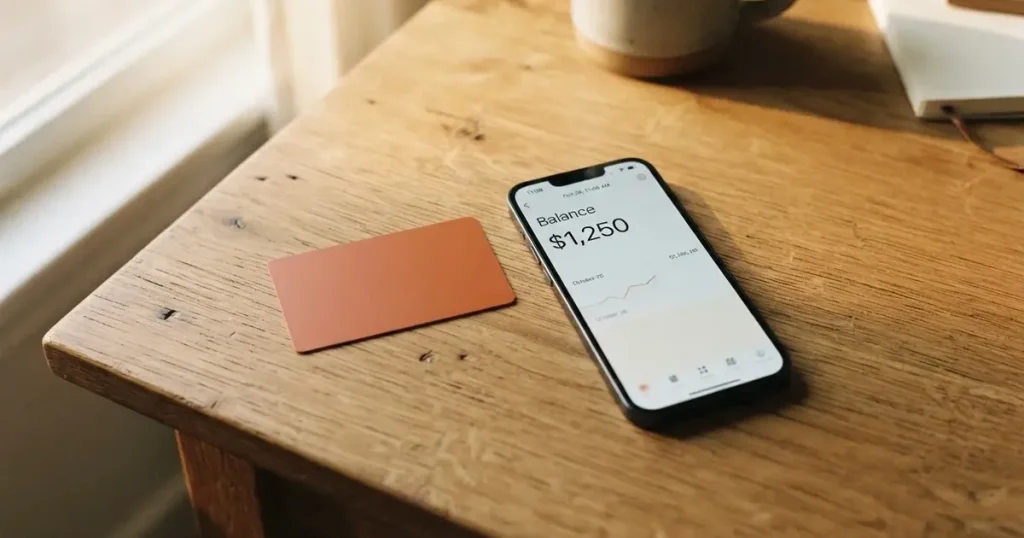
The Kem card does something genuinely appealing: it hands you a Visa number you can spend from a crypto balance, charges nothing to issue, nothing a month, and says it has no foreign-exchange fee. On paper that is a very cheap way to pay ordinary bills from stablecoins. The problem is what sits behind that paper. The card’s own public pages do not name the bank that issues the card or the licences it holds, and the operator describes itself as “a crypto financial platform, not a bank”. Reviews are thin but bad — 2.5 out of 5 on Trustpilot from five reviews, all one-star — and user reports describe stuck withdrawals, deductions on failed transactions and support that does not answer. Add USDT-only funding with no published network list, and you have a card that is cheap by design and unfinished by disclosure.
That is my honest summary: a 5.8 out of 10. The cost side is unusually good. The trust side is unusually thin.
If you read one thing before applying, read the section on who will actually give you the card and the section on what can go wrong. Everything else — fees, top-ups, Apple Pay — matters much less than those two.
The conditions described here are current as of October 28, 2026.
The verdict: 5.8 out of 10
Kem is aimed at residents of Gulf countries who already hold USDT and want to spend it without first converting it into a bank balance. If that is you, and you are comfortable treating the balance as money you could lose access to for weeks at a time, the price of using it is unusually low.
If you are anyone else — if you need your money to be reliably withdrawable, if you are putting a meaningful amount on it, if you want to know which regulated institution holds your funds — this is not the card to try first.
| Criterion | Mark | Why |
|---|---|---|
| Who can get it | 6 / 10 | Visa accepted in 150+ countries, marketed to residents of Kuwait, Bahrain, UAE, Qatar; a 13-country restricted list comes from the starting data only |
| Cost | 8 / 10 | No issuance fee, no monthly or annual fee, “No FX fees”; conversion 1% per starting data, not confirmed on the page |
| Top-up options | 4 / 10 | USDT from any wallet or exchange, gold and crypto swaps to USDT in-app; no networks named |
| Reliability and complaints | 3 / 10 | Operator KEM TECHNOLOGIES HOLDING (ADGM), issuer and licences not named; Trustpilot 2.5/5, complaints about failed withdrawals and silent support, KYC up to 4 weeks |
| Everyday use | 7 / 10 | Virtual immediately, physical on request; unofficial sources say Apple Pay works, Google Pay does not |
| Total | 5.8 / 10 | Cheap to hold, hard to trust |
Who will they give you the card
The straightforward answer: it is marketed to people living in Kuwait, Bahrain, the UAE and Qatar, and it works wherever Visa is accepted, which the card’s own page puts at “150+ countries”. That second number is about where the card *spends*, not who can *sign up*. Those are different questions and the distinction matters for you.
On who can sign up, there is a restricted-country list — Belarus, China, Cuba, India, Iran, Iraq, Israel, Russia, Syria, Turkey, Ukraine, Venezuela, Vietnam — but I need to be straight with you about where that comes from: it is from the starting data for this card, and the blog page does not state it. So treat it as the best information available, not as a published policy you can rely on.
A detail worth holding on to, because it will come up in the alternatives below and it applies here too: the rule in most of this industry is by *residence or registration*, not citizenship. If you hold a passport from one country and live in another, the country you live in is usually the one that matters.
One thing the card does not tell you: whether eligibility tiers exist. No KYC levels are published, no minimum age, no proof-of-address requirement on the official page. That is a gap, not an answer — you will find out at signup.
How to get it
The process as described is short: sign up in the app and “provide your identity documents for KYC verification”. A virtual card is immediate; a physical one is “available upon request”. Tap-to-pay is supported.
That is genuinely all the official page says, and the unknowns stack up quickly:
- Which documents, and proof of address? Not stated by the card.
- What age? Not stated.
- Where does the physical card ship, how long does it take, does it cost anything? Not stated.
- What if it is lost or damaged? Replacement terms not stated.
- What card currency do I get? Not stated on the official page.
Third-party reviewers filling those blanks — treat this as unofficial, not confirmed by Kem — describe needing email, phone, ID, proof of address and a selfie, claim setup in under three minutes, and also report KYC waits of up to four weeks. Those two statements contradict each other, and that contradiction is itself informative: on a good day it is quick, on a bad day it is a month of waiting.
The card currency question is more consequential than it looks. The app store listing for the app mentions swaps between crypto and Gold, KWD, SAR and AED, and a third-party source lists KWD, SAR and AED support. Neither is an official statement of which currency your card is denominated in. If you are being charged in a currency you do not think about, that is where a hidden cost appears.
Fees: what it really costs
Here is the part of the review that is unambiguously good. The card states “No issuance fees” and “no monthly or annual fees”, and its blog intro says “No FX fees”. For a card aimed at people who spend across borders, zero foreign-exchange fee is the headline feature and the main reason to consider it at all.

The catch is that the card’s own page notes that its public fee information is limited, and one important number is not confirmed: a 1% conversion fee on purchases appears in the starting data but is not on the page. A third-party site lists monthly, issuance, ATM, FX, top-up and decline fees all as free — again, unofficial, and not confirmed by Kem.
So read the cost of this card as: the visible fees are near zero, and the invisible costs — spread on the crypto conversion, network fees on the way in — are where your money actually goes.
| Item | What is stated |
|---|---|
| Issuance | “No issuance fees” |
| Monthly or annual fee | “no monthly or annual fees” |
| Conversion | 1% on purchases per starting data — not confirmed on the page |
| Foreign exchange | “No FX fees” |
| ATM | Not stated; unofficial sources say the fee is free and withdrawals unlimited |
| Daily and monthly limits | Not stated; unofficial sources say spend and ATM limits are “Unlimited” |
| Top-up | Not stated; unofficial sources say free |
| Tiers | Not stated — a single card is named, the Kem Infinity Card |
Two everyday payments, so this is concrete rather than abstract.
A coffee in a currency that is not your own. You tap a card in a shop abroad. Under the card’s stated terms there is no FX fee and no monthly cost. What you still pay is whatever spread sits in the crypto-to-fiat conversion at the moment of the transaction — and if that 1% from the starting data is real, it applies here. This is the best-case scenario for Kem, and it is genuinely competitive.
A subscription you cannot cancel from the card. Say a monthly service that declines the charge. Here the picture gets murkier. Decline fees are not stated by the card, unofficial sources call them free, and user reports for this card specifically mention *deductions on failed transactions*. That is the pattern to fear: a charge that fails and still costs you something. For a big recurring payment this matters more than the fee itself does.
Withdrawing cash. Not stated officially. Unofficial sources say the ATM fee is free and withdrawals are unlimited. Treat both as unconfirmed.
How to Top up the card
The funding story is one sentence long, and that sentence is the problem. The card says: “Deposit Tether from any wallet or exchange to your Kem balance”, and you can swap gold or crypto to USDT in the app before you spend it.
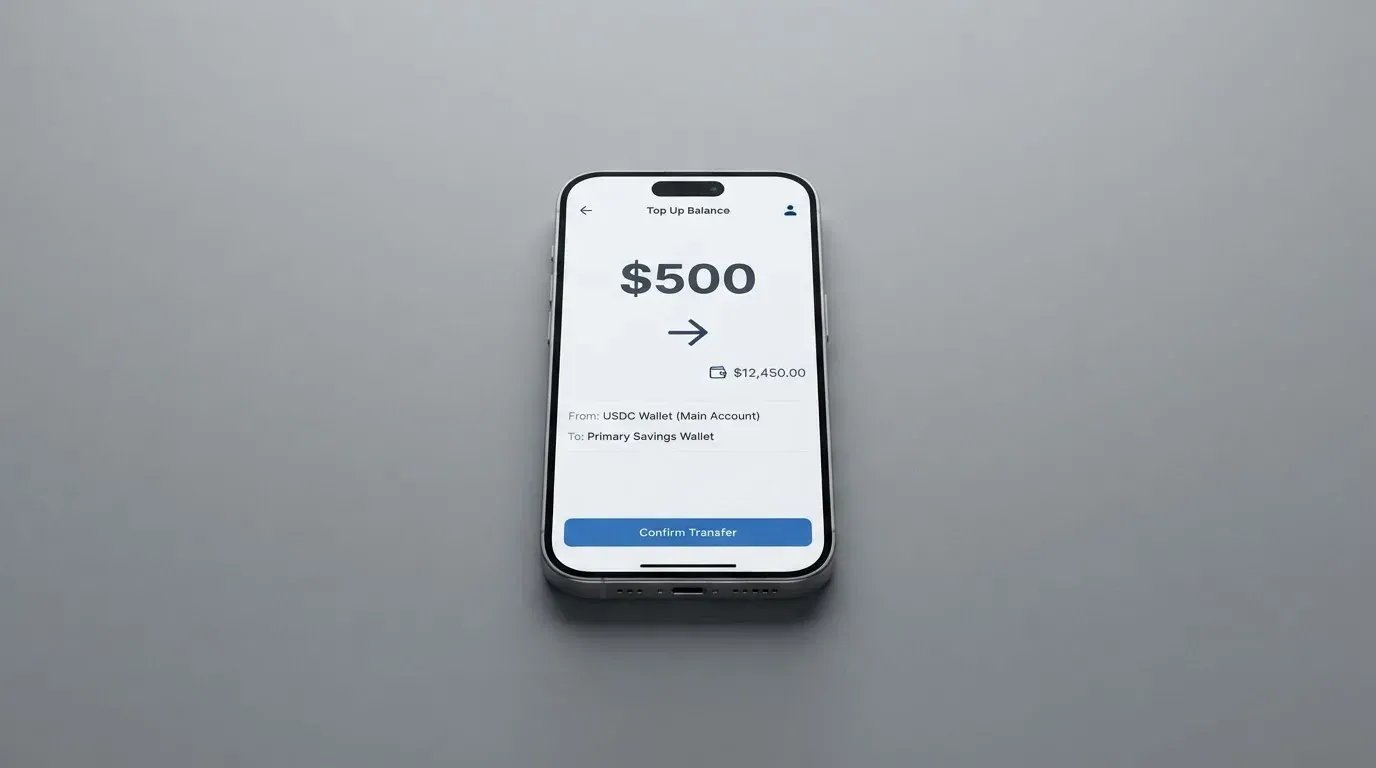
That gold feature is unusual and worth understanding, because it shapes the risk. The app store listing mentions swaps between crypto and Gold as well as between crypto and local currencies. Gold is a real asset with a real price that moves on its own schedule. Spending is USDT-denominated, so what you are doing is converting into gold, converting back into USDT, and paying for the privilege each time — unless you are deliberately holding gold as the thing you actually want to own. If you just want to spend dollars, that layer is pure cost and complexity.
What is not stated, and what you need before your first transfer:
- Which networks? Not stated. This is the big one, and it is covered in the risk section below because a wrong guess here is expensive.
- What are the fees? Not stated.
- Is there a minimum? Not stated.
- Who pays the network fee? Not stated. Generally on-chain network fees for your deposit are charged by the blockchain, not by the card provider.
- Can you top up with fiat? Not stated. No card, bank transfer or cash option is described anywhere official.
On cashing back out, nothing is stated officially. The app store listing does say transfers and withdrawals “may be subject to review or network delays”, which is a plain warning that getting your own money out can be slow. A third party quotes a FAQ referring to variable network and administrative fees on external withdrawals — unofficial, but it tells you to expect that money is not free on the way out either.
So the full round trip is: stablecoin in, spend in fiat, and if you ever want to reverse it, variable network and administrative fees on the withdrawal plus a possible delay. That is not a dealbreaker, but it is a one-way door you should know about before you walk through it.
Paying with it every day
The mechanics are fine. Virtual card immediately, physical on request, tap-to-pay, Visa accepted in 150+ countries. Apple Pay and Google Pay are not mentioned on the card’s blog page; a third-party source says Apple Pay is supported and Google Pay marked unsupported, though one user reportedly says Google Wallet works for them. Unofficial, and if a mobile wallet matters to you, it is worth testing yourself before you commit.
Two things you are told nothing official about:
Blocked categories. Not stated. This matters more than people expect. Merchants are classified by a four-digit merchant category code, and certain codes — 7995 covers gambling, for example — are blocked by issuers as policy rather than by law. The blocked list varies by issuer, so with no published list for Kem you cannot know in advance which subscriptions or merchants will simply fail.
Rewards. Not stated by the official page. Unofficial sources say no cashback and no welcome or referral bonus, with staking cited at 5.5% APR. So: no rewards to offset the conversion spread, and the main upside is the interest rate on what you leave staked.
Disputes. Not stated. If a charge goes wrong, there is no published procedure to point at. That is worth weighing against the general rule that prepaid-card coverage varies by country and should not be assumed.
The app. iOS and Android. The App Store listing shows 4.2 out of 5 from 31 ratings, which I read on 2026-10-21. The Google Play listing I did not read, so if you are on Android, that rating means nothing to you.
One general mechanic to know, because it will show up on your statement and look alarming: a declined authorisation can leave a *hold* on your funds that stays for several days — typically up to seven — even though you spent nothing. It is not a loss, but it will read as one while it sits there.
What can go wrong
This is the section that takes the score from “cheap and pleasant” to 5.8.
Nobody will tell you who issues the card. The operator is KEM TECHNOLOGIES HOLDING Ltd, registered in the Abu Dhabi Global Market under company number 000008598. The app store seller is KEM Company for Electronic Payment and Settlement Services, and a developer named KEM LLC appears. A Czech entity, Kemfinity s.r.o., shows up in the starting data and third-party sources only. The card issuer and the licences are simply not stated. A card programme runs through a licensed issuer; the brand is often just the front. If you cannot establish which institution stands behind the Visa programme, you cannot work out who is regulated by whom, what your remedy is, or which deposit or safeguarding regime covers your balance. That is not a detail missing from a good page. That is the centre of the product.
The balance is custodial. Your app balance is held by the provider, which means you hold no keys and have no direct claim on anything. General safeguards for this model — app-based 2FA, instant freeze, spending limits — are not stated for Kem. On this side of the business, the historical record is not encouraging: custodial platforms have failed before, and the network cannot freeze or reverse a transfer once it is made. Tether also states that it disables tokens in wallets on the OFAC sanctions list and has frozen funds tied to illicit activity, so a stablecoin balance is not censorship-proof in either direction.
The network list is not published, and this is the expensive mistake. Blockchain transfers are irreversible. Send USDT on a network the provider does not support, or to an address belonging to a different network, and the money can be gone or need manual support recovery with no guarantee. USDT exists on Ethereum, Tron, Solana, Polygon, Avalanche and others, and the economics differ sharply: on Ethereum you pay gas in ETH, so a wallet holding USDT but no ETH cannot send at all; on Tron fees are paid via bandwidth and energy resources, often burning TRX. With Kem naming no networks, the burden is entirely on you to send correctly, blind.
A stablecoin is not a dollar. USDT is pegged to the dollar by intention, not by law, and pegs break — TerraUSD collapsed in May 2022, USDC lost its peg briefly in March 2023. Tether describes USDT as backed 1-to-1 and Circle makes similar claims for USDC, with monthly reserve attestations for the latter. But if your plan is “hold USDT, spend USDT”, the depeg risk sits between you and every purchase.
The complaints are specific, not vague. No official incidents. From user reports on the app store and review aggregators in 2026: failed withdrawals and stuck funds, deductions on failed transactions, no support replies, KYC waits of up to four weeks, cards still pending after verification. On Trustpilot, 2.5 out of 5 from five reviews, all one-star, read 2026-10-21. The dated reports I could find: failed withdrawals October to November 2025; unanswered support October to November 2025; scam allegations from October 2025 to April 2026; slow card application December 2025. Five reviews is a small sample and allegations of fraud are allegations, not findings. But the *shape* of the complaints — money that won’t come out, support that won’t answer — is the exact shape that matters, and none of it has been publicly answered.
Nobody is coming to help. The contact page exists. Languages and hours are not stated. Combined with reports of unanswered support, assume you are resolving problems yourself.
Nothing has happened yet, publicly. The blog says Tether “has invested directly in Kem”. I found no dated events — no enforcement action, no outage, no licence announcement. That is neutral: an absence of news is not a clean bill of health, and here it mainly means there is not yet a track record to read either way.
One regulatory frame worth holding in mind as you weigh all this, since it explains why “not a bank” is a structural feature and not a put-down. A card is a payment service regulated separately from the crypto side — custody, exchange, transfer — so a product like this commonly sits on two licences, and the public pages give you one name, not two. In the EU, an electronic money institution may issue cards and wallets but cannot lend, and it must safeguard customer funds, by segregating them or insuring them; those funds are not bank deposits and carry no deposit guarantee. Wherever you are, assume you are dealing with a payment institution rather than a bank, and size your balance accordingly.
What to take instead
All three alternatives below are also crypto cards, and all three scored higher on the same criteria I used for Kem. None is a bank either, and none removes the general risks of this category — but each publishes more than Kem does.
Morse (7.5 / 10) is the strongest of the three on paper. It states “Zero foreign exchange fees or markups” using the real-time Visa exchange rate, and paying with the card online and contactless is free. Critically for your top-up problem, it names its networks: USDC, USDG and EURC via Solana are free, while other tokens and blockchains carry a fee. It also states that the Morse Wallet “is self-custodial”, which removes the custodial counterparty risk I flagged above. Against that: “Morse Card is fully virtual for now” — no physical card — issuance and monthly fees are not stated, the card page says only “Fees may apply. See Cardholder Agreement”, and eligibility is narrow and checkable in-app. It is closed-beta in a long list including Australia, Japan, Singapore, Switzerland, the UK, Hong Kong SAR China, Türkiye, Serbia, New Zealand and others, and cannot serve customers subject to US, UK, EU or UN sanctions.
International Visa Card (6.7 / 10) is the most transparent about money and the least about crypto. It states its fees completely: virtual card issuance $5 one-time, no maintenance fee, plans at Classic free, Pro $9.00/month and Max $19.00/month, card use in USD free on all plans, foreign currency at “Visa exchange rate + 2% FX fee”, and deposits of any kind free. That 2% is worse than Kem’s stated zero, and I want to be honest about that rather than pretend otherwise. What you buy with it is clarity: a “U.S.-issued Platinum Visa card”, virtual, paying in USD, with a published restricted-country list covering 15-plus jurisdictions and purchases blocked in seven of them. Its physical card is listed as “Coming soon”. Rewards: no cashback stated.
UNi Card (6.1 / 10) sits in the middle. It is a multicurrency card on the Mastercard network spending from the UNi.Global account balance, with “No annual fee or foreign transaction fee”, conversion at “live OTC (Over-the-Counter) rates” and “No hidden exchange fees”. Its hook is “Spend-to-Earn rewards” of up to 3%. What it does not publish: who can get it, whether it is physical or virtual, the issuance fee, and how you fund it. A no-annual-fee card with no published eligibility is a harder no than a slightly pricier one that tells you the rules.
| Kem | Morse | International Visa | UNi | |
|---|---|---|---|---|
| Score | 5.8 | 7.5 | 6.7 | 6.1 |
| Network | Visa | Visa prepaid debit | Visa, U.S.-issued | Mastercard |
| Foreign-exchange fee | “No FX fees” stated | Zero, real Visa rate | Visa rate + 2% | None stated |
| Issuance / monthly | None / none | Not stated | $5 one-time / none to $19 | Not stated / none annual |
| Physical card | On request | None for now | Coming soon | Not stated |
| Custody | Custodial app balance | Self-custodial wallet | Not stated | Not stated |
| Networks named | No | Yes | No | No |
| Who can sign up | Kuwait, Bahrain, UAE, Qatar marketed; 13-country list from starting data | Long closed-beta list, invite codes | Restricted list published, by residence or registration | Not stated |
My honest read on the comparison: Kem is not the best-value card in the category on price, and it is not the best-documented one. It wins only on the narrow combination of no issuance fee, no monthly fee and no FX fee for Gulf residents specifically. If your use case is different, Morse is the more complete product and the International Visa Card is the more legible contract.
Who I would recommend it to
I would recommend Kem to someone in Kuwait, Bahrain, the UAE or Qatar who already holds USDT, already has a working self-custody wallet and exchange setup they trust, and who wants a low-cost Visa number for everyday spending without touching a bank balance. Keep the amount on it small enough that a four-week verification delay or a stuck withdrawal would inconvenience you rather than hurt you. Check whether Apple Pay works before you rely on it, because nothing official says it does.
I would not recommend it to you if any of these are true: this is your main spending money; you need to withdraw on a predictable timetable; you plan to hold a large balance; you are not confident sending USDT to the right network without guidance; or you want to know which licensed institution stands behind the card. On that last point — you cannot find it, and I could not find it either.
And I would be careful with it regardless if you are new to crypto cards. The category has real structural risks that no individual issuer removes: transfers are irreversible, custodial balances carry counterparty and hack risk, stablecoins can and do depeg, prepaid-card consumer protection varies by country and should not be assumed, and card programmes have been shut down before — Visa ended its agreements with FTX in November 2022, and WaveCrest’s European programmes were suspended in 2018. A closure typically means loading stops, spending stops, and you are asked to withdraw what remains. Judge Kem as though that is a real possibility, because with the issuer unnamed, you have no way to rule it out.
Frequently asked questions
What is the Kem card?
Kem is a Visa payment card you fund with USDT rather than from a bank account. The card’s site says it works wherever Visa is accepted, which it puts at 150+ countries, and that it is marketed to residents of Kuwait, Bahrain, the UAE and Qatar. You get a virtual card immediately and can request a physical one. The card says there is no issuance fee, no monthly or annual fee and no FX fee. It is not a bank account, and the operator describes itself as a crypto financial platform, not a bank.
Is Kem a bank?
No, and the card is explicit about it — it says “Kem is a crypto financial platform, not a bank”. The operator is KEM TECHNOLOGIES HOLDING Ltd in the Abu Dhabi Global Market, number 000008598. A card is a payment service regulated separately from the crypto side, so this kind of product normally rests on two licences, one for payments and one for custody or exchange. Kem’s public pages name neither the card issuer nor its licences. Your balance is custodial, held by the provider, so it is not a bank deposit and carries no deposit guarantee.
How do I get the Kem card?
You sign up in the app and provide identity documents for KYC verification, and a virtual card is issued immediately; a physical one is available on request. Which documents are accepted, whether proof of address is required, the minimum age, shipping countries, delivery time, delivery cost and replacement terms are all not stated by the card. Third-party reviewers say email, phone, ID, proof of address and a selfie are needed and report KYC waits of up to four weeks.
Does Kem require KYC, and how long does it take?
Yes — the card’s own wording is “provide your identity documents for KYC verification”. Verification is required by anti-money-laundering law wherever the provider is licensed, which is why accounts get frozen pending documents rather than simply refused. Kem publishes no KYC tiers and no expected time. Third-party reviewers describe setup in under three minutes at best and waits of up to four weeks at worst, and user reports from 2026 mention cards still pending after verification. Treat four weeks as possible, not exceptional.
How do I top up the Kem card?
The card says: “Deposit Tether from any wallet or exchange to your Kem balance”, and you can swap gold or crypto into USDT inside the app before spending. Fees, minimum amounts, who pays the network fee, and which blockchains are supported are all not stated — and the missing network list is the one that costs real money. On-chain network fees for a deposit are charged by the blockchain, not by Kem. Send USDT on an unsupported network, or to an address from another network, and the transfer can be lost.
What does it cost to use the Kem card?
The stated costs are near zero: “No issuance fees”, “no monthly or annual fees”, and “No FX fees”. A 1% conversion fee on purchases appears in the starting data but is not confirmed on the card’s page. ATM fees and limits are not stated officially; third-party sources call the ATM fee free and withdrawals unlimited, and list top-up and decline fees as free too. What you really pay is the spread inside the crypto conversion, plus any network fee on the way in and any withdrawal fee on the way out.
Can I add Kem to Apple Wallet or Google Pay?
Not officially confirmed. Neither mobile wallet is mentioned on Kem’s own blog page. A third-party source says Apple Pay is supported and Google Pay is marked unsupported, though one user reportedly says Google Wallet works for them. Nothing official states either way, so if a mobile wallet matters to you, add the virtual card and test it on a small purchase before relying on it.
Is the Kem card safe?
Safety here has two layers, and both are worth separating. The card carries a PCI DSS compliance badge assessed by ControlCase, and Tether says it has invested directly in Kem — but 2FA, instant freeze and any safeguarding of funds are not stated. Your balance is custodial, so the historical record for that model includes Mt. Gox, Coincheck and the Ronin Network losses. Trustpilot shows 2.5 out of 5 from five reviews, all one-star, and 2026 user reports cite stuck funds, deductions on failed transactions and unanswered support.
Can I use the Kem card in my country?
The card spends wherever Visa is accepted — 150+ countries — but where you can *sign up* is narrower. It is marketed to residents of Kuwait, Bahrain, the UAE and Qatar, and a restricted-country list of 13 nations comes from the starting data rather than the card’s own page. Eligibility is generally decided by where you reside or are registered, not by passport, and if you are unsure, the app itself is the only reliable test.
How do I withdraw money from Kem, and how long does it take?
Kem publishes no withdrawal terms — no fees, no minimums, no timing. The app store listing does say transfers and withdrawals “may be subject to review or network delays”, and a third party quotes a FAQ referring to variable network and administrative fees on external withdrawals, which is unofficial but a fair warning to expect a cost. This is also the weakest area in user feedback: reports from October to November 2025 describe failed withdrawals and funds stuck, so allow generously and try a small amount early.
App and neobank card verdicts – cryptocardverdict
Content created by the «cryptocardverdict» team