
Revolut's crypto card, examined in plain terms
 Available in US

Revolut is one of the most widely used finance apps in Europe and the UK, and its crypto card is one of the easiest ways to spend digital assets at the point of sale without first moving them to an exchange. The card links to a Revolut account, draws from a balance the user can fund with either crypto or fiat, and works wherever Visa or Mastercard is accepted. That sounds simple, and for many existing Revolut customers it is. The question is whether the card holds up once you look past the marketing and into the fee schedule, the country list, and the things that go wrong when support is hard to reach.
Conditions are current as of October 28, 2026.
I went through the public help pages, the fee schedule excerpts that are still in circulation, the third-party summaries that collect plan prices, and a long thread of user reports. The picture that comes out is mixed: Revolut is a strong choice if you are already inside the Revolut app and live in a supported country, and a weaker one if you need a dedicated crypto card with clear, flat-rate pricing. Conditions are current as of 2026-10-20.
Verdict
Revolut scores 6.5 out of 10. It is a competent everyday card with a crypto balance attached, and the convenience is real, but the cost story depends heavily on which plan you take and how much you exchange in a month. If you are in the EU or the UK, you already use Revolut, and you treat the card as one of several spending tools rather than a pure crypto card, the experience is smooth. If you are a heavy crypto user who wants a single transparent fee for every payment, the fair-use thresholds and the weekend markup will frustrate you.
| Criterion | Score | Why it matters |
|---|---|---|
| Who can get it | 6 / 10 | Availability depends on country and plan; a long restricted list cuts off large markets. |
| Cost | 6 / 10 | Virtual cards are free on Standard, Plus and Ultra, but crypto exchange and FX markups are tiered. |
| Top-up options | 8 / 10 | Wide choice of tokens and fiat balances, drawn automatically at the point of sale. |
| Reliability and complaints | 7 / 10 | High overall satisfaction, but account closures and difficult chargeback cases are common themes. |
| Everyday use | 6 / 10 | A virtual card with mobile wallet support; ATM allowance varies sharply by plan. |
| Total | 6.5 / 10 | Strong for existing Revolut customers in the EU and UK; less compelling as a standalone crypto card. |
The core audience is the EU and UK customer who already has a Revolut account and wants to spend from a balance that mixes euros or pounds with a small crypto allocation. The card is a poor fit for US residents (the country is on the restricted list), for anyone outside the supported 37 markets, and for users who need a self-custody wallet feeding a card.
Who can get the Revolut card
Revolut does not publish a single list on its public pages, and the official position on eligibility is that availability depends on country and plan. The third-party summaries I checked say the card is currently available in 37 countries, including most of the EU, the UK, Australia, Japan, Singapore and New Zealand. Twelve countries are restricted: Belarus, Canada, Cuba, India, Iran, Libya, Myanmar, North Korea, Russia, Sudan, Syria, and the United States. (These figures come from CryptoCardHub, August 2026; a second aggregator puts the count higher, at 48 or more, so treat the exact list as unofficial until you confirm in the app itself.)
A few things follow from that:
- Residency is the gate, not citizenship. The card page is checked by the country on your address, so where you live matters more than where you were born.
- The US is blocked, which rules out a large share of potential users.
- The restricted list is policy-driven and can change. What is open today may not be open next year, and what is closed today may reopen with a partner bank.
If you are in a country that is not on the published list, the most reliable check is to download the Revolut app, attempt sign-up with your real address, and see what it says. Aggregator lists drift; the app is the source of truth.
There is no separate age rule called out in the public material, but as with any regulated e-money product, you must be at least 18 to open an account in your own name.
How to sign up
Sign-up runs through the Revolut app. You create an account, complete identity verification, choose a plan, and request a card. The official pages do not lay out the full KYC flow in one place, and the third-party description is that Revolut performs full KYC: a government ID, sometimes a selfie, and, for larger crypto transactions, a source-of-funds declaration. (This is the standard, unofficial description from CryptoCardHub, August 2026; the exact set of documents asked for will depend on your country and risk profile.)
The card itself is a virtual crypto card linked to your Revolut account. The network (Visa or Mastercard) and the settlement currency are not stated in the public material, but the same third-party summary says it is a prepaid debit card and that the network depends on the region. The card is listed as free to issue on the Standard, Plus and Ultra plans in the older Revolut fee schedule PDFs (2023-2024). I did not see an updated schedule in the current public material, so I would treat the issuance price as “free on most plans, with a paid physical card on Standard and Plus” until you confirm inside the app.
Physical delivery is also not stated in the official pages I could read. The unofficial summary is that Standard charges around £4.99 (or €5.50) for delivery, Plus is paid, Premium is free express, and Metal and Ultra are free priority; replacements run about £5 to £6 on Standard, Plus and Premium, and more on Metal and Ultra. Take these as approximate; Revolut changes its pricing, and the figures are from August 2026.
One specific caller note: Pro and Business accounts cannot link the card. If you are on a Pro or Business plan, the crypto card is not available to you.
Fees and what it really costs
The headline is that virtual cards are free on Standard, Plus and Ultra. That is the part the marketing shows, and it is accurate. What the marketing does not show is the rest of the fee schedule, and the rest is where the cost lives.

| Fee or limit | Value |
|---|---|
| Virtual card issuance | Free on Standard, Plus, Ultra |
| Monthly plan fee | Standard £0, Plus £3.99/€2.99, Premium £7.99/€7.99, Metal £14.99/€13.99, Ultra £55/€60 (unofficial figures) |
| Crypto exchange fair usage | Standard 1% above £1,000/month, Plus 0.5% above £3,000/month, Premium/Metal/Ultra no limit |
| Weekend FX markup | Standard 1%, Plus 0.5%, Premium/Metal/Ultra 0% (unofficial figures) |
| ATM allowance (free) | £200 (Standard, Plus), £400 (Premium), £800 (Metal), £2,000 (Ultra); then 2% (unofficial figures) |
| Daily ATM limit | £3,000 |
| Crypto exchange limit | 100 exchanges per 24 hours (official); single transaction ~£100,000 (unofficial) |
The monthly plan fees above are from CryptoCardHub, August 2026, and a second aggregator. They are not on the public Revolut fee pages I could read in full, so treat them as unofficial.
What this means for an everyday payment: if you are on Standard and you buy a coffee in a foreign currency, the conversion goes through Revolut’s exchange rate, and on a weekend you will pay the 1% markup on top. If you exchange more than £1,000 of crypto in a month, you start paying 1% on the excess. On Premium, Metal and Ultra, both of those layers go away. So a user who spends mostly in their home currency on a Standard plan sees almost no extra cost; a user who travels, pays in multiple currencies, and converts frequently sees meaningful drag.
The official Revolut help page in German is more cautious. It says there is no exchange fee for crypto transactions made with the Revolut card, but fair-usage fees may apply depending on the plan. That is consistent with the table: the 1% and 0.5% kicks in above the threshold. Older 2023 terms mention a crypto fee of 1.99% (unofficial) or £0.99, whichever is greater, on Standard and Plus; that line has not appeared in the current public material, so it may be stale.
Two everyday scenarios make this concrete.
A £40 dinner in a country that uses euros, paid on a Saturday on the Standard plan. Revolut converts pounds to euros at its rate and adds the 1% weekend markup. The cost of the markup on £40 is 40 pence, but on a £400 weekend hotel bill it is £4, and over a year of travel that adds up.
A £2,500 crypto-to-fiat exchange in a single month on the Standard plan. The first £1,000 is free, the next £1,500 is charged at 1%, so £15. The same exchange on Premium, Metal or Ultra is free.
There is one more layer that does not always show up in summaries: the on-chain network fee. If you are topping up Revolut from a self-custody wallet by sending a token across a blockchain, the gas or bandwidth fee is paid to the network, not to Revolut, but it still comes out of your cost.
How to top up Revolut
Revolut does not publish the exact list of supported tokens and networks on the page I could read, and the official material does not say which coins you can fund the card from. The unofficial summary is that the card draws from a chosen crypto or fiat account, with fallback to your other Revolut balances if the first one is empty, and that more than 250 tokens are available for spending alongside 30-plus fiat currencies. (This is the CryptoCardHub, August 2026 summary; the precise set changes, and the app is the only place that shows the current list.)
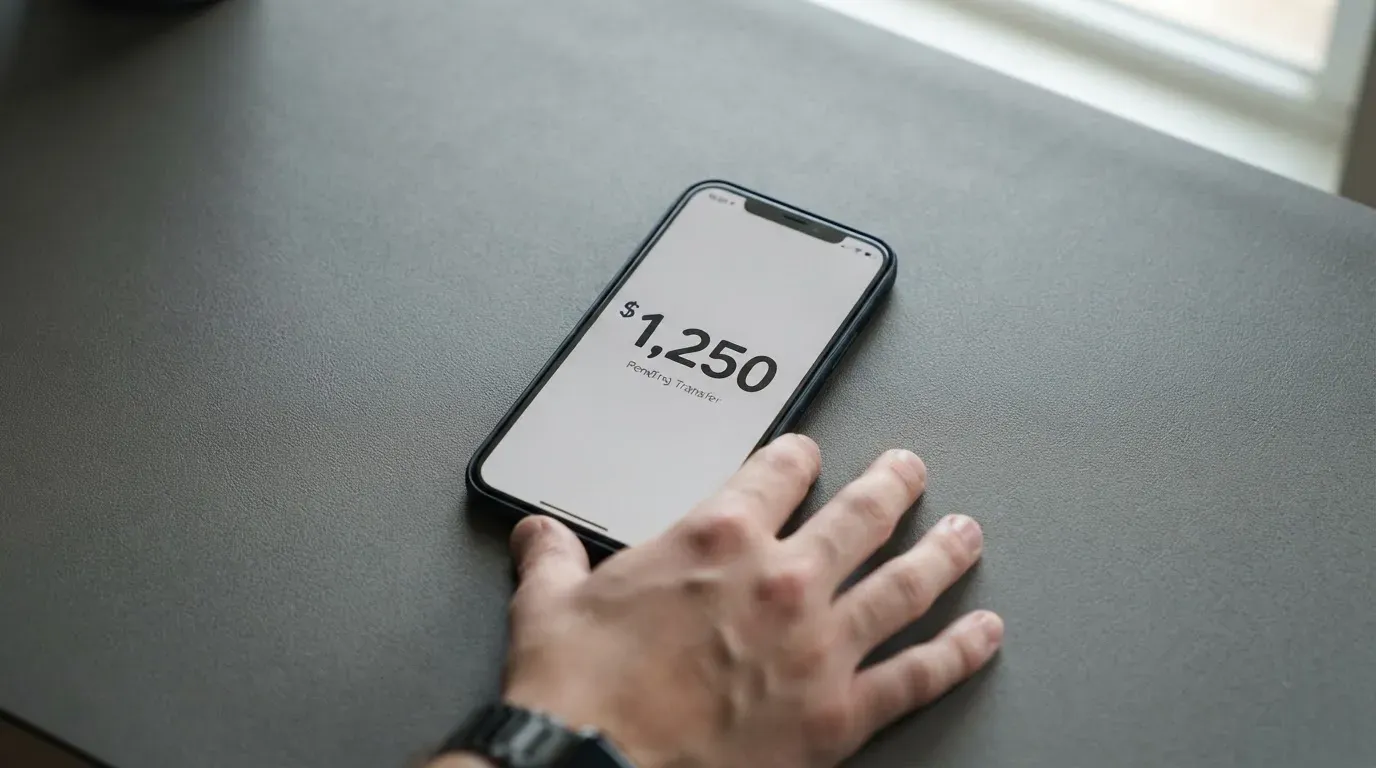
A few practical points that follow from how the card is structured.
- You pick the source balance inside the app. The card spends from that balance first, then falls back to your other Revolut balances.
- The fiat side of Revolut is separate from the crypto side. To pay with crypto, you either hold a crypto balance that Revolut converts at the moment of payment, or you exchange crypto into fiat in advance and pay from the fiat balance.
- On-chain deposits are subject to the network you choose. If you send USDC on a chain Revolut does not support, or to an address on the wrong network, the funds can be lost or stuck in support, because blockchain transfers are irreversible.
- Cardholders are not given on-chain addresses in the same way a self-custody wallet is. Revolut holds the crypto in its own books, and the “top up” step is a balance change inside the Revolut platform, not a transfer to a card address.
For a user already inside the Revolut app, the practical experience is that the card is funded automatically: choose a default spending balance, top up that balance from your bank or from a crypto exchange inside Revolut, and the card draws from it.
For a user coming from an external self-custody wallet, the path is to sell or transfer the asset into Revolut first, then spend. That round trip is the friction: you are paying the network fee on the way in, then Revolut’s exchange and FX fees on the way out.
Paying with the card day to day
In daily use the card behaves like any other prepaid debit card. You tap, insert, or pay online. The unofficial summary says Apple Pay and Google Pay are supported, which makes the card usable on phones and watches; contactless and online work the same way once the token is loaded into the wallet. The card is fully virtual in the sense Revolut describes, and the physical card is optional.
Reward programmes vary by plan. The unofficial summary is that Metal and Ultra customers get 0.1% cashback in eligible European countries and 1% cashback elsewhere, capped at roughly one month’s fee; Standard, Plus and Premium have no cashback. The cashback is paid in fiat, not crypto. The details, the list of eligible countries, and the cap change, so check the in-app terms before you decide.
ATM withdrawals are one of the places where the plan tier really matters. On Standard and Plus, you can take out £200 (unofficial figure) a month for free; Premium raises that to £400, Metal to £800, and Ultra to £2,000. Beyond the allowance, the fee is 2%. The daily limit on any plan is £3,000. Crypto-card-specific ATM terms are not in the public material, so the ATM line in the table is the standard Revolut ATM policy, not a special crypto rule.
The app itself is well-rated. The unofficial summary puts it at 4.8 out of 5 on the App Store (around 140,600 ratings) and 4.5 out of 5 on Google Play. Trustpilot sits around 4.6 out of 5 in the same summary, which is a touch higher than the figure I saw in the user-reported data, around 4.5 with about 425,000 reviews. Both numbers are in the same neighbourhood, and both are high for a financial app.
What can go wrong
The biggest complaints in the user data are not about technology. They are about account closures, fraud disputes, and delays on crypto deposits.
Account closures. Trustpilot reviews and r/Revolut threads both surface cases where an account is closed or restricted without a clear explanation. From a customer’s point of view, the experience is that money is held pending review, the review drags on, and the eventual answer is that the account is being closed. The reason given in the closure notice is usually generic.
Crypto deposits held for months. There are specific reports of a crypto deposit being held for more than two and a half months. In a custodial model, the platform has the funds, and the platform decides when to release them. The user cannot move the funds elsewhere in the meantime.
Hard fraud and chargeback cases. A UK Financial Ombudsman decision (DRN-5705456) on card payments to a crypto platform found that the platform was the merchant of record and that the payments were authorised, so there were no chargeback grounds. The general pattern, also visible on Trustpilot, is that Revolut tends to side with the merchant on disputes about crypto platforms, because the customer’s card was used to make a payment that the platform’s terms allowed.
Sanctions and screening. Revolut, like any regulated e-money institution, screens customers against sanctions lists. The restricted-country list is part of that. If your residency or transaction history trips a screening rule, the account can be closed.
Weekend and fair-use fees. These are not “wrong” in the way the others are, but they are the fees most likely to surprise a new user. A 1% markup on a Saturday adds up over a year of travel; the 1% fair-use fee kicks in at £1,000 of crypto exchange on Standard, and many users do not realise that until they have already crossed the line.
Underlying company risk. The unofficial corporate picture is that the issuer is Revolut Ltd in the UK and Revolut Bank UAB in the EU, with regional partner banks elsewhere, and that crypto in the EU is provided by Revolut Digital Assets Europe Ltd (Cyprus), a MiCA-registered CASP. The PRA granted Revolut a UK banking licence with restrictions in July 2024 (third-party summary, September 2024, not read in detail). Revolut is a large, regulated firm, but the banking licence is not unrestricted, and the EU crypto side depends on the MiCA registration.
Support. The unofficial summary is that in-app chat is available 24/7 in 100-plus languages, which is generous in coverage, but a recurring user complaint is that crypto-specific issues get bounced or take a long time to resolve.
What to take instead
Revolut is a strong generalist card with a crypto feature. If you want a card whose entire value proposition is built around crypto spending, three alternatives are worth a look.
International Visa Card scores 6.7 out of 10. It is a US-issued Platinum Visa, virtual, that pays in USD. The card itself costs $5 to issue, with no maintenance fee, and plans are Classic (free), Pro ($9.00 a month) and Max ($19.00 a month). Card use in USD is free on all plans, foreign currency is charged at the Visa exchange rate plus a 2% FX fee, and all deposits are free. You fund the USD account with USDC or USDT at 1:1, or with USD, EUR, SEPA, SWIFT or FedNow. There is no cashback. Availability is restricted in a long list of countries (Belarus, mainland China, North Korea, Cuba, India, Iraq, Iran, Israel, Myanmar, Nepal, Nicaragua, Russia, Syria, Turkey, Ukraine, Venezuela and Vietnam), and the US government blocks purchases in North Korea, Cuba, Iran, Russia, Syria, Ukraine and Venezuela. The 2% flat FX fee is the trade-off for the simple pricing.
UNi Card scores 6.1 out of 10. A multicurrency Mastercard that spends from the UNi.Global account balance, with no annual fee and no foreign transaction fee, and assets converted at live OTC rates. The headline benefit is the Spend-to-Earn rewards programme, which goes up to 3%. The card’s availability and the issuance fee are not in the public material I could read, and that is the gap you would close before signing up.
Morse scores 7.5 out of 10. A fully virtual Visa prepaid debit card that spends from the Morse Balance in any currency, with zero foreign exchange fees or markups at the real-time Visa rate. Funding is unusually open: USDC, USDG and EURC on Solana are free, Bitcoin, USDT, Ethereum and other tokens can be deposited, and the wallet is self-custodial. The catch is geography. The P2P app is in 140-plus countries and local add/withdraw is in 70-plus, but the card itself is available only in certain countries (the list is not on the card page; you have to check the app). Closed-beta countries needing an invite code include Australia, Hong Kong, Japan, New Zealand, Singapore, Switzerland, Thailand, Türkiye, the UK and others. The card cannot serve customers subject to US, UK, EU or UN sanctions.
In short: International Visa Card is the cleanest for a US customer, UNi Card is the rewards-led pick, and Morse is the best for a self-custody user who can find the card in their country.
Who I would recommend it to
I would recommend the Revolut crypto card to EU and UK customers who already use Revolut as their main account, hold a small crypto balance alongside fiat, and want one card to cover travel, dining, online shopping, and the occasional crypto-funded purchase. The free virtual card on Standard, the mobile wallet support, and the breadth of the Revolut app make it easy to live with.
I would steer other readers to one of the alternatives. A US resident has no option here at all. A heavy crypto user in a supported country will run into the fair-use exchange fees and the weekend markup, and would be better served by a card with a single transparent fee. A self-custody user who wants the card to draw directly from their own wallet will not find that here; Revolut holds the crypto in its own books, and the round trip through the Revolut platform is the only path.
The card is also a poor fit for anyone whose main use case is to convert and spend large amounts of crypto each month. The exchange and FX schedule, plus the 100-exchange limit in 24 hours, are designed for light use. If your volume is high, the fees compound and the limit gets in the way.
For the right reader, in the right country, on the right plan, the Revolut crypto card is a useful tool. For everyone else, the alternatives on the list will save money or remove friction.
Frequently asked questions
What is the Revolut card?
The Revolut card is a payment card linked to a Revolut account. The crypto version is a virtual card that can be funded from a crypto balance, a fiat balance, or both, and that converts at the moment of payment. The card is free to issue on the Standard, Plus and Ultra plans in the older fee schedules.
How does the Revolut card work?
You top up a Revolut balance from your bank, a card transfer, or a crypto conversion inside the app, and the card spends from that balance. At the till, Revolut converts the balance to the merchant’s currency at its exchange rate, and the merchant receives fiat through the card network.
Is Revolut a bank?
In the UK, Revolut holds a banking licence from the PRA granted in July 2024 with restrictions (third-party summary, September 2024). In the EU, Revolut Bank UAB is a licensed bank in Lithuania. The crypto side in the EU is run by Revolut Digital Assets Europe Ltd, a MiCA-registered crypto-asset service provider in Cyprus. So parts of Revolut are a bank, and parts are an e-money or crypto services firm; the card you hold depends on which entity issued it.
Who owns Revolut?
The material I have does not name the shareholders or founders. Revolut Ltd is a UK private company; Revolut Bank UAB is its EU banking arm. The group’s structure includes a payments arm, a banking arm and a crypto arm, with regional partner banks in countries where Revolut does not have its own licence.
Is the Revolut card available in my country?
The unofficial summary puts availability at 37 countries, including most of the EU, the UK, Australia, Japan, Singapore and New Zealand, and 12 restricted countries including the United States, Canada, India, Russia, Cuba, Iran, North Korea, Belarus, Myanmar, Libya, Sudan and Syria. A second aggregator gives a higher count, so the safest check is the app, with your real address.
Does the Revolut card require KYC?
Yes. The third-party description is full KYC: a government ID, sometimes a selfie, and source-of-funds declarations for larger crypto transactions. The exact set of documents is decided inside the app and varies by country and risk profile.
How do I top up the Revolut card?
You top up a Revolut balance, not the card directly. From a bank transfer, a card payment, or a crypto sale inside the app. The card then draws from the balance you choose, with automatic fallback to your other Revolut balances.
How do I add the Revolut card to Apple Pay or Google Pay?
The unofficial summary says Apple Pay and Google Pay are supported. The exact steps are inside the Revolut app under the card section, and the card has to be active first. The token lives in the device’s Secure Element and not on the card itself, so revoking the token does not cancel the card.
Is the Revolut card free?
The virtual card is free on Standard, Plus and Ultra. The Standard plan has no monthly fee, but every other plan does. The fair-use and weekend fees are the part most users underestimate, and they are what give the cost story its real shape.
Is the Revolut card safe?
The card uses standard safeguards: tokenised mobile wallets, 3-D Secure on online payments, in-app 2FA, and instant card freeze. The recurring risks are not technical: account closures, slow resolution of crypto deposit holds, and difficult fraud disputes on payments to crypto platforms. The UK Financial Ombudsman decision DRN-5705456 illustrates the chargeback limit on crypto-platform payments.
App and neobank card verdicts – cryptocardverdict
Content created by the «cryptocardverdict» team