
VCCPRO: quick virtual cards paid in crypto — but thin on the details that matter
 Available in US

If you have been searching for a way to spend crypto online without waiting weeks for a physical card, VCCPRO is the sort of thing that looks promising on the surface: a web shop where you pick a virtual Visa or Mastercard, pay in crypto at checkout, and receive card details within minutes. It sounds built for exactly the person who cannot get an ordinary bank card, or who wants a throwaway virtual number for subscriptions. But after reading everything the company publishes — the homepage, the Terms, the refund policy, the About page — my honest assessment is that VCCPRO is a thin, fast-moving product that answers some of your questions clearly and leaves others, including the ones that decide whether you should trust it with money, unstated. On a ten-point scale I give it 6.1 / 10: genuinely convenient where it works, thin on transparency where it counts.
The conditions described on this page are current as of October 28, 2026.
The verdict: 6.1 out of 10 — a fast virtual card, not a fully explained one
Who this card is for is the fastest thing to get clear. VCCPRO markets itself as “Quick virtual cards for online payments, paid in crypto.” If that sentence describes your problem — you need a working card number for online payments today, you are used to paying in crypto, and you are comfortable with a product whose inner workings are partly opaque — then you may find it fits. If you are looking for a bank-like relationship, clear regulatory status, published FX rates, or a card you can hold in your hand and use at a cash machine, this is not that product, and the gaps are not small ones.
Here is how the ten points break down.
| Criterion | Mark | Why |
|---|---|---|
| Who can get it | 9 / 10 | “Accepted Worldwide By Top Global Platforms,” BINs from the US, UK, EU and Asia; no closed countries in the terms |
| Cost | 6 / 10 | $4.99 issuance, $5.00 load fee (2.0%), no monthly fee; conversion spread and FX fee not disclosed |
| Top-up options | 5 / 10 | Bitcoin and USDT named, “such as” other coins, plus Perfect Money; networks not disclosed; $10 to $1000 max load per transaction |
| Reliability and complaints | 4 / 10 | VCCPRO Ltd, Poole, UK, “not a bank”; issuer and licences unnamed; Trustpilot 3.5 out of 294 reviews, complaints about undelivered or stuck orders and slow support |
| Everyday use | 5 / 10 | Virtual Visa and Mastercard only, an NFC card that “fully supports Apple Pay and Google Pay”; no plastic, ATM not disclosed |
| Total | 6.1 / 10 | Fast and crypto-native, but under-documented and lightly supported |
The single highest mark is for access, and the lowest is for reliability. That pattern tells you most of what you need to know. This is a product built to remove friction at the front — get in quickly — and it does that well. What it does not do well is tell you, in advance and in writing, exactly who stands behind the card, what happens to your balance, and what a foreign-currency purchase costs. You are, in effect, deciding to trust on the strength of a Trustpilot score and a company description.
Will they give you the card
Short answer: probably, because VCCPRO does not publish a country list, a blacklist, or a citizenship test on the pages I could read. The site says the cards are “Accepted Worldwide By Top Global Platforms,” and it advertises BINs — the first six or eight digits of a card number that identify the issuing institution and country — from the “US, UK, EU and Asia.” Crucially, the Terms name no closed countries. So there is no published red line you are obviously on the wrong side of.
But “probably” is doing real work in that sentence, and I want to be precise about why. A card with a BIN from one of those regions does not mean you, wherever you are, are entitled to hold it. The company states it is “a technology platform and is not a bank, electronic money institution, or card issuer,” and that cards are issued by unnamed licensed third-party providers. That third party is the one whose risk policy, sanctions screening and onboarding rules actually decide whether your application or your order succeeds. Those rules are not published, so you cannot check them in advance. The absence of a country blacklist on the site is not the same thing as universal eligibility — it is the absence of a statement either way.
There is one age floor that is explicit: users must be 18 or older. And the Terms carry a broad reservation that covers a lot of ground: “Identity verification, sanctions screening, and PEP screening may be required, depending on service providers, issuing partners, or applicable law.” In practice this means an identity check or a sanctions screening can appear at the point of purchase rather than at sign-up, and whether you clear it can depend on factors you never see.
So the honest position is this: VCCPRO advertises wide acceptance and publishes no exclusions, which is genuinely more open than many cards; but because the real decision-maker is an unnamed issuer, you cannot pre-screen yourself. If your concern is “will they turn me away,” the answer is that they probably will not, and that you find out at the moment of ordering.
How to get it
Getting a VCCPRO card is one of the shortest flows in the crypto-card category. There is no account to open, no application form, no interview. You pick a card in the web shop, you pay with crypto at the checkout, and your card details are delivered to you immediately. The About page puts it more bluntly: “Cards are issued instantly.”
The timing of that delivery is worth reading carefully, because “instantly” and the customer-facing promise are not quite the same sentence. The virtual card’s delivery is usually between 30 minutes and 6 hours, and in rare cases up to 24 hours. There is no physical card at all — this is a virtual product only — so everything about your relationship with it is screen-based: a card number you add to a wallet or paste into a checkout.
What you actually receive depends on which product line you pick in the shop. The range includes a basic Cheap Visa and MasterCard, an “NFC Contactless Virtual Card,” “Reloadable Premium Cards,” a “Platinum High-Limit Visa,” a “Premium VCC,” and “Exclusive BINs.” The card currency is not stated for any of them. One important caveat on expectations: the shop lists these lines, but as navigation links rather than as a table of benefits — there are no per-tier prices or features spelled out beyond the names themselves. So the “Platinum High-Limit” label is a promise of a high limit without a published limit number.
One last thing to settle before you order: identity checks. The homepage mentions no KYC at all. The Terms, however, reserve the right to require “Identity verification, sanctions screening, and PEP screening … depending on service providers, issuing partners, or applicable law.” No tiers or levels of verification are described, and the terms leave it open whether a check happens for you. There is also no app — this is a web shop — so any verification would presumably run through the site or the support channels.
My advice is narrow and practical: read the refund policy before you pay, not after. The way these products are built, the moment you click checkout is the moment you are committed.
Fees: what a VCCPRO card really costs you
The headline numbers are clear and small. Issuing a card costs $4.99, and there is no monthly or annual fee. That absence of a recurring fee is genuinely nice — you are not signing up for a subscription you have to remember to cancel. But the two costs that would actually hurt you on a crypto card, the conversion spread and the foreign-exchange fee, are not disclosed. That is the gap that keeps this section from being a clear “yes.”

Here is everything the company states, and everything it does not.
| Fee or limit | What is stated |
|---|---|
| Issuance | $4.99, one-time |
| Monthly or annual fee | None stated |
| Top-up / load fee | $5.00 (2.0%) |
| Crypto conversion spread | Not stated |
| FX (foreign exchange) fee | Not stated |
| ATM withdrawal | Not stated (virtual card) |
| Load per transaction | $10 to $1000 max per virtual card transaction |
| Daily spend limit | Not stated |
| Monthly spend limit | Not stated |
Now let me make those numbers real by walking three everyday payments through them, so you can see where the fee story actually lands. The load fee is the clearest: the company gives its own worked example of a $250 load costing an estimated total of $259.99. That is the $5.00 fee, essentially 2%, applied on top of what you send.
Paying a $20 online subscription from a card you loaded with $250. You paid $5.00 to load. The purchase itself draws on the loaded balance. No per-purchase fee is published, so the cost of this transaction is the share of that $5.00 load fee that belongs to this purchase and nothing more — the card does not charge you again at the till. This is the good case, and it is why the load fee feels acceptable if you load once and spend steadily.
Paying a $20 meal at a restaurant in a currency that is not your card’s currency. Here the picture changes. The card converts the balance into the merchant’s currency at checkout, and the crypto-to-fiat conversion spread and any FX fee both apply — but neither is disclosed, so I cannot tell you what this transaction cost. This is the everyday case that matters most and it is the one the company has left you to guess at.
Loading small amounts repeatedly. The fee is $5.00 or 2.0% per load. On a $10 load — the stated minimum — a $5.00 fee would exceed the amount you are adding, so frequent small top-ups are where this pricing bites hardest. The economics only make sense if you load in reasonably large chunks and spend them down over time.
The site’s mention of “USA, UK, and European currencies” savings hints that holding a balance in some currencies may avoid certain conversion costs, but it never says which currency your card will be denominated in, or what the saving is. Treat that as a hint, not a promise. And one thing to be clear about: ATM withdrawal is not stated, at all — consistent with a virtual-only product. If you need cash, this is not the card, and you should not discover that at an airport.
Top up: loading crypto onto the card
Topping up is how money reaches the card, and it is the part of the flow where the most goes unsaid. What is named: Bitcoin and USDT are supported, the phrase is “such as other cryptocurrencies” without a full list, and there is a traditional option in Perfect Money. PayPal is explicitly not accepted. You fund the card at checkout with crypto or via Perfect Money — there is no direct fiat top-up path from your bank account through the site itself.
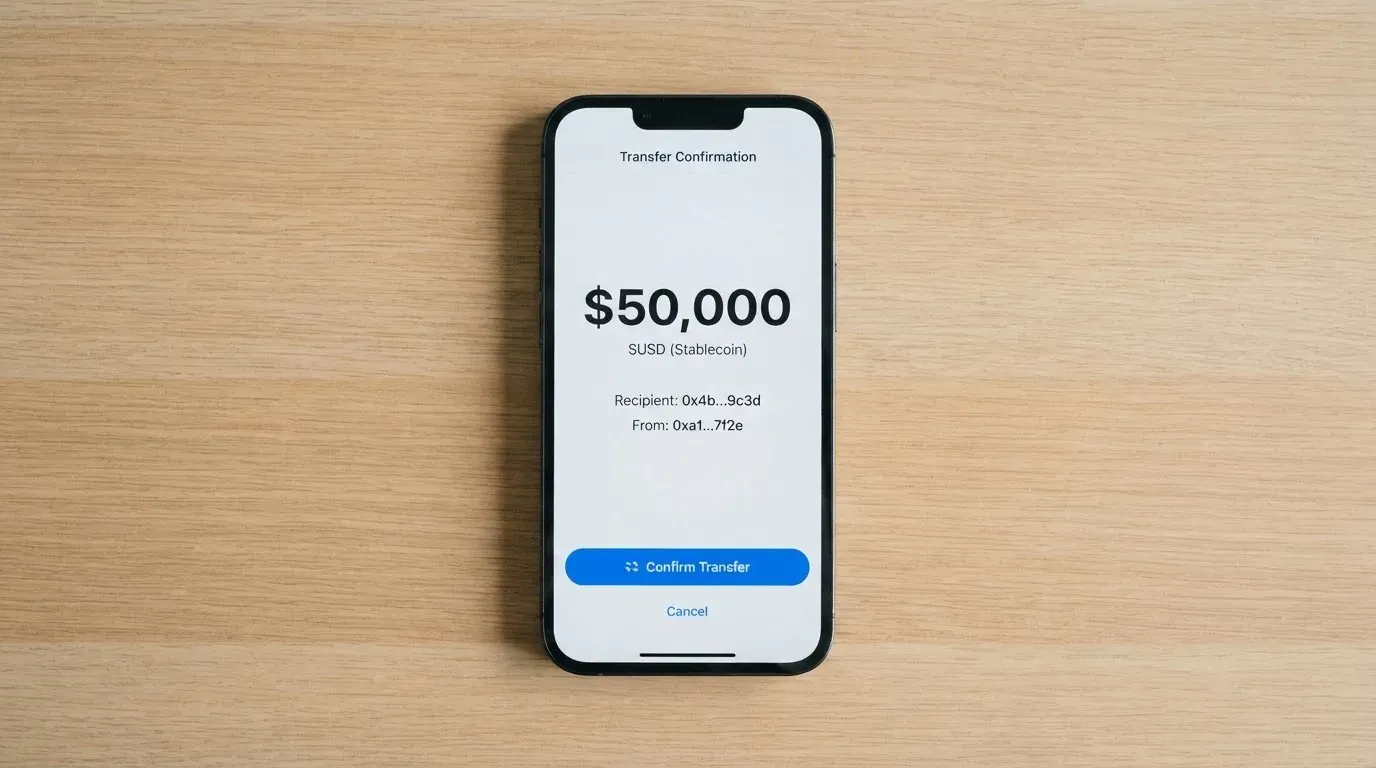
The unsaid parts are the ones that decide whether a transfer works. The networks are not stated. This matters more than it might seem: when you send USDT, you choose a network, and the card provider has to be watching that network for your deposit. Send on the wrong chain, or to an address on a network the provider does not support, and the money can be stranded or lost — blockchain transfers are irreversible by design. The company does not say whether you bear the on-chain network fee, either. So the sequence in front of you is: pick a coin, pick a network the provider is actually watching (which the site does not tell you), send, wait. That middle step is the gap.
The stated numbers: a load fee of $5.00 (2.0%), and $10 to $1000 maximum load per virtual card transaction. That $1000 ceiling is a per-transaction limit, not clearly a lifetime or balance cap.
And what about getting your money back out? The answer is that the withdrawal side is not stated. The refund policy does say orders are final once a card is issued and delivered, that approved refunds generally land within 5 business days, and that any balance left when an account closes is not addressed. Read together, those clauses point one way: this is a card you load to spend, not an account you can drain back to a wallet. If you need reversibility — the ability to get funds out — you should assume, until the company tells you otherwise in writing, that you do not have it.
Paying with it every day
Day-to-day, a VCCPRO card is an online payment tool first. It is virtual only — no plastic — and comes as a Visa or a Mastercard. The product line includes an “NFC Contactless Virtual Card,” and the FAQ states these NFC cards “fully support Apple Pay and Google Pay integration,” which means you can add the card number to your phone’s wallet and pay by tapping or by device token rather than typing the number each time.
The part I like about the everyday picture is that it maps cleanly onto how online spending actually happens. If you are paying for subscriptions, services, and digital goods, a virtual card number that lives in your phone wallet is close to ideal — you never handle it physically, and it is not the card number you use everywhere else, which is a small privacy benefit if you are compartmentalising.
The gaps are in the physical and cash world. No plastic card exists, so there is no in-person chip-and-PIN experience to speak of. ATM withdrawal is not disclosed, which is consistent with virtual-only and means no reliable cash access. Beyond that, several everyday-use features simply are not stated: which merchant categories are blocked is not stated; rewards or cashback are not stated; and there is no app — it is a web shop — so any spending controls, notifications, or card freezing you expect from a modern card simply are not documented.
One practical protection to know about: the refund policy denies refunds for “prohibited or high-risk merchants.” That phrase is doing a lot of work without a list attached. It means there are merchants — gambling being the classic category that card issuers block by policy — where a charge will not be refunded if something goes wrong, and you have to find out which ones by having a payment declined.
There is also a real question of what happens when something goes wrong, which I will come back to under risks. In short: you are expected to report a problem within 24 hours of delivery, with your Order ID, email, a description and screenshots. The clock is short and the burden of evidence is on you.
What can go wrong
This is where I have to be blunt, because the failure modes of this category are well documented and VCCPRO sits inside them.
Start with the company itself. VCCPRO Ltd is registered at Lytchett House, 13 Freeland Park, Wareham Road, Poole, Dorset, UK BH16 6FA. It describes itself plainly: “a technology platform and is not a bank, electronic money institution, or card issuer.” Cards are issued by unnamed licensed third-party providers. No licences are named and no registration number is given. So the entity you are paying is a marketing and technology platform; the entity whose licence actually stands behind your card is one you are not told about. For an online-only, virtual-only, crypto-funded card, that is a thin structure — and it means your recourse, if a card fails or a balance is frozen, runs through a company that says on its own site it is not the regulated party.
The user reports are the other half of the picture, and they are consistent. On Trustpilot the card scores 3.5 out of 5 from 294 reviews (I read this on 2026-10-21), with roughly 70% five-star and 22% one-star. Recurring themes, from user reports rather than the company: paid orders not delivered, or left “on hold” (roughly October 2025 to September 2026); slow or no support response (roughly December 2025 to May 2026); and accusations of scam, which the company disputes as harassment by one individual (roughly December 2025 to January 2026). Against that, the company’s own position is that there are no official incidents to report.
On support specifically, the channels are WhatsApp, Telegram (@worklinkx), and a contact form. Hours and languages are not stated. That matters for a product where problems are time-sensitive: their refund policy asks you to report a delivery problem within 24 hours, and if support is slow or asleep when you message, that window can close before anyone looks at it.
Three more risks deserve naming. First, the balance question again — because withdrawals are not stated and closure balances are not addressed, you should not treat money left on this card as recoverable savings; treat it as spend-it-or-lose-it. Second, the regulatory direction of travel: cards like this depend on licences, and licences move. Visa and Mastercard license issuers rather than issuing crypto cards themselves, and either can suspend or wind down a programme — the FTX US debit card is the standing example. A closure typically means loading and spending stop, and you are then asked to withdraw whatever balance remains, which is exactly the outcome this card’s unclear withdrawal terms leave you least prepared for. Third, the everyday fraud-adjacent ones that apply to any crypto-funded card: the possibility that a decline leaves a hold on your funds for several days, and the fact that because these are virtual, prepaid-style cards, some merchants simply decline them or apply extra scrutiny when the issuing country does not match your billing address.
What to take instead
If VCCPRO’s model — fast virtual cards, paid in crypto — is what you want, it is not the only option, and the alternatives have their own strengths. I include my score for each so you can weigh them the same way. These scores are from the same ten-point framework, not from a different yardstick.
CardFlow — 4.9 / 10. Aimed squarely at Nigeria (“Nigeria’s smartest fintech card platform” and “Nigerians and global users”), with no country exclusions stated. It issues a virtual USD Mastercard created quickly. Notably, “creating a virtual card is completely free” (its site FAQ), though monthly fees are not stated. Funding is Bitcoin, USDT, ETH, or Naira bank transfer; networks are not stated. If you are Nigerian or transact in naira, the free creation and local transfer are the appeal; if you are elsewhere, the Nigeria focus is the limit.
HyperCard — 4.7 / 10. A prepaid card with no country list on the official pages; the App Store says it works in “more than 176 countries” — though that is acceptance, not eligibility, and it is worth keeping the two apart. The card balance is in USD or EUR. You deposit crypto such as USDT, BTC, or ETH in the app and it converts to USD or EUR on the card. The App Store page lists no fees. The draw is the simplicity of a two-currency balance; the drawback is that neither costs nor the network details are published on the pages I could read.
Card.fi — 6.6 / 10. The most fully specified of the three, and the one I would point you at first if you want documentation rather than speed. Cards ship to “200+ countries,” with the bar being residents of, or orders from, a sanctioned country where the service would be prohibited. It offers Virtual Classic and Virtual Premium, physical Classic and Premium, and a metal card; every physical order includes a virtual card, and cards are issued “under licence from the relevant card schemes” (Visa and Mastercard are not named by scheme). Costs are one-time: Virtual Classic $49, Virtual Premium $249, with no monthly, annual, inactivity, or minimum-balance fee. Its fee schedule is published: top-up Classic 1.5% plus $1.00 and Premium 1%; FX fee Classic 3.5% and Premium 2.5%; the conversion fee is shown before each top-up. Funding is the widest of any of these — 32 coins across five networks (Ethereum, Base, BNB Chain, Solana, and Kaanch) including USDT, USDC, ETH, BNB, SOL, and KAANCH, with a deposit address per card and conversion at market rate on arrival; sending on the wrong chain risks permanent loss. Rewards are cashback on card spending only: Classic 0.8% capped at 10 USDT a month, Premium 1%, and Metal 1.2% capped at 10,000/100 USDT depending on tier or 2% capped at 250 USDT a month / 20,000 USDT, plus a headline 10% at coffee shops capped at 10 USDT a month and “up to 18%” on balances for Metal, variable. The tradeoff is clear: you pay more up front than VCCPRO’s $4.99 and you get a far more legible product.
| Alternative | Score | Card | Issuance cost | Loading / FX fees |
|---|---|---|---|---|
| VCCPRO | 6.1 / 10 | Virtual Visa and Mastercard | $4.99 | Load 2.0% + $5.00; conversion and FX not stated |
| Card.fi | 6.6 / 10 | Virtual, physical, metal; scheme not named | $49 (Virtual Classic) / $249 (Virtual Premium) | Top-up 1–1.5% + $1.00; FX 2.5–3.5% |
| CardFlow | 4.9 / 10 | Virtual USD Mastercard | Free to create | Not stated |
| HyperCard | 4.7 / 10 | Prepaid; network not stated on App Store page | Not stated | Not stated |
Two honest caveats about this comparison. Card.fi’s much higher visibility does not make it safer by default — it is a different structure with its own counterparty risk — it just means you can read what you are agreeing to. And all of these, VCCPRO included, share a category-level caution: whoever ends up as the licensed issuer can change, and when a programme winds down, the last thing you want is an unread refund policy.
Who I would recommend it to
I would recommend VCCPRO to a specific person, and I want to be concrete rather than diplomatic. Consider it if you need a working virtual card number for online payments quickly, you routinely pay in crypto and are comfortable converting and loading a balance, your spending is mostly online and in a single currency so the undisclosed FX and conversion costs barely bite, and you treat the balance as spend-it money rather than savings. If all of that is true, the low $4.99 issuance, the absence of any recurring fee, and the near-instant delivery are real advantages over more bureaucratic alternatives.
I would steer you elsewhere if any of the following is true of you. If you need cash from an ATM, or a physical card for in-person chip payments — this product does not offer them. If you intend to hold a balance or move money in and out — withdrawals are not stated and closure balances are not addressed. If you want to know, before you commit, exactly who the regulated issuer is and under which licence — VCCPRO will not tell you, and will tell you it is simply a technology platform. If a published FX rate and a published conversion spread matter to you — they are not here. And if you are the kind of person for whom a 3.5-out-of-5 Trustpilot score with recurring “order on hold” complaints is a red flag you cannot ignore — that is a legitimate position, and one of the alternatives above will serve you better.
My one practical suggestion, whichever card you choose: keep crypto you have not spent in your own wallet, not on the card, and treat any load as money you intend to lose until the card proves otherwise.
Frequently asked questions
What is VCCPRO card?
VCCPRO is an online platform selling quick virtual payment cards — Visa and Mastercard — that you buy with cryptocurrency. You choose a card in a web shop, pay at checkout in crypto, and receive the card details, usually within 30 minutes to 6 hours. The products are virtual only; there is no physical card. The cards include an NFC contactless virtual card that works with Apple Pay and Google Pay.
Is VCCPRO a bank?
No. VCCPRO describes itself as “a technology platform and is not a bank, electronic money institution, or card issuer.” The actual cards are issued by unnamed licensed third-party providers. The company is VCCPRO Ltd, based in Poole, Dorset, UK. It publishes no licence names and no registration number, so the licensed party behind the card is not identified on its public pages.
Who owns VCCPRO card?
The card product is operated by VCCPRO Ltd, registered at Lytchett House, 13 Freeland Park, Wareham Road, Poole, Dorset, UK BH16 6FA. However, the card itself is issued by a licensed third-party provider that VCCPRO does not name. So there are two parties: the platform you buy from and the issuer you do not learn the identity of.
Does the VCCPRO card require KYC?
Possibly. The homepage mentions no identity check, but the Terms say “Identity verification, sanctions screening, and PEP screening may be required, depending on service providers, issuing partners, or applicable law.” No specific verification tiers are described. In practice, an identity or sanctions check can appear at checkout rather than at sign-up, and you would only find out when it does.
Is the VCCPRO card available in my country?
Probably. VCCPRO publishes no country list and no exclusions, and advertises acceptance “worldwide by top global platforms” with BINs from the US, UK, EU and Asia. Because the cards are issued by unnamed third-party providers, though, the real eligibility rules sit with that issuer and are not published. There is one clear requirement: you must be 18 or older.
How do I top up the VCCPRO card?
You load it with crypto at checkout — Bitcoin and USDT are named, with “such as” other cryptocurrencies, plus Perfect Money as a non-crypto option. PayPal is not accepted, and there is no direct fiat top-up from your bank. Each load costs $5.00 (2.0%), with $10 to $1000 per transaction. The networks you can send on are not stated, which is the detail to confirm before transferring.
Can I withdraw money from VCCPRO?
The withdrawal side is not stated. The refund policy says orders are final once the card is issued and delivered, approved refunds generally arrive within 5 business days, and it does not address any balance remaining when an account closes. I would plan as though you load the card to spend, not to move money back out, and confirm any exit route with support before loading.
Is the VCCPRO card safe to use?
Safety here depends on facts the company does not publish. It does not say whether funds are held in custody by it, and it does not describe two-factor authentication or a card freeze. Its Trustpilot score is 3.5 from 294 reviews (read 2026-10-21), with recurring user reports of undelivered or held orders and slow support. Use it for spending you can afford to lose, not for storing funds.
Is the VCCPRO card worth it?
Worth it if you need a virtual card number for online payments today and pay in crypto — the $4.99 issuance, no recurring fee, and fast delivery are genuine wins. Not worth it if you need a physical card, cash withdrawals, published FX and conversion costs, or clarity on who the licensed issuer is. It earns 6.1 / 10 in my scoring; the more fully documented alternative, Card.fi, earns 6.6 / 10.
Virtual card verdicts – cryptocardverdict
Content created by the «cryptocardverdict» team