
wavecard spends Bitcoin straight from your balance — for 1% and a spread, if you live in the EEA
 Available in US
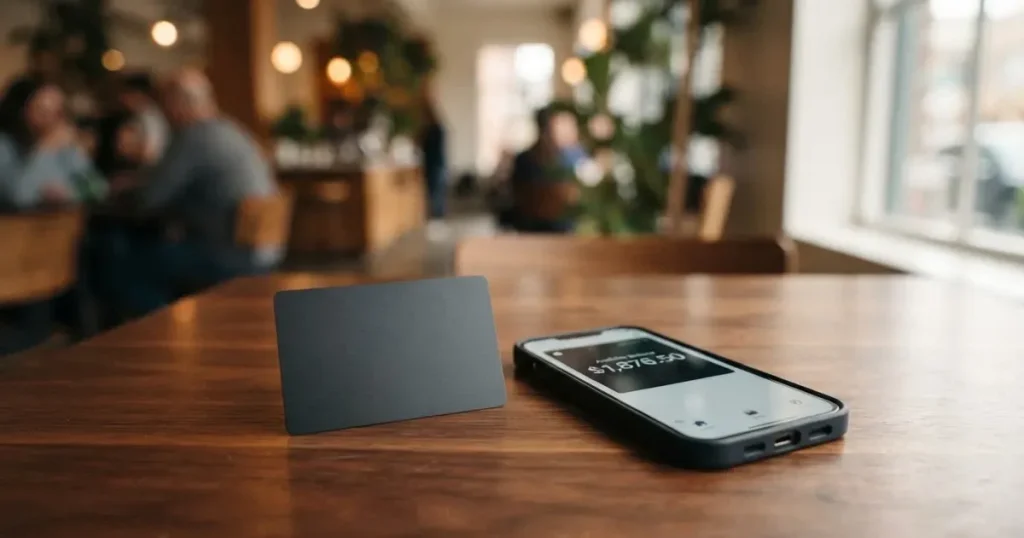
The short version: wavecard is not a bank account with a card attached. It is a way of turning Bitcoin into card payments at the moment you spend. You load bitcoin or euros onto the card, and when you pay something, wavecard sells the bitcoin and the money goes to the merchant. That single design choice explains almost everything about how the card feels in daily use — the fees, the limits, the freeze button in the app, and the one thing that has drawn the worst reviews.
I scored it 6.3 out of 10. That is a passing, unremarkable score, and the reasons for it are unusually easy to lay out: strong on everyday mechanics, decent on cost, and held back by narrow funding options and a young operation with a thin complaint history.
The conditions described here are current as of October 28, 2026.
Verdict: 6.3 out of 10, and it suits a very specific person
wavecard is built for one reader: someone who lives in the European Economic Area, already holds bitcoin, and wants to spend it without the dance of moving it to an exchange first. If you have a euro IBAN and your savings are denominated in sats, this card does something no mainstream bank will do for you. It is a genuine convenience, and the app-based card control is better than most.
It is not for someone who wants a normal spending card with a salary behind it. It is not for anyone outside the EEA. It is not for people who need stablecoins on other networks, or a physical card that arrives tomorrow, or a chargeback process that is written down. And there is one behaviour of the operator’s that should give you pause before you load anything you care about — I come back to it in the risks section.
Here is the score broken down.
| Criterion | Mark | Why |
|---|---|---|
| Who can get it | 5 / 10 | All residents aged 18+ of the EAA — 30 countries — by residence, not citizenship. Broad inside the bloc, closed outside it entirely. |
| Cost | 7 / 10 | Virtual card EUR 2.99, physical EUR 29.99, no monthly fee. Bitcoin conversion 1%, a spread of about 0.5% inside the BTC price, no FX fee between fiat currencies. ATM 3% plus EUR 2. |
| Top-up options | 6 / 10 | BTC on-chain and over Lightning, EUR to a personal vIBAN to buy bitcoin, and a PRO option with a self-custodial Lightning wallet over NWC. No stablecoins. |
| Reliability and complaints | 6 / 10 | Wave Space Exploration UAB in Lithuania; services by Lightspark Payments Europe AS in Tallinn; the card itself issued under a white-label arrangement with a third party. Trustpilot 4.3 from 25 reviews, and a January 2026 report of an account blocked with funds held. |
| Everyday use | 8 / 10 | Virtual card instantly, physical Visa debit, Google Pay and Samsung Pay on by default, ATM up to EUR 350 a day. Apple Pay only through the Curve app. |
| Total | 6.3 / 10 | Strong mechanics, narrow funding, young operator. |
The reliability mark is the one I would look at twice. A 6 out of 10 for a card that holds your money is not a disaster, but it is not a comfort, and it rests on a company structure where the brand you are reading about, the licensed provider, and the actual issuer are three different names.
Will they give you the card?
Eligibility is by residence, and it is narrower than it first sounds. wavecard states that all residents aged 18 and over in the European Economic Area can apply. That is 30 countries: Austria, Belgium, Bulgaria, Croatia, Cyprus, Czechia, Denmark, Estonia, Finland, France, Germany, Greece, Hungary, Ireland, Italy, Latvia, Lithuania, Luxembourg, Malta, Netherlands, Poland, Portugal, Romania, Slovakia, Slovenia, Spain, Sweden, plus Liechtenstein, Norway and Iceland.
Three things follow from this that matter more than the country list itself:
- It is residence, not citizenship. The card’s own wording is “by residence”. A citizen of one of these countries living in Brazil is not eligible; a citizen of anywhere living in Warsaw is. This is the standard pattern for European financial products, and it means the answer to “can I get this?” depends on where you actually live.
- There is no path in from outside the bloc. No third-country programme, no waiting list I can find in the public material. If you are reading this from outside Europe, the honest answer is that this is not your card.
- Age 18 is the floor. Prepaid and debit products generally sit there, and some issuers push higher. wavecard has not raised the bar.
What is not stated: the specific documents required, or whether proof of address is collected. The card mentions verification but does not enumerate a document list in its public pages. You should expect to prove who you are and where you live, because in the EU that is not optional — customer due diligence covers name, address, date of birth, nationality and identity documentation, a sanctions check, the purpose of the relationship, and whether you are a politically exposed person. If that process cannot be completed, EU rules require the institution to hold off on the transaction or the relationship, and where necessary to end it. That is the legal background to every account freeze anyone will ever read about on this card or any other.
Nationality is also recorded and screened separately from your address, because sanctions screening usually applies to citizenship and country of birth as well as to where you live. So “I live in France” is the answer to eligibility, but it is not the whole of the check.
How to get it
The route is short. You sign up for a verified wave.space account — the card says sign-up and verification take under five minutes — and that verified account is what gets you a personal vIBAN and the card itself. Verification is free of charge, and the age floor is 18. Documents and proof of address are not stated.
Then you choose a card:
- Virtual card — issued instantly.
- Physical card — a Visa debit. Delivery is Standard at 5–9 working days for EUR 0, tracked, or Express at 2–3 working days for EUR 30 under the terms. Delivery countries are the same EEA list as eligibility. The card must be activated on arrival. Replacement cost is not stated.
You can create more than one card, and the card currency is not stated — though fiat is EUR through the vIBAN, and the card advertises 0% FX fees.
On KYC tiers: only one is mentioned anywhere in the public material, “Tier 2 KYC”, and its only stated effect is that it raises monthly spending to EUR 15,000. Other tiers are not described, nor is processing time, nor are the reasons a verification might be refused. That is unusually thin disclosure for something that gates whether your money arrives.
My honest read on the five-minute figure: it describes the flow, not the worst case. The category background explains why — a file that does not match records, or a screening hit, sends the application into manual handling, and the public pages give you no basis for expecting a clock.
Fees: what it really costs
This is the part to read twice, because the headline numbers look good and the small print adds up. Every figure below is what wavecard states.
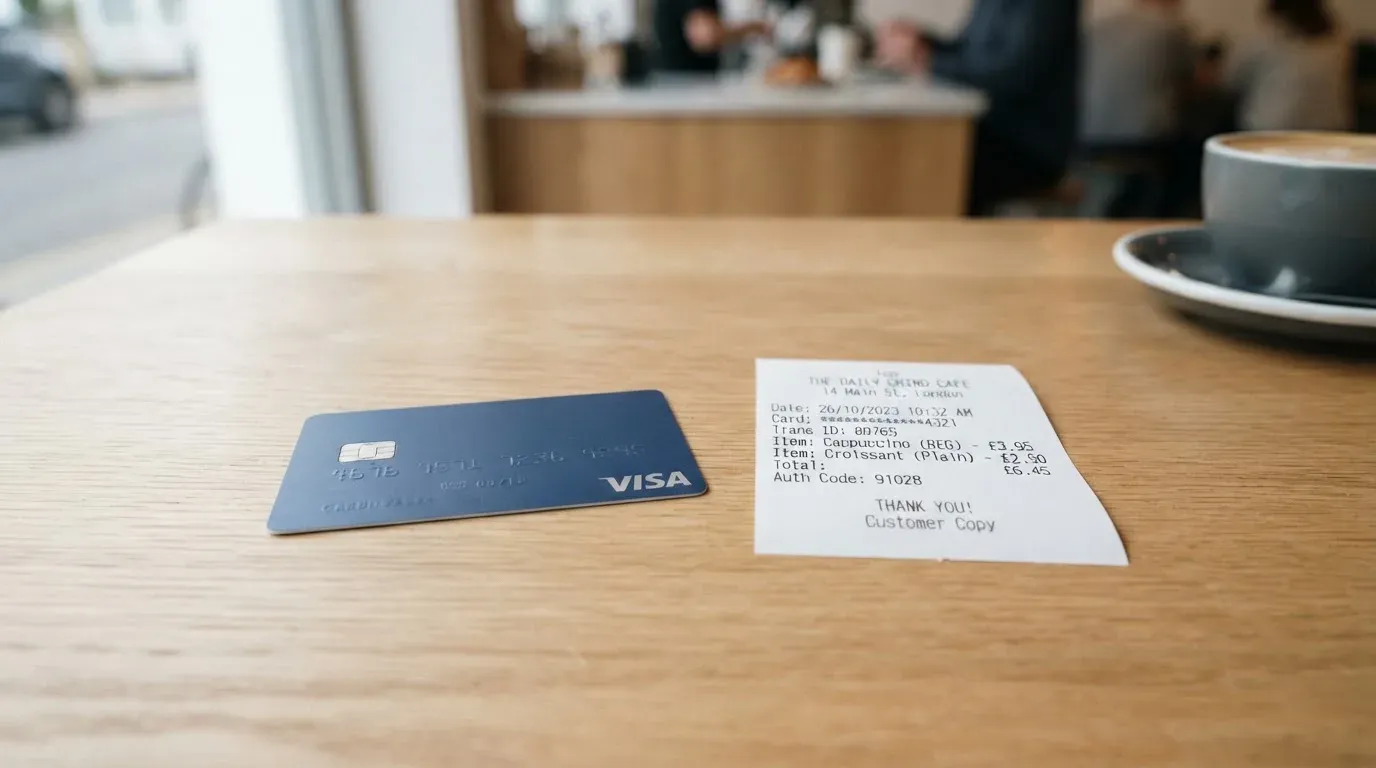
| Item | Fee or limit | Notes |
|---|---|---|
| Virtual card opening | EUR 2.99 | Paid in bitcoin |
| Physical card opening | EUR 29.99 | Paid in bitcoin; terms confirm |
| Monthly fee | Free | — |
| Spending from bitcoin | 1% | Terms: 1% on card payments |
| Crypto-to-euros swap | 1% | Per the terms |
| Spread | About 0.5% | Already “baked into the BTC price” |
| FX between fiat currencies | None | Stated as 0% |
| ATM withdrawal | 3% + EUR 2 | “At cost”; terms: EUR 2 plus 3.00% |
| Daily spend | EUR 10,000 | — |
| Monthly spend | EUR 10,000 | Up to EUR 15,000 with Tier 2 KYC |
| Daily ATM | EUR 350 | — |
| Monthly ATM | EUR 3,000 | — |
Not stated: a free allowance on ATM withdrawals, multi-currency balances, and any blocked merchant categories.
Now three ordinary payments, and what each one triggers.
Buying EUR 40 of groceries with bitcoin on the card. The 1% conversion fee applies, so EUR 0.40 goes in fees. The roughly 0.5% spread is already inside the bitcoin price you are given, so it applies too, invisibly — another roughly EUR 0.20. No FX fee, because you are not crossing currencies: the card spends euros. The total cost is 1% plus the spread, and there is no monthly fee eating into it. This is the case wavecard is good at.
Withdrawing EUR 100 from an ATM. EUR 2 plus 3% comes off the top, so EUR 5, before whatever your own bank’s ATM charges you on top — a cost the card cannot control. The category rule of thumb is that ATM use is the expensive end of any card, and here it is expensive twice over. If you can pay EUR 40 at the shop, do that.
Swapping crypto to euros. The terms list 1% for this as a separate line from card payments, and it is the route that refunds take: a refund is converted back to bitcoin at the available market rate. So a returned purchase goes back as bitcoin, not as euros, at the rate of that moment, with the fee on top. If the price moves between the purchase and the refund, the round trip is not neutral.
One thing worth understanding about the 1% and the spread: they are not the same charge wearing two hats, but they are not unrelated either. The 1% is wavecard’s. The 0.5% sits in the bitcoin rate you see. Together they mean a 1% fee and a 0.5% spread off every euro you spend from bitcoin, which is the real number to hold in your head — and it lands on small everyday purchases exactly as heavily as on large ones.
Top up: how the balance gets there
There are three ways, and all of them end with bitcoin on the card. The card holds BTC until you pay, and sells it at that moment.
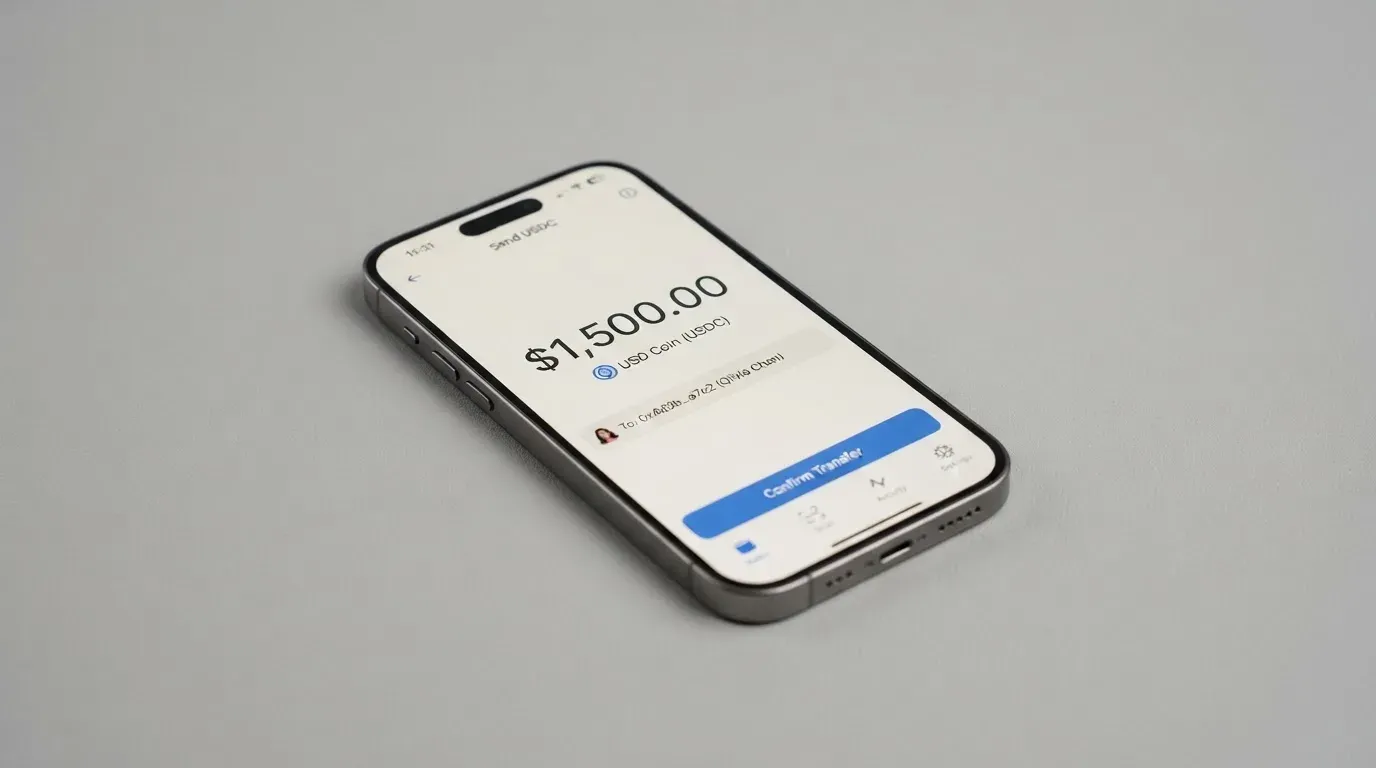
On-chain bitcoin. You send BTC to an address. Simple, and you pay the blockchain’s own network fee, not the card’s.
Lightning. The card accepts Lightning invoices and LN addresses. If you have a Lightning-native balance, this is the cheapest and fastest route, and it is the clearest reason to pick this card over a competitor that only speaks on-chain.
EUR to your personal vIBAN, to buy bitcoin. You send euros, and wavecard converts them into BTC. The terms put this at 1% conversion.
The PRO self-custodial option. This connects a Lightning wallet of your own via NWC — Alby is the recommended one — so the wallet stays yours rather than sitting with the provider. It is the answer to anyone who does not want to hand over control of their keys, and it is genuinely different from the default custodial setup.
Not stated: the deposit fee, any minimum, and exactly which network addresses to use. That last one is not a nitpick. Blockchain transfers are irreversible, and a deposit sent on a network the provider does not support, or to an address belonging to a different network, can be lost or need manual recovery with no guarantee. Copy the address from wave’s own interface rather than from memory or from an old message.
Getting money back off. Withdrawals work in the opposite direction: the card converts back to bitcoin at the available market rate. Closing the account is done by email to [email protected]. What happens to a balance left at closure is not described — so if you hold a balance, take it out yourself rather than assuming an orderly wind-down. And accounts inactive for 365 days may be closed, or may attract a maintenance fee. Those are the two lines I would read twice before walking away from the card for a long trip.
Paying with it every day
This is where wavecard scores best, at 8 out of 10, and it is not close to a marketing decision.
The virtual card arrives instantly. You can have a number in seconds and start paying, which matters if you are trying to sign up for something right now rather than plan ahead.
Google Pay, Samsung Pay, Fitbit Pay and Garmin Pay are on by default. You do not have to switch them on, which is the difference between a wallet integration people use and one they set up and forget.
Apple Pay is not. It works only through the Curve app, and the card says direct Apple Pay support is coming soon. If Apple Pay is how you pay for everything, this is a daily friction point — one extra app in the loop on every tap.
The card is a Visa debit. Visa Secure (the 3-D Secure brand) adds an identity step to online payments: the issuer assesses risk and either approves frictionlessly or challenges you, with a one-time code or a biometric. That is protection when it fires, and a small number of extra taps when it does not.
Merchant-category blocking is not stated, so I cannot tell you whether gambling, adult content or similar categories are refused. That is worth asking support directly if it matters to you, because the industry convention is that issuers block MCC 7995, gambling, by policy rather than by law — and the blocked list varies by issuer, so there is no general answer to point you at.
On apps and rewards: the web app is app.wave.space, and no App Store or Google Play rating is stated. Rewards are not stated either — no cashback is mentioned anywhere in the public material, so assume there is none.
Disputes are the weak point of the design. No chargeback process is described. Card matters are referred to the issuer’s terms, claims are answered within two business days, and refunds come back as bitcoin. That is the part to weigh carefully if you are spending anything you would want to win back. A chargeback is a refund ordered by the issuer to settle a dispute, with reason codes for fraud, duplicate billing or goods not received — and US debit reversal rights come from Regulation E while prepaid coverage varies and should not be assumed. wavecard does not describe that machinery for itself.
One structural fact that shapes everything else, and it is easy to miss: the card number begins with a BIN identifying the issuing institution and its country, and merchants can look it up. When the issuer country differs from the billing address, some shops apply extra scrutiny, and some decline prepaid or foreign BINs outright. wavecard’s physical card comes from a Lithuanian operator through a third-party issuer, which means a decline abroad is not always about you. It is also why a declined authorisation can leave a hold on your funds for several days — typically up to seven.
What can go wrong
The company behind it is young, small and layered. Wave Space Exploration UAB, registration 306727148, is based in Lithuania. Its terms state that licensable financial services are provided by Lightspark Payments Europe AS, registration 16298772, in Tallinn, Estonia. The wavecard itself “is issued through a white-label arrangement with a third-party provider, Wave Space acts as the distributor”. The licence type is not stated, and Lithuanian law governs. Read that structure carefully: the brand on the app, the regulated provider and the actual card issuer are separate entities, and your remedy sits with whichever one your terms place it with. In November 2022 Visa said it had “terminated our global agreements with FTX”, and in 2018 Visa suspended WaveCrest in Europe, closing all WaveCrest-issued Visa programmes. Programmes do close.
Account freezes with money held. On Trustpilot — read 21 October 2026, a TrustScore of 4.3 across 25 reviews, with the star graphic showing 4.5 — the themes that recur are an account freeze with funds withheld, a claim about review authenticity from June 2025 which the company disputes, requests for Lightning support and a physical card through 2025, and slow bitcoin confirmations in January 2025. The freeze is the serious one: a user report from 15 January 2026 describes an account blocked after sending money with the funds kept, and the company replied on 18 March 2026 that it had been suspended for compliance reasons and a full refund was offered. One case is not a pattern, and the reply matters. But it is the specific risk this card carries that a normal bank does not: compliance enforcement against a crypto account can freeze the balance itself.
Custody means trusting someone with your keys. With a custodial wallet the provider holds the credentials and you must trust it completely. The category’s record is not encouraging: Mt. Gox, about US$350 million reported stolen in 2011–2014; Coincheck, about US$400 million in 2018; Ronin Network, US$625 million in 2022. The PRO self-custodial option exists precisely because of this, and if you take it you carry the opposite risk — seed-phrase loss, phishing, and clipboard malware that swaps an address after you copy it. Transfers are irreversible and a stolen key has no recovery.
Regulation is settling around this product. MiCA, Regulation (EU) 2023/1114, took legal effect in June 2023; its token rules applied from 30 June 2024 and the rest, including crypto-asset service provider rules, from 30 December 2024. Under MiCA, e-money tokens may only be issued by a credit institution or an electronic money institution. The transitional period runs until 1 July 2026 or until a provider is authorised or refused, whichever comes first — so a provider’s regulatory footing can genuinely change while you are using the card. ESMA keeps a public interim register of authorised CASPs and non-compliant entities, and checking it costs you two minutes.
Safety tools exist; guarantees do not. You can freeze the card and change limits in the app, set recovery codes and a 3-D Secure password, and a pseudonymous name on the card is allowed. Safeguarding of funds is not stated. If the provider is an electronic money institution, EU rules require customer funds to be safeguarded — segregated in dedicated accounts or insured — but such funds are not bank deposits and may not sit under a deposit guarantee scheme. Nobody can promise you what happens in a failure, and I am not going to.
Tax is yours to work out. This is not advice, only a flag. Digital assets are generally treated as property, so converting bitcoin into goods or services is a disposal measured in local currency at the value on the date of the transaction. A card funded from crypto can produce a separate taxable event on every single payment. Talk to a professional in your own country rather than taking my word for anything here.
Inactivity and closure. Accounts inactive after 365 days may be closed or charged a maintenance fee. What a balance does on closure is not described.
What to take instead
wavecard’s competition is not really other Bitcoin cards; it is a set of cards that solve slightly different problems. Here is how the three I looked at compare, on their own published terms.
| wavecard | International Visa Card | UNi Card | Morse | |
|---|---|---|---|---|
| Score | 6.3 / 10 | 6.7 / 10 | 6.1 / 10 | 7.5 / 10 |
| Who | EEA residents 18+ | Not residents or registrants of Belarus, mainland China, North Korea, Cuba, India, Iraq, Iran, Israel, Myanmar, Nepal, Nicaragua, Russia, Syria, Turkey, Ukraine, Venezuela, Vietnam; FATF grey list case by case | Not stated | 18+ and resident in a supported country; app in over 140 countries |
| Card | Virtual instantly, physical Visa debit | U.S.-issued Platinum Visa, virtual; physical “Coming soon” | Multicurrency Mastercard, physical/virtual not stated | Fully virtual Visa prepaid |
| Issuance | EUR 2.99 virtual / EUR 29.99 physical | $5 virtual, no maintenance fee | No annual fee; issuance fee not stated | Not stated; cardholder agreement says fees may apply |
| Spending from crypto | 1% conversion plus about 0.5% spread | Free in USD; “Visa exchange rate + 2% FX fee” abroad | Converted at live OTC rates, no foreign transaction fee | Paying online and contactless is free |
| Funding | BTC on-chain and Lightning, EUR via vIBAN, PRO self-custodial | USDC or USDT 1:1, plus USD, EUR, SEPA, SWIFT, FedNow | Not stated | Debit card, stablecoin transfer, Account Details (USD, EUR, MXN, COP; BRL needs CPF); USDC, USDG and EURC on Solana free, other tokens cost; wallet is self-custodial |
| Rewards | Not stated | No cashback stated | Up to 3% Spend-to-Earn | Not stated on card pages |
Reading that table rather than just scoring it:
Morse (7.5) is the strongest of the four, and the reason is that it drops the crypto-conversion layer for everyday spending: paying online and contactless is free, with zero foreign exchange fees and the real-time Visa rate. It is also fully virtual for now, self-custodial, and reaches far more countries — over 140 for the app. It also runs a closed beta in American Samoa, Australia, Cape Verde, Guernsey, Hong Kong SAR China, Isle of Man, Japan, Jersey, New Zealand, Serbia, Singapore, Switzerland, Thailand, Türkiye, the United Kingdom and Western Sahara, needs an invite code, cannot serve customers subject to US sanctions, and its card page does not publish the country list — you have to check the app. If you spend across multiple currencies rather than spending bitcoin, Morse is the more logical pick.
International Visa Card (6.7) is the opposite bet: a US-issued Platinum Visa card that spends USD for free, with a 2% FX fee abroad, funded by USDC or USDT at 1:1 and by ordinary rails including SEPA and SWIFT. It has the longest and most explicit country exclusion list of the four. If stablecoins are what you actually hold rather than bitcoin, it is the more direct instrument — and note the direction of travel in this category: Visa and Mastercard do not issue crypto cards to consumers themselves, they license issuers, and they can pull a programme.
UNi Card (6.1) is the weakest fit for anyone reading this page. Eligibility and funding are not stated, it is a multicurrency Mastercard spending from a UNi.Global balance, and its differentiator is rewards up to 3% rather than crypto mechanics.
The honest summary: wavecard is the one of these that treats Lightning and bitcoin as first-class, and the weakest of the four on published transparency about regulatory status and dispute handling. If your money is in stablecoins, look elsewhere. If it is in bitcoin and you are in the EEA, this is a reasonable tool with real costs and one documented headache.
Who I would recommend it to
I would recommend wavecard to a person who lives in the EEA, is 18 or over, already holds bitcoin they are not planning to sell at a bad moment, and wants a card that spends it without an exchange in the middle. I would also recommend it to anyone who lives on Lightning and has been annoyed that crypto cards do not speak it — the invoices, the LN addresses and the PRO self-custodial NWC option are not marketing bullets, they are the actual product.
I would not recommend it as your only card. Not because of the fees, which are honest and disclosed, but because of the combination of no described chargeback process, no stated safeguarding of funds, a white-label issuer chain, and a complaint theme that includes an account frozen with the funds inside. Hold a second card for the things that would hurt to lose.
And before you commit, do the boring part: send a small amount of bitcoin first, spend it somewhere ordinary, withdraw a little cash, and see how the timing, the fees and the support actually behave. Then check the provider’s standing on ESMA’s interim register. Ten minutes of that costs you nothing and tells you more than any review, including this one.
Frequently asked questions
What is wavecard card?
wavecard is a Visa debit card that spends bitcoin rather than a bank balance. You load bitcoin onto it, or send euros to a personal vIBAN and have them converted, and the card holds the BTC until you pay something — then it sells at that moment. It sits under a Lithuanian operator, Wave Space Exploration UAB, with services from Lightspark Payments Europe AS. It is not a bank account.
How does wavecard card work in practice?
Every payment triggers a conversion. wavecard takes a 1% fee, and the roughly 0.5% spread is already built into the bitcoin price you are quoted, so the effective cost of spending is 1% plus the spread of the euro amount. Refunds work backwards: they are converted back to bitcoin at the then-current market rate, so a returned purchase can leave you with a different amount than you started with.
Is wavecard a bank?
No, and this matters for what protection you have. The operator is a Lithuanian company, and the card itself is issued through a white-label arrangement with a third-party provider, with wavecard acting as distributor. The card’s own pages do not describe a safeguarding arrangement for your balance. EU rules require electronic money institutions to safeguard customer funds, but such funds are not bank deposits and may not be covered by a deposit guarantee scheme.
Who owns wavecard?
Wave Space Exploration UAB, registration number 306727148, based in Lithuania. Its terms say licensable financial services are provided by Lightspark Payments Europe AS, registration 16298772, in Tallinn, Estonia, and that the card is issued through a white-label arrangement with a third-party provider. The licence type is not stated, and Lithuanian law governs the terms.
Is wavecard available in my country?
Only if you live in the European Economic Area and are 18 or over — 30 countries from Austria to Iceland, plus Liechtenstein and Norway. The rule is residence, not citizenship. There is no route in from outside the bloc, and no waiting list in the public material. If you are elsewhere, one of the alternatives may serve you instead.
Does wavecard require KYC?
Yes — a verified wave.space account, which the card says takes under five minutes, and verification is free of charge. Documents and proof of address are not stated. What is stated is “Tier 2 KYC”, which raises monthly spending to EUR 15,000; other tiers, processing times and refusal reasons are not described. Have your identity and address documents to hand anyway.
How much does wavecard cost to open and to keep?
Opening is EUR 2.99 for the virtual card and EUR 29.99 for the physical one, paid in bitcoin. There is no monthly fee. Spending from bitcoin costs 1%, plus the roughly 0.5% spread in the price. There is no FX fee between fiat currencies. ATM withdrawals cost 3% plus EUR 2. Card delivery is free tracked in 5–9 working days, or EUR 30 for 2–3 working days.
What are the limits?
Daily spending is EUR 10,000 and monthly spending is EUR 10,000, rising to EUR 15,000 with Tier 2 KYC. ATM withdrawals are capped at EUR 350 a day and EUR 3,000 a month. There is one card product, virtual or physical, and Tier 2 affects limits only. No free ATM allowance is stated.
Can I add wavecard to Apple Pay?
Not directly. Apple Pay works only through the Curve app, and wavecard says direct Apple Pay support is coming soon. Google Pay, Samsung Pay, Fitbit Pay and Garmin Pay are supported and on by default. If Apple Pay is your default way of paying, that extra app in the loop is a real daily annoyance.
Is wavecard safe to use?
It depends on what you mean by safe. The app offers the right controls — freeze the card, change limits, set recovery codes and a 3-D Secure password, and a pseudonymous name on the card. What is not stated is fund safeguarding. On Trustpilot the score read 4.3 from 25 reviews, and the recurring complaint theme includes an account frozen with funds withheld in January 2026, which the company said was for compliance reasons with a refund offered.
App and neobank card verdicts – cryptocardverdict
Content created by the «cryptocardverdict» team