
Two virtual cards, one funding rail, and a lot the card does not say
 Available in US
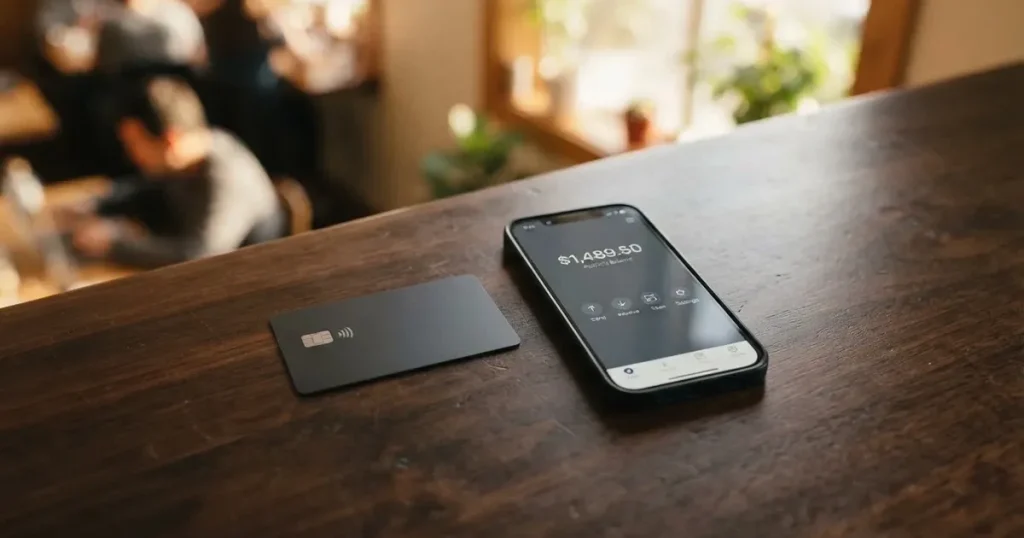
The Zambulay card is a virtual-only payment card aimed at people who pay for advertising and subscriptions out of a crypto balance — the card’s own audience note puts it as paying for ads and subscriptions with USDT TRC-20. It offers two tiers, Black and Platinum, and it funds them in exactly one way: USDT on the TRC-20 network, instantly. The card’s public pages say little about the company behind it, and nothing at all about the card network, the issuing bank, conversion fees or identity checks. That silence is the story as much as the price list is.
I scored it 6.2 out of 10. It is not a bad card for the narrow job it does; it is an unusually undocumented one, and the documentation gap is where your risk sits. If your spending is concentrated in Google and Meta ad accounts plus recurring subscriptions, the fit is good. If you want a card you can hold, use at a cash machine or present in person, the answer is simply no. Everything below is what I could verify, and — just as important — what I could not.
The conditions described here are current as of October 28, 2026.
Verdict: 6.2 / 10
| Criterion | Mark | Why |
|---|---|---|
| Who can get it | 9 / 10 | Black card: “No country or spend limits”; Platinum: “Works worldwide”; no country list published |
| Cost | 7 / 10 | Issuance from $3, 0% for account top-up, from 1.5% for card top-up; reviewers complain fees are several times competitors’; conversion not disclosed |
| Top-up options | 4 / 10 | USDT (TRC-20) only, instantly |
| Reliability and complaints | 4 / 10 | 3-102-944750 SRL (Costa Rica), issuer not named; Trustpilot 4.1 out of 10 reviews, complaints about fees and a first card that did not work |
| Everyday use | 5 / 10 | Virtual only: Black for ad accounts, Platinum with Apple Pay; Google Pay not named, no plastic, no ATM |
| Total | 6.2 / 10 | A narrow, workable tool wrapped in missing information |
Two things decide that total for me. First, the top-up line: one coin, one network. There is no card here you can fund from a bank transfer, from another stablecoin, or from a different chain, so a single point of failure sits between you and every payment you make. Second, the fee disclosure: an issuance fee “from $3” is the only number the card puts on the table besides two top-up percentages, while conversion and FX costs are simply not stated. A card you cannot price is a card you can only measure after you have used it.
The mark for who can get it is the highest on the table and that is worth a moment, because it is unusual. The Black card is described as having “No country or spend limits” and the Platinum as working “worldwide”, with no list of countries at all. For someone who has been turned down by ordinary banks, that openness is the whole value proposition. Read the section on who can get the card for what the card claims and where those claims stop.
Who will give you the card
The card states two things about eligibility, and that is all it states. The Black card carries the line “No country or spend limits”. The Platinum card is described as “Works worldwide”. There is no country list, no exclusion list, no note about residency versus citizenship, and no explanation of what “no spend limits” is supposed to mean in practice — whether it describes the card, or whether it is a marketing phrase for “we do not publish numeric caps”. No numeric limits are given anywhere.
That absence of a country list cuts both ways. It removes the disappointment of discovering your country is excluded, but it also means you have no published document to point at if your application is declined or your account is frozen. Whether the missing detail matters to you depends almost entirely on where you are: if you are somewhere with a thin or hostile banking relationship to crypto, the openness is worth a lot, and you would be relying on support’s answer rather than on the terms. If you are in a well-regulated market with plenty of alternatives, a card with no published eligibility rules is simply less information than you have elsewhere.
One more general point applies here. Cards of this type are normally available to adults aged 18 or over, and some issuers set higher limits for their own reasons. That is a category-wide norm rather than something the card states about itself — the card does not state its KYC level, and I found no age or limit policy on the public pages.
How to get it
The application path is short, and that is both its appeal and its puzzle. KYC is not mentioned anywhere in the public material; the only application form described collects contact details. That is all. There is no stated identity-document step, no stated verification tier, no stated proof-of-address request, and no stated source of funds. Unofficial reporting — a Trustpilot reviewer in 2026 praising a quick sign-up with no complicated verification — describes it that way too, but that is one user’s account on a third-party site, not a policy confirmed by the card.
So the honest version of this section is: nobody has told me what happens after you submit your details. Whether a human reviews the application, whether screening happens silently behind the scenes, and what would trigger a refusal are all unstated. As a general rule of the category, regulated businesses are expected to verify customers and assess risk under anti-money-laundering law, including ongoing transaction monitoring and suspicious-activity reporting, and where due diligence cannot be completed the expectation is to hold off or close the relationship. Whether that framework applies to Zambulay specifically, and at what level, I cannot tell you from what is published.
What you do get, concretely:
- Two virtual tiers: Black, compatible with Google and Meta ad accounts, and Platinum, which works with Apple Pay.
- No physical card. Delivery is not applicable because there is nothing to deliver.
- No standalone app is mentioned. The workspace lives on the web at client.zambulay.com.
- Card network and currency are not stated.
That last line is the one I would want you to sit with. A card without a published network is a card whose acceptance you cannot reason about in advance, and I will come back to why that matters in the section on what can go wrong.
Fees: what it really costs
Here is everything the card publishes about money, and it is a short list.
| Fee or limit | What the card says |
|---|---|
| Issuance fee | From $3 |
| Monthly fee | Not stated |
| Account top-up | 0% fee |
| Card top-up | From 1.5% |
| Conversion fee | Not stated |
| FX fee | Not stated |
| ATM | Not stated (no physical card, so no ATM use) |
| Daily limits | Black card: “No country or spend limits”; no numeric limits given |
| Monthly limits | Black card: “No country or spend limits”; no numeric limits given |
| Card currency | Not stated |
| Minimum top-up | Not stated |
| Network fee payer | Not stated |
Read that table twice and notice what is missing rather than what is there. The two percentages you get are on the *funding* side: topping up your account is free, and loading the card itself costs from 1.5%. The two percentages that would tell you what a coffee costs — conversion and foreign exchange — are absent. For a card whose entire purpose is spending a stablecoin balance in ordinary shops, that is the missing number.
Let me make that concrete with three everyday payments, using only figures the card publishes. Take a $100 payment. If the $100 came from an account top-up, that step was 0%. Loading it onto the card was between $1.50 and more, since the card says “from 1.5%” and publishes no ceiling. Then the payment itself: what the merchant charges your account depends on a conversion fee and an FX fee that are not stated, and on a card currency that is not stated. A user report on Trustpilot in May 2026 — a two-star review, unofficial — describes a commission “several times higher than that of competitors”, with $100 costing about $20. That figure is one person’s account of their own spending, not a published rate, and I cannot reconcile it with the “from 1.5%” line. Which is exactly the problem.
Two examples that separate the costs cleanly:
- $20 subscription, paid from an already-loaded card balance. No top-up fee applies, because you are not topping up. What still applies is whatever conversion or FX treatment the card applies, and that is not stated.
- $50 top-up, then a $50 purchase. The top-up is 0% into the account, then from 1.5% to load the card, then an unstated amount at the merchant.
- $30 spent abroad in a currency other than the card’s. Both the FX fee and the conversion fee would apply, and neither is disclosed. This is the scenario where an undocumented fee hurts most.
The honest summary is that Zambulay tells you what it charges to move money in and nothing about what it charges to spend it. Budget on the assumption that you cannot predict the total cost of a foreign-currency purchase, and check the numbers in your own account history before you commit a meaningful sum. Trustpilot’s own rating sits at 4.1 out of 10 reviews from a very small sample — the page showed 5 of 43 reviews and sources disagree about the figures — so treat it as a signal, not a statistic.
How to top it up
This is the simplest part of the whole card, and the simplest part is also the biggest limitation. Top up via USDT (TRC-20), instantly. That is the entire list: one coin, one network, no bank transfer, no card-to-card load, no second stablecoin.
The account-level fee is 0%, so the transfer into your Zambulay balance costs nothing from Zambulay’s side. The card-level load is “from 1.5%”, which is the layer that actually moves value onto the thing you use. Neither the minimum top-up nor who pays the blockchain network fee is stated — a category-wide point is that on-chain network fees for your deposit are charged by the blockchain rather than by the card provider, so that cost exists independently of anything Zambulay tells you.
Two things make TRC-20 specific rather than generic. First, Tron prices transactions through bandwidth and energy resources, often burning TRX, rather than the ETH-only gas model of Ethereum; if you have never used Tron, the wallet setup is the learning curve. Second, and this matters more, sending to the wrong network or the wrong address is a genuinely costly mistake in this category: blockchain transfers are irreversible, so a deposit sent on an unsupported network or to an address belonging to another network can be lost or require manual recovery with no guarantee. There is no partial safety net here. Send a small test amount before you send a large one.
One related feature worth knowing: withdrawals are described as completing within 30 minutes. That is stated as a platform feature and the fees for it are not stated. If you intend to move money back out rather than spend it, ask about the cost first — a thirty-minute withdrawal is not much comfort if each one is expensive.
Paying with it every day
Both cards are virtual. That is the defining constraint on daily use, and it is not a limitation you can spend your way around.
The Black card is positioned for advertising: compatible with Google and Meta ad accounts. That is a real, specific job, and if your spending is media buying it is the tier you want. The Platinum card connects to iPhone and Apple Watch in seconds and works with Apple Pay. Google Pay is not mentioned anywhere, so if your Android setup is your default wallet, the card does not claim to cover it.
Everything else about daily use is unstated: no rewards or cashback is described, no blocked merchant categories are listed, and there is nothing on the public pages about how disputed transactions are handled. There is no physical card, no ATM function, and no card network named. No price or feature table separates the two tiers either — what distinguishes Black from Platinum is the ad-account compatibility on one side and Apple Pay on the other.
There is a category background worth holding in mind when you use any card like this, virtual or not. Apple Pay does not transmit your card number: it replaces it with a device-specific number stored in the Secure Element on the phone, and each payment carries a one-time dynamic code. That is a genuine security improvement over typing numbers into sites. But the issuer can still restrict a tokenised number — blocking it on magnetic stripe, on phone, or on websites — and online payments may trigger 3-D Secure, an identity check that either passes silently or challenges you with a one-time code or biometric. Address verification, which compares the numeric parts of the billing address you type against issuer records, is mainly offered in the US, Canada and the UK and is generally unavailable for foreign-issued cards, which can cause declines. None of that is Zambulay-specific, but all of it lands on you the same way it lands on anyone paying with an overseas virtual card.
My practical read: this is a card you will use in a browser and in an ad platform, not one you hand over in a shop. Budget accordingly and do not build a daily life around it.
What can go wrong
The biggest thing that can go wrong here is not fraud; it is that you cannot predict the cost or the outcome. Let me take those in order.
The company behind the card is disclosed; the issuer is not. The operator is 3-102-944750 SRL, registered in Costa Rica, at Provincia Puntarenas 06, Canton 11 Garabito, Jaco, 61101, with a stated ultimate beneficial owner of Stanislav Mickevic. The site says it is “not a bank, credit institution, financial intermediary or financial advisor”, and that its “offers are provided by third-party companies”. The card issuer is not named. So the entity whose balance you hold disclaims being a financial institution, and the institution that actually issued the card and holds your money is not identified on the pages I could read. That combination is the central fact for due diligence.
No named issuer means acceptance is unpredictable. A card number begins with a six- or eight-digit issuer identification number, and merchants can look it up to see which institution and country issued it, then apply extra scrutiny when the issuer country differs from the billing address. That is why a card issued in one country can look foreign in another shop. If Zambulay’s issuer and its country are not published, you cannot know in advance which merchants will decline you — and some merchants decline prepaid or foreign-issued cards precisely because the lookup reveals the card type and issuer country. A declined authorisation can also leave a hold on your funds that stays for several days, typically up to seven.
Fees are disputed by users. The May 2026 two-star Trustpilot report describes a commission several times higher than competitors, $100 costing about $20, and a first card that did not work so a second was purchased. A four-star review notes support is sometimes slow. Both are unofficial user reports. Their real function is not to establish a price — they cannot — but to show that the published “from 1.5%” figure has not matched at least one user’s experience, which is what you would expect when the conversion and FX fees are undisclosed.
Programme closure is a real category risk. Programme closures typically follow a pattern: a notice period, then spending and loading stop, then users are asked to withdraw remaining balances. For scale, Visa terminated its global agreements with FTX on 13 November 2022 and the FTX US debit card was wound down by its issuer; WaveCrest, a Visa issuer that supplied several crypto card brands, was suspended by Visa in Europe in 2018, closing all WaveCrest-issued Visa programmes. You cannot know in advance whether a given card programme survives. What you can do is not leave more balance sitting on the card than you need for the week.
What is simply unknown. No official incidents were found, which is worth stating plainly — absence of incidents is not evidence of safety. Security features are not stated: no mention of two-factor authentication, instant card freeze or spending limits. No news or incident history is published. There is nothing on dispute handling, which matters more than usual because 3-D Secure shifts liability for fraudulent online payments away from the merchant, and for prepaid-card coverage in the US — where Regulation E covers debit and Regulation Z covers credit — you should not assume prepaid protection applies.
On the regulatory side. A crypto card usually depends on two licences: the card itself is a payment service regulated under e-money and payment-services law, while the crypto side — custody, exchange, transfer — falls under markets-in-crypto regulation. In the EU, MiCA took legal effect in June 2023, with its rules on e-money tokens and asset-referenced tokens applying from 30 June 2024 and the remaining provisions, including crypto-asset service provider rules, from 30 December 2024. Under MiCA, e-money tokens may be issued only by a credit institution or an electronic money institution. The transitional period lets providers already operating under national law continue only until 1 July 2026 or until they are authorised or refused authorisation, whichever comes first, and ESMA keeps a public interim register of authorised providers that you can search. I have no evidence either way about where Zambulay stands in that framework, and it is not something the card states. In the US, FinCEN guidance treats administrators and exchangers of convertible virtual currency as money transmitters while ordinary users spending are not.
If you are in the EU or UK and this matters to you, the check to make is the ESMA register — that is a search you can do yourself, and it is a more reliable signal than anything the card’s own site tells you. I am not giving you tax or legal advice here; if the tax position of converting a stablecoin into spending matters to you, that is a conversation with an adviser in your own jurisdiction.
What to take instead
Two of the alternatives below score lower than Zambulay on our scale and one scores higher. I include all three because the fit depends on what you need, not on the ranking.
| Card | Score | Card form | Top-up | Costs the pages state |
|---|---|---|---|---|
| Zambulay | 6.2 / 10 | Virtual Black and Platinum | USDT (TRC-20) only | Issuance from $3; account top-up 0%; card top-up from 1.5%; conversion and FX not stated |
| CardFlow | 4.9 / 10 | Virtual USD Mastercard, created in about 3 minutes | Bitcoin, USDT, ETH or Naira bank transfer; networks not stated | Creating a virtual card is free; monthly and other fees not stated |
| HyperCard | 4.7 / 10 | Prepaid, balance in USD or EUR | Crypto such as USDT, BTC, ETH in the app, converted on the card; networks not stated | Nothing stated on the pages I could read |
| Card.fi | 6.6 / 10 | Virtual Classic and Premium, physical Classic and Premium, metal; every physical order includes a virtual card | 32 coins across 5 networks (Ethereum, Base, BNB Chain, Solana, Kaanch); a deposit address per card | One-time $49 Virtual Classic, $249 Virtual Premium; top-up 1.5% + $1.00 Classic, 1% Premium; FX 3.5% Classic, 2.5% Premium; no monthly, annual, inactivity or minimum-balance fee |
CardFlow is aimed at Nigeria — its own description is “Nigeria’s smartest fintech card platform” — and at Nigerians and global users, with no country list or exclusions stated. Its strength is funding breadth: four routes including a Naira bank transfer, where Zambulay has one. Its weakness is that nothing is priced: creating the card is free, and monthly fees, conversion and FX are all unstated, so the total cost of spending is as opaque as Zambulay’s, and its name and card network are specified where Zambulay’s are not. At 4.9 it scores below Zambulay mostly because its audience is narrower and its disclosure thinner on the everyday numbers.
HyperCard takes deposits in USDT, BTC and ETH in the app and converts them to a USD or EUR balance on the card, so unlike Zambulay you can hold a non-dollar balance and spend it. Its App Store page says the card works in “more than 176 countries” — that is acceptance, not eligibility, and the official pages give no country list. The App Store page lists no fees at all, and the card network is not stated there. At 4.7 it is the lowest-scoring of the four, and the reason is not the funding but the absence of anything to price.
Card.fi is the only one of the four that scores above Zambulay, and the reason is disclosure. It publishes top-up fees of 1.5% plus $1.00 for Classic and 1% for Premium, FX fees of 3.5% and 2.5% respectively, shows a conversion fee before each top-up, and states there is no monthly, annual, inactivity or minimum-balance fee. It accepts 32 coins across five networks with a separate deposit address per card and converts at market rate on arrival, and it warns in its terms that sending on the wrong chain risks permanent loss. It also has physical and metal cards, which Zambulay does not, and cashback on spending: 0.8% on Classic capped at 10 USDT a month, 1% on Premium, and on Metal either 1.2% capped at 100 USDT a month, or 2% capped at 250 USDT a month, with the headline 10% at coffee shops capped at 10 USDT a month and variable rates on balances up to 18%. Its own terms bar residents of, or orders from, a country subject to sanctions that would prohibit the service, and it does not name Visa or Mastercard. So: if your priority is knowing exactly what a payment will cost before you make it, Card.fi publishes more than Zambulay does and is the more expensive card to buy up front — $49 or $249 one-time for the virtual tiers.
Who I would recommend it to
I would recommend Zambulay to one specific person: someone whose spending is mostly advertising platforms and recurring subscriptions, who already holds USDT and is comfortable on the Tron network, who has been unable to get an ordinary card, and who is willing to treat the balance on the card as money at risk rather than money parked. For that person, at $3 to start and 0% to fund the account, the arithmetic is attractive and the fit is real.
I would not recommend it to someone who needs a physical card, an ATM, a rewards programme, or a card they can point at and say who issued it. I would not recommend it to anyone planning around a foreign-currency purchase, because the conversion and FX fees are not published and a user report suggests the real figure can be several times higher than the headline percentage. And I would not recommend it to anyone for whom a frozen balance would be a crisis — because the entity holding the balance says it is not a bank or financial institution, the issuer is not named, and there is nothing published about dispute handling or security features.
Before you commit, three checks in order. Ask support, in writing, what the conversion and FX fees are and what currency the card holds — the answers are the ones the site omits. Send a small test deposit on TRC-20 before a large one, because a wrong-network transfer is irreversible and unsupported. And keep the balance on the card to what you need this week, because the category’s history is a history of programmes closing and asking people to withdraw.
That is what a 6.2 looks like from where I sit: the openness that makes it worth having, and the silence that makes it hard to rely on.
Frequently asked questions
What is the Zambulay card?
Zambulay is a virtual payment card, offered in two tiers: Black, compatible with Google and Meta advertising accounts, and Platinum, which works with Apple Pay. There is no physical version. It is funded by transferring USDT on the TRC-20 network to a web workspace at client.zambulay.com, with no standalone app mentioned. Its stated audience is people paying for ads and subscriptions out of a crypto balance.
Is Zambulay a bank?
No, and it says so itself. The operator, 3-102-944750 SRL in Costa Rica, states on its site that it is “not a bank, credit institution, financial intermediary or financial advisor”, and that its offers are provided by third-party companies. The entity that actually issued the card is not named anywhere on the public pages I could read, so the institution holding your balance is not identified.
How much does the Zambulay card cost?
Issuance is from $3. Topping up your account costs 0%, and loading the card from that account costs from 1.5%. The monthly fee, the conversion fee, the foreign-exchange fee, the minimum top-up and the card currency are all not stated, and no numeric daily or monthly spending limits are published. That gap is the main cost risk.
Does the Zambulay card require KYC?
KYC is not mentioned on the public material; the only form described collects contact details. A Trustpilot reviewer in 2026 praises a quick sign-up with no complicated verification, but that is an unofficial user report, not confirmed policy. As a category norm, regulated businesses are expected to verify customers and assess risk under anti-money-laundering rules.
How do I top up the Zambulay card?
You send USDT on the TRC-20 network, and the card says the top-up is instant. The account-level fee is 0%, while loading onto the card costs from 1.5%. Neither the minimum amount nor who pays the blockchain network fee is stated. Send a small test first: transfers on this category of card are irreversible, and a wrong-network deposit can be lost.
Can I use the Zambulay card in my country?
The card publishes no country list at all. The Black card is described as having “No country or spend limits” and the Platinum as working “worldwide”. That means no country is excluded on paper, but it also means no published rule you can rely on if an application is declined. Because the issuer and its country are not named, merchant acceptance is also hard to predict in advance.
Does Zambulay work with Apple Pay and Google Pay?
The Platinum card connects to iPhone and Apple Watch in seconds and works with Apple Pay. Google Pay is not mentioned anywhere in the card’s material. The Black card is described instead as compatible with Google and Meta ad accounts, so the two tiers serve different purposes: one for advertising platforms, one for Apple’s wallet.
Is the Zambulay card safe?
No official incidents were found, but that is not evidence of safety. The operator disclaims being a financial institution, the issuer is unnamed, and security features — two-factor authentication, instant freeze, spending limits — are not stated, nor is anything about disputed transactions. Hold only what you need, because a declining card programme typically stops spending and loading and then asks users to withdraw.
What do users complain about on Trustpilot?
Trustpilot shows 4.1 out of 10 reviews from a very small sample — the page displayed 5 of 43 reviews, and sources disagree on the figures. Themes include fees several times higher than competitors, a $100 payment costing about $20 in a May 2026 two-star report, a first card that did not work, and support being sometimes slow. Unofficial, small sample, but consistent with the undisclosed conversion fee.
Should I choose Card.fi instead?
Card.fi scores 6.6 against Zambulay’s 6.2, and the difference is disclosure rather than price. It publishes top-up fees of 1.5% plus $1.00 on Classic and 1% on Premium, FX fees of 3.5% and 2.5%, and shows a conversion fee before each top-up, with no monthly or inactivity fee. It accepts 32 coins across five networks and offers physical and metal cards, but the virtual tiers cost $49 and $249 one-time.
Virtual card verdicts – cryptocardverdict
Content created by the «cryptocardverdict» team