
PEXX in practice: a no-limit crypto card with a 0.6% toll on every purchase
 Available in US

If you have been reading about crypto payment cards, PEXX sits in an odd middle ground. It promises no spending limits at all — not a high ceiling, but none — and it does not name an issuing bank on its public pages. What it does name is a fee: 0.6% on every card transaction, plus 1.2% on anything bought in a currency other than the US dollar. Those two numbers tell you most of what you need to know about whether this card is worth using.
I went through the card’s own materials and the surrounding regulatory picture to work out what it is actually offering, who can get one, what it costs in practice, and where the weak points are. My score for it is 6.8 out of 10. That is not a bad score for a card in this category — several of the alternatives I looked at scored lower, and one scored higher but with a closed-beta wait. It is a middling score, and the reason is specific: PEXX is unusually good at the things it advertises (limits, speed, range of countries) and unusually quiet about the things that decide whether you can trust it with your money (the issuing bank, the exact fee schedule, what happens when something goes wrong).
The conditions described here are current as of October 28, 2026.
Before anything else, let me be straight about what this review can and cannot tell you. I have not held this card. I am reading what PEXX publishes and what regulators and users say about it. Where the card’s own pages are silent — and they are silent on several important things — I will say so rather than guess. Some facts come from third-party sites; those I mark as unofficial and note that PEXX itself does not confirm them.
Verdict: 6.8 out of 10
The score comes from six criteria, each marked out of ten. Here they are with my reasoning, so you can argue with any single mark rather than the total.
| Criterion | Mark | Why |
|---|---|---|
| Who can get it | 7 / 10 | Eligibility is decided by country of residence, and the list is long: Europe, Australia, Japan, Latin America, Africa, the UAE, Georgia, Kazakhstan and others. Not perfect because the specific eligibility and exclusion rules are not published. |
| Cost | 6 / 10 | A 0.6% platform fee on every transaction and a 1.2% markup on non-USD payments. The issuance and monthly fees are not disclosed, which is exactly what a cost mark should reflect. |
| Top-up options | 6 / 10 | USD, USDT and USDC, with a USD account funded over ACH, Fedwire and SWIFT. The blockchain networks are not named, so you cannot tell from the site alone whether your usual chain works. |
| Reliability and complaints | 7 / 10 | PEXX Technology Pty Ltd is registered with AUSTRAC as a Digital Currency Exchange and with FinCEN as an MSB. The partner bank is not named. Trustpilot shows 3.5 out of 5 from 3 reviews, with complaints about fees being higher than advertised. |
| Everyday use | 8 / 10 | Physical and virtual cards, Apple Wallet and Google Pay, and no spending limits at all. The ATM situation is not disclosed. |
| Total | 6.8 / 10 | A capable card that is hard to fully price from public information. |
Who this suits, in one sentence: people who already hold dollars or stablecoins, who want to spend them without a bank’s ceiling in the way, and who are comfortable with a card whose fee arithmetic they will have to work out themselves.
Who it does not suit: anyone whose first question is “who is my bank and is my money insured”; anyone spending heavily abroad, where the 1.2% markup stacks on top of the 0.6%; and anyone who needs a card that works reliably in high-risk merchant categories, since the blocked-category list is not published.
The honest summary is that PEXX has decided to be generous on limits and vague on paperwork. Whether that trade suits you depends almost entirely on how much you would worry if the answer to “is this insured” turned out to be no.
Will they give you the card?
Yes, in a lot of places — but the answer is driven by where you live, not where you are from.
PEXX publishes no eligibility criteria and no exclusions list. That is the single most important fact in this section, because it means the only reliable way to know is to apply and see. In practice, availability follows your country of residence, and the range is genuinely wide.
Roughly 35 European countries and territories, including the UK, France, Germany, Italy, Spain and Switzerland. Then Australia, Japan, Macao, Malaysia, the Philippines, South Korea, Taiwan and Thailand. In Latin America: Argentina, Brazil, Chile, Colombia, Ecuador, El Salvador, Mexico, Panama and Peru. In Africa and the Middle East: Bahrain, Ghana, Kenya, Nigeria, South Africa, Uganda and the UAE. And in the post-Soviet space: Azerbaijan, Georgia, Guernsey, the Isle of Man, Jersey, Kazakhstan, Moldova, Ukraine and Uzbekistan.
Note what this list is and is not. It is a list of places of residence. It says nothing about citizenship, and PEXX does not publish the screening rules it applies. KYC in this industry routinely records nationality separately from address, because sanctions screening and issuer risk policy are applied to citizenship and country of birth as well as to where you live. So a resident of a listed country holding a passport from an unlisted one could still be refused, and you would not learn the reason in advance.
What PEXX does tell you about the process: you need a valid ID and a phone number, and the US virtual bank account specifically requires “level 1 KYC”. Proof of address and age requirements are not stated anywhere on the public pages. That absence matters more than it sounds — under EU customer due diligence rules, a regulated firm is expected to establish name, address, date of birth, nationality and identity documentation, run a sanctions check, understand the purpose of the relationship, and determine whether you are a politically exposed person. If a provider cannot complete that, the rules require it to hold back or refuse. So expect to be asked for more documents than the short application suggests, and expect the application to sit still for a while.
Cards go live in two forms. PEXX Physical is loaded with USD and stablecoins. PEXX Virtual is instant, generated online. The page title carries both Visa and Mastercard branding; the card currency is implied to be USD but not stated explicitly, which matters for the fee discussion later.
There is also an extra identity check to activate the card itself, beyond registration. Applications usually show “In Review” for 1 to 2 business days. The reasons an application can be rejected are not listed.
So: will they give you the card? Probably yes if you live in one of the places above. Certainly you will not be told in advance, and if you are refused you will not be told why.
How to get it
The process is short on paperwork and short on detail at the same time.
You apply in the app or online with a valid ID and a phone number. If you want the US virtual bank account, you clear level 1 KYC. The application then sits in “In Review”, typically 1 to 2 business days, followed by an additional identity check to activate the card. After a confirmed deposit, the virtual card is issued within about 1 minute; the physical card’s delivery time and delivery cost are not stated, and neither is the replacement cost if it is lost.
There are two products, PEXX Physical and PEXX Virtual. There are no tiers, subscription levels or premium versions to choose between — you take one of the two, and which one depends on whether you want something in your wallet.
Two things to be clear about before you start. First, age and proof of address: not stated by the card, though prepaid and debit cards in this category generally go to adults aged 18 and over. Second, the physical card route has no published delivery timeline, so if you need a card in your hand for something soon, the virtual card is the predictable option.
Fees: what it really costs
This is where PEXX is clearest and also most expensive. Here is everything the card states about what it charges.

| Fee or limit | What the card says |
|---|---|
| Issuance fee | Not stated |
| Monthly fee | Not stated |
| Platform fee | 0.6% on every card transaction |
| Foreign exchange | 1.2% FX markup on non-USD purchases; “true mid-market pricing” |
| ATM fee | Not stated |
| Card minimum top-up | Not stated |
| Deposit fee | None listed |
| Spending limits | None — “there are currently no spending limits” |
| Daily limit | $30,000 per day |
| Per-transaction limit | $30,000 per transaction |
| Monthly limit | $70,000 per month |
Three lines in that table deserve attention.
First, the “no spending limits” claim and the dollar figures sit in tension. The card says there are no spending limits, and also states $30,000 a day, $30,000 per transaction and $70,000 a month. The reasonable reading is that those are ceilings on loading or on balance rather than hard blocks on spending, but the card does not explain the distinction, and I would not build a plan around it without asking support.
Second, issuance and monthly fees are simply not disclosed. For a cost review that is a real gap: you cannot compare the total cost of this card against another card if one of the two will not tell you its fixed charges. Treat the absence as unknown, not as zero.
Third, the 0.6% is not an exchange rate difference — it is a fee on top. The card also claims “true mid-market pricing”, so on a USD purchase you are paying 0.6% over the rate you would get on a currency site.
Now, three everyday payments, with the fees that actually apply:
A $20 lunch in your own country, in dollars. The platform fee is 0.6%, so about $0.12. No markup, because it is a USD purchase. This is PEXX at its cheapest and it is genuinely cheap — a card with no monthly fee you can use without thinking.
A $60 hotel in Tokyo, priced in yen. You pay 0.6% ($0.36) plus the 1.2% FX markup ($0.72) — about $1.08 on $60. This is where the fee structure starts to bite, and it bites more the smaller the purchase.
A $900 flight paid in euros. Same structure: $5.40 platform fee plus $10.80 markup, about $16.20. On a large purchase the percentage feels tolerable. But a traveller spending $200 a day abroad pays roughly $3.60 a day in fees — over $1,300 a year — for the privilege of not holding local currency.
The pattern to take away: at home, PEXX is a cheap everyday card. Away from home, that 1.2% is a tax on being abroad, and no amount of mid-market pricing removes it. If your spending is predominantly foreign-currency, look for a card with an explicit zero-foreign-transaction-fee structure — there are alternatives below that publish exactly that.
One more category-specific charge to know about: on-chain network fees. Whatever gas or bandwidth a blockchain charges for your deposit is set by the blockchain, not by PEXX, so it sits outside the table above entirely.
Top up: funding the card
Three currencies go in: USD, USDT and USDC. That is a short list and it covers most people’s actual holdings.
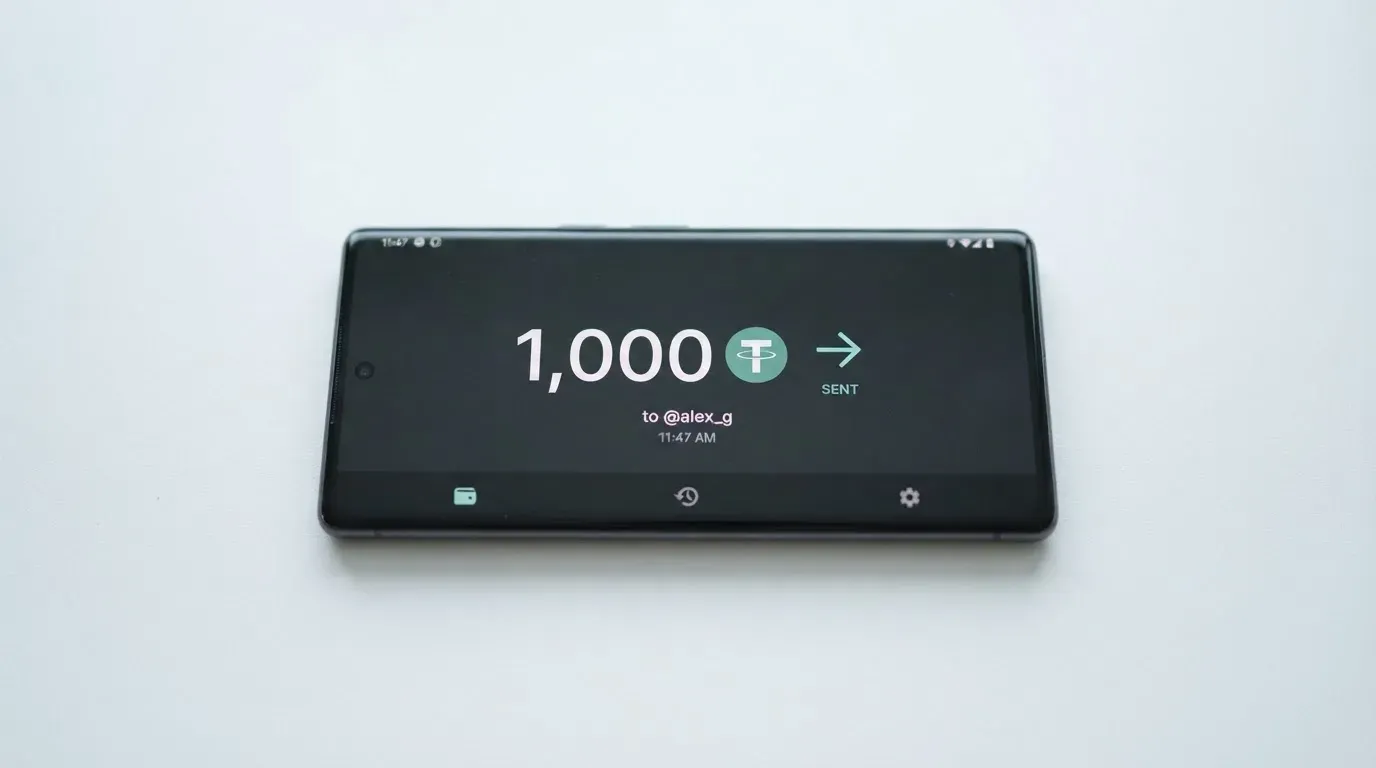
USD arrives through the banking rails, not the crypto ones: ACH, Fedwire and SWIFT. The timings the card gives are 1 to 3 US business days for ACH, a few hours to 1 business day for Fedwire, and 1 to 5 US business days for SWIFT. That spread matters more than it looks — if you are moving money in the US, Fedwire is the fast lane, and if you are moving it from elsewhere, SWIFT’s five-day window is a real wait. No deposit fee is listed.
USDT and USDC arrive as blockchain transfers, and here is the sharpest practical problem in this whole section: the card does not name the networks it supports. Not one chain is specified on the public pages. That is not a technicality. Stablecoins exist on many chains, and a transfer sent on a chain the provider does not support — or to an address belonging to a different chain — can simply be lost, or need manual recovery through support with no guarantee attached. ERC-20 transfers cost gas paid only in ETH, so a wallet holding USDT with no ETH cannot send it. USDT has been issued on Ethereum, Tron, Solana, Polygon, Avalanche and others; Circle lists USDC as natively supported on 38 networks as of 16 September 2026, including Ethereum, Solana, Base, Polygon PoS, Avalanche, Arbitrum and Stellar. Circle stopped supporting USDC on Tron in February 2024, so “USDC over TRC20” is not a native option at all.
Before you send a single token, find out which network PEXX expects for your asset. The information exists; it just is not on the card page.
There is also PEXX Earn, which pays daily interest tied to US Treasury bill rates, and states there is no minimum balance. Earn funds can be withdrawn at any time. Two cautions: those funds are not FDIC-insured, and the treatment of a normal card balance on withdrawal or account closure is not stated — there is a withdrawal section in the FAQ with three articles that I did not read.
Paying with it every day
The good news: this is the section where PEXX scores best, and where day-to-day use is genuinely frictionless.
Both a physical card and an instant virtual card are available. You can add either to Apple Wallet or Google Pay from the Cards tab in the app, with a one-time password by email or SMS to confirm. When you add a card to a phone wallet, the card number is replaced by a device-specific number stored in the Secure Element, never on the manufacturer’s servers, and every payment carries a fresh one-time security code — so a phone wallet is a meaningfully safer way to pay than a physical card, and it is the option I would use by default. Your card provider can restrict the tokenised number to certain channels, but PEXX does not publish which restrictions it applies.
Then there is the app. The Australian App Store listing shows 5.0 out of 5 from 3 ratings, version 3.6.2, requiring iOS 16.0 or later, in English. A Google Play app exists but I did not read its rating. Three ratings is not a sample that tells you anything; treat the 5.0 as decoration rather than evidence.
The card states “bank-grade encryption” and real-time alerts, and there is an in-app payment approval feature. USD deposits are held with licensed partners and are not FDIC-insured. Card freeze and insurance are not stated.
PEXX Earn is the other everyday feature: daily interest tied to US Treasury bill rates. If you are going to leave a balance sitting, that is the reason to, though the return should not be the reason you chose the card.
What is not published, and what you will discover only by trying: which merchant category codes are blocked. MCCs are the four-digit codes that classify a business — gambling, for instance, is 7995 — and issuers block them by policy rather than by law, with the list varying by issuer. If you pay for anything in a category that tends to get blocked, you will not find out beforehand from PEXX.
And if a payment goes wrong, here is the dispute process as stated: it runs through PEXX support and is submitted through the card network, applies only to successful transactions, must be raised within 120 days, and takes 60 to 90 days. Two caveats inside that: chargeback rights may be limited for unauthorised claims on 3-D Secure payments, and a USD 25 administration fee may apply if the dispute fails. Sixty to ninety days is not a fast refund, and the $25 is a real cost if you lose.
One more thing merchants do that catches people out: a declined authorisation can leave a hold on your funds that stays for several days, typically up to 7.
What can go wrong
Grouped by how likely it is to affect you.
Fees higher than advertised. This is the most common complaint, and it comes from users, not from the card. Reviews on Trustpilot and on PEXX’s own site — unofficial, not confirmed by PEXX — report fees above the advertised 0.6%, including a $0.50 per-transaction charge and deductions with no visible history. A January 2026 one-star review says exactly that. A December 2025 five-star review praises the fees and the speed. Trustpilot for pexx.com shows 3.5 out of 5 from 3 reviews as I read it. Three reviews is not evidence of a pattern, but the specific allegation — that the real charge is 0.6% plus 50 cents — is the single thing I would verify myself with a small test payment after opening the account.
Deposits that go missing. One user report describes a failed crypto deposit with only a partial refund. This is where the unnamed networks compound the problem: if you send on the wrong chain, you are dependent on support and there is no guarantee of recovery, because blockchain transfers are irreversible by design.
The card works, then does not. Visa and Mastercard do not issue these cards themselves — they license issuers, and either can suspend a programme. Visa terminated its global agreements with FTX on 13 November 2022, and the FTX US debit card was wound down by its issuer. WaveCrest, a Visa issuer that supplied several crypto card brands, was suspended by Visa in Europe in 2018, closing all WaveCrest-issued Visa programmes. Programmes usually close in stages: a notice period, then loading and spending stop, then you are asked to withdraw what remains. One 2026 closure reported by a single unconfirmed secondary source ended new loads on 8 July 2026 and spending on 8 August 2026. PEXX has no named issuing bank on its public pages, only “partner bank” and “licensed partners”, which means the counterparty behind your balance is not something you can name from the card’s own materials.
Payments declined for reasons you cannot see. Merchants can look up the card’s BIN and see which institution and country issued it, and may apply extra scrutiny when the issuer country differs from your billing address. Some merchants decline prepaid or foreign BINs for that reason. Address verification, which compares the numeric parts of your billing address against issuer records, is mainly offered in the US, Canada and the UK and is generally unavailable for foreign-issued cards — which can cause declines on an otherwise ordinary purchase. None of this is PEXX-specific; it is what happens with a card issued in one country and used in another, and it is worth knowing before you blame the card.
Getting support in your language. Help is in the app or by email, with an FAQ at faq.pexx.com, plus Telegram, X, Instagram and Medium. The site is English only, hours are not stated, and Russian is not offered. If you do not read English comfortably, this is a real cost that does not appear in the fee table.
Nothing has gone publicly wrong yet, and no dated events were found. PEXX says it follows AUSTRAC guidelines and runs an AML/CTF programme with enhanced due diligence. That is a statement of intent, not a track record.
On the company itself: PEXX Technology Pty Ltd is an Australian entity, registered with AUSTRAC as a Digital Currency Exchange (DCE100851583-001) and a remittance dealer (IND100851583-001), and with FinCEN as an MSB (31000288010318). Those registrations are real and checkable, and they are the reason the reliability mark is 7 rather than 3. What they are not is a banking licence, and the funds side of the business is not covered by deposit insurance.
The background that makes all of this make sense: in the US, FinCEN guidance treats administrators and exchangers of convertible virtual currency as money transmitters, while people merely buying goods or services are not. In the EU, an electronic money institution can issue e-money and payment cards but cannot lend, and MiCA’s rules on e-money tokens have applied since 30 June 2024, with the rest of the regulation from 30 December 2024 — including a transitional period running to 1 July 2026. A card is regulated separately as a payment service, so a crypto card often rests on two licences rather than one. EMIs must safeguard customer funds by segregating them or insuring them, and such funds are not bank deposits.
And a caution about stablecoins themselves, because it undercuts everything: they aim to hold a stable value but are not necessarily stable. TerraUSD collapsed in May 2022; USDC temporarily lost its peg in March 2023 during the US banking crisis. Tether says it disables tokens in wallets on the OFAC sanctions list and has frozen funds tied to illicit activity, so these assets are not censorship-proof. A card that holds dollars and stablecoins holds both of those risks.
What to take instead
Three alternatives, with the same treatment. Scores are mine on the same scale as PEXX’s 6.8.
| Alternative | Score | Card | Fixed costs | Foreign exchange | Notable limits |
|---|---|---|---|---|---|
| PEXX | 6.8 / 10 | Physical and virtual, Visa and Mastercard | Not stated | 1.2% markup, plus 0.6% platform fee | None stated, but $30,000 a day and $70,000 a month are stated |
| International Visa Card | 6.7 / 10 | U.S.-issued Platinum Visa, virtual only — physical “coming soon” | $5 issuance; plans from Classic free to Pro $9.00/month and Max $19.00/month | Visa rate plus 2% FX fee | Not available to residents or registrants of a long exclusion list |
| UNi Card | 6.1 / 10 | Multicurrency, Mastercard network | No annual fee; issuance not stated | None — “no hidden exchange fees”, converted at live OTC rates | Spend-to-Earn rewards up to 3% |
| Morse | 7.5 / 10 | Fully virtual Visa prepaid debit | Not stated — “fees may apply, see Cardholder Agreement” | Zero foreign exchange fees or markups | Several countries are closed beta and need an invite code |
Morse scored highest of the four, 7.5. Its fee structure is the cleanest: zero foreign exchange fees or markups on the real Visa rate, and paying online or contactless with the card is free. Its wallet is self-custodial, which removes the counterparty risk that sits underneath PEXX. Deposits by debit card, or USDC, USDG and EURC over Solana free, with other tokens and chains carrying a fee; local add and withdraw in over 70 countries. The catch is access: it is closed beta in a long list including Australia, Japan, Singapore, Switzerland, the United Kingdom, New Zealand and Hong Kong SAR China, all of which need an invite code, and the card is “available only in certain countries” with no published list. It also cannot serve anyone subject to U.S. sanctions. If you can get in, it is the better card on the numbers.
International Visa Card is the closest comparison and the most different in character. Its 2% FX fee is worse than PEXX’s 1.2% markup, but its fixed costs are published: $5 to issue the virtual card, no maintenance fee on the free Classic plan, then $9.00 and $19.00 a month for Pro and Max. Card use in USD is free on every plan and deposits of any kind carry no fee. The real difference is who it will serve: it is not available to residents or legal registrants of Belarus, mainland China, North Korea, Cuba, India, Iraq, Iran, Israel, Myanmar, Nepal, Nicaragua, Russia, Syria, Turkey, Ukraine, Venezuela or Vietnam, with FATF grey-list countries reviewed case by case. Purchases are blocked in North Korea, Cuba, Iran, Russia, Syria, Ukraine and Venezuela. The rule follows residence or registration, not citizenship — citizenship is not mentioned.
UNi Card scored lowest at 6.1, mostly because the card pages state almost nothing about who can get one or how you fund it. What it does state is good: no annual fee, no foreign transaction fee, assets converted at live over-the-counter rates, no hidden exchange fees, and spend-to-earn rewards up to 3% on a multicurrency Mastercard.
A note on which network is not a quality signal. Visa and Mastercard do not issue crypto cards to consumers; they license issuers and can suspend programmes. Which logo is on the front tells you who routes the payment, not who holds your money.
Who I would recommend it to
If you are spending your own dollars in your own country, you value having no ceiling on what you can pay out in one go, and you are already comfortable with crypto wallets and self-service support in English, PEXX will do its job without fuss. The virtual card is issued in about a minute after a confirmed deposit, the wallets work, and the everyday cost of 0.6% on a $20 lunch is twelve cents.
If you travel regularly and spend in local currency, look at Morse first. Zero foreign exchange fees is worth more than PEXX’s flexibility, if you can get past the invite.
If you are opening an account to see whether the fees are what the card says, do that with a small amount and one real purchase, then read the receipt line by line. That is the only way I can think of to settle the most common complaint about this card.
If what you need is a bank with deposit insurance behind the balance, none of these is that, and PEXX says so plainly about the USD deposits. If your priority is the widest possible country coverage with the least fuss, PEXX’s list is one of the longer ones here.
And if you are reading this because a normal bank card is hard to get where you are: the practical order of operations is the same as for anyone. Confirm your country of residence is on the list, complete KYC early with more documents than you think you need, and make a small test payment before you move anything you cannot afford to lose.
Frequently asked questions
What is the PEXX card?
PEXX is a crypto payment card issued by PEXX Technology Pty Ltd, an Australian company registered with AUSTRAC and FinCEN. You load it with dollars or stablecoins and spend from that balance like an ordinary card. It comes in physical and virtual forms, with Visa and Mastercard branding. The balance works like a prepaid card: what is loaded is what can be spent, so it cannot overdraw. No named issuing bank appears on the public pages.
How does the PEXX card work?
You top up with USD, USDT or USDC, and the card draws on that stored balance. It is the prepaid model rather than the debit model, where a bank is asked to withdraw from a linked account at each purchase. Every transaction carries a 0.6% platform fee, and purchases not in dollars add a 1.2% foreign exchange markup on top. The card states there are no spending limits, alongside stated ceilings of $30,000 a day and $70,000 a month.
Is PEXX a bank?
No — not on the evidence published. PEXX Technology Pty Ltd is registered with AUSTRAC as a Digital Currency Exchange and remittance dealer, and with FinCEN as a money services business, but the card refers only to an unnamed “partner bank” and “licensed partners”. USD deposits are held with licensed partners and are explicitly not FDIC-insured. Regulators elsewhere treat safeguarded e-money funds as something distinct from bank deposits.
Is PEXX card safe?
Registrations are real and checkable, which is the reassuring part. The caution is that your money sits with a provider rather than an insured bank, transfers out are irreversible, and the card has no named issuer. User reports on Trustpilot and PEXX’s own site — unofficial and unconfirmed — describe fees above the advertised rate and a failed deposit with only a partial refund. Treat any balance as money you could lose.
Does PEXX require KYC?
Yes. You need a valid ID and a phone number, the US virtual bank account requires level 1 KYC, and there is an extra identity check to activate the card. Proof of address and age requirements are not stated. Applications usually show “In Review” for 1 to 2 business days. Expect more document requests than the short form implies, and know that nationality and address are normally screened separately.
How much does the PEXX card cost?
The stated costs are a 0.6% platform fee on every card transaction and a 1.2% markup on non-USD purchases. Issuance fees, monthly fees, ATM fees and minimum top-ups are not stated. A $20 USD lunch costs about $0.12; a $60 purchase in yen costs about $1.08. The absence of published fixed fees means you cannot compute a full annual cost from public information.
Which countries can use the PEXX card?
Availability follows country of residence and covers roughly 35 European countries and territories, Australia, Japan, several Asian markets, nine Latin American countries, a set of African and Middle Eastern countries, and a post-Soviet group including Georgia, Kazakhstan, Moldova and Ukraine. Eligibility criteria and exclusions are not published, and citizenship is not mentioned — so a listed residence with an unlisted passport may still be refused.
How do I top up the PEXX card?
With USD, USDT or USDC. The USD account is funded over ACH (1 to 3 US business days), Fedwire (a few hours to 1 business day) or SWIFT (1 to 5 US business days), with no deposit fee listed. The catch is that PEXX does not name the blockchain networks it accepts, so check which chain your token must be sent on before transferring — a transfer on the wrong network can be lost.
Is the PEXX card free?
There is no listed issuance fee and no listed monthly fee, but both are undisclosed rather than confirmed free, and every purchase still costs 0.6%. PEXX Earn pays daily interest tied to US Treasury bill rates with no minimum balance, and those funds can be withdrawn at any time, but they are not FDIC-insured. Treat “free” as unverified and check your own statement.
Can I add PEXX to Apple Wallet or Google Pay?
Yes. Add the card from the Cards tab in the app, and confirm with a one-time password sent by email or SMS. Apple Pay replaces the card number with a device-specific number stored in the Secure Element and uses a fresh one-time code per payment, so a phone wallet is safer than a physical card. The issuer may still restrict where the tokenised number can be used, and PEXX does not publish those restrictions.
App and neobank card verdicts – cryptocardverdict
Content created by the «cryptocardverdict» team