
A crypto wallet with cards attached — promising on paper, quiet on the details
 Available in US
PPAY is a crypto wallet that issues two things: a virtual card denominated in US dollars for online spending, and a physical Mastercard you can use wherever Mastercard is accepted. That is the whole pitch, and on its face it is a useful one — especially if your problem is that an ordinary bank card is not easy to get where you live. The wallet itself holds crypto, and swaps are offered through a WhatsApp bot rather than only inside the app.
What stops me recommending it with confidence is not what PPAY has done, but what its public pages do not contain. No issuance fee, no monthly fee, no exchange rate spread, no spending limits, no ATM terms, no list of supported countries beyond “10+”, no list of coins or networks you can send to, and no named issuing bank or licence. The card says it is “a technology company, not a bank”, and it is right — but that also means the questions a bank would answer on its first screen of terms are here simply left blank.
If you are Nigerian and need a USD virtual card plus a physical Mastercard tied to a crypto balance, PPAY does what it says on the tin. If you are anywhere else, or if you plan to run your money through it, you will be doing the arithmetic without the numbers.
The conditions described here are current as of October 28, 2026.
The verdict: 4.5 out of 10
4.5 / 10 is not a score that says “avoid at all costs”. It says the card is usable for a narrow group of people and carries real disclosure gaps for everyone else. The two halves of that sentence matter more than the number, so let me take them in turn.
| Criterion | Mark | Why |
|---|---|---|
| Who can get it | 3 / 10 | Residence in Nigeria or an “eligible country”; the site says “10+” countries and names none of them |
| Cost | 5 / 10 | No issuance or monthly fee published, no fee amounts disclosed; peer-to-peer sends are fee-free |
| Top-up options | 4 / 10 | The wallet holds crypto and swaps run through a WhatsApp bot; no coins or networks listed for funding the card |
| Reliability and complaints | 5 / 10 | Owned by PROSPER DIGITAL SYSTEMS LTD, says it is “not a bank”, names no issuer or licence; no complaints or reviews found |
| Everyday use | 6 / 10 | A USD virtual card and a physical Mastercard; Apple Pay, Google Pay and ATM are not covered |
| Total | 4.5 / 10 | Usable for its core audience, thin on published detail everywhere else |
Who this suits. Nigerian residents who want a USD virtual card for online shopping and a Mastercard for day-to-day spending straight from a crypto balance, and who are comfortable with a provider whose own documents say “not a bank”.
Who this does not suit. Anyone outside Nigeria who cannot confirm their country is on the list. Anyone who needs to know the exact cost of a transaction before making it. Anyone whose balance is large enough that the absence of a stated safeguarding model, custody model or issuer name becomes the deciding factor.
Will they give you the card?
The answer is: probably, if you live in Nigeria; possibly, if you live in one of the unnamed others; no, if you do neither.
The terms say: “You must be a resident of Nigeria or an eligible country where PPAY operates.” Two things are worth holding on to. First, the rule is residence, not citizenship — where you live decides, not what is in your passport. Second, the home page advertises “10+” countries supported but does not name a single one of them. So if you are, say, in Ghana or Kenya, the page that would tell you whether you qualify does not exist in public. The only way to find out is to install the app and start the process.
The AML policy is thinner still: it refers only to “high-risk jurisdictions”, without listing them. So the geographic screening is described in principle and left unspecified in practice.
This is the single largest practical barrier for most readers, and it is worth being blunt about it: you may be eligible, and there is no published list with which to check.
How to get it
You need to be 18 or older, and you need to complete identity verification before the account activates. The steps the card describes are ordinary: create an account in the app, verify identity, then start using features.
The verification itself is heavier than some people expect. The onboarding list in the AML policy includes:
- full legal name, residential address and date of birth
- phone number and email address
- government-issued ID, plus selfie or biometric verification
- proof of address
- “BVN, NIN, or equivalent verification data where applicable”
The BVN and NIN are Nigerian identifiers, so if you are verifying from outside Nigeria the “or equivalent” clause is doing a lot of work — you would want to know in advance what your country accepts. The terms also say KYC applies to certain features “in compliance with CBN regulations”, the Central Bank of Nigeria’s rules, which again points at the Nigerian onboarding track as the one fully documented.
Two gaps remain. Verification is described as “tiered” — “PPay operates tiered verification limits” — but the tiers themselves, how long each takes, and the reasons a verification can be refused are not published. The terms do say that failing to respond to verification or enhanced due diligence requests can lead to suspension or termination, so silence in your inbox has consequences.
And then the physical question: how long delivery takes, how much it costs, where it ships to — not stated.
Fees: what it really costs
Here is the honest answer: nobody can tell you, including PPAY.
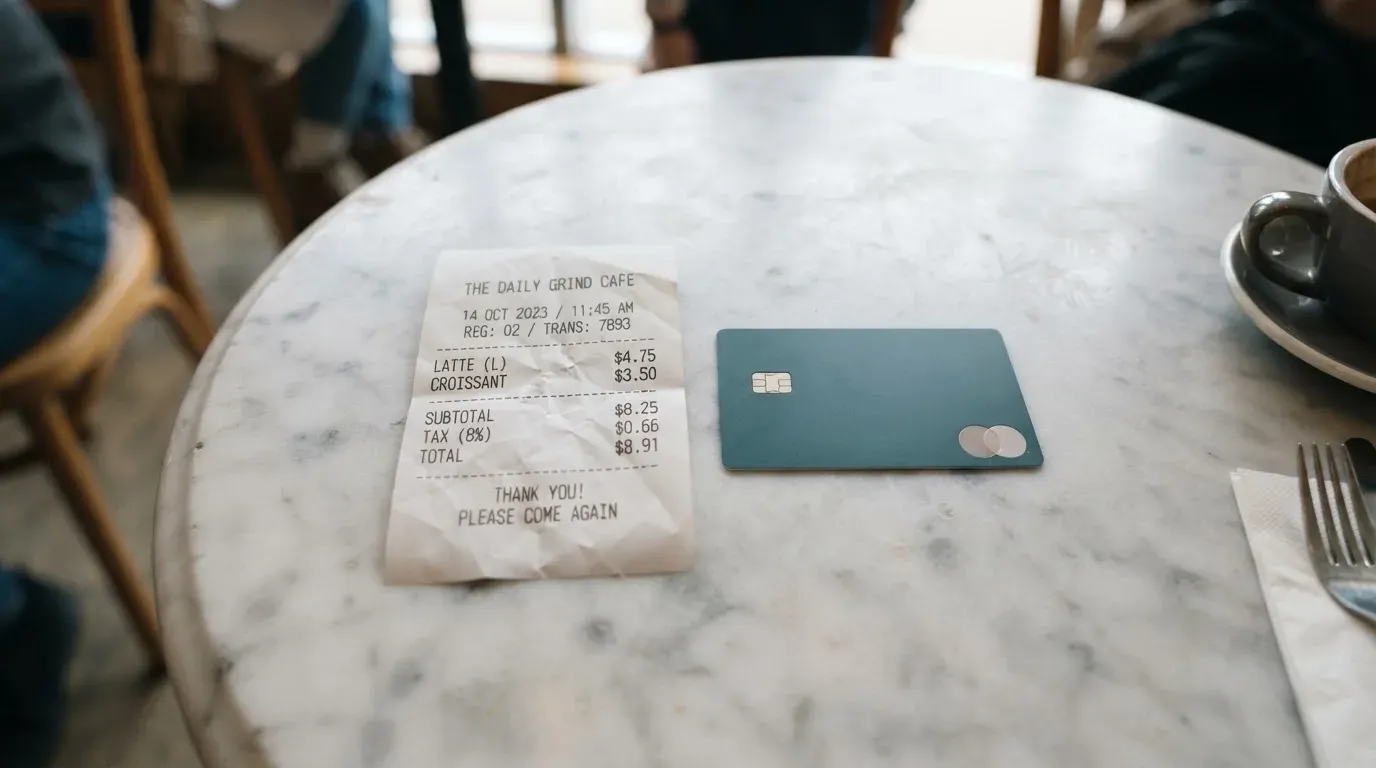
The terms say fees “may apply to bank transfers, card funding, and certain third-party services” — and then give no amounts. There is no published issuance fee, no monthly fee, no exchange spread, no foreign transaction rate, no ATM pricing. If you have been comparing cards by reading their fee tables, this one has no fee table.
| Item | What PPAY publishes |
|---|---|
| Card issuance | Not stated |
| Monthly or maintenance fee | Not stated |
| Conversion / exchange rate | Not stated; the app shows “Live Rates: crypto and fiat rates with a built-in converter” |
| Foreign transaction fee | Not stated |
| ATM withdrawal fee | Not stated |
| Card funding | Terms say fees “may apply” to card funding, amount not stated |
| Bank transfers | Terms say fees “may apply”, amount not stated |
| Peer-to-peer sends | “zero peer-to-peer fees” — stated, and limited to P2P sends only |
| Spending limits | Not stated beyond “tiered verification limits” |
| Tier pricing | Not stated; cards are listed as virtual and physical with no pricing |
Three everyday payments, and which fees would bite
I want to be careful here. I am not going to invent numbers, and neither does the card. What I can do is walk through the three payments most people make and name which line of the table above decides the cost.
Paying for a subscription in US dollars. This is the payment PPAY is best suited to. The virtual card is USD-denominated, the merchant is charging USD, and no conversion happens at the moment of payment because there is nothing to convert — you are spending the balance in the currency it is already in. What can still touch the cost is the fee on funding the card, which the terms say may apply without an amount. This is the case where the missing numbers hurt least.
Paying for something priced in naira while your balance sits in dollars. Here the exchange rate decides, and PPAY publishes a live rate display rather than a spread. A displayed rate and the rate you actually receive can differ, and the difference is the margin. Without a stated markup you cannot tell in advance whether the conversion is favourable. This is the payment to test small before you rely on it.
Withdrawing cash at an ATM. Nothing is published: not the fee, not whether the Mastercard works at ATMs at all, not the withdrawal limit. There is also the wider category point that a foreign-issued BIN can be declined by some machines and merchants for reasons that have nothing to do with your balance. Treat this as an open question rather than a feature.
Two more things shape cost without appearing in a fee table. The virtual card is USD only — there is no multi-currency information — so a euro or naira cost always involves a conversion. And card payments in some categories carry their own friction: gambling merchants sit under MCC 7995, which many issuers block on specific cards by policy rather than by law, and the blocked list varies by issuer. You cannot check whether PPAY’s Mastercard does this from the public pages.
Top up: how money gets onto the card
Short answer: the card does not tell you. Longer answer: here is what is documented and where the gap sits.
The wallet holds crypto. The home page advertises swaps through a WhatsApp bot, describing “OTC trades, crypto swaps”. So the intended flow appears to be: you hold crypto in the wallet, you swap it, and the resulting balance is what the card draws on. What is not published:
- which coins are accepted
- which networks are supported for deposits
- minimum top-up amounts
- how long a top-up takes
- whether fees apply to funding the card beyond the terms’ general “may apply”
That last omission is the one that should make you pause, because in this category the network you send on is not a detail. Sending USDT over Tron and over Ethereum are different operations with different requirements; a wallet holding USDT but no ETH cannot send an ERC-20 token at all, because gas on Ethereum is paid only in ETH. Tether describes USDT as a token issued on networks including Ethereum, Tron, Solana, Polygon and Avalanche, and Circle lists USDC as natively supported on 38 networks as of 16 September 2026 — so the universe of possible networks is wide, and picking the wrong one is a known way to lose money. Blockchain transfers are irreversible, so a deposit sent on an unsupported network or to an address belonging to another network can be lost, or need manual support recovery with no guarantee.
On withdrawal, the terms say only this: “You may close your account at any time through the app settings. Any outstanding balance will be settled before closure.” The method and the fees are not stated. So the way out is described in principle — close, and the balance is settled — without saying how the money reaches you or what that costs.
Paying with it every day
The card shape is straightforward. You get a USD virtual card for online shopping and a physical Mastercard “accepted everywhere Mastercard is”. The virtual card’s network is not stated, and the card currency is USD.
What is missing for daily use is more than what is present. Apple Pay and Google Pay support are not covered anywhere in the public pages — and that matters more than it sounds, because tokenised mobile wallets are the normal way people pay with a card now, and they work differently: the card number is replaced by a device-specific number stored in the secure hardware, with a fresh one-time code per payment. Whether you can add this card to a phone wallet is simply unknown from public sources. ATM availability and cost are also unstated.
Wallets: not covered. Rewards: no cashback is stated. There is a savings feature advertised at “up to 8.5% APY”, but that belongs to the savings product, not to card spending — worth separating, because it is easy to read as a card benefit.
The apps exist on iOS and Android, but the store buttons on the home page are placeholders that link to “#”, so no listing was found and I could not read any ratings. That is itself a small signal: a functioning product usually has a public app listing someone can inspect before downloading.
If a payment goes wrong, the terms say transactions are final once confirmed, refunds are decided case by case, and disputes should first go through support. Chargebacks are not mentioned at all. That is a meaningfully weaker position than a card from an institution with a published chargeback scheme, where the issuer, not the merchant, resolves the dispute with a reason code such as fraud, duplicate billing or goods not received.
What can go wrong
The provider is not a bank and names no licence. The owner is PROSPER DIGITAL SYSTEMS LTD, from the site footer. PPAY states plainly: “PPAY is a technology company, not a bank.” Its registration country, its issuing bank and its licences are not stated. The terms are governed by the laws of the Federal Republic of Nigeria, with disputes going to the Lagos State courts. Whether that is fine for you depends on where you are and how much you hold.
Custody is unstated. The card does not say whether it holds your crypto itself or whether you hold the keys. This is the question that separates two very different products. With a custodial wallet the provider holds the credentials and you must trust it completely; with a self-custody-linked card the funds stay in your wallet until the moment of payment and you bear the risk of key loss, phishing, and malware that swaps copied addresses. Crypto transfers are also irreversible in the general case, with no built-in recovery. The history of custodial platforms is not encouraging — Mt. Gox (about US$350 million reported stolen, 2011–2014), Coincheck (about US$400 million, 2018), Ronin Network (US$625 million, 2022). And stablecoins are not censorship-proof: Tether says it disables tokens in wallets on the OFAC sanctions list and has frozen funds tied to illicit activity.
Safeguards are claimed but incomplete. The card says “Every account, and every sensitive action within it, is protected by biometric and two-factor verification”, and that transactions are screened for fraud and sanctions. Good words. But the custody model is not stated, safeguarding of funds is not stated, and the help page lists the question “Can I freeze my card?” without an answer — which is odd, because instant freeze is one of the most standard card controls and one of the first things you want when a card goes missing.
No complaints, and no reviews either. I found no official incidents. I also found no user reports: searching for PPAY card reviews turned up a different company, Perpay, and nothing for ppayglobal.com. No Trustpilot page was found. Take that two ways. It may mean a clean record. It may equally mean few users — and a product with few users has fewer people publicly documenting what went wrong.
Programmes like this do close. Visa terminated its global agreements with FTX on 13 November 2022, and the FTX US debit card was wound down by its issuer. WaveCrest, a Visa issuer that supplied crypto card brands, was suspended by Visa in Europe in 2018, closing all WaveCrest-issued Visa programmes. Closures typically follow a pattern: a notice period, then loading and spending stop, then users are asked to withdraw remaining balances. Neither Visa nor Mastercard issues crypto cards to consumers directly — they license issuers, and they can suspend a programme. Your money’s continuity depends on a licence you cannot see.
Support is thin on detail. Contact is by email at [email protected], in-app chat, X and Instagram, and a WhatsApp bot. Replies are promised “within one business day”. Languages and opening hours are not stated — which matters if you are not an English speaker and the terms are governed by Nigerian law.
What to take instead
The honest comparison is not “PPAY versus a bank”. It is PPAY against other crypto cards that publish more. Here is where the alternatives score, and the three that state enough for you to actually plan around.
| Alternative | Score | Card | Cost | Key limitation |
|---|---|---|---|---|
| Morse | 7.5 / 10 | Fully virtual Visa prepaid, spends from balance in any currency | Paying online and contactless is free; “zero foreign exchange fees or markups” at the real Visa rate | Eligibility by residence, “available only in certain countries”, list not published; some countries closed-beta with an invite code |
| International Visa Card | 6.7 / 10 | U.S.-issued Platinum Visa, virtual, pays in USD | $5 issuance, no maintenance fee; plans Classic free, Pro $9.00/month, Max $19.00/month; card use in USD free; foreign currency “Visa exchange rate + 2% FX fee” | Physical card “coming soon”; a long excluded-country list by residence or registration |
| UNi Card | 6.1 / 10 | Multicurrency card on the Mastercard network | “No annual fee or foreign transaction fee”; converted at live OTC rates; “no hidden exchange fees” | Funding methods not stated; physical versus virtual not stated |
A few things stand out when you read them side by side.
Morse is the strongest of the three on disclosure and on score. It publishes “zero foreign exchange fees or markups” with the real Visa exchange rate, and says paying with the card online and contactless is free. Its deposit options are spelled out: debit card, stablecoin transfer, account details in USD, EUR, MXN and COP (BRL needs a Brazilian CPF), and USDC, USDG and EURC via Solana are free while other tokens and blockchains carry a fee. The wallet is self-custodial. What it does not publish is the card issuance or monthly fee — the card page just says fees may apply and points to the Cardholder Agreement. And its eligibility is also residence-based, with the country list deliberately unpublished; American Samoa, Australia, Cape Verde, Guernsey, Hong Kong SAR China, Isle of Man, Japan, Jersey, New Zealand, Serbia, Singapore, Switzerland, Thailand, Türkiye, the United Kingdom and Western Sahara are in closed beta and need an invite code. Morse also cannot serve customers subject to US sanctions, as well as UK, EU and UN ones.
The International Visa Card is transparent about money and restrictive about geography. It publishes exact numbers: $5 one-time issuance, no maintenance fee, and the FX cost stated as “Visa exchange rate + 2% FX fee”. It is virtual only — “coming soon” for physical — which is a real limitation if you want something in your hand. Deposits of any kind are free, and you can fund with USDC or USDT into the USD account, or with USD, EUR, SEPA, SWIFT and FedNow. But the account is not available to residents or legal registrants of a long list including Belarus, mainland China, North Korea, Cuba, India, Iraq, Iran, Israel, Myanmar, Nepal, Nicaragua, Russia, Syria, Turkey, Ukraine, Venezuela and Vietnam, with FATF grey-list countries reviewed case by case, and purchases are blocked in several of them. No cashback is stated.
UNi Card sits in the middle on clarity. It promises “no annual fee or foreign transaction fee”, assets converted at live OTC rates, “no hidden exchange fees”, and adds “Spend-to-Earn rewards” of up to 3%. Its card is multicurrency on the Mastercard network and spends from the UNi.Global balance. What it does not state: who can get it, how you fund it, and whether a physical card is included.
Where PPAY lands in this picture is fairly clear. It is the only one of the four whose fee table is entirely blank. The others at least tell you which direction the costs move.
Who I would recommend it to
I would recommend PPAY to a Nigerian resident who has a specific, ordinary need: a USD virtual card for online payments, and a physical Mastercard for everyday spending, funded from crypto they already hold. For that person the card does a real job, the onboarding route is documented for Nigeria specifically, and the peer-to-peer sends are fee-free.
I would tell everyone else to slow down and get answers first. If you are outside Nigeria, you cannot confirm eligibility from public sources, so find out before you commit money. If you plan to convert currency regularly, you need a stated rate or spread, and there is none. If you intend to hold a meaningful balance, you need to know the custody model, whether funds are safeguarded, and who the issuer is — and the card says “not a bank” and names no licence. If cash withdrawals matter to you, assume nothing until you have read the ATM terms yourself.
One practical note for anyone who does go ahead: test with a small amount through the conversion path before you size up, because that is where the missing numbers will show themselves. And keep an eye on network choice when you send crypto in, since the card does not list which networks it accepts.
None of this is a warning that something is wrong. It is the plain observation that the information you would normally rely on to decide is not published, and the decision has to be made without it.
Frequently asked questions
What is PPAY card?
PPAY is a crypto wallet that gives you a virtual card in US dollars for online shopping and a physical Mastercard for everyday spending. The wallet holds crypto, and swaps are offered through a WhatsApp bot. The card says PPAY is “a technology company, not a bank”, owned by PROSPER DIGITAL SYSTEMS LTD. It is aimed at Nigerian residents in particular.
Is PPAY a bank or a regulated company?
No, it is not a bank — PPAY states that itself. The owner named in the site footer is PROSPER DIGITAL SYSTEMS LTD. Its registration country, issuing bank and licences are not stated on the public pages. Terms are governed by Nigerian law and disputes go to Lagos State courts. If regulation matters to you, this is a question to put to support directly.
Who can apply for a PPAY card?
You must be 18 or older and a resident of Nigeria or an “eligible country where PPAY operates”. The test is residence, not citizenship. The home page says “10+” countries are supported but names none, so if you are outside Nigeria you cannot check eligibility from the public site.
Does PPAY require KYC, and what documents do I need?
Yes. Verification is mandatory before activation. The AML policy lists full legal name, residential address, date of birth, phone, email, government-issued ID with selfie or biometric verification, proof of address, and “BVN, NIN, or equivalent verification data where applicable”. Verification is tiered, but the tiers and timings are not published.
How much does a PPAY card cost?
Not stated. No issuance fee, no monthly fee, no exchange spread, no FX fee and no ATM fee are published anywhere. The terms say fees “may apply to bank transfers, card funding, and certain third-party services” without amounts. Peer-to-peer sends are fee-free. Spending limits are described only as “tiered verification limits”.
Can I use the PPAY virtual card for online payments?
That is what it is built for: a USD virtual card for online shopping. But no fee is published for funding it, and the virtual card’s network is not stated, so check at the point of payment rather than assuming. Subscriptions priced in dollars are the cleanest case, since no conversion is needed.
How do I top up a PPAY card?
The published route is that the wallet holds crypto and swaps run through a WhatsApp bot offering “OTC trades, crypto swaps”. No coins, networks, minimums or timings are listed. Send on the wrong network and the transfer can be lost, since blockchain transfers are irreversible and there is no guaranteed recovery.
Is the PPAY card safe, and can I freeze it?
The card says every account and sensitive action is protected by biometric and two-factor verification, and that transactions are screened for fraud and sanctions. But the custody model and whether funds are safeguarded are not stated, and the help page lists “Can I freeze my card?” without an answer. Treat that as an open question for support.
Can I add the PPAY card to Apple Pay?
Not stated anywhere on the public pages, and the app store buttons on the home page are placeholders, so no app listing or rating could be checked. If a mobile wallet is how you normally pay, confirm this before relying on the card day to day.
Can I withdraw money or close my PPAY account?
The terms say you may close your account at any time through app settings, and that any outstanding balance will be settled before closure. The method of receiving the money and any fees are not stated. Plan for the balance to come back to you, but ask support how and how long before you need it.
App and neobank card verdicts – cryptocardverdict
Content created by the «cryptocardverdict» team