
A Visa Infinite for stablecoin holders, with most of the basics still unpublished
 Available in US
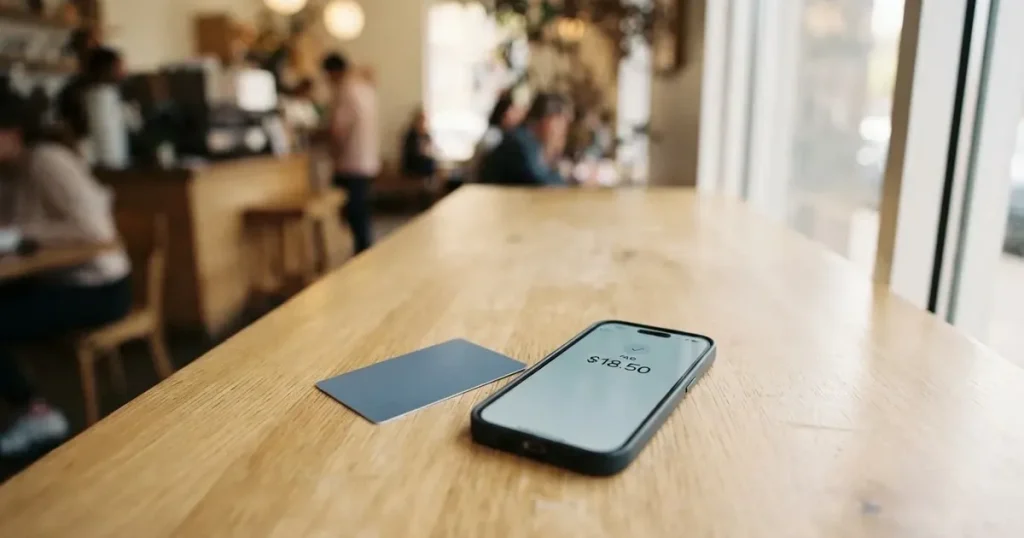
The Digital Treasures Card is a Visa Infinite pitched at people who hold crypto and want to spend it through a normal card network. The card is run by Digital Treasures Center Pte Ltd, a Singapore company better known as dtcpay, and it sits on top of the dtcpay Wallet app. In principle that is a familiar pitch: load stablecoins, convert to fiat at the moment of payment, tap to pay anywhere Visa is taken. In practice, after a careful read of what the company publishes and what reviewers have written, the card is hard to evaluate. The score I land on is 4.7 out of 10, and most of the marks it loses are for things the issuer simply has not told us, rather than for anything it has done wrong.
This review is current as of October 28, 2026. Anything specific to the card that I could not confirm against an official source is marked as unofficial or as “not stated”, and the country rules below are given as the card states them, not as a recommendation for any particular reader.
Verdict
The short version: this is a card aimed at high-net-worth stablecoin holders who live outside the United States and are comfortable with a Singapore-issued product. If that is you, the value proposition is real. If you are an ordinary shopper looking for a cheap way to spend crypto, the published information is too thin to commit to. Most of the basics, from issuance fees to ATM limits, simply are not stated on the pages I could read, and the third-party complaint record is thin but pointed.
| Criterion | Mark | Why |
|---|---|---|
| Who can get it | 4 / 10 | The card’s official pages do not list supported countries. Unofficial reporting says the product targets ultra-high-net-worth clients, is issued from Singapore and excludes the United States, but the issuer has not confirmed this on a public page. |
| Cost | 5 / 10 | Only “competitive exchange rates” are advertised. No issuance fee, monthly fee, ATM fee, FX fee or conversion spread is published, so a reader cannot tell what they will actually pay to use the card. |
| Top-up options | 6 / 10 | The dtcpay Wallet converts stablecoins to fiat in real time. USDT, USDC, BTC and ETH are mentioned in launch coverage, but the specific networks you can send on are not named. |
| Reliability and complaints | 4 / 10 | The operator, Digital Treasures Center Pte Ltd, is registered in Singapore and describes itself as a Major Payment Institution under MAS. The card-issuing bank is not named. Trustpilot shows a 2.6 out of 5 score from four reviews, all one star, with reports of blocked accounts and funds that were not returned. |
| Everyday use | 5 / 10 | The card is Visa Infinite, available in virtual and physical form, with Apple Pay and Google Pay support. ATM access and merchant-category restrictions are not described. |
| Total | 4.7 / 10 | A real product with a real licence, but a reader cannot make an informed decision on cost, eligibility or support from the public information alone. |
If you are a high-net-worth holder looking to convert stablecoins to fiat on a Visa card and you are not a US resident, this is a category the card is built for. If you want a card with a clear fee table, a public country list and a settled record of customer support, the Digital Treasures Card is not yet that product.
Who will they give you the card
The single most important thing to know about Digital Treasures is who the issuer says it is for, and the answer, on the official pages, is essentially nothing. The card’s own website does not list supported countries, residency requirements or minimum balance. What is in the public domain comes from third-party press coverage rather than from the issuer: Fintech News Singapore reported in February 2025 that the card targets ultra-high-net-worth individuals, and the same starting data says the card is issued from Singapore, with US residents excluded per the issuer’s terms, though that exclusion is not confirmed by a readable source I could find.
That gap matters. Most card programmes publish a list of supported countries, a list of excluded countries, and a clear age requirement. Digital Treasures publishes none of those, so a prospective applicant cannot tell, before applying, whether they will be turned down. In a category where a frozen account can hold your money for weeks, that is a meaningful risk to take on without a checklist.
Two things can be said with confidence. First, the operator behind the card is Digital Treasures Center Pte Ltd, a Singapore-registered company that describes itself as a Major Payment Institution under the Monetary Authority of Singapore. That licence is a real regulatory status, and it tells you the company is permitted to provide payment services in Singapore under MAS supervision. Second, the card programme was announced with Visa in September 2024, and the consumer card itself launched in late February 2025. The card is a Visa Infinite, which is Visa’s top-of-range consumer product and is unusual for a crypto-linked card.
What that means in practice: a US resident should expect to be turned away. A non-US resident who falls outside the unofficial ultra-high-net-worth target may also be turned away, or may simply never be told why. If you are considering this card, the first thing to check is whether anyone in your country has been approved, because the issuer is not going to tell you before you apply.
How to get it
The published application path is short and unspecific. Unofficial reporting from Fintech News Singapore says applicants go through the dtcpay app: you download the wallet, create an account, complete whatever identity checks the app asks for, and apply for the card from inside the app. The card itself is a Visa Infinite, available in both virtual and physical form. The card’s currency is not stated.
Beyond that, almost every practical question is unanswered. The KYC steps the app actually runs are not stated. The documents you will be asked for are not stated. The minimum age and whether the card is open to non-Singapore residents in general are not stated. The delivery time for a physical card is not stated, and the difference between a virtual and physical card in terms of who is eligible for which is not stated either. None of this is unusual for a young programme, but it is unusual for a Visa Infinite, where the network’s own underwriting normally pushes issuers to be explicit about tiers and limits.
For a reader, the practical effect is that you cannot plan a move from your current card to this one. You can only download the app, submit what it asks for, and wait. Whether the wait is days or weeks, and whether you will hear back at all, is not something the public record can tell you.
Fees: what it really costs
This is the section the card fails hardest on, because there is almost nothing to write. The only published pricing claim is that real-time stablecoin-to-fiat conversion happens at “competitive exchange rates”. The exchange rate itself is not quoted. There is no fee schedule, no monthly fee, no issuance fee, no ATM fee, no FX fee for non-card-currency transactions, and no daily or monthly cap on spending. The card is offered as a single Visa Infinite tier, with no published premium or metal variant.
| Fee or limit | What Digital Treasures publishes |
|---|---|
| Issuance fee | Not stated |
| Monthly fee | Not stated |
| Conversion spread (crypto to fiat) | “Competitive exchange rates” only; no number |
| Foreign exchange (FX) fee | Not stated |
| ATM withdrawal fee | Not stated |
| Daily spending limit | Not stated |
| Monthly spending limit | Not stated |
| Tiers | Single tier (Visa Infinite); no variants published |
That leaves a reader in an awkward position. Suppose you top the card up with USDC, convert to a balance in your card’s currency, and pay for a coffee. The published information tells you only that you will pay an unspecified conversion margin, on a network whose card-issuer bank you do not know, with no disclosed FX mark-up if you happen to travel. Now suppose you withdraw cash from an ATM abroad. There is no published ATM fee, no published FX fee, and no published cap. You can only find out what it cost you by doing it and reading the statement.
To put that in concrete terms, three everyday payments illustrate the uncertainty:
- A coffee at home, paid in your card’s currency. The cost is the spread on the crypto-to-fiat conversion at the moment of payment. That spread is not published, so the only way to know it is to compare the rate the app gave you with the rate on a public reference like a major exchange’s mid-price.
- A meal in a country whose currency is not your card’s currency. On top of the conversion spread, you can expect an FX mark-up, but the mark-up is not published. Most cards in this category charge a variable amount on top of the wholesale rate, and you cannot tell where this one sits in that range.
- A cash withdrawal at an ATM. The ATM operator’s own surcharge is usually disclosed on-screen, and the card’s own fee for the withdrawal is not disclosed at all. If the card has a withdrawal limit, it is not published either.
If you are comparing this card against alternatives, the practical test is to load a small amount, make a test payment, and read every line of the app’s transaction screen. Until the issuer publishes a fee schedule, you should treat any “competitive” claim as an invitation to measure it yourself.
How to top it up
Topping up the Digital Treasures Card starts inside the dtcpay Wallet app, where the company says stablecoins are converted to fiat in real time as you spend. That model means the card is, in practical terms, a pre-loaded balance card: the crypto you hold in the app is converted and held as a fiat balance, and the card can spend only that balance. It cannot overdraw, which is one structural protection the design gives you.
The starting list of supported assets, again from launch coverage, includes USDT and USDC, plus BTC and ETH. The networks you can send those assets on are not named. This is a real gap, because USDT alone exists on Ethereum, Tron, Solana, Polygon, Avalanche and several other chains, and the wrong choice can lose the funds outright. A blockchain transfer is irreversible, and a deposit sent on a network the card provider does not support, or to an address for a different network, can be lost or stuck pending manual support, with no guarantee of recovery. Before you send anything, the only safe move is to find a network the app explicitly tells you to use, and to send a small test amount first.
Withdrawal paths are not stated either. The card’s own ATM access is not described, and the app’s path to cashing the balance back out to a bank or to crypto is not described. If you need to move money off the card quickly, that is information you will want to have before you load it.
Paying with it every day
On the merchant side, the card behaves like a Visa Infinite. Press materials from the launch say it is accepted at over 150 million Visa locations, with an earlier release giving 130 million across 200+ countries; in practice that means anywhere Visa is taken in the world, including online. The card is available in both virtual and physical form, so online card numbers can be issued immediately, and the physical card can be added to mobile wallets. Apple Pay and Google Pay are supported, which is what most people will use day to day: tokenised card numbers stored on the device, with a one-time dynamic security code per transaction.
That is the upside of running on Visa Infinite. The downsides are the things Visa cards of this kind normally come with, and that Digital Treasures has not published: ATM access is not described, merchant-category restrictions are not described, and the dispute path for an unhappy purchase is not described. A Visa Infinite also usually comes with concierge and lounge benefits, but the issuer has not said which of those, if any, apply here. If your main use case is in-store contactless, the card will work; if you are relying on Visa’s dispute and fraud-resolution process, you are relying on a programme whose own complaint record is thin.
A note on how Visa cards work in this category is worth keeping in mind. A card number starts with a six- or eight-digit bank identification number that tells the merchant’s payment system which institution issued the card, and merchants may apply extra scrutiny when the issuer country does not match the customer’s billing address. That is one reason a card issued in Singapore can look “foreign” to a shop in another country, and one reason a cardholder should expect the occasional declined authorisation, with the funds held for up to a week before the hold clears.
What can go wrong
Two things are worth weighing before you sign up. The first is the regulatory position. Digital Treasures Center Pte Ltd describes itself as a Major Payment Institution licensed by the Monetary Authority of Singapore, which is a real licence and a real supervisory relationship. The card-issuing bank is not named on the public pages I could read, and that is unusual: most crypto card programmes name the bank that sits behind the Visa or Mastercard licence. The absence of a named issuer makes the programme harder to evaluate, and means any escalation path runs through dtcpay rather than through a named bank.
The second is the third-party complaint record. Trustpilot shows dtcpay, the company, with a TrustScore of 2.6 out of 5 from four reviews, all one star, dated across 2024, 2026 and mid-2026. The themes in those reviews are familiar from the wider crypto-card category: accounts blocked or made inaccessible, funds delayed or not returned, allegations of fraud, and slow support. The company has not replied on Trustpilot, and the score reflects company-wide sentiment rather than the card product specifically, but the pattern is the one to watch: when something goes wrong, the resolution path runs through the app and through the issuer’s support team, and that path is not described in any of the public documents.
A broader category risk is worth flagging as well. Crypto card programmes have a track record of being shut down by their networks. Visa said in November 2022 that it had terminated its global agreements with FTX, and the FTX US debit card was wound down by its issuer; in 2018, Visa’s suspension of WaveCrest closed every WaveCrest-issued Visa programme in Europe overnight. The pattern, when it happens, is a notice period, then an end to loading, then an end to spending, and then a window to withdraw your balance. None of that is happening here today, but it is the kind of event a reader should plan for, and it is one more reason to keep balances on the card low.
A final point on everyday card safety. Typical safeguards, like app-based two-factor authentication, instant card freeze, per-transaction spending limits, 3-D Secure confirmation and tokenised mobile wallets, are now table stakes. The Digital Treasures app’s specific safety features are not stated in the public materials, so the only way to confirm them is to read the app’s security settings after you install it. As a general rule, a cardholder in this category should assume the only recoverable record of a disputed transaction is the in-app statement, and keep screenshots of every authorisation.
What to take instead
If the Digital Treasures Card’s gaps on cost, eligibility and complaint history are deal-breakers, three alternatives cover most of the same ground. None is a perfect substitute, and each makes different trade-offs.
| Card | Score | What it is | Who it suits |
|---|---|---|---|
| CardFlow | 4.9 / 10 | A virtual USD Mastercard aimed at Nigeria, with the site calling itself “Nigeria’s smartest fintech card platform” and saying it also serves “Nigerians and global users”. A virtual card can be created quickly; no country list or exclusions are stated. Funding is in Bitcoin, USDT, ETH or Naira bank transfer. | A Nigeria-based user who wants a fast virtual USD card and is comfortable funding from crypto or local bank transfer. Fees are not stated on the public pages. |
| HyperCard | 4.7 / 10 | A prepaid “HyperCard” with balance in USD or EUR, available through an app that the App Store says works in “more than 176 countries” (which is acceptance, not eligibility). Funding is crypto, including USDT, BTC and ETH, converted on deposit. Fees and reward programmes are not stated. | A user who wants a straightforward prepaid USD or EUR balance, is happy to fund in crypto, and accepts that the official country list and fees are not published. |
| Card.fi | 6.6 / 10 | A multi-coin card programme that ships to “200+ countries” by its own banner, with virtual and physical tiers, a metal option, and 32 coins across 5 networks (Ethereum, Base, BNB Chain, Solana, Kaanch). The fees are published, including a one-time card price (Virtual Classic $49, Virtual Premium $249), a top-up fee of 1.5% + $1.00 for Classic and 1% for Premium, an FX fee of 3.5% for Classic and 2.5% for Premium, and cashback on spending (0.8% to 2% depending on tier, with monthly caps). | A reader who wants published fees, a real country list, and a published reward programme, and is willing to pay a one-time card price and a top-up fee. |
CardFlow and HyperCard are roughly the same shape as Digital Treasures: a virtual card, a crypto top-up, a not-fully-stated fee schedule, and a young programme. Card.fi is the only one of the three with a published fee table, a published country banner and a published reward programme, which is why its review score is meaningfully higher. If you are choosing between them, the deciding question is whether published transparency is worth the one-time card price and the ongoing top-up fee.
Who I would recommend it to
The Digital Treasures Card is a real product with a real licence, and the launch is recent enough that the absence of a published fee schedule is, on its own, a normal state for a new programme. What is not normal is the combination: a Visa Infinite target market, no published country list, no published fees, no named card-issuing bank, and a third-party complaint record that is small but pointed. A reader has to take on faith several things that other issuers publish as a matter of course.
I would recommend the card to a high-net-worth holder of stablecoins who lives outside the United States, who is comfortable with a Singapore-issued Visa programme, who can absorb a worst-case loss of the card balance, and who is happy to install the app, read the small print, send a test transaction, and measure the actual conversion spread against a public reference rate before committing serious volume. For that reader, the card is a sensible way to convert stablecoins to a Visa balance, with the usual structural risks of a custodial product.
I would not recommend the card to a US resident, to a reader who needs a published fee table before they can budget, to a reader who relies on a clear dispute or chargeback path, or to a reader who plans to keep a large balance on the card itself. For any of those readers, Card.fi’s published fees and country banner make it a stronger starting point, and the alternatives above cover the same crypto-to-card use case with a more legible rule book.
The honest summary is that the Digital Treasures Card is built for a narrow audience and the issuer has not yet given the rest of us the information we would need to join it. Until that changes, this is a card to watch, not a card to load up.
Frequently asked questions
What is the Digital Treasures card?
The Digital Treasures Card is a Visa Infinite payment card run by Digital Treasures Center Pte Ltd, a Singapore company that operates under the dtcpay brand. It is designed to let holders of crypto, especially stablecoins, convert and spend through the Visa network via the dtcpay Wallet app.
How does the Digital Treasures card work?
You hold crypto in the dtcpay Wallet app, and the app converts it to fiat at the moment you spend, so the card draws on a pre-loaded fiat balance rather than making a direct crypto payment. The card is available in virtual and physical form and can be added to Apple Pay and Google Pay.
Is Digital Treasures a bank?
Digital Treasures Center Pte Ltd is not a bank. It is a Singapore-registered payments company that describes itself as a Major Payment Institution licensed by the Monetary Authority of Singapore. The card-issuing bank is not named in the public materials.
Who owns Digital Treasures?
Digital Treasures is a brand of Digital Treasures Center Pte Ltd, a private company incorporated in Singapore. The ownership structure beyond the corporate entity is not stated on the public pages.
Is the Digital Treasures card available in the United States?
The card is generally described as Singapore-issued, and unofficial reporting from Fintech News Singapore says United States residents are excluded. The issuer has not confirmed that exclusion on a public, readable page, so the safest working assumption is that a US resident should not expect to be approved.
How do I get the Digital Treasures card?
According to unofficial reporting, you apply for the card from inside the dtcpay Wallet app. The KYC steps, the documents required, the card currency, the delivery time for a physical card, and the eligibility rules are not stated in the public materials.
Does the Digital Treasures card require KYC?
Yes, as a regulated payment institution operating in Singapore, dtcpay is required to verify customers’ identities under anti-money-laundering rules. The specific KYC steps the app actually runs, the documents requested, and the verification levels are not stated on the public pages.
How do I top up the Digital Treasures card?
You top the card up by depositing supported crypto into the dtcpay Wallet app, where it is converted to a fiat balance. Launch coverage lists USDT, USDC, BTC and ETH as supported; the specific blockchain networks you can send on are not stated, and sending on the wrong network can result in lost funds.
How do I add the Digital Treasures card to Apple Wallet?
The card supports Apple Pay and Google Pay, so once your card is active in the dtcpay Wallet app you can add it to the mobile wallet from the app’s card screen or from the Wallet app on your phone. The exact steps inside the dtcpay app are not described in the public materials.
Is the Digital Treasures card safe?
The operator holds a Major Payment Institution licence from the Monetary Authority of Singapore, and the card runs on Visa’s network with tokenised mobile wallet support. Beyond that, the public materials do not describe the app’s specific safety features, the dispute process, or the support response time, so a cardholder should assume funds held on the card carry the same counterparty and operational risk as any other custodial product.
Virtual card verdicts – cryptocardverdict
Content created by the «cryptocardverdict» team