
A $350 no-KYC card that spends straight from a crypto balance
 Available in US
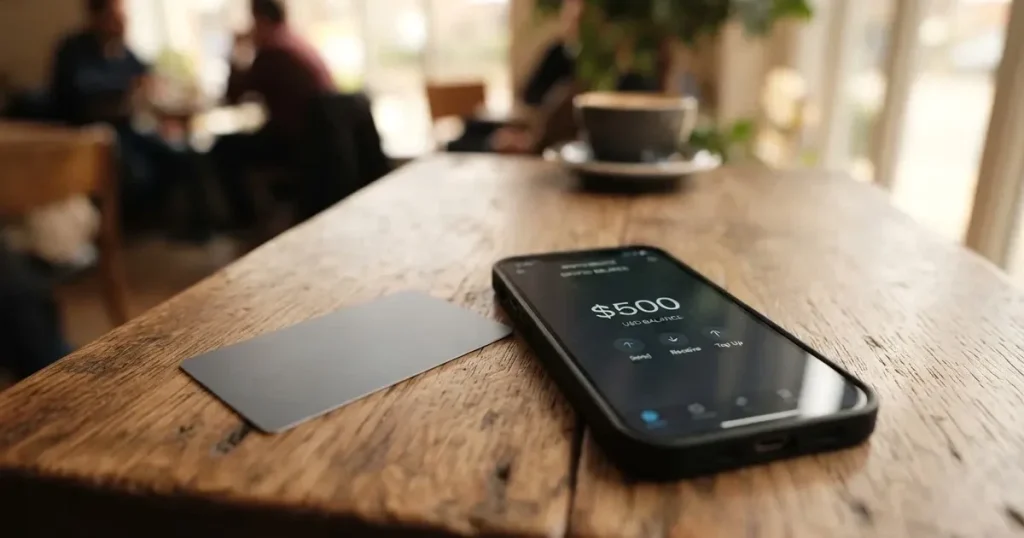
The Goblin card is one of those products that exist because a large number of people cannot get an ordinary bank card, or do not want to give a bank their documents. You buy a physical Mastercard and a virtual Visa, load them with crypto, and spend the balance. On paper that is a clean, useful thing. The price of entry is $350, and almost every number in the fee schedule is higher than you would meet with the mainstream alternatives. I have gone through the card’s own pages, its limits, its refunds and its support channels, and this is what I found.
The conditions described here are current as of October 28, 2026.
Verdict: a specialist tool, not a general-purpose card
Goblin scores 5.5 / 10 for me. That is not a rounding of “bad” or “good” — it is the arithmetic of a card that does two things very well and everything else at ordinary prices, and it does them the only way it can.
If you are one of the people the card was built for — you want a plastic card plus a virtual card, you do not want to send a passport scan to anyone, and you are comfortable converting crypto into a spendable balance before you pay for anything — then this is a genuine answer, and nothing mainstream gives you all three at once. The physical card carries a Mastercard and holds its balance in MXN, the virtual one is a Visa holding USD, and no identity document is asked for on the physical card. The daily mark of 9 / 10 for everyday use is the highest score on the card, and I agree with it: as a payment instrument the thing is simple and it works in the ordinary way.
What holds it back is money and paperwork. A $350 kit for Physical plus Virtual, a $100 renewal, a $100 replacement, 3.5% on every deposit, and — this is the detail that decides it for most people — no published country list. The page says only that “Country and merchant restrictions apply”. You cannot read the card’s own pages and find out whether your address will be served. And the issuer is not named.
| Criterion | Mark | Why |
|---|---|---|
| Who can get it | 8 / 10 | The list of countries is not published on the pages I could read; the card says country and merchant restrictions apply, and an earlier check found it worldwide, 18+, with some countries restricted |
| Cost | 1 / 10 | Physical plus Virtual $350, renewal and replacement $100 each, deposit 3.5% (BTC, ETH, SOL, USDT) or 4% (XMR), about 1.5% FX on the virtual card, 2% cash withdrawal |
| Top-up options | 6 / 10 | BTC, ETH, SOL, XMR and USDT through the web portal or a Telegram bot, converted to MXN or USD; the USDT network is not named |
| Reliability and complaints | 5 / 10 | Goblin Solutions LLC; neither the country of registration nor the issuer is named; I found no complaints and no reviews; refund available before first use |
| Everyday use | 9 / 10 | Physical Mastercard and virtual Visa, Apple Pay and Google Pay on the virtual card, ATM withdrawal limited to $500 a day |
| Total | 5.5 / 10 | Best for privacy-minded users who want plastic plus a virtual card without KYC |
Will they give you the card?
Mostly yes, and by design you will not be asked who you are. The card’s pages state “No KYC”: Goblin Physical needs no ID, no passport and no driving licence, and the minimum age is 18. For the virtual card, the card’s public pages do not state what verification, if any, applies — so treat that as unknown rather than as the same no-KYC promise. What kind of verification is done at any tier is also not stated.
Where it gets uncertain is geography. The country list is not on the pages I could read. The card’s own wording is “Country and merchant restrictions apply”, and an earlier check of the same pages described it as worldwide, 18+, with roughly 50 countries restricted. So the honest answer to “will they ship to me” is: probably, but nobody — including the card — has published the list that would let you know in advance. If your country being served is a hard requirement for you, that is the first thing to write to support about before you spend $350, not after.
How to get it
The sequence is unusually short. You pay, you deposit crypto through the web portal or the Telegram bot, and then you contact support to register the cards once they arrive. There is no application form to fill in and no identity check on the physical card — but note that the activation step is a conversation with support, not something you do yourself at an ATM or in an app.
The kit is Goblin Physical and Goblin Virtual together, $350 as a limited-time offer. The physical card is a Mastercard with an MXN balance; the virtual card is a Visa with a USD balance. There is one product pair and no tiers to choose between, so you are not picking a level — you are deciding whether the $350 is worth it.
Delivery is worldwide and takes about seven days, up to fourteen at the maximum, with tracked international shipping included in that price. A replacement card costs $100.
Fees: what it really costs per payment
This is where the 5.5 comes from, and it is worth reading the table before reading anything else on the site. The headline price is not the whole cost: the deposit fee applies every time you move crypto in, and that is the fee you will pay most often.
| Fee or limit | Goblin Physical | Goblin Virtual |
|---|---|---|
| Kit price | $350 for Physical + Virtual (limited-time offer) | included in the kit |
| Subscription or monthly fee | none | none |
| Validity | three years | three years |
| Renewal | $100 | $100 |
| Replacement (lost card) | $100 | $100 |
| Deposit fee | 3.5% (BTC, ETH, SOL, USDT), 4% (XMR) | 3.5% (BTC, ETH, SOL, USDT), 4% (XMR) |
| FX fee | 0% | approx. 1.5% versus reference rates, including a 1% markup |
| Cash withdrawal fee | 2%, applied separately | 2% |
| Goblin ATM fee | 0% | not applicable |
| Per transaction | $2,500 | $20,000 tap-to-pay; $200,000 online |
| Daily spending | $5,000 | $20,000 tap-to-pay; $200,000 online |
| Daily ATM | $500 | no limit |
| Monthly limit | none | none |
Limits on the physical card reset 24 hours after each transaction. On the virtual card, tap-to-pay is $20,000 per transaction and per day, and online payments are $200,000 per transaction and per day.
Three everyday payments, so the arithmetic is concrete:
- A $12 coffee paid with the physical card. No FX fee, so the only cost is whatever the merchant’s own pricing does. Nothing taken by Goblin.
- A $60 online subscription paid with the virtual card. Here you pay the deposit fee when you funded it, and if the merchant prices in a currency other than USD you are also inside the roughly 1.5% FX charge, part of which is a stated 1% markup on the reference rate.
- $200 taken out of a Goblin ATM. The ATM fee is 0% and the daily cap is $500, but a 2% cash withdrawal fee is applied separately — $4 on that withdrawal — and the ATM operator may add a fee of its own on top. That is $4 and possibly more before you have any money in your hand.
The honest summary: using the physical card in its home currency is the cheap path, and every deviation from that costs you. Deposit fee, FX fee, cash fee. None of these are hidden, and none of them are small.
Top up: five coins, two doors, one unnamed network
Topping up is where most of your friction with this card will live. You send BTC, ETH, SOL, XMR or USDT, either through the web portal — which the card recommends — or through the Telegram bot. Whatever arrives is converted into MXN for the physical card or USD for the virtual one. There is no app; the web portal and the Telegram bot are the whole interface.
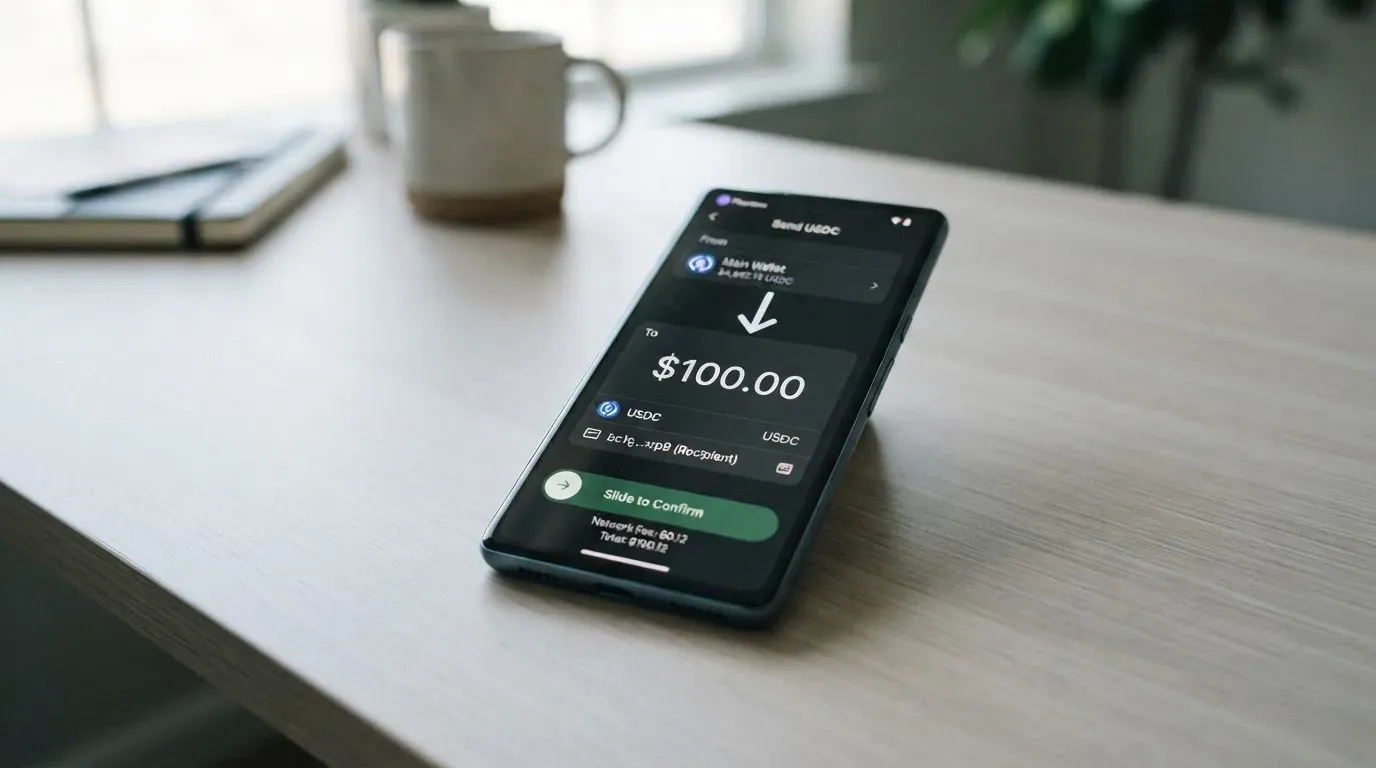
Three numbers to hold on to. The deposit fee is 3.5%, rising to 4% for XMR. The minimum deposit is $100. And the network fee — the gas or bandwidth the blockchain charges for your transfer — is not stated, so it is not something the card has committed to either way.
The line that should stop you for a second is this: the card’s public pages do not name the network for USDT. This is not a technicality. USDT exists on several chains — Ethereum, Tron, Solana, Polygon, Avalanche among them — and if you send it on the wrong one, the transfer can be lost or need manual support recovery with no guarantee. Blockchain transfers are irreversible by nature; the network cannot undo one. Get that answer in writing before your first deposit.
One more thing about balances: how you withdraw the balance if you close the account is not stated. Only cash withdrawals are described.
Paying with it every day
The everyday mechanics are the best part of this card, and the 9 / 10 is justified. Apple Pay and Google Pay work on Goblin Virtual only — not on the physical card. Whether any merchant categories are blocked is not stated beyond “merchant restrictions apply”, which is worth remembering if you travel.
There is no cashback and no rewards of any kind mentioned. The card’s appeal is functional, not a rebate.
Support is the other side of everyday use, because with no app you will end up talking to a person. Support runs over SimpleX and Telegram (@banklessinlatam) and the Telegram bot, in English only, between 8am and 10pm CST.
What can go wrong
Start with the one that is unusual, because it is written down and it would not occur to most buyers. If you publicly share your card’s BIN, you get an indefinite suspension without refund. The refund rules are also unusually specific and worth reading before you pay rather than after:
- Before any successful use, the kit is refundable for any reason.
- Before shipping, a full refund. After shipping, the refund is minus the shipping fee.
- After successful use, it is not refundable.
- If the card never arrives, you get a free reship or a refund where you are eligible.
Chargebacks are not stated. Neither is the security architecture of the account — no description of how your data or your keys are handled appears on the pages I read.
On the company side, the operator is Goblin Solutions LLC. Neither its country of registration nor the issuing bank or institution behind the Mastercard and Visa is named. For a card whose entire pitch is that you hand over no documents, “who actually issues this” being unstated is not a small gap.
Then the ordinary risks. A declined payment can leave a hold on your funds for several days, typically up to seven. Merchants can decline prepaid or foreign-issued cards because the BIN lookup reveals the card type and issuer country. Address verification is mainly offered in the US, Canada and the UK and is generally unavailable for foreign-issued cards, which causes declines. And the crypto side carries its own weight: crypto transfers are typically irreversible, a wrong network can mean lost funds, and Tether says it disables tokens in wallets on the OFAC sanctions list, so stablecoins are not censorship-proof.
What I could not find is a track record. No complaints and no reviews — none on Trustpilot or Reddit in my search, and no Trustpilot page for goblincards.com. No official incidents either. That silence cuts two ways: there is no evidence of a problem, and there is no evidence of reliability. A young programme with no public history is not the same as an established one.
Finally, taxes, briefly, because people ask and because I will not advise you here. In the US the IRS treats digital assets as property, so converting crypto into goods, services or dollars generally produces a taxable gain or loss, measured in local fiat currency at fair market value on the date of the transaction. That means each card payment funded from crypto can be its own disposal event. Speak to an accountant about your situation — this is not advice.
What to take instead
None of these three is the same card, and I want to be clear about that before comparing fees. Goblin is distinguished by the combination of physical plastic, a virtual card, and no KYC on the physical one. Where the alternatives are stronger, they are stronger on price or on published detail — which is itself a kind of strength when you are handing over $350.
CardFlow — 4.9 / 10. Aimed at Nigeria (“Nigeria’s smartest fintech card platform” and “Nigerians and global users”), a virtual USD Mastercard created in about three minutes. Creating the virtual card is free according to its own FAQ. Fees, rewards and a country exclusion list are not stated. You fund it with Bitcoin, USDT, ETH or a Naira bank transfer, networks not named. The contrast with Goblin is stark: Goblin charges $350 for a kit and names its issuer neither; CardFlow charges nothing for the card and says who it is for.
HyperCard — 4.7 / 10. A prepaid card with the balance in USD or EUR, loaded in the app with crypto such as USDT, BTC or ETH. Its official pages state no country list; the App Store says the card works in more than 176 countries, which is about acceptance, not eligibility. The network is not stated on the App Store page, and no fees are listed there. Read that last point twice before you assume it is free to use — not stated is not the same as zero.
Card.fi — 6.6 / 10, the highest of the four. Cards ship to 200+ countries, and its terms bar residents of, or orders from, a country subject to sanctions that would prohibit the service — a real, written exclusion list where Goblin has none. It offers Virtual Classic and Virtual Premium, physical Classic and Premium, and a stainless steel metal card, with a virtual card included in every physical order. One-time prices: $49 for Virtual Classic, $249 for Virtual Premium; physical and metal prices are not listed, and there is no monthly, annual, inactivity or minimum-balance fee. Top-up is 1.5% plus $1.00 on Classic or 1% on Premium; FX is 3.5% on Classic and 2.5% on Premium, with the conversion fee shown before each top-up. You can fund with 32 coins across 5 networks, and there is cashback on spending: 0.8% capped at 10 USDT a month on Classic, 1% on Premium, and 1.2% or 2% on Metal, plus headline offers like 10% at coffee shops capped at 10 USDT a month. Cards are issued under licence from the relevant card schemes. The catch: Goblin asks you for no documents, and Card.fi does not offer that.
| Goblin | CardFlow | HyperCard | Card.fi | |
|---|---|---|---|---|
| Score | 5.5 / 10 | 4.9 / 10 | 4.7 / 10 | 6.6 / 10 |
| Card cost | $350 kit, $100 renewal | virtual card free | not stated | $49 / $249 virtual tiers |
| Monthly fee | none | not stated | not stated | none |
| KYC | none on Physical | not stated | not stated | not stated |
| Country detail | list not published | aimed at Nigeria, no exclusions listed | acceptance in 176+ countries, eligibility not stated | 200+ shipping, sanctions bar written |
| Networks named | BTC, ETH, SOL, XMR, USDT (USDT network unstated) | BTC, USDT, ETH, Naira transfer | USDT, BTC, ETH | 32 coins, 5 networks |
My read: if the reason you are looking at Goblin is KYC avoidance and nothing else, the alternatives will not help you. If what you actually want is a cheap way to spend crypto, Card.fi is cheaper on the way in and much better on fees, and pays cashback while it does it. CardFlow is the one to look at if you are in Nigeria and want a virtual card in a few minutes. Neither has a physical Mastercard with no KYC at $350, which is precisely the gap Goblin is standing in.
Who I would recommend it to
I would recommend Goblin to someone who has already made the decision to not deal with a bank on this, and who treats the $350 as the price of that decision rather than as a card fee. Concretely: you hold crypto, you want to spend it without converting through an exchange account, you want a physical card for the places that still want plastic, you want a virtual card for everything else, and you are willing to read the fee schedule before each transfer rather than after. Check the country question in writing first, and check which USDT network they want. Those two answers cost you one message and can save you $350.
I would not recommend it to someone who wants to spend occasionally and lightly. Every deposit costs 3.5%, the entry price is $350, and the virtual card’s FX markup means spending outside dollars quietly costs more. Nor to anyone for whom the phrase “the issuer is not named” is a blocker — for a product sold on not handing over documents, that is a strange thing to be unable to answer. And not to anyone who needs a chargeback, a dispute process or a support line in their own language: chargebacks are not stated, and support is English only, 8am to 10pm CST.
The card’s own audience note is privacy-focused users wanting plastic plus a virtual card without KYC, and that is exactly where I would put it. Read the limits, read the fees, keep enough off the card that a lost card at $100 does not hurt.
Frequently asked questions
What is the Goblin card?
The Goblin card is a payment card pair you buy with crypto. You get a physical Mastercard, which holds its balance in Mexican pesos, and a virtual Visa, which holds its balance in US dollars. You load them by sending BTC, ETH, SOL, XMR or USDT through the web portal or the Telegram bot, and the amount is converted into the card’s currency. The physical card does not require identity documents. The kit costs $350 as a limited-time offer, and there is no monthly fee.
How does the Goblin card work?
You pay for the kit, send crypto to the card’s deposit route, and then contact support to register both cards once they arrive. From then on it behaves like a prepaid card: the balance you loaded is what you can spend, and it cannot go negative. There is no app. Everything runs through the web portal and the Telegram bot, and the physical card works at merchants and at Goblin ATMs.
Does Goblin require KYC?
The card’s pages state “No KYC”, and the Goblin Physical card needs no ID, passport or driving licence. For the virtual card, the public pages do not say what verification applies, so I would not assume the same exemption. The minimum age is 18 either way. What kind of verification happens at any level, if any, is not stated on the pages I could read.
How much does the Goblin card cost?
$350 buys the Physical plus Virtual kit as a limited-time offer. There is no subscription and no monthly fee. The costs that add up are the deposit fee of 3.5% for BTC, ETH, SOL and USDT and 4% for XMR, a renewal at $100, a lost-card replacement at $100, roughly 1.5% FX on the virtual card including a 1% markup, and a 2% cash withdrawal fee on both cards.
Can I use Goblin card in my country?
Probably, but you cannot confirm it from the card’s public pages. The country list is not published there — the card says only that country and merchant restrictions apply, and an earlier check of those pages described it as worldwide, 18+, with some countries restricted. Before you spend $350, ask support directly whether your country is served and what you should expect on arrival.
How do I top up the Goblin card?
Send BTC, ETH, SOL, XMR or USDT through the web portal, which the card recommends, or through the Telegram bot. The amount is converted into MXN for the physical card or USD for the virtual one. The deposit fee is 3.5%, or 4% for XMR, and the minimum deposit is $100. Check which network they want for USDT before sending anything.
Is the Goblin card safe?
There is no track record either way. I found no complaints and no reviews — nothing on Trustpilot or Reddit in my search — and no official incidents, which cuts both ways. The operator is Goblin Solutions LLC, and neither its country of registration nor the card issuer is named. The card’s own pages state that publicly sharing your card BIN leads to indefinite suspension without refund.
Can I add Goblin to Apple Pay?
Yes, on the virtual card. Apple Pay and Google Pay are supported on Goblin Virtual only, not on the physical Mastercard. Because those wallets replace the card number with a device-specific number and use a one-time code per payment, the usual token controls apply: the issuer can restrict the tokenised number to, or block it on, certain uses.
Is Goblin card free?
No. The Physical plus Virtual kit is $350 as a limited-time offer. There is no monthly fee after that, so there is no subscription, but renewal at the end of the three-year validity is $100 and a lost card costs $100 to replace. Some competitors give the virtual card away — CardFlow’s own FAQ says creating one is free — so the free route exists in this category, just not here.
What happens if I want to complain or get a refund?
Read the refund terms before you buy, because they change as you go. Before any successful use, the kit is refundable for any reason; before shipping you get a full refund, and after shipping the refund is minus the shipping fee. After the first successful payment it is not refundable. If the card does not arrive, you get a free reship or an eligible refund. Chargebacks are not stated, so do not assume a dispute route.
Virtual card verdicts – cryptocardverdict
Content created by the «cryptocardverdict» team