
A prepaid crypto card aimed at USDC payments, with a small market footprint and a few open questions
 Available in US
Laso Finance sells a prepaid payment card that draws on a USDC balance. It is virtual-only, the issuer is not named on the public pages, and the company runs a small operation out of Austin, Texas, registered with FinCEN as a money services business. The official API does not list restricted countries for the International card, and the load step works on Base and Solana through an x402 payment flow. The catch sits in the everyday details: The USA card carries a 0% fee while the International card adds 3.8% on top of the on-card amount, an unofficial source puts non-USD FX at about 2%, Apple Pay is not guaranteed, and the bug-bounty programme was paused in September 2026.
The conditions described here are current as of October 28, 2026.
Verdict
Laso Finance scores 5.6 out of 10. That puts it below the middle of the road for a crypto-funded prepaid card: the eligibility story is generous, the funding options are technically interesting, but the cost on the International product, the uncertainty around mobile wallets, and the company’s quiet footprint (a paused bug bounty, a small Trustpilot review base, an unnamed issuer) all pull the score down.
The score breaks down across five criteria:
| Criterion | Score | Why it lands there |
|---|---|---|
| Who can get it | 8 / 10 | The official API names no restricted countries for the International card; a third-party source lists availability in 170 countries with 26 excluded |
| Cost | 3 / 10 | 0% on the USA card but 3.8% on top of the on-card amount on International, an unofficial ~2% FX, an unofficial 14% balance-refund fee, and no stated monthly fee |
| Top-up options | 8 / 10 | USDC is official, settling on Base and Solana via x402; a third-party source adds USDT, DAI and several other EVM and non-EVM networks |
| Reliability and complaints | 6 / 10 | MSB-registered in the US, but the issuer is not named, the bug bounty is paused, and Trustpilot reviews are split between praise and frustration |
| Everyday use | 3 / 10 | Virtual only, Apple Pay not guaranteed, ATM withdrawals blocked per a third-party source, no cashback programme |
The card is built for a narrow use case: people and AI agents paying online with USDC. If you fall outside that lane, if you live outside the US and want a physical card, if you need a mobile wallet that works everywhere, or if you want cashback and a long history of complaint handling, this card is not the right fit.
Who will they give you the card
Laso Finance runs two products, and the eligibility rules depend on which one you pick. The USA card is meant for purchases at U.S. merchants, and any physical goods have to ship to a U.S. address. The International card is for merchants outside the U.S. and for non-USD checkouts, and Laso’s public API does not name a fixed list of accepted countries, which is unusually open. That is the headline: for the International product, the country list is “no fixed list” rather than a long allow-list with an exception clause.
A third-party review of the card, not confirmed by Laso, puts the picture more concretely. According to that source, the card is available in 170 countries, with 26 restricted. The restricted list includes Afghanistan, Albania, Belarus, Central African Republic, Cuba, DR Congo, Eritrea, Ethiopia, Iran, Iraq, Lebanon, Libya, Mali, Myanmar, Nicaragua, North Korea, Russia, Somalia, South Sudan, Sudan, Syria, Tunisia, Ukraine, Venezuela, Yemen and Zimbabwe. The same source notes that “100+ countries” refers to the International card’s acceptance footprint, not eligibility. The same third-party source also reports that region restrictions are enforced by device fingerprinting, and a Trustpilot reply from the company in August 2026 confirmed that fingerprint-based region checks are in use, with accounts closed when the system flags a prohibited region.
The practical takeaway: eligibility is generous in theory and tight in enforcement. If you travel with a VPN, use a proxy, or your device fingerprint does not match the address you sign up with, the account can be closed even though the country itself is on the allowed side of the rule. That is worth knowing before you commit funds.
Identity verification is required for the person opening the account, even when the spending is done by an AI agent. The principal completes the identity check personally, and linking a Venmo or PayPal payment method also triggers identity verification. The level of KYC is not stated on Laso’s public pages, and a third-party source claims Laso does not require a conventional identity-document upload or credit check for card purchases, but wallet screening, sanctions checks, device fingerprinting and ongoing monitoring still apply. Official sources are silent, third-party sources describe a lighter touch, and the actual step in front of you may depend on the risk Laso sees at signup.
How to get it
The signup path is short, but a few details shape what you actually get at the end. The card is virtual only, so there is no shipping address to worry about. The USA card is issued instantly. The International card is queued and fulfilled manually, typically within 24 hours, and you can cancel while it is still in the queue. Both products are prepaid, so there is no credit check, no standing order to set up and no monthly statement to manage in the usual sense.
The International card is described by a third-party source as non-reloadable and Visa-compatible, with a card currency of USD even when the merchant settles in another currency. The USA card is single-load. There is a third product, a Canadian card, that exists in the lineup but is not the focus of this review.
If you are an agent or a human paying an AI agent, the flow is that the principal creates the account and passes identity verification, the agent then triggers card purchases through x402, and the load is paid in USDC from the agent’s wallet. The card’s funds are held on the prepaid card itself, not in a Laso wallet that you can move in and out of, so the moment of spend is the moment the conversion happens.
Activation, in the conventional sense of “phone a number and enter a PIN,” is not described in Laso’s public pages. The card works as soon as it is loaded and the load has settled, and the help centre covers the lifecycle in general terms.
Fees: what it really costs
The headline is simple and the details are not. The USA card carries a 0% load fee. The International card charges 3.8% of the loaded amount, so a $100 top-up leaves roughly $96.20 on the card. Laso says a promotion can lower that rate, possibly to 0%, but does not publish a current promotion schedule. There is no monthly fee stated, no per-authorization charge and no per-decline charge. A third-party source puts the FX on the International card at about 2% on top of network conversion, and an older Chrome Web Store listing said there was no currency exchange fee, so the practical non-USD cost depends on which product you hold and which rule the merchant’s bank applies.
ATM withdrawals are blocked on the card, according to a third-party source, and Laso’s own pages do not state whether cash access is supported. So the card is online-and-in-store only, and the “card” part is really a payment instrument at point of sale and on the web, not a cash dispenser.
| Fee or limit | USA card | International card |
|---|---|---|
| Issuance / load fee | 0% | 3.8% on top of the on-card amount (promotion can lower it, possibly to 0%) |
| Monthly fee | not stated | not stated |
| FX fee | not stated | about 2% on non-USD spending, per a third-party source |
| ATM withdrawal | not stated | blocked, per a third-party source |
| Load range | $5 to $1,000 | $100 to $1,000 on-card |
| Daily spend | $1,000, per a third-party source | $1,000, per a third-party source |
| Per-payment / 24-hour caps | set by the account owner | set by the account owner |
| Unused-balance refund | not stated | 14% fee with a $10 minimum, only if the card was never used, per a third-party source |
To make these fees concrete, here are three everyday payments and which charges apply.
A $50 online subscription billed in USD to a U.S. merchant, paid with the USA card: the load was 0%, the spend is in USD, no FX applies, and the card pays $50. Total fee: 0%.
A €40 purchase at a European merchant, paid with the International card: the load cost 3.8% on top, so a €40-equivalent top-up cost about €1.52 in the load step, then the FX add-on of about 2% on non-USD spending applies, which is roughly €0.80. The card pays €40. Total fee: about 2.32 on a €40 purchase, before any network fee the merchant’s bank charges.
A $200 one-off digital service that accepts the International card and bills in USD: the load cost 3.8% on the on-card amount, so the top-up needed is about $207.79 to land $200 on the card. No FX applies, since the merchant bills in USD. Total fee: about 3.8%.
If you want to know what your own payment will cost, the move is to add 3.8% for the load on an International card, then add 2% if the merchant settles in a currency other than USD. On a USD purchase with the USA card, the math is just 0%.
Top up: how to fund the card
The official top-up is USDC. Laso’s documentation describes x402 payments that settle on Base and Solana, and the International card is paid in USDC from the agent’s wallet through x402. A third-party source widens the picture: it lists USDC, USDT and DAI on Ethereum and other EVM networks, plus Solana, Stellar, Arbitrum, Polygon, Optimism, Base, BNB Smart Chain and PulseChain. The official pages and the third-party source therefore disagree, and a single user-facing rule does not exist: the official flow is USDC on Base or Solana via x402, and the wider list is what some users reportedly see, but it is unofficial.
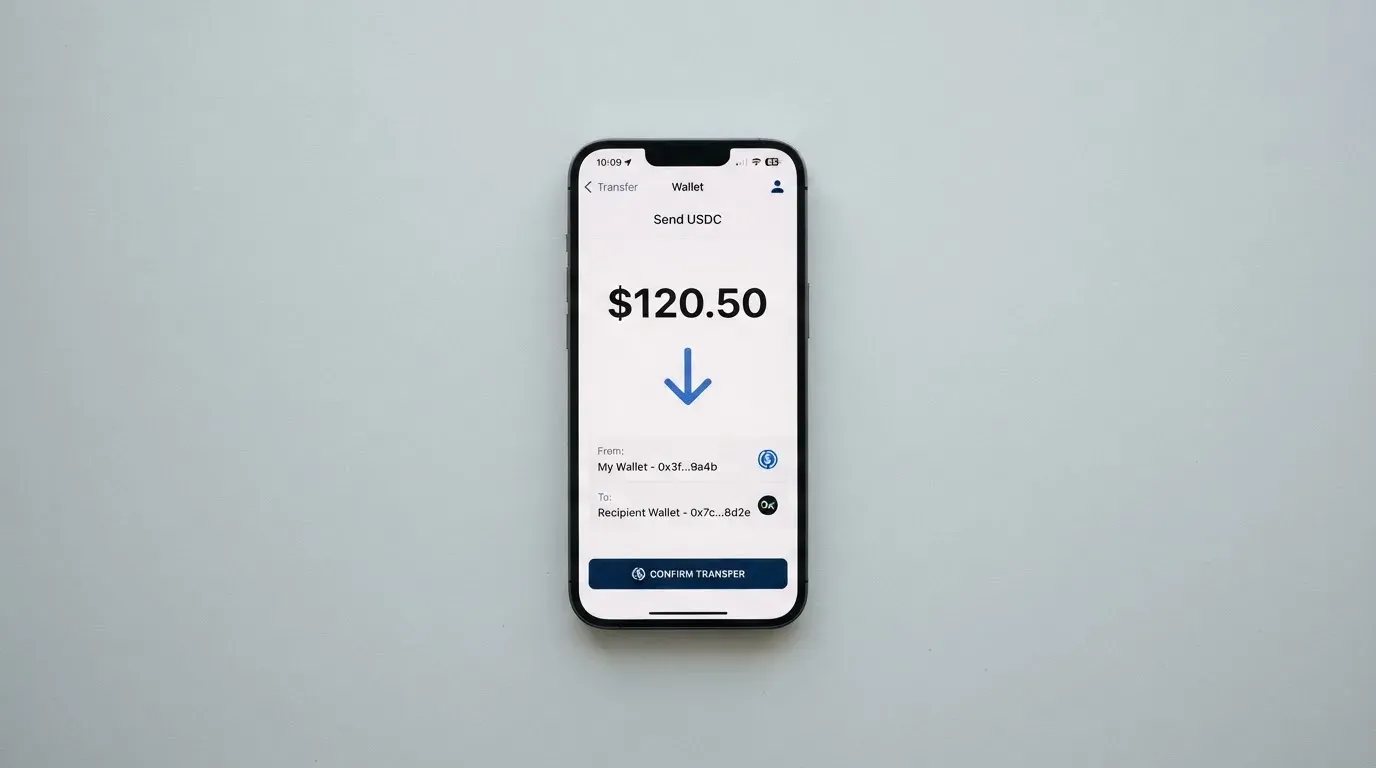
The cost of a top-up on the International card is 3.8% of the load; on the USA card it is 0%. The on-card amount for an International load is $100 to $1,000. Network fees (gas, bandwidth) are paid by the user to the blockchain, not by Laso, and Laso does not state a figure. Fiat top-up (bank transfer, card top-up) is not stated. If you want to load from a bank, that option is not on the public page.
Sending stablecoins has a few traps that are easy to step into. A blockchain transfer is irreversible, so a deposit sent on a network Laso does not support, or to an address of another network, can be lost or stuck in manual support recovery with no guarantee. USDC is natively issued on 38 networks as of mid-September 2026, including Ethereum, Solana, Base, Polygon, Arbitrum, Avalanche and Stellar, but the card’s accepted networks are narrower than the list of networks USDC exists on. Sending USDC on a chain the card does not watch is the most common way to lose funds, and Tether also says it disables tokens in wallets on the OFAC sanctions list, so the stablecoin layer is not censorship-proof. There is no undo button.
If you want to withdraw unused balance from a non-reloadable card, the rules are harsh. Non-reloadable cards expire 6 months after issuance, and the remaining balance is “forfeited to the card issuer (not Laso Finance)”. A third-party source describes a 14% refund fee with a $10 minimum on the International card, and the refund is only possible if the card was never used. A discontinued reloadable product once allowed withdrawals of $2 to $10,000 to a Base wallet, usually within 1 to 3 business days, with no fee listed, but that product has been wound down by third-party report.
Paying with it every day
The card is virtual, so there is no plastic to hand over. In-app and online checkouts work, and in-store payments work where the merchant accepts Apple Pay or Google Pay through a tokenised card number. The help centre has an Apple Pay and Google Wallet collection with 4 articles, so the feature exists, but the contents of those articles were not read for this review.
A Trustpilot company reply in September 2026 said Apple Pay “depends on device eligibility and isn’t guaranteed”. A reviewer in October 2026 reported that only Google Pay was currently available. The practical reading is that the card is best treated as a web checkout instrument, with mobile wallet support that may or may not appear on your specific device.
There is no cashback or points programme, according to a third-party source, and the official pages do not mention rewards. A mobile app exists on the US App Store, and a third-party source rates it 3.9 out of 5 from 11 ratings as of 8 August 2026, but a small rating base is not a strong signal. The help centre has a Withdrawals and Refunds collection with 5 articles on merchant refunds, reversals, duplicate charges and disputes, so the dispute path exists in writing, but the contents were not read in detail.
Some merchant categories are blocked. A third-party source says financial-transfer merchant categories are blocked, so the card will not work for moving money between accounts or for some fintech flows. The blocked list is not public, so the only way to know if your specific merchant works is to try.
What can go wrong
The official story has a few quiet spots, and the user reports fill them in. The bug-bounty programme was paused indefinitely as of 21 September 2026, which is a meaningful signal from a security-programme perspective: a public bounty is a way for a company to invite outside review, and a pause means the company is not running that review at the moment. The help centre pages and a Chrome extension exist, but mobile-platform details were not read, and the company has not named a card issuer on its public pages, only “regulated partners”. A third-party source has cited Celtic Bank via Stripe Issuing as the historical issuer, but that is not confirmed by Laso.
User reports on Trustpilot and elsewhere line up into a few themes. Apple Pay was promised and not delivered (September to October 2026). Accounts were closed as a “prohibited region” by fingerprinting (August 2026). Cards did not work at some merchants (January 2026). Reloadable cards were discontinued and balance updates on the non-reloadable product are manual (January to March 2026). Trustpilot shows 4.1 out of 5 from 22 reviews in the 12 months leading up to 21 October 2026, with 73% five-star and 14% one-star, so the average is high, but the volume is small. A competitor page claims a Laso card stopped working in July 2026; that report is unconfirmed.
The company itself is Laso Finance LLC, based in Austin, Texas, founded in March 2023, and registered with FinCEN as a money services business under number 31000328975254. Money-services-business registration in the US is not the same as a banking licence or a money-transmitter licence in every state, and the company has not named a card issuer on its public pages, so the layer that holds the card funds and runs the network is not visible. Customer support is reachable at help.laso.finance, [email protected] and [email protected], and Telegram support is praised by reviewers, but a small operation means a single bad week can stretch response times.
The card has guardrails on the agent side. Owner-set per-payment and 24-hour caps sit on top of the on-card balance, and Laso says its managed agent wallet refuses certain external x402 challenges. The card funds themselves are held on the prepaid card, which means the funds sit with the unnamed issuer, and the prepaid-card coverage of US reversal rules is not the same as Regulation E or Regulation Z coverage, so the consumer protections on a prepaid card are not the same as on a bank debit or credit card.
What to take instead
The market for crypto-funded prepaid cards is wider than Laso, and three alternatives are worth looking at, depending on what you need.
CardFlow is a virtual USD Mastercard that can be created in about 3 minutes, aimed at Nigeria and “Nigerians and global users”. Creating the card is free, but the cost of running it, the FX fee and the funding networks are not stated. If you want a quick virtual card in USD and you do not need a long track record or detailed cost transparency, CardFlow is one option, and it scores 4.9 out of 10 in the alternatives comparison.
HyperCard is a prepaid card in USD or EUR, with no country list on the official pages and the App Store claiming acceptance in “more than 176 countries”. Acceptance is not the same as eligibility, and the App Store page lists no fees, but the company-side pages do not state the cost. The card is funded by depositing USDT, BTC or ETH, which is converted to USD or EUR on the card. The networks are not stated. HyperCard scores 4.7 out of 10 in the alternatives comparison.
Card.fi is a more feature-complete option, with virtual and physical cards, a metal (stainless steel) tier, and shipping to “200+ countries” on the marketing banner. The terms bar residents of sanctioned countries but do not list a citizenship versus residence rule beyond that. The one-time fees are visible: Virtual Classic $49, Virtual Premium $249, with physical and metal prices not listed, and no monthly, annual, inactivity or minimum-balance fee. The recurring fees are clearer than Laso’s: top-up is 1.5% plus $1.00 on Classic and 1% on Premium, FX is 3.5% on Classic and 2.5% on Premium, and the conversion fee is shown before each top-up. The funding list is 32 coins across 5 networks (Ethereum, Base, BNB Chain, Solana and Kaanch), converted at market rate on arrival, with the warning that a wrong chain risks permanent loss. Card.fi runs a cashback programme: 0.8% on Classic (capped at 10 USDT per month), 1% on Premium and 1.2% on Metal (capped at 100 USDT per month and 5,000 USDT lifetime) or 2% on a higher Metal tier (capped at 250 USDT per month and 20,000 USDT lifetime), plus a 10% headline at coffee shops capped at 10 USDT per month, and variable earn on idle balances “up to 18%” on the Metal tier. Card.fi scores 6.6 out of 10 in the alternatives comparison and is the strongest of the three.
If your priority is a transparent cost structure and a clearer physical-card path, Card.fi is the better fit. If your priority is a free virtual card in USD and you do not need detailed fee information, CardFlow is the simpler pick. If your priority is a multi-currency USD/EUR card and you do not need stated fees, HyperCard sits between the two.
Who I would recommend it to
The card suits a narrow reader. If you are a US-based user paying U.S. merchants in USD, the 0% load fee and the virtual-only flow are simple and cheap, and the card does what it says. If you are running an AI agent that pays online services in USDC through x402 on Base or Solana, the card was designed for that flow and the 3.8% on the International product is the cost of the convenience of letting an agent hold a payment instrument. If you want a prepaid card with a clear audit trail, a small but functioning Trustpilot presence, and a US-registered company, this is a viable instrument, provided you keep the load small and the use case narrow.
The card does not suit a wider set of readers. If you live outside the US and want to spend in your local currency, the 3.8% load plus the unofficial 2% FX on non-USD spending adds up fast, and there is no cashback to offset it. If you need a physical card, this is virtual-only. If you need Apple Pay to work on every device, this is not guaranteed, and a recent report says only Google Pay currently works for some users. If you want a card from a company with a long public record, a named issuer and a running bug bounty, Laso’s 2023 founding date, paused bug bounty and unnamed issuer are a tougher sell. If you want ATM access, the third-party source says it is blocked, and the official pages are silent. If your country sits on the unofficial restricted list, account closure by fingerprinting is a real risk.
If you fall into the narrow “yes” group, keep loads small, set the per-payment and 24-hour caps low, expect manual balance updates on the non-reloadable product, and treat the 6-month expiry on non-reloadable cards as a deadline: the remaining balance is forfeited to the card issuer, not refunded to your wallet. If you fall into the wider “no” group, Card.fi is the more transparent alternative for a feature-complete card, and CardFlow or HyperCard are simpler options for a free or multi-currency virtual card.
Frequently asked questions
What is the Laso Finance card?
The Laso Finance card is a prepaid virtual card that draws on a USDC balance. It is sold by Laso Finance LLC, a company registered in Austin, Texas, with FinCEN as a money services business. The card is virtual only and comes in a USA version, for U.S. merchants, and an International version, for merchants outside the U.S. and non-USD checkouts. The card is funded by USDC transferred through an x402 payment flow that settles on Base and Solana, and it is aimed at users and AI agents paying online with USDC.
How does the Laso Finance card work?
You create an account, pass the principal’s identity check, and request a card. The USA card is issued instantly; the International card is queued and typically fulfilled within 24 hours. You then top up the card with USDC, the load settles on Base or Solana, and the card balance is what you can spend. At the point of sale or at an online checkout, the card is treated like any prepaid card, and the load on the International product carries a 3.8% fee on top of the on-card amount.
Is Laso Finance a bank?
No. Laso Finance LLC is a money services business registered with FinCEN under number 31000328975254. It is not described as a bank, and the card issuer is not named on the public pages, only as “regulated partners”. A third-party source has cited Celtic Bank via Stripe Issuing as a historical issuer, but that is not confirmed by Laso, and the card funds are held on the prepaid card by the issuer, not in a Laso-operated deposit account.
Who owns Laso Finance?
Laso Finance LLC is a Texas limited liability company founded in March 2023, registered with FinCEN as a money services business. The ownership structure is not described in the public research, and the card issuer behind the programme is not named by Laso. If ownership and named issuer matter to you, that information is not on the public page and you would have to ask the company directly.
Is the Laso Finance card available in my country?
The official API names no restricted countries for the International card, which is unusually open. A third-party source lists 170 available countries and 26 restricted, including Afghanistan, Albania, Belarus, Central African Republic, Cuba, DR Congo, Eritrea, Ethiopia, Iran, Iraq, Lebanon, Libya, Mali, Myanmar, Nicaragua, North Korea, Russia, Somalia, South Sudan, Sudan, Syria, Tunisia, Ukraine, Venezuela, Yemen and Zimbabwe. The same source says restriction is by location, enforced by device fingerprinting, and a Trustpilot reply from Laso in August 2026 confirmed fingerprint-based region checks. So even if your country is on the allowed side, your account can still be closed by fingerprinting.
Does the Laso Finance card require KYC?
Yes, the principal opening the account completes identity verification personally, and linking a Venmo or PayPal payment method also triggers identity verification. Agents cannot be the account holder. The level of KYC, meaning whether there are tiered limits based on documents supplied, is not stated on Laso’s public pages. A third-party source claims Laso does not require a conventional identity-document upload or credit check for card purchases, but says wallet screening, sanctions checks, device fingerprinting and ongoing monitoring still apply, so the actual step in front of you may be lighter or heavier than a standard bank KYC.
How do I add the Laso Finance card to Apple Wallet or Google Wallet?
The help centre has an Apple Pay and Google Wallet collection with 4 articles, so the feature exists, but the contents of those articles were not read in detail for this review. A Trustpilot company reply in September 2026 said Apple Pay “depends on device eligibility and isn’t guaranteed”, and a reviewer in October 2026 reported that only Google Pay was currently working. The practical reading is that adding the card to a mobile wallet may or may not work on your specific device and region, and the help-centre article is the place to check for the current state.
How do I get my money back from the Laso Finance card?
If you hold a non-reloadable card and the card has never been used, a third-party source describes a 14% refund fee with a $10 minimum, with the refund only available if the card has no transactions. Non-reloadable cards expire 6 months after issuance, and any remaining balance after expiry is forfeited to the card issuer, not refunded. The help centre has a Withdrawals and Refunds collection covering merchant refunds, reversals, duplicate charges and disputes, so the dispute path exists, but the contents of those articles were not read in detail. There is no ATM access, so a cash withdrawal is not on the table.
Is the Laso Finance card free?
The USA card carries a 0% load fee, and the company says there are no per-authorization or per-decline charges. The International card adds a 3.8% fee at load, and a third-party source puts the FX fee at about 2% on non-USD spending. There is no stated monthly fee, but a third-party source describes a 14% fee on unused-balance refunds with a $10 minimum. So the card is free on the USA side, but the International side has a load fee, an unofficial FX fee and an unofficial refund fee, and that combination is what drives the cost score down to 3 out of 10.
Is the Laso Finance card worth it?
It depends on what you are using it for. If you are a US-based user paying U.S. merchants in USD with a small load, the card is cheap and the flow is simple. If you are an AI agent paying online services in USDC through x402 on Base or Solana, the card is built for that and the 3.8% load fee is the cost of the convenience. If you live outside the US, want a physical card, need reliable Apple Pay, want cashback, want a named issuer or want a long track record, this card is not worth it, and Card.fi is a more transparent alternative for a feature-complete product, with CardFlow and HyperCard as simpler virtual-card options.
Virtual card verdicts – cryptocardverdict
Content created by the «cryptocardverdict» team