
Mirocard is a cheap virtual card for paying online services from crypto, if you can live with the paperwork gaps
 Available in US
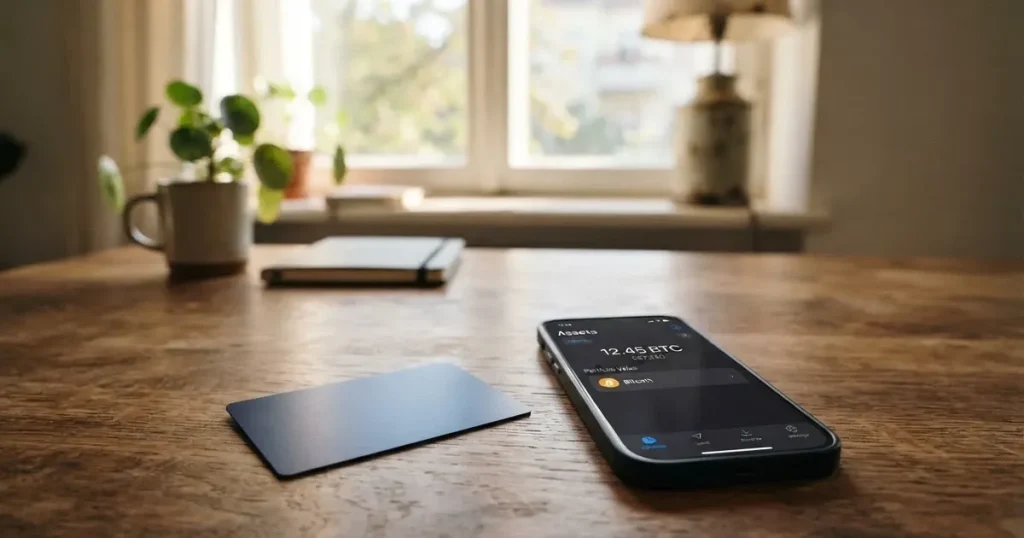
Mirocard is a virtual Visa and Mastercard you load with cryptocurrency and spend like a normal payment card — no physical card in the post, no monthly fee, and a transaction fee that is either $0.20 or $0.00 depending on which of the three card types you pick. That is the whole pitch, and it is a real one: it solves the problem of paying an advertising platform or a hosting provider when your bank card is not the card you want to see on that statement.
It solves it partially. My score is 6.1 out of 10. The card is not a bank, the company does not name the bank that actually issues the card, and the public pages leave several of the questions you would need answered before you trust it with money — where it is available, which networks you can send on, what it costs to convert — either unstated or deliberately vague. That is not a disqualification. It is a reason to read the terms yourself, which this review is meant to help you do.
The conditions described here are current as of October 28, 2026.
Verdict: 6.1 out of 10
Let me give you the score table first, because the numbers are the most honest thing I can say about this card. Every mark below is mine, and every reason is a fact from the card’s own pages or from what I could not find there.
| Criterion | Mark | Why |
|---|---|---|
| Who can get it | 5 / 10 | No country list at all; the terms bar people in a “Restricted Jurisdiction” under the AML policy that never enumerates them |
| Cost | 7 / 10 | Travel issuance $15.00, advertising $5.00, services from $5; no monthly fee; transaction fees $0.20, $0.00, $0.00; top-up fee varies |
| Top-up options | 9 / 10 | ETH, USDC, USDT, BTC, SOL, TON, TRX and other major coins to a Master Balance, credited in minutes |
| Reliability and complaints | 5 / 10 | Issuer unnamed, Mirocard is neither bank nor EMI, and I found no complaints and no reviews either way |
| Everyday use | 5 / 10 | Virtual Visa and Mastercard only, instantly; Apple Pay and Google Pay on the travel card only; no ATM |
| Total | 6.1 / 10 | A competent tool for a narrow job, with the documentation a narrow job does not always need |
The card suits a specific person: a freelancer or a small business paying for advertising, subscriptions, hosting, or design tools, who already holds crypto, who wants the payment to land as ordinary Visa or Mastercard spend, and who is comfortable verifying their identity online with a company whose bank they cannot name. The reader I imagine is not really asking “is this safe” in the abstract — they are asking “can I stop having my card declined at the ad platform, and what will it cost me.”
The card does not suit someone who needs a physical card, a bank account in their own name, or cash withdrawals. It does not suit someone in a hurry: if you need to know within five minutes whether you are in a restricted country, this site will not tell you.
The pricing page lists the countries of the card BINs — US, SG, EE (+1) for the services and advertising cards, and HK, SG for the travel card. Read that carefully if you are scanning it for eligibility, because a BIN country is not the same as “you may sign up”: a BIN is the six- or eight-digit prefix that tells a merchant which institution and country issued a card, and it is what makes a card look foreign in a shop’s system. The actual eligibility rule lives elsewhere, in the terms, and I will come back to it.
The fit I keep coming back to is the one the audience note describes: freelancers paying for ads and online services with crypto. That is what the three card types are built for — travel, advertising, and foreign services/subscriptions — and it shows. But built-for is not the same as documented-for.
Will they give you the card?
There is no country list on the public pages. That is the plain fact, and it is an unusual one for a card review to have to state.
What the pages do say is this: Mirocard is not offered to people who are located in, ordinarily resident in, incorporated in, or otherwise subject to a “Restricted Jurisdiction” as designated under the company’s AML policy — and that policy does not list those jurisdictions publicly. So the exclusion exists and is enforceable; the content of it is not for you to read before you sign up. If you are in a country with sanctions pressure against crypto, or with a strict exchange of payments regime, the honest advice is that you cannot pre-clear yourself here. You would be relying on the company’s decision at signup, and the terms reserve the right to refuse you.
Two things that are not exclusions but feel like them. The site is in English and Russian, which tells you where the company’s centre of gravity is more than any registered address does. And the BIN countries on the pricing page — US, SG, EE for services and advertising, HK and SG for travel — are the countries of issue, not the countries of residents. A card issued in Singapore is not a card for Singaporean residents only.
Against that, the KYC picture is ordinary. Registration is online, described as taking 2 minutes and free. Under the AML policy the company may collect your full name, date of birth, nationality, residential address, a government-issued ID and your email; the terms set the minimum age at 18 and reserve the right, to Mirocard or to the card provider, to require verification. What is *not stated* is whether proof of address is required — the public pages do not say, so do not assume you will not be asked for it. Nor are the verification tiers described anywhere I could read.
The one thing that should give you pause is not a rule but an absence. The issuer is an unnamed “Card Provider,” a third party whose terms govern your money when things go wrong. You are not buying from a named bank. You are buying from an intermediary whose bank you will meet only in a dispute.
How to get it
The process is short because there is nothing physical to wait for. Registration online, in 2 minutes, free. A virtual card, Visa or Mastercard, appears instantly — no shipping, no courier, no waiting for a plastic card in the post. You can hold several cards on one account, which matters if you run several ad accounts and want each one to carry its own balance.
What is not stated anywhere is what currency the card holds. Prices on the site are in US dollars, so a dollar assumption is reasonable, but the card’s own account currency is not something the pages tell you. If you spend in euros and the answer matters to you, that is a question to ask before you load money, not after.
What the company says it can do with your verification, however, is broad. It may refuse you for failed verification, inaccurate documents, or risk. “Risk” is doing quiet work in that sentence — it means there is discretion, and discretion is not something you can audit in advance.
Two details about the card that will matter later, so they go here: the travel card is the only one that works with Apple Pay and Google Pay, and the advertising card asks you to confirm every single payment. Those two facts explain a lot about what the card is for and who it is for, and I return to them when we get to daily use.
Fees: what it really costs
Here is the cost structure as the site states it. There is no monthly charge. There are three card types with different prices and different transaction fees.
| Fee or limit | Travel / international | Advertising / arbitrage | Services / subscriptions |
|---|---|---|---|
| Issuance | $15.00 | $5.00 | from $5.00 |
| Transaction fee | $0.20 | $0.00 | $0.00 |
| Monthly fee | none stated (“no monthly charges”) | none stated | none stated |
| Conversion fee | not stated | not stated | not stated |
| FX fee | not stated | not stated | not stated |
| Top-up fee | individual per card, no amount | individual per card, no amount | individual per card, no amount |
| ATM | not stated (virtual cards only) | not stated | not stated |
| Daily and monthly limits | no numbers given | no numbers given | no numbers given |
Read that table as carefully as it deserves, because three of its rows are blank and the blanks are the story.
No monthly fee is the best number here, and it is the one most competitors cannot match. If you keep a card open for a subscription you pay monthly, you pay the issuance once and then nothing per month.
Transaction fees of $0.20 or $0.00 are genuinely low. The advertising and services cards charge nothing per transaction, which means a high-volume spender — someone running dozens of ad-platform payments a day — pays nothing per payment on those two. The travel card’s $0.20 is the one I would actually feel.
The top-up fee is “individual for each card.” I have written this out because it sounds like a small phrase and is not. The site states the amount nowhere. It varies by card, and the public pages do not list it. So the cost of getting money onto the card — the one cost you cannot avoid — is the one cost you cannot read. Same for the minimum top-up, which is not stated, and the question of who pays the blockchain network fee, which is not stated either.
The FX fee and the conversion fee are not stated. This is the largest gap. A virtual card that spends globally will be charged in local currencies by merchants, and the conversion from your balance into that currency is precisely where crypto cards make their money. The site is silent. Anyone who tells you Mirocard charges a certain percentage has gone past what the pages say, and possibly past what the card actually does.
Limits are not stated. The copy says “without limits or blocks.” I would not treat that as a number. No numeric daily or monthly ceiling is published, and in practice the card provider and the anti-money-laundering policy set limits whatever the marketing line says.
No ATM. There are no physical cards, so there is no ATM story to tell, and the site does not pretend otherwise. If you need cash, this is not the instrument.
Two everyday payments, then, to make the fees concrete. A $50 subscription on the services card costs you the issuance — from $5 — plus $0.00 per transaction, plus whatever the individual top-up fee and the unstated conversion work out to. A $15.00 travel card for a trip costs the $15.00 up front plus $0.20 a time you pay, and again the conversion and FX charges that the site does not publish. Notice that in both cases the number I can give you with confidence is the small one, and the number that could actually decide whether the card is worth it is the one the site keeps to itself.
Top up: how the money gets in
This is the card’s strongest dimension, and I scored it 9 out of 10, which is the highest mark on the whole sheet.
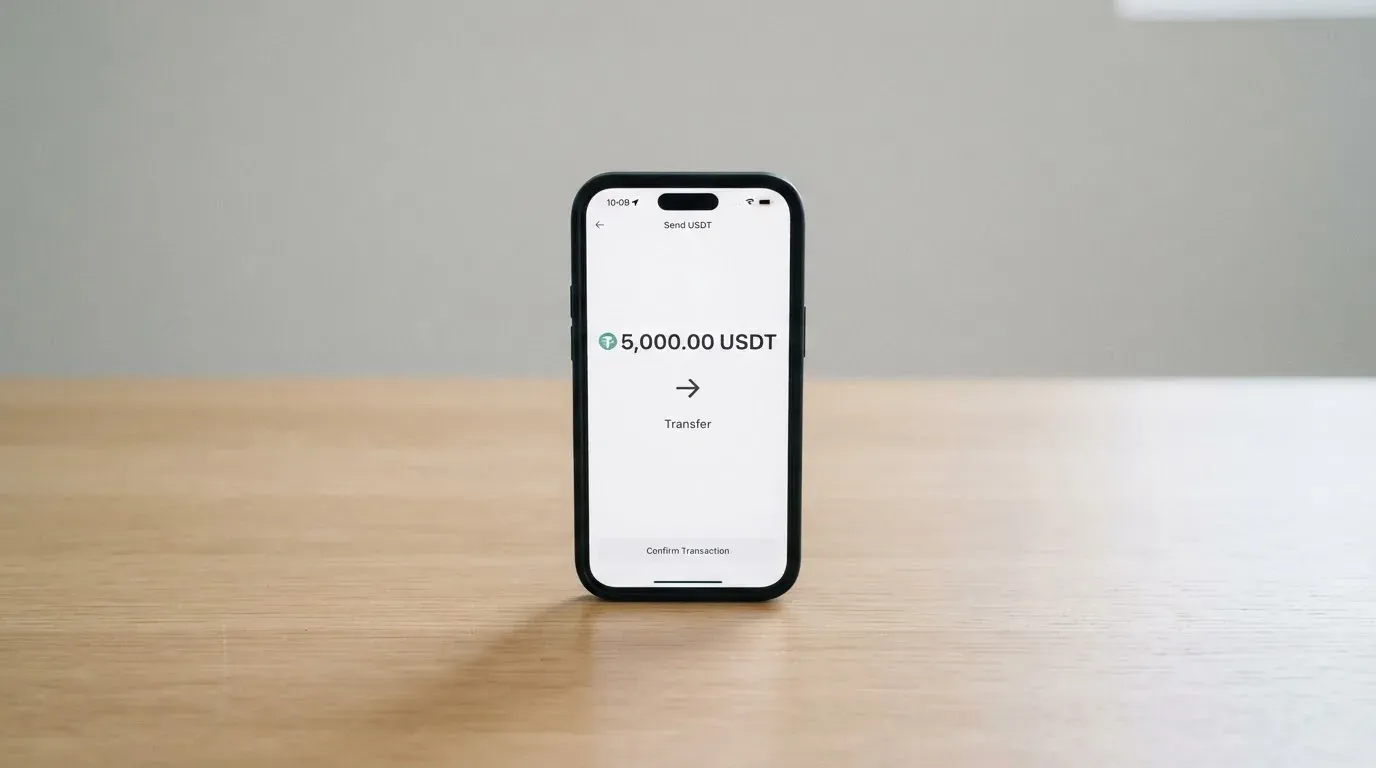
You fund a Master Balance with crypto — from your own wallet or from an exchange — and then move that balance onto the card. The coins named on the site are ETH, USDC, USDT, BTC, SOL, TON, TRX and others, described as all major coins. Once the network confirms the transfer, the credit lands “within a few minutes.” That is a fast, familiar loop for anyone who has moved a stablecoin before: crypto in, spendable balance out, no bank transfer in the middle, no waiting for an account review.
The nine is for breadth and speed, and it should be read with one warning attached, because the warning is not about Mirocard but about how this category works generally. The specific networks are not itemised. You are told which coins, not which chains. That matters more than it sounds. Blockchain transfers are irreversible: a deposit sent on a network the card provider does not support, or sent to an address belonging to a different network, can be lost outright, or need manual recovery through support with no guarantee. If the site does not name the chain for your coin, you are the one who has to find it, and a wrong guess is not refundable.
The other two unknown numbers are the ones a careful buyer asks about first. The top-up fee is individual per card and no amount is published, so your cost to load is not knowable from the site. And the minimum top-up is not stated, which for a card aimed at small ad-platform payments is the number you most want.
There is also no withdrawal story on the public pages. What the terms do say is that you close the account by writing to [email protected], that prepayments you make to Mirocard for services are generally non-refundable, and that a refund of an eligible unused prepayment is available within 30 calendar days of a request with documents. That is a narrow, documented path out — not a feature, but at least it is a written one.
Paying with it every day
Here is where the “virtual only” fact does the most damage, and where the card’s design shows what it is really for.
Apple Pay and Google Pay are on the travel card only. The advertising card and the services card are online-payments instruments by construction. If your everyday life is paying a shop by tapping your phone, this card cannot do it — the virtual advertising card will not go in your wallet.
The advertising card asks you to confirm every payment. Every single one. That sounds like friction until you realise what it is for: it is a deliberate design choice for a card whose main use is running ads through advertising platforms, where a stray or hijacked payment is the actual threat model. If you find it tedious, that is the price of the card that costs $0.00 per transaction.
The merchant categories named on the site are ads, games, AI, subscriptions, design, travel, delivery, hosting, and shopping. Read as a list of what the card’s maker expects to work well. Note what is missing: no groceries, no utility bills, no local services, nothing that needs a physical tap. Blocked categories are not stated, which means I cannot tell you where the card will be declined by policy — and with a prepaid-style balance, a decline at an unfamiliar merchant is not unusual. Merchant category codes are what a business is assigned when it starts accepting cards, and issuers block whole codes by policy rather than by law, with the blocked list differing from one issuer to the next. This card’s list is not published.
There is no mobile app. Your account lives on the web at app.mirocard.com, and no app is mentioned; there are no ratings to read, which cuts both ways — it means no pile of reviews to sift, and it means no public track record to lean on. Rewards are not stated. Nobody is promising you cashback here, and if someone tells you Mirocard pays rewards, they are describing a different product.
Two things make everyday use less smooth than they look on paper. First, the card is prepaid in nature — it spends a stored balance — so the balance is your ceiling and a decline at the till can be a surprise. Second, and this applies to the whole category, a declined authorisation can leave a hold on your money for several days, typically up to seven.
And if a payment goes wrong: chargebacks, refunds and reversals on card purchases are governed exclusively by the Card Provider’s terms, not Mirocard’s. Complaints go to [email protected] first. The time frames are not stated.
What can go wrong
The honest summary is that I found no incidents and no reviews. No official incident surfaced, and no reviews for Mirocard — not a Trustpilot page, not anywhere I could locate. That is a double-edged fact. It means no public pile of complaints to read before you decide, and it means no public record of a card that has been widely used for years. Treat it as untested rather than as clean.
Here is what the pages themselves tell you could go wrong.
The company is not a bank and not an electronic money institution. The terms say so plainly, and say that the issuer is a separate, unnamed Card Provider. This is the structural risk of the whole category and here it is at its sharpest: you are trusting an intermediary to route your payments and to stand behind them, and the institution that ultimately issues the card is not identified on the site.
The licence behind the operation is unclear from the outside. The site’s footer reads “© 2026 Mirocard.” The terms mention an LLC in the Kyrgyz Republic — a company named in start-up filings, not confirmed in the documents I read. If you are the kind of reader who wants to know which regulator signs off on your money, this is where you will find no answer, and in Europe you can check whether a provider appears in ESMA’s interim register of authorised crypto-asset service providers, which MiCA maintains alongside white papers and non-compliant entities. Mirocard does not present itself to me in a way I could match to one.
Mirocard does not hold your card balance. The card details — number, expiry, CVC — are viewable only after an extra confirmation, 3-D Secure is on for all card types, and the advertising card requires per-payment confirmation. Those are good, ordinary safeguards. The balance sits elsewhere.
Support is Telegram and email. There is a Telegram bot, a Telegram community, and [email protected], with hours described as “always available.” There is a Russian-language site. The channel is Telegram-first, which is convenient and fast and also means the record of your conversations with the company lives on a messaging app rather than in a formal ticketing system — worth weighing if a dispute ever matters.
Three failures that this category has produced before, for calibration. An exchange, Mt. Gox, lost roughly $350 million to theft over 2011–2014; Coincheck lost about $400 million in 2018; the Ronin Network bridge lost $625 million in 2022. Card programmes have closed too: Visa terminated its global agreements with FTX on 13 November 2022 and the FTX US debit card was wound down, and WaveCrest, a Visa issuer that supplied several crypto card brands, was suspended by Visa in Europe in 2018, closing every programme it had issued. Closures follow a pattern — a notice period, then spending and loading stop, then you are asked to withdraw what is left. If you hold a balance here, that is the shape of the risk.
And the one you create yourself. If you send crypto to the wrong network, the transfer is irreversible and the network cannot freeze or return the funds. Send from an exchange, and the exchange is a counterparty with its own history. Send from your own wallet, and you alone hold the keys — which means you alone carry the risk of a lost seed phrase. This is not a special danger of Mirocard; it is the standing condition of holding crypto, and a card funded from crypto inherits it exactly.
What to take instead
I want to be fair to the alternatives before I compare them, because they are not all in the same category. CardFlow is aimed at Nigeria and at “Nigerians and global users,” a virtual dollar Mastercard created in about 3 minutes, free to create per its own FAQ, with a monthly fee not stated and transaction fees not stated. HyperCard is a prepaid card whose App Store page says it works in more than 176 countries — that is acceptance, not eligibility, and no country list is given — with a balance in dollars or euros, fees not stated on the pages I could read, and deposits of USDT, BTC or ETH converted on the card. Card.fi is the most substantial of the three: virtual Classic and Premium, physical and metal, every physical order including a virtual card, cards issued under licence from the card schemes, no monthly, annual, inactivity or minimum-balance fee.
Here is how they compare to Mirocard on the things that decide it.
| Mirocard | CardFlow | HyperCard | Card.fi | |
|---|---|---|---|---|
| My score | 6.1 / 10 | 4.9 / 10 | 4.7 / 10 | 6.6 / 10 |
| Card form | Virtual Visa and Mastercard, instant | Virtual USD Mastercard, ~3 minutes | Prepaid card, network not stated | Virtual, physical and metal |
| Issuance | $5.00 to $15.00 | Free to create, per site FAQ | Not stated | Virtual Classic $49, Virtual Premium $249; physical and metal not listed |
| Monthly fee | None stated | Not stated | Not stated | None |
| Transaction fee | $0.20 or $0.00 | Not stated | Not stated | Not stated; top-up and FX fees instead |
| Top-up fee | Individual per card, amount not stated | Not stated | Not stated | Classic 1.5% + $1.00; Premium 1% |
| FX fee | Not stated | Not stated | Not stated | Classic 3.5%; Premium 2.5% |
| Top-up coins | ETH, USDC, USDT, BTC, SOL, TON, TRX and others | BTC, USDT, ETH or naira transfer | USDT, BTC, ETH | 32 coins on 5 networks; USDT, USDC, ETH, BNB, SOL, KAANCH |
| Networks named | No | No | No | Yes: Ethereum, Base, BNB Chain, Solana, Kaanch |
| Rewards | Not stated | Not stated | Not stated | Cashback on spend; 0.8% to 2% by tier, with caps |
Three things fall out of that table.
Mirocard is the cheapest to start and the vaguest on running costs. A $5 or $15 issuance against Card.fi’s $49 and $249 is not nothing. But Card.fi publishes its top-up and FX fees to a decimal, and Mirocard publishes neither. If your spending is regular and you care about the ongoing percentage, the card that tells you the percentage is easier to plan with.
Mirocard names more coins for the deposit than the others, and fewer networks than the best of them. That sounds like a contradiction and it is not — coins and chains are different things, and naming a coin without naming its chain is the gap I flagged in the top-up section. Card.fi at least tells you the five networks, which means a wrong-chain deposit is a mistake you can avoid rather than a coin toss.
Nobody publishes everything. CardFlow and HyperCard are thinner on disclosure than either Mirocard or Card.fi, and I scored them lower for that reason, not because they are worse products. HyperCard’s “176 countries” is a marketing line about where the card works, not a statement about who can hold one.
What I would switch away for. If you need a physical card, or a card in your phone’s wallet, Mirocard is out — the only wallet support is the travel card. If you need to see the FX and conversion fees before you commit, Card.fi is the one that publishes them. If you want a card in a specific country and need certainty, none of these four will give you that certainty from a website, because the only site that publishes an actual eligibility rule is the one that also declines to say what the rule says.
Who I would recommend it to
I would recommend Mirocard to the freelancer whose income is already in crypto and whose expenses are already online — someone paying for ad platforms, hosting, design and AI tools, subscriptions, maybe games — who wants Visa or Mastercard acceptance without handing their bank card details to another platform, and who is comfortable verifying their identity online with a company that is not a bank. The three card types map onto that person’s spending almost exactly, the transaction fee is zero on the two that matter most, there is no monthly charge, and the card is instant.
I would not recommend it as a primary everyday card, to someone who needs cash or a physical card or a wallet tap for the advertising or services versions, or to anyone who is uneasy about the three gaps the public pages leave: which countries are restricted, what the conversion and FX fees are, and which blockchain networks to send on. Those gaps are not disqualifying, but they are gaps, and you should not paper over them with optimism. Read the terms, ask [email protected] the two questions that matter to you, and if the answers are unsatisfying, look at Card.fi where the numbers are printed.
The card is competent and cheap at doing one narrow job. Judge it on whether that job is yours.
Frequently asked questions
What is Mirocard?
Mirocard is a virtual payment card that you load with cryptocurrency rather than from a bank account. You fund a Master Balance with coins such as ETH, USDC, USDT, BTC, SOL, TON or TRX, transfer that balance to a card, and spend it as ordinary Visa or Mastercard payments. There is no physical card and no monthly fee, and there are three card types aimed at travel, advertising, and foreign services or subscriptions.
Is Mirocard a bank or a licensed financial institution?
No, and it says so itself. Mirocard’s terms state that it is not a bank, not an electronic money institution and not the card issuer. The actual issuing institution is a separate, unnamed “Card Provider” whose terms govern chargebacks and refunds. So you are dealing with an intermediary and a bank you cannot identify from the public pages.
Who owns Mirocard?
The site’s footer reads “© 2026 Mirocard.” Company filings referenced in start-up data name an LLC in the Kyrgyz Republic, but that is not confirmed in the documents published by the card itself. The site runs in English and Russian, and support runs through email and a Telegram bot.
Which countries can I use Mirocard in, and who can sign up?
The public pages give no country eligibility list, which is unusual. The terms bar people located in, ordinarily resident in, incorporated in, or subject to a “Restricted Jurisdiction” designated under the AML policy, and that policy does not publish the list. The BIN countries on the pricing page — US, SG and EE for services and advertising, HK and SG for travel — show where the cards were issued, not who may hold one.
How much does a Mirocard card cost to issue and to use?
Issuance is $15.00 for the travel card, $5.00 for the advertising card, and from $5 for services and subscriptions. There are no monthly charges. The transaction fee is $0.20 on the travel card and $0.00 on the other two. Top-up fees exist but vary per card with no published amount, and the FX and conversion fees are not stated anywhere on the public pages.
Does Mirocard require KYC, and what documents?
Yes. The AML policy permits collection of your full name, date of birth, nationality, residential address, a government-issued ID and your email, and the terms set a minimum age of 18. Mirocard or the Card Provider may require verification and may refuse you for failed verification, inaccurate documents or risk. Whether proof of address is required is not stated on the public pages.
How do I top up a Mirocard card, and how long does it take?
You send crypto from your wallet or exchange to fund the Master Balance, then transfer it to the card; the site says the credit appears within a few minutes of network confirmation. The coins listed are ETH, USDC, USDT, BTC, SOL, TON, TRX and other major coins. The specific blockchain networks are not itemised, which matters because transfers to the wrong network are irreversible and can be lost.
Can I add Mirocard to Apple Pay or Google Pay?
Only on the travel card. Apple Pay and Google Pay are listed for that card alone; the advertising and services cards, which carry no per-transaction fee, are not supported in the mobile wallets. If tapping to pay is part of how you spend, this is the constraint that decides the question for you.
Is Mirocard safe, and what happens if I have a problem with a payment?
The card applies ordinary safeguards: card details visible only after extra confirmation, 3-D Secure on all card types, and per-payment confirmation on advertising cards. But I found no reviews and no incident reports for Mirocard, which is as much untested as it is clean. Refunds and chargebacks are governed solely by the unnamed Card Provider’s terms; complaints go first to [email protected], with no time frames published.
How do I close my Mirocard account, and can I get my money back?
Account closure is by email to [email protected]. The terms state that prepayments made to Mirocard for services are generally non-refundable, but that a refund of an eligible unused prepayment is available within 30 calendar days of a request accompanied by documents. Card balance withdrawal is not stated on the public pages, so I would not assume a cash-out route exists.
Virtual card verdicts – cryptocardverdict
Content created by the «cryptocardverdict» team