A crypto card for people locked out of ordinary banking
 Available in US
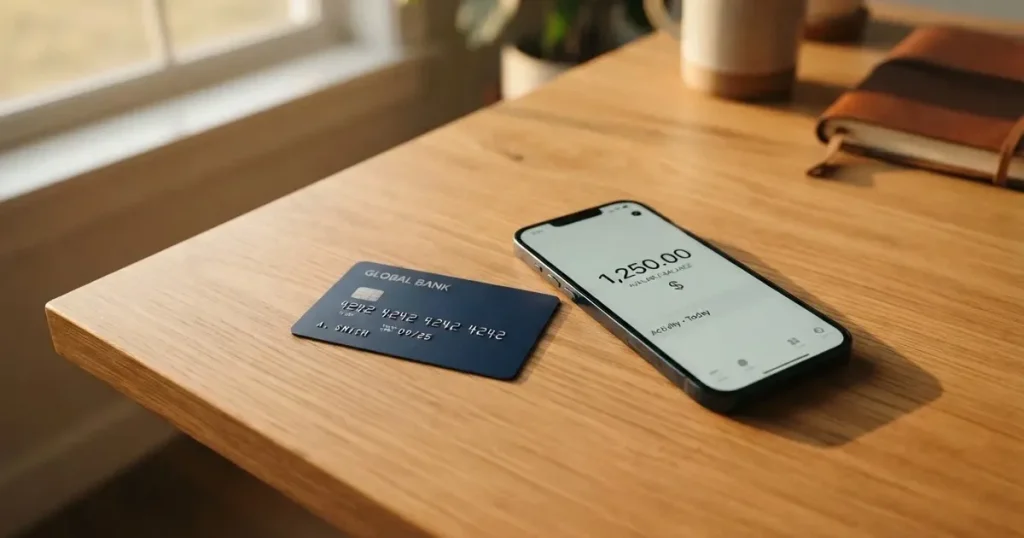
The Sovrae card is a prepaid-style crypto payment card sold without identity verification. You buy a virtual or physical card, load it with USDT or USDC, and it behaves like an ordinary Visa or Mastercard at the till: a generated card number, an expiry, Apple Pay and Google Pay, and — on the physical one — a working ATM. The catch is that you pay to hold it: $89 for the virtual card, $349 for the physical one, a percentage fee every time you top up, and a foreign-exchange fee plus a transaction fee on every single payment, with the amounts for those last two not published. It is global rather than country-specific, minus a restricted list. Whether that is a good deal depends almost entirely on why you cannot get a normal bank card. If you can, this is expensive. If ordinary cards are closed to you — no address proof, no local bank willing to open an account, sanctions at your bank rather than at your identity — then the value is not the card, it is the access.
The conditions described here are current as of October 28, 2026.
Verdict: 6.5 out of 10
I rate the Sovrae card 6.5 / 10. That is a middling score, and it is a deliberate one: the card does three things very well and one thing badly. Top-up options, everyday use and geographic reach are all near the top of the scale. Cost is near the bottom. The number you should carry away is that this is a strong tool bought at a high price, not a cheap everyday card.
Who it suits: people who cannot obtain an ordinary bank card and who already hold stablecoins and are comfortable choosing a network and copying a deposit address. If you are in that position — no usable local banking, US dollar balances, a habit of self-custody — Sovrae removes a real barrier, and nothing in this review talks you out of that. The audience note the card fits best is the privacy-minded user who wants a virtual or physical card without KYC, not someone hunting for a rewards credit card.
Who it does not suit: anyone with a normal debit card. If you can already pay at a shop with the card in your pocket, this card costs you issuance money, a top-up percentage and per-payment fees for the privilege of a more anonymous-sounding label. It also does not suit people who want cashback, a credit line, or predictable itemised statements — none of those are on offer.
| Criterion | Mark | Why |
|---|---|---|
| Who can get it | 9 / 10 | Worldwide except a restricted-country list (Visa/Mastercard policy): Afghanistan, Belarus, Cuba, Iran, North Korea, Syria, Venezuela, Russia, Ukraine, Myanmar, Somalia, Yemen, “among others” |
| Cost | 2 / 10 | Issuance $89 virtual, $349 physical; top-up 2% (virtual), 1.5% (physical); FX and per-transaction fees with no amounts published |
| Top-up options | 9 / 10 | USDT or USDC on BEP-20, ERC-20 and TRC-20; other coins via in-app swap; a permanent deposit address per card |
| Reliability and complaints | 5 / 10 | Cards issued by partners in Hong Kong and Singapore; no licences named; no KYC; no complaints or reviews found |
| Everyday use | 9 / 10 | Virtual (instant) and physical (5–7 days) cards; Apple Pay and Google Pay on both; ATM on the physical card |
| Total | 6.5 / 10 | Excellent access and reach, poor cost transparency |
The reliability line deserves an early flag, because it is the one most likely to hurt you. The card is issued by partners in Hong Kong and Singapore and the site names no licences. There is no Trustpilot page and searching for reviews turned up essentially nothing about Sovrae — not a wall of praise, not a wall of complaints, just silence. A brand with no public track record is not automatically a scam, but it is a brand where you are the early adopter, and you should hold the balance accordingly.
Will they give you the card?
Yes — to almost anyone, anywhere. The card is offered globally rather than to one country’s residents, and the exclusions are driven by Visa and Mastercard policy rather than by Sovrae’s own view of you. The restricted list named on the site is Afghanistan, Belarus, Cuba, Iran, North Korea, Syria, Venezuela, Russia, Ukraine, Myanmar, Somalia and Yemen, “among others,” and the full list is available on request by email or Telegram.
Read that as: if you are not in one of those places, you can buy the card; if you are, the card networks are the reason, not a judgement about your identity. The site does not say whether it looks at your citizenship or only where you live — that distinction matters a great deal in practice, and it is not stated — so if your citizenship is in a restricted country but your residence is not, you are guessing. That is a question to ask before you spend $89, not after.
There is no identity verification at all. No document upload, no selfie, no proof of address; the card is described as pre-verified upon purchase, and the site says your personal details are never passed to third parties. Documents and an age requirement are not stated. In practice this is the whole appeal: you can hold and use the card without handing over the paperwork that closes ordinary accounts.
How to get it
You get it in two steps: buy it, then fund it with USDT or USDC. There is no application to be approved or rejected. That is also the whole reason there is no approval — nothing is checked, so nothing can fail.
On what you actually receive:
- A virtual card, which activates instantly and is valid for 3 years.
- A physical card, valid for 4 years, arriving in 5–7 days.
Both are accepted “Visa & Mastercard worldwide.” The physical card carries no name printed on it by default, though personalisation is available on request. Which currency the card is denominated in is not stated. Whether there is any minimum age to buy is not stated either, which leaves a gap: the card is sold with no verification, so nothing on the public pages tells you who is legally required to be old enough to hold one. Physical cards ship to countries at a cost that is not stated, and the cost of a replacement card is not stated.
The no-KYC detail is worth pausing on, because it cuts both ways. It means you are not exposing yourself, and it also means nobody at Sovrae has any record of who you are. If a card is lost or a transaction is disputed, the party on the other end of that dispute is a stranger to the issuer by design.
Fees and costs: what it really costs
The costs table is the weakest part of the card, and it is where the “Cost: 2 / 10” comes from. The card charges you to buy it, to load it, and again on every payment — and it does not tell you the price of the last two.
| Fee or limit | Virtual card | Physical card |
|---|---|---|
| One-time issuance | $89 | $349 |
| Monthly fee | none listed | none listed |
| Top-up fee | 2% | 1.5% |
| Foreign-exchange fee | charged, amount not given | charged, amount not given |
| Transaction fee | charged, amount not given | charged, amount not given |
| ATM | not available | available; ATM fee not stated |
| ATM limits | — | $3,750 daily; $80k monthly |
| Spending limits | $80,000 per transaction; $1M daily | $80,000 per transaction; $1M daily |
| Card currency | not stated | not stated |
Read that table as the total cost of the card, and the shape of the thing becomes clear: there is no monthly fee, so the card sitting in a drawer costs nothing more — but you have already paid $89 or $349 to get it, and you pay a percentage on every euro you put into it, and you pay an unstated amount on top of the exchange rate every time you spend it. The full breakdown of those last fees is shown in the app, so you cannot read them before you commit.
Let me run three ordinary payments through it, using only the figures above:
- A $20 coffee abroad. You pay the coffee price, plus whatever exchange-rate spread the unstated FX fee represents, plus the unstated transaction fee. On the virtual card, if you funded it earlier, the 2% top-up cost is also baked into the balance you are spending. The rounding error between what you see at the till and what you expected is the part you cannot predict in advance.
- A $200 supermarket run. Same structure. The exchange-rate fee is the one that scales with the amount, and its size is not published — so on a large spend the unknown is largest.
- Withdrawing $100 from an ATM in person (physical card only; the virtual card has no ATM access). Cash out, plus the unstated ATM fee, at $3,750 a day and $80,000 a month available.
Two tiers, no loyalty scheme. That is worth saying plainly because it is unusual: most cards in this space have a free tier and a paid one. Sovrae just has two products — virtual and physical — and the difference between them is price, top-up percentage and whether you get plastic and an ATM. There is no cashback and no rewards listed on card spending, so the only thing you get back is a referral programme that pays up to $50 per card bought by users you refer, across three levels.
My advice, before any of this: open the app, look at the actual FX and transaction fees, and do the arithmetic on a realistic monthly spend against the $89 or $349. On low spend the exchange-rate spread is the whole story; on high spend the flat costs disappear and the per-payment percentage dominates. The card does not let me pre-compute either, and neither can you.
Top up: how the money gets in
You top up with USDT or USDC, on any of three networks: BEP-20, ERC-20 or TRC-20. Any other coin you hold can be converted in the app through a swap. Each card has its own permanent crypto deposit address, and the funds sit in a non-custodial wallet — yours — until you top up the card, at which point they are held in segregated accounts with providers.
That is the genuinely good part of the design. Your money stays under your own keys until the moment you choose to spend it, and the deposit address never changes, so you can set it up once and reuse it. The top-up is described as instant, or as reflecting within minutes. The top-up fee is 2% on the virtual card and 1.5% on the physical one.
Two things you must check yourself, because the site does not say them: the minimum top-up, and who pays the on-chain network fee. Network fees — gas on Ethereum, resources on Tron — are charged by the blockchain, not by Sovrae, so they come out of the transfer regardless of what the app claims. And fiat on-ramp directly to the card is not stated, so do not assume you can top up from a bank account; the described route is crypto in, card out.
Get the network right. Sending on a chain the provider does not support, or to an address belonging to a different network, can lose the deposit outright, and blockchain transfers are essentially irreversible — recovery means support, with no guarantee. If you hold USDC and pick TRC-20, note that Circle stopped natively supporting USDC on Tron in February 2024, so that specific pairing is not a straightforward option. Choose the network before you press send, not after.
Paying with it every day
Daily use is where this card scores highest: 9 out of 10. You get Apple Pay and Google Pay on both the virtual and the physical card, and once the card number is in your phone wallet it behaves like any other contactless payment. The virtual card exists precisely for online and phone spending; the physical one adds a chip and an ATM for the times you need cash or a tap on a terminal that rejects tokenised numbers.
There are blocked merchant categories: petrol stations, betting, crypto purchases, military supplies, gaming credits, non-profits and government agencies. So no filling the car at the forecourt on this card, and no paying a non-profit donation. Everything else — supermarkets, travel, utilities, restaurants, subscriptions — is the ordinary case, and it is the case the card is built for.
A few practical realities of how card payments behave, which apply to any card like this:
- Merchants can look up the issuing institution and country from the first digits of the card number, and some apply extra scrutiny when the issuer’s country differs from your billing address. A card issued in Asia can simply look “foreign” to a shop elsewhere, and some merchants decline prepaid or foreign-issued cards on that basis.
- Address verification checks, common in the US, Canada and the UK, are often unavailable for foreign-issued cards — a further reason a payment can be declined rather than completed.
- A declined online authorisation can leave a hold on your balance for several days, sometimes up to seven. Even a payment that did not go through can cost you a week of available balance.
- In-app protection details — whether there is instant freeze and two-factor authentication — are not stated, and neither is how disputes or chargebacks are handled. For a card with no identity verification and a foreign partner issuer, that is a meaningful absence to weigh.
Rewards are the thinnest part of the everyday picture: no cashback on spending, no tiers, no benefit beyond access to the card at all.
What can go wrong
The risks here are not hypothetical warnings about crypto in general; they are specific to this card’s structure.
The unnamed issuer. Cards are issued by partners in Hong Kong and Singapore, and no licences are named. That matters more than it might seem for an everyday payment card. The card networks — Visa and Mastercard — license the issuers and can suspend a programme, and both have done so before: Visa terminated its agreements with FTX on 13 November 2022 and the card was wound down; a crypto card issuer, WaveCrest, was suspended by Visa in Europe in 2018 and every programme it had issued closed. A closure is not fraud, but it is the risk profile of a card whose issuing licence you cannot look up.
No complaints is not the same as no problems. There is no Trustpilot page and no reviews to read either way. You are trusting an issuer you have never heard of, on an issuer you cannot verify, with money you loaded yourself.
Custody until you load. The design is better than fully custodial — your crypto stays in your own wallet until you top up — but once it is on the card, the balance sits with providers in segregated accounts. Segregated is not the same as insured, and not the same as a bank deposit.
Fees you cannot see. The FX and transaction fees are shown only in the app. In a country where the card is your main spend, an unquantified spread on every purchase is a permanent, invisible tax.
The refund question. How disputes work, and whether you have chargeback rights on a prepaid, no-KYC card issued abroad, is not stated. Assume you have to resolve a bad payment through support, not through a card scheme, until you know otherwise.
Irreversible transfers. Blockchain transfers cannot be reversed by the network. A wrong network or a lost key has no built-in recovery.
What to take instead
The alternatives are worth comparing honestly, because none of them is clearly better — they trade away different things.
| Alternative | Score | Card | Issuance | Top-up fee | FX fee | Notes |
|---|---|---|---|---|---|---|
| Sovrae | 6.5 / 10 | Virtual + physical, Visa & Mastercard | $89 / $349 | 2% / 1.5% | not stated | No KYC; global |
| CardFlow | 4.9 / 10 | Virtual USD Mastercard, ~3 min | free | not stated | not stated | Nigeria-focused; BTC, USDT, ETH or Naira transfer |
| HyperCard | 4.7 / 10 | Prepaid, network not stated | not stated | not stated | not stated | Works in 176+ countries at acceptance; USD or EUR balance |
| Card.fi | 6.6 / 10 | Virtual & physical, Classic/Premium/Metal | $49 (Virtual Classic) to $249 (Virtual Premium) | 1.5% + $1 (Classic), 1% (Premium) | 3.5% (Classic), 2.5% (Premium) | 200+ countries; 32 coins, 5 networks; cashback on spend |
A few honest observations from that comparison:
- CardFlow is the cheapest entry of the lot — creating a virtual card is free — and it is aimed squarely at Nigeria, funding from Bitcoin, USDT, ETH or a Naira bank transfer. If you are Nigerian, the low score reflects thin published detail more than a bad product.
- HyperCard publishes almost nothing: no fees, no issuance cost, no network named on its store listing. It deposits crypto and converts to a USD or EUR balance. Its “176+ countries” figure describes where the card is accepted, not who is eligible — do not read it as eligibility.
- Card.fi is the closest competitor and, on the published numbers, the more conventional product: cards under licence from the card schemes, ship to 200+ countries, 32 coins across five networks, a deposit address per card, and — unlike Sovrae — cashback on spending (0.8% Classic up to 10 USDT a month, 1% Premium, up to 1.2% on metal). It also excludes residents of, or orders from, sanctioned countries. Its catch is that it does carry KYC-adjacent tiering and does not advertise a no-KYC route, and it costs more at the top end ($249 for a Virtual Premium).
If your priority is cash in the bank of a known issuer, cards from licensed programmes such as Card.fi or a regulated e-money institution in your own country are the safer default. If your priority is no paperwork at all, Sovrae and its peers are the only real options, and you accept the unnamed-issuer risk to get them.
Who I would recommend it to
I would recommend Sovrae to exactly three kinds of reader.
The person who cannot get a normal card. No local bank account, no document they are willing to upload, a country where the banks want proof of address they do not have. For them this card is not a mediocre expense; it is the difference between paying and not paying. The score reflects the cost, not the access.
The self-custody user. You already run your own wallet, you already know what BEP-20 versus ERC-20 costs, and you want a card that draws on that wallet without a custodial platform sitting in the middle. The permanent per-card deposit address and the non-custodial-until-top-up design fit that habit well.
The traveller or expat with dollar balances. Someone whose income is already in USDT or USDC and who wants to spend it abroad without opening a foreign account. Here the 1.5% top-up on the physical card is the better of the two rates, and the ATM — with a $3,750 daily limit — is a real convenience.
I would not recommend it to anyone with a functioning debit card, to anyone hunting rewards or credit, or to anyone who needs a reliable dispute process or a named, licensed issuer behind their money.
The single question to ask yourself before spending $89 or $349 is: what is this card actually solving for me? If the answer is “I have no other way to pay,” buy it and use the physical card for the better top-up rate. If the answer is anything softer, a licensed card from a regulated provider will cost you less and answer to someone.
Frequently asked questions
What is the Sovrae card?
The Sovrae card is a prepaid-style crypto payment card sold without identity verification. You buy either a virtual card that activates instantly, or a physical card that arrives in 5–7 days, and load it with USDT or USDC. It carries a card number accepted as Visa or Mastercard worldwide, works with Apple Pay and Google Pay, and the physical version has an ATM. There is no application and no document check — you buy, you fund, you use.
Does Sovrae require KYC?
No — that is the card’s defining feature. The site says there is no identity verification, that cards are pre-verified upon purchase, and that personal details are never passed to third parties. The trade-off is that no record of you exists at the issuer: age requirements and any future verification steps are not stated on the public pages. Ask before you commit if a later ID check is acceptable to you.
Is Sovrae a bank?
Not on the evidence available. Cards are issued by partners in Hong Kong and Singapore, and no licences are named on the site’s public pages. Sovrae markets itself as the front of the card programme; the licence, if one exists, sits with the partner. There is no deposit-guarantee scheme behind the balance. If the answer to “who is my regulated counterparty” matters to you, this is a question to put to support directly.
How much does the Sovrae card cost?
One-time issuance is $89 for the virtual card and $349 for the physical one, with no monthly fee listed. Top-up is 2% (virtual) or 1.5% (physical). Every payment also carries a foreign-exchange fee and a transaction fee with no amounts published — the breakdown is in the app. On top of that, ATM fees apply on the physical card and the amount is not stated. Do the arithmetic on your own monthly spend first.
How do I top up the Sovrae card?
Send USDT or USDC to the card’s permanent deposit address on BEP-20, ERC-20 or TRC-20. Other coins can be swapped in-app. The funds sit in your own non-custodial wallet until you top up, which takes effect within minutes. Check the network twice before you send: a transfer on the wrong chain is irreversible and the network’s own fee applies regardless.
Is Sovrae safe for my money?
Define “safe.” On key custody it is reasonable — your crypto stays in your own wallet until you load the card, and the card balance sits in segregated accounts with providers, not a bank deposit. On issuer risk it is thin — the issuing partners are unnamed and unlicenced on the public pages, so a programme change is a real possibility. I would hold only what I could afford to have unavailable for a while.
Can I use Sovrae in my country?
The card is global rather than country-limited, and the site says the exclusions come from Visa and Mastercard policy: Afghanistan, Belarus, Cuba, Iran, North Korea, Syria, Venezuela, Russia, Ukraine, Myanmar, Somalia and Yemen, “among others,” with the full list available on request. The site does not say whether eligibility follows citizenship or residence, so check that yourself for your situation. Some merchant categories are blocked too — no petrol, betting, crypto or non-profits.
Does Sovrae have cashback or rewards?
No cashback on card spending and no tiers — the card has two products, virtual and physical, and nothing in between or beyond. The one incentive is a referral programme paying up to $50 per card bought by someone you referred, across three levels. If rewards are why you want a card, look at a product with published cashback such as a licensed card in the alternatives above.
Is there an app fee or hidden charge?
There is no monthly fee listed. The costs the site does not quantify are the foreign-exchange fee and a per-transaction fee on every purchase, and the ATM fee on the physical card; all are shown in the app rather than published. On-chain network fees for your deposit are charged by the blockchain, not by Sovrae. If precise costs matter to your decision, read the in-app breakdown before you load money.
Is Sovrae worth it?
Worth it if you have no ordinary bank card and a habit of holding stablecoins — then the access is worth far more than the 1.5% to 2% top-up. Not worth it if you already have a working debit card, want cashback or a credit line, or need a named, licensed issuer behind your balance. The $89 to $349 issuance is the price of admission; the fees only start after that.
Virtual card verdicts – cryptocardverdict
Content created by the «cryptocardverdict» team