
I read the Zerocard terms so you can decide whether it belongs in your wallet
 Available in US
Zerocard is a debit card you spend from a crypto balance. You top a wallet with a dollar stablecoin on the Base or Ethereum network, and the card converts to local currency at the point of sale when you tap to pay. The company’s own terms describe the core services as a “zero-fee experience”, and the founder has posted about free transactions. I read those promises next to what the same terms actually say, and the gap between the two is the most useful thing on this page. My score for the card is 6.3 out of 10: a genuinely interesting idea, aimed at people who already hold stablecoins on a self-custody wallet, wrapped in documentation that leaves a lot of the basics unanswered.
If that sounds like you — you keep USDC, you are outside the countries where an ordinary bank card is easy to open, and you would rather tap than convert by hand — read the whole page. If you are opening your first card, want a known bank behind it, or are looking for a card with published fees and a published list of countries, this is not the card for you, and the alternatives below will serve you better.
The conditions described here are current as of October 28, 2026.
Verdict: 6.3 out of 10, and the score is mostly about missing information
Six point three is not a low score for a product that launched its first market in Nigeria and had a beta review in July 2025. It is a mid score for a specific reason: Zerocard tells you a lot about what it wants to be, and very little about what it charges and where it works. Every one of the criteria below is marked out of ten, and the total comes from them.
| Criterion | Mark | Why |
|---|---|---|
| Who can get it | 7 / 10 | The site says the card “works in 150+ countries” and the terms name the restricted jurisdictions. The list of countries where you can actually open one is not published. |
| Cost | 7 / 10 | Core services are described as a “zero-fee experience”, but card issuance, currency conversion and express processing “may be” chargeable and no amounts are published. |
| Top-up options | 6 / 10 | USDC or USDT on Base and Ethereum. Unofficial reporting says the app takes only USDC on Base, with a non-custodial wallet on Base. |
| Reliability and complaints | 5 / 10 | Notzero Technologies Limited is the provider, the issuer is not named, it launched in beta in Nigeria, and an account can be suspended without prior notice. I found no complaints to weigh. |
| Everyday use | 6 / 10 | A virtual or physical debit card after KYC. Unofficial reporting mentions an ATM fee; no wallets are disclosed. |
| Total | 6.3 / 10 | A usable idea with a thin public paper trail. |
The intended user is narrow and worth naming: someone spending USDC from a non-custodial Base wallet who has already accepted that the card is a tool, not a bank. If your money sits with a conventional exchange in a conventional bank account and you have a card that works, Zerocard solves a problem you do not have. If you cannot get an ordinary card at all — because of your country, your documentation, your status — then a card that converts stablecoins at the till is a real solution, and this may be the most relevant product in this category for you. Just know that you are buying an early-stage provider’s implementation, not a regulated bank’s promise.
Will they give you the card?
They will not issue it to everyone. The short version: eligibility follows your country, and the country list is the thing you cannot read.
The company says the card “works in 150+ countries”. That is a statement about acceptance, not about onboarding. The terms then list the jurisdictions where you cannot use it: Belarus, Burundi, Central African Republic, Cuba, Iran, Libya, Myanmar (Burma), North Korea, Russia, Somalia, South Sudan, Sudan, Syrian Arab Republic, Ukraine, Venezuela and Zimbabwe. The verification provider can add more. What is not published anywhere is the list of countries where you can actually open an account. So the gap runs the wrong way for you: the places that are closed to you are enumerated, and the places that are open to you are not.
Two things the terms leave open that will decide your case. First, citizenship versus residence — the card does not say which one it screens. If your address is in a supported country but your passport is from a restricted one, you have no way to know from the public pages. Second, who issues the card. The terms name only “Zerocard”; the provider is Notzero Technologies Limited, and no issuer is named. In this category that matters more than it looks: a card network routes the payments, but the institution that actually holds your balance and pays the merchant is the issuer, and you would be lending money to a name the documents do not give you. Sanctioned persons cannot open accounts, as you would expect.
How to get it
Registration is a normal three-step sequence, and the identity check is the gate rather than the formality.
- Register an account in the app.
- Pass KYC — the identity check — before you can request a card or withdraw.
- Request a virtual or physical Zerocard card.
The documents accepted are an International Passport, a Driver’s License or a National Identity Card. You also give a residential address with proof of it, for example a utility bill no older than three months, and you must be 18 or older.
What sits behind this is worth understanding before you start. KYC is not paperwork bureaucracy bolted onto a product; it is the legal obligation of a regulated business to verify who you are and screen you, including ongoing transaction monitoring. In the EU, customer due diligence covers your name, address, date of birth, nationality, identity document, a sanctions check, the purpose of the relationship, and whether you are a politically exposed person. Your nationality is screened separately from your address, because sanctions screening and issuer risk policy are usually applied to the country of your passport as well as the country you live in. If due diligence cannot be completed, the rules require the institution to hold the transaction or close the relationship — which is exactly why accounts freeze when a document is missing or does not match. You cannot skip this step, and nothing on this page is a way around it.
There are no tiers. The KYC policy defines risk categories — High, Medium, Low — but not levels of account, and it publishes no limits. Processing time is not stated. Rejection has two shapes: failing to provide the requested information blocks transactions for new users, or suspends the account; sanctioned persons cannot open accounts at all.
What it really costs: the Fees that are named and the ones that are not
This is the section to read twice, because Zerocard’s fee story is a promise and a blank space. The terms describe core services as a “zero-fee experience”. They also say optional services may carry fees, naming card issuance and express processing among them. No amounts are published. The terms list currency conversions and cross-border transactions as possible optional-service fees and again state no rates.
| Item | What Zerocard says |
|---|---|
| Card issuance | Named as a possible optional-service fee. Amount not published. |
| Express processing | Named as a possible optional-service fee. Amount not published. |
| Currency conversion | Named as a possible fee; crypto is converted to local fiat at the point of sale. Rate not published. |
| Cross-border transactions | Named as a possible optional-service fee. Rate not published. |
| Monthly fee | Not stated. |
| ATM withdrawal | Not stated in the card’s own pages. Unofficial reporting describes ATM fees, kept separate from a ₦5 per-transaction charge, with the amount not visible in the summary I could check (per TechCabal, July 2025). |
| Daily and monthly limits | Not stated. |
Three everyday payments illustrate the uncertainty. You buy coffee in a local currency and the crypto in your wallet is converted at the point of sale — the conversion rate is the fee the terms mention, and it is not published, so you cannot calculate the cost of that coffee before you pay it. You pay for a hotel in a foreign country and you have only USDC; that is a currency conversion plus a cross-border transaction, both listed as possible fees with no stated rates. You take cash out at an ATM and the card’s own pages say nothing about it; unofficial reporting from July 2025 describes ATM fees, with the exact amount not visible in the summary available. The lack of fee information makes it difficult for a reader to understand the actual cost of a transaction, which tells you something about how these pages are written.
Two practical consequences. First, you cannot build a budget from these documents; you can only discover costs by spending. Second, the network fee on the deposit side is not the card provider’s to charge or refund: on-chain gas is paid to the blockchain when you move the stablecoin into your wallet, and that is a separate cost from anything Zerocard lists. If you are on Ethereum, gas is paid in ETH, so a wallet holding USDT with no ETH cannot send it at all. Tron-based transfers price differently again, burning TRX for bandwidth and energy. Budget for the transfer as well as the card.
How to Top up Zerocard
The wallet takes USDC or USDT on the Base or Ethereum network, and that is the whole top-up story. Crypto is converted to local fiat automatically at the point of sale.
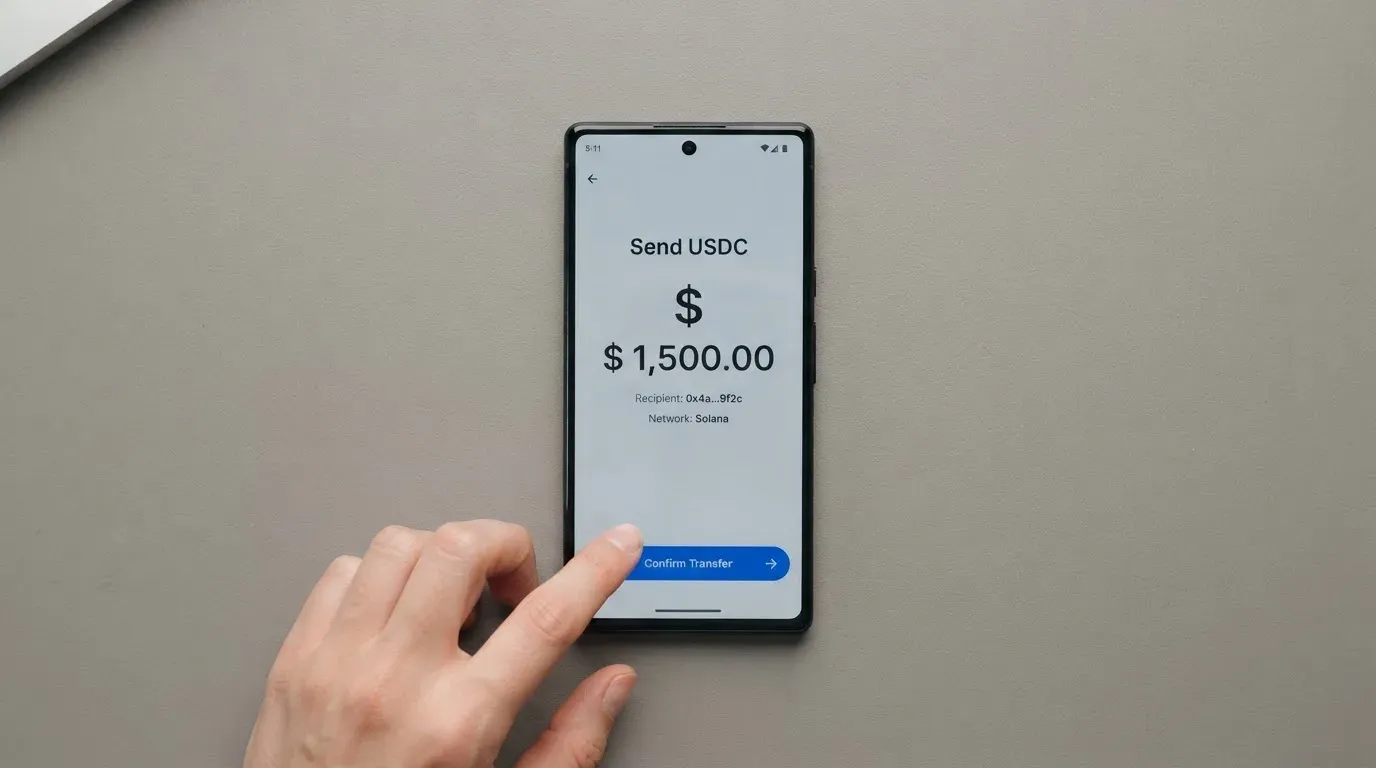
One thing to verify yourself before your first transfer. Unofficial reporting from July 2025 (TechCabal) says the app supports only USDC on Base and not USDT, and that each user gets a non-custodial wallet on Base. That contradicts the broader “USDC or USDT on Base or Ethereum” and it is the more specific claim, so I would treat it as a real possibility rather than dismiss it. Neither the network list nor the minimum top-up is stated on the card’s own pages; a figure for the top-up threshold is not something the public documents give you.
The reason the network matters so much is that this step is where money actually disappears. Blockchain transfers are irreversible. A deposit sent on a network the provider does not support, or to an address belonging to a different network, can be lost or need manual support recovery with no guarantee attached. Check the network twice — once in your sending app, once in Zerocard’s own instructions — before you confirm. And know which stablecoin you are actually sending: USDC is the dollar token Circle says is redeemable 1:1 for USD and backed by cash and cash equivalents, and Circle lists it as natively supported on 38 networks as of 16 September 2026, including Base and Ethereum. USDT is issued across several blockchains including Ethereum, Tron, Solana, Polygon and Avalanche. If you hold USDT on Tron and the card expects Base, that is not a small mistake.
The withdrawal side runs the same rule in reverse: KYC must be completed before you can withdraw funds, and the terms do not address fees or what happens to a remaining balance at closure.
Paying with it every day
In practice the card behaves like a prepaid card. A standard debit card asks your bank to withdraw from a linked account at the moment of purchase; a Zerocard card draws on a balance that was already loaded. The model is a pre-loaded balance: you top up, the balance is what you have, and the card cannot overdraw. That is a real structural protection, but it also means your card is empty whenever your wallet is.
Mechanics you should expect. It is a virtual or physical Zerocard debit card requested after KYC, and the network and card currency are not stated. Crypto is converted to local fiat at the point of sale, with no card currency named. A “Download app” button appears on the site with no store URL and no ratings I could find, so I cannot tell you what people rate it after using it. The founder’s post claims “zero fees” and free transactions; no cashback is stated anywhere.
Where the day-to-day friction comes from is not Zerocard’s design so much as card mechanics. A card number starts with a six or eight digit issuer identification number, and merchants can look it up to see which institution and in which country issued the card. If that issuer country differs from your billing address, some merchants apply extra scrutiny — which is why a card issued in one country can look foreign to a shop in another. Some merchants decline prepaid or foreign-issued cards for exactly that reason. Address Verification Service, which compares the numeric parts of the billing address a buyer types against issuer records, is mainly offered in the US, Canada and the UK and is generally unavailable for foreign-issued cards, which causes declines. A declined authorisation can also leave a hold on your funds that stays for several days, typically up to seven.
Merchant categories are another thing issuers decide. Gambling sits under a four-digit category code that classifies gambling businesses, and many issuers block it on specific cards by policy rather than by law, with the blocked list differing per issuer. If you need to pay for anything like that, ask, not assume. Online payments go through 3-D Secure, where your issuer assesses risk and either approves frictionlessly or challenges you with a one-time code or biometric; the brand is Visa Secure on Visa and Identity Check on Mastercard.
Adding the card to a phone wallet is possible in principle on any tokenised card: Apple Pay replaces the card number with a device-specific number held in the phone’s secure hardware, never on Apple’s servers, and each payment uses a one-time dynamic code. The issuer can still restrict the tokenised number — blocking it on websites, for example. Zerocard’s own pages say nothing about which wallets are supported, so treat that as unconfirmed.
If something goes wrong, the stated route is Customer Support with the transaction reference and the date. No timeline is given, no refund policy is stated.
What can go wrong
Start with the clause that should govern your expectations: accounts may be suspended or restricted “at its sole discretion and without prior notice”. Two-factor authentication and a card freeze are not stated. When a provider can freeze without telling you and has not published a limit schedule, your downside is unbounded in the sense that matters — not the size of a fee, but whether your money is available on a given morning.
Suspension is not a hypothetical in this category. Card programmes do close. Visa terminated its global agreements with FTX on 13 November 2022 and the FTX US debit card was wound down by its issuer. WaveCrest, a Visa issuer that supplied crypto card brands, was suspended by Visa in Europe in 2018, closing all WaveCrest-issued Visa programmes. The pattern in these cases is a notice period, then loading stops, then spending stops, then users are asked to withdraw. One 2026 closure reported by a single secondary source had new loads ending 8 July 2026 and spending stopping 8 August 2026 — unconfirmed, but it shows the shape.
Against that, I found no official incidents for Zerocard, and no Trustpilot or Reddit pages in the search — the results that came back were about an unrelated US card called “Zero”. That is not a clean record; it is an absence of record, and for a product young enough to have had a beta in July 2025 there is not yet a complaint history to read. Judge it accordingly.
Self-custody cuts one way and the other. Control of crypto belongs to whoever holds the private key or seed phrase. The unofficial account of Zerocard is that each user gets a non-custodial wallet on Base, which means your balance is not held by the company — the seed phrase stays with you, and nobody can quietly spend it. That is a real advantage over a custodial platform, and custodial platforms have a documented record of failure: Mt. Gox (about US$350 million reported stolen, 2011–2014), Coincheck (about US$400 million in 2018), Ronin Network (US$625 million in 2022). The cost of self-custody is that you carry the whole burden of key loss, phishing, and clipboard-hijacking malware that swaps a copied address. A seed phrase is typically 12 to 24 words in an unencrypted form of the private key; anyone who obtains it can restore the wallet and spend the funds, and there is no built-in recovery because the network cannot freeze or return anything.
Stablecoins are not risk-free instruments, whatever their name suggests. TerraUSD collapsed in May 2022 and USDC temporarily lost its peg in March 2023 during the US banking crisis. They are also not censorship-proof: Tether says it disables tokens in wallets on the OFAC sanctions list and has frozen funds tied to illicit activity.
And if something does go wrong, your recourse is unclear. There is a formal mechanism in this industry — a chargeback, a refund ordered by the issuer with reason codes for fraud, duplicate billing or goods not received — but its practical reach varies by jurisdiction. US debit card reversal rights come from Regulation E and credit card rights from Regulation Z, prepaid-card coverage varies and should not be assumed, and under 3-D Secure liability for fraudulent online payments can shift from merchant to bank. Zerocard publishes no refund policy and no dispute timeline.
On the regulatory side, know what you are actually holding. A card is a payment service regulated separately — e-money and payment-services law — while MiCA, the EU’s markets-in-crypto-assets regulation, covers the crypto side. ESMA states MiCA took legal effect in June 2023; its rules on stablecoins applied from 30 June 2024 and the remaining provisions, including crypto-asset service provider rules, from 30 December 2024. Under MiCA, e-money tokens may be issued only by a credit institution or an electronic money institution. Transitional grandfathering lets providers operating under national law continue only until 1 July 2026 or until they receive or are refused a MiCA authorisation, whichever comes first. ESMA keeps an interim register of authorised providers that you can check. An electronic money institution can issue e-money and cards but cannot lend, and it must safeguard customer funds by segregating them or insuring them — funds that are not bank deposits and may not sit under a deposit guarantee scheme. Zerocard names no issuer and no licence on its public pages, so none of these protections can be confirmed from the outside.
What to take instead
If any of the gaps above — unpublished fees, no country list, no named issuer — is the kind of thing that ends your decision, there are three cards that publish more. Here is how they compare on the same questions.
| TokenPocket | MetaMask | KAST | |
|---|---|---|---|
| My score | 5.8 / 10 | 7.1 / 10 | 6.1 / 10 |
| Where | Visa debit for a list of European countries and territories; Mastercard debit for Australia, Canada, Hong Kong, Japan, Taiwan, New Zealand, Singapore, South Korea, the UK and others; Americas planned for Q2 2025 | Sign-up open in 45 listed countries and territories; other regions join a waitlist; US and UK sign-ups temporarily closed | Residence-based list shown at KYC; country list not published, a Restricted Locations list referenced without naming countries; unsupported-country accounts exist but KYC stays locked |
| Card | Mastercard/Visa debit, runs on Arbitrum; cards are virtual, no physical card mentioned | Mastercard; virtual card issued instantly, metal card pre-orderable after approval, one card per user | Virtual and physical, up to 10 cards; Visa Platinum, Visa Infinite metal, Visa Infinite gold plated, plus Pengu, Solana and Bitcoin designs |
| Cost | NFT creation fee partly covered by TokenPocket, user pays “a small portion”, amount not stated; no other fees | Virtual free, no annual or maintenance fee; metal $199/year | Standard $0, Premium $1,000/year, Private $10,000/year billed annually upfront; extra virtual card $2; Standard physical card $0 card fee plus $40 delivery; $1/month inactivity fee after 12 months |
| Spending fees | 1% fee on depositing crypto into the card, said to be refunded later via rewards and reduced transaction fees; FX fee not stated; inter-institution settlement can add costs | “Minimal fee for each transaction”, amount not stated; no additional MetaMask fees; no foreign transaction fee, Mastercard rate used | Stablecoin top-up 0%, USD card spend 0%, transaction fee 0%, Apple/Google Pay 0%; non-USD FX 0.5%–1.75% depending on residence country, transaction country and programme; non-USD transactions under 25 USD cost $0.10; a declined transaction for insufficient balance costs $0.50 |
| Funding | Crypto from the TokenPocket wallet; coins and networks not listed in the FAQ | Spends directly from the connected wallet on Linea, Base, Monad, Solana; tokens include mUSD, wETH, EURe, GBPe, USDC, USDT; Solana-only wallets cannot withdraw credit | USDT, USDC, PYUSD, RLUSD; USDT/USDC on Ethereum, Solana, Polygon, Arbitrum, Tron; no bank account needed; spending from own balance, not credit |
| Rewards | No cashback; the 1% deposit fee “will later be refunded to users through rewards, reduced transaction fees, etc.” | Cashback in mUSD: Virtual 1%; Metal headline 3% but the footnote caps 3% to the first $10,000 spent then 1%; plus a $FLY bonus 5X or 7X via the Blackbird dining app | USD cashback: Standard 1.5% on the first $2,000/month, Premium 2% on the first $10,000/month, Private 3% on the first $40,000/month; KAST Points add +1% or +2% of eligible spend on Premium and Private |
Where each one wins, plainly. MetaMask is the strongest of the three on publishing: it names an issuer (Monovate) and a card provider (Crypto Life), states a card currency position, lists supported countries, and gives real cashback percentages. It is also the one where the fee is still a phrase — “minimal fee for each transaction” — with the table linked rather than shown, so it solves Zerocard’s country problem more than its cost problem. TokenPocket is the thinnest: a 1% deposit fee, refunded later by a promise rather than immediately, and a physical card nobody mentions. KAST is the most explicit on price, publishing the whole schedule including the small print — the $40 delivery, the $0.10 minimum foreign transaction, the $0.50 decline, the $1 monthly inactivity fee after a year — and it is the only one of the three that tells you in advance what a foreign transaction will cost you. Against Zerocard’s unpublished amounts, that transparency is worth more than any cashback percentage on this list.
Who I would recommend it to
I would recommend Zerocard to a person who already holds USDC on a self-custodial Base wallet, is comfortable reading a support ticket when something fails, lives somewhere the card’s 150+ countries claim plausibly covers but that an ordinary bank will not serve, and treats the card as one tool among several rather than as their only access to money. For that person it is a 7 or 8 out of 10 idea executed by an early team, and the non-custodial Base wallet reported in July 2025 is the right architecture.
I would not recommend it as a first card, as a card for someone who needs predictable costs, or as the only card someone has. A provider that publishes no fee amounts, no limits, no country list, no issuer and no refund policy has asked you to accept an unbounded amount of uncertainty in exchange for spending crypto you already hold. That trade can be worth it. It just should be made with your eyes open, not by accident.
Before you decide, check four things yourself: the current fee schedule inside the app, the network and token your version of the app actually accepts, whether a named issuer and licence appears on the terms by then, and what the support channel is if the wallet stops loading. If any of those come back vague, take the alternative that published its numbers — KAST for explicit pricing, MetaMask for a named issuer and a longer country list — and keep Zerocard for later.
Frequently asked questions
What is Zerocard?
Zerocard is a debit card that spends from a crypto balance rather than from a bank account. You fund a wallet with USDC or USDT on the Base or Ethereum network, and the balance converts to local currency at the point of sale when you pay. The provider named in the terms is Notzero Technologies Limited, the issuer is not named, and a founder post from 17 May 2025 says it launched first in Nigeria with a global plan.
Is Zerocard a bank?
No — and this is the most important thing to understand. The card behaves like a prepaid card drawing on a stored balance, not like a debit card linked to a bank account. The terms name only “Zerocard” and do not state a registration or a licence, and no issuing bank or electronic money institution is named. That means the protections that come with a bank deposit do not obviously apply to the balance here.
Who owns Zerocard?
The public pages point to Notzero Technologies Limited as the provider, and the terms themselves only carry the Zerocard name. A founder blog refers to a “card infra partner” in Nigeria. The founder post announcing the Nigerian launch is dated 17 May 2025, and TechCabal published a beta review in July 2025, so this is a young company rather than an established institution.
Is Zerocard available in my country?
The site says the card “works in 150+ countries”, but the terms name only the restricted jurisdictions — Belarus, Burundi, Central African Republic, Cuba, Iran, Libya, Myanmar, North Korea, Russia, Somalia, South Sudan, Sudan, Syria, Ukraine, Venezuela and Zimbabwe, with the third-party verification provider able to add more. There is no published list of countries where you can open an account, and whether citizenship or residence is what gets checked is not stated.
Does Zerocard require KYC?
Yes, and it is a gate rather than a formality. You must complete KYC before requesting a card or withdrawing funds. Accepted documents are a valid International Passport, Driver’s License or National Identity Card, plus a residential address with proof such as a utility bill no older than three months. You must be 18 or older, and there are no tiers.
How do I top up the card?
The wallet accepts USDC or USDT on the Base or Ethereum network. Unofficial reporting from July 2025 says the app in fact supports only USDC on Base and gives each user a non-custodial Base wallet, so check your own app before sending. Transfers are irreversible, so confirm the network on both sides or the deposit can be lost.
Is Zerocard free?
The terms describe core services as a “zero-fee experience” but also say optional services may charge fees, naming card issuance, express processing, currency conversion and cross-border transactions — with no amounts published. Separately, the blockchain charges its own network fee for the deposit, and that is not something Zerocard refunds. So the honest answer is: partly, but you cannot calculate the rest in advance.
Can I use Zerocard with Apple Pay?
Unconfirmed. Zerocard’s pages do not say which mobile wallets are supported. In principle any tokenised card can be added, since the card number is replaced by a device-specific number in the phone’s secure hardware and each payment uses a one-time code, and the issuer can still restrict the tokenised number. But you would be assuming a feature the documentation does not mention.
Is Zerocard safe to use?
It carries the normal category risks plus Zerocard-specific ones. The terms say accounts may be suspended or restricted at sole discretion and without prior notice, two-factor authentication and card freeze are not stated, and no refund policy or dispute timeline is published. Against that, unofficial reporting describes a non-custodial Base wallet per user, so your crypto is not held by the company — but you then own key-loss and phishing risk entirely.
Is Zerocard worth it?
If you spend stablecoins you already hold, live somewhere an ordinary card is difficult to obtain, and you can tolerate undocumented fees and an unlisted country map, it may be. If you want a first card, predictable costs, or a named bank behind the balance, it is not — KAST publishes a full fee schedule and MetaMask names its issuer and card provider, which is a lot more than Zerocard’s pages do.
Wallet card verdicts – cryptocardverdict
Content created by the «cryptocardverdict» team