
A free virtual Visa with a lot of blank spaces where the details should be
 Available in US

If you have arrived here because an ordinary bank card is proving hard to get — because of where you
live, what documents you hold, or a banking history that has gone sideways — then a crypto card looks
like the obvious workaround. Kryptonim offers one: a virtual Visa, free of monthly fees, that you can
load from a crypto wallet and spend wherever Visa cards are taken. That is genuinely useful for a lot of
people, and I am not going to pretend otherwise. But the more I read the card’s own pages, the more I
noticed the gaps. Not one country list. Not one fee schedule. Not one stated daily limit. The useful
thing here is not that the card is bad; it is that you should know exactly which questions the card
answers and which ones you will have to ask support before you commit a single coin. The conditions described on this page are current as of October 28, 2026.
I scored the card 6.1 out of 10. That is not a rounding of something else — it is the sum of six
criteria I set out below, each marked and explained, so you can disagree with any single line and still
see where the total comes from.
The conditions described on this page are current as of October 28, 2026.
Verdict: 6.1 out of 10
Here is how the score is built, criterion by criterion.
| Criterion | Mark | Why |
|---|---|---|
| Who can get it | 5 / 10 | No country list published; the card works “where VISA cards are accepted” |
| Cost | 8 / 10 | Virtual card free, no monthly fee; on a demo top-up 1.00 EUR the fee is 0.00 EUR and network fee 0.00 EUR; the physical card price and FX costs are not disclosed |
| Top-up options | 5 / 10 | Top-up by QR code in Kryptonim Wallet, automatic conversion of digital assets; coins and networks not named |
| Reliability and complaints | 6 / 10 | Among the Kryptonim group structures: Swaps Ltd (FCA), QuantiPay AG, KTM Virtual Services (FINTRAC); the card issuer is not named; no complaints about the card, and for the main service an unofficial Trustpilot score of 3.2 out of 166 reviews |
| Everyday use | 6 / 10 | Virtual or physical Visa, Google Pay is supported; Apple Pay and ATM are not disclosed |
| Total | 6.1 / 10 |
The 8 out of 10 on cost is the one place the card scores well, and it scores well on a narrow,
verifiable fact: there is no monthly fee for the virtual card, and the demo deposit screen shows
“Fees 0.00 EUR, Network fee 0.00 EUR” on a 1.00 EUR deposit. That is a real strength. It is also,
notably, the only cost figure on the card pages that comes with numbers attached. The physical card
price is not stated. The conversion rate and any spread are not stated. What the card’s FAQ asks
about fees gets no answer in the page text at all.
Who is this for? In short: people who already use the Kryptonim wallet and want a free virtual Visa
attached to it, and who are comfortable doing their own diligence because the card pages will not do
it for them. The card is not for anyone who needs to know on day one exactly what a coffee will cost
them, or who needs a written daily limit, or who needs to know which regulator stands behind the
card balance. It is not for people in a hurry — because there is no published country list, the
eligibility question can only be answered by the company itself.
Will they give you the card?
Short answer: the card’s public pages do not say. There is no country list on them at all. The stated
position is that the card is usable “where VISA cards are accepted” — and that is a statement about
where the card can be *spent*, not about who can *hold* it. Those are two different questions, and only
the first one has an answer.
This distinction matters more than it first appears, and it is worth pausing on. A card number beginning
with a six- or eight-digit issuer identification number tells the merchant’s payment terminal which
institution and which country issued it — and a merchant whose terminal sees an issuer country unlike
your billing address may apply extra scrutiny. So the fact that a card works in a country tells you
nothing about whether your application will be accepted. Plenty of people apply, get declined, and never
learn which rule caught them.
What is also not stated: which countries are excluded, whether eligibility runs on citizenship or on
residence, and whether there are sanctions screening differences between the two. In this product
category the distinction is routine rather than exotic — nationality is recorded and screened separately
from residence, because issuer risk policy and sanctions screening are often applied to citizenship and
country of birth as well as to your address.
So the honest version of this section: if your question is “will they issue this to me, in my country,
with my documents”, the only reliable answer is a direct one from Kryptonim’s support. Their card page
carries a “CHAT WITH US” button, and there is a Help section with FAQs and a contact form on
the Kryptonim website, though neither the languages it covers nor its opening hours are stated.
And one more thing you should know before you apply, because it bears directly on whether a card solves
your problem: I found no official incidents and no card-specific complaints, and equally I found no
card-specific reviews at all. That silence is not a clean bill of health. It is an absence of
information, and absence of information is the theme running through this entire review.
How to get it
The card’s stated flow is short: “Get your free virtual card shortly after account verification”. You
verify your account, and the virtual card arrives shortly after. The card itself comes as a virtual or
physical Kryptonim Card, running on Visa, usable “anywhere VISA are accepted”.
That is the whole of the documented process, and the omissions are conspicuous once you list them:
- Documents, age and proof of address — not stated. You do not know what to have ready.
- Card delivery — not stated, for either the virtual or the physical version.
- KYC levels — not stated. Whether you face a light or a full check is unknown.
- Card currency — not stated.
Some of these blanks are normal. Cards in this category often say little about onboarding because the
app screens you as you go, and the flow is genuinely self-explanatory once you are inside it. But two of
them are not cosmetic. “Shortly after account verification” tells you nothing about how long, and a
delivery window matters enormously to someone whose alternative is having no card at all. And the
absence of stated KYC levels is a real gap in a product aimed at people who have difficulty with
conventional banking: if the process gets stuck, you have no published document list to work from, so
the wait becomes open-ended.
One practical note that belongs here. Even where such services are permitted, prepaid and debit cards
are generally available to adults aged 18 and over, and some issuers set higher limits than the
baseline. Whether Kryptonim applies any such age floor is not stated on the card pages.
Fees and what a payment actually costs
This is the section where the card is at its most confident and I am at my most cautious. The card
pages contain exactly one sentence about cost — “No monthly fees for virtual card”, with the virtual
card described as free — and a demo deposit screen showing “Fees 0.00 EUR, Network fee 0.00 EUR” on a
1.00 EUR deposit. Everything else that a person budgeting needs is blank.

| Item | What the card states |
|---|---|
| Issuance (virtual card) | Free; no monthly fees for virtual card |
| Issuance (physical card) | Not stated |
| Monthly fee | None for the virtual card |
| Conversion fee | Not stated; the page mentions “Automatic conversion of digital assets” |
| Foreign exchange / FX cost | Not stated |
| ATM withdrawal | Not stated |
| Daily spending limit | Not stated; the FAQ question on spending limits has no answer in the page text |
| Monthly spending limit | Not stated |
| Tier structure | Not stated |
Three everyday payments, worked through as carefully as the material allows:
A coffee bought with crypto you loaded yesterday. You bought USDT, you sent it to Kryptonim, the
card converted it to a fiat balance, and now you tap for a small purchase. What I can tell you is that
the monthly fee is zero and that the deposit’s own fee and network fee both showed 0.00 EUR on the
demo screen. What I cannot tell you is what happened between those two points — no conversion rate is
published, no spread is published, and the FAQ question about fees has no answer. If the cost of the
coffee is the sum of a hidden spread and an undisclosed conversion charge, you will not see either in
advance. Ask before you rely on it.
A subscription priced in euros while your balance is in dollars. There is no FX figure to plan
with, and there is no stated card currency to plan from. This is not a corner case: currency
mismatch is the normal condition for this kind of card, not the exception, and the cost of it is
precisely the number the pages withhold.
A withdrawal from an ATM in the country you are standing in. Not stated, at all — not a fee, not a
limit, not whether it works. The everyday-use facts say Apple Pay and ATM are not disclosed, which is
the same finding in a different direction. If cash is part of your plan, this is the first thing to
ask, because a card that cannot reach an ATM is not a replacement for a bank card; it is a narrower
thing.
I want to be careful about one thing here rather than dramatic. A published fee schedule is a
marketing document, so silence does not mean the fees are high. Plenty of honest operators simply do
not publish. But the practical consequence for you is identical either way: the number you cannot see
is a number you cannot budget, and in a category where conversion mechanics are structurally opaque,
“ask first” is not paranoia.
How to Top up the card
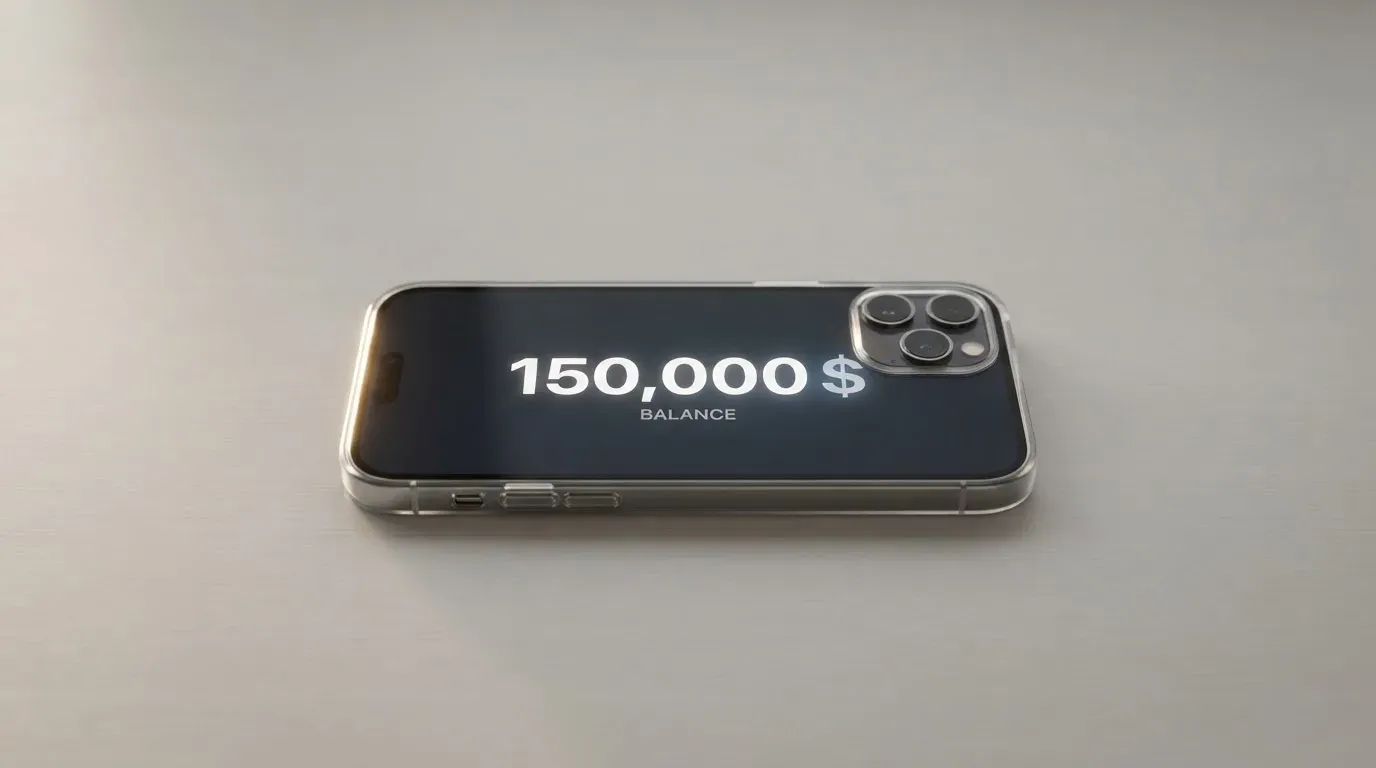
Top-up is the one part of the flow the card pages describe concretely, and even here the detail stops
early. The method given is a QR code scanned in Kryptonim Wallet. The page also refers to automatic
conversion of digital assets, which is how a crypto balance becomes spendable fiat on the card.
What is not named: which coins, and which networks. That second omission is the one that can cost you
real money. Blockchain transfers are irreversible, so a deposit sent on a network the card provider does
not support, or to an address belonging to a different network, can be lost outright or need manual
support recovery with no guarantee of success. There is no published list here to check against before
you send — so the check has to happen in support, before the transfer, not after.
On the demo deposit screen, a 1.00 EUR deposit shows “Fees 0.00 EUR, Network fee 0.00 EUR”. Minimums and
fiat top-up options are not stated, so I do not know the floor on a deposit or whether you can load
without touching crypto at all. Related to this: the FAQ asks whether the balance can be withdrawn to
wallet or bank, and the page text contains no answer. That question matters beyond curiosity — if the
balance is withdrawable, a mistake is recoverable; if it is not, it may not be.
Worth holding in mind generally, though it is category background rather than something about this
card: on-chain network fees for your deposit are charged by the blockchain, not by the card provider,
so a zero network fee on a demo screen is not a promise about a real one.
Paying with it every day
The everyday picture is coherent but thin. You get a virtual or physical Visa, it works anywhere Visa
is accepted, and the card page says “Add your Kryptonim Card to Google Pay” with the Google Pay terms
linked. That is a real, useful capability — tokenised mobile payment without handing a card number to a
café.
Against that: Apple Pay is not mentioned anywhere on the pages. If your phone is an iPhone and your
routine runs through Apple Wallet, that is a real gap, not a technicality. The card currency is not
stated, so you cannot tell in advance what currency you will be spending. Blocked merchant categories
are not stated, and in this category that is not a trivial omission: a four-digit merchant category
code classifies what a business sells, and issuers routinely block categories such as gambling on
specific cards by policy rather than by law, with the list varying by issuer. You will not find out
whether Kryptonim’s card declines a hotel, a ticket, or a ride until you try.
On the app side, there is an iOS link to “Kryptonim Wallet” on the page; the ratings were not read, so
I have no basis to rate it. Refunds are unaddressed: the FAQ asks where a merchant refund goes and the
page text has no answer. For someone who has been burned by a merchant disappearing, that refund
question deserves a written answer more than almost anything else on this list.
And the decline question nobody asks out loud. Some merchants decline prepaid or foreign-issued cards
because the issuer lookup reveals the card type and the issuer country. Address verification — which
compares parts of the billing address you type against the issuer’s records — is mainly offered in the
US, Canada and the UK and is generally unavailable for foreign-issued cards, which can itself cause
declines. If you are outside those markets, some of your declines will have nothing to do with you.
What can go wrong
Here I leave the card’s own claims behind and look at what the category makes possible. Nothing below
is a prediction that any of this will happen to you; it is the set of failure modes you are choosing
between.
Who actually stands behind the money. The card issuer and e-money institution are not stated, and
the page does not link the named entities to the card. That is the first thing on this list, because it
determines everything else. The Kryptonim website lists several entities: Swaps Ltd (England and Wales, no.
11850124, “registered with the UK Financial Conduct Authority (FCA) as a cryptoasset business”);
QuantiPay AG; KTM Virtual Services Inc. (British Columbia, FINTRAC MSB M23813101); Kryptonim Colombia;
and Kryptonim sp. z o.o. as data controller. A structure like that is normal for a group operating in
several jurisdictions — but a brand name is not a card issuer, and until you know which licensed body
holds your balance, you do not know whose rules protect it.
Funds held by a custodian. Control of crypto belongs to whoever holds the private key or seed
phrase; with a custodial wallet the provider holds the credentials, so you must trust them completely. A
seed phrase — typically 12 to 24 words — is the unencrypted form of the private key, and anyone who
obtains it can restore the wallet and spend its funds. Transfers are typically irreversible and a
stolen key has no built-in recovery, because the network cannot freeze or return funds. This is not
hypothetical history: Mt. Gox (about US$350 million reported stolen 2011–2014), Coincheck (about
US$400 million, 2018) and Ronin Network (US$625 million, 2022) are the standing reference points for
custodian risk. For a self-custody-linked card the trade runs the other way — the funds stay in your
wallet until the moment of payment, and you carry sole responsibility for key loss, phishing and
clipboard malware that swaps a copied address. The card pages say only that you should “never share
your private keys or sensitive information”, and do not state whether this card is custodial or
self-custody.
The balance may not be a bank deposit. Where an electronic money institution holds funds, it must
safeguard them in dedicated accounts or insure them — but such funds are not the same as bank deposits
and may not be covered by a deposit guarantee scheme. I am not giving you tax or legal advice here and
I am not qualified to; I am telling you that “my money is with a licensed institution” and “my money is
insured up to X” are different sentences, and you should be told which one applies.
Two regulators, one card. A card is a payment service, regulated separately under e-money and
payment-services law, while MiCA (the EU’s markets-in-crypto-assets regulation, which ESMA states
took legal effect in June 2023, with its asset-referenced and e-money token rules applying from
30 June 2024 and the remaining provisions including crypto-asset service provider rules from
30 December 2024) covers the crypto side: custody, exchange, transfer. So a crypto card often depends on
two licences. MiCA also limits who may issue e-money tokens to a credit institution or an electronic
money institution, and its transitional period lets providers already operating under national law
continue only until 1 July 2026 or until they receive or are refused a MiCA authorisation, whichever
comes first — a date worth holding in mind when you weigh a provider’s regulatory footing.
The network can switch you off. Visa and Mastercard do not issue crypto cards to consumers
themselves; they license issuers and can suspend a programme. Visa said in November 2022 that it had
“terminated our global agreements with FTX”, and the FTX US debit card programme was being wound down
by its issuer. WaveCrest, a Visa card issuer that supplied crypto card brands, was suspended by Visa
in Europe in 2018, closing all WaveCrest-issued Visa programmes. Programme closures typically give a
notice period, then stop spending and loading, then ask users to withdraw remaining balances; one
2026 closure reported by a secondary source had new loads ending 8 July 2026 and spending stopping
8 August 2026 — a single unconfirmed source, offered here as an illustration of the shape such an
event takes, not as fact.
Stands of the fee. A declined authorisation may leave a hold on funds that can remain for several
days, typically up to seven. And a chargeback is a refund ordered by the card issuer to settle a
dispute, with reason codes such as fraud, duplicate billing or goods not received; your rights differ
by card type and country, and prepaid-card coverage varies and should not be assumed.
The group around the main service. For the related on-ramp service at the Kryptonim website — not the card
itself — an unofficial Trustpilot rating of 3.2 out of 5 from 166 reviews is reported, with complaints
of unpaid withdrawals and a deposit not returned for weeks. Treat that as a user-report context, not a
confirmed finding: it is third-party data, not something the card pages confirm, and it concerns a
different product. I mention it only because the on-ramp is where many people meet the brand first.
One small piece of good news, offered narrowly. Under 3-D Secure — Visa’s brand is Visa Secure,
Mastercard’s is Identity Check — liability for fraudulent online payments can shift away from the
cardholder, and the issuer approves either frictionlessly or challenges you, for example with a
one-time code. In Europe this aligns with strong customer authentication requirements. That is a
protection against fraud, not against devaluation, fee opacity, or an issuer’s decision.
What to take instead
I want to be careful here, because a comparison table can look like a ranking when it is really just a
list of different shapes of the same idea. All four cards below are built the same way: crypto goes in,
a card balance comes out. The differences are in eligibility, cost structure and disclosure.
| Kryptonim | CardFlow | HyperCard | Card.fi | |
|---|---|---|---|---|
| Score | 6.1 / 10 | 4.9 / 10 | 4.7 / 10 | 6.6 / 10 |
| Who it targets | No country list stated | Aimed at Nigeria — “Nigeria’s smartest fintech card platform” and “Nigerians and global users”; no exclusions stated | No country list on official pages; App Store says the card works in “more than 176 countries” (acceptance, not eligibility) | Cards ship to “200+ countries”; terms bar residents of, or orders from, “a country subject to sanctions that would prohibit the service” |
| Card | Virtual or physical Visa | Virtual USD Mastercard, created in about 3 minutes | Prepaid “HyperCard”, balance in USD or EUR; network not stated on the App Store page | Virtual Classic and Premium; physical Classic and Premium; metal; a virtual card with every physical order |
| Cost | Virtual free, no monthly fee; physical not stated | “Creating a virtual card is completely free”; monthly fee not stated | Not stated; App Store page lists no fees | Virtual Classic $49, Virtual Premium $249, one-time; physical and metal not listed; no monthly, annual, inactivity or minimum-balance fee |
| Fees | Not stated | Not stated | Not stated | Top-up Classic 1.5% + $1.00, Premium 1%; FX Classic 3.5%, Premium 2.5%; conversion shown before each top-up |
| Top-up | QR code in Kryptonim Wallet; coins and networks not named | Bitcoin, USDT, ETH or Naira bank transfer; networks not stated | Deposit crypto such as USDT, BTC, ETH in the app, converted to USD or EUR; networks not stated | 32 coins across 5 networks (Ethereum, Base, BNB Chain, Solana, Kaanch), a deposit address per card, converted at market rate on arrival |
| Rewards | Not stated | Not stated | Not stated | Cashback on card spending only: Classic 0.8% (cap 10 USDT/month), Premium 1%, Metal 1.2% (cap 100 USDT/month, 5,000 USDT) or 2% (cap 250 USDT/month, 20,000 USDT); headline 10% at coffee shops capped at 10 USDT/month |
Three things come out of this. First, Card.fi is the only one of the four that publishes a full price
list — $49 and $249 for the virtual tiers, 1.5% plus $1.00 and 1% on top-ups, 3.5% and 2.5% on FX.
That transparency is worth paying for if you intend to move real sums. Second, CardFlow and HyperCard
are more transparent about who they serve than Kryptonim is: one names its market outright, the other
points to a country reach from its App Store listing. Kryptonim, on this evidence, tells you the least
about eligibility of any of the three. Third, all of them carry the same structural warning: sending
crypto on the wrong chain to a per-card deposit address risks permanent loss, which is why Card.fi’s
terms foreground the conversion preview and Kryptonim’s pages name neither coins nor networks.
Who I would recommend it to
I would recommend this card to someone who is already inside the Kryptonim wallet, who wants a virtual
Visa at no monthly cost, who pays mainly online, and who has already asked support the four questions
the pages leave blank: which country list applies to me, what the conversion and FX costs are, what
the daily and monthly limits are, and where a merchant refund goes. If those four answers come back
clearly, the free virtual card is a reasonable thing to have in your pocket.
I would not recommend it as a first card for someone whose main problem is that no bank will open an
account for them. The reason is specific: the card’s pages will not tell you whether you are eligible,
what you will pay, or how much you may spend. You would be starting a relationship with the least
information available, which is exactly the position you were trying to escape.
The people who should walk away fastest are those who need cash from ATMs, those on iPhones expecting
Apple Pay, those who spend heavily in a currency other than the card’s — whose currency is not even
stated — and those who would be unsettled to learn that the entity holding their balance is not named
on the card pages. Add to that list anyone for whom a frozen or slow withdrawal would be a crisis,
because the card’s own FAQ declines to say whether the balance can be withdrawn to wallet or bank at
all.
And please keep the last one in proportion. I found no complaints about this card and no official
incidents. The name of a good product is not that it is provably risk-free — nothing in this category
is — but that its risks are ones you have chosen knowingly, having asked the questions that the
marketing page left open. Ask them. That is the whole review, really.
Frequently asked questions
What is the Kryptonim card?
The Kryptonim Card is a payment card offered by the Kryptonim crypto wallet, in virtual or physical
form, running on the Visa network. You load it from the Kryptonim wallet — the card pages describe a
top-up by QR code scanned in the app — and it spends a converted balance wherever Visa cards are
accepted. The virtual version is described as free with no monthly fees. The pages do not name the
card issuer, the card currency, or the countries it is issued in.
Is Kryptonim a bank?
The card pages do not present it as a bank, and the card issuer and e-money institution are not
stated. The Kryptonim website lists entities including Swaps Ltd (England and Wales, no. 11850124, “registered
with the UK Financial Conduct Authority (FCA) as a cryptoasset business”), QuantiPay AG, KTM Virtual
Services Inc. (British Columbia, FINTRAC MSB M23813101), Kryptonim Colombia, and Kryptonim sp. z o.o.
as data controller — but the pages do not link these entities to the card itself.
Does the Kryptonim card require KYC?
Yes, in effect: the stated flow is that you get the free virtual card “shortly after account
verification”, which means verification comes first. What the pages do not say is which documents are
needed, whether proof of address is required, what the age requirement is, or what KYC tiers exist —
the card’s FAQ question on this has no answer in the page text. Bring whatever identity documents you
have and ask support for the exact list before you begin.
How much does the Kryptonim card cost?
The virtual card is described as free, with “No monthly fees for virtual card”. A demo deposit screen
shows zero fees and zero network costs for a 1.00 EUR deposit. Beyond that, the card pages state
nothing: the physical card price, the conversion fee, the foreign exchange cost, ATM fees, and the
daily and monthly limits are all not stated, and the FAQ question “Are there any fees for Kryptonim
Card?” has no answer in the page text.
How do I top up the Kryptonim card?
The method described is scanning a QR code in Kryptonim Wallet, and the page also refers to automatic
conversion of digital assets. Which coins and which networks are not named, and that is the detail
that matters — a transfer sent on a network the provider does not support can be lost, because
blockchain transfers are irreversible. Minimum deposit amounts and fiat top-up options are also not
stated.
Where can I use the Kryptonim card?
The card works “anywhere VISA are accepted”, and the pages say it can be added to Google Pay. But
“where you can spend” is not the same question as “who can hold it”: no country list is published, so
eligibility is unknown until you ask. Apple Pay is not mentioned. Some merchants decline prepaid or
foreign-issued cards because the issuer lookup reveals the card type and issuer country.
Is the Kryptonim card safe?
There are no published card-specific incidents or complaints that I could find, but there is also no
card-specific review record to draw reassurance from. The card pages say only that you should “never
share your private keys or sensitive information”, and do not state whether the card is custodial or
self-custody. The bigger structural question is who holds your balance, and the issuer is not named.
Can I withdraw money from Kryptonim?
The card’s own FAQ asks whether the balance can be withdrawn to wallet or bank, and the page text
contains no answer — which makes this one of the first questions worth putting to support. It matters
more than it looks, because if the balance is withdrawable a mistake is recoverable, and if it is not,
it may not be. Card-level ATM access is also not disclosed, so cash availability is unknown.
Is the Kryptonim card available in my country?
The card pages do not publish a country list, and the only geographic statement is that the card works
“where VISA cards are accepted” — a statement about acceptance, not eligibility. Whether the decision
runs on your citizenship or your residence is not stated either. The realistic route is a direct
question to Kryptonim’s support before you go further; the card page carries a “CHAT WITH US” button.
Is the Kryptonim card worth it?
Worth it if you already use the Kryptonim wallet, want a virtual Visa with no monthly fee, and mainly
pay online — and if support answers your questions on eligibility, fees, limits and refunds. Not worth
it as your first card if the reason you are here is that banks have turned you down, because you would
be starting with less information than any other option. The honest summary is a fair price for an
incomplete description.
Virtual card verdicts – cryptocardverdict
Content created by the «cryptocardverdict» team