
A virtual card you fund with USDT, published mostly in Russian, with a lot of blanks where the numbers would be
 Available in US
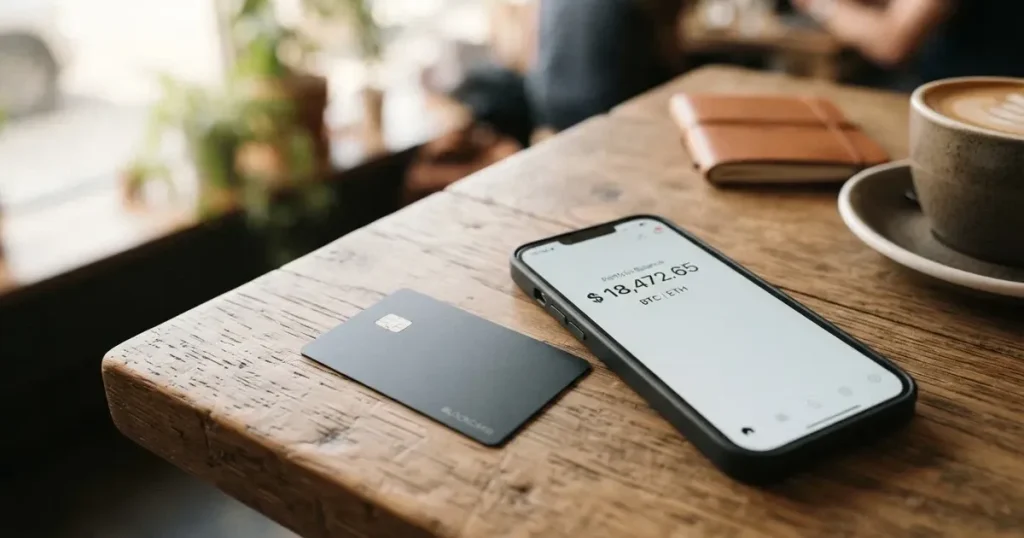
ByDex is a virtual card that you load from a USDT balance, and the service around it is published in Russian, priced in rubles and reached through a website or a Telegram bot. That combination has one obvious appeal and one obvious limit. The appeal is that the card is aimed at exactly the person who already holds dollars in crypto and wants to spend them without a bank turning the transaction down. The limit is that the public pages do not tell you most of the things you need in order to decide: there is no published country list, no price for issuing the card, no fee schedule, no card limits, no named legal entity and no named issuer.
My score is 4.8 out of 10. That is not a mark of a bad product — I have not used this card, and nothing in what I could read suggests the service is a fraud. It is a mark of how little is publicly checkable. A card is a promise made by someone you cannot name, backed by an issuer you cannot identify, and priced by numbers the site declines to print. You can still try it with a small amount and see how it behaves. You just do it knowing that you are buying a description, not a document.
The conditions described here are current as of October 28, 2026.
Score card
| Criterion | Mark | Why |
|---|---|---|
| Who can get it | 4 / 10 | No country list is published; the service is in Russian, denominated in rubles and reachable through Telegram |
| Cost | 5 / 10 | Neither fees nor the cost of issuance are disclosed; the rate, fees and limits are shown to you before you confirm |
| Top-up options | 5 / 10 | The card is funded from a USDT balance; USDT from an exchange or wallet (network not named) or a bank transfer |
| Reliability and complaints | 5 / 10 | No legal entity and no issuer are named; no complaints were found |
| Everyday use | 5 / 10 | Virtual only, Apple Pay and Google Pay available; cash machine terms not disclosed |
| Total | 4.8 / 10 |
Read that table as a shape rather than a verdict on quality. The two fives in the middle are the honest core: the funding route is real and simple, and the publishing is thin but not absent. The four is the one that should slow you down, because “who can get it” is a question about whether the card will work for you at all, and nobody has published an answer.
The reader I have in mind through this whole page is someone who has already found that an ordinary bank card is difficult to get — a blocked country, a closed account, a long refusal process, or simply no banking relationship that a crypto exchange will accept. That person is not looking for a hobbyist experiment. They are looking for a way to pay a landlord, a supplier or an online service. That is the standard this review holds the card to, and it is why I keep coming back to what is not printed.
Will they give you the card?
Here is the first thing to know: nobody has published a country list. The service presents itself in Russian, shows amounts in rubles, and offers the Russian fast bank transfer system as a funding route. That tells you who the service is built for, which is users who prefer a service in Russian, denominated in rubles, and funded via fast bank transfers. It does not tell you where you have to live, what passport you need, or which countries are excluded, because those answers are not on the public pages.
That matters more than it sounds. Registration runs through the site or a Telegram bot. Neither route is the same thing as a published eligibility rule, and if you are reading this, you have no way to check from the outside whether your country would be accepted, refused, or accepted and then closed after your first transaction. My advice is not to read the Russian-language interface as an answer to that question — it is a description of who the service was built for, not a promise to you.
What I can tell you is what the service says about identity, because it says something quite unusual. The page states that a USDT top-up from an exchange or wallet happens “without mandatory identity verification”. That is a direct quotation of the service’s own wording, and I am reproducing it precisely because it is the kind of sentence that deserves reading twice. The same page immediately qualifies it: requirements depend on the product, the amount and the applicable rules, and any additional check is shown to you before the operation. So the honest reading is not “no checks ever” but “checks are decided at the point of transaction, product by product, amount by amount” — which in practice means you will not know until you are mid-flow.
For EU readers, one piece of general background helps you read that sentence. Under EU anti-money-laundering rules, customer due diligence covers name, address, date of birth, nationality and identity documentation, plus a sanctions check, the purpose of the relationship, and whether you are a politically exposed person. If due diligence cannot be completed, the institution must not proceed, and where a relationship already exists, must end it — which is why accounts get frozen pending documents. In the US, the customer identification programme requires name, date of birth, address and an identification number. Nationality is also screened separately from residence, because sanctions screening and issuer risk policy often apply to citizenship and country of birth, not just to where you live.
None of that tells you ByDex is breaking a rule. It tells you that “no mandatory verification” describes the path for one particular top-up, and that a regulated intermediary somewhere in the chain may still require documents. Which documents, and at what level, the public pages do not state. I want to be plain about that rather than imply the card is either fully anonymous or fully verified: it is neither, on the evidence available.
How to get it
The card itself is called “ByDex Virtual”. A news post from 12.07.2026 refers to a “ByDex VISA international card”, so the network is named in the news item but not on the card’s own description page. The currency the card holds is not stated.
The issuing sequence, as the page describes it, is short. You open “Virtual card” in your account, click “Issue card”, confirm the terms, top up from your USDT balance, and add the card to Apple Pay or Google Pay. There is no plastic to wait for and nothing to sign for — this is a virtual product end to end, so delivery times simply do not apply.
One thing to settle early, because it decides where you go next: the card is funded from a USDT balance. That means the account you are making this card inside already holds dollars in crypto form, and the card spends that balance rather than a bank account underneath it. If you are coming to ByDex from fiat, you are really making two decisions — first how to get USDT, then how to spend it. The second decision is the one this page covers.
For readers who arrive with a bank account rather than crypto, the routing question matters. The card number begins with an issuer identification number of six or eight digits, and merchants can look that up to see which institution and which country issued it. If that country differs from your billing address, some merchants apply extra scrutiny, and some decline prepaid or foreign-issued cards outright. That is a property of the payment system rather than of this card, but it is the mechanism behind the “why does my payment fail” story you will hear from other users of any virtual card.
Fees: what this card really costs
I want to open this section with the finding rather than bury it: the cost of issuing the card is not stated, the fees are not stated, and the cash machine terms are not stated. The service does say that the rate, the fees and the limits are shown to you before you confirm an operation — which is a genuine design choice, and arguably a decent one, since you are not signing up for surprises. It is also, for a reviewer, the absence of the one thing I would use to judge value.
So what follows is the honest version: the fees table is mostly empty, and the rows where the card is silent are the rows where your money actually goes.
| Fee or limit | What the card says |
|---|---|
| Issuance | not stated |
| Monthly fee | not stated |
| Conversion | not stated; the rate and fees are shown before confirmation |
| FX (spending in another currency) | not stated |
| Cash machine | not stated |
| Card spending limits | not stated |
| Exchange limits | 1 000 to 500 000 RUB |
| Card currency | not stated |
| Tiers | not stated — a single “ByDex Virtual” is shown |
Two numbers survive in that table. The first is the exchange limit range of 1 000 to 500 000 RUB, which is the only published figure I can find anywhere on the card’s money side. The second is what it is silent about: what you actually pay. If you fund the card with USDT, spend it in a shop, and the shop charges in another currency, then two things happen in sequence — the stablecoin is converted to a balance currency, and then that balance is converted to the shop’s currency. Each of those steps can carry a fee, and the card does not publish either one.
Let me make that concrete with three everyday payments, using only what the page tells me. A coffee shop in your own currency is the simple case: the stablecoin converts once, and whatever fee attaches to that conversion applies. Paying a foreign online service is the harder case: conversion, then a second conversion into the merchant’s currency, and the FX fee if one applies. Paying a subscription billed monthly is the case that hurts quietly, because a small percentage repeated every month is invisible in any single statement and obvious over a year. In all three, the number you care about is the one shown before confirmation — which means the cost of this card is something you discover per transaction rather than something you can plan for.
There is one more cost that never appears on a card’s own fee page, because it is charged by the blockchain rather than by the provider: the network fee for your deposit. If you send USDT from an exchange or wallet, the network charges for the transfer, and that cost is yours regardless of what the card charges.
Then the category context, so the silence has a frame. A prepaid card draws on a stored balance; a standard debit card asks your bank to withdraw from a linked account at the moment of purchase. Many crypto cards behave like prepaid cards, and in the pre-loaded balance model the card spends only what you have loaded, so it cannot overdraw. That is a genuine structural protection — but note what it does not protect you from. A card that cannot overdraw can still charge you a bad rate on every swipe, and the whole cost of such a card lives in the rate.
So before you fund it, the number to write down is not the price of the card, which nobody has published. It is the conversion rate and fee you were shown on your first transaction, times roughly how many transactions you expect to make. If you will not spend an hour working that out against a competitor, the card is telling you something about itself.
How to top up
Topping up is the part of ByDex that is genuinely well described, and it comes in two routes. The first is the card’s native path: your USDT balance funds the card, and that balance is topped up with USDT from an exchange or a wallet. The second is a bank transfer from any bank’s card or account.
On speed, the page says the card is issued and topped up “instantly”, and that a bank top-up usually completes in under a minute. Fees for those top-ups are not stated.
Notice what the funding route does not name: the network. If you send USDT from an exchange or wallet, the page does not say which network to use, and that omission has teeth. USDT has been issued on networks including Ethereum, Tron, Solana, Polygon, Avalanche and others, and a deposit sent on a network the provider does not support — or to an address belonging to a different network — can be lost, or need manual support recovery with no guarantee. Blockchain transfers are irreversible by design. If the ByDex pages do not tell you the network, then the one piece of information you need most is the one piece you must verify yourself, and I would verify it in writing before sending anything.
A related trap worth knowing, because it applies to the same USDT transfer: Tether issues USDT on many networks and describes reserves intended to back it one-to-one, but not every USDT variant behaves the same. A stablecoin aims to hold a stable value against a fiat currency, and despite the name, stablecoins are not necessarily stable — TerraUSD collapsed in May 2022, and USDC temporarily lost its peg in March 2023 during the US banking crisis. “USDT is stable” is a description of intent, not a guarantee, and the risk that matters to you is what a depeg does to the balance you are about to spend.
For withdrawal, the card does not state anything. There is no published procedure for taking funds off a ByDex card, and that gap deserves a flag rather than a shrug — because a card that spends a stored balance is only half a tool if there is no published way back. Hold that question; I will come back to it when I talk about what can go wrong.
Category context on where the funds sit: control of crypto belongs to whoever holds the private key. With a custodial wallet the provider holds the credentials, so you must trust the provider completely; a seed phrase, typically twelve to twenty-four words, is an unencrypted form of the private key, and anyone who obtains it can restore the wallet and spend its funds. Transfers are typically irreversible, and a stolen private key has no built-in recovery — the network cannot freeze or return the funds. The record of custodial failures is not theoretical: Mt. Gox (about US$350 million reported stolen, 2011-2014), Coincheck (about US$400 million, 2018) and Ronin Network (US$625 million, 2022). Holding funds with a custodian carries counterparty and hack risk, and knowing which side of that line ByDex puts your USDT on would be my first question to a human.
Paying with it every day
Everyday use works through the mobile wallets. Apple Pay and Google Pay are both supported, and the instruction page mentions USDT only — the currency the card itself holds is not stated. Blocked merchant categories are not stated either, which is worth knowing because those lists vary by issuer and are a policy choice rather than a law.
Apple Pay is the better-supported route for good reasons, and the reasons are structural rather than marketing. Apple Pay replaces the card number with a device-specific Device Account Number stored in the Secure Element, never on Apple’s servers, and each payment uses a one-time dynamic security code. The issuer can still restrict a tokenised number — for example block it on magnetic-stripe, phone or website use — so what works depends on settings you cannot see from the outside.
Here is the pattern you should expect with any virtual card. A payment goes out, the merchant’s system looks at the BIN and sees a foreign-issued or prepaid card, and something goes wrong in one of a few well-known ways. Address Verification Service compares the numeric parts of the billing address you typed against issuer records, but it is mainly offered in the US, Canada and the UK and is generally unavailable for foreign-issued cards, which can cause declines. Some merchants decline prepaid or foreign BINs because the lookup reveals the card type and issuer country. 3-D Secure adds an identity check to online payments, where the issuer either approves frictionlessly or challenges you with a one-time code or a biometric; Visa’s brand is Visa Secure and Mastercard’s is Identity Check. And a declined authorisation can leave a hold on funds that can remain for several days, typically up to seven — so a failed attempt at a shop can quietly reduce your available balance for a week.
None of that is a ByDex defect. It is the terrain every virtual crypto card walks over, and it is why a virtual-only card with no physical alternative can feel fragile in exactly the situations where you most need it to work. If your essential spending includes a petrol station, a terminal that only takes a physical card, or a subscription that blocks prepaid BINs, you should test that before you depend on it.
Two more everyday-use gaps: rewards are not stated, and so are dispute handling. There is no published description of how to dispute a transaction, and no published description of what happens when something goes wrong with a payment — which is the single most useful thing to know about any card in this category. There is also no published mechanism for withdrawing money from the card, as I noted above.
What can go wrong
Start with the one that has no number attached to it: the issuer is not named. The only corporate mark anywhere on the public material is a copyright line reading “© 2026 ByDex”. No legal entity, no issuer, no banking or electronic money licence. There was a news post about the ByDex VISA international card on 12.07.2026, and no licence or issuer events alongside it.
That gap is not a technicality, and here is the mechanism that makes it matter. A card payment involves several parties: the card network (Visa or Mastercard) routes messages and sets rules, the issuer — a bank or electronic money institution licensed to issue under the network’s licence — holds the card programme, and the crypto brand is often only a programme manager or front-end that markets the card. Visa and Mastercard do not issue crypto cards to consumers themselves; they license issuers, and they can suspend a programme. In November 2022 Visa said it had terminated its global agreements with FTX, and the FTX US debit card programme was wound down by its issuer. WaveCrest, a Visa card issuer that supplied crypto card brands, was suspended by Visa in Europe in 2018, closing all WaveCrest-issued Visa programmes. In both cases the visible product was still there and the underlying licence was not.
Programme closures also have a shape. They typically give a notice period, then stop spending and loading, then ask users to withdraw remaining balances. If the issuer is not named, you cannot tell who would give you that notice, from where, or how quickly.
So the honest list of things that can go wrong with a card in this category, in order of how much they should bother you:
- The programme can end. A suspended issuer ends spending and loading, and your balance becomes a withdrawal queue.
- The money sits with someone whose name is not published. Custodial risk, hack risk, counterparty risk — the same risk profile as the examples above, with less information.
- The cost is per-transaction and unpublished. A bad rate repeated quietly is the most likely way this card ends up costing you money.
- A deposit on the wrong network can be lost. Irreversible, and support recovery carries no guarantee.
- A decline can hold your funds for days.
- A depeg or a network outage changes what your balance is worth with no notice.
What I found on complaints: nothing. I searched for reviews of the card and found no relevant results, and no Trustpilot or review pages. Read that carefully, because it cuts both ways. No complaints can mean a young service with few users. It can also mean users who lost something did not write about it. And I should be straight with you: the absence of complaints is not evidence of good service, and neither is it evidence of bad service. It is simply silence, and silence is the main thing this review has to report.
Support is available 24/7 through the Telegram bot at t.me/ByDexnetbot, and the site is in Russian. That’s a real commitment to availability, and for a user who prefers those tools, it is probably the strongest operational fact on this page. It is also the only channel the public material describes, and the quality, response time and language coverage of actual replies are not something I could check.
On regulatory status, the general frame for Europe: MiCA, the EU’s markets-in-crypto-assets regulation, took legal effect in June 2023; its rules on asset-referenced tokens and e-money tokens applied from 30 June 2024, and the remaining provisions including crypto-asset service provider rules applied from 30 December 2024. Under MiCA, e-money tokens may be issued only by a credit institution or an electronic money institution. The transitional grandfathering period lets providers already operating under national law continue only until 1 July 2026 or until they receive or are refused a MiCA authorisation, whichever comes first — a date that has now passed, which means a provider in that position either has authorisation or is operating without it. ESMA keeps an interim register of authorised CASPs, white papers and non-compliant entities, and that register is where a reader in the EU can check. In the US, FinCEN guidance treats administrators and exchangers of convertible virtual currency as money transmitters, while people merely buying goods or services are not.
And the last structural point, because it explains why the fee silence matters legally: a card is a payment service regulated separately under e-money and payment-services law, while MiCA covers the crypto side — custody, exchange, transfer. A crypto card often depends on two licences. An electronic money institution must safeguard customer funds by segregating them in dedicated accounts or insuring them, and such funds are not the same as bank deposits and may not be covered by deposit guarantee schemes. When you cannot name the issuer, you cannot ask which of those protections covers the balance on your card. That is the question I would put to support first.
What to take instead
I want to be careful here. None of the alternatives below fixes the same problem ByDex aims at, and none is automatically better for the person who cannot get a normal bank card. I am including them because the comparison is more useful than the verdict alone.
CardFlow scores 4.9 out of 10 in my notes, close to ByDex. It presents itself as “Nigeria’s smartest fintech card platform” for “Nigerians and global users”, with no country list or exclusions stated. The card is a virtual USD Mastercard, created in minutes. Creating a virtual card is completely free according to the site’s own FAQ, though no monthly fee is stated and no fee schedule is stated. You fund it with Bitcoin, USDT, ETH or a Naira bank transfer, networks not stated. So: a similar shape, a clearer price promise for the free part, and a much more specific geographic identity.
HyperCard scores 4.7. Its official pages state no country list, though the App Store says the card works in “more than 176 countries” — that is acceptance, not eligibility, and the distinction is exactly the one ByDex leaves entirely blank. It is a prepaid card, network not stated on the App Store page, with the balance in USD or EUR. Cost is not stated and the App Store page lists no fees. You deposit crypto such as USDT, BTC or ETH in the app and it is converted to USD or EUR on the card; networks are not stated. In practice it is a wallet-first product for someone who already lives in crypto.
Card.fi scores 6.6, the highest of the four, and the difference is that almost everything is written down. Its banner says cards ship to “200+ countries”, and its terms bar residents of, or orders from, “a country subject to sanctions that would prohibit the service” — that is a real, published rule with a real, published boundary. It offers Virtual Classic and Virtual Premium, physical Classic and Premium, a metal card in stainless steel, every physical order including a virtual card, issued under licence from the relevant card schemes. One-time prices are $49 for Virtual Classic and $249 for Virtual Premium; physical and metal prices are not listed; there is no monthly, annual, inactivity or minimum-balance fee. Fees are published: top-up 1.5% plus $1.00 on Classic and 1% on Premium, FX 3.5% on Classic and 2.5% on Premium, with the conversion fee shown before each top-up. Funding covers 32 coins across five networks — Ethereum, Base, BNB Chain, Solana, Kaanch — including USDT, USDC, ETH, BNB, SOL and KAANCH, with a deposit address per card and conversion at market rate on arrival. It even warns that sending on the wrong chain risks permanent loss. Rewards are cashback on card spending only: 0.8% on Classic capped at 10 USDT a month, 1% on Premium, 1.2% on Metal capped at 100 USDT a month and 5,000 USDT, or 2% capped at 250 USDT a month and 20,000 USDT, with a headline 10% at coffee shops capped at 10 USDT a month.
| ByDex | CardFlow | HyperCard | Card.fi | |
|---|---|---|---|---|
| Score | 4.8 / 10 | 4.9 / 10 | 4.7 / 10 | 6.6 / 10 |
| Card | ByDex Virtual | Virtual USD Mastercard | Prepaid, network not stated | Virtual and physical, Classic and Premium |
| Price of the card | not stated | free (site FAQ) | not stated | $49 Virtual Classic, $249 Virtual Premium |
| Fees published | no | no | no | yes, per tier |
| Country rule | none published | aimed at Nigeria and global users | none published; acceptance in 176+ countries | ships to 200+; sanctions-based exclusion |
| Funding | USDT balance, or bank transfer | BTC, USDT, ETH, Naira transfer | USDT, BTC, ETH in-app | 32 coins, 5 networks |
The honest comparison, then: ByDex is the weakest on published information and the strongest on nothing that I could verify as better. CardFlow and HyperCard are similar products with similar silences. Card.fi publishes the most, which does not make it the best card for you — it makes it the one you can actually evaluate. If your situation is that you cannot get a bank card and you need to know what you are paying before you pay it, that difference is worth more than a headline percentage.
Who I would recommend it to
I would recommend ByDex to one specific person: someone who already holds USDT, wants a virtual card today, and is comfortable treating the balance as money that is out of reach if something goes wrong. For that person the case is straightforward — the funding path is clear, the setup is five steps, the bot support runs around the clock, and the card lands in Apple Pay or Google Pay immediately.
I would not recommend it as a first crypto card, and I would not recommend it to anyone whose essential spending depends on it working without a fallback. Not because the service appears dishonest, but because you cannot check the things that protect you: who issues the card, what the fee is, what the limit is, and what happens to your balance if the programme ends. When a product declines to print a fee, the risk does not disappear — it just moves to you.
Three things I would check before sending real money, in this order. First, ask support in writing which network USDT must be sent on, and get the answer in writing, because a wrong-network deposit is irreversible. Second, ask which legal entity operates the service and which institution issues the card, and whether customer funds are safeguarded in a segregated or insured account. Third, make one small transaction and record the rate, the fee and the limits you were shown before confirming — that is the only published cost this card will ever give you, and it is the number you will actually live with.
And one practical note about the rest of your money: if you fund this card from crypto, each payment funded from crypto may be treated as a disposal. The IRS treats digital assets as property, so exchanging them for goods, services, dollars or other digital assets generally produces a taxable gain or loss, measured in local currency at fair market value on the date of the transaction — which would make a series of small card payments a series of separate taxable events. That is a reason to keep records, and to check the rules that apply where you live rather than take my word for anything. I am not giving you tax advice, and the position differs by country.
Frequently asked questions
What is ByDex card?
ByDex is a virtual payment card funded from a USDT balance rather than a bank account. You load dollars in crypto, spend them through Apple Pay or Google Pay, and the service around it is published in Russian with amounts in rubles. The card is called “ByDex Virtual”, and a news post from 12.07.2026 refers to a ByDex VISA international card.
How does the ByDex card work?
You open “Virtual card” in your account, click “Issue card”, confirm the terms, top up from your USDT balance, and add the card to Apple Pay or Google Pay. Because the card draws on a stored balance rather than a linked bank account, it behaves like a prepaid card and cannot overdraw. The service says issuance and top-up are instantaneous.
Is ByDex a bank?
The public pages do not say, and this is the single biggest gap I found. No legal entity and no card issuer are named anywhere — the only corporate mark is a copyright line reading “© 2026 ByDex”. A crypto card usually depends on two licences, one for the payment side and one for the crypto side, and a bank is neither of those things in the way readers often mean it.
Which countries can get a ByDex card?
Nobody has published a list, which is why I marked this the lowest-scoring criterion at 4 out of 10. The service is in Russian, denominated in rubles, and offers Russian fast bank transfers, so it is built for users familiar with those systems. Whether your country of residence is accepted, refused, or accepted and then closed cannot be checked from the public pages.
Does ByDex require KYC?
The page says a USDT top-up from an exchange or wallet happens “without mandatory identity verification”, then immediately qualifies it: requirements depend on the product, the amount and the applicable rules, and any additional check appears before the operation. Which documents, and at what level, are not stated. This is not full anonymity and not a guarantee of none — it is a per-transaction decision.
What are the fees and limits?
Neither is published. The cost of issuing the card, the monthly fee, the conversion fee, the FX fee, cash machine terms and card spending limits are all not stated. The one number on the money side is the exchange limit range of 1 000 to 500 000 RUB. The service says the rate, fees and limits appear before you confirm each operation.
How do I top up the ByDex card?
Two routes: send USDT from an exchange or wallet to top up the card’s USDT balance, or make a bank transfer from any bank’s card or account. A bank top-up usually completes in under a minute, and top-up fees are not stated. Critically, the network for USDT is not named — send on the wrong one and the deposit can be lost, since blockchain transfers are irreversible.
Is ByDex card safe?
I would not call it unsafe, and I would not call it safe. There are no complaints anywhere I could find, but that is silence rather than evidence — a young service with few users looks the same as a service whose users did not write. What is missing is the information safety depends on: the issuer, the licence, the safeguard arrangements, and the fee you will pay on every transaction.
Can I add the ByDex card to Apple Wallet?
Yes. Apple Pay and Google Pay are both supported, and the card is added as part of the issuing flow. Apple Pay is the more robust route generally, because it replaces your card number with a device-specific number stored in the Secure Element and uses a one-time code per payment. The issuer can still restrict the tokenised number by channel, and blocked merchant categories are not stated.
How do I withdraw money from a ByDex card?
The public pages do not say. There is no published procedure for withdrawing funds from the card, which matters more than it sounds for a product whose entire model is a stored balance. If taking your money back out is part of your plan, ask support before you fund it — and keep a record of every transaction you make through it.
Virtual card verdicts – cryptocardverdict
Content created by the «cryptocardverdict» team