
Moon card review — a cheap crypto-to-USD card, but the fine print and the reviews tell two different stories
 Available in US
Moon sells itself as a simple bridge between your crypto balance and a Visa card you can spend in stores and online. The pitch is fast: load BTC, USDT, USDC, or ETH, convert to a Moon Credit balance in USD, and the card draws on that balance at the till. There is no monthly fee, the first Moon X card is free, and the company says it does not charge foreign-transaction fees. On paper, that is a clean, low-cost setup for someone who already holds crypto and wants to spend it without a bank account in the middle.
In practice, the picture that emerges from the terms, third-party reporting, and user reviews is more mixed. Moon does not publish a country list, the legal entity behind the card is not clearly identified, and a long string of Trustpilot reviews describe frozen accounts, withheld refunds, and support that goes quiet. The score I give Moon, 5.6 out of 10, reflects that split: the product is cheap and easy to start, but the trust signals around it are weak.
This review walks through who Moon says it serves, what the card actually costs in everyday use, how the top-up flow works, and what tends to go wrong. By the end, you should know whether Moon fits your situation, or whether one of the alternatives in the same corner of the market is a better bet.
Conditions are current as of October 28, 2026.
Verdict
Score: 5.6 / 10.
Moon is a fit if you want a quick, low-cost way to turn crypto into a USD balance on a Visa card for small online payments, and you are comfortable with a relatively young brand that does not publish a country list or a named issuer bank. It is not a fit if you need strong customer support, a card you can add to Apple Pay or Google Pay today, or a provider with a long track record of paying out refunds without delays.
| Criterion | Mark | Why it scored there |
|---|---|---|
| Who can get it | 8 / 10 | Unofficial reporting cites “over 130 countries” for Moon X, but no public list exists and sanctioned regions are excluded. |
| Cost | 6 / 10 | First Moon X card is free, transaction fee is 1% with a $1 minimum, no FX fee, but there are edge-case charges (per unofficial reporting: $0.50 after 20 declines, $40 excess-refund fee, $25 overdraw). |
| Top-up options | 8 / 10 | BTC, Lightning, USDT on Tron, USDC on Ethereum, and ETH. |
| Reliability and complaints | 2 / 10 | Issuer and legal entity not clearly disclosed; Trustpilot 2.5/5 across 276 reviews, with recurring themes of frozen accounts and held funds. |
| Everyday use | 3 / 10 | Virtual card ready instantly, but Apple Pay, Google Pay, and Samsung Pay are not yet supported, and ATM details are not published. |
The headline use case Moon is built for is small online USD payments funded from crypto. If that is what you need and you can absorb the risk of a thin support operation, Moon is cheap and quick to start. If you need a card for travel, contactless payments, or larger recurring bills, the gaps start to hurt.
Will they give you the card
The short answer is: probably yes if you live somewhere that is not under sanctions, but you will not find a country list on Moon’s site to check first.
Unofficial reporting citing Moon’s own terms says Moon X is available in “over 130 countries.” That figure comes from a third-party site, solcard.cc, which quotes Moon’s terms as of October 2026. There is no public list of supported countries, and not all products are available everywhere. Residents of sanctioned regions are explicitly prohibited, and purchases from disallowed countries will not go through. The practical effect is that the eligibility check happens at signup, not before it: you create an account, you try to fund a card, and the system either lets you proceed or it does not.
This matters for two reasons. First, if you are a citizen of one country but live in another, Moon’s policy on citizenship versus residence is not spelled out on the public pages. You may find that the country on your account is the one that counts, and that country may or may not be on the unofficial “over 130” list. Second, even within a country that is broadly eligible, certain merchants and certain transaction types can be blocked. Some blocked merchants, the same source reports, “may open up after verification,” which suggests a tiered approach to risk that is not visible from the outside.
Age is straightforward: 18+. Beyond that, what Moon asks for at signup is light. You register with an email and a password, and two-factor codes arrive by email. There is no published list of identity documents, and the level of KYC the company may request later (proof of address, source of funds) is not stated. Several Trustpilot reviewers in 2026 report that refunds were held until they completed an ID verification step, so it is fair to assume that the more you transact, the more likely you are to be asked for documents.
If you have trouble getting an ordinary bank card because of your residency status, your citizenship, or the country you are moving to, Moon’s broad unofficial reach is genuinely useful. You should still go in with the expectation that the process may be opaque, and that some restrictions may only show up when you try to spend, not when you sign up.
How to get it
The signup flow is unusually light. You create an account with an email and a password, you turn on two-factor codes by email, and you are in. There is no upfront identity-document upload mentioned in the public terms, and no waiting period for approval. That makes the entry barrier low.
The card itself comes in two flavours. Moon X is the reloadable product: you load a Moon Credit balance, the card draws on that balance, and you can top it up again. It is valid for three years from purchase. Moon 1X is a single-load card aimed at US merchants: you load it once, you spend it, and that is it. The network is Visa, and the card is virtual and ready instantly. Whether a physical card is available, and what it costs to ship, is not stated in the public terms.
Activation, in the sense of “ready to spend,” is the moment the virtual card is issued. You fund the Moon Credit balance from crypto (see the top-up section), the balance appears in USD, and you can use the card details online straight away. There is no separate activation step in the public terms.
One thing to note: because the level of KYC is not published, you should expect that Moon can request proof of eligibility, source of funds, or identity at any time. The conditions say Moon “may request proof of eligibility” without specifying when. The Trustpilot pattern of refunds being tied to later ID checks lines up with that.
What it really costs: fees and the numbers in the fine print
Moon is cheap for normal use, but the fine print has a handful of edge-case charges that bite if your usage is unusual. The figures below come from unofficial third-party reporting citing Moon’s terms as of October 2026, so treat them as a working baseline rather than as a guarantee.
Costs at a glance
| Fee or limit | Amount |
|---|---|
| Moon X first card | Free |
| Moon X additional card | $2.99 |
| Moon 1X per card | $1.49 |
| Monthly fee | None stated |
| Moon X transaction fee | 1%, $1.00 minimum per transaction |
| Moon 1X transaction fee | None |
| Foreign transaction / FX fee | None (per Moon) |
| Decline, reversal, or refund fee | $0.50 after 20 in a month (unofficial) |
| Excess refund fee | $40 (unofficial) |
| Overdraw fee | $25 (unofficial) |
| Chargeback dispute fee | $17.50 (unofficial, only if Moon proceeds) |
| Unused balance at expiry | Charged as a fee |
| Moon X monthly spend | $4,000 across all cards (unofficial) |
| Card creation | 10 per day, 30 per month |
| Moon Credit purchase | $10,000 daily, $30,000 monthly (unofficial) |
| Moon 1X load | $5 minimum, $1,000 maximum per card (unofficial) |
| Cards loaded in | USD |
Three everyday payments and the fees that apply
To make those numbers less abstract, here is what happens with three common situations. The conversions are illustrative; the rates are not, and the 1% Moon X transaction fee is per the unofficial terms cited above.
Coffee in a US shop for $5 with Moon X. You pay the $5 to the merchant. Moon X charges you 1% with a $1.00 minimum, so the fee is $1.00, not $0.05. The total deducted from your Moon Credit balance is $6.00. For small purchases, that minimum is what makes the effective rate high: a $5 coffee costs you 20% in fees. (Note: These figures are based on unofficial reporting as of October 2026 and are not confirmed by Moon.)
A $200 online order with Moon X. The 1% transaction fee is $2.00, well above the $1.00 minimum, so the fee is just 1% of the purchase. Total deducted: $202.00. This is the case Moon is built for: larger payments where the minimum does not distort the rate.
A $50 in-store payment in a country other than the US, paid in local currency, with Moon X. Moon says it does not charge an FX or foreign-transaction fee. What you still pay is the 1% Moon X transaction fee (above the $1.00 minimum), and what the merchant’s bank and Visa charge is outside Moon’s control. Network fees and interchange are not itemised in Moon’s terms.
The edge-case charges matter more than they look (all figures from unofficial reporting and not confirmed by Moon). If you trigger 21 declines in a month, the 21st and every one after that cost you $0.50 each. If a refund is processed for more than the original amount, the excess is charged a $40 fee. If the card ever goes into a negative balance, that is a $25 overdraw fee. The $17.50 chargeback fee is only charged if Moon decides to take your dispute forward, but the existence of the fee is a reason to think twice before filing a chargeback on a small amount.
There is also the question of what happens to an unused balance when the card expires. Per the terms, that balance is charged as a fee, which is unusual. Most prepaid card programmes either let you withdraw the remainder or roll it over. Treat any long-term stored value on a Moon card as money that can disappear on a three-year timer.
How to top up Moon
The top-up flow has two stages: turn crypto into Moon Credit, then spend Moon Credit on the card.
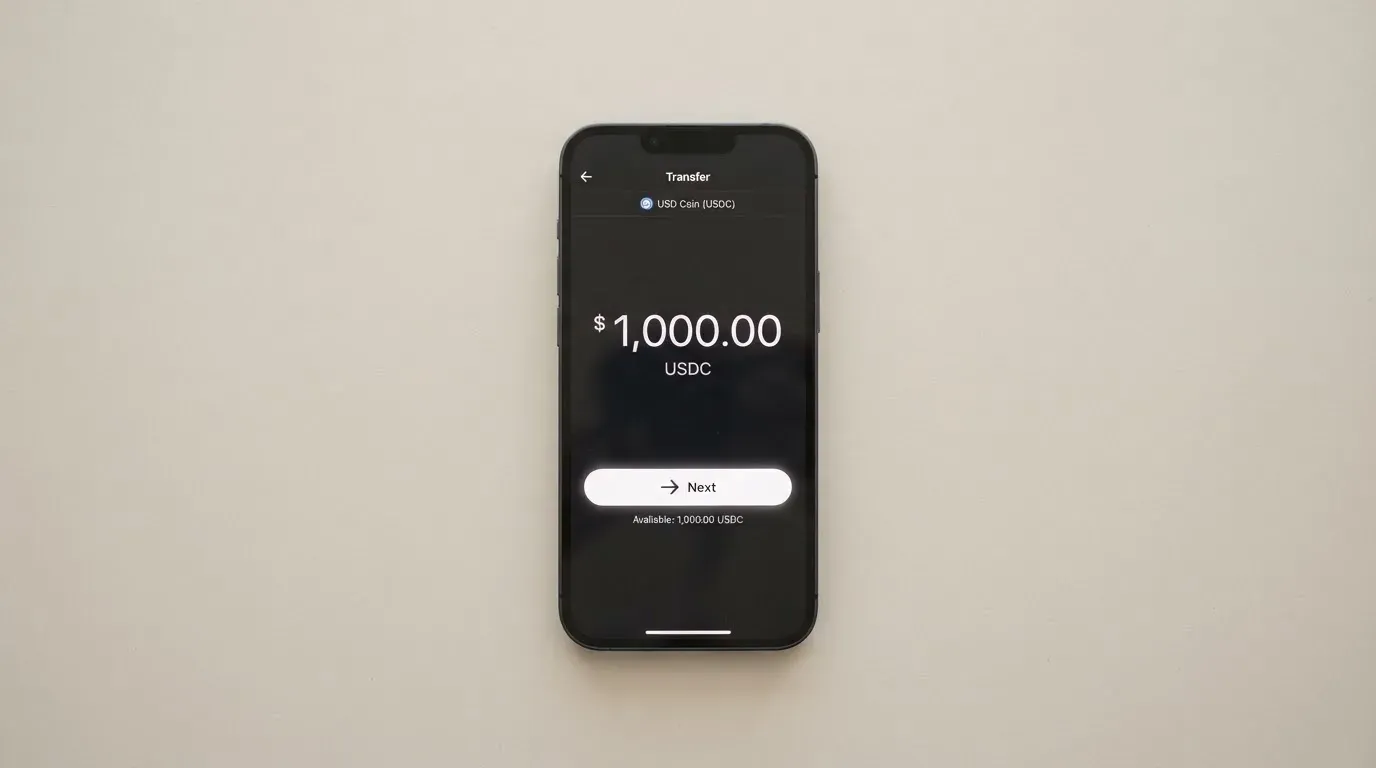
Moon Credit can be purchased with five crypto routes: Bitcoin on its main network, Bitcoin over Lightning, USDT on TRC-20 (Tron), USDC on ERC-20 (Ethereum), and ETH. There is no fiat top-up option in the public terms, and there is no stated deposit fee. The blockchain network fee (gas on Ethereum, bandwidth on Tron, Lightning routing fees) is charged by the network itself, not by Moon, and the size of that fee is set by the network at the time of the transfer.
For the Moon 1X single-load card, the minimum load is $5 and the maximum is $1,000 per card (unofficial reporting); that load counts toward the $4,000 monthly account maximum. There is no stated minimum or maximum for a Moon Credit top-up, only the daily $10,000 and monthly $30,000 purchase limits.
A few practical warnings from the general category, since Moon’s own terms do not spell these out. First, ERC-20 transfers require ETH in the sending wallet to pay gas; a wallet that holds only USDT cannot send. Second, sending USDT to a Tron address when the card expects Ethereum, or USDC to a Tron address when Circle stopped supporting USDC on Tron in February 2024, can mean the funds are lost. Third, blockchain transfers are irreversible, so a typo in a deposit address is not recoverable by support.
If you want to take money back off Moon, the route is a refund paid in Bitcoin, minus network and partner fees. There is no stated fiat withdrawal, and no stated procedure for closing the account. Any balance left when the card expires is converted to a fee rather than paid out.
Paying with Moon every day
The card is virtual and ready to spend the moment it is funded. That part works. What does not work yet, according to the same unofficial reporting, is the mobile-wallet stack: Apple Pay, Google Pay, and Samsung Pay are described as “on the way” but not currently supported. If contactless phone payments are a major part of how you pay, Moon is not ready for that today.
ATM access is not detailed in the public terms. The card is Visa-branded, so where ATMs accept Visa, the network will route the request, but Moon’s own ATM fee (if any) and any limits are not published. Treat cash withdrawal as an unstated feature.
Online acceptance is the strength. Anywhere a Visa is taken, the virtual card can be used. That includes most US merchants, which is the target market for the Moon 1X single-load product. The merchant may apply Address Verification Service checks, and foreign-issued Visa cards can fail AVS in the US, Canada, and the UK, but Moon’s terms do not flag this as a known issue.
Blocked merchants exist but are not enumerated. The general category point that an issuer can choose to block merchant category codes applies: gambling (MCC 7995) is the most commonly blocked code, and other high-risk categories may be on Moon’s list too. If you need the card for a specific merchant type and the public terms do not name it, you have to test it.
Rewards, cashback, or interest on the stored balance are not stated. Moon is positioned as a payment card, not as a rewards card, so the absence of a programme is consistent with the pitch.
App features (instant freeze, spending caps, detailed transaction history) are also not stated. The Trustpilot reviews suggest the app exists, but no published feature list was available at the time of writing.
What can go wrong
The biggest risks are not about fees; they are about reliability.
The legal and issuer structure is not transparent. The brand is “Moon” or “Pay with Moon,” and the entity in the footer is “Moon LLC.” The legal entity, registration country, and the bank or e-money institution that actually issues the Visa card under licence are not named on the public pages. That means the regulatory regime that protects your funds, who has to safeguard them, and what happens if Moon stops operating is not visible from the outside. The terms describe Moon as “not a custodial service,” which puts the burden of key management on you for any crypto in transit, but does not address what happens to the fiat balance on the card if the issuer or programme manager goes away.
User reviews cluster around several themes. On Trustpilot, the score is 2.5 out of 5 across 276 reviews (read 21 October 2026), and 44% of those reviews are one star. The recurring complaints are:
- Frozen or restricted accounts with funds withheld, reported across January to August 2026. Reviewers describe being told their account is under review, then waiting weeks for a response.
- Refunds delayed or tied to KYC, reported from December 2025 through September 2026. Several reviewers say they completed ID verification only to have the next step be another document request.
- Outages and cards cancelled, including a reported platform offline period from 3 to 6 December 2025, and another in January 2026. No official incident notice was found.
- Unresponsive support, with tickets going unanswered for weeks or months, from November 2025 through May 2026.
These are user reports, not adjudicated findings, but the volume and consistency of the themes is what drags the reliability score down to 2/10.
There are no published support channels or hours. Reaching a human is described as inconsistent. If something goes wrong with a payment, a refund, or a frozen account, the practical remedy seems to be a support ticket and patience.
The unused-balance-at-expiry clause is a small but real risk. Money you load and do not spend within the card’s life is converted to a fee rather than returned. If you load a large balance in advance, plan to spend it before the card expires.
Finally, because Moon is “not a custodial service,” your crypto sits in your own wallet until you send it to Moon. That is good for control, but it also means you alone bear the consequences of a clipboard-hijack (malware that swaps copied wallet addresses), a phishing site, or a lost seed phrase. The card side does not add a safety net; it adds a payment rail.
What to take instead
If Moon’s gaps put you off, the same corner of the market has a few other options. They differ in cost, geography, and how much they tell you about who is behind the card.
| Card | Score | What it is | Why you might pick it |
|---|---|---|---|
| CardFlow | 4.9 / 10 | A virtual USD Mastercard aimed at Nigeria and global users; created in minutes. | Free card creation, funds via BTC, USDT, ETH or Naira bank transfer. |
| HyperCard | 4.7 / 10 | A prepaid card with USD or EUR balance; App Store says accepted in “more than 176 countries.” | Multi-currency balance, crypto top-up in-app. |
| Card.fi | 6.6 / 10 | A virtual and physical card programme (Classic, Premium, metal) shipping to “200+ countries.” | Cashback on spending, multi-network crypto top-ups across 32 coins. |
CardFlow is the closest comparison in spirit: a virtual card you fund from crypto, aimed at users who may not have easy access to banking. Its score is lower than Moon’s because the cost data and the country story are thinner. If you are in Nigeria or sending money there, it is worth a look.
HyperCard is broader geographically by acceptance (176 countries), but the cost structure is not stated on the pages reviewed, and the issuer details are thin. It is a reasonable plan B if Moon does not serve your country.
Card.fi is the strongest alternative on this list. It publishes more about who runs the programme, ships to a wide range of countries, and offers cashback on spending. The trade-off is the upfront cost (Virtual Classic $49, Virtual Premium $249) and the higher FX fee on the Classic tier. If you want a card with a clearer institutional story and you are willing to pay for it, Card.fi is the more defensible choice.
Who I would recommend Moon to
Moon is a reasonable pick in a narrow set of circumstances.
If you already hold BTC, USDT, USDC, or ETH, you want to spend small to medium amounts online in USD, and you do not need a card in your phone wallet today, Moon’s fee structure is hard to beat. The first Moon X card is free, the 1% transaction fee is competitive, and there is no FX fee. For someone in a country where banking is patchy, that combination is genuinely useful.
If you are planning to load a large balance and leave it sitting, Moon is the wrong tool. The unused-balance-at-expiry clause means idle money can disappear, and the support operation is not built around resolving that kind of problem quickly. For long-term storage, a self-custody wallet is the better answer; for a card, you want a provider with a clearer institutional setup and a track record of paying out balances.
If you have had trouble with regulated financial institutions in the past, Moon’s low-friction signup is appealing, but the trade-off is that KYC, when it arrives, can be heavier and slower than at a bank. Be ready to provide documents if you want to recover a refund or unfreeze an account.
The honest summary is this: Moon is cheap, fast, and broadly available, and it is also lightly documented, lightly staffed, and lightly reviewed. The 5.6 score reflects that balance. If you can absorb a worst case where a refund takes weeks and a support ticket goes nowhere, the everyday price is right. If you cannot, pay more for a card with a clearer story behind it.
Frequently asked questions
What is the Moon card?
Moon is a Visa-branded prepaid card funded from cryptocurrency. You convert BTC, USDT, USDC, or ETH into a Moon Credit balance in USD, and the card draws on that balance when you pay. It comes in two forms: Moon X, which is reloadable, and Moon 1X, a single-load card aimed at US merchants.
How does the Moon card work?
You create an account, top up Moon Credit from crypto at the market rate, and the virtual card is issued instantly. The card spends that USD balance online wherever Visa is accepted. Because Moon describes itself as “not a custodial service,” your crypto stays in your own wallet until you send it to Moon.
Is Moon a bank?
No. Moon is a programme manager that issues cards “under licence from partner financial institutions” with a Visa licence. The issuer bank and the legal entity that runs the programme are not named on the public pages, so it does not behave like a regulated bank for the customer.
Who owns Moon?
The brand is operated by Moon LLC, also referred to as “Pay with Moon.” The registration country, the legal entity behind the brand, and the issuing bank are not published on the pages reviewed, which is unusual for a card programme.
Is the Moon card available in my country?
Unofficial reporting citing Moon’s terms says Moon X is available in “over 130 countries,” but no public list exists. Sanctioned regions are excluded, and the eligibility check happens when you try to fund a card, not before. If the system lets you proceed, you are eligible; if it does not, you are not.
Does the Moon card require KYC?
Signup is light: email, password, and email-based 2FA. There is no published list of identity documents, and the level of KYC you may be asked for later is not stated. Trustpilot reviewers in 2026 report that refunds were tied to later ID verification, so be ready to provide documents if you want your money back.
How do I top up the Moon card?
You buy Moon Credit with Bitcoin (on-chain or Lightning), USDT on Tron, USDC on Ethereum, or ETH. The conversion to USD happens at the current market rate, and the network fee (gas or bandwidth) is charged by the blockchain, not by Moon. There is no fiat top-up option in the public terms.
Can I add the Moon card to Apple Pay or Google Pay?
Unofficial reporting says Apple Pay, Google Pay, and Samsung Pay are “on the way” but not currently supported. Until that changes, the Moon card is for online and any in-person payment that reads a Visa number, not for contactless phone payments.
Is the Moon card safe?
The card side uses standard Visa security, but the broader picture is mixed. Moon is not a custodial service, so your crypto is your responsibility until you send it. The legal and issuer structure is not clearly disclosed, and Trustpilot reviewers report frozen accounts, delayed refunds, and slow support. Treat any balance on the card as funds that may be hard to recover if something goes wrong.
Is the Moon card worth it?
It depends on what you need. For small-to-medium online USD payments funded from crypto, the fees are low and the signup is quick. For long-term stored value, contactless payments, or any situation where you need reliable support, the gaps in the offering and the user reviews suggest looking at alternatives.
Virtual card verdicts – cryptocardverdict
Content created by the «cryptocardverdict» team