
A virtual Visa in Telegram, funded with USDT, but plenty of unknowns
 Available in US
Balance Pay is a payment card you get inside Telegram, fund with Tether (USDT), and spend wherever Visa is accepted, at least in theory. The pitch is simple: no bank account needed, no paperwork beyond the bot’s identity check, and a virtual card in your wallet within minutes. The reality, in late 2026, is more complicated, because the product is still half-built, and the company behind it is unusually quiet about who it is, where it sits, and what it charges.
I went through Balance Pay’s public pages, the Telegram bot itself, and what little third-party material exists. This review is what I found: where the card actually works, where the gaps are, and whether it’s the right tool for you depending on what you need.
Conditions are current as of October 28, 2026.
Verdict
Balance Pay earns 5.7 out of 10. It is not a bad idea, and for a specific kind of user (a Telegram-native crypto holder who wants to spend USDT online without opening a bank account) it does the one job it sets out to do. But the product is incomplete: only a virtual card, no mobile wallet support yet, no published fee schedule, no named legal entity, and no verifiable list of which countries can sign up. The rest of this review unpacks each of those gaps, but the headline is that you are buying a working but unproven tool from a company that is still telling you the fine print will come later.
The score breaks down as follows.
| Criterion | Mark | Why |
|---|---|---|
| Who can get it | 7 / 10 | Country list not published; interface in English and Russian |
| Cost | 6 / 10 | No monthly fee, free sign-up; conversion and FX fees not published; possible one-time virtual card fee per Russian FAQ |
| Top-up options | 8 / 10 | USDT on TRON (TRC-20), Polygon and Base; other networks “coming soon” |
| Reliability and complaints | 4 / 10 | Fintech, not a bank; no legal entity, registration country or issuer named; tariffs and legal docs promised “later”; no reviews found |
| Everyday use | 3 / 10 | Virtual Visa only; Apple Pay and Google Pay “coming soon”; metal and plastic cards planned; ATM access not stated |
| Total | 5.7 / 10 |
The card suits Telegram users who top up a virtual Visa with USDT and want to spend crypto online without a bank account. It does not suit anyone who needs a physical card today, who lives in a country with strict card-issuer rules, who wants to know the exact fees before they spend, or who needs recourse if something goes wrong.
Will they give you the card
Balance Pay does not publish a list of supported countries, a list of excluded countries, or any restrictions on citizenship or residency. That is the first thing to know, and it matters more than it sounds: if you cannot confirm you are eligible before you sign up, you may pass the identity check, fund the card, and then find your account frozen because your country is not on whatever internal list the company keeps.
What is published is more limited. The interface is available in English and Russian, which is a hint about the audience the company is targeting, but a hint is not a policy. There is no statement of minimum age, no mention of proof-of-address requirements, and no description of what “passing KYC” actually involves beyond the bot’s own description of “a few minutes.”
For the reader in general, that means three things. First, your eligibility depends on rules you cannot read. Second, the bot is the only place to find out, because there is no human-readable “supported countries” page. Third, because the company has not named its legal entity or its issuing bank, the regulatory framework you are operating under is also unknown, which makes it hard to know what rights you have if your application is rejected or your account is later closed.
If you need a card where the country rules are spelled out before you start, Balance Pay is not it. The comparison section below lists alternatives that publish their country lists, and you may want to look there first.
How to get it
The signup path is short, because most of it happens inside Telegram. You open the bot, @balance_bot, complete an identity check “in a few minutes,” top up the card, and the virtual Visa appears in the bot. There is no separate mobile app to download, no web form to fill in, and no waiting for a card in the post.
What the bot does not tell you is what the identity check actually requires. The company has not published the list of accepted documents, the KYC provider it uses, or the threshold at which additional documents (proof of address, source of funds) get requested. The card is issued instantly in the bot once the check passes, which is faster than most bank-issued cards, but that speed is partly because the company is not telling you what it is verifying.
The card you get today is a virtual Visa. Physical cards, including metal and plastic options, are planned; the company has hinted at Visa Signature perks “once physical cards launch,” but the launch date is not on the public pages. The currency the card settles in has not been published either, which matters because it determines whether you pay a foreign-exchange fee every time you buy something in a currency other than the card’s base.
If you are comfortable signing up through a Telegram bot, with no app to fall back on and no published documentation of what the KYC step does, the friction is genuinely low. If you are the kind of person who wants to read the privacy policy, the data-retention rules, and the regulator’s name before you upload an ID, Balance Pay does not give you that option yet. The company says “full tariffs and legal documents will appear later,” which is a fair description of the product’s current state.
What it really costs: fees, limits, and the small print that isn’t there
The honest answer is that Balance Pay has not published a fee schedule. The company’s public pages say “no monthly fee” and that registration is free, and the Russian-language FAQ mentions a possible one-time fee for issuing a virtual card, without naming the amount. Beyond that, the numbers are not on the page.
What the costs table shows is the gap.
| Fee or limit | What Balance Pay says |
|---|---|
| Card issuance | Free for registration; possible one-time virtual card fee (amount not stated) |
| Monthly fee | None |
| Conversion fee (crypto to fiat) | Not stated |
| Foreign-exchange (FX) fee | Not stated |
| ATM withdrawal | Not stated |
| Daily spending limit | Mentioned but no value given |
| Monthly spending limit | Not stated |
| Tiers (Standard, VIP, etc.) | Not published |
| Multi-currency spend | Listed as a feature, no details |
Three everyday situations make the missing numbers feel real. The first is buying a subscription in euros with a card denominated in US dollars: Balance Pay’s FX margin is not stated, so you cannot budget for it. The second is topping up with USDT on Polygon and then spending in a currency that requires a second conversion: each conversion is a place a fee can hide, and here both are hidden. The third is withdrawing cash from an ATM, which crypto cards sometimes allow at a flat fee plus a percentage, and which Balance Pay has not described at all.
Until the fee schedule is published, every transaction is a small experiment. If you only need to spend small amounts online, that may be acceptable. If you are planning to put meaningful funds on the card, the absence of a published fee is a real risk.
Top up: how to fund the card
Funding is the one part of Balance Pay that is genuinely well-developed. The card accepts USDT on three networks: TRON (TRC-20), Polygon and Base. The company says more networks are “coming soon,” but it has not said which ones. USDT is the only token listed.
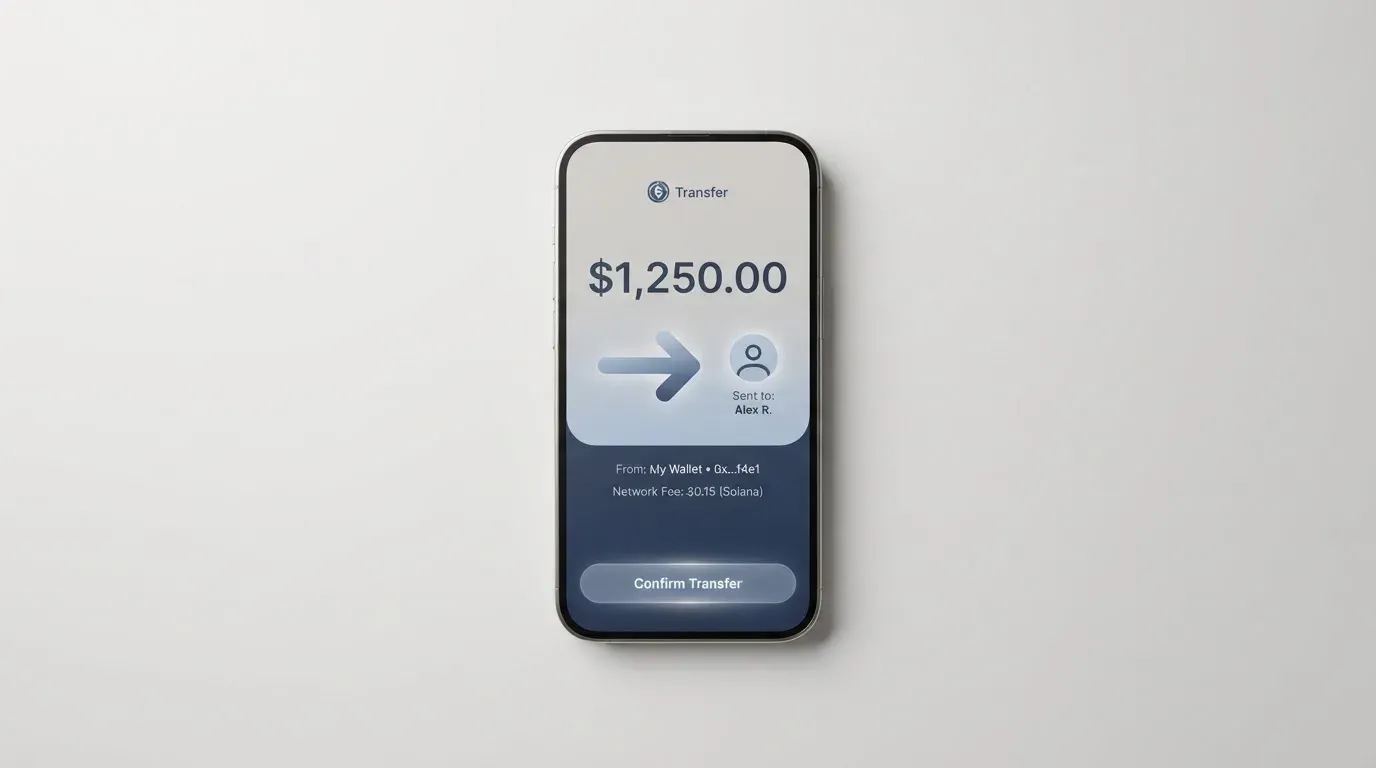
The top-up path itself is conventional for a crypto card: you send USDT from your own wallet or exchange to a deposit address the bot provides, on one of the three supported networks, and the balance appears in the card once the transfer confirms. There are no top-up fees listed on the public pages, but the network fee (gas, or in TRON’s case bandwidth and energy) is paid to the blockchain, not to Balance Pay, and that cost is on you. The minimum top-up amount, and which side pays the network fee, are not stated.
If you are outside Europe, Balance Pay works with local fiat on-ramp partners, so you can in principle buy crypto and load the card without an exchange account. For European cards, the on-ramp partner named is Mercuryo, which is a familiar third-party processor. Whether Mercuryo is available in your country, what its fees are, and what its KYC requirements look like, depends on Mercuryo, not on Balance Pay, and that is another moving part to check.
One thing to be careful about, because it bites people: stablecoin transfers are irreversible, and a deposit sent on a network the card does not support, or to the wrong address, can be lost. The bot’s deposit screen tells you which network to use, but it is worth double-checking the address and network before you send, especially if you are copying the address from a web page into a wallet on a different chain.
You can also withdraw: send USDT from your Balance Pay balance to an external wallet, or use partner routes to a bank account. The fees for those withdrawals, and the minimum balance you need to close the account, are not stated.
Paying with it every day
Right now, paying with Balance Pay means paying online, because there is no physical card and no mobile wallet support. The bot is the only place the card lives. Apple Pay and Google Pay are listed as “coming soon,” but the launch date is not on the public pages, so you cannot plan around it.
The card uses the standard Visa rails, so where it works depends on the merchant. Online shops that accept Visa will generally accept a Balance Pay virtual card, subject to the usual hurdles: some merchants decline prepaid cards, some decline foreign-issued BINs, and some decline cards that fail Address Verification Service (AVS) checks, which is more common for cards issued outside the country of the merchant. Balance Pay has not published the issuer country, so you do not know in advance whether your card will look “foreign” to a given shop.
There is a list of restricted merchant categories (MCCs) the card blocks, but the company has not published the list. Gambling (MCC 7995) is the most commonly blocked category across crypto cards, but without the full list you cannot know what else is excluded. If you intend to use the card for a specific kind of purchase, that is a question to ask support before you load it.
On the rewards side, Balance Pay offers bonus points or stablecoin cashback for each referred friend who activates a card, but the amounts are not stated. There is no published everyday cashback rate, no sign-up bonus, and no tier system, so the card is closer to a payment tool than a rewards product.
The bot does include payment controls: you can freeze and unfreeze the card, toggle security settings, and receive real-time alerts on transactions. Those are the basics, and they are the right basics, but they do not make up for the missing pieces. The dispute process, the procedure for a chargeback, the procedure if a merchant double-charges you, and the time limits for raising a complaint, are all not stated.
What can go wrong
There are three layers of risk to think about, and the first is the most uncomfortable.
The first layer is the company itself. Balance Pay describes itself as a fintech company, not a bank, and it has not published its legal entity name, its country of registration, or the name of the issuing bank behind the Visa programme. That is unusual. Most crypto card providers name the licensed e-money institution or bank that actually issues the card, because that is the entity you are relying on if the programme shuts down or your funds need to be returned. Without that name, you cannot check the regulator’s register, you cannot confirm the licence is current, and you cannot tell whether the issuer is in a jurisdiction that protects your funds if the company fails.
The second layer is the regulatory status. The company says “full tariffs and legal documents will appear later,” which is a polite way of saying the product is not fully compliant with the kind of disclosure that licensed card issuers are required to provide. In the European Union, for example, the Markets in Crypto-Assets regulation (MiCA) has been in force since 2023, with stablecoin rules applied from June 2024 and crypto-asset service provider rules from December 2024, and licensed providers are required to publish white papers, customer disclosures, and segregation arrangements. Balance Pay’s pages do not show a MiCA registration, a CASP register entry, or a national regulator’s licence number, and the company has not said which framework it operates under. That is not a judgement, but it is information you cannot verify.
The third layer is operational. The product is still in launch mode: only a virtual card, no physical card, no mobile wallet, fees unpublished, and no verifiable user reviews. A search for Balance Pay or balance.money reviews turns up very little, which is consistent with a product that is genuinely new, but it also means there is no track record to lean on. The few things that do exist are official communications; there is no Trustpilot page, and the company’s support contact is an email address ([email protected]) plus a “contact support” shortcut in the bot. That is thin for a product that holds your money.
There are also the general risks that come with any crypto card, and they apply here too. A custodial card holds your balance with the provider, so if the provider fails, your funds are at risk alongside everyone else’s. Even with a card that converts at the moment of payment, the time between the conversion and the merchant settlement is a window in which the provider is holding the funds. Self-custody-linked cards reduce that window but also put the burden of key management on you, and Balance Pay’s model is custodial: you fund the card, the company holds the balance, the card spends from it.
The good news, to the extent there is good news, is that there are no published security incidents and no public complaints tied to Balance Pay or balance.money as of the date of this review. That is a low bar, but it is the bar that exists.
What to take instead
Balance Pay’s score of 5.7 puts it in the middle of the crypto card market. The alternatives below are the closest comparables I could find, all Telegram-based virtual cards funded with crypto, and the differences come down to how much each one tells you about itself. I have not used any of these cards; the scores are the same scoring framework applied to publicly stated facts.
Azul Card (5.3 / 10)
Azul Card is a Telegram-based virtual Mastercard funded with crypto, with a published country list. The restrictions are explicit: the card cannot be used in Russia, Belarus, North Korea, Iran, Syria, Cuba, Sudan, Venezuela, Ukraine, and the Crimea, Donetsk, Luhansk, Zaporizhzhia and Kherson regions, and the restrictions apply regardless of the user’s nationality. That is unusual, and worth knowing if any of those places are in your life.
The card has a one-time creation fee of $20, refunded after $2,000 in spending, plus a $5 monthly maintenance fee. Crypto top-ups carry a 4% fee plus $0.25 per transaction. The foreign-exchange fee is not stated. The card balance is held in US dollars, and the card works anywhere Mastercard is accepted. There is no physical card, though one may come later. On the rewards side, there is no cashback, but the referral programme pays up to 40% of Azul’s fees from every transaction your referrals make.
Azul is the most transparent of the three alternatives on country rules and on fees, but the monthly fee and the top-up percentage add up if you do not spend heavily.
Telecard (6.1 / 10)
Telecard scores higher than Balance Pay, mostly because it publishes more of the numbers a careful user wants to know. The site says the card works in over 150 countries wherever Mastercard is accepted, with an identity check available in most major regions, and the terms only bar users blocked or sanctioned by the United States Government (including OFAC). That is broader than Balance Pay’s silence, even if it is not a complete list.
The card is a virtual Mastercard, instant, with no physical or metal option yet. Card currency is US dollars, and a 1.5% conversion fee applies to non-USD payments. A gas fee of 0.5 USDT per successful card transaction is added on top, and FX and cross-border fees of up to 3% each may apply. The basic plan is free to sign up with no monthly fee, but a $99 minimum deposit is required to activate (the company says this is not a fee and the funds stay in the wallet). The VIP plan is $49 to set up and $19 per month, with reissuance at $15.
Telecard accepts USDT on TRON (TRC-20) or Ethereum (ERC-20), USDC on Ethereum (ERC-20), and the main page also lists ETH and TRX. Polygon is not supported, which is a real difference from Balance Pay if you hold USDT on Polygon. The referral programme pays Fiorini points for activated friends and cashback when friends spend, but the cashback rate is not specified.
OnCards (4.6 / 10)
OnCards is the lowest-scoring of the three, mainly because it publishes the least. The site describes a virtual Mastercard or Visa in Telegram (the network is not fixed in the pages I read), funded with USDT on BEP-20 (BNB Smart Chain). Bank transfers are not accepted. There is no country list, no fee schedule, and no rewards programme mentioned.
If transparency matters to you, OnCards is the opposite of what you want. If you want a card that does one thing and you can confirm the funding network yourself, it is at least clear about that.
| Card | Score | Card type | Funded with | Monthly fee | Notable fees |
|---|---|---|---|---|---|
| Balance Pay | 5.7 / 10 | Virtual Visa | USDT on TRON, Polygon, Base | None | Not stated |
| Azul Card | 5.3 / 10 | Virtual Mastercard | Crypto (networks not named in pages read) | $5 | Top-up 4% + $0.25 per transaction |
| Telecard | 6.1 / 10 | Virtual Mastercard | USDT on TRON/ERC-20, USDC on ERC-20, ETH, TRX | None (basic), $19 (VIP) | 1.5% currency conversion; 0.5 USDT gas per transaction |
| OnCards | 4.6 / 10 | Virtual Mastercard/Visa | USDT BEP-20 | Not stated | Not stated |
Who I would recommend it to
Balance Pay is a working product for a narrow user. If you are a Telegram-native user who holds USDT on TRON, Polygon or Base, who wants to spend that USDT online without opening a bank account, who is comfortable with a virtual-only card, and who can absorb a small unknown fee on every transaction, Balance Pay is a reasonable tool. The bot flow is fast, the top-up path is straightforward, and the company is reachable by email and through the bot.
If any of those conditions do not hold, look elsewhere. If you need a physical card, wait for the launch and check the fee schedule when it appears. If you live in a country where card issuance is heavily regulated, look for a card that publishes its supported country list. If you need to know the FX margin before you spend, Balance Pay will not tell you. If you need the comfort of a named issuer, a regulator’s licence number, and a published dispute process, wait until those are public.
The honest summary is this: Balance Pay is a 5.7 because the part that works (USDT top-up on three networks, instant virtual card, real-time alerts) is genuinely useful, and the part that does not yet work (fees, country rules, physical card, mobile wallet, named issuer) is exactly the part you would want before you put meaningful funds on the card. The product is half-built, and the review is half-positive for the same reason.
Frequently asked questions
What is Balance Pay card?
Balance Pay is a payment card you get inside the Telegram app, from the bot @balance_bot, and fund with USDT on the TRON, Polygon or Base networks. The card you can get today is a virtual Visa, with metal and plastic physical cards planned for a later launch. It is aimed at people who want to spend stablecoins online without opening a bank account.
How does Balance Pay card work?
You complete an identity check in the Telegram bot, transfer USDT to the deposit address the bot provides, and the card balance is credited. When you pay, the balance is converted to the merchant’s currency and the payment goes through the Visa network. The company has not published the conversion rate, the foreign-exchange margin, or the fee for any of these steps.
Is Balance Pay a bank?
No. The company describes itself as a fintech company, not a bank, and it has not published the name of the licensed bank or e-money institution that issues the card on the Visa network. That means the regulatory framework the card operates under is not publicly verifiable, and the safeguards that apply to bank-issued cards (deposit insurance, named regulator) are not confirmed.
Who owns Balance Pay?
The company has not published the name of its legal entity, its country of registration, or the identity of its owners or directors. The website is balance.money, the support email is [email protected], and the public-facing brand is Balance Pay. Beyond that, the ownership structure is not on the public pages.
Is Balance Pay card available in my country?
The company has not published a list of supported countries or excluded countries, and the only place to find out is to start the identity check in the Telegram bot. If your country is not supported, the bot will tell you at that stage. There is no way to confirm eligibility before you upload an ID, which is a real limitation if you are cautious about sharing documents.
How do I get a Balance Pay card?
Open the Telegram bot @balance_bot, complete the identity check, send USDT to the deposit address on one of the three supported networks, and the virtual card is issued in the bot. The whole flow takes “a few minutes” for the identity check, plus the time for the USDT transfer to confirm on the blockchain.
Does Balance Pay card require KYC?
Yes, the identity check is part of the signup flow and happens inside the bot. The company has not published which documents are accepted, which KYC provider it uses, or the criteria for passing or failing the check, so the level of scrutiny is not transparent before you start.
How do I top up Balance Pay card?
Send USDT from your own wallet or exchange to the deposit address the bot gives you, on TRON (TRC-20), Polygon, or Base. The balance is credited once the transfer confirms on the network. The network fee (gas, or bandwidth and energy on TRON) is paid by you, and the minimum top-up amount is not stated.
How do I add Balance Pay card to Apple Wallet or Google Pay?
You cannot yet. Both Apple Pay and Google Pay are listed as “coming soon” on the company’s public pages, and the launch date is not stated. Today the card lives only in the Telegram bot, and online purchases are made by entering the card details manually.
Is Balance Pay card safe?
The card uses standard Visa security, the bot supports card freeze and unfreeze, and real-time payment alerts are available. What is not publicly stated is the custody model for your balance, the safeguarding arrangements for customer funds, the dispute process, and the issuing bank’s identity, all of which would normally be published by a regulated card programme. Treat the card as a working tool, not as a place to park more funds than you can afford to lose access to.
Virtual card verdicts – cryptocardverdict
Content created by the «cryptocardverdict» team