
A close look at WooCard — the Telegram-only Visa that wants to be your everyday spending card
 Available in US
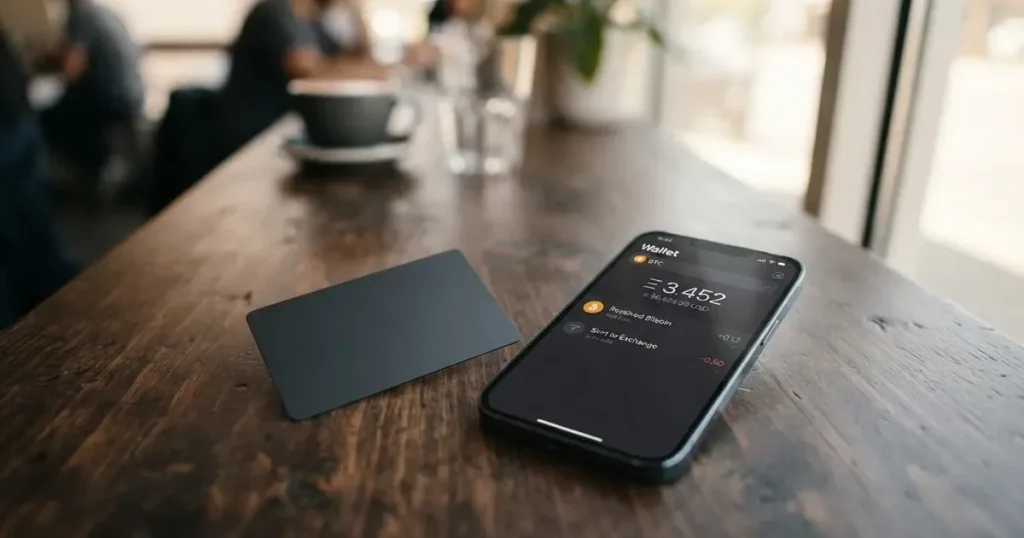
WooCard is one of a small group of payment cards you can only get inside Telegram. You open a chat with a bot, hand over a Telegram account and an email, and a virtual Visa is issued to you within minutes, denominated in either US dollars or euros. The pitch is simplicity: a card you can top up with USDT or USDC, link to Apple Pay or Google Pay on a phone that supports it, and use anywhere Visa is taken. There is no app to download, no separate onboarding form, and no physical card to wait for on the Standard tier.
The reality behind the pitch is more uneven. The “WooCard” name belongs to a brand and referral partner, not to the institution that actually issues the card or holds your money, and neither that institution nor any licence is named on the public site. The card-creation fees are modest but the top-up fee is high, and it is charged on the dollar value of every load. Rewards, dispute handling, fees for ATM use, daily and monthly limits, fiat on-ramps, even the basic question of whether there is a physical card — most of these are not stated on the official pages. The card is live, you can sign up today, and a number of people appear to be using it. But the gap between what is on the site and what a careful buyer would want to know is wide enough that I want to walk you through it before you sign up.
The conditions described in this review are current as of October 28, 2026.
Verdict
My overall score for WooCard is 5.6 out of 10. It is a working product that delivers the core promise — a virtual Visa you can fund with stablecoins and spend through a mobile wallet — but the brand is unusually thin, the pricing is loaded onto top-ups rather than monthly fees, and a number of things a cardholder would normally expect to read in plain language on the issuer’s site are simply not there. The card makes sense for a narrow reader: someone already living inside Telegram who wants a quick virtual Visa in USD or EUR and is comfortable with the gaps. For almost everyone else, the same idea can be done by a card with a more visible issuer, clearer limits and a published schedule of fees.
How the score breaks down
| Criterion | Mark | Why it lands there |
|---|---|---|
| Who can get it | 7 / 10 | Sign-up only needs a Telegram account and an email; on the other hand the site does not list the countries where cards are actually issued, and 44 jurisdictions including Russia and Belarus are blocked. |
| Cost | 4 / 10 | The headline monthly fee is zero, but every top-up carries 2.8% plus a possible 1 USDT fixed fee, a creation fee of 9 USDT (Standard) or 85 USDT (VIP) is charged up front, and pulling money back out costs 3 USDT. |
| Top-up options | 8 / 10 | USDT, USDC, TRON, ETH and BTC are named, the wallet supports 18+ coins across 4 networks, and other coins can be swapped to stablecoins in-app. |
| Reliability and complaints | 3 / 10 | WooCard is described as a brand and referral partner; the legal entity behind the card, the issuer, and any licences are not named. I could not find any user reviews of substance. |
| Everyday use | 7 / 10 | Virtual Visa with Apple Pay and Google Pay on eligible cards, ATM access on the VIP tier only, currency conversion at official Visa rates. A physical card is reported by third-party sites but not on the official pages. |
The full reasoning for each row is in the section that deals with that topic. The short version: where WooCard is concrete (fees, supported coins, blocked countries) it earns its marks, and where it is silent (issuer, limits, dispute process, ATM fees) it loses them.
If you are weighing this card, the most useful next step is to read the Who will they give you the card and What can go wrong sections, because those are the two places where a Telegram-only product tends to disappoint.
Who will they give you the card
WooCard does not publish a list of countries where it issues cards. The site says only that the card is “not available in all jurisdictions” and that eligibility is decided by the unnamed provider that runs the programme. The public pages do, however, publish a blocked-list of 44 places, and on that list you will find Russia and Belarus alongside a long roll of countries subject to broad sanctions or war. The blocked list also includes the partially recognised states of Abkhazia, Nagorno-Karabakh, Northern Cyprus, the Sahrawi Arab Democratic Republic and Somaliland, and the disputed regions sometimes listed separately as South Ossetia. The full blocked list reads:
- Afghanistan
- Albania
- Angola
- Belarus
- Bosnia and Herzegovina
- Myanmar
- Burundi
- Central African Republic
- Cuba
- North Korea
- DR Congo
- Ethiopia
- Eritrea
- Guinea
- Guinea-Bissau
- Haiti
- Iran
- Iraq
- Ivory Coast
- Kosovo
- Lebanon
- Liberia
- Libya
- Macedonia
- Mali
- Nicaragua
- Pakistan
- Russia
- Somalia
- South Sudan
- Sudan
- Syria
- Serbia
- Sierra Leone
- Venezuela
- Yemen
- Zimbabwe
- Abkhazia
- Nagorno-Karabakh
- Northern Cyprus
- Sahrawi Arab Democratic Republic
- Somaliland
- South Ossetia
There are two things to notice in that list. The first is that the rules are stated as country rules, not as citizenship rules. The site does not say whether a Russian or Belarusian citizen living in, say, the United Arab Emirates is treated as a Russian or Belarusian applicant. In practice, regulated card programmes screen by citizenship and country of birth as well as by residence, because sanctions and issuer risk policy routinely apply to all three; if that matters to you, ask the support team before you sign up.
The second is that the list is wider than just the usual sanctions roll-call. Serbia, Albania, Bosnia and Herzegovina, North Macedonia, Kosovo, Lebanon, Nicaragua, Pakistan, Angola and several others are not, as a rule, on the same sanctions list as Iran or North Korea. That tells you something about how the provider is sizing its own risk, and it tells you something about how a “country list” can quietly exclude more readers than the headlines suggest.
For sign-up, the official site requires an active Telegram account and an email address, and says that onboarding and AML checks are carried out by the unnamed provider. The site also says that “simplified due diligence” may apply to low-limit prepaid tiers where the law allows it. The site does not say which documents, if any, you will be asked for; it does not list an age requirement; and it does not explain the difference, if any, between a level-0 sign-up and a higher one. A third-party listing (cryptocards.so, 2026) describes WooCard as “No KYC (level 0)” — no ID, no proof of address, no selfie — and says that only Telegram and email are needed. That is a third-party claim, not a statement from the card itself, and you should treat it as unofficial.
The Telegram-only nature of the product has a practical consequence. If you are in a country where Telegram is blocked, throttled or surveilled, you will struggle to use the card, even if your country is not on the blocked list. If you are not already a Telegram user, the onboarding is asking you to take on a new account and a new platform before you can even see the welcome screen.
How to get it
The path to a card is short, because the product is built to be short. You start a chat with the WooCard Telegram bot, hand over an email, accept the terms, and the system creates a virtual Visa denominated in either USD or EUR. The official site does not name a separate mobile app: the Telegram chat is the app, the card detail screen, the support channel and the freeze-and-OTP console all in one.
Two tiers are on the site:
- Standard — described as “Everyday Use”, no ATM access, 9 USDT to create. USD or EUR.
- VIP — adds ATM withdrawals, 85 USDT to create. USD or EUR.
The site says you can have up to five active cards at a time, and that each is valid for three years from the moment it is issued. Beyond the virtual card, the official pages do not mention a physical card at all, do not mention a Mastercard option, and do not name a delivery service, because nothing is delivered to a postal address on the documented tiers. A third-party listing (cryptocards.so, 2026) again says a physical card is also offered under WooCard, with its fee not stated; that is unofficial and not confirmed by the card’s own site.
A few things to know before you tap through the bot:
- Identity checks are not described. The site says the provider handles onboarding and AML, and that “simplified due diligence” can apply to low-limit prepaid tiers where the law allows it. It does not say what triggers a higher level of check, which documents you may be asked for at that point, or what the limits are on the lower tier. The unofficial claim of “no KYC at all” is a third-party claim, not a published term.
- Age and address rules are not stated. The site does not list a minimum age; the public-facing pages do not require or ask for proof of address.
- The issuer is not named. The site does not name the bank or e-money institution that actually issues the card, the licence it holds, or the regulator that supervises it. WooCard is described as a brand and customer-acquisition partner, not the issuer. If you are the kind of person who reads the small print of who holds your money, there is no small print to read here.
What it really costs
WooCard’s headline monthly fee is zero, and the card-creation fee is small in dollar terms. The cost of using the card, however, sits on the top-up. Every load is charged 2.8%, plus a possible fixed 1 USDT on top, and that charge applies to the dollar value of the load, not to the spend. If you top up a little, spend it, and top up again, the percentage is charged on the same money more than once.
The costs at a glance
| Fee or limit | Amount |
|---|---|
| Card creation (Standard) | 9 USDT |
| Card creation (VIP) | 85 USDT |
| Monthly maintenance | $0 |
| Top-up fee (USD value) | 2.8% plus a possible fixed 1 USDT |
| Crypto swap inside the wallet | 0.1% |
| Purchase fee | $0 |
| Decline fee | $0 |
| Cross-border fee | $0 |
| Currency outside card currency | Official Visa rate; no WooCard markup |
| ATM withdrawal fee | not stated on the official site (Standard has no ATM at all; VIP does) |
| Card balance withdrawal | 3 USDT |
| Daily spend limit | not stated (“subject to current provider terms”) |
| Monthly load capacity | not stated (“subject to current provider terms”) |
| Minimum top-up | not stated on the official site |
A few things in that table deserve a second look.
The 2.8% top-up fee is the single largest number in the cost story. Compare it with the alternatives in the What to take instead section: Azul Card charges 4% on top-up, Telecard charges no advertised deposit fee but 0.5 USDT per transaction. WooCard sits in the middle, but the fee is applied at the moment of loading, not the moment of spending, so a cardholder who reloads frequently will pay it more than once on the same money.
The “$0” on purchases, declines and cross-border payments is genuinely welcome. Many crypto cards charge a percentage on every swipe, and a few charge a flat decline fee that punishes you when the network or merchant rejects a transaction. WooCard does neither. The catch is that the cross-border fee is zero only on top of what Visa itself charges for currency conversion; the official site says the rate is the official Visa rate with no WooCard markup, so what you pay is what Visa charges.
The 3 USDT balance-withdrawal fee matters in one situation only: you load the card, change your mind, and want your money back out of the card balance. That is more expensive than the typical on-chain transfer fee on Tron and is close to a day’s worth of network fees on Ethereum at busy times. Plan your top-ups.
The “not stated” rows are the ones I would pay most attention to. The official site does not give a daily spend limit, a monthly load limit, an ATM fee for VIP withdrawals, or a minimum top-up. A third-party listing (cryptocards.so, 2026) gives unofficial numbers — unlimited daily spend, $200,000 monthly spend, unlimited ATM, $20 minimum top-up, ATM fee free — but that listing is internally inconsistent (it also says Standard has no ATM while listing unlimited ATM withdrawals), and you should not plan around it. For any number that matters to you, ask the support team and keep the answer.
Three everyday payments, what they cost
A coffee for $5 in a country that uses the card’s currency (USD on a USD card):
- $5 purchase fee: $0
- Cross-border fee: $0
- Currency conversion: none
- Top-up fee (already paid on the load that funded this): 14¢ on every $5 loaded, or 2.8% of $5 = 14¢, plus, on the load itself, 2.8% of however much you transferred in and possibly 1 USDT. The fee on the load is the load, not the coffee.
An online subscription paid in a currency other than the card’s base currency, say a euro-priced service on a USD card:
- $40 purchase fee: $0
- Cross-border fee: $0
- Currency conversion: official Visa rate (no WooCard markup), so the cost is whatever Visa charges for the USD/EUR conversion
- Top-up fee: still sitting on the load that funded this subscription
An ATM withdrawal on the VIP tier:
- ATM fee: not stated on the official site (cryptocards.so says free; treat as unofficial)
- Cross-border fee: $0
- Currency conversion: official Visa rate if the ATM dispenses a different currency
- Top-up fee: already paid on the load
The pattern is that WooCard is cheap at the moment of payment and expensive at the moment of loading. If you are the kind of person who loads a large balance once and spends it down, the 2.8% is paid once. If you are the kind of person who tops up $50 every Friday, the 2.8% is paid every Friday.
How to top up WooCard
The funding model is the part of WooCard that is best documented. The site names five coins that the card accepts directly and says the wallet behind the card supports more than eighteen coins across four networks, with in-app swap of eighteen-plus coins into stablecoins.
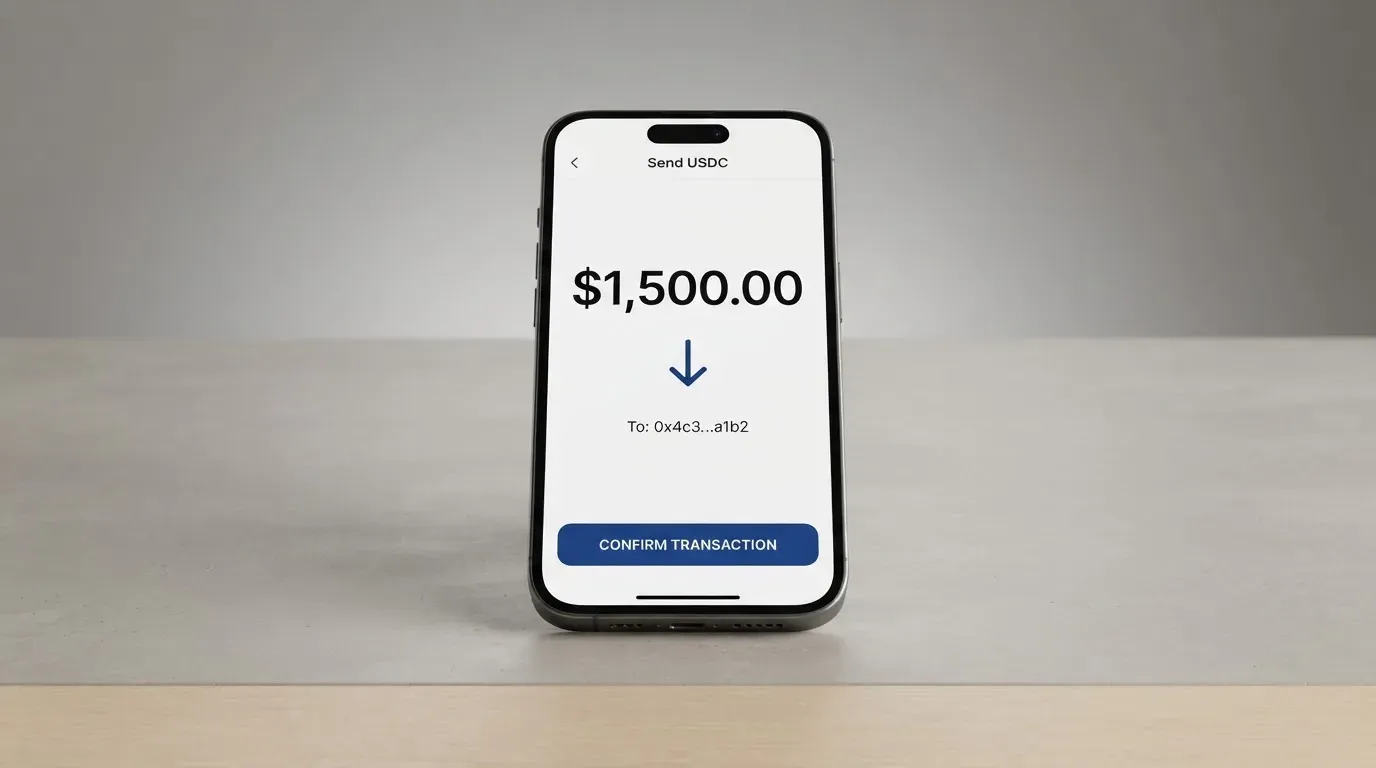
The named coins are:
- USDT — Tether’s dollar stablecoin.
- USDC — Circle’s dollar stablecoin.
- TRON (TRX) — Tron’s native token.
- ETH — Ether, the native asset of Ethereum.
- BTC — Bitcoin.
Beyond those, the wallet supports eighteen-plus coins in four networks and lets you swap eighteen-plus coins into stablecoins before loading. The four networks are not named on the public page, but USDT and USDC are typically available on Ethereum, Tron and a handful of other chains; if you are sending in a token, send it on the chain the wallet tells you, on the address the wallet gives you. Crypto transfers are not reversible, and a deposit sent on a chain the card does not support, or to an address belonging to a different chain, can be lost or stranded in support for an unpredictable amount of time.
The top-up fee is 2.8% on the USD value of the load plus a possible fixed 1 USDT, with the swap inside the wallet charged at 0.1%. On top of that, the underlying blockchain may charge its own network fee (gas on Ethereum and EVM chains, bandwidth/energy on Tron), and that fee is paid to the network, not to WooCard. There is no fiat top-up on the official page; you cannot load the card from a bank transfer or a card payment.
Pulling the balance back out costs 3 USDT. The site does not describe a balance-closure process or say what happens to a tiny remaining balance when you close a card; the answer, again, is to ask support.
A short checklist for the first top-up, the kind of thing a person who has never used a Telegram-only card would want to know:
- Open the bot, accept the card terms, and create a card.
- The bot will give you a deposit address; the address is tied to a specific network, and the network is shown to you.
- Send USDT, USDC, TRON, ETH or BTC, or use the in-app swap on one of the 18+ supported coins to convert into a stablecoin first.
- Wait for the transaction to confirm on the blockchain; the time depends on the network and the fee you paid.
- The card balance updates; the top-up fee is taken at this point, not at the moment of spend.
- Spend or withdraw. The card does not allow overdraft; if the balance is empty, the card declines.
The 2.8% top-up fee is, in practice, the fee you should plan around. It is larger than the typical card-issuance fee for a one-time buy, and it is charged repeatedly if you reload often.
Paying with it every day
WooCard is a virtual Visa, which means the experience of paying with it is the experience of paying with a card number. On a phone that supports it, the card can be tokenised into Apple Pay or Google Pay; the official site says this works “on eligible cards where wallet, region and programme allow”, which is the standard way of saying that the wallet, the bank and the merchant all have to be in agreement. The site is explicit that WooCard does not add its own markup on top of the network conversion rate, so what you pay for currency conversion is what Visa charges.
The site does not list blocked merchant categories. Most cards in this category block at least gambling (MCC 7995), and many block crypto exchanges, dating services, adult content and a small number of other categories, but the official WooCard pages do not tell you which. If a particular category matters to you, ask before you load.
The Standard tier has no ATM access. The VIP tier does. The fee for an ATM withdrawal on the VIP tier is not stated on the official site; a third-party listing (cryptocards.so, 2026) says it is free, which I would not plan around.
There is no cashback programme, no rewards programme and no sign-up bonus described on the official pages. The site does not say there is a referral programme either; if you are being offered a referral code by a friend, the rewards, if any, are not described in public. Some Telegram-only cards pay a small amount of internal “points” for activations and spends; WooCard does not appear to do this, at least not in any way it is willing to publish.
A handful of “not stated” rows matter here. The site does not describe a disputes or chargeback process, beyond the standard 3-D Secure flow. It does not name a regulator or a complaint body. It does not describe a process for lost or stolen virtual cards beyond “freeze inside the Telegram app”. If your card is used without your authorisation, the practical answer is the same as it is for any virtual card: freeze the card, change the PIN, dispute through the issuer — and the issuer is not named.
A few practical patterns to expect:
- Online checkout. The card behaves like a Visa. Some merchants decline prepaid cards or foreign-issued BINs; that is a property of the merchant, the BIN and the network, not of WooCard. If a checkout is rejected, the hold on the funds can stay for up to a week.
- Mobile wallet. Apple Pay and Google Pay tokenise the card, so the merchant never sees the underlying card number. That helps with cards whose BIN otherwise gets flagged.
- Subscriptions. WooCard does not describe a subscription manager in its documentation. Cancellations and disputes go through the merchant and, if needed, through WooCard’s support, with the usual caveat that the dispute process is not described in public.
- Declines. The site says decline fees are $0, but a declined transaction can still leave a hold on the card balance for several days.
What can go wrong
The biggest risk on WooCard is not a single feature, it is the shape of the company. The public site describes WooCard as “a brand, marketing, and customer-acquisition partner and affiliate referral service”, and it does not name the legal entity behind the card, the issuer, the regulator or the licence. The user-funds statement is plain: WooCard does not hold customer funds, the provider does. That is reassuring in the sense that WooCard cannot lose your money in its own bankruptcy, and it is worrying in the sense that you do not know who you are trusting.
I went looking for user reviews. I did not find a Trustpilot page for this card, I did not find a Reddit thread with sustained user discussion, and the search “woocard crypto card reviews trustpilot reddit” returned either unrelated businesses called “WooCard” or listings marked “Not yet rated”. The Telegram support group exists, but its hours, response time and languages (the documentation is in Russian) are not stated. There are no official incidents on the public record.
A few specific things I would look at before you load more than a small test amount:
- No named issuer, no named licence. A payment card has to be issued by a licensed bank or e-money institution. WooCard’s site does not name that institution, the country of its licence or the regulator. In the EU, an authorised Crypto-Asset Service Provider (CASP) appears on ESMA’s interim register; WooCard does not appear on it under the name “WooCard”, because WooCard is the brand, not the issuer. If you cannot find a name, ask for one in writing before you load.
- Customer funds are held by the provider. That means the provider’s solvency, the provider’s safeguarding arrangements and the provider’s regulator are what matter, not WooCard’s.
- 3-D Secure is enabled. Card details and PIN are viewable inside the Telegram app; one-time passcodes for 3-D Secure are also delivered inside the app. If your Telegram account is compromised, the card is compromised.
- Cards can be frozen and terminated by the provider. The site does not say on what grounds, and does not promise a notice period.
- Sanctions screening is applied to crypto funding. This is the right thing to do, and it is also a reason a load from a flagged address can be held or refused.
- Terms of Use became effective on 1 October 2026 and were last revised on 20 October 2026. The price list on the site was checked on 16 September 2026. Terms can change, and the way you hear about a change is through the Telegram bot.
- No documented dispute or chargeback process. If a merchant charges you for goods you do not receive, the path from “I want my money back” to a refund is not described in public. That does not mean the path does not exist; it means the path is the support chat.
For a reader who is used to a bank-issued debit card, the comparison is uneven. A bank card comes with a regulator you can name, a complaints body you can write to, and a deposit guarantee (or, for an e-money institution, segregated safeguarding) you can read about. A WooCard card comes with a Telegram bot and a support channel whose hours and languages are not stated. The card can be cheap and useful for a small, defined use; it is harder to recommend as your only payment card.
What to take instead
There is no shortage of Telegram-issued crypto cards, and a reader who likes the WooCard idea but wants more transparency has a small set of comparable products to look at. The three I would put on a shortlist are Azul Card, Telecard and OnCards, and the table below puts their stated numbers next to WooCard’s.
| Card | Score | Card type | Top-up | Monthly fee | Card creation | ATM | Where |
|---|---|---|---|---|---|---|---|
| WooCard | 5.6 / 10 | Virtual Visa (USD or EUR) | 2.8% + possible 1 USDT | $0 | 9 USDT (Standard), 85 USDT (VIP) | VIP only | Telegram only; 44 blocked countries including Russia and Belarus |
| Azul Card | 5.3 / 10 | Virtual Mastercard (USD balance) | 4% + $0.25 per transaction | $5 | $20 (refunded after $2,000 of spending) | not stated | Worldwide except Russia, Belarus, North Korea, Iran, Syria, Cuba, Sudan, Venezuela, Ukraine and the Crimea, Donetsk, Luhansk, Zaporizhzhia and Kherson regions |
| Telecard | 6.1 / 10 | Virtual Mastercard (USD) | 0% advertised (0.5 USDT per successful transaction) | $0 on basic plan; $19/month on VIP | $5 (Standard), $49 (VIP) | not stated | Over 150 countries wherever Mastercard is taken; bars users blocked or sanctioned by the US Government including OFAC |
| OnCards | 4.6 / 10 | Virtual (Visa or Mastercard, network not fixed) | USDT BEP20 only | not stated | not stated | not stated | Country list not stated |
A few notes on the table:
- Azul Card is closer to WooCard in shape than the others. It is a Telegram-issued virtual Mastercard, it has a refundable creation fee that effectively becomes free if you spend enough, and its monthly fee is a real $5 rather than $0. The blocked list is narrower than WooCard’s (Albania, for example, is not on Azul’s list) but it explicitly adds Ukraine and the four contested regions, which is a serious restriction for a reader in or from that country.
- Telecard is a virtual Mastercard with a $99 minimum deposit (described as “NOT a fee”, because the money stays in the wallet), a 1.5% non-USD conversion fee, and a 0.5 USDT gas fee per successful card transaction. The basic plan’s monthly fee is $0; the VIP plan is $19/month on top of a $49 setup. The headline “0% deposit” is offset by the per-transaction 0.5 USDT.
- OnCards is the most opaque of the four. The site does not list the supported countries, does not give a fee schedule beyond “no hidden charges”, and accepts only USDT on BEP20 for top-up. It is the lightest product on the shortlist and earns the lowest score.
What the table does not show, and what matters more than any single fee, is who actually issues each card. Telecard is closer to a published programme than the other two; WooCard is the least. If the issuer’s identity is a deciding factor for you, the answer is to ask each Telegram bot for the issuer’s name and licence number, in writing, before you load.
Who I would recommend it to
WooCard is a working product for a small reader. If you are already a Telegram power user, if you want a quick virtual Visa in USD or EUR without uploading identity documents, if you are happy to load the card in stablecoins from a self-custody wallet you already control, and if you do not need an ATM, a physical card or a detailed fee schedule, WooCard is a reasonable tool for the job. The top-up fee is 2.8% plus a possible 1 USDT, the card creation is 9 USDT on the Standard tier, and the card is live today.
I would not recommend WooCard as your only payment card. The brand is a marketing partner, not the issuer; the issuer is not named; the licence is not named; the regulator is not named; the limits are not stated; the ATM fee is not stated; the dispute process is not stated; the rewards programme does not exist on the public site. The card can disappear in a programme shutdown, as happened to FTX’s Visa programme in November 2022 and to WaveCrest’s European Visa programmes in 2018, and the way you would hear about it is through the Telegram bot.
The honest summary is this. WooCard delivers the core promise of a Telegram-only virtual Visa, charges you a real 2.8% on every top-up for the privilege, and asks you to take a lot on trust about the institution behind it. If the gaps do not bother you for a small test amount, try it with $50, not $5,000. If the gaps do bother you, the alternatives in the What to take instead section are not dramatically more expensive and are noticeably more transparent.
Frequently asked questions
What is WooCard?
WooCard is a virtual Visa card you get inside Telegram. You open a chat with the WooCard bot, hand over a Telegram account and an email, and the bot issues a card in either US dollars or euros. The card can be tokenised into Apple Pay or Google Pay on phones that support it, and you load it with stablecoins such as USDT and USDC.
How does WooCard work?
You create a card, the bot gives you a deposit address on a chosen network, you send USDT, USDC, TRON, ETH or BTC to that address, the system credits the dollar value of the deposit to your card balance (less the 2.8% top-up fee and any fixed 1 USDT), and you spend the balance with the card. The card cannot overdraw; if the balance is empty, the transaction is declined.
Is WooCard a bank?
No. WooCard is described on its own site as a brand, marketing and customer-acquisition partner, not the issuer of the card. The institution that issues the card and holds the funds is not named on the public pages.
Who owns WooCard?
The site does not say. There is no legal entity, no registration number and no address on the public pages, and the issuer of the card is not named either.
Is WooCard available in my country?
The site does not publish a list of issuing countries. It does publish a blocked list of 44 jurisdictions, including Russia, Belarus, Serbia, Cuba, Iran, North Korea, Syria, Venezuela and several partially recognised states. If your country is not on the blocked list, the provider still has the right to refuse your application, and citizenship rules are not separately stated.
How do I get a WooCard?
You start a chat with the WooCard Telegram bot, accept the terms, provide an email and create a card. There is no separate mobile app; the Telegram bot is the interface for the card.
Does WooCard require KYC?
The site says the unnamed provider handles onboarding and AML, and that “simplified due diligence” can apply to low-limit prepaid tiers where the law allows it. The site does not list the documents, if any, that may be requested, and does not give a minimum age. A third-party listing (cryptocards.so, 2026) says the sign-up is “no KYC (level 0)”, but that claim is not from the card itself and should be treated as unofficial.
How do I top up WooCard?
The bot gives you a deposit address for one of the supported networks, and you send USDT, USDC, TRON, ETH or BTC to that address. The wallet supports more than eighteen coins across four networks, and you can swap eighteen-plus coins into stablecoins inside the wallet before loading. The top-up fee is 2.8% of the dollar value of the load plus a possible fixed 1 USDT, and the underlying blockchain may also charge a network fee.
Is WooCard free?
There is no monthly maintenance fee, but there is a 9 USDT creation fee on the Standard tier (85 USDT on the VIP tier), a 2.8% top-up fee plus a possible 1 USDT fixed fee on every load, a 0.1% fee on in-wallet crypto swaps, and a 3 USDT fee to withdraw the card balance. There is no cashback or rewards programme on the official site.
How do I add WooCard to Apple Wallet?
The site says Apple Pay and Google Pay work on eligible cards where the wallet, the region and the programme all allow it. The practical path is to open the card detail screen in the Telegram bot, follow the prompt to add the card to the wallet, and complete the issuer’s verification (typically a one-time code or biometric prompt) inside Apple Wallet or Google Wallet.
Virtual card verdicts – cryptocardverdict
Content created by the «cryptocardverdict» team