
A flexible crypto-fiat hybrid card with a useful free tier, weighed down by opaque FX and an uneven track record
 Available in US
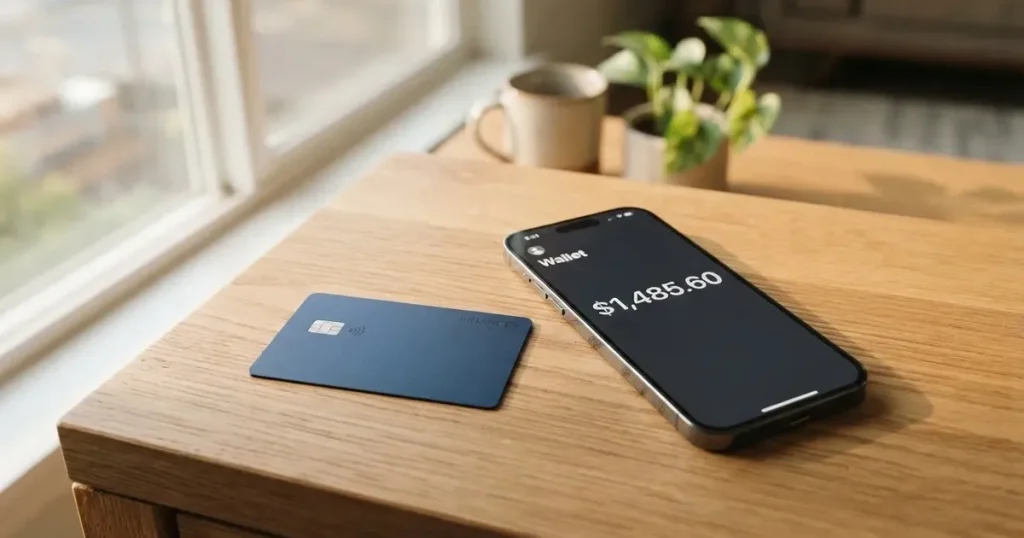
The Wirex card is a Visa or Mastercard debit card linked to a Wirex account that can spend from a fiat balance, a stablecoin balance, or cryptocurrency held in-app. It is one of the older names in the crypto-card space, founded in 2014, and the combination of a free standard tier, multi-currency account, and an in-app exchange for more than 200 cryptocurrencies is what makes it interesting. What drags it down is an FX fee the company refuses to state in writing, recurring user complaints about held funds, and a publicly named card issuer in Singapore that is not named for the UK and EEA programmes.
The conditions described here are current as of 2026-10-20. The facts, fees, and regulatory details were checked against official pages and terms.
October 28, 2026Verdict
I gave the Wirex card 6.7 out of 10 overall. That is a middling-but-useful score, and it tells you straight away where I land: this is a card for a specific kind of reader, not a card for everyone. The score breaks down as follows.
| Criterion | Score | Why |
|---|---|---|
| Who can get it | 6 / 10 | The homepage advertises “Worldwide (130+ countries)”, but the official country list did not load, and the strongest unofficial source I found (a competitor review) says the card is in roughly 35 countries and not in the US |
| Cost | 7 / 10 | Free standard issuance, no monthly fee, free ATM withdrawals up to 200 EUR/GBP a month, then 2%. Metal card 45 GBP. The catch is that the FX fee is hidden behind “market-leading rates” in the app, and a 30 GBP admin fee hangs over anyone who breaks the rules |
| Top-up options | 7 / 10 | You can spend from cash, stablecoins, and cryptocurrencies, and the exchange lists 200+ coins, but the supported networks and tokens for deposit are not published |
| Reliability and complaints | 5 / 10 | This is the lowest score. Wirex Pte Ltd (Singapore) and Wirex Limited (England) are named, but the card issuer for the UK and EEA programmes is not. A 5h 51min card outage on 25 June 2026, a 54-minute one the next day, and several held-funds complaints on Trustpilot drag this down |
| Everyday use | 9 / 10 | The highest score. Virtual plus physical, Apple Pay and Google Pay, ATM on the physical card, and a single account that holds both fiat and crypto makes the day-to-day part genuinely good |
Who it suits: a reader in the UK, the EEA, or parts of Asia-Pacific who wants a single account for fiat and crypto, is happy to verify their identity, and is willing to use a mobile app to find out the real conversion fee at the moment they pay. The free standard tier, the Apple Pay and Google Pay support, and the 200 EUR free ATM allowance per month are real wins for that reader.
Who it does not suit: a reader in the United States, a reader who needs a fixed FX fee in writing before they sign up, a reader who keeps large balances on a card provider, or a reader who wants a true self-custody card where their crypto never leaves their own wallet.
Who can get the Wirex card
This is where the Wirex story gets wobbly, and it is the first thing to check for your own situation.
Wirex states the card is available in many countries (the homepage claims “Worldwide (130+ countries)”), but the official country list is not published. Unofficial sources, such as competitor reviews from October 2026, narrow this down to around 35 countries, including most of the EU, the UK, Switzerland, Norway, Australia, New Zealand, Hong Kong, Taiwan, Argentina, and Brazil. The card is not available in the United States. Prospective users should download the app to confirm availability, as the sign-up flow is the definitive eligibility test.
There are country-specific rules that are worth knowing even before you download the app:
- In Singapore, the card terms say cash withdrawals are not permitted, even though the global marketing talks about fee-free ATM access.
- Wirex blocks transactions with what it calls “Prohibited Countries” — Iran, Cuba, Syria, “and others” are named — so the card will not work in those places regardless of where you live.
- The country of residence you enter must match the ID you upload, so a passport from one country and a flat in another is not a workable combination.
Delivery fees vary by region and are charged in the local currency: UK Royal Mail 5 GBP (not trackable), UK DHL Express 15 GBP, EEA DHL WorldMail 5 EUR or DHL Express 15 EUR, Hong Kong local post 39 HKD or DHL Express 238 HKD, Singapore SingPost 5 SGD, Australia 1 AUD, New Zealand 7.99 NZD or DHL Express 49.99 NZD, Philippines and Taiwan 4.99 USD or DHL Express 29.99 USD. Delivery can take anywhere from several days to four weeks, and the express option needs a starting balance on the account.
If your country is not on the unofficial list and the official list will not load, the only safe answer is to download the app and see whether the in-app sign-up flow accepts your phone number and your ID. That is the real eligibility test.
How to sign up
Wirex services are only available to verified users, so the sign-up process is also the KYC (know your customer) process. You start by creating an account and then upgrading to “Starter” status, which kicks off the verification.
What you will need to provide:
- Identity: passport, national ID card, driving licence, or residence permit. Accepted types vary by issuing country. The document must be in English and in full colour, and must show your full name, date of birth, photo, and expiry date. Document upload and the selfie take place inside the mobile app — there is no web upload.
- A Liveness Verification (a live selfie or short video) may be requested depending on your country of residence.
- Address: Wirex states the residence country must match the ID, and verification covers address and source of funds on top of identity, but the specific proof-of-address documents accepted (utility bill, bank statement, etc.) are not stated in the pages I read.
- Minimum age: 18.
A Wirex account must exist before you can order a card. Once your account is at Starter status or above, you can request a virtual card (for online use) and a physical card (for in-store and ATM use). The wirex-terms mention one physical and one virtual card at a time, which is a common limit on hybrid programmes.
Processing time and the specific reasons an application can be rejected are not stated on the official pages, so you should expect the usual regulated-finance experience: sometimes it is same-day, sometimes it is several business days, and sometimes support will write to you asking for additional documents.
Card forms and networks. The card is offered in three forms: a virtual card for online purchases, a plastic physical card, and a metal card. The metal card is described on the UK page as a “Visa Signature debit card”, and the Singapore terms name the network as Visa. Elsewhere, Wirex says “Visa or Mastercard” but does not fix the network per region, so the card you receive may be on either. Card currency and validity period: not stated.
Fees
This is the section where Wirex is at its strongest on paper and its weakest in disclosure. The card page says “no annual or foreign exchange fees”, which sounds clean. The fee page does not back that up with a number for the FX fee — it just says “market-leading exchange rates” and tells you to look in the app. The real cost of a payment, especially one in a currency different from your account currency, is therefore something you only see at the moment you confirm the transaction.

| Fee or limit | Amount |
|---|---|
| Standard card issuance (UK, EEA, APAC, SG, AU, Other) | Free |
| Metal card (UK) | 45 GBP order fee, free DHL Express |
| Metal card (other regions) | “only 45 EUR” delivery fee |
| PIN change | Free |
| One-off admin fee for terms-of-service violations | 30 GBP |
| FX fee on card spend | Not disclosed; “market-leading rates” in the app |
| Exchange fee | No fixed amount, varies by pair and liquidity, shown in-app before confirming |
| ATM withdrawal | Free up to 200 GBP / 200 EUR / 200 SGD / 400 AUD per month, then 2% (marketing text: “up to $200 fee-free ATM withdrawals globally”) |
| ATM on virtual card | Not available |
| Single purchase limit | EUR 30,000 (virtual, plastic, metal) |
| Monthly purchase limit | EUR 30,000 (virtual, plastic); EUR 75,000 (metal) |
| Cash per day | EUR 500 (plastic, metal) |
| Cash per month | EUR 5,000 (plastic, metal) |
| SEPA bank transfer | 50,000 EUR per day |
| Faster Payments | 50,000 GBP per day |
| Limits may vary by region or currency | Yes |
A few everyday payments, walked through the way the rules actually apply:
- Paying for groceries in euros from a euro balance. No FX conversion is needed, so the “no FX fee” wording is real for you here. The 2% conversion fee that some crypto cards charge does not bite, because there is no conversion.
- Paying for a hotel in US dollars from a euro balance. This is where the gap between the marketing line and the fee page hurts. The card page says no foreign exchange fee; the fee page declines to publish a number; the app shows you the rate before you confirm. The only way to know what you are paying is to look at the app, and the rate is what Wirex calls “market-leading”.
- Withdrawing 250 EUR from an ATM in Spain. The first 200 EUR is free. The remaining 50 EUR attracts 2%, so 1 EUR. The monthly allowance resets, and the next 200 EUR is free again.
The 30 GBP admin fee for terms-of-service violations is unusual, and worth taking seriously: it is the one-off cost that hits you if Wirex decides you have broken the General Terms, and it is the kind of charge that does not appear on any comparison table.
Top up
Topping up the Wirex card is where the “all-in-one” claim gets tested. The debit card is linked to a Wirex account, and the account can hold fiat, stablecoins, and cryptocurrencies. Spending can be funded from any of those balances.
There are three documented top-up routes:
- From another Wirex account, including from another person.
- From a third-party payment provider (an external Visa or Mastercard debit or credit card).
- By bank transfer in supported fiat rails: SEPA in EUR (free), Faster Payments in GBP (free), ACH in the US (free), and PIX in Brazil (free).
If you fund from an external card, the minimum is 12 USD. Per-day limits depend on whether the external card is confirmed: an unconfirmed external card is capped at 15,000 USD per day (2,000 USD in Singapore); a confirmed external card is capped at 25,000 USD per day. The local funding fee is “0% or more” depending on the currency and the country, which is another way of saying the app is the only place to see the actual fee.
If you move money from another card onto Wirex (Card-to-Wirex), the minimum is 10 USD. Per-transaction limits are 10,000 USD for transfers from your own first-party card and 2,500 USD for transfers from someone else’s third-party card. Per-month limits are 50,000 USD and 10,000 USD respectively. The phrase “your own” and “someone else’s” matters here — Wirex treats inbound transfers differently depending on whose card sent them.
For crypto, withdrawals between Wirex users (Wirex-to-Wirex) and on-chain withdrawals on Wirex’s own infrastructure are 0%. Withdrawals to external wallets vary by network. Wirex supports more than 200 cryptocurrencies on its exchange, but the specific coins and networks accepted for deposit are not stated in the pages I read — so if you intend to deposit, say, USDC on Polygon, the only safe way to find out is to look at the deposit screen in the app or to write to support before sending.
The same is true for the funding minimums and the network selection: they live in the app, not on the marketing page, which is a common pattern for crypto cards but a real source of friction for first-time users.
Paying with the Wirex card every day
The everyday-use score is the highest in this review, and for a reason: this is where the card is genuinely good.
- Form factors. A virtual card for online payments, a physical card for point-of-sale and ATMs. The metal card is an upgrade, not a different product.
- Mobile wallets. The homepage feature list names Apple Pay and Google Pay, so tokenising the card onto a phone works as expected.
- Linking to other wallets. Wirex publishes a help article on adding the Wirex card to Revolut, so it is not locked to Wirex’s own app for display purposes.
- ATM. Works on the physical card. Does not work on the virtual card, which is standard.
- Singapore rules. The Singapore terms exclude drug paraphernalia, stolen goods, firearms, “certain financial products”, and transfers to unrelated third parties. Gambling is excluded from Cryptoback rewards (not stated as blocked by the card itself, just unrewarded).
The reward programme is called Cryptoback, paid in WXT (Wirex’s own token). The published rates are 0.5% on Standard, up to 3% on Premium, and up to 8% on Elite — the metal card page repeats “up to 8% back in WXT”. WXT is not a stablecoin, so the value of the reward in fiat terms moves with the token’s price.
A long list of merchant category codes is excluded from Cryptoback: 4829 (money orders), 6010, 6011, 6012 (financial institutions, ATMs), 6050, 6051 (quasi-cash), 6211 (securities brokers), 6529–6532, 6534, 6536–6538 (financial services), 7012 (timeshares), 7399 (business services), 8999 (professional services), 9211 (legal services), 9222 (fines), 9311 (tax payments), 9399 (government services). ATM withdrawals, cash advances, crypto purchases, gambling, and refunds are excluded too. The exclusions are not surprising for a regulated programme but they are easy to miss, and they cover a lot of routine spending categories — paying your taxes with the card, for example, will not earn any Cryptoback.
The mobile app. The App Store lists two apps: “Wirex: All-In-One Trading App” (3.76 average from 846 ratings, updated 2026-01-23), and “Wirex One” (1.87 average from 15 ratings, updated 2026-10-05). Homepage structured data indicates a 4.5 average from 15,000 ratings. As Wirex is migrating users to Wirex One, these ratings may not reflect the current user experience.
A note on dispute handling: not stated. This is a gap. A regulated card programme is expected to have a chargeback process, and the lack of a public description means a reader who needs to dispute a transaction will have to find that out the hard way, via support.
What can go wrong
This is the section the marketing pages do not want you to read carefully, and it is the section that pulled the score down.
Company and issuer. The homepage says Wirex was founded in 2014 in London and describes itself as a “Principal member of Visa and Mastercard”. The Singapore terms name the card issuer as Wirex Pte Ltd (Singapore registration number 201731976E), and the App Store seller for both Wirex apps is Wirex Limited. A third-party card programme (Trustee Plus) names “WIREX Limited” (England, company number 09334596) as its card issuer. The card issuer for the UK and EEA programmes is not stated in the pages I read. That is unusual for a regulated programme and it is the kind of detail an attentive reader will want to confirm before loading significant funds.
Complaints and incidents. A 2026 Trustpilot review describes funds held since January 2025, a limited account blocking crypto transfers, and an unresolved ATM withdrawal case in Cyprus from July 2025. The themes are not unique to one person: held funds and limited accounts blocking crypto transfers are recurring complaints in the user base. The Trustpilot aggregate score and review count were not read, so I am not quoting a number.
A third-party incident tracker (Pingoru) lists events in 2026: card payouts disabled for five days from 6 May 2026; a card outage of 5 hours 51 minutes on 25 June 2026; a 54-minute outage on 26 June 2026; unexpected declines on 13 July 2026; and a Wirex One transaction-processing incident on 3 September 2026. None of these are confirmed by Wirex.
Security. The card uses account-based custody — your crypto sits inside Wirex rather than in your own wallet. Merchants may place an authorisation hold of up to 20% above the anticipated bill (per the Singapore terms), which can be unpleasant at restaurants and car-hire desks. Whether the app supports 2FA, instant card freeze, and balance segregation is not stated in the pages I read; the homepage does claim safeguarding, but the mechanism is not described.
Support. Request form, in-app chat, and a Discord community. Languages and hours of operation are not stated.
Stability. Wirex is migrating users to a new app, Wirex One, in 2026, which is a real-world risk for anyone whose workflow depends on a specific app version. The homepage text says “7 million users” while the structured data says “8 million+”, and no regulator suspension has been found, but a card issuer that is not named in its own UK and EEA terms is harder to hold to account than one that is.
What to take instead
If the Wirex card does not quite fit, three alternatives cover the main reasons a reader might look elsewhere. Each is presented with the same scoring scale.
International Visa Card — 6.7 / 10. Aimed at readers who specifically want a US-issued Visa card. Virtual card in USD; physical card listed as “Coming soon”. Account or card not available to residents or legal registrants of Belarus, mainland China, North Korea, Cuba, India, Iraq, Iran, Israel, Myanmar, Nepal, Nicaragua, Russia, Syria, Turkey, Ukraine, Venezuela, and Vietnam, with FATF grey-list countries reviewed case by case. Purchases are blocked in North Korea, Cuba, Iran, Russia, Syria, Ukraine, and Venezuela. The rule is by residence or registration, not by citizenship. Virtual card issuance is a one-time 5 USD; no maintenance fee. Plans are Classic (free), Pro (9 USD/month), and Max (19 USD/month). Spending in USD is free on every plan; foreign-currency spending adds a 2% FX fee on top of the Visa exchange rate. Deposits of any kind — USDC, USDT, USD, EUR, SEPA, SWIFT, FedNow — are free. There is no cashback programme.
UNi Card — 6.1 / 10. A multicurrency card on the Mastercard network that spends from the UNi.Global account balance. “No annual fee or foreign transaction fee” is the marketing line; assets are converted at “live OTC (Over-the-Counter) rates” with “no hidden exchange fees”. Country availability and the physical/virtual split are not stated. The reward programme is “Spend-to-Earn rewards” up to 3%.
Morse — 7.5 / 10. The strongest of the three. Eligibility is by residence, not citizenship: users must be at least 18 and resident in a supported country. The P2P app is in over 140 countries; local add and withdraw is in over 70. Sanctions: Wirex-style language — cannot serve customers subject to US, UK, EU, or UN sanctions. Closed-beta countries needing an invite code include American Samoa, Australia, Cape Verde, Guernsey, Hong Kong SAR China, Isle of Man, Japan, Jersey, New Zealand, Serbia, Singapore, Switzerland, Thailand, Türkiye, the United Kingdom, and Western Sahara. The card is “fully virtual for now” and is a Visa prepaid debit that spends from a Morse Balance in any currency. “Zero foreign exchange fees or markups”, real-time Visa exchange rate, online and contactless payments are free. Deposits by debit card, stablecoin transfer, and Account Details in USD, EUR, MXN, and COP (BRL needs a Brazilian CPF). USDC, USDG, and EURC on Solana are free to deposit; other tokens and blockchains carry a fee. The Morse Wallet is self-custodial, which is the meaningful difference from Wirex: your crypto stays in your own wallet until the moment of payment. The card page says “Fees may apply” without a number, and the reward programme is described in a help-centre collection that I did not read.
| Card | Score | FX fee | Custody | Card form | Best for |
|---|---|---|---|---|---|
| Wirex | 6.7 / 10 | Not disclosed | Custodial | Virtual, plastic, metal | UK / EEA / APAC readers who want fiat + crypto in one app |
| International Visa Card | 6.7 / 10 | 2% on top of Visa rate | Custodial | Virtual (physical coming soon) | US-style USD spending with USDC/USDT top-up |
| UNi Card | 6.1 / 10 | “No hidden exchange fees” | Custodial | Not stated | Multicurrency Mastercard with cashback up to 3% |
| Morse | 7.5 / 10 | Zero FX markup | Self-custodial | Virtual only | Readers who want their crypto in their own wallet |
Who I would recommend it to
The honest version: I would recommend the Wirex card to a specific reader, and I would talk that reader out of it if their situation is different.
The reader I would recommend it to. Someone in the UK, the EEA, Australia, New Zealand, Hong Kong, Singapore, or one of the other regions where Wirex is documented to operate. They already use crypto, and they want a single account where they can hold a fiat balance, a stablecoin balance, and a crypto balance, and then spend any of them with a tap. They are happy to use a mobile-first product, they are willing to verify their identity, and they treat the card as a spending tool rather than a savings account. For that reader, the free standard tier, the 200 EUR monthly ATM allowance, and the Apple Pay / Google Pay support are the right combination.
The reader I would not recommend it to. A US resident (the card is not available there). A reader who needs the FX fee in writing before they sign up. A reader who keeps more than a month of spending money on a card provider, especially a custodial one whose issuer is not publicly named in the UK and EEA programmes. A reader who is looking for a self-custody card, where the crypto never leaves their own wallet until the moment of payment — Morse is the better fit there.
A practical checklist before you commit:
- Confirm your country is supported. The official list did not load when I checked; download the app and try the sign-up flow.
- Check the FX fee live in the app for a transaction in the currency you actually use.
- Read the Cryptoback exclusions (4829, 6010, 6011, 6012, 6050, 6051, 6211, 6529–6532, 6534, 6536–6538, 7012, 7399, 8999, 9211, 9222, 9311, 9399, plus ATM, cash advances, crypto purchases, gambling, refunds) before you plan around the 0.5–8% reward.
- Decide how much you are willing to leave on a custodial platform. The single most common complaint I found is held funds, and the answer to “how much is too much” is whatever you can afford to have locked for an undefined number of weeks.
- Confirm the card issuer for your region. In Singapore it is Wirex Pte Ltd. In the UK and EEA, Wirex does not name the issuer in the pages I read, and that is worth a question to support before you load a large balance.
Frequently asked questions
What is the Wirex card?
The Wirex card is a Visa or Mastercard debit card linked to a Wirex account. The account can hold fiat, stablecoins, and cryptocurrencies, and the card can spend from any of those balances. Wirex is the company behind it, founded in 2014 in London and a “Principal member of Visa and Mastercard” per its homepage.
Is Wirex a bank?
No. Wirex is a payments and crypto company, not a bank. The Singapore card terms name Wirex Pte Ltd as the card issuer. The card issuer for the UK and EEA programmes is not stated in the pages I read, and a third-party card programme names Wirex Limited (England) as the issuer of a different product. The lack of a named issuer for the UK and EEA programmes is a real gap.
Who owns Wirex?
Wirex Limited (England) and Wirex Pte Ltd (Singapore) are the named corporate entities. The parent company’s jurisdiction and equity structure are not publicly disclosed.
Is the Wirex card available in the United States?
No, according to the strongest unofficial source I found. The official country list did not load when I checked, and a competitor’s review from October 2026 names 35 supported countries and explicitly excludes the US. Treat that as unofficial and not confirmed by Wirex.
Does the Wirex card require KYC?
Yes. Wirex services are only available to verified users, and verification covers identity, address, and source of funds. The process starts when you upgrade to “Starter” status. Accepted ID documents are passport, national ID card, driving licence, or residence permit, in English and in full colour. A Liveness Verification may be requested depending on your country.
How do I top up the Wirex card?
Three documented routes: from another Wirex account, from a third-party payment provider (an external Visa or Mastercard), or by bank transfer (SEPA, Faster Payments, ACH, PIX — all free). The external-card minimum is 12 USD; the per-day limit depends on whether the external card is confirmed.
Is the Wirex card free?
Standard issuance is free in the UK, EEA, APAC, SG, AU, and “Other”. There is no monthly fee on the standard tier. The metal card is 45 GBP (UK) or a 45 EUR delivery fee (elsewhere). ATM withdrawals are free up to 200 EUR / 200 GBP / 200 SGD / 400 AUD per month, then 2%. The FX fee is not disclosed in writing — it is shown in the app at the moment of payment.
Is the Wirex card safe?
Wirex uses account-based custody, so the crypto sits inside the platform rather than in your own wallet. That is a real difference from a self-custody card like Morse. The card page describes standard card-network protections, but the dispute process, 2FA, freeze controls, and the safeguarding mechanism are not described in the pages I read. The card issuer for the UK and EEA programmes is not publicly named, which is a real due-diligence gap.
How do I add the Wirex card to Apple Wallet?
Open the Wirex app, go to the card, and follow the Apple Pay add-card flow. Wirex lists Apple Pay and Google Pay as supported on the homepage, so the integration is there. The exact steps change with app versions, and Wirex is moving users to a new app (Wirex One) in 2026, so the path may be different in the older app and the new one.
Is the Wirex card worth it?
For a UK, EEA, or APAC reader who wants a single fiat-plus-crypto account, a free standard tier, and 200 EUR of free ATM withdrawals a month, it is a reasonable option, and the everyday-use score reflects that. For a US resident, a reader who needs the FX fee in writing, a reader who keeps large balances on a custodial platform, or a reader who wants self-custody, it is the wrong fit. The 6.7 out of 10 is honest about both halves of that.
App and neobank card verdicts – cryptocardverdict
Content created by the «cryptocardverdict» team