A crypto-funded card with useful everyday features, but the missing details and exchange complaints are hard to ignore
 Available in US

CoinUp markets itself as a simple bridge between a crypto balance and a card you can tap at a shop. On paper the product is friendly: no annual or inactivity fees, a virtual Mastercard that lives in Apple Pay or Google Pay, a physical Visa you can apply for in the app, and crypto cashback on every purchase. That is a genuinely useful combination for someone who already keeps funds inside the CoinUp exchange and wants a way to spend them without first wiring money to a bank.
The trouble starts when you try to pin down the details. CoinUp does not publish an issuance fee, an FX margin, an ATM fee, a conversion spread or the list of coins and networks the card accepts. The card is operated by CoinUp Global Limited, and the licensed bank or e-money institution behind the card programme is not named on the public pages. And while the card itself is a separate product from the exchange, the exchange’s Trustpilot record — 2.7 out of 5 across a small number of reviews, with most of them one star — is the closest thing to a public track record available. The card has no independent reputation of its own.
This review walks through what the card actually offers, what it costs in the cases CoinUp does and does not spell out, how the top-up flow works, and the alternatives that may suit you better depending on where you live.
The conditions described here are current as of October 28, 2026.
Verdict
CoinUp scores 6.1 out of 10. That number reflects a product that is convenient on the surface and frustrating underneath. The everyday-use features are strong: a virtual Mastercard you can spin up to five of, Apple Pay and Google Pay support, a physical Visa with up to USD 1,000,000 in monthly spending, and crypto cashback on every purchase. Cost is the weak link — the absence of an annual or inactivity fee is welcome, but the missing numbers around issuance, FX, conversion and ATM withdrawals mean you cannot budget before you apply. The top-up path is also thin: crypto from the CoinUp account only, with no public list of supported coins or networks. And the reliability score is dragged down by the exchange’s complaint record, since the card sits inside that same group and the issuer is not disclosed.
How the score breaks down
| Criterion | Mark | Why it got that mark |
|---|---|---|
| Who can get it | 8 / 10 | Available in 170+ countries and regions, but only in “select regions” inside the app, so the real list is hidden until you sign up. |
| Cost | 6 / 10 | No annual or inactivity fees, but the issuance fee, conversion spread, FX margin and ATM fee are not stated. |
| Top-up options | 5 / 10 | Crypto from your CoinUp account only; the supported coins and networks are not stated. |
| Reliability and complaints | 3 / 10 | Operated by CoinUp Global Limited, issuer not named; the exchange’s Trustpilot record (2.7 of 5) is full of frozen-funds reports. |
| Everyday use | 8 / 10 | Up to five virtual Mastercards, a physical Visa, ATM access on the physical card, Apple Pay and Google Pay on the virtual card. |
This card fits a particular reader: someone who is already a CoinUp exchange user, keeps a balance there, and wants a frictionless way to convert that balance into spending money without moving it to a bank. If that is you, the card will feel like a natural extension of the app. If you are not already inside the CoinUp ecosystem, the missing numbers and the company’s complaint history make it hard to justify the card as a first choice.
Who can get the CoinUp card
CoinUp states the card is available in 170+ countries and regions. That is a wide headline number. The practical reality is more cautious: the card is “available in select regions”, and the official guidance is to check the app to see whether yours is one of them. In other words, you do not get a country list up front; you find out by signing up.
There is no public statement about minimum age, residency requirements beyond the app check, or whether citizens of specific countries are excluded regardless of where they live. CoinUp’s group entity, CoinUp Global Limited, is the operator named on the public pages, but the licensed bank or e-money institution that actually issues the card is not disclosed on the card’s product page. For a card product, that is a meaningful gap: the entity that holds your money and is responsible if something goes wrong is the issuer, not the brand you see on the marketing.
If you are a US resident, the most natural comparison here is with cards that publish their US state availability in advance. The Coinbase Card, for example, openly states that it is available in all US states except Hawaii. CoinUp gives you no equivalent map. If you are an EU resident, the regulatory framework around e-money and crypto services is stricter, and a card that does not name its issuer or its regulator makes it harder to know who would be accountable in a dispute.
For the reader who is choosing between cards, the practical question is: does your country and your residency status put you in CoinUp’s “select regions”? You will only find out by downloading the app and starting the process.
How to sign up
The signup path is built around the CoinUp app, and it has three steps.
- Create a CoinUp account and pass KYC. You will need an active CoinUp account, with identity verification completed “in just a few minutes” inside the app. CoinUp does not publish the KYC levels the card requires or the documents you may be asked for, so the depth of verification is something you discover as you go.
- Apply for the card in the app. Once your account is verified, the card application is a step inside the same app. The card is available in two forms: a virtual Mastercard (up to five cards per account) and a physical Visa (one card, marked “New” on the product page). The virtual card activates in the app; the physical card is applied for in the app and “delivered to you”. The countries the physical card ships to, the delivery time and any shipping cost are not stated.
- Top up and spend. You transfer crypto from your CoinUp account balance to the card, and it is “ready to use instantly”.
The signup flow is straightforward in shape. What is missing is the detail that usually accompanies a card product: the issuer name, the regulator, the supported currencies, the KYC documents, the delivery time, and a clear list of the coins and networks the card accepts. If you are the kind of reader who likes to know everything before you start, this card will ask you to commit before it tells you.
Fees and what it really costs
This is the section to read twice. CoinUp is unusually quiet about the numbers that usually matter most for a payment card.
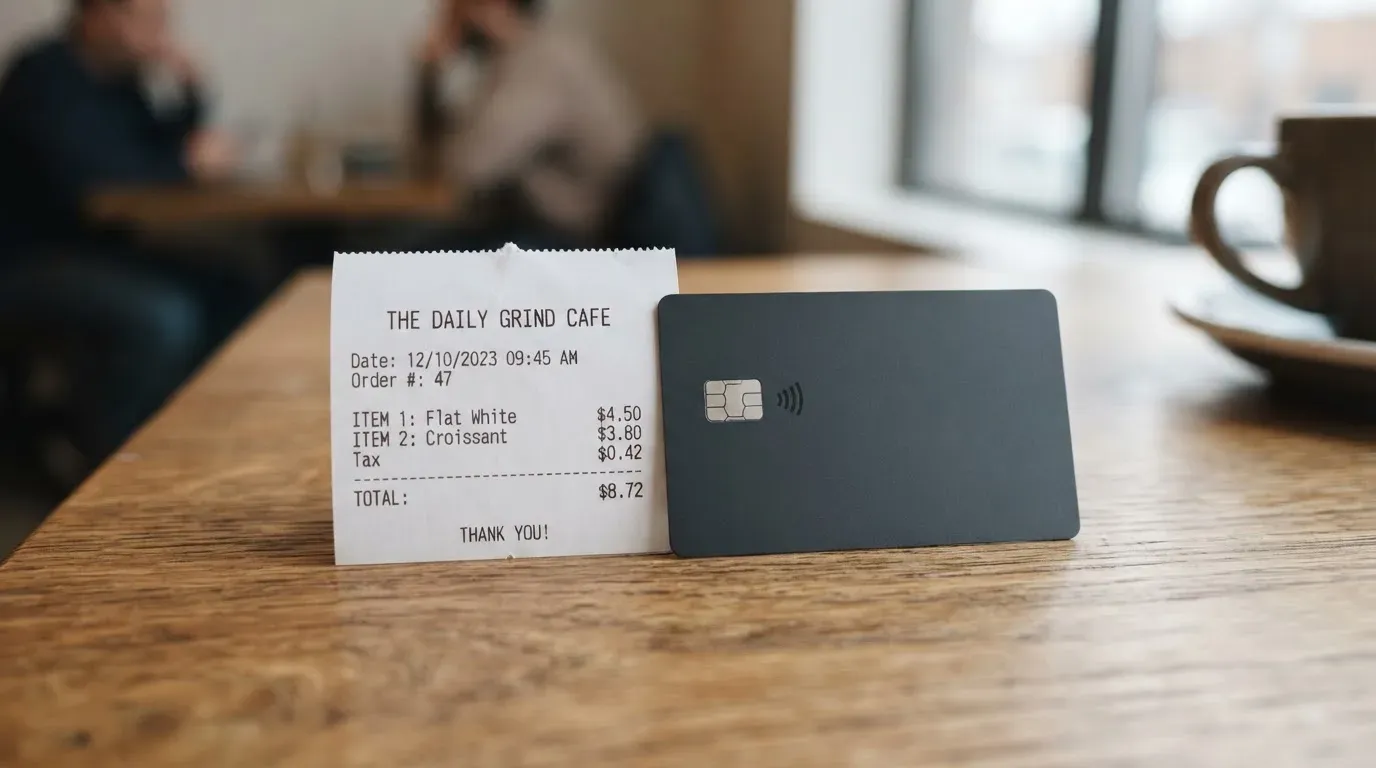
The headline is friendly: no annual fee and no inactivity fee on the virtual card, and the same — “no VIP requirement, annual or inactivity fees” — on the physical card. There is no VIP tier to qualify for, and no charge for not using the card.
The headline is also incomplete. CoinUp does not state:
- the issuance fee for either the virtual or physical card,
- the conversion spread when crypto is converted to fiat at payment,
- the FX margin when the card is used in a currency different from its base,
- the ATM withdrawal fee on the physical card,
- the monthly or per-transaction limits on the virtual card.
What CoinUp does state is the spending ceiling on the physical card: up to USD 1,000,000 monthly limit. For most users that ceiling is irrelevant; the binding constraint will be the day-to-day fees, which are not published.
| Fee or limit | Virtual Mastercard | Physical Visa |
|---|---|---|
| Issuance fee | Not stated | Not stated |
| Annual fee | None | None |
| Inactivity fee | None | None |
| VIP requirement | None | None |
| Conversion spread | Not stated | Not stated |
| FX margin | Not stated | Not stated |
| ATM withdrawal fee | Not stated (online only) | Not stated |
| Daily limit | Not stated | Not stated |
| Monthly limit | Not stated | Up to USD 1,000,000 |
To make this concrete, walk through a few everyday payments and see which fees the public information actually covers.
Paying for a coffee in your home currency. The crypto on your CoinUp account converts to fiat at the moment of payment. CoinUp does not state the spread between the market rate and the rate you get. In the wider market, crypto card spreads typically run from a fraction of a percent to a few percent, depending on the coin and the liquidity provider. Without a published number, you will only learn what you actually paid by looking at the receipt after the fact.
Paying in a foreign currency while travelling. The card will apply a foreign-exchange margin on top of any conversion spread. CoinUp does not state either figure.
Withdrawing cash from an ATM (physical card only). The virtual card is online only. The physical card supports ATM withdrawals, and the fee is not stated. ATM fees on crypto-funded cards typically include a flat fee (a couple of dollars per transaction) and sometimes a percentage of the withdrawal, plus the ATM operator’s own surcharge.
Holding the card unused. Nothing. There is no inactivity fee, so a quiet account is not punished.
The cost picture, then, is this: the obvious standing fees (annual, inactivity) are zero, and the per-transaction fees that determine what you actually pay are undisclosed. Until CoinUp publishes those numbers, the only honest answer to “what does it cost?” is “it depends, and you will not know until you spend”.
How to top up the card
The top-up path is deliberately narrow. You fund the card by transferring crypto from your CoinUp account to the CoinUp Card, and the balance is “ready to use instantly”. That is the full description on the product page.
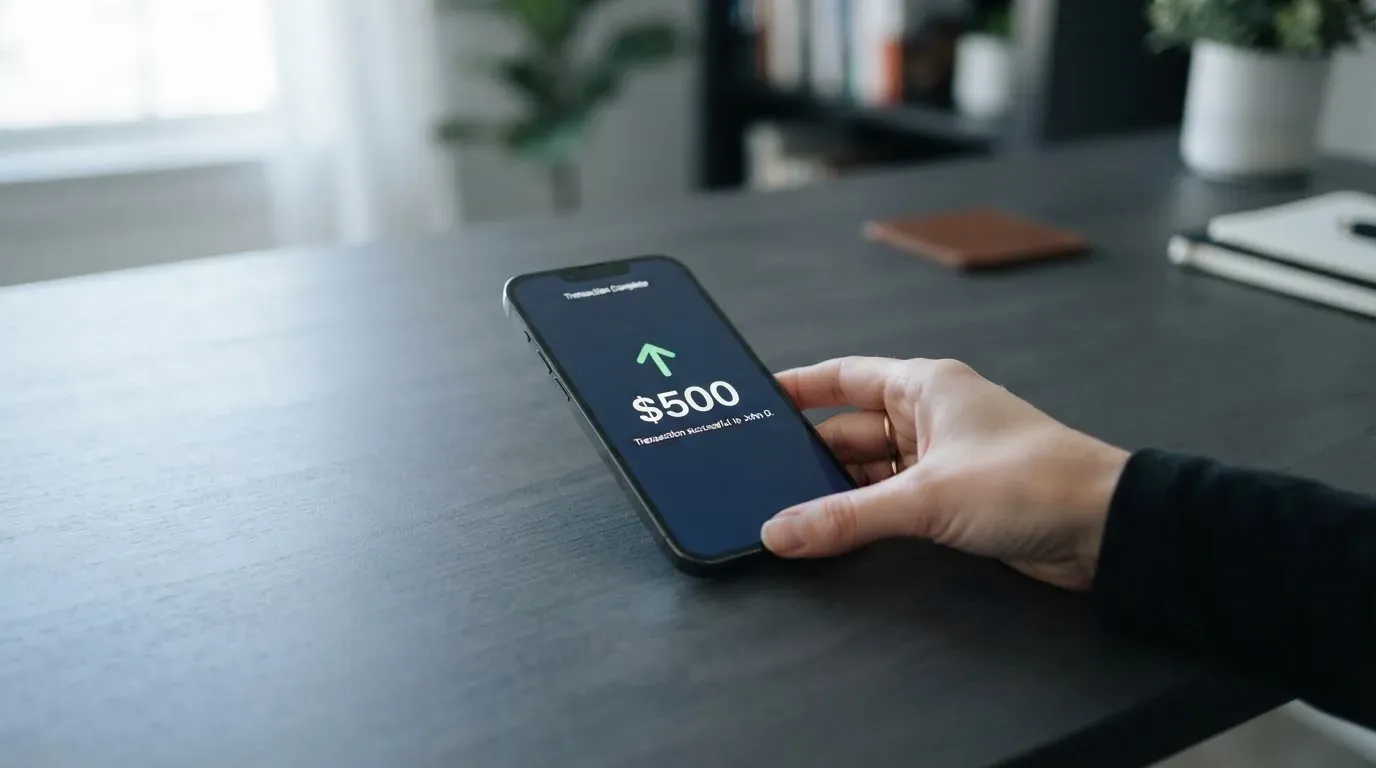
What it does not say:
- which coins the card accepts,
- which blockchain networks you can transfer on,
- whether there is a minimum top-up amount,
- whether there is a top-up fee,
- whether you can top up with fiat from a bank account or card.
By contrast, Coinbase’s US card lets you fund it by linking a bank account or by depositing part of a paycheck, with zero fees, and your existing crypto balance is also spendable. The CoinUp card is, on the published evidence, a closed loop: crypto from inside CoinUp, nothing else.
For the reader, this matters in three ways.
First, you must already hold the supported crypto on the CoinUp exchange. If your coins are on another exchange or in a self-custody wallet, you have to move them to CoinUp first, paying the network fee and accepting the on-chain risk that the address or network you choose is correct. Blockchain transfers are irreversible, and a deposit sent on a network the card does not support, or to an address for a different network, can be lost or sit in limbo until manual support intervenes.
Second, the card is topped up from your CoinUp account balance, not directly from a private wallet. That is a custodial flow: the crypto sits with the exchange until you spend it. The convenience is real; the counterparty risk is also real, and it is the same counterparty whose exchange has a 2.7-out-of-5 Trustpilot record.
Third, because the coins and networks are not listed, you cannot compare the top-up path against a specific holding without going through the app. The cost of moving a coin you already own into a form the card will accept — swap fees, network fees, spread — is opaque at this stage.
The cards are topped up separately: a balance on the virtual card does not automatically feed the physical card, and vice versa. If you hold both, you manage two balances.
Paying with the card every day
Where the card is at its strongest is in the day-to-day mechanics of spending.
Card form factors. You can have up to five virtual Mastercards on one account, which is useful for separating subscriptions, family spending or business expenses. The physical card is a single Visa you apply for in the app.
Mobile wallets. The virtual Mastercard supports Apple Pay and Google Pay. The physical card’s wallet support is not stated. Tokenised payments through a mobile wallet replace your card number with a device-specific number stored in the Secure Element, and each transaction uses a one-time dynamic security code, which is a meaningful security upgrade over a plain plastic number.
ATM access. The physical Visa supports ATM withdrawals; the virtual card is online only.
Spending ceiling. The physical card has a monthly limit of up to USD 1,000,000. The virtual card’s limits are not stated. In practice, the binding constraint is more often the funds you load than the ceiling the issuer sets.
Rewards. The card offers crypto cashback on every purchase, which is a recurring incentive that some competitors reserve for higher tiers. The cashback rate and the coin paid out are not stated, so the actual yield on everyday spend is something you confirm in the app.
App. There is no separate “CoinUp Card” app; the card lives inside the CoinUp exchange app, listed on the App Store as “CoinUp.io-Buy Crypto,Eth,DOGE”. As of the date this page was last checked (the app listing is dated 2026-07-04, read 2026-10-22), the app held a 4.57 rating from 28 ratings. That is a small sample, so the rating is more directional than statistically firm.
Disputes and chargebacks. Not stated. The card pages do not describe a dispute process, a chargeback path or a complaint escalation. This is a meaningful gap for a card that is supposed to behave like a payment instrument, and it is one of the differences between a card backed by a regulated issuer and a card whose issuer is not named.
For the reader, the everyday experience looks like this: top up with crypto, tap to pay with a virtual card in your phone, withdraw cash from an ATM with the physical card, and collect cashback. The mechanics are familiar. The missing pieces — the cashback rate, the dispute path, the FX and conversion numbers — are the things that determine whether the day-to-day experience is actually as good as it looks.
What can go wrong
Three categories of risk deserve your attention before you commit funds to the card.
1. The card’s issuer is not named
CoinUp’s public pages identify the operator as CoinUp Global Limited. The licensed bank, e-money institution or payment provider that actually issues the card — the entity that holds your funds and is regulated to do so — is not disclosed. A payment card is regulated under payment-services and e-money law, and the issuer is the entity your regulator would hold accountable in a dispute. With this card, you do not have a public name to look up.
In a healthier market, you would be able to check the issuer’s authorisation on a public register (in the EU, the EMI’s national regulator; in the UK, the FCA; in the US, the state regulator). Until CoinUp names the issuer, you cannot do that check.
2. The exchange’s complaint record is the card’s only track record
The card itself is too new to have an independent reputation, so the best available evidence is the record of the exchange it sits inside. The exchange’s Trustpilot page holds 2.7 out of 5 across 12 reviews, with 66% of those reviews awarding one star (read 2026-10-21). The themes, in the user’s own words:
- September 2026: an unpaid refund after a listing deal, and removal from the project’s Telegram channel.
- August 2026: a signed agreement for a token launch broken, with missed launch dates.
- July 2026: USDT frozen for eight days, with support responses described as scripted.
- July–August 2025: accounts blocked after profitable trades, with funds reported as inaccessible.
The positive reviews, dated February and March 2026, describe fast KYC and an easy interface. The signal here is mixed but leans negative, and the small sample size means the rating is more a temperature check than a verdict.
It is fair to note that these complaints are about the exchange, not specifically the card. But the card runs on the same CoinUp account, the same KYC process and the same support channels. If a problem affects the exchange — frozen balances, slow support, an account block — the card inside that account is also affected.
3. The security and recovery details are thin
The card product page states that the physical card supports real-time alerts and PIN verification, and that card settings are managed in the CoinUp app. It does not describe:
- whether the card supports 3-D Secure for online payments (the standard second-factor check on Visa and Mastercard),
- whether the user can freeze and unfreeze the card from the app,
- the dispute or chargeback process,
- whether tokenised numbers can be restricted by the user (for example, blocked for online or contactless use).
Support channels listed on the site include a Help Center, a Contact Us page, a Feedback form, and official Telegram channels (Chinese and International) and X accounts. The footer carries a corporate identifier, COINUP LIMITED 20211565064, which is a registration number rather than a licence number. Without a published regulator and a clear dispute path, the reader is relying on the brand’s responsiveness if something goes wrong.
For a custodial product that holds your crypto and converts it at payment, the combination of an undisclosed issuer and a complaint-heavy exchange record is the part to weigh most carefully. The card’s everyday mechanics are good; the safety net underneath them is less clear.
What to take instead
CoinUp is not the only crypto-funded card on the market, and the right alternative depends on where you live and what you want the card to do. Three cards make for a useful comparison.
Coinbase Card
- Score: 6.4 / 10
- Availability: all US states except Hawaii. Account opening follows the USA PATRIOT Act identity rules (name, address, date of birth, ID). No other countries.
- Form: Visa prepaid debit, virtual or physical. Spends cash or crypto, with all crypto converted to US dollars at the point of purchase or ATM withdrawal.
- Cost: “Zero spending fees and no annual fees”, with all fees disclosed in the Cardholder Agreement and User Agreement.
- Funding: link a bank account or deposit part of a paycheck, both with zero fees, or spend your existing crypto balance, which is converted to USD.
- Rewards: optional crypto rewards on every purchase, US card users only, at a variable rate shown in the app, with the user able to pick from a rotating set of reward coins.
The Coinbase Card’s edge over CoinUp is the disclosure: fees are in a published agreement, the regulator and issuer are well known, and the funding options are broader. Its limit is geography: US residents only, and not in Hawaii.
OKX card
- Score: 6.2 / 10
- Availability: EU plus Norway, launched 28 January 2026, with Iceland and Liechtenstein excluded (one explainer concludes “entire EEA”, which is inconsistent with the exclusion list). EEA users are served by OKX Europe Ltd., a MiCAR-licensed entity.
- Form: Mastercard, euro-denominated virtual debit card linked to OKX Pay. No physical card mentioned. Issued via an unnamed European licensed payment provider.
- Cost: no card fee. No transaction fee. No OKX FX fee. A conversion spread applies, quoted at 0.1% by one explainer in May 2026 and 0.4% in the launch press release; the explainer is the newer source, so treat 0.1% as the more current number, with the conflict noted. Conversion to euro happens at purchase.
- Funding: USDC or USDG held in OKX Pay, either via Convert or by an external deposit. Other coins must be converted first. No auto top-up: if the balance is short at the point of payment, the transaction is declined.
- Rewards: cashback only on USDG purchases (USDC earns none), with monthly caps in euro by tier — Regular 2% cap 10; VIP1 4% cap 300; VIP2 4.5% cap 450; VIP3 5% cap 1,000; VIP4+ 10% cap 1,000 (the text says 2–5%, the table says 10%, which is inconsistent). A launch promotion offered up to 20% (VIP) or 15% (regular) for 30 days.
The OKX card’s edge is the regulatory base: a MiCAR-licensed entity in the EU, with stablecoin balances you control more granularly. The cost of that clarity is a narrower availability footprint and a single-coin rewards model.
Young Card
- Score: 5.7 / 10
- Availability: not stated.
- Form: not stated officially.
- Cost: not stated officially.
- Funding: not stated for the card itself.
- Rewards: cashback paid in YNG tokens, at a rate that depends on the Club tier — Essential 0.1%, Gold 1.8%, Platinum 3.6% (Bronze and Silver not stated).
Young Card’s appeal is the token-native cashback. The drawback is the absence of public detail on availability, form factor, cost or funding, so it is a card to research carefully before committing funds.
| Card | Best for | Headline strengths | Headline limits |
|---|---|---|---|
| CoinUp | Existing CoinUp exchange users | No annual fee, up to 5 virtual Mastercards, Apple Pay and Google Pay, physical Visa with USD 1M monthly limit | Issuer not named, fees not published, exchange complaint record |
| Coinbase Card | US residents (excl. Hawaii) | Published fees, US regulator framework, bank account or paycheck funding, USDC conversion at payment | US only |
| OKX | EEA residents (excl. Iceland, Liechtenstein) | MiCAR-licensed entity, euro-denominated, no card or transaction fee | Virtual only, USDG-only rewards, single EEA footprint |
| Young Card | Token-incentive seekers | YNG-token cashback with tiered rates | Availability, form factor, cost and funding all unstated |
Who I would recommend the CoinUp card to
I would recommend the CoinUp card to a narrow reader. If you are already an active CoinUp exchange user, if you keep a meaningful balance there, and if you want a low-friction way to convert that balance into everyday spending without first moving it to a bank, the card’s day-to-day features — the virtual Mastercard in your phone, the physical Visa for cash, the cashback on every purchase, the absence of an annual or inactivity fee — are genuinely useful. For you, the card is a sensible extension of the app you already use.
I would not recommend it as a first crypto card, and I would not recommend it to someone whose primary concern is regulatory clarity or dispute protection. The issuer is not named, the per-transaction fees are not published, and the exchange’s complaint record is the only public track record available. For a US resident who can get the Coinbase Card, the published agreement and the US regulatory framework make the trade-off clearer. For an EU resident who can get the OKX card, the MiCAR-licensed entity provides a level of accountability that the CoinUp card does not yet match.
If you do decide to try the CoinUp card, start small. Top up only what you are comfortable holding with the exchange, keep the bulk of your crypto elsewhere, and use the virtual card in Apple Pay or Google Pay so you can cut the balance off instantly if something looks wrong. The card’s everyday mechanics are good; the safety net is the part to test before you rely on it.
Frequently asked questions
What is the CoinUp card?
The CoinUp card is a payment card offered by CoinUp that draws on a crypto balance held in your CoinUp account. You can have up to five virtual Mastercards and one physical Visa, with Apple Pay and Google Pay supported on the virtual card and ATM withdrawals on the physical card. Crypto cashback is offered on every purchase, and there is no annual or inactivity fee.
How does the CoinUp card work?
You hold crypto in a CoinUp exchange account, pass KYC identity verification, apply for the card in the app, and transfer crypto from your account to the card balance. At payment, the crypto converts to fiat, and the merchant receives fiat in the normal card-network flow. The card runs on Mastercard (virtual) and Visa (physical) rails, so it is accepted wherever those networks are taken.
Is CoinUp a bank?
No. CoinUp is a crypto exchange group, and the card product is operated by CoinUp Global Limited. The licensed bank or e-money institution that actually issues the card is not named on the public pages, so the entity that holds your funds and is regulated as a payment institution is not disclosed.
Who owns CoinUp?
The card is operated by CoinUp Global Limited. Ownership, leadership and corporate structure beyond that are not described on the public card pages.
Is the CoinUp card available in my country?
CoinUp states the card is available in 170+ countries and regions, but the practical availability is “select regions” and the official guidance is to check the app. There is no public country list and no public list of excluded countries, so you find out by signing up.
Does the CoinUp card require KYC?
Yes. An active CoinUp account with completed identity verification is a prerequisite. CoinUp describes the KYC step as taking “just a few minutes” in the app, but the KYC levels the card requires and the documents you may be asked for are not stated publicly.
How do I top up the CoinUp card?
You transfer crypto from your CoinUp account balance to the card, and the balance is “ready to use instantly”. The list of supported coins and the blockchain networks the card accepts are not published, and there is no public top-up fee or minimum.
How do I add the CoinUp card to Apple Wallet?
The virtual Mastercard supports Apple Pay and Google Pay. The practical steps are managed inside the CoinUp app: open the card section, choose the virtual card you want to add, and follow the prompt to add it to your mobile wallet. The physical card’s wallet support is not stated on the product page.
Is the CoinUp card safe?
The physical card supports real-time alerts and PIN verification, and card settings are managed in the CoinUp app. Beyond that, the card’s issuer is not named, the dispute process is not described, and the exchange behind the card has a 2.7-out-of-5 Trustpilot record (across 12 reviews) with multiple frozen-funds reports. The everyday security features are standard; the broader accountability framework is not.
Is the CoinUp card worth it?
For an existing CoinUp exchange user who wants a simple, low-friction way to spend a balance they already keep on the platform, the card’s day-to-day features are competitive. For a first crypto card, or for a reader who values published fees, a named issuer and a clear dispute path, the missing details and the exchange’s complaint record make the trade-off harder to justify.
Exchange card verdicts – cryptocardverdict
Content created by the «cryptocardverdict» team