
A virtual Mastercard on a new crypto exchange's rails, priced well but built on a young stack
 Available in US
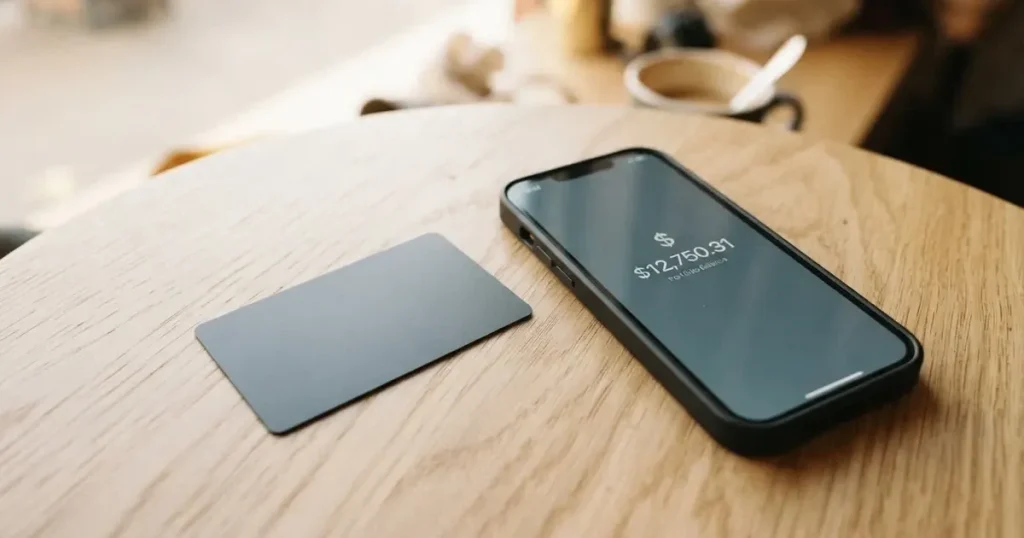
The Zoomex card is a virtual Mastercard with a dedicated IBAN, issued through a UR account and funded from crypto — mainly USDC. There is no card issuance fee and no annual fee. The catch is that the whole product is very new: the card launched on 9 March 2026, the company announcing it is a Seychelles exchange founded in 2021, and several of the things you would want to know before signing up (which countries, what KYC, what the ATM fees are) simply aren’t stated on the card’s public pages. I score it 6.8 / 10.
The conditions described here are current as of October 28, 2026.
Verdict: 6.8 out of 10
The score sits in the middle because the price is genuinely good and the practical shape of the card is sensible, while the maturity around it is thin. Cost is the standout: 8 out of 10. Who can get it also scores 8, mostly because the stated availability is close to worldwide. Everything else lands in the middle or below, and top-up options — the thing that decides whether a crypto card is usable day to day — come in lowest at 5.
Who this suits: you already hold crypto (or USDC in particular) on a Zoomex account, you want a virtual Mastercard with a dedicated IBAN rather than a physical plastic card, and you are comfortable being an early adopter of a young product. Who it does not suit: you need a physical card, you need a well-documented ATM withdrawal policy, you want a long public record of how the issuer handles complaints, or you would rather not hold your balance with a provider in a jurisdiction that does not hand it out.
Let me walk you through the score criterion by criterion, then through each part of the card in detail.
| Criterion | Mark | Why |
|---|---|---|
| Who can get it | 8 / 10 | Stated as global, excluding USA, Russia, Iran and North Korea; citizenship vs residence is not stated. |
| Cost | 8 / 10 | No issuance fee, no annual fee; crypto-to-fiat conversion 1%; cross-currency at Mastercard’s real-time rates. |
| Top-up options | 5 / 10 | USDC deposit and USDC transfer from the Zoomex exchange account; networks are not named. |
| Reliability and complaints | 5 / 10 | Seychelles company, licences claimed rather than named as issuer, and the exchange scores poorly on a third-party review site. |
| Everyday use | 7 / 10 | Virtual Mastercard with a dedicated IBAN, Apple Pay, Google Pay and Samsung Pay; no plastic, ATM policy undisclosed. |
| Total | 6.8 / 10 | A well-priced but very new card. |
Who will they give you the card?
The Zoomex card is described as available worldwide with a short exclusion list. The card’s own press release does not actually give a country list — the exclusion of the USA, Russia, Iran and North Korea comes from an earlier check, not from the launch material, and some US territories were excluded alongside them. So treat “global” as the intent and the specific country list as something you should confirm for yourself before you spend an afternoon on the application.
One detail that matters more than it sounds: whether the rules apply to your citizenship or to where you live is not stated. This is not a technicality. Banks and card issuers routinely apply risk policy to a customer’s nationality and country of birth as well as to their address, because sanctions screening works that way. If you hold a passport from an excluded country but live in an allowed one, the card’s public pages give you no way to know which side of that line you fall on. Ask.
What is clear: the card is reached through a UR account, and the only membership tiers mentioned anywhere are Basic and UR Pro. Verification tiers are not stated. That is different from saying there are none — it means you cannot read them off a page before you start. If having to upload documents and wait for approval is the thing most likely to turn you off, find out what the process looks like in practice before you commit time to it.
How to get it
The form the card takes is straightforward: it is a virtual Mastercard. A physical card is not mentioned anywhere, and delivery of physical plastic is therefore not applicable. It settles in USD, EUR, CHF, SGD, HKD, JPY “and more”, and it comes with a dedicated IBAN.
That IBAN is the detail that separates this from a plain prepaid card. A dedicated IBAN means you can receive a normal bank transfer to that number and have it land in the account rather than only spending from a balance you loaded yourself. If your reason for wanting a crypto card is “I need to be paid like an ordinary person,” that is the part that does the work.
Getting one goes through a UR account. What identity checks are required is not stated in the release. I would rather tell you that plainly than dress it up: you are signing up for a regulated-ish financial product and you should expect to prove who you are, because anti-money-laundering rules require regulated businesses to verify customers and assess risk, including ongoing monitoring and reporting of suspicious activity. But the card’s public pages do not spell out what documents it wants or how long it takes. That is a real gap, and it is one of the reasons the score is not higher.
Nor is there a stated activation procedure. Some virtual cards simply start working once added to a wallet; others need a tap or a first transaction. You will find out at the point of use, not in advance.
Fees and the real cost of spending
This is where the Zoomex card is strongest, and the strongest section of the card’s public material. Here is what is stated:

| Fee or limit | Value |
|---|---|
| Card issuance | No fee |
| Annual fee | No fee |
| Crypto-to-fiat conversion | 1% |
| Cross-currency transactions | Mastercard’s real-time exchange rates (no separate FX fee stated) |
| ATM withdrawal | Not stated |
| Monthly limit | Upgraded UR Pro members: up to 100,000 CHF |
| Other limits | Not stated |
Two points about that table. First, no issuance fee and no annual fee is genuinely unusual and genuinely useful — most competing products in this category either charge to issue the card or charge a subscription. Second, note how much of the table reads “not stated.” The ATM withdrawal fee is the one that would bite an ordinary person hardest, and it is exactly the cell the card leaves empty. If cash matters to you, that is a question to ask before you rely on this card.
One more thing about the limits: new cardholders are automatically upgraded from Basic to UR Pro at no cost, and UR Pro is what brings the higher limits (the 100,000 CHF monthly figure is a UR Pro number) and what the card describes as “better withdrawal fees”. So you start at the top tier by default. That is good. It also means you have no cheaper tier to drop back to if the card underperforms.
The currency list matters for daily use. A card that holds and settles in USD, EUR, CHF, SGD, HKD, JPY “and more” gives you multi-currency balances, and cross-currency spending goes through Mastercard’s real-time rates — no separate foreign transaction surcharge is mentioned, which is a real saving against most conventional bank cards. What you do pay is the 1% crypto-to-fiat conversion when crypto is converted into the spendable balance.
Let me put that in terms of two or three ordinary payments, because 1% sounds small until you watch it apply.
A €12 coffee bought with euros from a euro balance. No conversion happens — you are spending euros you already hold. Nothing is taken beyond the merchant’s own price. This is the case where the 1% simply doesn’t appear.
A €40 supermarket shop on a card holding dollars. The purchase converts from dollars to euros at Mastercard’s real-time rate, and the 1% crypto-to-fiat conversion applies if the dollar balance was itself loaded from crypto. On €40 the conversion cost is €0.40. On a monthly grocery run of, say, several hundred euros, the same 1% is a visible line on your statement.
A $25 online subscription paid while your balance sits in crypto. Same 1%, $0.25, plus whatever the merchant applies. And note that your crypto was converted into fiat before you spent it, so the 1% has already been taken by the time the merchant’s own currency handling begins.
The lesson is not that 1% is bad — for a crypto card it is at the good end. The lesson is that the conversion happens at funding, not at the till. You convert once, the rate and the fee are set at that moment, and then you are spending an ordinary balance.
Top up options and how funding actually works
Top-up is the weakest part of this card, and it scores 5 out of 10 for a specific reason: the card names what you can deposit but not how.
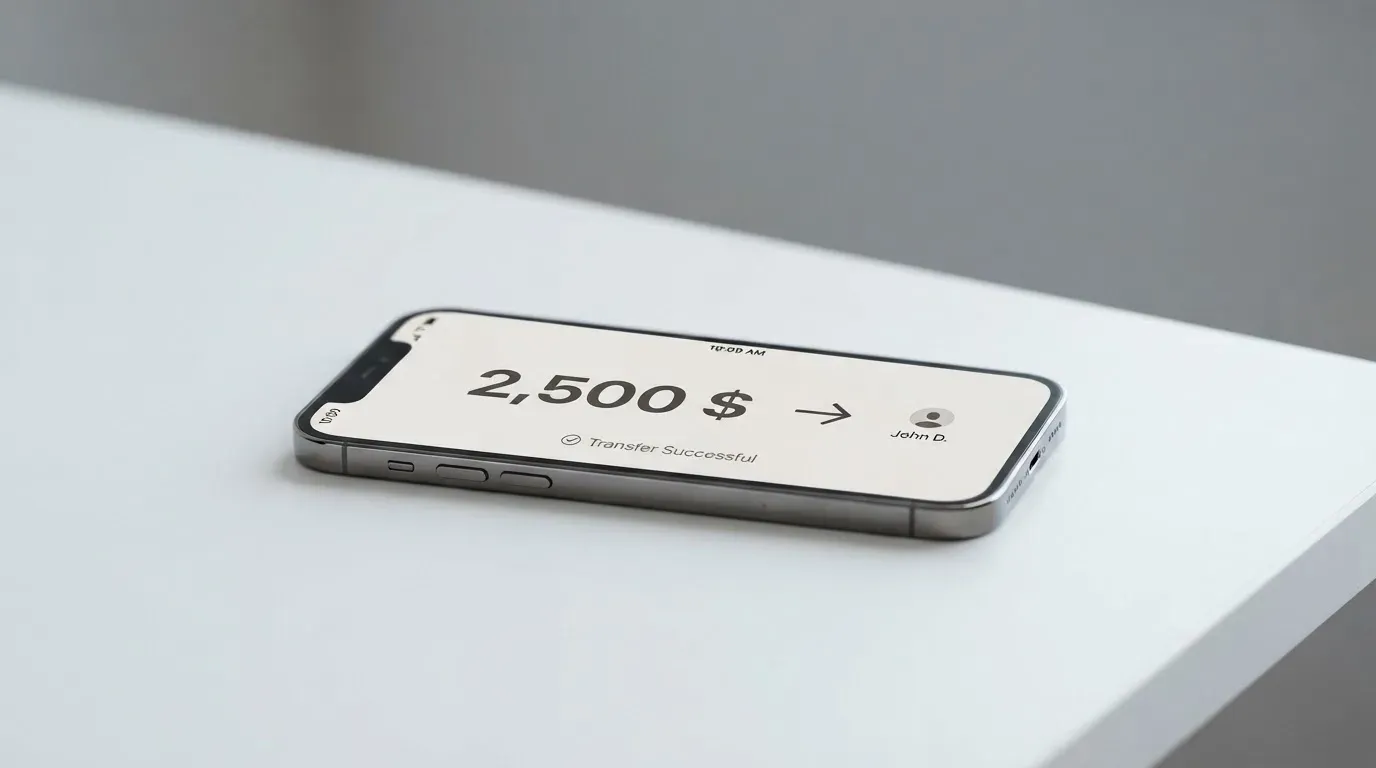
What is stated: you can fund with digital assets instantly. The named asset is USDC — via a USDC deposit, or by transferring USDC from your Zoomex exchange account to your UR account (that route comes from the earlier check). The card’s pages do not name which blockchain networks are supported for the deposit, and the fee and minimum for a top-up are not stated. Only USDC is mentioned.
That combination matters more than it sounds. USDC is not one thing; it exists on many networks — Circle lists it as natively supported on 38 networks, including Ethereum, Solana, Base, Polygon PoS, Avalanche, Arbitrum and Stellar. If you send USDC on a network the card provider does not support, or to an address belonging to a different network, the transfer can be lost or need manual support recovery with no guarantee. Blockchain transfers are irreversible. This is precisely why I would not treat this card as ready for everyday money until you have confirmed, from Zoomex or UR directly, which network your deposit should go on.
There is one more cost hiding under top-up: the network fee for the deposit itself is charged by the blockchain, not by the card provider, and it comes out of the amount you send. On a busy network that is small; on a chain that is congested, not small. The card’s 1% conversion and the chain fee are separate charges, and only the first is written down anywhere.
As for cashing out: there is no fee for fiat withdrawals, and UR Pro members get better withdrawal fees. What you have left in the account when you close it is not stated — which is one of those details that only matters on the worst day of your life with a card, and is exactly why you should ask about it before you need it.
Paying with it every day
Day-to-day, this is a competent virtual card. It works with Apple Pay, Google Pay and Samsung Pay, which is most of what people actually want from a phone card. Which merchant categories are blocked is not stated — and that matters if you gamble or buy things that some issuers decline. Gambling sits in a specific merchant category (MCC 7995, covering casinos, betting and lotteries), and many issuers block it on particular cards by policy rather than by law, with the blocked list varying by issuer. You will not find the answer here.
The rewards are time-limited and the dates matter. There is 1% cashback on compliant purchases through 30 April 2026, 23:59 UTC, credited in real time, and a $10 reward for a purchase of $5 or more within 30 days of activation for new users. Both are promotional. The rate after the promo is not stated. So read the 1% as an introductory rate, not as what the card pays from May 2026 onward — and note that “compliant purchases” is doing quiet work in that sentence, since the qualifying categories aren’t defined here.
A few practical things about card payments that will shape your experience, whether or not they’re the card’s fault:
- Some shops decline foreign-issued prepaid cards. When you pay, the merchant can look up the card’s issuing institution and country from the first six or eight digits of the number. If the issuer country differs from your billing address, extra scrutiny is possible — this is why a card issued in one country can look “foreign” in another. Some merchants decline prepaid or foreign-issued cards on the basis of that lookup alone.
- Declined payments can still leave a hold. A declined authorisation may leave a hold on your funds that can persist for several days, typically up to 7. Budget for the possibility that money is briefly unavailable after a failed payment.
- Address verification often doesn’t work on foreign-issued cards. Address Verification Service compares the numeric parts of the billing address you type against the issuer’s records; it’s mainly offered in the US, Canada and the UK and is generally unavailable for foreign-issued cards, which can cause declines on otherwise fine transactions.
- Mobile wallet tokenisation is the safer route. In Apple Pay the card number is replaced by a device-specific number stored in the phone’s Secure Element, never on Apple’s servers, and each payment uses a one-time dynamic code. The issuer can also restrict a tokenised number — blocking it on magnetic-stripe, phone or website use — so a card that works in a phone wallet may fail in a card reader.
The app and the dispute process are not described on the public pages, and I did not find ratings to quote. What happens when a charge goes wrong is not stated. That matters, because a chargeback — a refund ordered by the issuer to settle a dispute — is one of the main protections a cardholder has, and prepaid-card coverage varies and should not be assumed.
What can go wrong
This is a young product on a young stack, and the risks cluster around that.
The issuer is not named. Zoomex is described as Victoria, Seychelles (its announcing office), founded in 2021. The card is “backed by UR’s licensed financial infrastructure”, but UR is not explicitly named as the issuer, and UR’s country and licences are not stated. The licences the company claims — Canada MSB, U.S. MSB, U.S. NFA and Australia AUSTRAC — are claimed in its own materials. On a card like this, knowing which institution is legally responsible for your balance is not a detail. It is the whole question. Push on it before you fund the card.
The track record is thin and the third-party signal is poor. No official incidents came up in my check, and no Trustpilot or Reddit card reviews were found. But that absence is itself the point: a card launched in March 2026 will not have a long complaint history yet. The one relevant third-party signal is on the exchange rather than the card: Gridinsoft rates zoomex.com at 1.9 out of 5 across 81 reviews. That’s unofficial and comes from a third-party site, and it’s about the exchange, not the card — but if the exchange is where your USDC sits before you transfer it, it’s not irrelevant either.
Custody means trusting someone. Control of crypto belongs to whoever holds the private key. With a custodial wallet — which is what an exchange balance is — the provider holds the credentials and you must trust it completely. The risk is not hypothetical: Mt. Gox reported about US$350 million stolen over 2011–2014, Coincheck about US$400 million in 2018, and the Ronin Network US$625 million in 2022. On the card’s own side, security details are not stated; the exchange says it passed a Hacken audit, which is the company’s claim to make. Support contact information is also not stated, which matters doubly when combined with irreversible transfers.
Card programmes get shut down. This is the category’s clearest pattern. Visa terminated its global agreements with FTX on 13 November 2022 and the FTX US debit card was wound down by its issuer. Visa also suspended WaveCrest in Europe in 2018, closing all WaveCrest-issued Visa programmes. Programme closures typically run in a predictable order: a notice period, then loading and spending stop, then users are asked to withdraw remaining balances. When that happens to a card like this, the IBAN and the balance go quiet together.
Regulation is still moving. In the EU, MiCA took legal effect in June 2023; its stablecoin rules applied from 30 June 2024 and the crypto-asset service provider rules from 30 December 2024. E-money tokens may only be issued by a credit institution or an electronic money institution. The transitional period runs until 1 July 2026 or until a provider is authorised or refused, whichever comes first — meaning a provider in that window could be operating under national rules that are about to change underneath it. A card itself is regulated as a payment service separately from MiCA, so a product like this often rests on two sets of rules. And where the balance is held, e-money institutions must safeguard customer funds in segregated accounts or insure them — which is not the same as a bank deposit and may not sit under a deposit guarantee scheme. Ask whether your balance is safeguarded and by whom.
Stablecoins are stable only in name. USDC is US-dollar-pegged and Circle says it is redeemable 1:1 for USD and fully backed by cash and cash equivalents, mostly in an SEC-registered government money market fund, with monthly reserve attestations by a Big Four firm — but stablecoins can and have depegged: TerraUSD collapsed in May 2022, and USDC briefly lost its peg in March 2023 during the US banking crisis. Circle stopped supporting USDC on Tron in February 2024, which is a live example of a network support ending overnight.
Taxes are worth a professional’s eye, not mine. I’m not qualified to advise on this and I won’t pretend otherwise, but the mechanics are worth knowing: the IRS treats digital assets as property, so exchanging them for goods, services or dollars generally produces a taxable gain or loss, measured in your local currency at the fair market value on the transaction date. If your card converts crypto to a spendable balance, each of those conversions can be a separate taxable event. Talk to an accountant in your own jurisdiction about your situation.
What to take instead
If something about the Zoomex card doesn’t suit you, there are three other cards in this category worth looking at, and it helps to compare them on the same axes.
| Card | Score | Card type | Cost stated | Funding | Rewards |
|---|---|---|---|---|---|
| Zoomex | 6.8 / 10 | Virtual Mastercard, dedicated IBAN | No issuance or annual fee; 1% crypto-to-fiat | USDC deposit / transfer from exchange; networks not stated | 1% cashback promo to 30 April 2026; $10 activation offer |
| Coinbase Card | 6.4 / 10 | Visa prepaid debit, virtual or physical | “Zero spending fees and no annual fees”; a spread applies on crypto conversion | Link a bank account or deposit part of a paycheck; crypto balance converts to USD | Optional crypto rewards on every purchase, US users only; variable rate |
| OKX | 6.2 / 10 | Virtual euro Mastercard linked to OKX Pay | No card fee; conversion spread stated (0.1% explainer vs 0.4% launch release) | USDC or USDG in OKX Pay; other coins must be converted first; no auto top-up | Cashback on USDG purchases only, tiered with euro caps; launch promo up to 20% VIP / 15% regular |
| Young Card | 5.7 / 10 | Not officially stated | Not officially stated | Not stated for the card itself | Cashback in YNG tokens by club tier: Essential 0.1%, Gold 1.8%, Platinum 3.6% |
Three contrasts stand out.
Coinbase Card is the most mature and the most geographically limited. It’s available in all US states except Hawaii, with account opening following the US PATRIOT Act identity rules — name, address, date of birth, ID — and no other countries. In exchange, it offers virtual or physical, states zero spending fees and no annual fees, and has the clearest funding routes of the four. It converts all crypto to US dollars for purchases and ATM withdrawals. If you are in the US, it is the plainest option on this list.
OKX is the European answer, with its own complications. It’s a euro-denominated virtual Mastercard linked to OKX Pay, launched for the EU plus Norway on 28 January 2026, with Iceland and Liechtenstein excluded. It’s issued via an unnamed European licensed payment provider, has no card fee and no OKX FX fee, and converts at the point of purchase. Its cashback only counts on USDG purchases, not USDC, and is capped by tier; the launch release advertised up to 20% for VIP and 15% for regular users for 30 days. Note the internal inconsistency in its own published figures on spread and cap — a reminder to check the app rather than a press release.
Young Card is the least documented of the group. Key facts — who can get it, what it costs, how it’s funded — are not stated officially, and its cashback is paid in YNG tokens rather than cash, which puts it in a different category entirely from the other three.
Across all of them, the pattern is the same one that runs through Zoomex: the price is competitive, the branding is modern, and the fine print is where the decision actually lives.
Who I would recommend it to
I’d point this card at three people.
First, if you already use Zoomex as an exchange, hold USDC there, and want to spend it without moving to another platform — a virtual card with a dedicated IBAN is a sensible reason to look, and the no-fee structure means there’s little to lose in trying it for small everyday spending.
Second, if your problem is that a conventional bank card isn’t available to you or doesn’t work where you live, and you’re comfortable with a provider that states its availability broadly. The Zoomex card’s intent is broad access, and the IBAN means you can be paid normally.
Third, if you are an early adopter by temperament — someone who reads terms rather than skims them, keeps balances small, and treats a new card as an experiment rather than infrastructure. For that person the missing details are a feature of the bargain, not a warning: you get a well-priced card now and accept you’re the test case.
I’d hold back if any of these are true. You need physical plastic — there’s no mention of any. You need cash and ATMs — the withdrawal fee is not stated, only “better withdrawal fees” for UR Pro. You need a long, public record of how complaints are handled — a card from March 2026 doesn’t have one yet, and the exchange’s unofficial third-party rating is poor. You’re holding a large balance — the Seychelles structure, unnamed issuer and custodial model are reasons to keep the amount small. Or you simply prefer regulated clarity: Coinbase Card for the US, OKX for the EU and Norway, with licences and frameworks you can name.
The Zoomex card is a fair bet at small sizes. It is not yet something I’d build a month of spending on without checking the things the card’s pages leave blank.
Frequently asked questions
What is the Zoomex card?
The Zoomex card is a virtual Mastercard with a dedicated IBAN, reached through a UR account and spent from crypto — mainly USDC. It settles in USD, EUR, CHF, SGD, HKD, JPY and more. There is no physical version mentioned. The card launched on 9 March 2026, making it a very new product on a company founded in 2021.
Is Zoomex a bank?
No — not as far as the public material goes. Zoomex is a cryptocurrency exchange based in Victoria, Seychelles, founded in 2021, and it claims registrations including Canada MSB, U.S. MSB, U.S. NFA and Australia AUSTRAC. The card is described as backed by UR’s licensed financial infrastructure, but UR is not explicitly named as the issuer.
Do I need to pass KYC to get the card?
The card’s public pages don’t say what identity checks are required, so there’s no way to know in advance what documents you’ll need. What is clear is that regulated businesses are required to verify customers under anti-money-laundering rules. If uploading documents and waiting is a dealbreaker, ask first.
What countries is the Zoomex card available in?
The launch press release doesn’t give a country list at all. An earlier check described it as global, excluding the USA, Russia, Iran and North Korea and some US territories. Whether the rules apply to citizenship or to residence isn’t stated either, which matters if your passport and your address point to different countries.
What does it cost to use the Zoomex card?
There’s no card issuance fee and no annual fee. Crypto-to-fiat conversion is charged at 1%, and cross-currency transactions use Mastercard’s real-time exchange rates with no separate FX fee mentioned. The ATM withdrawal fee is not stated, which is the gap most likely to matter to you in practice.
How do I top up the Zoomex card?
With USDC — either by depositing it or by transferring it from your Zoomex exchange account to your UR account. The card does not name which blockchain networks are supported, and blockchain transfers are irreversible, so confirm the network with Zoomex or UR before sending anything.
Is the Zoomex card safe?
There’s no long track record to judge — it launched in March 2026, and no official incidents or Trustpilot card reviews came up in my check. The company is in Seychelles, the issuer isn’t explicitly named, and your USDC sits with a custodian while it’s on the platform. Keep balances small and treat this as an experiment.
What are the Zoomex card’s limits and membership tiers?
New cardholders are automatically upgraded from Basic to UR Pro at no cost. UR Pro brings higher limits — up to 100,000 CHF monthly — and what the card describes as better withdrawal fees. Other limits, and the verification tiers themselves, are not stated on the public pages.
Can I add the Zoomex card to Apple Wallet or Google Pay?
Yes: the card is compatible with Apple Pay, Google Pay and Samsung Pay. Tokenised mobile wallet payments are also the safer route — the card number is replaced by a device-specific number and each payment uses a one-time code. Note that issuers can restrict a tokenised number, blocking it on magnetic-stripe, phone or website use.
How do I get money back off the Zoomex card?
Fiat withdrawals carry no fee, and UR Pro members get better withdrawal fees. What isn’t stated is what happens to any balance remaining if you close your account, which is worth asking about before you ever need to know. Remember too that converting crypto to a spendable balance can be a separate taxable event.
Exchange card verdicts – cryptocardverdict
Content created by the «cryptocardverdict» team