
A prepaid Visa with one confirmed way in, one unstated price and an unnamed issuer
 Available in US

UU Visa Platinum is a prepaid Visa card issued inside the UU Wallet app, available in a virtual and a physical version, and aimed squarely at people who already hold a balance in that wallet. On paper it sounds like an ordinary everyday card: the Visa network, Apple Pay and Google Pay, spending at merchants in 160 or more countries and regions. What I found when I went through the card’s own public pages is a product whose plumbing is described clearly and whose commercial terms are almost entirely absent. The card works where merchants accept Visa. Nobody will tell you what it costs after the promotional period, what the conversion rate is, what the ATM terms are, or who the issuing bank actually is.
The conditions described here are current as of October 28, 2026.
I want to be precise about what follows, because the pattern of this review will look repetitive: for a great many questions — the fee after the campaign, the foreign-exchange markup, the ATM, the daily and monthly limits, the issuing bank, the licence, the card’s currency, the delivery time, the reward scheme after May 2026 — the card’s public pages simply do not say. I am not going to fill those gaps with typical market figures or with what other cards do. Where a fact is not stated, I say it is not stated, and I move on. That absence is not itself proof of a bad card, but it is a real cost of the product: you are being asked to trust a card you cannot price.
Verdict: 5.9 out of 10, and the silence is most of the score
UU Visa Platinum scores 5.9 / 10. That is not a rounding of a bad experience into a mediocre one; it is a card with genuinely broad reach and genuinely missing information. The single strongest thing about it — that it works at merchants in 160+ countries and regions, with phone binding listed for Australia, Brazil, Cambodia, Dubai, France, Hong Kong, Japan, Laos, Macau, Malaysia, Philippines, Saudi Arabia, Singapore, South Korea, Taiwan, Thailand, UK and Vietnam — is offset by the fact that the card does not publish the list of countries where it can actually be issued, nor any exceptions. Wide acceptance on the spending side, silence on the eligibility side.
The intended user is narrow and the card is honest about that in its own way: users of the UU Wallet app who want a Visa prepaid card rather than a virtual-only balance. If that is you, and you already trust the wallet, the card is a reasonable extension of something you have. If you are coming from a bank card that was refused to you, or you are comparing this to a mainstream prepaid card with a published price list, you are trading transparency for reach, and it is worth being honest with yourself about that trade.
| Criterion | Mark | Why |
|---|---|---|
| Who can get it | 9 / 10 | Works at merchants in 160+ countries and regions; the list of issuing countries and any exceptions are not disclosed |
| Cost | 5 / 10 | Not disclosed: the fee after the promotion is unpublished (in May 2026 virtual issuance was free in a 15-day campaign), and commissions, ATM and servicing are not named |
| Top-up options | 4 / 10 | USDT top-up from the UU Wallet balance to the prepaid card; other coins and networks are not disclosed |
| Reliability and complaints | 5 / 10 | Site footer: UU Wallet payments Limited 2025; issuer and licences not named, no official incidents and no Trustpilot page found |
| Everyday use | 5 / 10 | Virtual and physical versions exist, Visa network, Apple Pay and Google Pay; ATM terms not disclosed, “Offline withdrawal” appears under Assets |
| Total | 5.9 / 10 | A wide card with a narrow, undocumented price list |
Two of the six marks are 4 and 5, and they are the two that touch money moving in and out. Cost at 5 and top-up options at 4 are where a reader is most likely to be surprised. The 9 for eligibility flatters the card on the strength of merchant coverage rather than on how easy it is to open the account — those are different things, and only one of them is well evidenced here.
Will they give you the card?
Largely yes, in the sense that the card’s starting data describes it as usable across a very wide map. But “will they give you the card” and “where can you use it” are different questions, and the card answers the second one clearly and the first one not at all.
What is stated: 160+ countries and regions per the starting data, with phone binding listed for Australia, Brazil, Cambodia, Dubai, France, Hong Kong, Japan, Laos, Macau, Malaysia, Philippines, Saudi Arabia, Singapore, South Korea, Taiwan, Thailand, UK and Vietnam. A Chinese-language article on the product says it works at merchants in “more than 160 countries and regions”, which is consistent with that.
What is not stated: the list of countries where the card can actually be issued, and any exclusions from it. That distinction matters more than it first appears. If you live in a country that is not on that binding list, you have no way to tell from the public pages whether you are eligible. If you live in one that is on it, you still do not know what happens in a specific edge case. The honest summary is that the card’s own footprint is wide and its own paperwork is thin.
There is one more thing worth understanding about why “works in 160+ countries” and “will issue to you” are separate. Every card number starts with an issuer identification number — a BIN or IIN of six or eight digits — that identifies the institution that issued it. Merchants can look that number up and see which institution and which country issued the card, and some apply extra scrutiny when the issuer’s country differs from the billing address on file. That is the ordinary background reason a card issued in one country can look foreign to a shop in another. It is not a trick being played on you; it is just how the network identifies cards, and it is the same reason a crypto card can pass everywhere and still get declined in one particular shop.
So: nothing in the card’s public pages suggests the card is restricted to a small club of countries. Equally, no published checklist exists. If your country matters to you, that is a question for the provider before you commit, and it is exactly the kind of question a published list would have saved you from asking.
How to get it
The route is short, and short is the good news here. UU Wallet publishes a prepaid card in a virtual and a physical version — “UU virtual or physical card” is the phrasing used — on the Visa network, under the name UU VISA Platinum. That is the whole product description.
To get the virtual card, real-name verification comes first: new users activate the card after completing it. That is the one firm procedural fact in the signup section, and it is worth pausing on, because it tells you something about the shape of this service. Real-name verification is standard across regulated financial services, not a sign of distrust on anyone’s part. In the EU, customer due diligence covers name, address, date of birth, nationality and identity documentation, a sanctions check, the purpose of the relationship, and whether you are a politically exposed person. In the US, the customer identification programme requires name, date of birth, address and an identification number, and electronic systems also validate proof-of-address documents against records. Nationality is recorded and screened separately from residence, because sanctions screening is usually applied to citizenship and country of birth as well as country of address. None of that is exotic. All of it is worth knowing you are agreeing to before you upload anything.
Beyond that, the public pages are quiet. Which documents are accepted: not stated. Whether proof of address is required and in what form: not stated. What age you must be: not stated. Note that prepaid and debit cards in this category are generally available to adults at 18 and up, with some issuers setting higher limits, but that is the general pattern for the category, not a stated rule for this card. Whether there are verification tiers, or what the higher tiers unlock: not stated. How long the physical card takes to arrive: not stated.
That last one matters more than it sounds. If you are planning around the physical card — because a physical card is what gets you into a shop that does not accept a virtual card number in a browser, or because you want one that works in person — then delivery time is a real planning constraint, and it is one you cannot get from the public pages. The virtual version is the version with a documented activation path.
Fees: what this card costs, and the fact that it will not say
I want to lead this section with the table, because the table is mostly empty space, and the empty space is the finding. Here is every cost and limit the card’s own pages disclose.
| Fee or limit | What the card states |
|---|---|
| Issuance | not stated — waived in a 15-day campaign from 1 May 2026; the fee after the campaign is not published |
| Monthly or maintenance fee | not stated |
| Conversion / exchange rate | not stated |
| Foreign exchange (FX) fee | not stated |
| ATM / cash withdrawal | not stated |
| Daily limit | not stated |
| Monthly limit | not stated |
| Tiers or paid plans | not stated |
| Card currency | not stated |
Now the ordinary part: the card is prepaid. It draws on a stored balance rather than on a bank account, which means the usual practical consequences. You cannot overdraw it. You can spend only what you have loaded. If the balance runs out mid-month, the payment simply fails — there is no overdraft line, no interest, no debt. That is a genuine structural advantage over a credit card for anyone who has been surprised by a statement.
The awkward part is everything the table leaves out.
- Issuance. In a campaign that ran from 1 May 2026 for 15 days, virtual issuance was free for new users. That is a promotional price, and the regular price after the campaign is not published. A free trial tells you nothing about the shelf price.
- Conversion. If the card holds a crypto-denominated or non-dollar balance and you spend in another currency, somebody applies a rate. The card does not name it. This is the single most consequential missing number for a traveller or for anyone spending outside their home currency, because conversion cost is where “free card” quietly becomes expensive.
- Foreign exchange. Sometimes folded into the conversion rate, sometimes a separate percentage. Here, neither figure is published.
- ATM. Whether cash withdrawal works at all, how many free withdrawals, what the per-withdrawal fee is, who pays the ATM operator’s own charge — none of it is stated. Note that the site’s Assets section does list “Offline withdrawal”, which suggests the function exists, but the card-level terms are not stated.
- Limits. No daily figure, no monthly figure, no per-transaction figure. This is the number people hit without warning.
- Card currency. Not stated. So even the unit in which you would be quoted a fee is unknown.
Take a single ordinary purchase and walk through it, because that is where the gaps turn into money.
A taxi in a country where your balance is not in the local currency. The card converts at a rate the card does not publish. If there is a spread on top of that rate, it comes out of your balance. You cannot predict the total, and you cannot even predict the currency you’d be quoted in.
A hotel booking abroad. Same conversion question, but on a much larger number, and usually with an authorisation hold on top. Declined authorisations may leave a hold on funds that can persist for several days — typically up to seven. On a balance you have manually loaded, a multi-day hold is a real operational problem, not a rounding error.
A coffee. The smallest possible test, and the one I would actually run first if you are considering this card. Convert a small amount, load it, buy one coffee, and see what the balance does. That single transaction answers the conversion and fee questions in a way no amount of reading will.
None of this is evidence that the fees are high. It is evidence that you cannot find out, and for a card whose entire proposition is convenience across 160+ countries, that is the wrong thing to be unable to find out.
How to Top up the card
Here is the good part, and it is a real one: the documented funding route is straightforward. USDT top-up from your UU Wallet balance to the prepaid card, per the card’s starting data. You hold the asset in the wallet, you move it onto the card, you spend it as fiat.
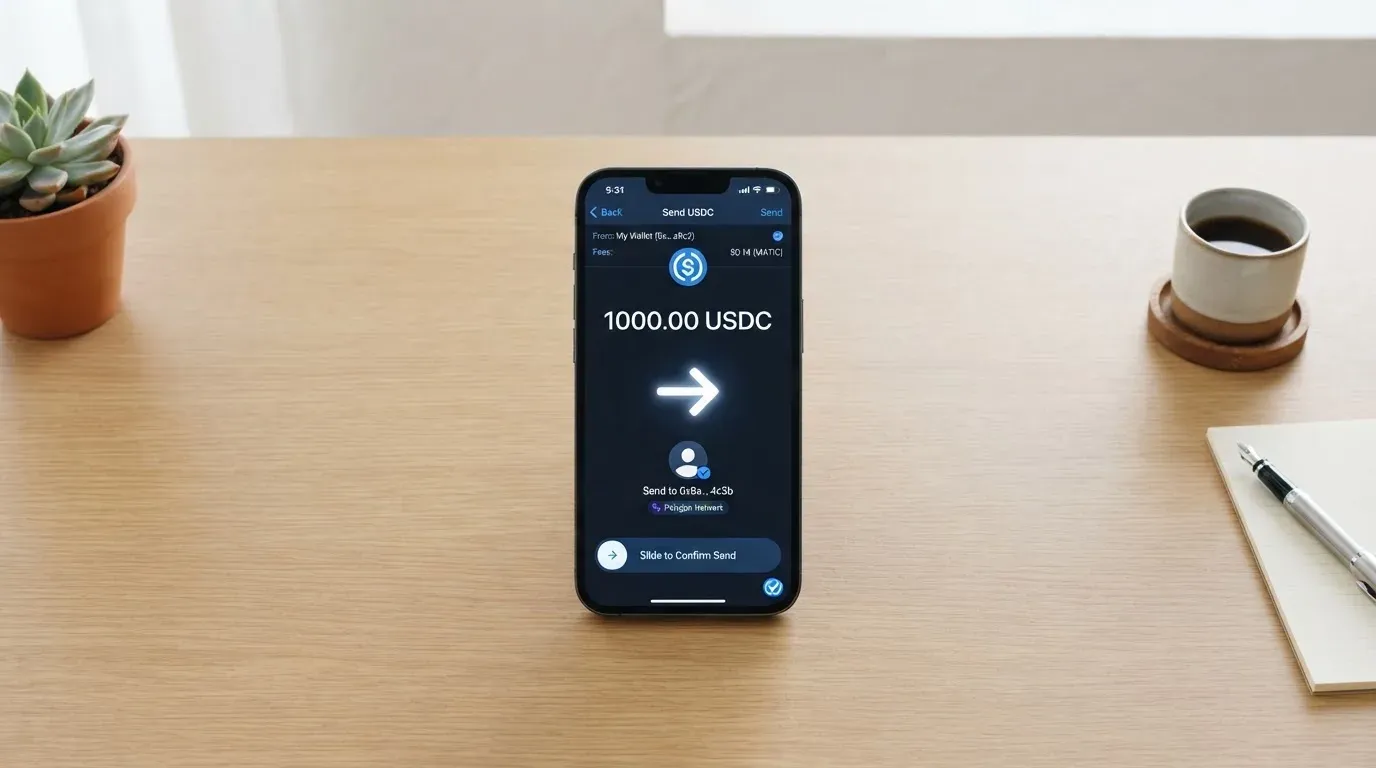
That simplicity has a dependency built into it, and it is worth naming plainly. The card is fed by one wallet and one asset. If you are not already holding USDT inside UU Wallet, this is not a card that draws on your bank account, your brokerage, or an exchange account. It is the spending end of a closed loop that starts and ends in UU Wallet. Whether that loop suits you depends entirely on how you currently hold money.
What is not stated: which other coins and networks are supported beyond USDT; and the top-up terms themselves — minimums, maximums, timing, fees. Two omissions in that list matter disproportionately. The network question is the sharp edge of this whole category, not a detail. USDT has been issued on networks including Ethereum, Tron, Solana, Polygon and Avalanche; if you send on a network the card provider does not support, or to an address belonging to a different network, the transfer can be lost or need manual support recovery with no guarantee — blockchain transfers are irreversible. Also worth knowing before you touch Tron: Circle stopped supporting USDC on Tron in February 2024, so “USDC over TRC20” is not a native option. And the gas question is independent of the card: on-chain network fees for your deposit are charged by the blockchain, not by the card provider, and on ERC-20 networks they are paid only in ETH, so a wallet holding USDT with no ETH cannot send.
So before your first top-up, the questions to ask the provider are narrow and answerable: which networks are supported for this card, what the minimum and maximum load is, what it costs, how long it takes, and what happens if I send on the wrong network.
Paying with it every day
The everyday-use picture is where this card is at its most ordinary, and that is a compliment of a sort. There is a virtual card and a physical card. The network is Visa. Apple Pay and Google Pay are both supported. That combination — physical Visa plus both mobile wallets — is what you actually want from a daily card, and the card has it.
On the wallet question specifically, the mechanics are worth a paragraph because they explain what you are really holding. Apple Pay replaces your card number with a device-specific Device Account Number stored in the Secure Element on your phone, never on Apple’s servers, and each payment uses a one-time dynamic security code. In practice this is a meaningfully better security posture than repeatedly typing your card number into websites, and it is also the reason a virtual card number is less scary than it sounds — the token sitting in your phone is not the number. The flip side is that your issuer can restrict a tokenised number, for example blocking it for magnetic-stripe, phone or website use, so a wallet that stops working is not always a broken phone.
What is not stated: whether other wallets are supported (only Apple Pay and Google Pay are listed); the ATM terms, which I covered under fees and which are the largest single gap in day-to-day usability, because cash is how you get through a market stall or a tipped restaurant in a country where terminals have failed; and the card currency.
One item belongs here because it is the only promotional offer I found: the May 2026 campaign, running 15 days from 1 May, offered USD 5 back on the first qualifying travel spend — single transactions of at least USD 5 on taxi platforms, at least USD 20 on travel booking platforms — paid to the prepaid card balance after the campaign. That is a campaign, not a programme. Permanent cashback is not stated.
Two more everyday frictions that belong to this category generally rather than to this card specifically, but that you will meet if you travel with it:
- Online payments may ask for 3-D Secure. This adds an identity check to an online card payment: the issuer assesses risk and either approves it without friction or challenges you, for example with a one-time code or biometric confirmation. Visa’s brand is Visa Secure, Mastercard’s is Identity Check. It is a normal step, and knowing it in advance stops it feeling like a scam when a code arrives.
- Some shops will look at the BIN and decline. Address Verification Service compares the numeric parts of a billing address you type against issuer records; it is mainly offered in the US, Canada and the UK and is generally unavailable for foreign-issued cards, which can cause declines. Separately, some merchants decline prepaid or foreign BINs outright, because the lookup reveals the card type and issuer country. Neither is a malfunction. Both are more likely with a card whose issuing country is not where you are standing.
Gambling is its own category: MCC 7995 covers casinos, betting and lotteries, and many issuers block it on specific cards by policy rather than by law. Whether this card does is not stated, and I would not rely on either answer.
What can go wrong
Two of the risk items here are about your money and crypto; the rest are about the thinness of the disclosure.
The counterparty problem. UU Wallet payments Limited is named in the site footer (© UU Wallet payments Limited 2025). The starting data lists Axiom-Forex / Finex Global Pay Ltd / Xinfinity Ltd as providers. The issuing bank and the licences are not stated. This is not a technicality. When you hold a prepaid card balance, you are holding a claim against an institution, and the terms of that claim — is the money safeguarded, is it insured, is it a deposit — determine what happens when something goes wrong. In the EU, electronic money institutions must safeguard customer funds by segregating them in dedicated accounts or insuring them; those funds are not the same as bank deposits and may not be covered by deposit guarantee schemes. If the card’s pages do not tell you which regime your balance sits under, you cannot know which protection applies.
The history of this category is not reassuring, and it is fair to weigh it. Custodial platforms have a record of failures: Mt. Gox, about US$350 million reported stolen between 2011 and 2014; Coincheck, about US$400 million in 2018; Ronin Network, US$625 million in 2022. Holding funds with a custodian carries counterparty and hack risk, and that risk does not disappear because the front-end looks polished. Programme closures have their own pattern: a notice period, then spending and loading stop, then users are asked to withdraw remaining balances — one 2026 closure reported by a secondary source had new loads ending 8 July 2026 and spending stopping 8 August 2026 (single source, unconfirmed). If your balance is on a prepaid card when a programme ends, your cash is stranded until you withdraw it, and how quickly you can is not something you control.
Irreversibility. Crypto transfers are typically irreversible. A stolen private key has no built-in recovery — the network cannot freeze or return the funds. Stablecoins are not censorship-proof either: Tether says it disables tokens in wallets on the OFAC sanctions list and has frozen funds tied to illicit activity.
The good news on incidents. I found no official incident involving this card, and no news coverage of one. Searches for reviews and complaints returned nothing: there is no Trustpilot page for UU Wallet that surfaced when I looked on 21 October 2026. Read that carefully, because it cuts both ways. No complaints can mean no problems — or it can mean nobody is using it at volume, or that complaints are handled inside the app’s own support channels where they are not indexed. An empty complaint record is weak evidence, not strong evidence. I would not treat silence as a clean bill of health.
The things I could not check at all. Whether the funds are self-custodial or held by the provider: not stated. Whether there is two-factor authentication, an instant card freeze, or spending-limit controls: not stated. What happens when you dispute a transaction, or how chargebacks work here: not stated. In the US, debit card reversal rights come from Regulation E and credit card rights from Regulation Z, and prepaid-card coverage varies and should not be assumed. If a payment goes wrong on this card, the card’s own pages give you no stated procedure for contesting it.
Support, at least, is clearly present. The site advertises “24/7 Chat Support”, an FAQ section, Telegram, Facebook, X, LinkedIn and email, in English. In a category where the written disclosure is thin, a responsive support channel is doing more work than it usually would. I would still rather see terms than know I can ask.
One more thing to hold in mind, since it is easy to forget about crypto cards. If your balance is crypto-denominated, spending it may be a taxable event. The IRS treats digital assets as property, so exchanging them for goods, services, dollars or other digital assets generally produces a taxable gain or loss, measured in local fiat currency at fair market value on the date of the transaction — which can make each card payment funded from crypto a separate disposal. Rules differ by country; this is a flag, not advice, and the treatment of your own situation is worth checking with someone qualified where you live.
What to take instead
If your objection to the UU Visa Platinum is the missing price list, then the alternatives below are worth reading not as “better cards” but as “cards that publish their terms”. I scored these for comparison, and the exercise is instructive: three of the four criteria I applied to UU can be checked on paper for the alternatives, which is exactly what is missing from the first card.
| Card | Score | Where it is clear | Where it is not |
|---|---|---|---|
| UU Visa Platinum | 5.9 / 10 | 160+ countries and regions of merchant coverage; Visa; virtual and physical; Apple Pay and Google Pay | Issuance fee after the campaign, fees, ATM, limits, card currency, issuer and licences, issuing-country list |
| International Visa Card | 6.7 / 10 | $5 one-time virtual issuance, no maintenance fee, plans Classic free / Pro $9.00 / Max $19.00 per month; USD spending free, foreign currency “Visa exchange rate + 2% FX fee”; deposits of any kind free | Physical card “coming soon”; supported deposit networks not stated; no cashback stated |
| UNi Card | 6.1 / 10 | No annual fee, no foreign transaction fee; assets converted at “live OTC rates” with “No hidden exchange fees”; spend-to-earn rewards up to 3% | Funding routes not stated; eligibility not stated; physical/virtual form not stated; issuance fee not stated |
| Morse | 7.5 / 10 | Zero foreign exchange fees or markups, real-time Visa exchange rate, “Paying with the Morse Card, online and contactless, is free”; self-custodial wallet | Issuance and monthly fee not stated (“Fees may apply. See Cardholder Agreement”); supported-country list not published on the card page; closed beta in about 16 named countries |
A few notes, because the comparison is more useful read than scanned.
International Visa Card publishes the thing UU does not: a price. Virtual issuance is $5 one-time with no maintenance fee, plans run Classic free, Pro at $9.00 a month and Max at $19.00 a month, USD spending is free on all plans, foreign currency is “Visa exchange rate + 2% FX fee”, and deposits of any kind carry no fee. You can fund it with USDC or USDT into a USD account at 1:1, or with USD, EUR, SEPA, SWIFT and FedNow. Against that, its eligibility rules are the strictest of the group: not available to residents or legal registrants of Belarus, mainland China, North Korea, Cuba, India, Iraq, Iran, Israel, Myanmar, Nepal, Nicaragua, Russia, Syria, Turkey, Ukraine, Venezuela or Vietnam, with FATF grey-list countries reviewed case by case, and purchases blocked in North Korea, Cuba, Iran, Russia, Syria, Ukraine and Venezuela — by residence or registration, not citizenship. And its physical card is “coming soon”, so it is currently a virtual card for everyone.
UNi Card is the cheapest on paper for anyone who holds multi-currency balances: no annual fee, no foreign transaction fee, assets converted at live over-the-counter rates, and “no hidden exchange fees”. It sits on the Mastercard network rather than Visa, spends from a UNi.Global account balance, and offers spend-to-earn rewards up to 3%. What I could not find is the funding route, the eligibility rules, and whether it is physical or virtual — three gaps of the same species as UU’s.
Morse is the strongest of the three and the one whose fee structure is clearest: zero foreign exchange fees or markups, conversions at the real exchange rate with no markup, online and contactless payments free, and a self-custodial wallet so the crypto stays under your own keys until the moment of payment. You can deposit by debit card, stablecoin transfer or account details (USD, EUR, MXN, COP; BRL needs a Brazilian CPF), with USDC, USDG and EURC via Solana free and other tokens or chains carrying a fee; Bitcoin, USDT and Ethereum deposits are supported. It scores highest partly because self-custody is a structural answer to the counterparty risk above, not just a feature. Against it: it is “fully virtual for now”, it cannot serve customers subject to US sanctions (also UK, EU, UN), eligibility is by residence with users “at least 18 years old” and in a supported country, the app is available in “over 140 countries” with local add and withdraw in over 70 — and roughly 16 named countries including Australia, Hong Kong SAR China, Japan, New Zealand, Singapore, Switzerland, Thailand, Türkiye and the UK are in closed beta needing an invite code. The card is “available only in certain countries”, so the practical move is to check the app rather than the page. Its issuance and monthly fees are not stated.
The pattern across all four: everyone publishes something and nobody publishes everything. That is what this category looks like right now.
Who I would recommend it to
I would recommend the UU Visa Platinum to someone in a fairly specific situation: you already use UU Wallet, you already hold USDT there, you want to spend that balance through a Visa number at ordinary shops in many countries, and you have decided that convenience of that kind is worth paying a price the card has not published. If that is you, the card does a real job, and the virtual-plus-physical, Visa, Apple Pay, Google Pay combination is the right shape for it.
I would not recommend it as your first card, and I would not recommend it to anyone choosing on price. The reason is not suspicion — there is no incident here, and I want to be clear about that — it is that you are being asked to make a financial decision from a page that does not tell you what the card costs. A reader with a published fee schedule can answer “is this worth it” in two minutes. A reader of this one cannot, and that is a defect of the disclosure rather than of the product.
Before you commit, the short list is: which networks can fund this card, what the issuance fee is after the campaign, what conversion and FX terms apply, what the ATM and daily and monthly limits are, which bank issues it and under what licence, and where your balance sits if the programme ends. Six questions, all answerable by a competent provider in a chat window. Ask them and keep the answers. If the answers are clear, this is a usable card for a usable purpose. If they are not, the absence is the answer.
Frequently asked questions
What is the UU Visa Platinum card?
It is a prepaid Visa card offered inside the UU Wallet app, available in a virtual and a physical version, on the Visa network, with Apple Pay and Google Pay support. It is aimed at people who already hold a balance in UU Wallet and want to spend it as an ordinary payment card. Because it is prepaid, it draws on a stored balance rather than a bank account, so it cannot be overdrawn. It is designed for users of the UU Wallet app who want a Visa prepaid card.
How does the UU Visa Platinum card work?
You hold crypto in your UU Wallet, move it to the card — the documented route is USDT from your wallet balance — and then spend the resulting prepaid balance at merchants as you would with any Visa card, physically or in a wallet app. The card has both a virtual and a physical version, and works at merchants in 160+ countries and regions. Beyond USDT, which other coins and networks can fund it is not stated, and the top-up terms themselves are not stated either.
Is UU Visa Platinum a bank, and who owns it?
Not a bank, on the evidence available. The site footer names UU Wallet payments Limited 2025, and the starting data lists Axiom-Forex / Finex Global Pay Ltd / Xinfinity Ltd as providers. The issuing bank and the licences are not stated, and neither is whether your balance is held custodially or under your own keys. So I cannot tell you which regulatory regime protects your money, which is a question worth asking before you load it.
Who can get the card?
The card’s starting data describes it as usable across 160+ countries and regions, with phone binding listed for Australia, Brazil, Cambodia, Dubai, France, Hong Kong, Japan, Laos, Macau, Malaysia, Philippines, Saudi Arabia, Singapore, South Korea, Taiwan, Thailand, the UK and Vietnam. What is not stated is the list of countries where the card can actually be issued, or any exceptions to it. Merchant coverage being wide and eligibility being clear are different things, and only the first is documented.
Does the UU Visa Platinum card require KYC, and how do I activate it?
Yes. Real-name verification is required for the virtual card; new users activate the card after completing it. Which documents are accepted, whether proof of address is needed, and what age you must be are not stated, and neither is whether there are verification tiers. Real-name checks are standard for regulated financial services — in the EU, due diligence covers name, address, date of birth, nationality, ID documentation, a sanctions check, the purpose of the relationship and PEP status.
What does it cost, and is the card free?
That is precisely the gap. The issuance fee was waived in a 15-day campaign from 1 May 2026, but the fee after the campaign is not published. The monthly or maintenance fee is not stated. The conversion rate and any foreign-exchange fee are not stated. ATM charges are not stated. Daily and monthly limits are not stated, and neither is the card’s currency. The card is prepaid, so it cannot overdraw you, but you cannot price it either.
Can I use it in my country, and can I use it abroad?
Abroad is the well-documented case: merchants in 160+ countries and regions, with the 3-D Secure step and possible declines on prepaid or foreign card numbers both normal to expect. At home is the case nobody has documented, because the issuing-country list is not published. Note also that virtual card numbers are declined in some online shops and that address verification is mainly offered in the US, Canada and the UK, so foreign-issued cards can be refused on that basis.
How do I top up the card, and which networks work?
The stated method is USDT from your UU Wallet balance onto the prepaid card. Coins and networks beyond USDT are not stated, and neither are minimums, maximums, timing or fees. The network question is the one to settle before your first transfer: blockchain sends are irreversible, so USDT sent on an unsupported network, or to another network’s address, can be lost or need manual recovery with no guarantee. Network fees are the blockchain’s, not the card’s.
Is the UU Visa Platinum card safe?
I found no official incident, no news coverage, and no Trustpilot page for UU Wallet when I looked on 21 October 2026 — which is weaker reassurance than it looks, since it may reflect low usage rather than a clean record. Safeguards such as two-factor authentication, instant card freeze and spending limits are not stated, and neither is the dispute or chargeback procedure. Apple Pay and Google Pay do give you device-specific tokens and one-time codes, which is a real security advantage.
Is the card worth it, and is it better than the alternatives?
For an existing UU Wallet user spending USDT across many countries, it is a reasonable extension of something you already use. Judged on disclosure, it loses to Morse (7.5 / 10), which publishes zero foreign exchange fees and a self-custodial wallet, to International Visa Card (6.7 / 10), which publishes a $5 issuance fee and a 2% FX fee, and to UNi Card (6.1 / 10), which has no annual fee and no FX fee. Ask about fees, networks, limits and the issuer before committing.
App and neobank card verdicts – cryptocardverdict
Content created by the «cryptocardverdict» team